Merchant City: The Tobacco Fortune
100 min · 3 km · easy
One well-planned day in Glasgow walks you through the Merchant City's tobacco-fortune grid to the medieval cathedral in the morning, then hops west to Kelvingrove, the university, and the Botanic Gardens in the afternoon. It is a genuinely walkable city, most of its landmark museums and churches are free to enter, and a short Subway ride links the two halves so you never rush. This guide sets out the route, the current opening hours and ticket needs, and where each stretch matches a self-guided Glasgow walking tour you can play through your headphones as you go.
The short answer: two halves, one Subway ride
Glasgow's centre and West End are each compact enough to cross on foot, but they sit about two miles apart, so the efficient shape of a one-day visit is: spend the morning in the historic core (George Square east to Glasgow Cathedral and the Necropolis), then take the Subway or a 25 minute walk out to the West End for the afternoon (Kelvingrove, the University of Glasgow, Ashton Lane, and the Botanic Gardens). Both halves are almost entirely free to enter. You are paying for lunch, coffee, and possibly a Subway ticket, little else.
The two Roamer tours line up exactly with this rhythm. The morning follows Merchant City: The Tobacco Fortune, a roughly 3 km, 100 minute walk rated easy. The afternoon follows West End: Kelvingrove and the University, about 3.5 km over 120 minutes, rated moderate for one real climb up to the university. You can pause either tour whenever you sit down, so the stated times are audio length, not a schedule.
Morning: George Square to the cathedral (Merchant City)
Hear a stop from this walk
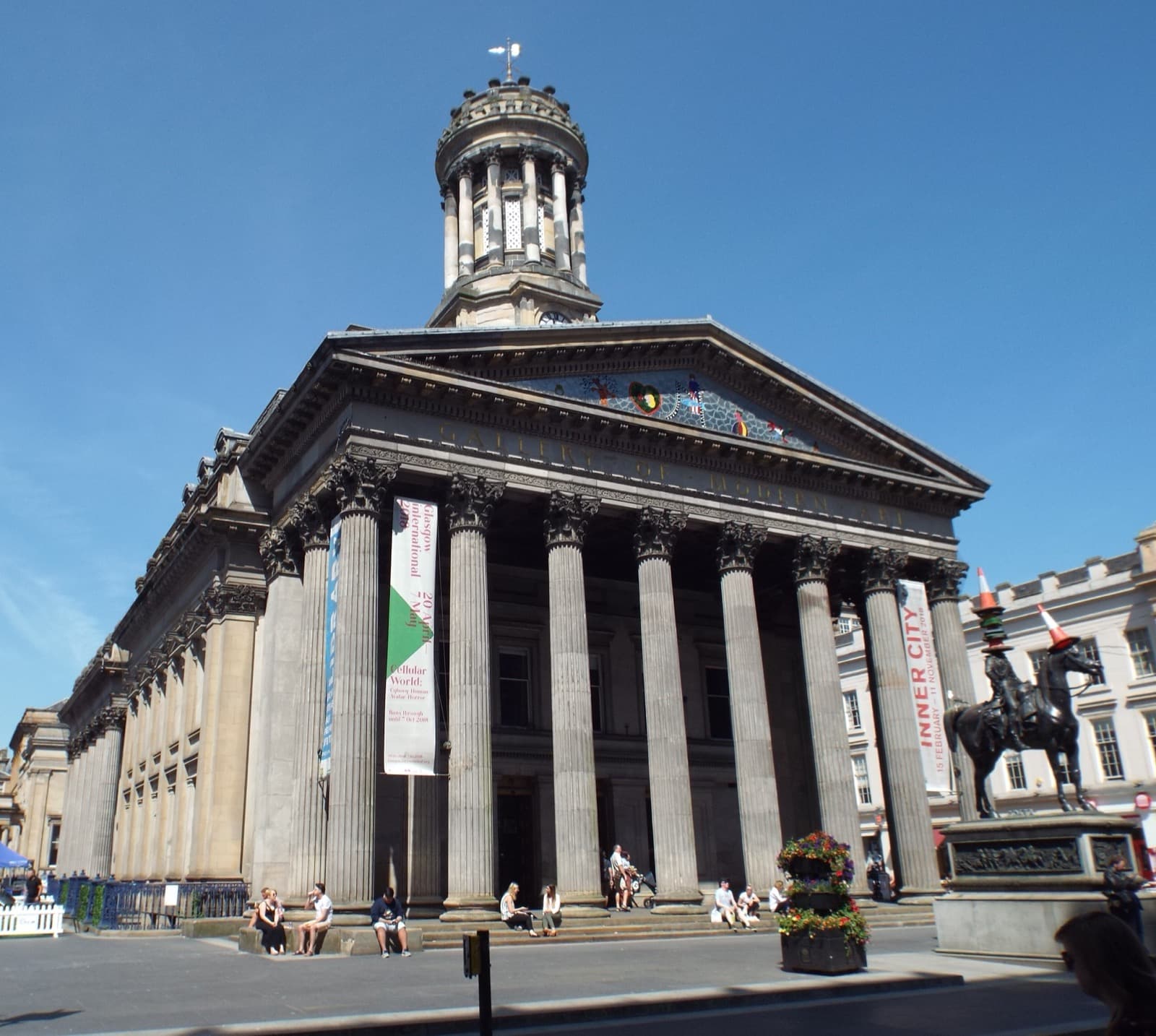
The Gallery of Modern Art: The Tobacco Lord's Mansion
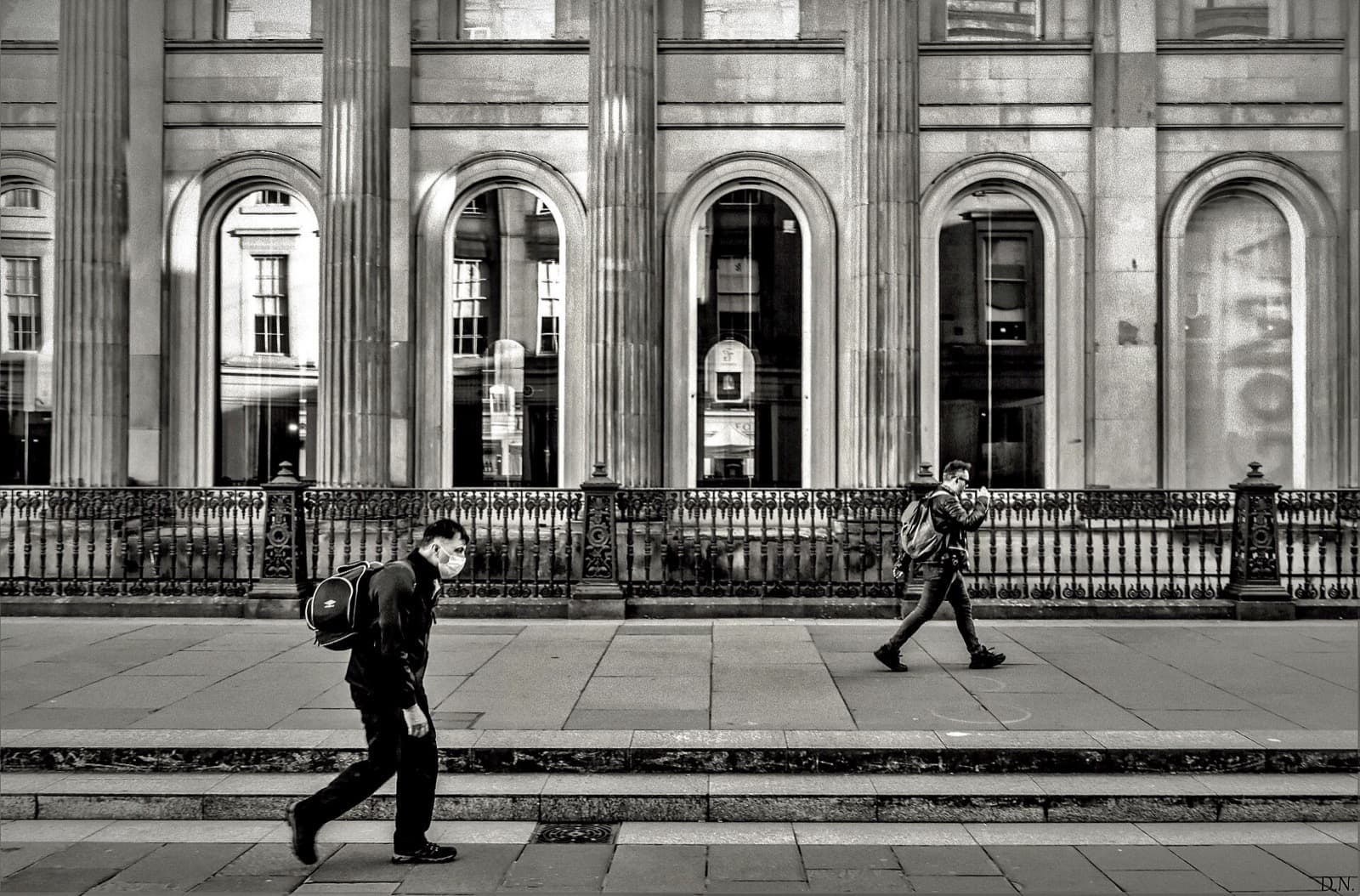
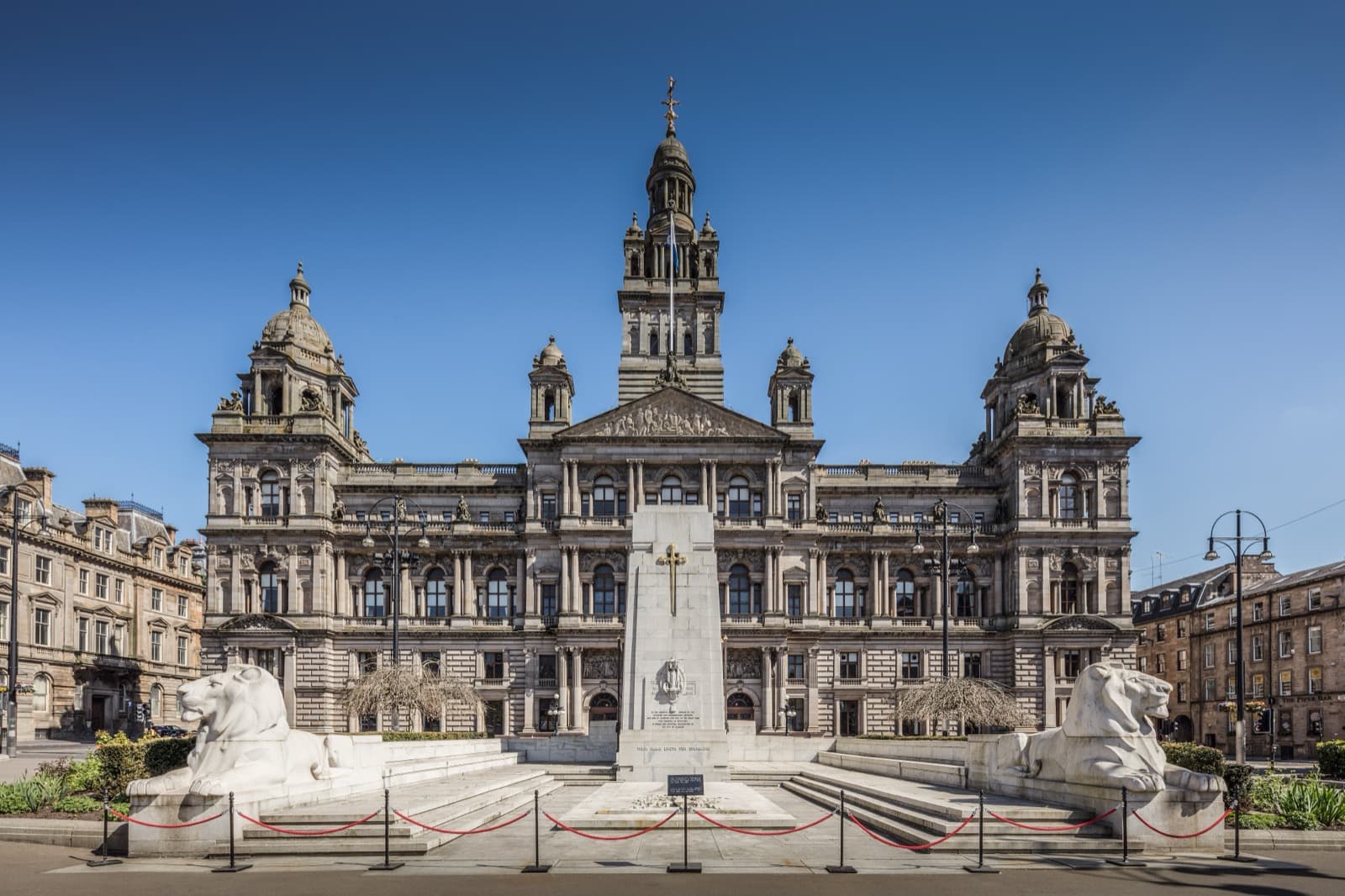
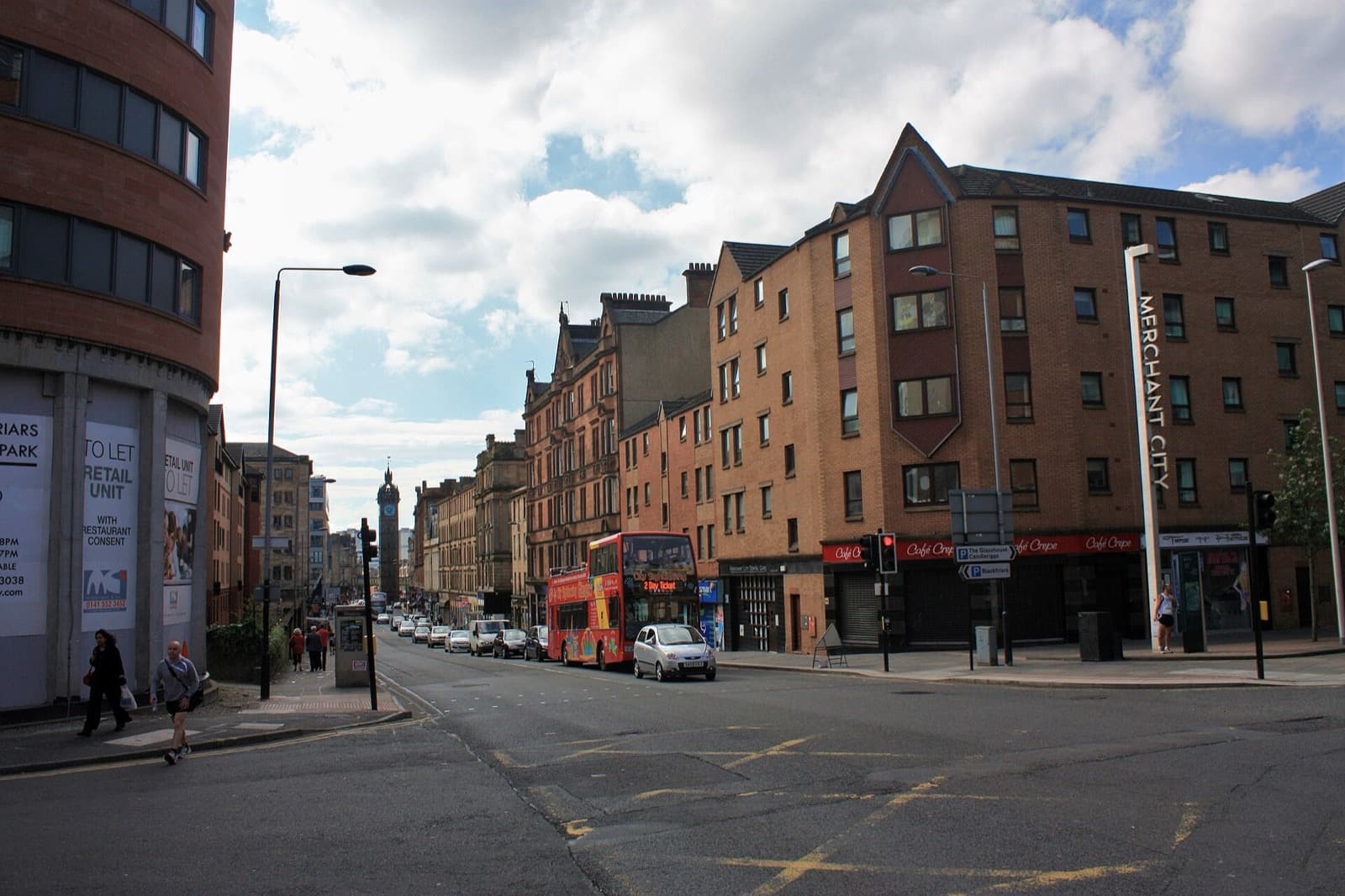
Start in George Square, the civic heart, ringed by the City Chambers. From there the walk moves east through the old Merchant City, past streets named Glassford, Virginia, Jamaica, and Ingram. Those names are the point of the morning: they record the fortunes that eighteenth century tobacco and sugar merchants built, wealth entangled with enslaved labour on plantations across the Atlantic. The University of Glasgow published a report in 2018 acknowledging its own historical benefit from that trade, which the tour draws on rather than glossing over.
Walking distances here are small. George Square to the Gallery of Modern Art is a couple of minutes, and the whole grid down to Glassford Street, Trades Hall, and Glasgow Cross covers well under a mile before the route turns uphill toward the cathedral. The Gallery of Modern Art is free. Trades Hall's marble interiors open mainly on event and Doors Open days, so treat the exterior as the default and check ahead if you want inside.
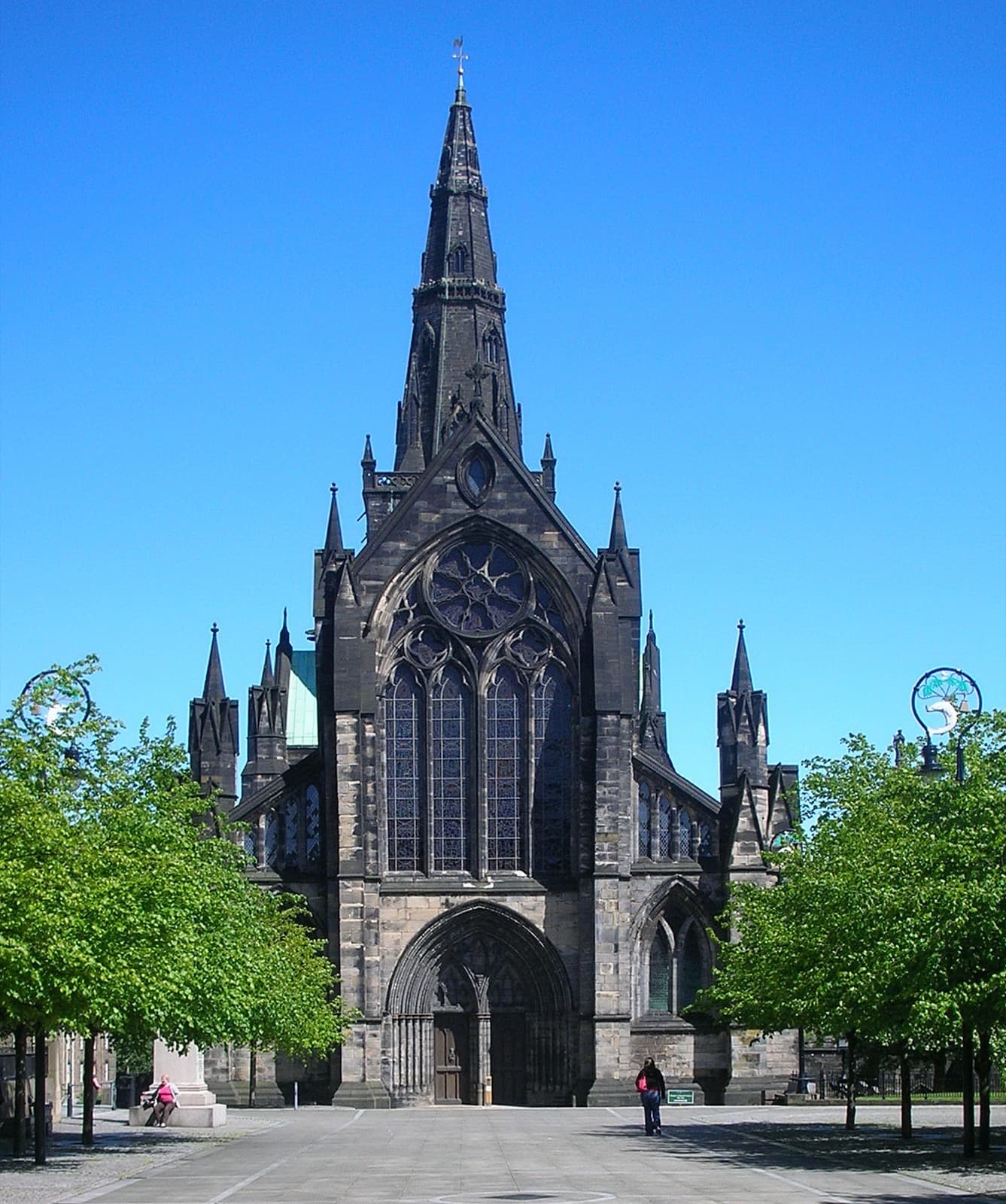
The morning's climax is the Cathedral Precinct. Glasgow Cathedral is free to enter (donations welcome), open Monday to Saturday roughly 9:30am to 5pm in summer and 10am to 4pm in winter, with a later Sunday start of 1pm because of morning worship. Behind it, the Glasgow Necropolis is a free Victorian burial hill open during daylight hours, and the climb rewards you with a view back over the cathedral and city. Give the crypt and the Necropolis slow time. They are calmest early, which is another reason to do this half first.
Midday: crossing to the West End
To move between the two halves, the simplest option is the Glasgow Subway, the small circular line locals call the Clockwork Orange. From the city centre, St Enoch station sits beside the Merchant City, and Hillhead station drops you at the top of Byres Road in the middle of the West End. The ride is only a few minutes. If you would rather walk and the weather is kind, it is about 25 to 30 minutes on foot from the centre out toward Kelvingrove, mostly gentle.
One timing note shapes the afternoon: the Hunterian Museum is closed on Mondays. If your one day in Glasgow is a Monday, do the West End first or plan to enjoy the university grounds and gardens without the Hunterian's interior.
Afternoon: Kelvingrove, the university, and the gardens (West End)
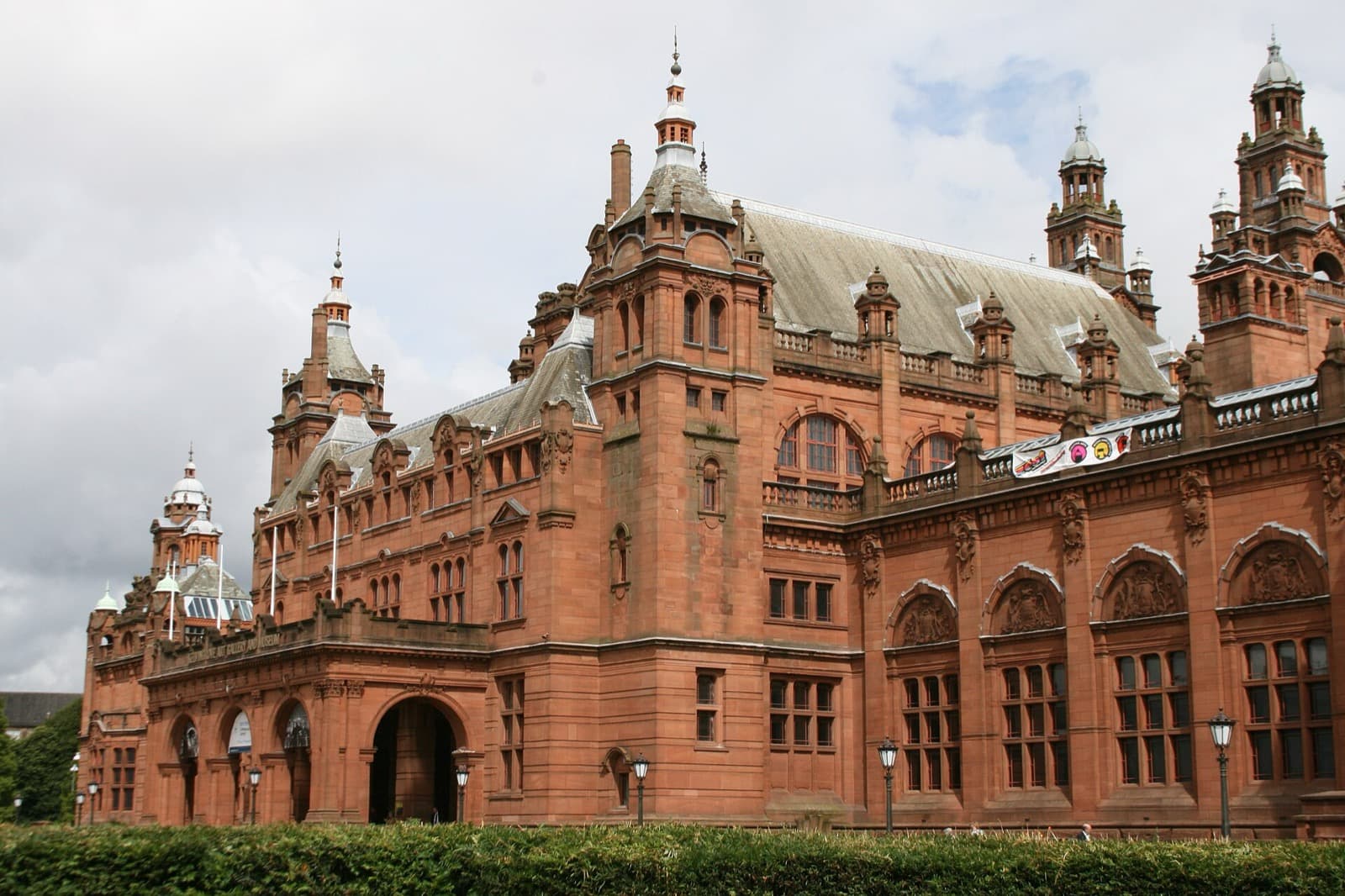
Begin at Kelvingrove Art Gallery and Museum, a red sandstone palace that is free to enter and one of Scotland's most visited attractions. It opens daily, generally 10am to 5pm Monday to Thursday and Saturday, and 11am to 5pm on Friday and Sunday. Try to be in the great central hall for the daily organ recital, held at 1pm most days and 3pm on Sundays. It is the kind of free, unhurried moment self-guided travel is built around.
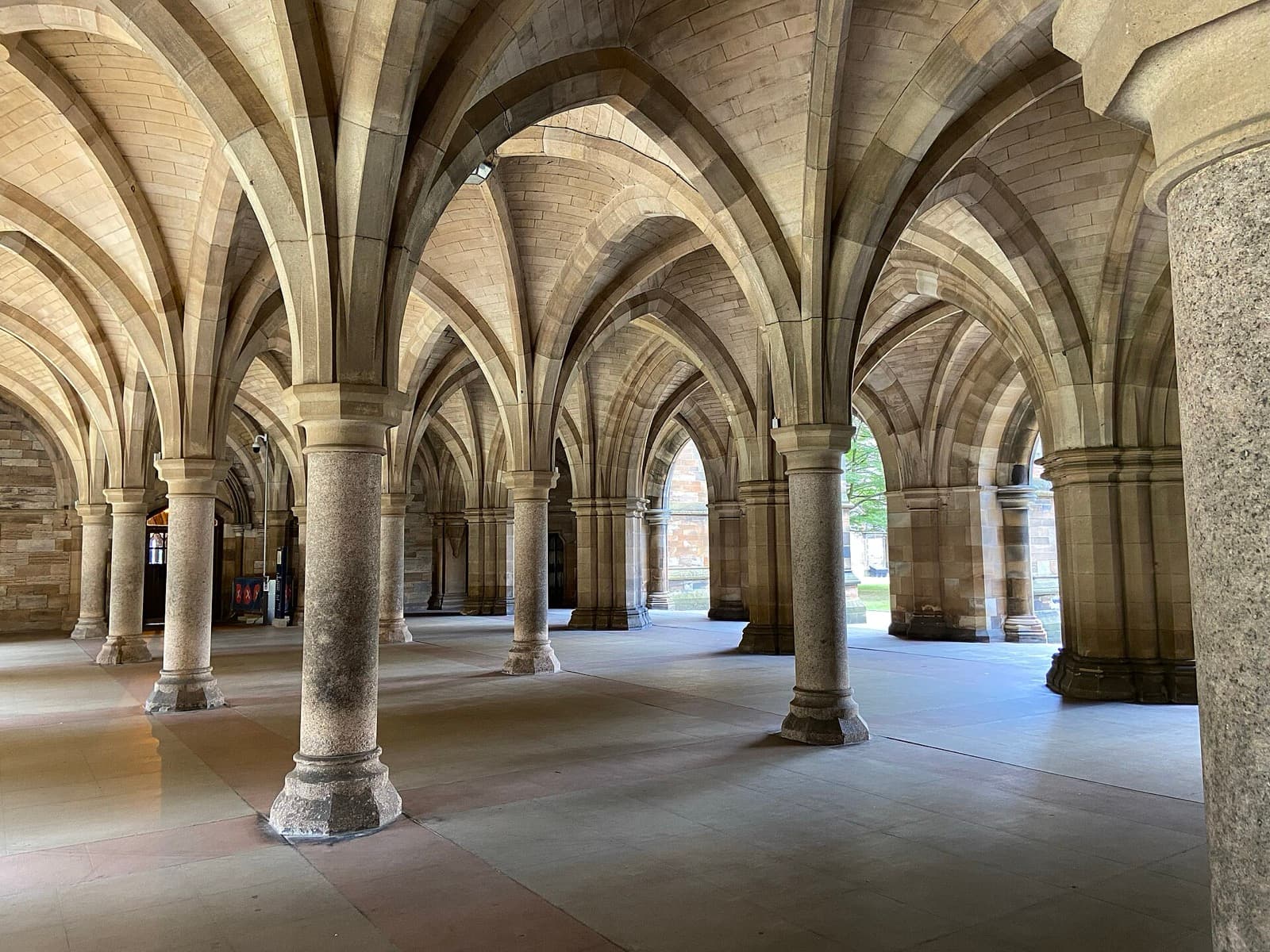
From there the route crosses wooded Kelvingrove Park, passing the Stewart Memorial Fountain, then climbs Gilmorehill to the University of Glasgow. This is the one real ascent of the day. The university's Gothic tower and vaulted Cloisters are free to walk through, and the university dates to 1451, older than Columbus's first Atlantic crossing. Inside the campus, the Hunterian Museum is free and, when open (Tuesday to Sunday, 10am to 5pm), is the oldest public museum in Scotland, founded on the bequest of the physician William Hunter (1718 to 1783).
Drop down to Ashton Lane and Byres Road for the student district: cobbles, festoon lights, cafes, and Glasgow's oldest cinema on the lane. This is a stretch to feel rather than tick off, so pause for a coffee. Finish north at the Glasgow Botanic Gardens, free and open from 7am to dusk, where the Kibble Palace glasshouse shelters marble statues under curved Victorian glass. The glasshouses close earlier than the grounds, around 6pm in summer and about 4:15pm in winter, so aim to reach them with time to spare. The pale grand terraces along Great Western Road send you off at the end.
How the tours carry the day
Both the Merchant City and West End routes are available as GPS-triggered audio walks you control yourself: your pace, your stops, no group and no fixed departure time. The narration plays automatically as you reach each landmark, and pauses when you sit down for lunch or duck into a museum. Because nearly every stop is free to enter, the day stays inexpensive and flexible. Start from the Glasgow walking tours hub or the Glasgow city page to preview the routes and begin whichever half suits your morning.
A practical closing note on weather and safety: Glasgow sits on Scotland's west coast, so rain can arrive and pass within an hour in any season. Carry a waterproof and wear shoes with grip for the Necropolis steps and the Gilmorehill climb. The city is welcoming to solo walkers by day; keep valuables discreet and use ordinary street awareness after dark around the busier student lanes, as you would in any city.
Sources
Frequently asked questions
- Can you see Glasgow in one day on foot?
- Yes. Glasgow's historic centre and West End are each compact enough to cross on foot, and they sit about two miles apart. A practical one-day plan does the Merchant City and cathedral in the morning, then takes the Subway or a 25 to 30 minute walk to the West End for Kelvingrove, the university, and the Botanic Gardens in the afternoon.
- Is Kelvingrove Art Gallery free, and when are the organ recitals?
- Kelvingrove is free to enter and is one of Scotland's most visited attractions. It opens daily, generally 10am to 5pm Monday to Thursday and Saturday, and 11am to 5pm Friday and Sunday. Free organ recitals are held in the central hall at 1pm most days and 3pm on Sundays.
- How much does it cost to visit Glasgow Cathedral and the Necropolis?
- Both are free. Glasgow Cathedral is free to enter with donations welcome, open Monday to Saturday roughly 9:30am to 5pm in summer and 10am to 4pm in winter, with a later 1pm start on Sundays. The Glasgow Necropolis behind it is a free Victorian cemetery open during daylight hours.
- How do you get from Glasgow city centre to the West End?
- The quickest way is the Glasgow Subway, the small circular line. St Enoch station sits by the Merchant City and Hillhead station drops you at the top of Byres Road in the West End, a ride of just a few minutes. Walking takes about 25 to 30 minutes.
- Is the Hunterian Museum open every day?
- No. The Hunterian Museum, the oldest public museum in Scotland, is open Tuesday to Sunday from 10am to 5pm and is closed on Mondays. Admission is free. If your visit falls on a Monday, plan the West End around the university grounds and Botanic Gardens instead.
- Are the Glasgow Botanic Gardens and Kibble Palace free?
- Yes, both are free. The gardens open from 7am to dusk daily, and the Kibble Palace and other glasshouses are also free to enter. The glasshouses close earlier than the grounds, around 6pm in summer and about 4:15pm in winter, so arrive with time to spare.
Ready to experience it?
Merchant City: The Tobacco Fortune
100 min · 3 km · easy
More from Glasgow
Explore more at your own pace.
Glasgow Travel Guide: How Many Days, Getting Around, and When to Visit
Glasgow: Beauty Built on Complicated Money
Glassford Street and the Map That Confesses: Glasgow's Merchant City
The Gothic Tower on Gilmorehill: Reading Glasgow's West End from the University Cloisters
Glasgow Cathedral: The Medieval Survivor Built Over a Saint's Grave