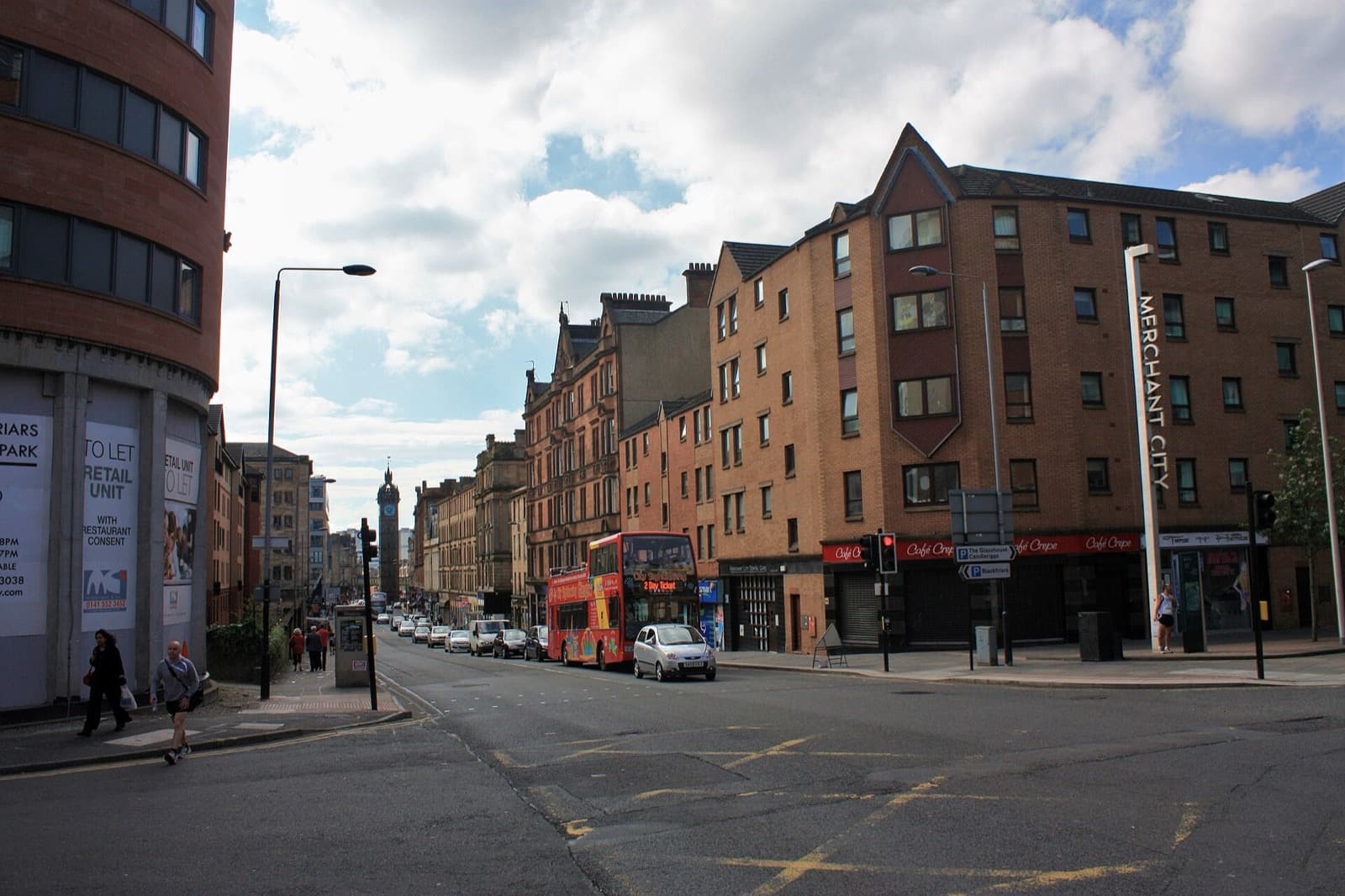
Glasgow's Merchant City confesses. The grid of merchants' streets laid out east of George Square in the later eighteenth century records, in its own signage, where the fortune came from. Glassford Street, Virginia Street, Jamaica Street, Buchanan Street, Ingram Street: the names are the names of tobacco traders and the colonies they traded with, and the map reads as a plain account of the money and the enslaved labour entangled with it. Stand on Glassford Street and you are standing at the exact hinge of this walk, the place where the whole tour's argument becomes legible on a corner.
The street that runs through a demolished mansion
Glassford Street was opened in 1793 and named for the Tobacco Lord John Glassford. The detail worth pausing on is how it came to exist. Glassford's great Shawfield Mansion was demolished in 1792 so that the new street could run straight through the site of it. The house of one of the richest merchants in the city was cleared to make room for the commercial grid, and the street took the dead mansion's owner as its name. That is the Merchant City in a single gesture: private tobacco wealth converted, within a generation, into the public infrastructure of a trading capital.
The names around it fill in the trade. Virginia Street was named for the tobacco colony. Jamaica Street was named for the West Indies and its sugar. Buchanan Street carries the name of the tobacco trader Andrew Buchanan, whose family owned plantations in Virginia. Ingram Street remembers a merchant provost of the city. Read together, they form a directory of the men and the goods that raised the district. Glasgow's colonial trade, above all tobacco between 1740 and 1775, built much of what you see. When the tobacco trade collapsed around the American Revolution, the merchants pivoted to West Indies sugar and cotton, and imports of both climbed sharply in the decades that followed.
Naming what the money rested on
Hear a stop from this walk
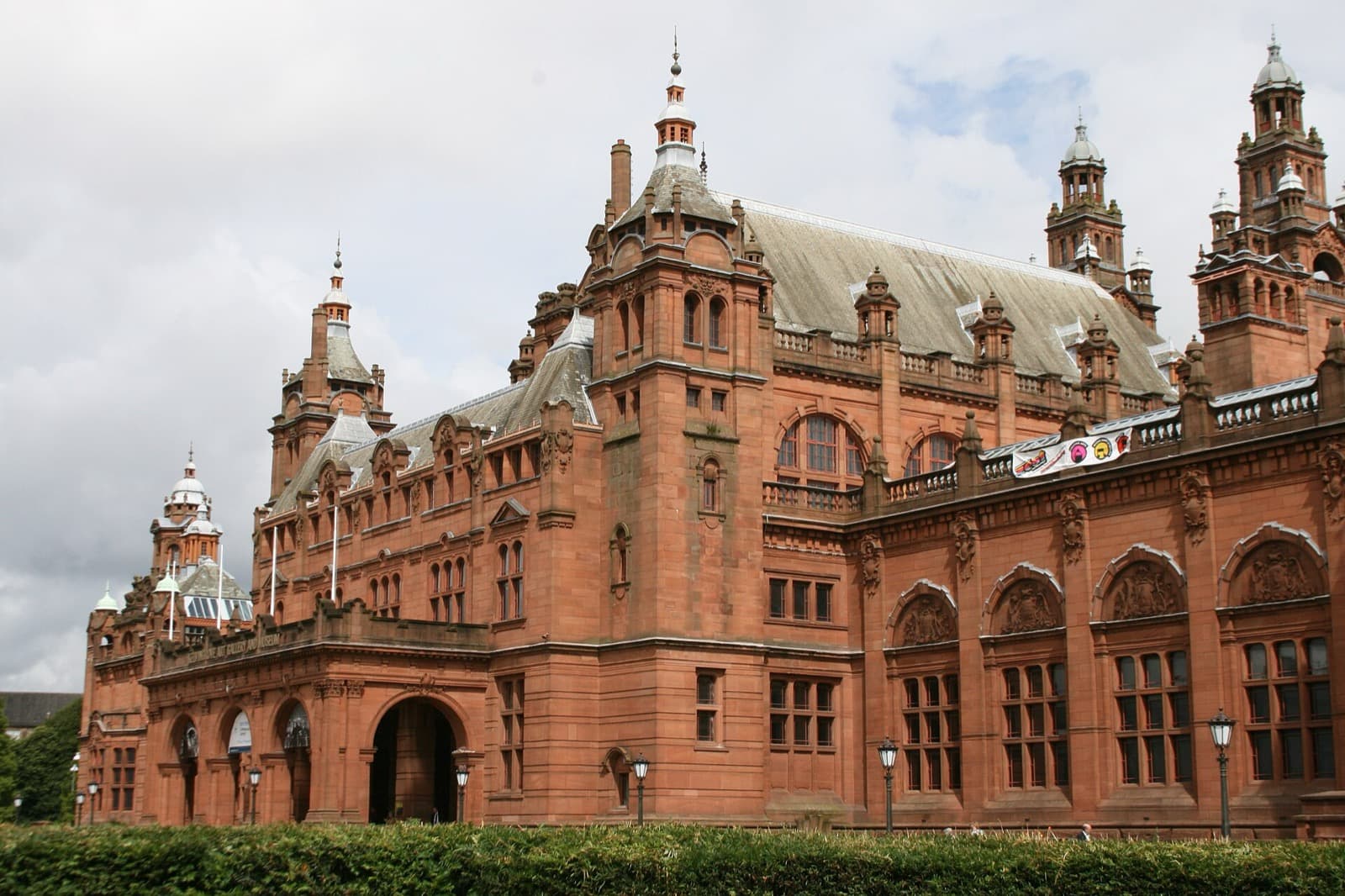
The Gallery of Modern Art: The Tobacco Lord's Mansion
These trades were rooted in Atlantic slavery. The names on these corners belong to men who traded in the produce of enslaved labour, and the important thing about modern Glasgow is that it now says so out loud rather than quietly. The city's museums document the trade and the people it exploited. The University of Glasgow published a report titled Slavery, Abolition and the University of Glasgow in September 2018, making it the first British university to publicly declare income derived from slavery and to commit to a programme of reparative justice, estimating tens of millions of pounds in present-day value from slavery-derived gifts.
This is why the walk holds two truths at once without flinching. The architecture is genuinely beautiful, and the fortune that raised it rested substantially on plantations in the Americas and the Caribbean. You do not have to choose between admiring the buildings and reckoning with their source. Glasgow itself has stopped choosing. On Glassford Street there is no monument, no spectacle, nothing staged. There is only the map, and the map confesses. You read one street sign at a time and let the city tell you, in its own signage, exactly what it now chooses to name.
Where Glassford Street sits in the whole walk
The Merchant City stop is stop three of seven on a route that runs about three kilometres and takes roughly ninety minutes to two hours on foot. It is the point where the tour's thesis clicks into place, and everything before and after it is arranged to make that click land.
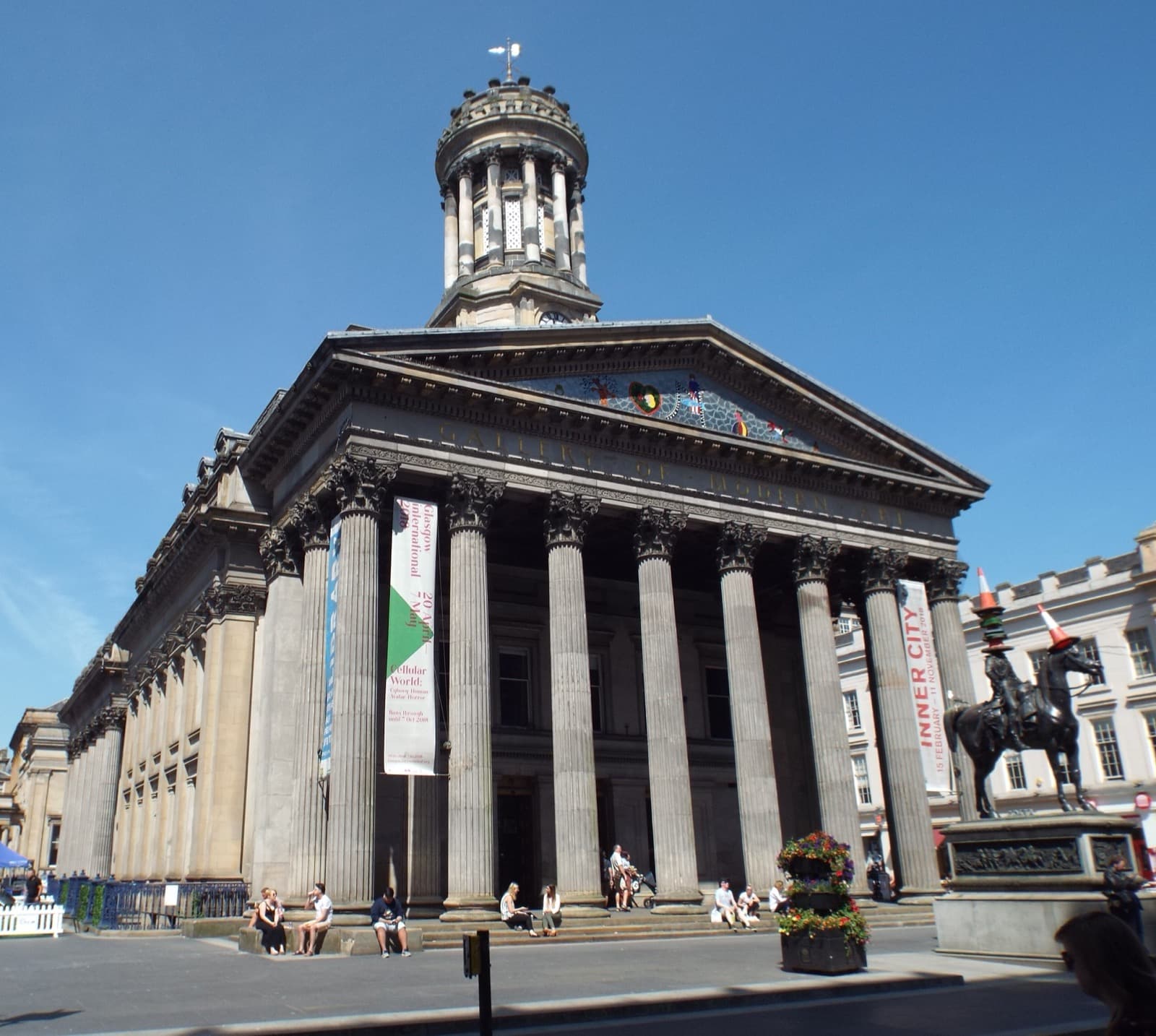
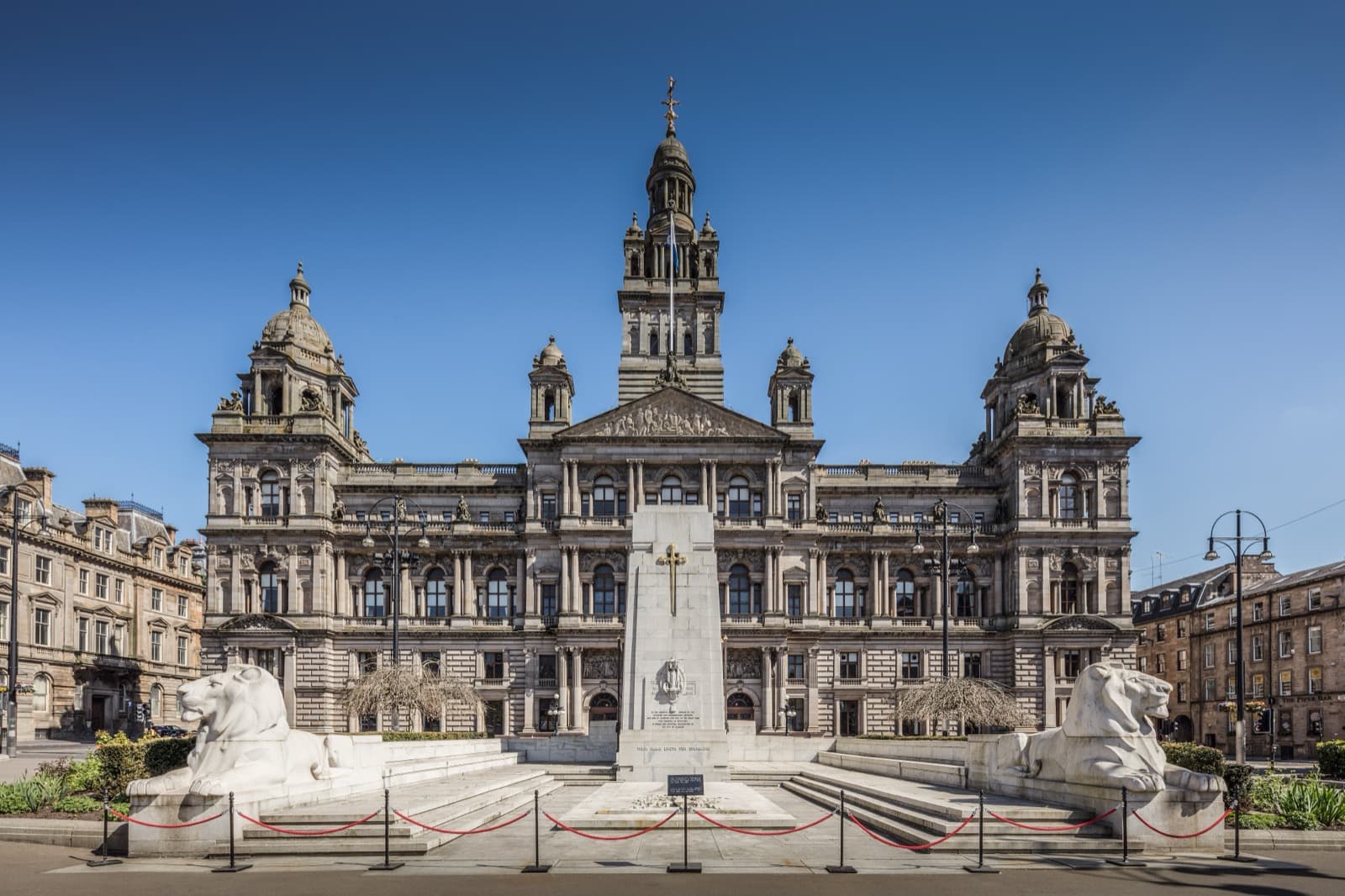
The walk opens at George Square, laid out in 1781 and named for King George the Third, ringed by eleven public sculptures and fronted by the City Chambers that Queen Victoria inaugurated in 1888. That square is the confident civic face of a city that called itself the Second City of the Empire. Stop two, the Gallery of Modern Art, is the argument in miniature: it began in 1778 as the townhouse of Tobacco Lord William Cunninghame of Lainshaw, and out front the Duke of Wellington rides with a traffic cone on his head, a folk habit the authorities keep trying to end and the people keep restoring.
From Glassford Street the route walks a short way to the Trades Hall, built between 1791 and 1794 to a design by Robert Adam, who won the commission but died before it was finished. By the Trades House's own account, apart from the medieval cathedral it is the oldest building in Glasgow still used for its original purpose. After the merchants, the makers: the hall belongs to the fourteen Incorporated Crafts whose skill actually built the district.
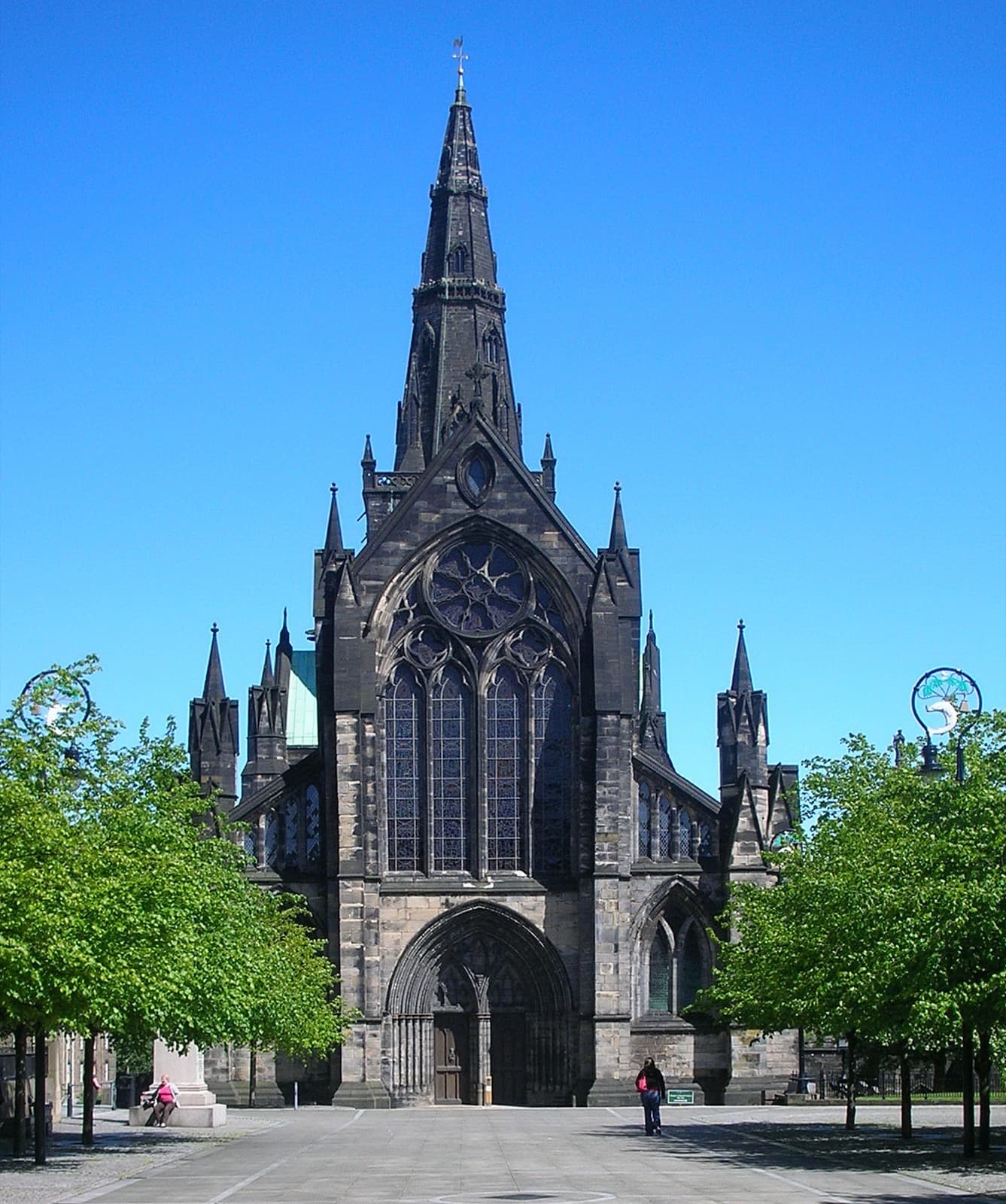
Then the ground turns downhill and back in time. At Glasgow Cross the Tolbooth Steeple, built between 1626 and 1634, stands almost alone after the rest of the old town jail and council house was demolished in 1921. The climb continues to Glasgow Cathedral, built mainly across the thirteenth to fifteenth centuries over the tomb of Saint Mungo and, by Historic Environment Scotland's record, the only medieval cathedral on the Scottish mainland to survive the 1560 Reformation virtually intact. Across the road, Provand's Lordship of 1471 is the oldest house in the city. The walk ends on the hill in the Glasgow Necropolis, opened in 1833 and modelled on Pere Lachaise in Paris, where the merchants whose names you read on the grid lie in obelisks and temple tombs, under a John Knox column dated 1825 that predates the graves around it.
Why walk it yourself
The sequence matters, and so does the pace. Glassford Street rewards slow reading, one corner and one name at a time, and a self-guided walk lets you give it that. There is no group at your shoulder, no schedule, no guide steering you past the uncomfortable parts, and no tip expected. You can stand as long as you like at each sign, skip a stop if you want to, and take the slopes toward the cathedral at whatever speed suits you. The audio tour narrates the confession the map is making, then hands you back to your own eyes.
If you want the wider context first, the Glasgow walking tours overview sets out how the Merchant City route fits alongside the rest of the city, and the Glasgow city page collects everything on offer. Then come to Glassford Street and read the map that confesses, in the changeable west-coast weather, at your own pace.
Sources
- Glassford Street (Wikipedia): origin of the street in 1793, its naming for John Glassford, and the 1792 demolition of Shawfield Mansion.
- John Glassford (Wikipedia): biography of the Tobacco Lord and his place in Glasgow's tobacco trade.
- Slavery, Abolition and the University of Glasgow (University of Glasgow, September 2018): the report that made Glasgow the first British university to declare slavery-derived income and commit to reparative justice.
- Glasgow Trades Hall (Wikipedia) and The Trades House of Glasgow: Robert Adam's authorship and the building's standing among the oldest still serving their original purpose.
- Glasgow Cathedral (Historic Environment Scotland): the cathedral's medieval construction over Saint Mungo's tomb and its survival of the 1560 Reformation.
Ready to experience it?
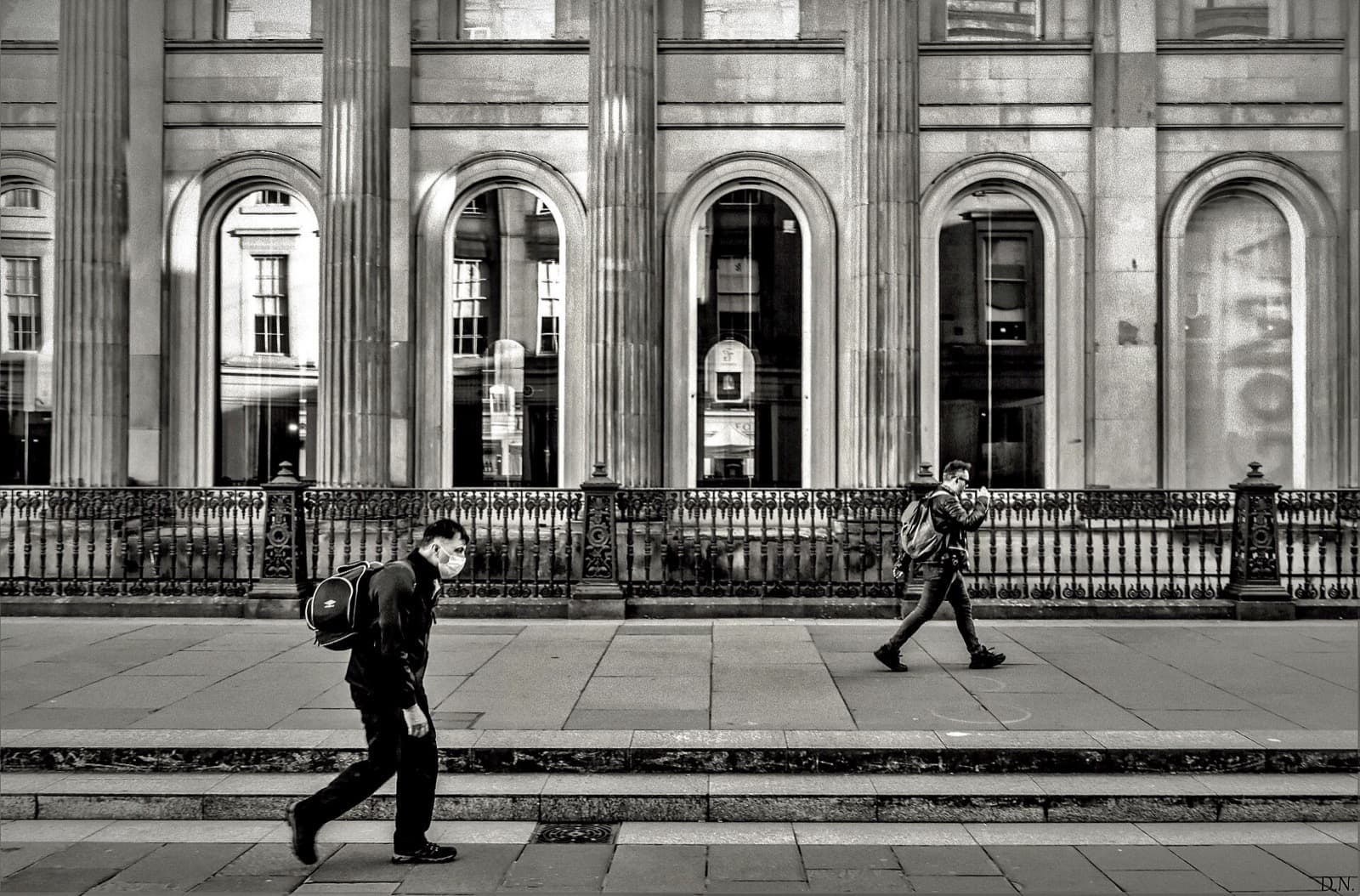
Merchant City: The Tobacco Fortune
100 min · 3 km · easy
More from Glasgow
Explore more at your own pace.
Glasgow Travel Guide: How Many Days, Getting Around, and When to Visit
One Day in Glasgow: A Walkable Morning-to-Evening Itinerary
Glasgow: Beauty Built on Complicated Money
The Gothic Tower on Gilmorehill: Reading Glasgow's West End from the University Cloisters
Glasgow Cathedral: The Medieval Survivor Built Over a Saint's Grave