Latin Quarter: The City of the Tribes
90 min · 1.7 km · easy
You can walk Galway's medieval core and its waterfront in a single unhurried day, morning to evening, because the whole city is compact, level, and stitched together by the fast River Corrib. Start in the walled old town around Eyre Square, thread down through the Latin Quarter to the Spanish Arch, then follow the river out to the Claddagh, the cathedral, the salmon weir, and the sea. This guide sets that day in order, ties it to two self-guided audio walks, and flags the opening hours and small entry costs you should check before you go.
Galway rewards a slow pace. The two tours below run at your schedule, not a group's, and you can pause either one to follow street music into a lane or sit by the water. Browse both on the Galway walking tours hub, or open the city page at /ireland/galway.
The short version
Give the day two halves. In the morning, walk the medieval town: Eyre Square, Lynch's Castle, Shop Street and the Latin Quarter, Saint Nicholas' Collegiate Church, the Hall of the Red Earl, and the Spanish Arch. This is the ground covered by the Latin Quarter self-guided audio tour, a compact loop of about 1.7 kilometers with seven stops that most people finish in around 90 minutes of listening plus stops. In the afternoon and evening, follow the river and the sea: the Claddagh, the Claddagh ring story, the Spanish Arch again, Galway Cathedral, the Salmon Weir Bridge, Nimmo's Pier, and out along the promenade to Salthill. That is the Claddagh and waterfront self-guided audio tour, roughly 4.4 kilometers over about two hours of audio, ending at the Atlantic edge.
Almost every outdoor stop on both walks is free. The handful of indoor sites that charge or ask a donation are noted below.
Morning: the medieval town (Eyre Square to the Spanish Arch)
Hear a stop from this walk
Saint Nicholas' Collegiate Church: The Sailors' Church of the Tribes
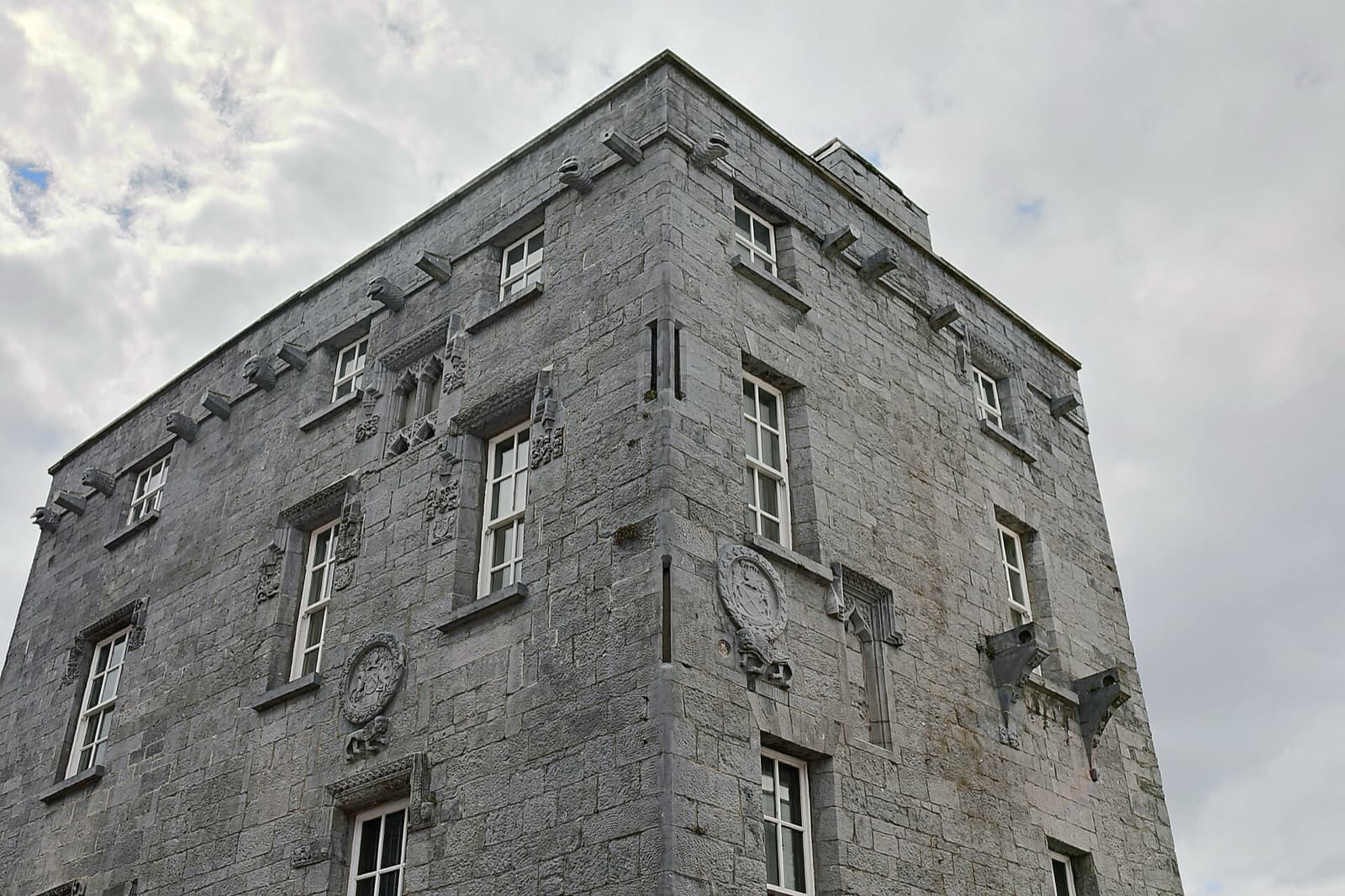
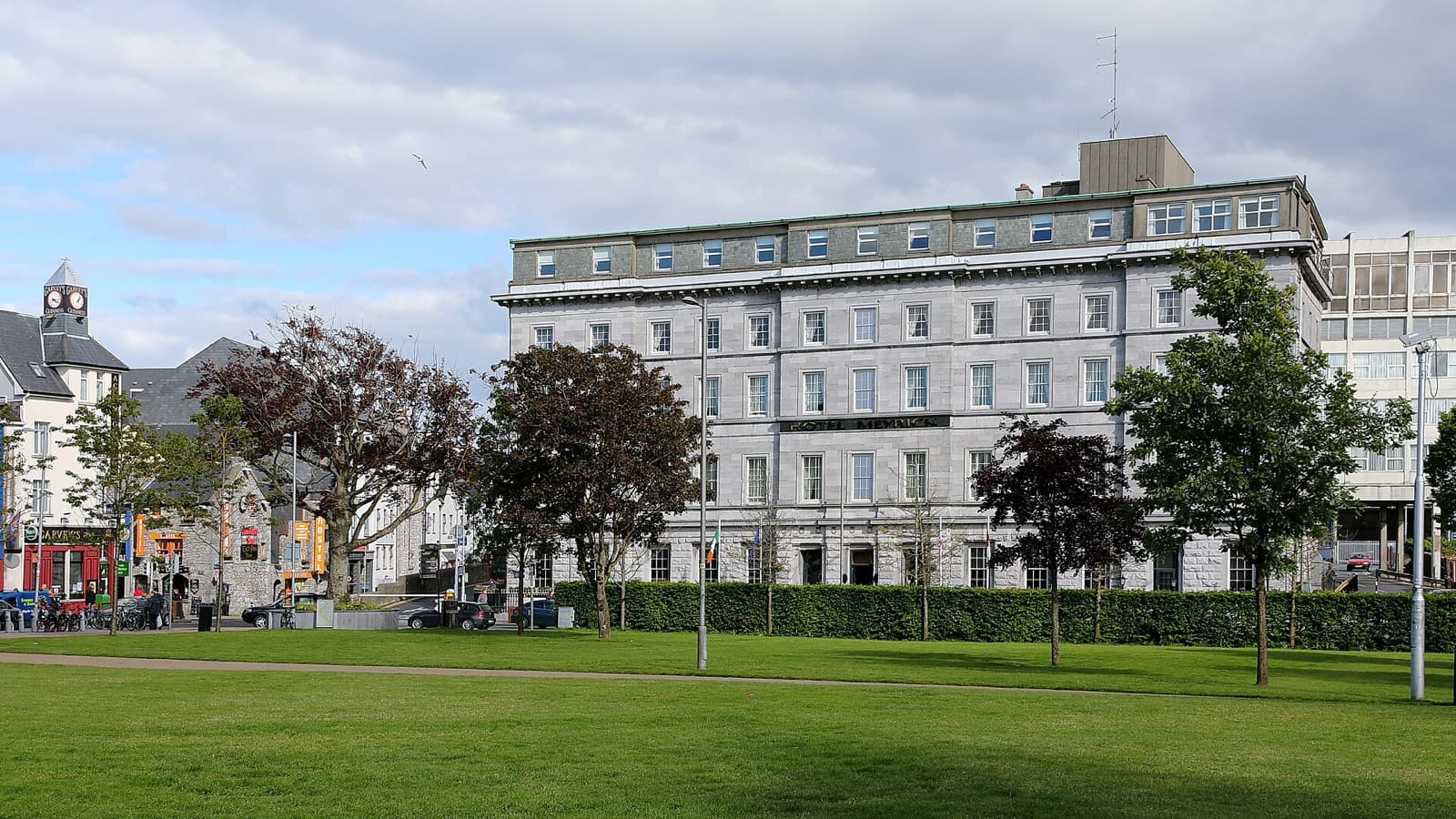
Begin at Eyre Square, the open market green at the top of the old town and an easy landmark whether you arrive by train, bus, or on foot. From here the town narrows into its medieval street pattern. Walk down toward Lynch's Castle on Shop Street, a late-medieval merchant's townhouse that now works as a bank, so you view its carved stone facade from the street rather than inside.
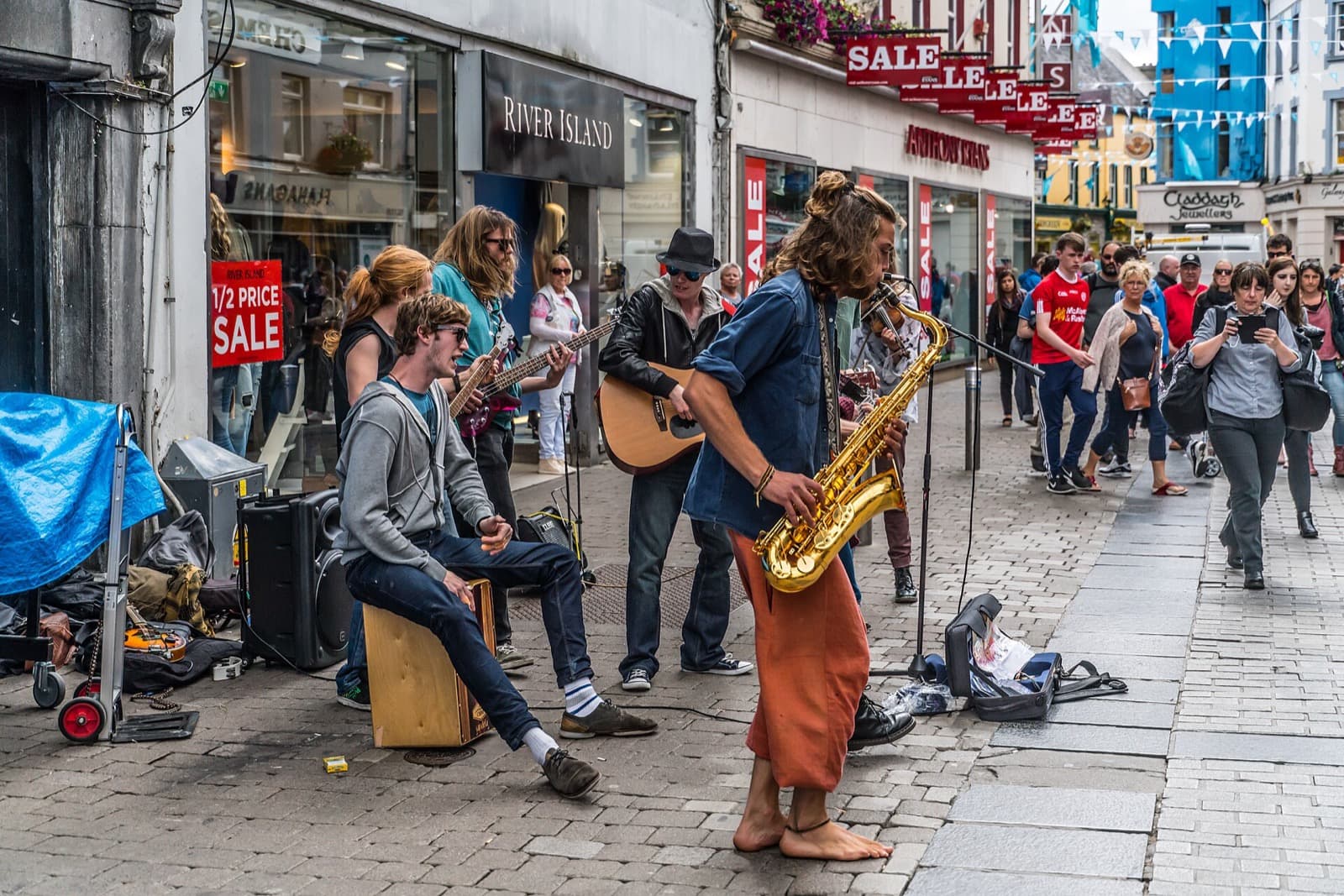
Shop Street runs into the Latin Quarter, the pedestrian heart of the old walled town, usually full of buskers by late morning. Two indoor stops sit just off it and reward good timing:
- Saint Nicholas' Collegiate Church. A working medieval church on Lombard Street, open daily with slightly different hours by day (broadly late morning to late afternoon, with last entry about 30 minutes before closing, and Wednesday opening later). It is a place of worship, so keep quiet inside. Entry has been described by visitors as a small charge or donation, so carry a little cash in euro and confirm the current policy at the door.
- The Hall of the Red Earl. An excavated medieval hall on Druid Lane, managed by the Galway Civic Trust. Admission is free with donations welcomed, and it generally opens on weekdays (about 9:30 in the morning to mid-afternoon), so plan the morning around a weekday if you want to see it. Saturday hours are shorter and seasonal.
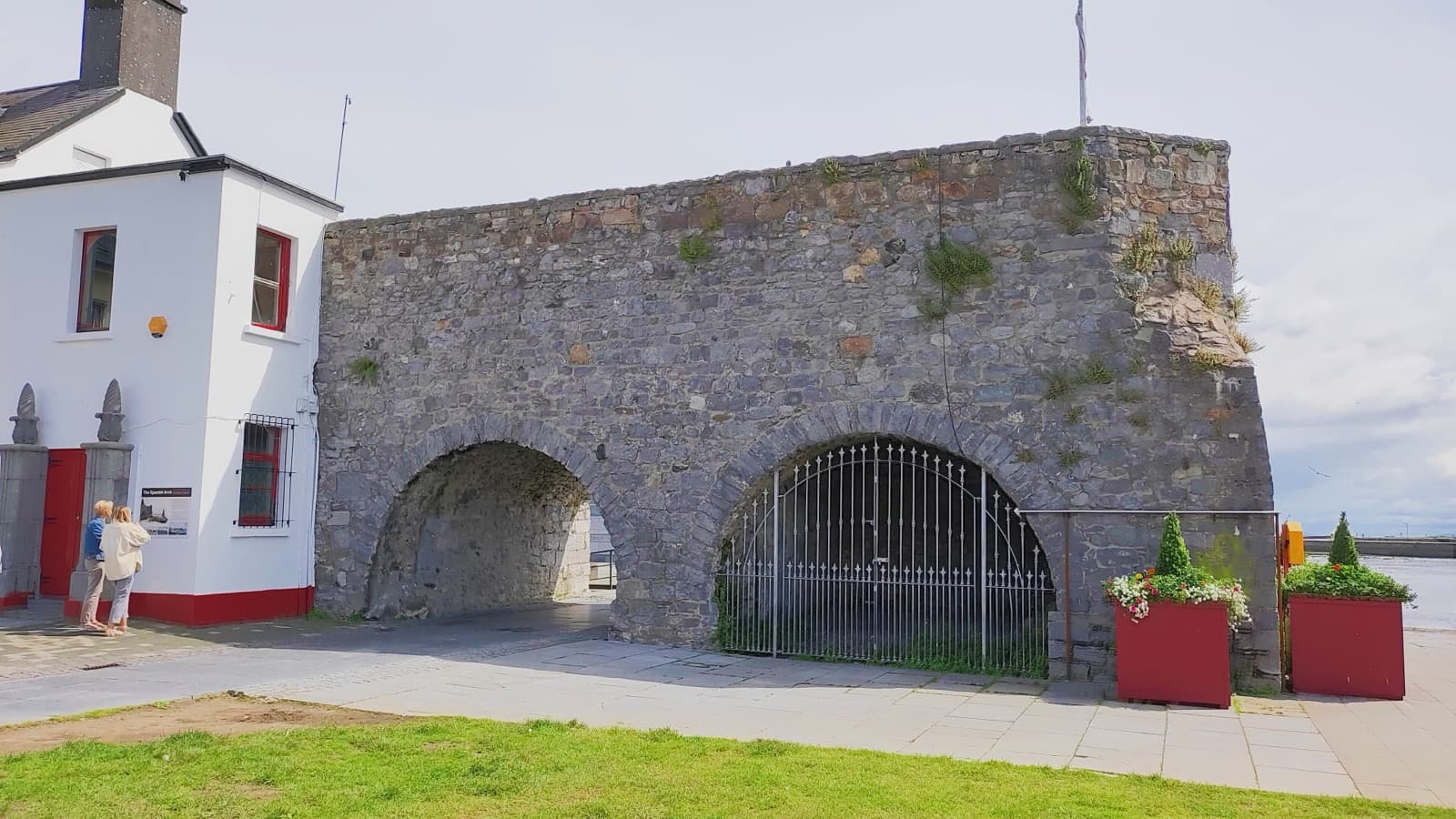
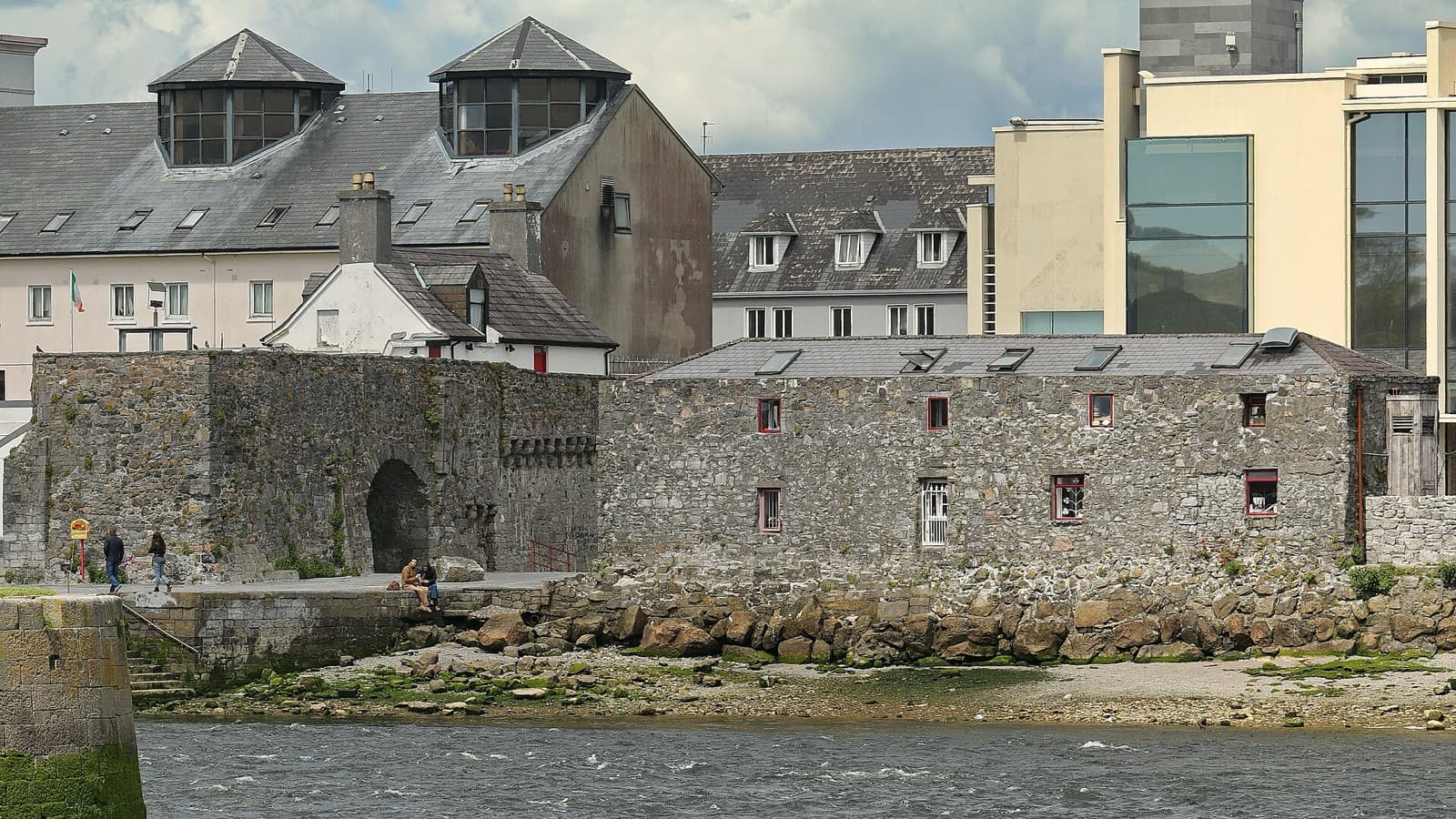
Close the morning at the Spanish Arch on the river, the surviving stretch of the old town wall where the walled merchant town met the water. If you want more background, the free Galway City Museum stands right beside it (open Tuesday to Saturday and, from spring through early autumn, Sunday afternoons; closed Mondays).
Lunch and the river crossing
The Latin Quarter and the streets around the Spanish Arch are where you eat. This is also the natural seam between the two walks. Cross the Wolfe Tone Bridge at the river mouth and you move from the merchant town to the Claddagh on the west bank, which is where the afternoon begins. Looking back across the swift Corrib to the colorful quayside houses gives you the classic Galway view.
Afternoon and evening: the Claddagh, the river, and the sea
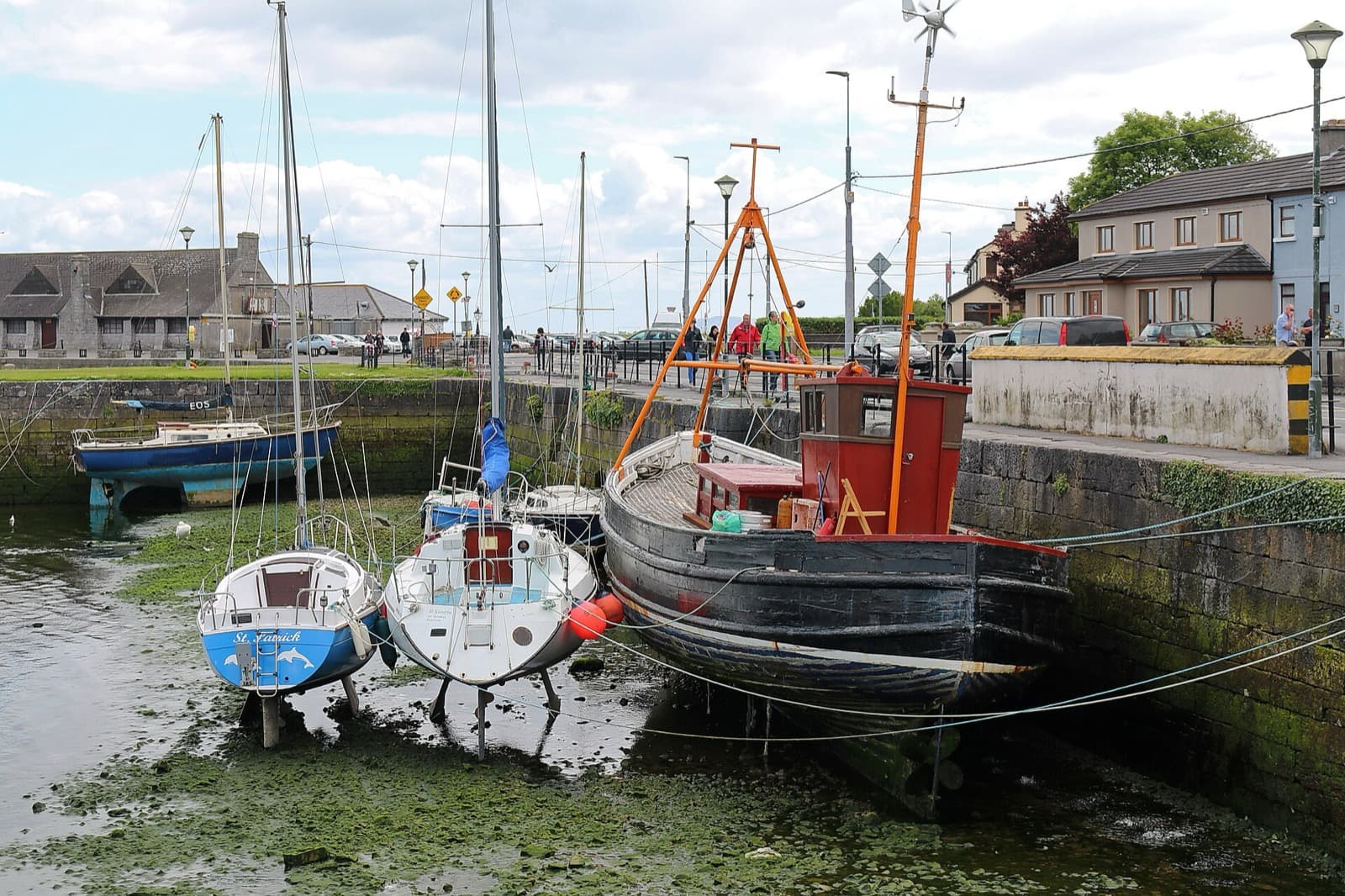
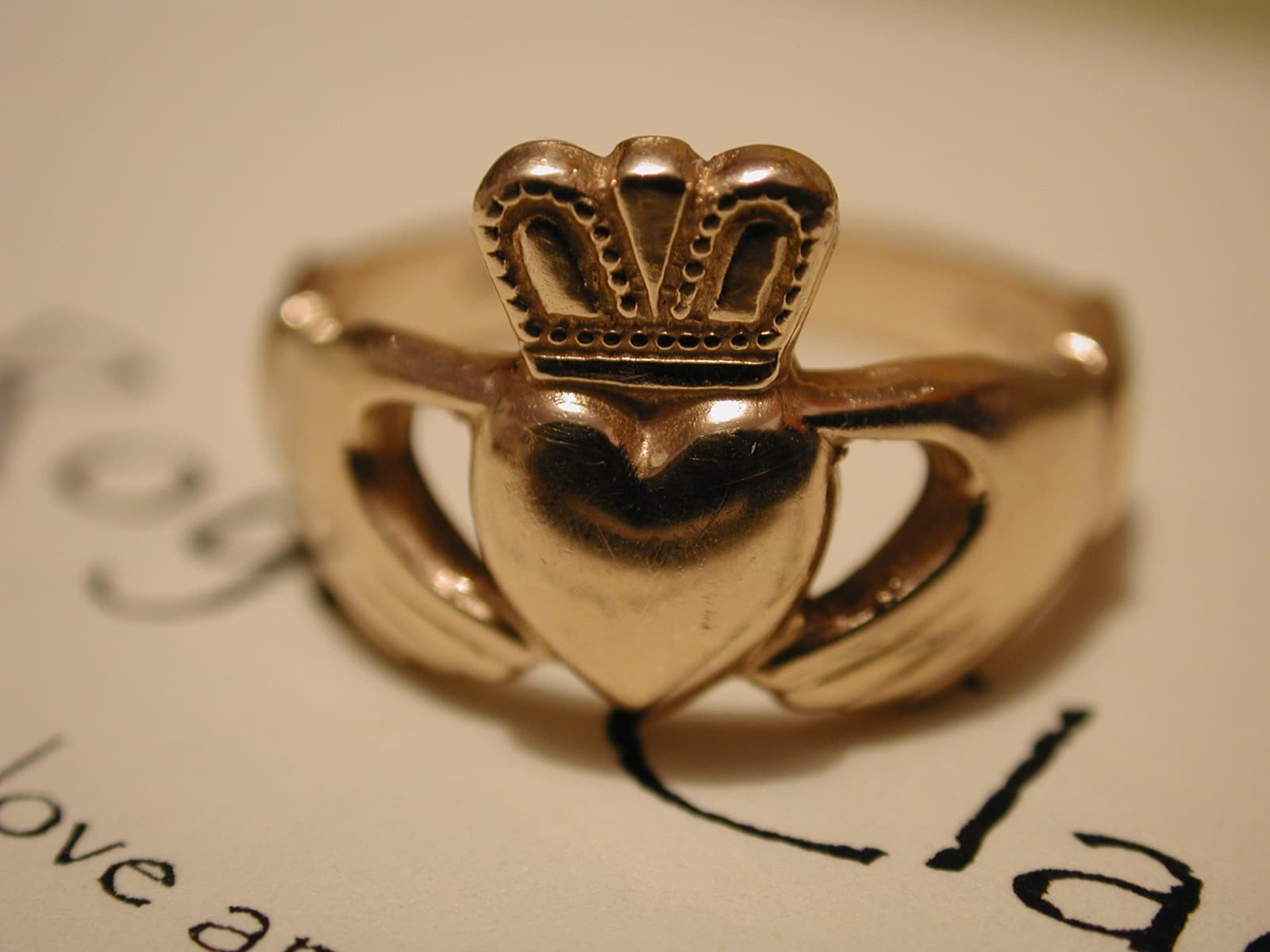
The Claddagh was an Irish-speaking fishing village outside the walls that kept its own elected local figure known as the King of the Claddagh. The Claddagh ring, the clasped-hands-and-heart design, is tied to this shore and to the goldsmith Richard Joyce, so read it here rather than treating the walk as a shopping errand.
From the Claddagh, follow the river inland. Galway Cathedral, the great domed church on the site of the old city jail, is usually open through the day (broadly early morning to evening) with no admission charge, though a donation of a few euro is requested for its upkeep. Continue to the Salmon Weir Bridge, where in late spring and early summer you can often see salmon holding in the clear water below, waiting to run up to Lough Corrib.
Then turn seaward. Nimmo's Pier gives you the best backward look at the Claddagh and the Spanish Arch from across the water. From there the route runs out along the seafront to the Salthill promenade, a flat, exposed stretch of about three kilometers one way to the Blackrock diving tower. On a clear evening the Burren hills across the bay, and sometimes the Aran Islands, come into view. Treat Salthill as the reward at the end of the day, not a race.
What to check and what to carry
- Confirm indoor hours before you rely on going inside. The Hall of the Red Earl is generally weekdays only, Saint Nicholas' varies by day, and the Galway City Museum is closed Mondays. If a full day of interiors matters to you, choose a weekday.
- Carry a little cash in euro for the cathedral donation, any church charge, and small extras. Most outdoor stops are free.
- Dress for changeable Atlantic weather. The waterfront and the Salthill promenade are open and windy, and Galway's weather turns fast, so bring a waterproof and comfortable shoes.
- Mind the water and the crowds. The Corrib runs fast at the quays, the sea wall and diving tower can be hazardous in rough conditions, and the Latin Quarter lanes are narrow and busy, so keep valuables discreet and watch your footing.
Getting there and getting around
Galway sits on the west coast. From Dublin, the direct Irish Rail train from Heuston station takes roughly two and a half hours, and coach services also run the route. Once you arrive, this whole day is on foot: the old town is tight and level, and the only real distance is the flat promenade walk out to Salthill, which you can shorten or turn back from at any point. Both self-guided tours start where you would naturally begin, so you can pick either half first depending on the light and your energy.
Sources
Frequently asked questions
- Can you see Galway in one day on foot?
- Yes. Galway's old town and waterfront are compact and level, so a single day covers Eyre Square, the Latin Quarter, the Spanish Arch, the Claddagh, Galway Cathedral, the Salmon Weir Bridge, and the Salthill promenade. The two self-guided audio walks in this guide total roughly 6 kilometers of walking, split into a morning old-town loop and an afternoon river-and-sea route.
- Is the Hall of the Red Earl free, and when is it open?
- Admission to the Hall of the Red Earl is free, with donations welcomed to support the Galway Civic Trust, which manages the site on Druid Lane. It generally opens on weekdays from about 9:30 in the morning to mid-afternoon, with shorter, seasonal Saturday hours and closed Sundays. Plan a weekday if you want to see the excavated medieval hall inside.
- Does Galway Cathedral charge admission?
- Galway Cathedral has no admission charge, but a donation of a few euro is requested from visitors to help with the upkeep of the building. It is usually open through the day, broadly from early morning to evening. As a working church, visitors are asked not to enter during Mass unless taking part.
- How do you get from Dublin to Galway?
- The direct Irish Rail train from Dublin Heuston station to Galway takes roughly two and a half hours, with several departures daily. Coach services also run the route. Once in Galway, the whole day described here is walkable, with the only longer stretch being the flat seafront promenade out to Salthill.
- What is the best time of year to walk the Galway waterfront?
- Late spring and early summer, roughly May and June, are ideal for the river-and-sea walk, when salmon often hold below the Salmon Weir Bridge and the evening light is long over Galway Bay. On a clear, calm day the Burren hills across the water, and sometimes the Aran Islands, come into view from the Salthill promenade. Mornings are quietest along the Claddagh and the Spanish Arch.
- Is the Claddagh ring connected to the actual Claddagh in Galway?
- Yes. The Claddagh ring, with its design of two hands clasping a crowned heart, takes its name from the Claddagh, the old Irish-speaking fishing village on the west bank of the Corrib in Galway. The design is associated with the goldsmith Richard Joyce, and the shore where it originates is a stop on the waterfront walk.
Ready to experience it?
Latin Quarter: The City of the Tribes
90 min · 1.7 km · easy
More from Galway
Explore more at your own pace.
Galway Travel Guide: Days, Transport, Timing, Safety, and Budget
The City of the Tribes: How Galway's Two Banks Explain the Whole Town
Lynch's Castle: Reading Galway's Merchant Power in Carved Stone
The Claddagh: Galway's Fishing Village That Kept Its Own King
The Claddagh Ring: What Two Hands and a Crowned Heart Really Mean