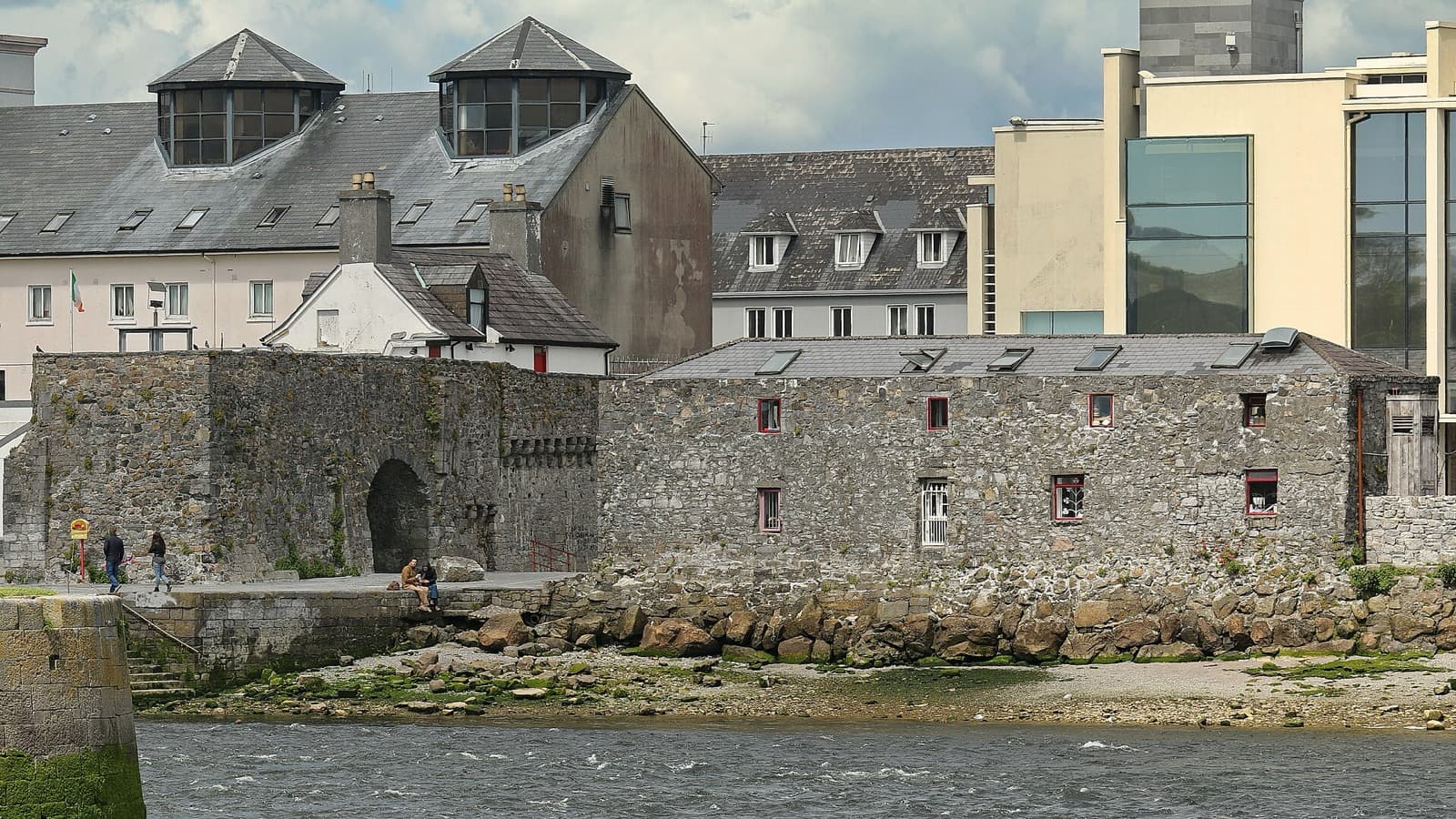
A short, dense loop through Galway's medieval walled core, reading the town like a merchant's account book from the market green at Eyre Square to the Spanish Arch and the fast river Corrib meeting the bay.
Start · Eyre Square: The Market Green of the Walled Town
DirectionsStops
- 1
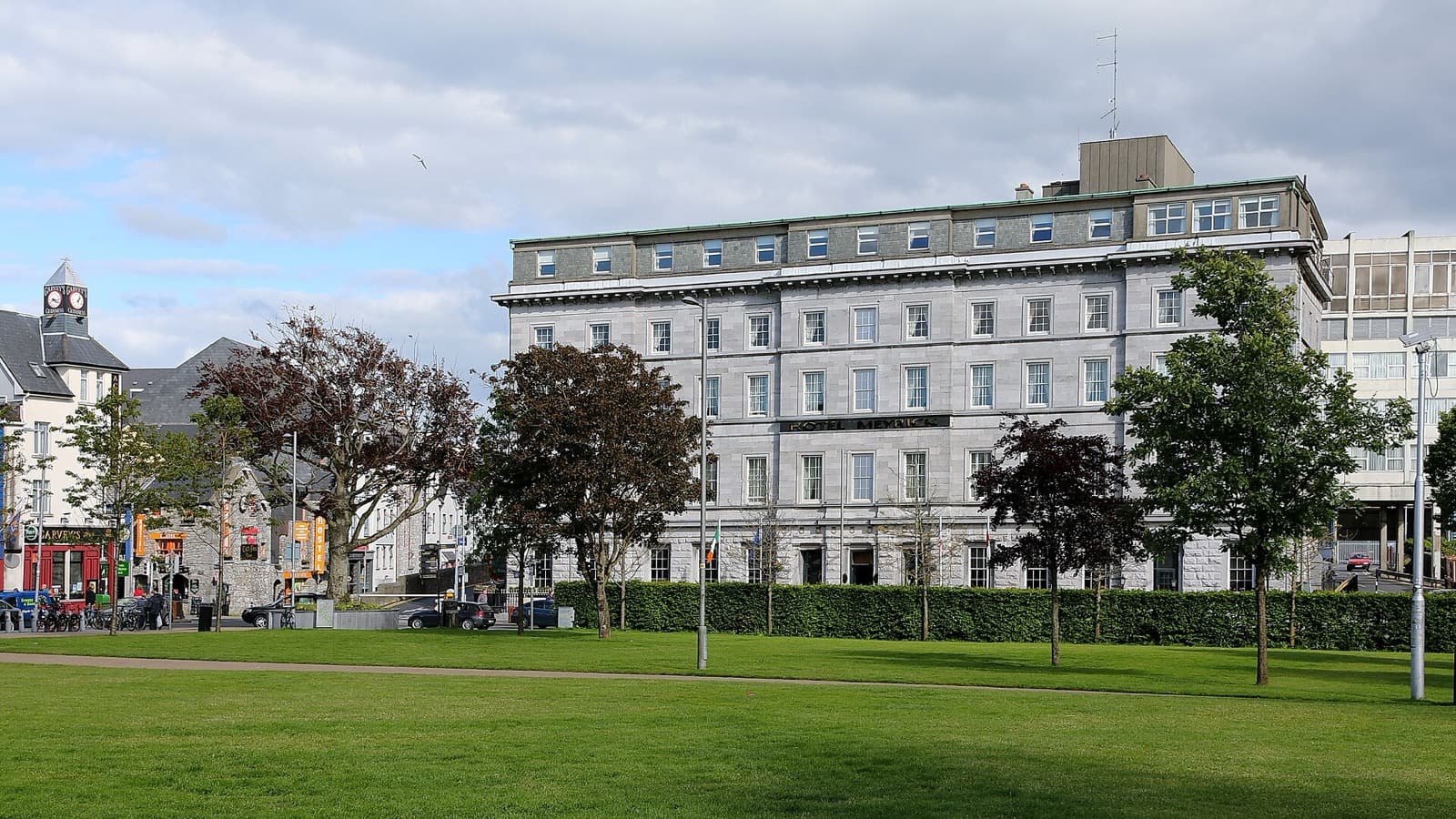
Eyre Square: The Market Green of the Walled Town
The principal public square at the head of the old town, once a medieval open green in front of the town gate where markets were held.
- 2
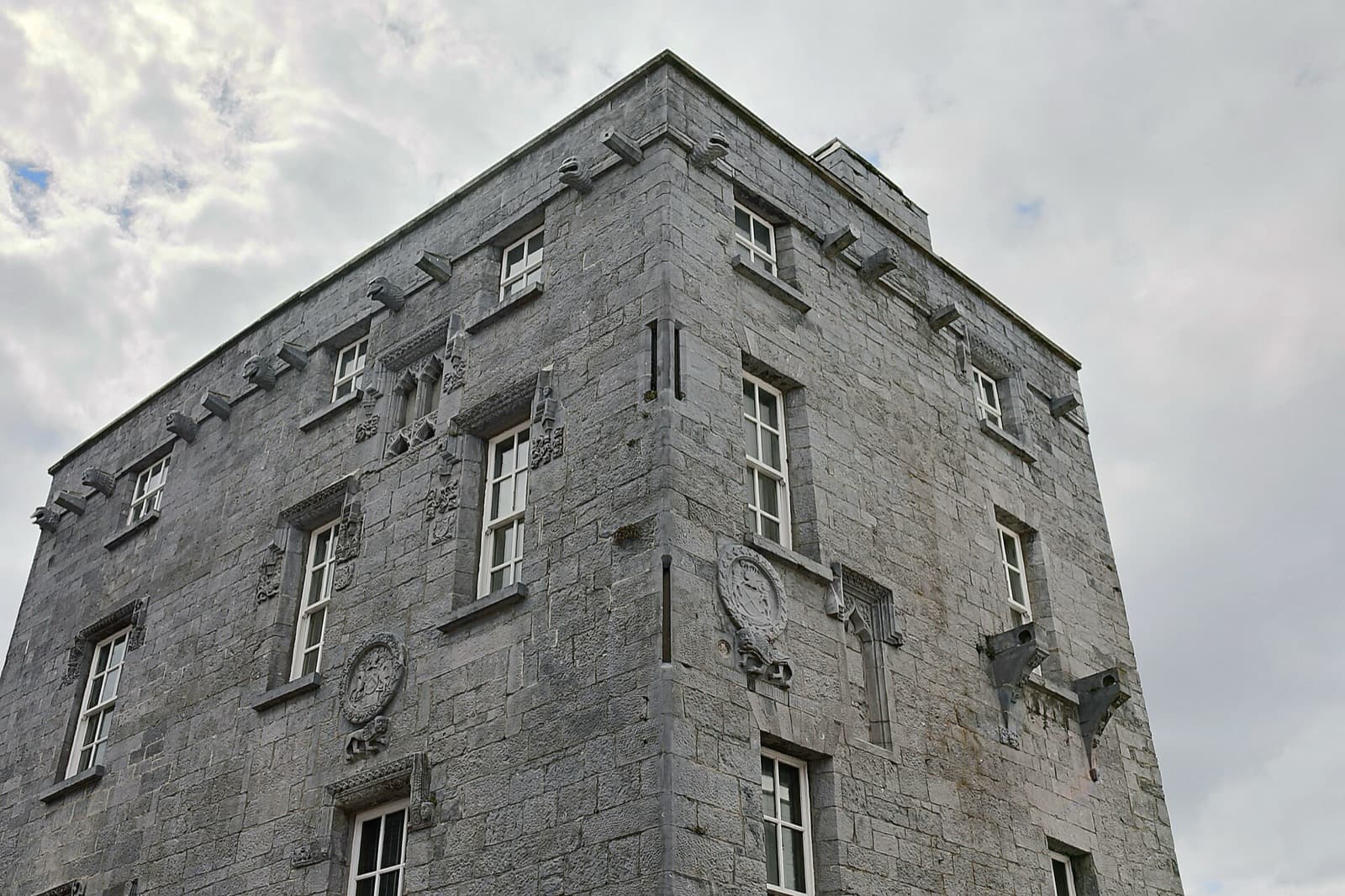
Lynch's Castle: The Carved Stone of the Mightiest Tribe
A fortified stone merchant's townhouse from about the early fifteen hundreds, its limestone facade carved with gargoyles, mouldings and family arms.
- 3
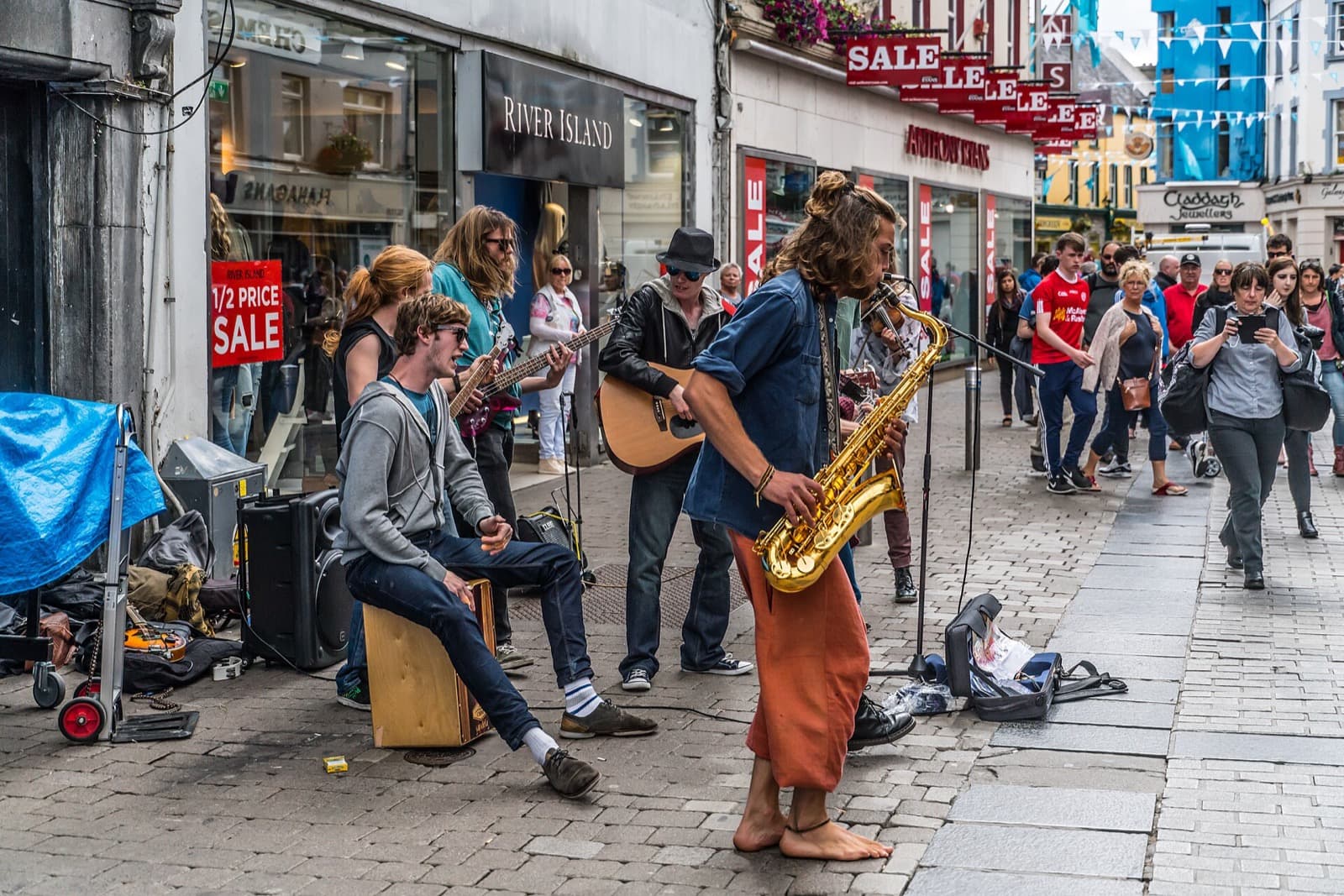
Shop Street and the Latin Quarter: The Living Medieval Spine
The pedestrian heart of Galway, a warren of narrow streets and lanes that still follows the original medieval street layout of the walled town.
- 4
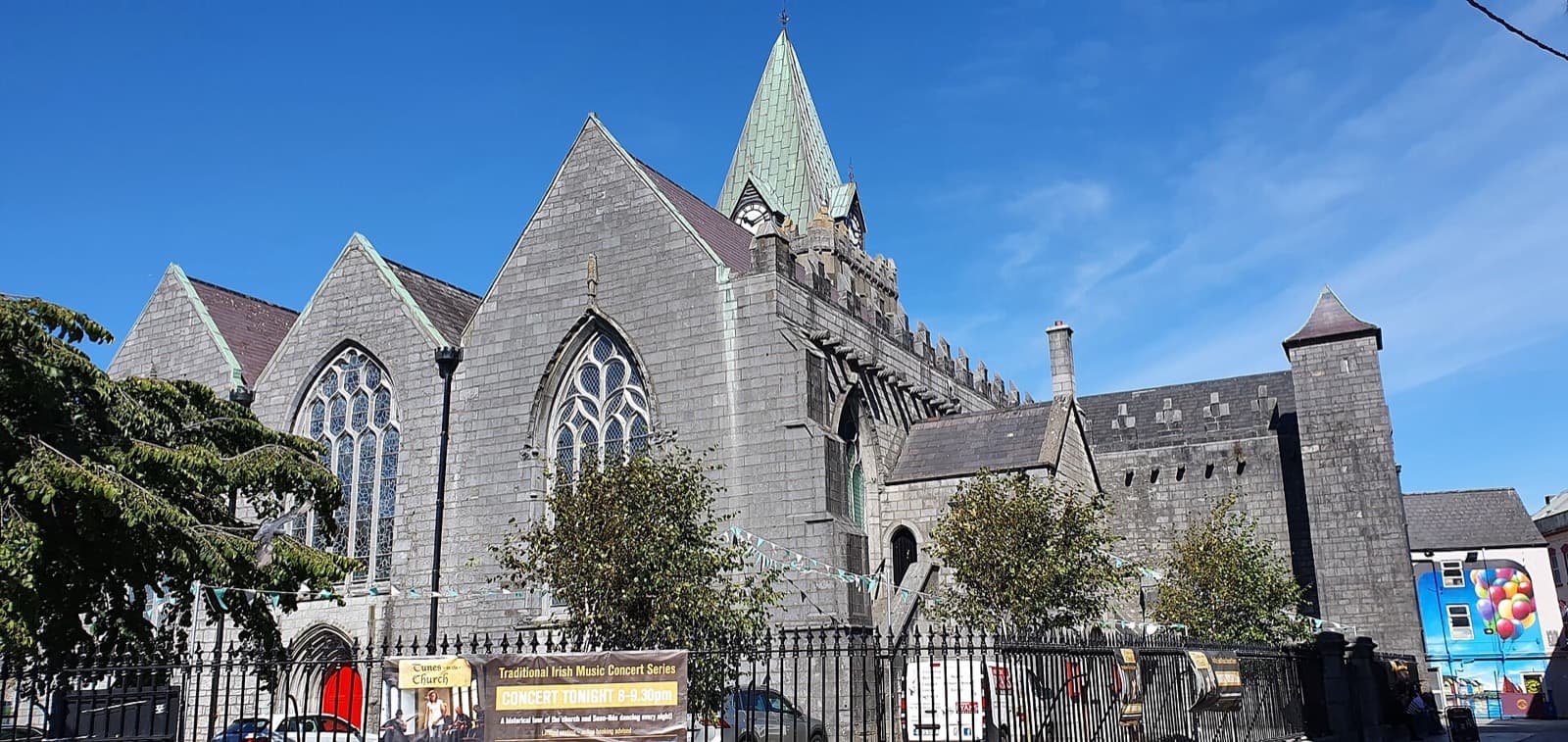
Saint Nicholas' Collegiate Church: The Sailors' Church of the Tribes
Founded about thirteen twenty and dedicated to the patron saint of sailors, described as the largest medieval parish church in Ireland still in continuous use.
- 5
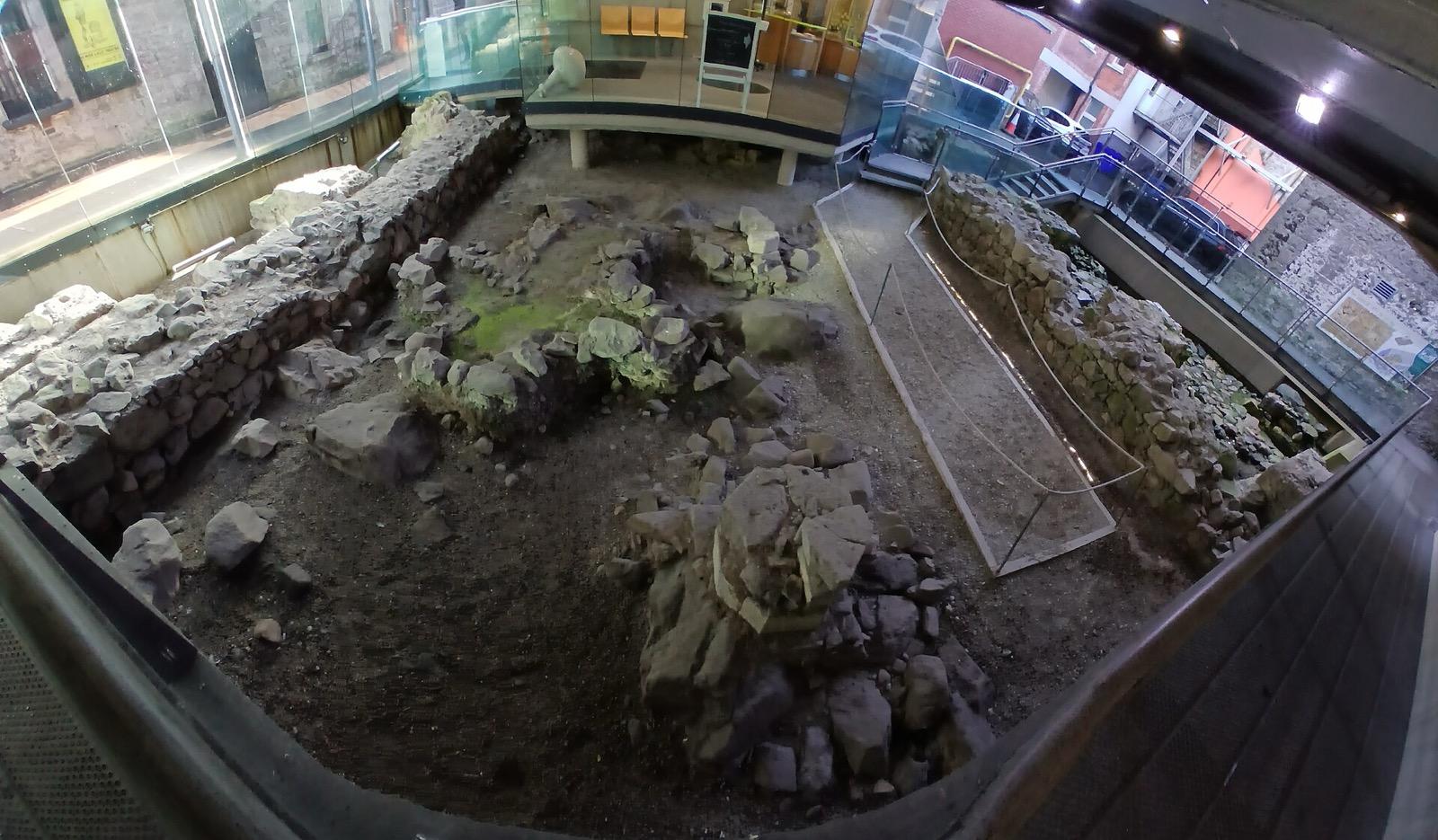
The Hall of the Red Earl: The Buried Hall of the Norman Founders
The excavated stone footings of a late thirteenth-century feasting and court hall built by the Anglo-Norman de Burgo lords who founded Galway, rediscovered in nineteen ninety-seven.
- 6
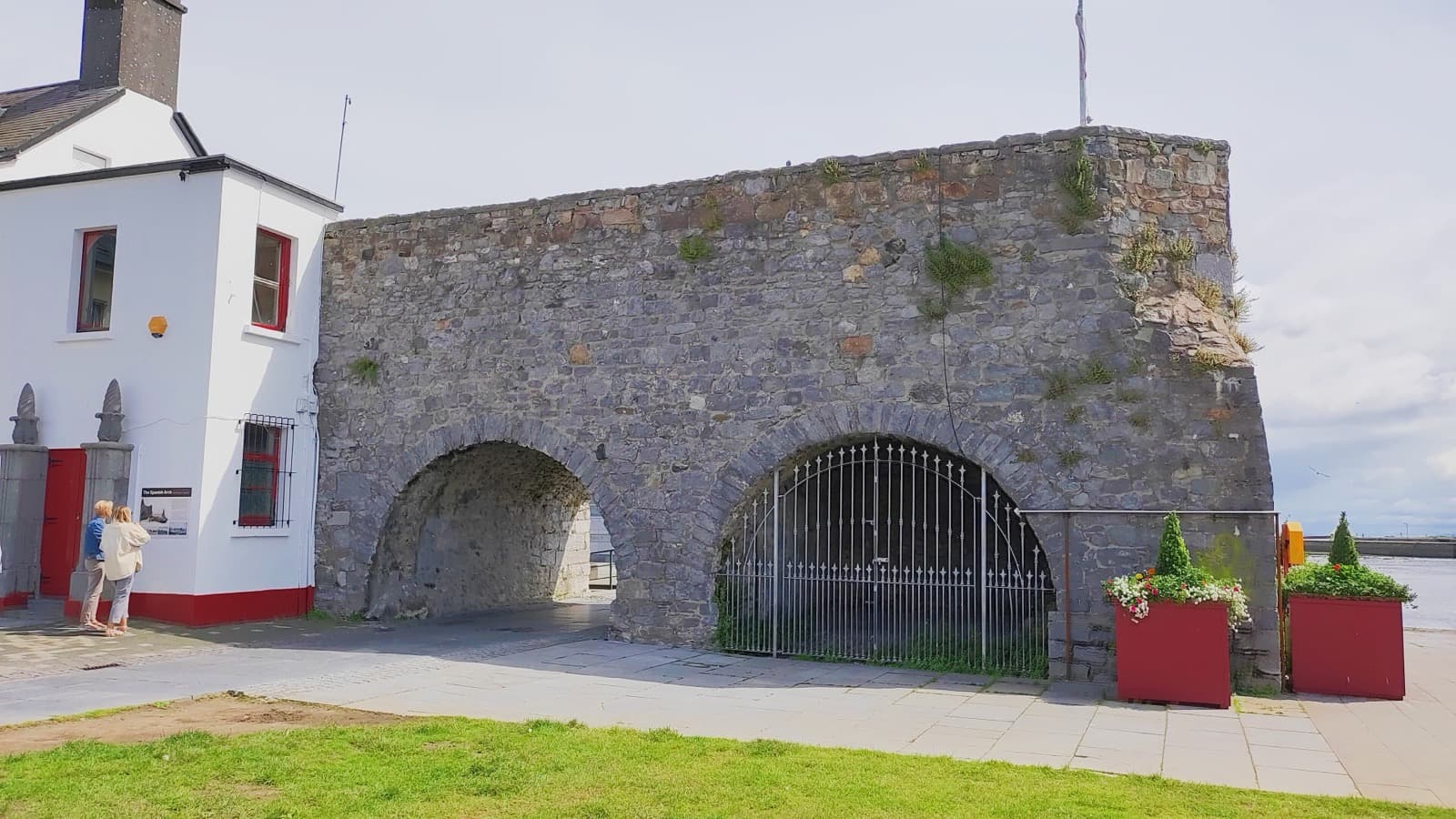
The Spanish Arch: The Wall Arch by the Water
A surviving section of Galway's medieval town wall built in fifteen eighty-four to protect ships and the quays, its familiar name a later popular tradition.
- 7
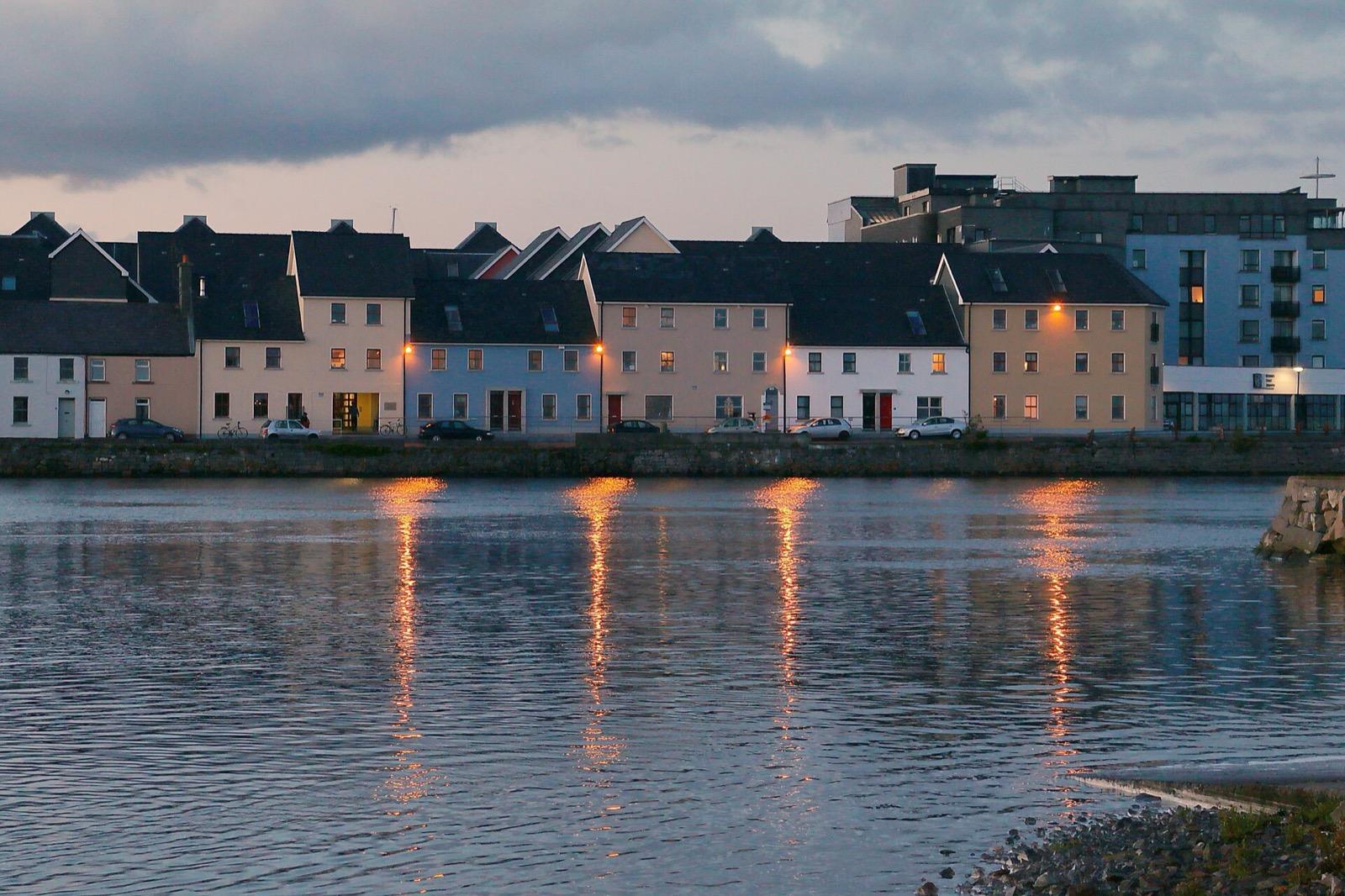
The Long Walk: Where the Fast River Meets the Bay
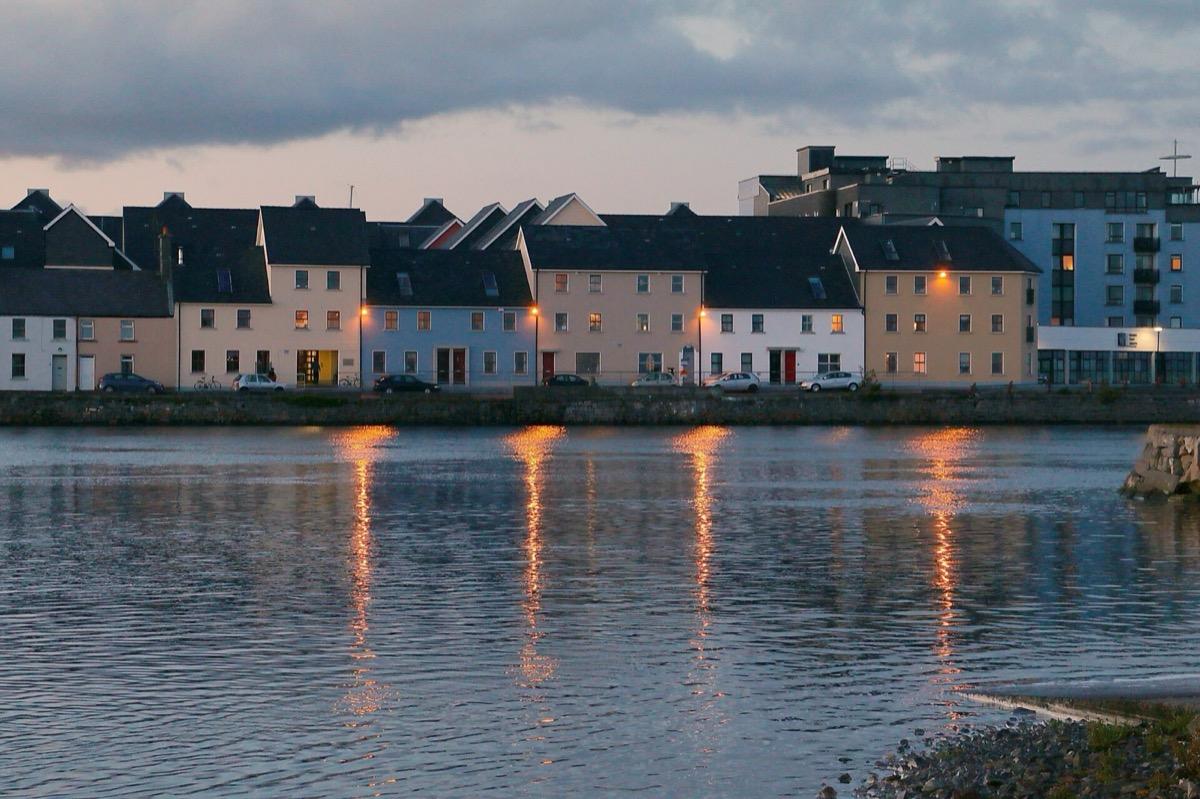
A row of tall, colourful quayside houses beside the Spanish Arch, at the mouth where the swift River Corrib rushes out toward Galway Bay.
Details
Best Time to Visit
Late morning to mid-afternoon is ideal, when Saint Nicholas' Collegiate Church and the Hall of the Red Earl are open to visitors and the Latin Quarter is full of buskers and street music. Weekday mornings are quieter for the medieval lanes and the church interiors, while the Long Walk and the Corrib mouth are loveliest in soft late-afternoon light, when the painted houses catch the sun across the fast water.
Pro Tips
- •The whole loop is compact and level on foot; give yourself extra unhurried time at Lynch's Castle and the Hall of the Red Earl, where the carved and excavated detail rewards a slow eye.
- •Check opening hours before you go: the Hall of the Red Earl generally opens weekdays only, and Saint Nicholas' welcomes visitors with a donation, so time your loop to catch the interiors.
- •The Latin Quarter is walked all day by guided groups on a fixed circuit; going at your own pace lets you follow the music into a lane or double back the moment something catches you.
- •For the classic Long Walk photograph, cross toward Nimmo's Pier and look back across the swift Corrib to the colourful quayside houses and the Claddagh.
- •The free Galway City Museum stands right beside the Spanish Arch and tells the walled town's story, an easy add-on at the end of the loop if you want more depth.
- •Carry a little cash in euro for the church donation box and any museum charges, and keep your phone charged for reading the map at your own pace between stops.
Safety & Precautions
- •The old-town lanes are narrow, cobbled in places and busy with pedestrians and buskers, so watch your footing and keep valuables discreet in the crowds of the Latin Quarter.
- •The finish along the quays and the Corrib mouth is open to Atlantic weather and wind; carry a waterproof, as Galway's weather changes fast, and take care near the fast-running river and the quay edges.
- •Keep a respectful quiet inside Saint Nicholas' Collegiate Church, which is a working place of worship, and be mindful of any services or events.
- •Some sites, the city museum and church donations aside, may charge entry in euro, and opening hours are limited on weekends and evenings, so confirm before relying on going inside.
Travel advisory: Exercise Normal Precautions (Level 1).
Gallery
Related Reading
Go deeper on what you'll see, hear, and walk through.
Overview
Best Self-Guided Walking Tours in Galway (2026)
3 min
Overview
Galway Travel Guide: Days, Transport, Timing, Safety, and Budget
7 min
Overview
One Day in Galway: A Walkable Itinerary From the Latin Quarter to the Sea
6 min
Thematic
The City of the Tribes: How Galway's Two Banks Explain the Whole Town
8 min
Companion
Lynch's Castle: Reading Galway's Merchant Power in Carved Stone
6 min
Deep dive
The Spanish Arch in Galway: What the Name Gets Wrong, and What It Gets Right
6 min
Read
What to Eat in Galway: Oysters, Chowder, and How to Order Like a Local
6 min
Read the walk
The full story of Latin Quarter: The City of the Tribes, in words. Prefer to listen? Play it narrated, from home or on location.
Introduction
Galway, in the west of Ireland, is a walled merchant town read best on foot, and this loop covers its compact medieval core in seven stops over about one and a half kilometres, taking roughly ninety minutes at your own unhurried pace. The nickname the city carries, the City of the Tribes, points to fourteen merchant families who ran this place for centuries, twelve of Anglo-Norman origin and two of Normanised Gaelic Irish stock. They grew rich facing the Atlantic and trading with Spain, and they kept the native Irish of the surrounding country deliberately at arm's length, a bye-law even recording that neither O nor Mac should strut or swagger through the streets without leave. Prosperity and exclusion here are the same story. The route begins at Eyre Square, the old market green in front of the town gate, then follows the pedestrian spine down through the Latin Quarter, the living medieval main street the locals call the heart of Gaillimh, the Irish name of Galway. It passes the finest surviving medieval townhouse in Ireland, the great sailors' church where legend sends Columbus to pray, and the buried Norman hall of the earls who founded the town, before reaching the Spanish Arch and the Long Walk where the swift Corrib rushes to Galway Bay. This is a heavily guided quarter, walked all day by groups, so the benefit is yours: no schedule, no lanyard, no tip pressure, and all the time you want under a carved doorway or beside the running water. When you arrive at Eyre Square, begin with stop one.
1. Eyre Square: The Market Green of the Walled Town
This is Eyre Square, officially John F. Kennedy Memorial Park, and it is where the walled town met the country at its back. Before it carried any of its formal names it was simply the green, a medieval open space in front of the town gate, where markets were held and where the surrounding Gaelic country came in to trade. It was formally presented to the town in seventeen ten by Mayor Edward Eyre, whose name it still carries. Two things here tell the story plainly. Near the top of the square stands the Browne Doorway, a carved stone doorway dated sixteen twenty-seven, taken from the town mansion of the Browne family, one of the fourteen tribes, and moved here in nineteen oh five. It is a merchant family's front door, lifted out of the medieval streets and set up as a monument. Nearby rises the Quincentennial Fountain, put up in nineteen eighty-four to mark five hundred years since Galway was incorporated as a borough with mayoral status in fourteen eighty-four. Its rust-brown semi-abstract shapes are meant as the sails of the Galway hooker, the traditional brown-sailed boat of this coast. This square also holds a modern memory. On the twenty-ninth of June nineteen sixty-three, President John F. Kennedy addressed a crowd here, the first serving American president to visit Galway; he was killed that same November, and in nineteen sixty-five the square was renamed in his memory. Take your time. This is the open gate of the tour, the market green where a closed merchant town let the world in on its own terms.
2. Lynch's Castle: The Carved Stone of the Mightiest Tribe
On the corner of Shop Street and Abbeygate Street Upper stands Lynch's Castle, and it is not a castle in the military sense but a fortified stone merchant's townhouse, dated to about the early fifteen hundreds. It is commonly described as one of the best-preserved medieval townhouses in Ireland, and the record at Buildings of Ireland notes the rare profusion of carved ornament around its windows. This was the house of the Lynch family, the most powerful and the most numerous of the fourteen tribes, who supplied a very large number of Galway's mayors across the centuries. Read the front of it slowly. The limestone rises four storeys, worked with gargoyles, ornamental mouldings, cornices and carved windows, and set with coats of arms. Among them you can find the arms of the Lynch family themselves, the arms of King Henry the Seventh of England, and the arms of the Fitzgeralds of Kildare. That is a merchant family carving its loyalties and its connections straight into the wall of its home, a public statement in stone about who they were tied to and who they served. Since nineteen thirty-three the site has belonged to Allied Irish Bank, which acquired and restored it, and it has housed a bank for about a century. So a working bank sits inside late-medieval Galway stone, which is oddly fitting for the house of a family that made its name in trade and money. This is the carved account book of the mightiest tribe. Linger under it. The detail rewards a slow eye, and there is no group here rushing you along.
3. Shop Street and the Latin Quarter: The Living Medieval Spine
You are now on the living spine of the old town. Shop Street and the streets running down toward the river form the pedestrian heart of Galway, the district widely called the Latin Quarter. It runs from around Shop Street and High Street down through Cross Street, Quay Street and old lanes like Kirwan's Lane toward the Spanish Arch and the water. What matters here is under your feet and in the shape of the streets. This district grew up inside the medieval walled town founded by the Anglo-Normans in the thirteenth century, and many of the narrow streets, the laneways and the historic stone premises still follow the original medieval street layout. The pattern of the walking is the artifact. This is Gaillimh, the Irish name of Galway, and this is its main street, worn smooth by centuries of feet. Today it is a lively warren of buskers, street performers, traditional-music sessions drifting out of doorways, old shopfronts and worn stone thresholds. It is also one of the most heavily guided stretches in the city, walked all day by lanyard groups on a fixed circuit and a fixed clock. That is exactly why your own quiet map is the better way through. You can stop in a lane the moment something catches you, follow the music to its source, double back, or simply stand still and let the street move around you. No one is counting heads or moving you on. Let the medieval geometry, not a schedule, decide where you pause.
4. Saint Nicholas' Collegiate Church: The Sailors' Church of the Tribes
This is the Collegiate Church of Saint Nicholas, founded about thirteen twenty and much enlarged over the centuries by the tribes. It is described as the largest medieval parish church in Ireland still in continuous use as a place of worship, and standing inside it you feel the…
Full narration for this stop unlocks with the tour.
5. The Hall of the Red Earl: The Buried Hall of the Norman Founders
Down Druid Lane, off Quay Street, lies the deepest layer of this whole tour: the Hall of the Red Earl, the excavated stone footings of a medieval hall now preserved and open beneath a modern building. It was built in the late twelve hundreds by Richard de Burgo, the Red Earl,…
Full narration for this stop unlocks with the tour.
6. The Spanish Arch: The Wall Arch by the Water
Here at the waterfront stands the Spanish Arch, a surviving section of Galway's medieval town wall. It was built in fifteen eighty-four during the mayoralty of Wylliam Martin, of the Martin tribe, as an extension of the city wall from Martin's Tower to the bank of the River…
Full narration for this stop unlocks with the tour.
7. The Long Walk: Where the Fast River Meets the Bay
The tour ends on the Long Walk, the row of tall, colourful quayside houses running along the River Corrib beside the Spanish Arch, at the mouth where the river rushes out toward Galway Bay. This is one of the most photographed scenes in the whole city, and the classic view is…
Full narration for this stop unlocks with the tour.