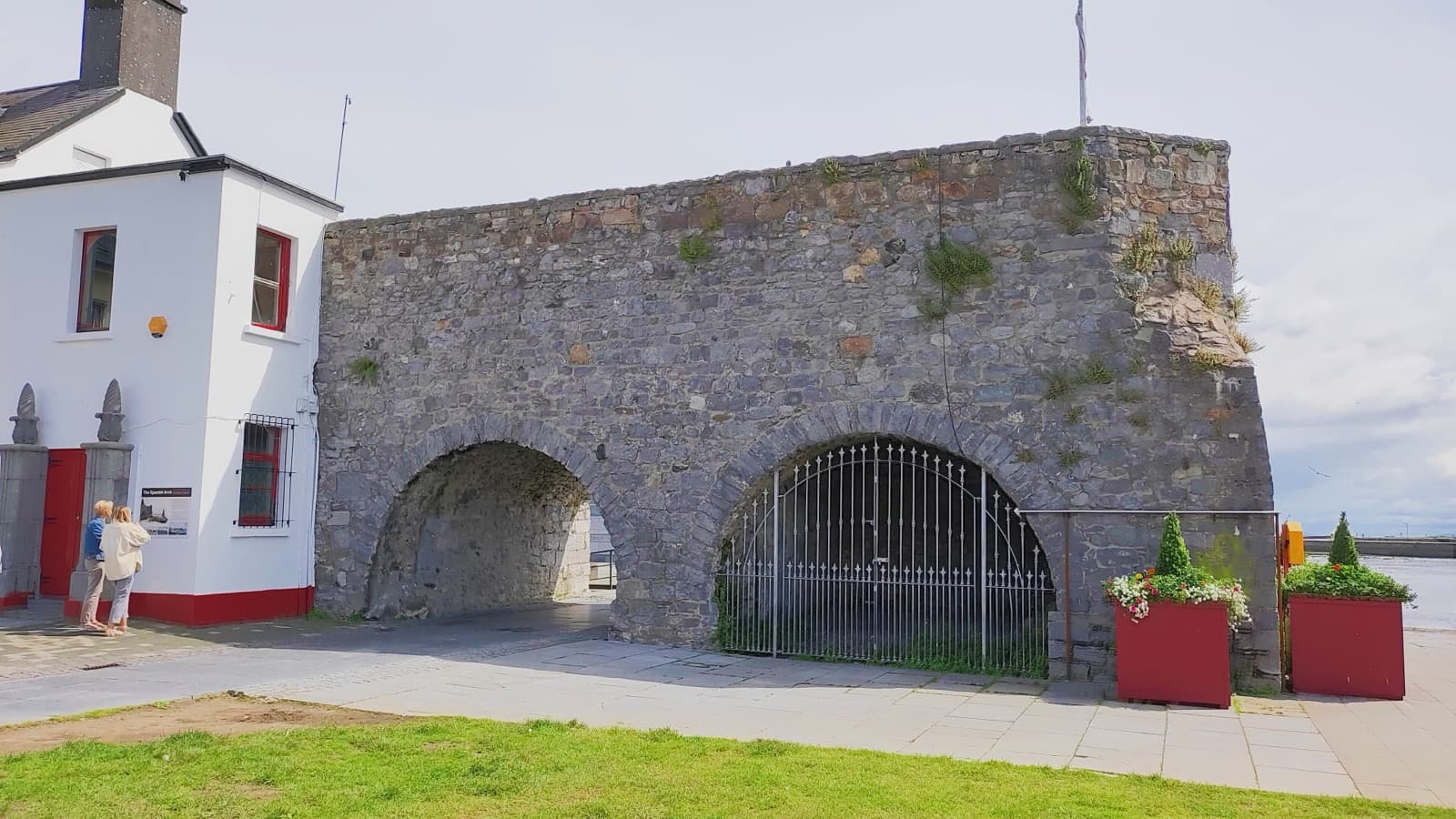
The Spanish Arch is a surviving section of Galway's medieval town wall, built in 1584 during the mayoralty of Wylliam Martin to guard the ships, quays and fish market. There is no evidence it was built by or for Spaniards. Its name is a later folk tradition, remembering Galway's real trade with Spain.
The Spanish Arch is a surviving section of Galway's medieval town wall, built in 1584 to guard the ships, quays and fish market where the walled merchant town met the sea. That is the fact worth carrying to the waterfront, because the name most people arrive with points somewhere else. There is no evidence the arch was built by Spaniards, for Spaniards, or under any Spanish authority. It was raised by Galway's own governing tribes as a piece of civic defence, and the label "Spanish Arch" is a later popular tradition of uncertain origin. Standing in front of the stone, the interesting question is not why the name is wrong, but why a wrong name stuck so hard, and what real history it is quietly remembering.
A section of wall, not a triumphal gate
Start with what the structure actually is. The Spanish Arch is one of two remaining arches at a spot the Irish called Ceann an Bhalla, which means simply the head of the wall. It was constructed in 1584 during the mayoralty of Wylliam Martin, of the Martin family, one of the fourteen merchant tribes who ran Galway for centuries. The build extended the existing city wall from Martin's Tower down to the bank of the River Corrib. Its job was practical and unromantic: shelter the ships, protect the quays, and shield the fish market that fed the town's trade.
That origin matters because it reframes the monument. A visitor primed by the name half-expects a ceremonial gateway, something Spanish galleons might have sailed toward. What survives is a defensive spur of the medieval fortifications, the tail end of a wall that once wrapped a tightly controlled trading town. Galway in this period was a closed merchant enterprise, twelve Anglo-Norman families and two of Normanised Gaelic Irish stock, who grew rich facing the Atlantic and kept the native Irish of the surrounding country deliberately at arm's length. The arch is a fragment of the physical boundary that made that exclusion real. It is the edge of the account book, the point where the town's wealth touched the open water.
Where the name really came from
Hear a stop from this walk
Saint Nicholas' Collegiate Church: The Sailors' Church of the Tribes
If the structure was never officially Spanish, what was it called? The best evidence points to a different family entirely. The arches were probably once known as the Eyre Arch, after the Eyre family, who extended the quays and the Long Walk in the eighteenth century. That naming makes sense: the people who developed the docks around a structure tend to lend it their name. The 1584 designation itself was tied straightforwardly to the wall and the quay, not to any nation.
So the "Spanish" label is younger than the stone and younger than the more likely Eyre name. It is folk tradition layered on later, the kind of nickname a town settles into and then forgets it invented. This is worth holding honestly. The name is cherished, and it is not proven history. Both things are true at once, and pulling them apart is the whole reward of paying attention here.
The real thing the name remembers
Here is where the wrong name turns out to preserve something right. Galway carried on a genuine, long and prosperous trade with Spain. Spanish ships and Spanish wine really did come to these quays. The town's fortunes were built partly on sending vessels south toward the Iberian coast and welcoming them back laden. The Galway City Museum, which stands right beside the arch, records that Spanish trade as a documented part of the port's commercial life.
So the popular name is not pure fantasy. It is a folk memory of a real economic relationship, misfiled onto a defensive wall rather than onto the harbour trade it actually describes. The arch became a convenient monument for a maritime connection the whole town lived by. That is often how popular names work: they attach a large, half-remembered truth to the nearest solid object. The lesson standing here is to keep the two layers separate. The Spanish trade is history. The Spanish name is tradition. Respect both, confuse neither.
A distant catastrophe, felt on the quay
The arch carries one more scar that surprises most visitors. In 1755 the arches were partly damaged by the tsunami that followed the Lisbon earthquake. The quake that levelled the Portuguese capital sent waves across the Atlantic, and their reach was felt on this Galway waterfront, chipping stone that had already stood for nearly two centuries. It is a small, sober reminder that a walled town on the edge of the ocean was never sealed off from the wider world's disasters, however tightly its tribes controlled who walked through its gates. The wall built to guard against ships and weather took a blow from a catastrophe a thousand miles south.
Standing at the head of the wall
The single thing to understand in front of the Spanish Arch is that you are looking at the surviving lip of a medieval trading town's defences, not a monument to Spain. The 1584 wall, the head of the wall at Ceann an Bhalla, the Martin mayoralty, the Eyre quays, the Spanish wine, the Lisbon wave: these are the layers stacked into one modest span of stone. The name is the least reliable thing about it and, paradoxically, the doorway into everything true.
The arch sits at the finish of a compact loop through Galway's old core, where the swift River Corrib rushes past toward Galway Bay and the painted houses of the Long Walk line the quay. To read it in sequence, from the market green at Eyre Square through the medieval spine of the Latin Quarter down to this wall by the water, walk the "Latin Quarter: The City of the Tribes" self-guided audio tour at your own pace, with no group, no schedule and all the time you want under the old stone. Browse more Galway walking tours, or explore what else there is to see in Galway before you set out.
Sources
- Spanish Arch, Wikipedia. Overview of the 1584 construction, the Ceann an Bhalla site, and the popular-name tradition.
- Spanish Arch, Visit Galway (official tourism board). Confirms the town-wall origin and the Spanish-trade association recorded at the adjacent museum.
- Galway City Museum. Records Galway's documented trade with Spain, the real relationship the arch's name preserves.
- Roamer tour transcript, "Latin Quarter: The City of the Tribes." Fact-audited narration for the Spanish Arch stop, including the Wylliam Martin mayoralty and the 1755 Lisbon tsunami damage.
Ready to experience it?
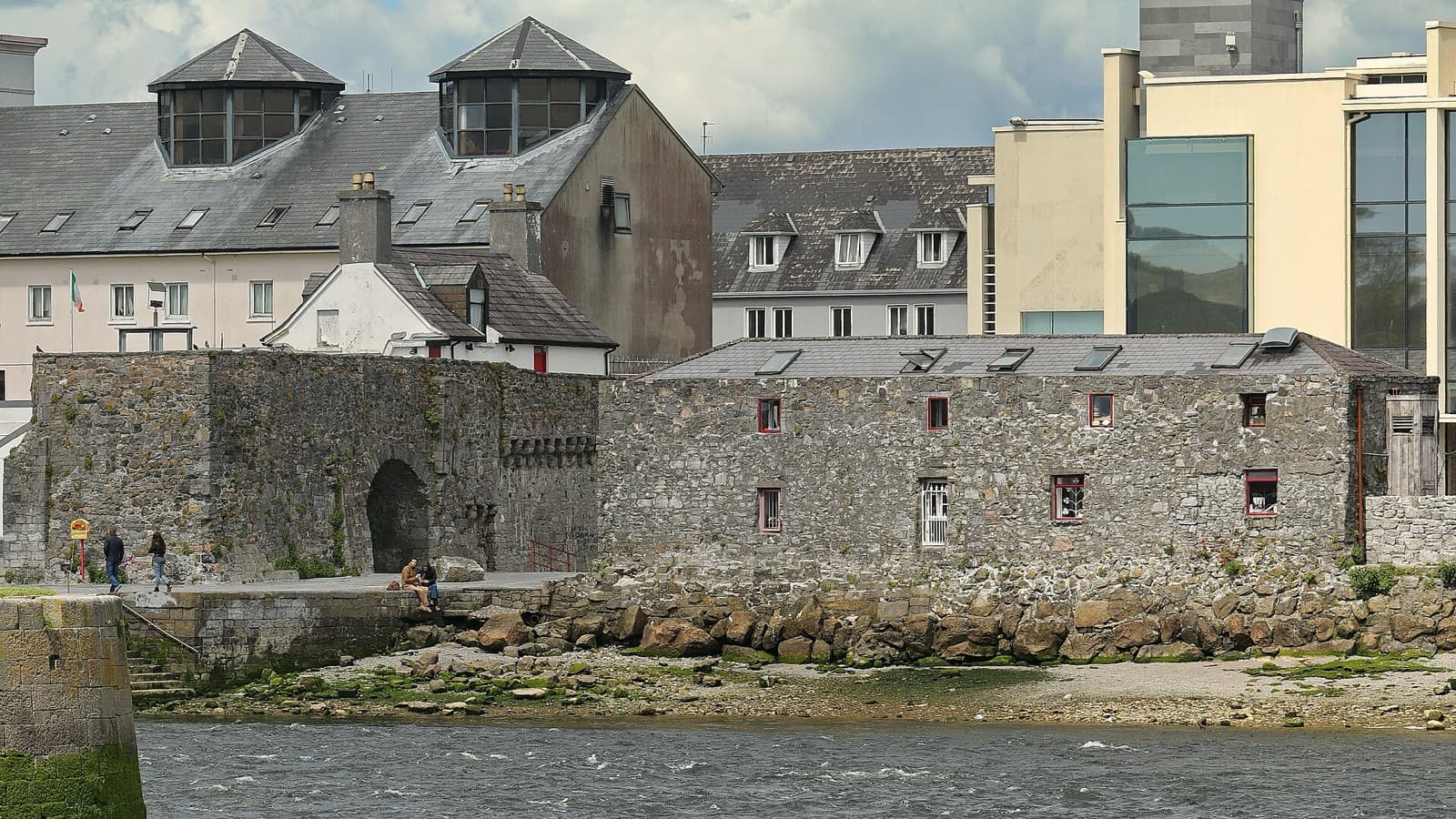
Latin Quarter: The City of the Tribes
90 min · 1.7 km · easy
More from Galway
Explore more at your own pace.
Galway Travel Guide: Days, Transport, Timing, Safety, and Budget
One Day in Galway: A Walkable Itinerary From the Latin Quarter to the Sea
The City of the Tribes: How Galway's Two Banks Explain the Whole Town
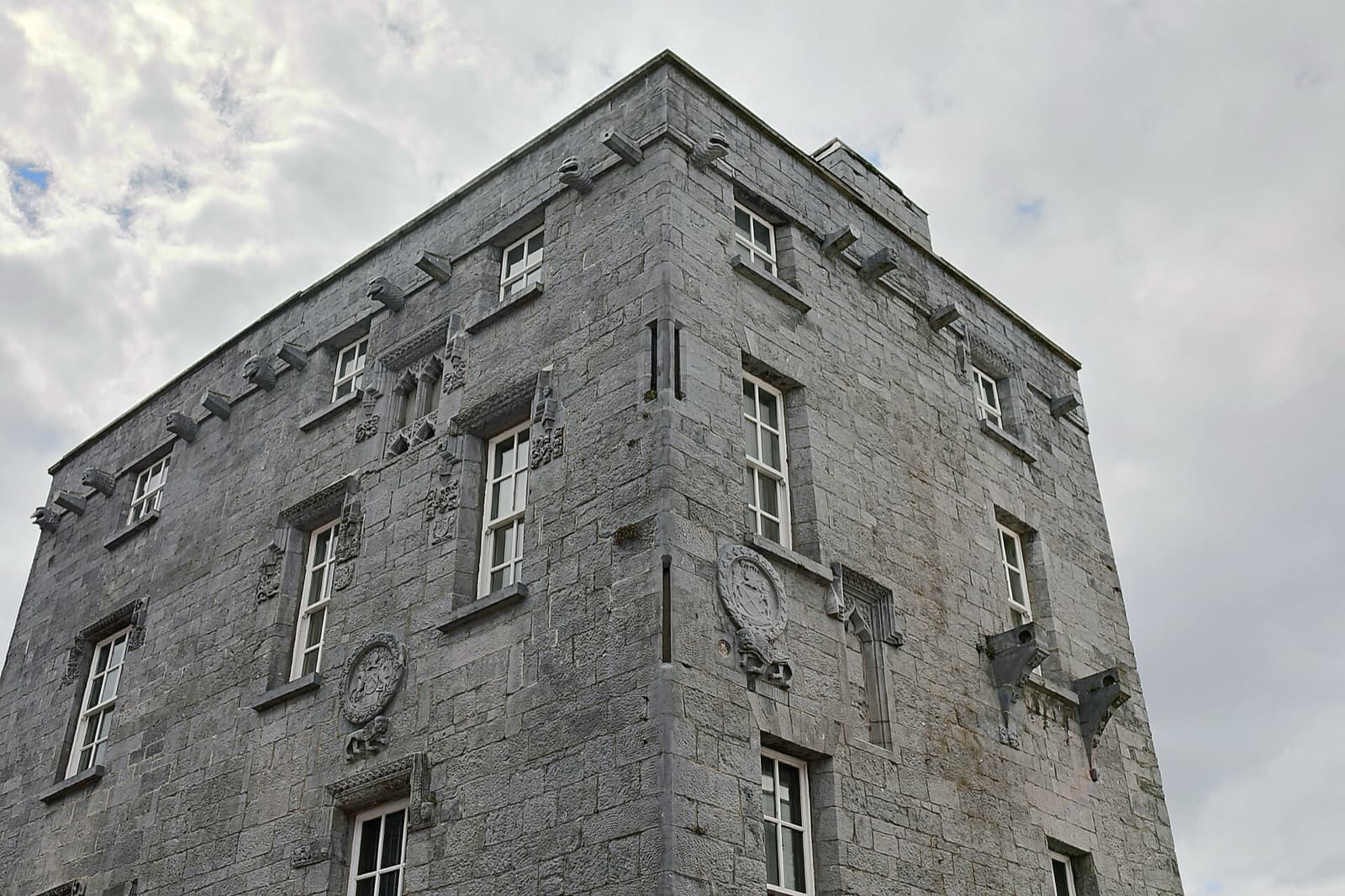
Lynch's Castle: Reading Galway's Merchant Power in Carved Stone
The Claddagh: Galway's Fishing Village That Kept Its Own King