Stand on the stony west bank where the River Corrib pours into Galway Bay, and you are standing on the ground of a fishing village that elected its own king. This was the Claddagh, an Irish-speaking community of thatched cottages that sat outside Galway's medieval merchant walls, kept its own customs, and governed itself under a leader chosen periodically from among its own people. The village is gone now, cleared in living memory, but its name is under your feet and its most famous object travels the world on people's hands. Begin here, and the whole shape of a waterside walk opens: from a vanished village along the fast river and the working pier out to the sea wall where Galway meets the Atlantic.
A village that governed itself
The Irish called this shore An Cladach, meaning the stony shore, and for centuries it held one of Ireland's oldest fishing communities. What makes it remarkable is not that fishermen lived here, but that they ruled themselves. The Claddagh chose one of its own to lead the fleet out, settle disputes, and set the rules of the water. That leader is popularly remembered as the King of the Claddagh, though the historian James Hardiman, writing in eighteen twenty, recorded the office more soberly. He noted that the village had, from time immemorial, been ruled by one of their own body, periodically elected, and dignified with the title of mayor in imitation of the head officer of the town. The last holder of the title, Martin Oliver, died in nineteen seventy-two, and the office is now only ceremonial.
The physical village did not survive. From nineteen twenty-seven the authorities deemed the thatched cottages unhealthy and overcrowded, citing poor sanitation and tuberculosis, and through the nineteen thirties the whole settlement was demolished and replaced with a council-housing scheme. The travel writer H.V. Morton once called the Claddagh one of the most remarkable sights in Europe, and he was describing something that no longer physically stands. That is the honest weight of this first stop: a living community, its language, its elected leader, and its low roofs, swept away within a lifetime. It is worth standing with that for a moment before the walk turns to the beautiful things this place made.
The ring that carried the name around the world
Hear a stop from this walk
The Claddagh: The Village That Kept Its Own King
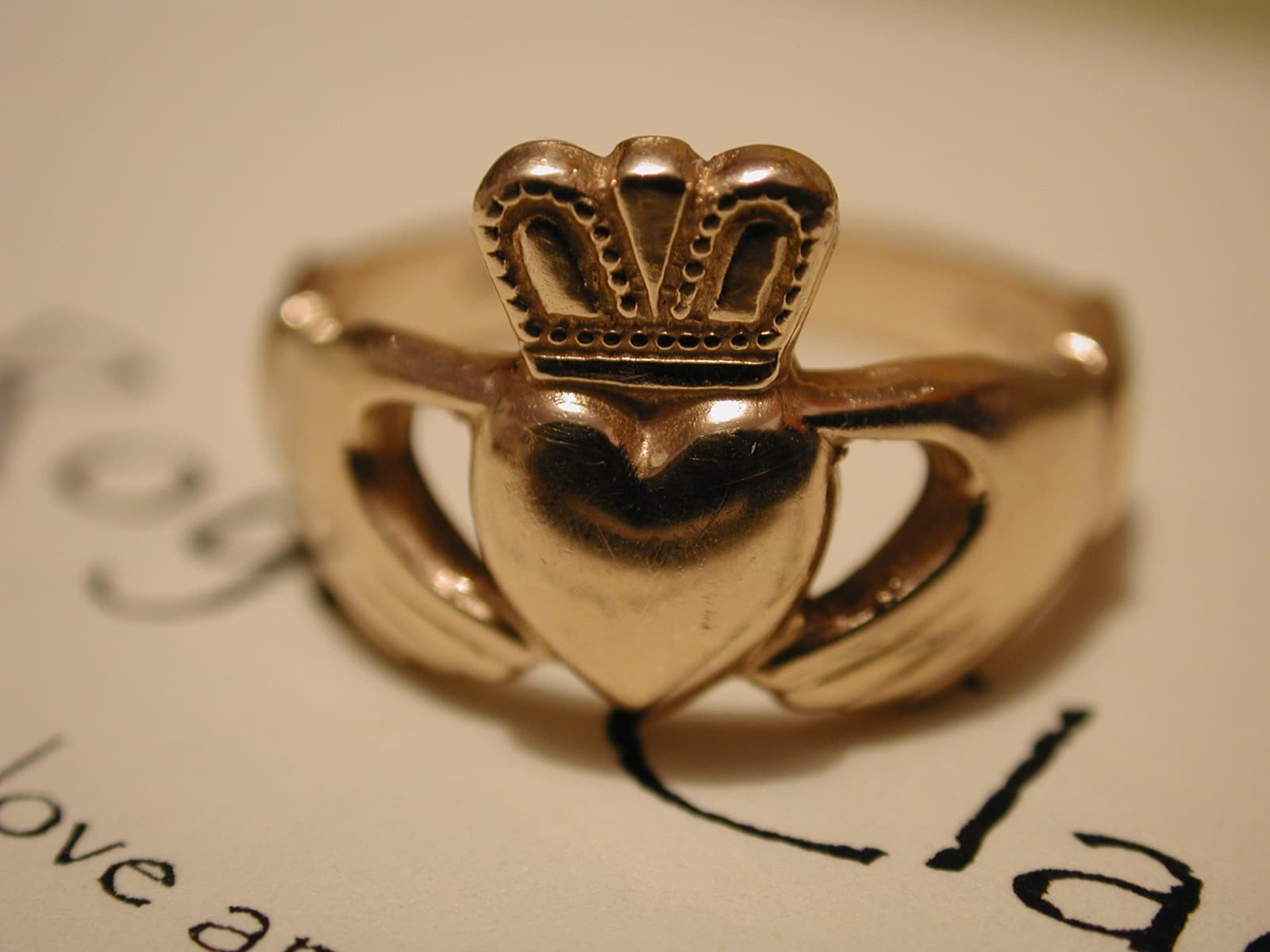
One small object carried the Claddagh's name everywhere: the ring you will recognise anywhere, two clasped hands holding a heart, a crown resting above. The hands mean friendship, the heart love, the crown loyalty. It is not an Irish invention from nothing. The design descends from an old European family of rings called fede rings, from the Italian word for faith, whose motif of clasped hands can be traced back to ancient Rome and was used for betrothal across medieval and Renaissance Europe. What belongs to this shore is that the ring took its name and its final form here. Rings of this kind have been made in Galway since around seventeen hundred, though the term Claddagh ring itself does not appear before the eighteen thirties.
You will hear a romantic origin story told beside the water, and it deserves an honest label. Tradition credits a Galway goldsmith named Richard Joyce, around seventeen hundred, said to have been captured by pirates, sold to a goldsmith who trained him, and freed after fourteen years to return home and make this ring for a sweetheart who had waited. It is a lovely tale, and it is a tale rather than a record. What is documented is quieter and just as moving: some of the oldest surviving Claddagh rings, dating to around seventeen hundred, are held at Galway City Museum. Worn on the hand, the heart turned out means the wearer is free, turned in means spoken for.
Following the water inland and out to sea
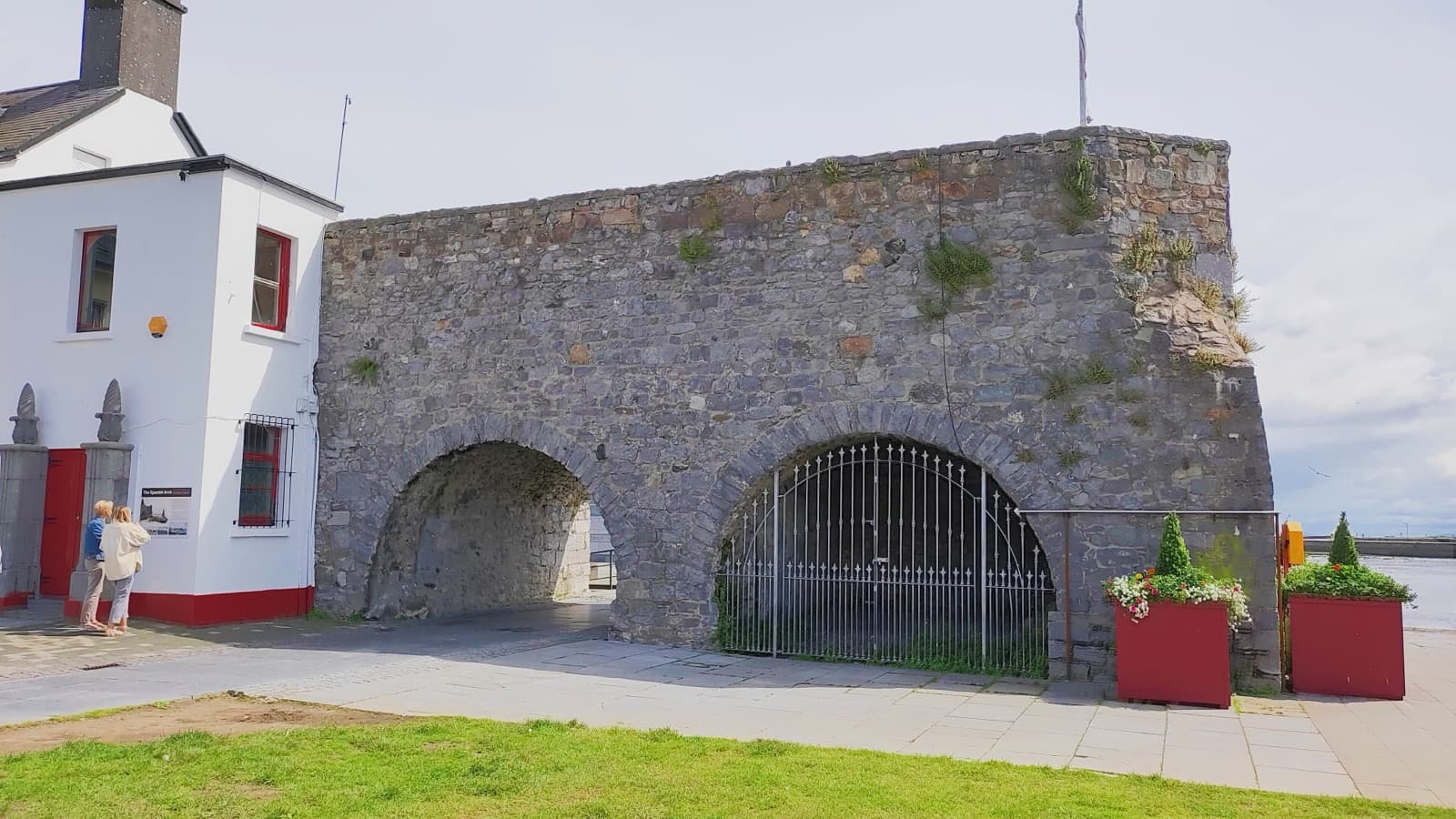
From the Claddagh the walk crosses the river mouth to the Spanish Arch, built in fifteen eighty-four by Wylliam Martin, the thirty-fourth mayor of Galway, as an extension of the town's twelfth-century Norman wall. Its older Irish name, Ceann an Bhalla, means the head of the wall, the point where the defences met the water. Stand at that seam and you can read the entire social geography of the walk. On the walled side lived the fourteen merchant families known as the tribes, most of them Anglo-Norman, who long kept the native Gaelic Irish at arm's length. Across the fast current lay the Claddagh, outside the walls. In seventeen fifty-five the waves of the Lisbon earthquake crossed the ocean and partly damaged this very arch.
The route then climbs to Galway Cathedral, which looks centuries old and is not. It was built between nineteen fifty-eight and nineteen sixty-five on the site of the former town jail, designed by architect John J. Robinson at the initiative of Bishop Michael Browne. President Eamon de Valera lit the sanctuary candle at its dedication on the fifteenth of August, nineteen sixty-five. Its copper dome rises about forty-four metres over the water, and it is often called the last great stone cathedral built in Europe. Beside it stands the Salmon Weir Bridge, built in eighteen eighteen and the oldest surviving bridge over the Corrib in the city, where from roughly February to September, most of all in May and June, shoals of Atlantic salmon hold in the clear water and the whole city leans over the rail to watch them wait.
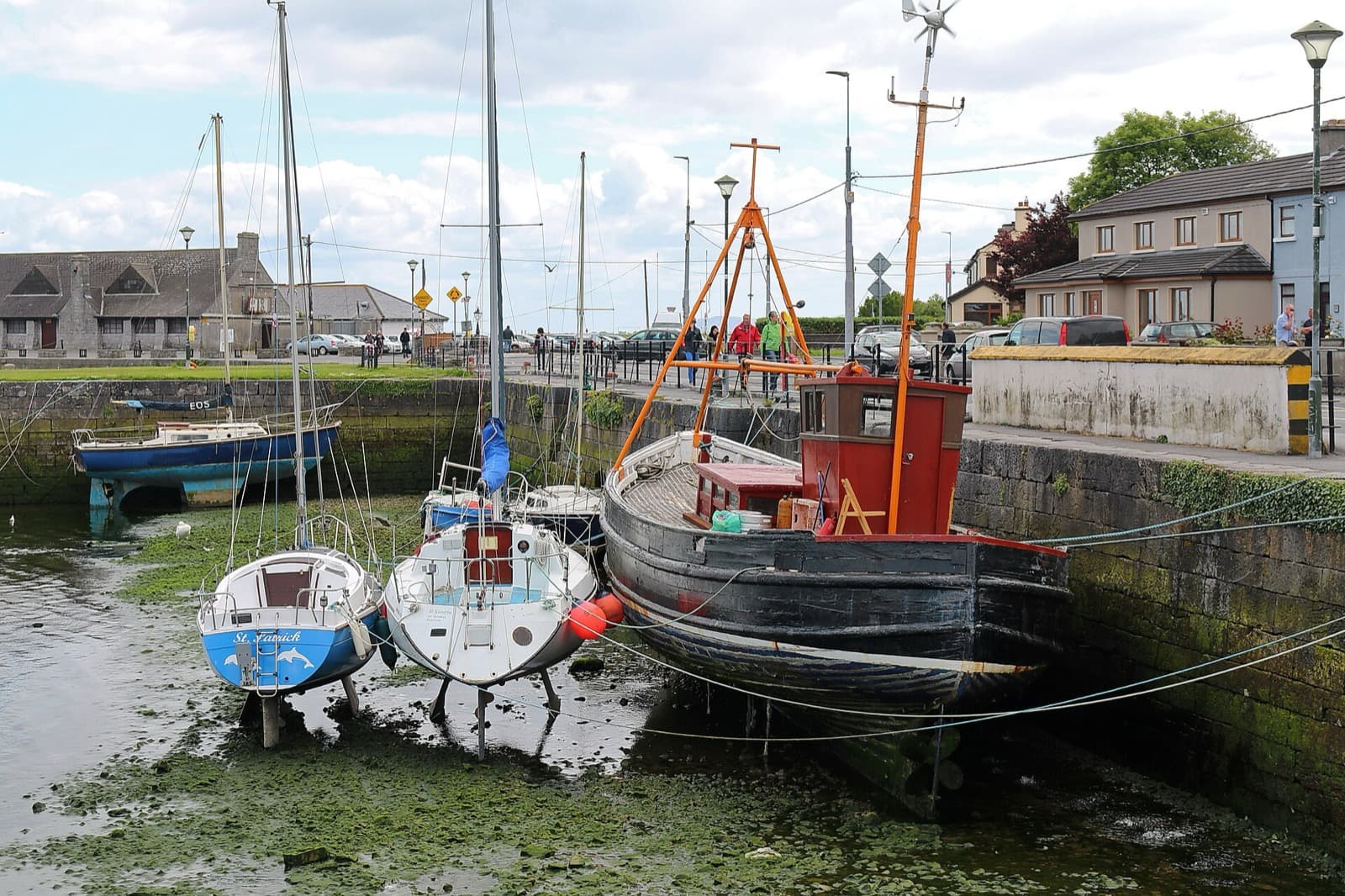
Down at the Claddagh basin, Nimmo's Pier reaches into the water. It carries the name of the Scottish engineer Alexander Nimmo, who lived from seventeen eighty-three to eighteen thirty-two and completed the pier around eighteen twenty-three to shelter the fishing fleet, including the russet-sailed Galway hookers. The walk ends on the Salthill Promenade, the level seafront the whole city calls the Prom, running about three kilometres west to the Blackrock Diving Tower. By long tradition, walkers kick the wall at the far end before turning back, said to bring them home to Galway someday.
Walk it at your own pace
This is a route to take slowly. There is no group at your shoulder, no timed entry, and no tip expected. You can linger at the river mouth, watch the salmon as long as they hold your attention, and skip whatever does not. The audio walk covers seven stops across roughly four and a half kilometres in about two hours, ending with that long, flat stretch of seafront as the reward. If you want to see how this route fits alongside the rest of the city, browse our full guide to Galway walking tours, or start planning your visit from the Galway city page. The Claddagh gives you the doorway. The water carries the rest.
Sources
- Claddagh, Wikipedia. Background on the fishing village, its self-government, and the twentieth-century clearance of the thatched settlement.
- King of the Claddagh, Wikipedia. Detail on the elected leadership and Martin Oliver as the last holder of the title in nineteen seventy-two.
- Richard Joyce and the oldest known Claddagh ring, Galway City Museum. Museum account of the ring's history and the folkloric Joyce origin story.
- Spanish Arch and Salmon Weir Bridge, Visit Galway. Tourism-board detail on the sixteenth-century arch and the eighteen eighteen bridge over the Corrib.
- Nimmo's Pier, Claddagh Quay, Buildings of Ireland. Heritage record of Alexander Nimmo's harbour works and the surviving stone pier.
Ready to experience it?
The Claddagh: Where the River Meets the Bay
120 min · 4.4 km · moderate
More from Galway
Explore more at your own pace.
Galway Travel Guide: Days, Transport, Timing, Safety, and Budget
One Day in Galway: A Walkable Itinerary From the Latin Quarter to the Sea
The City of the Tribes: How Galway's Two Banks Explain the Whole Town
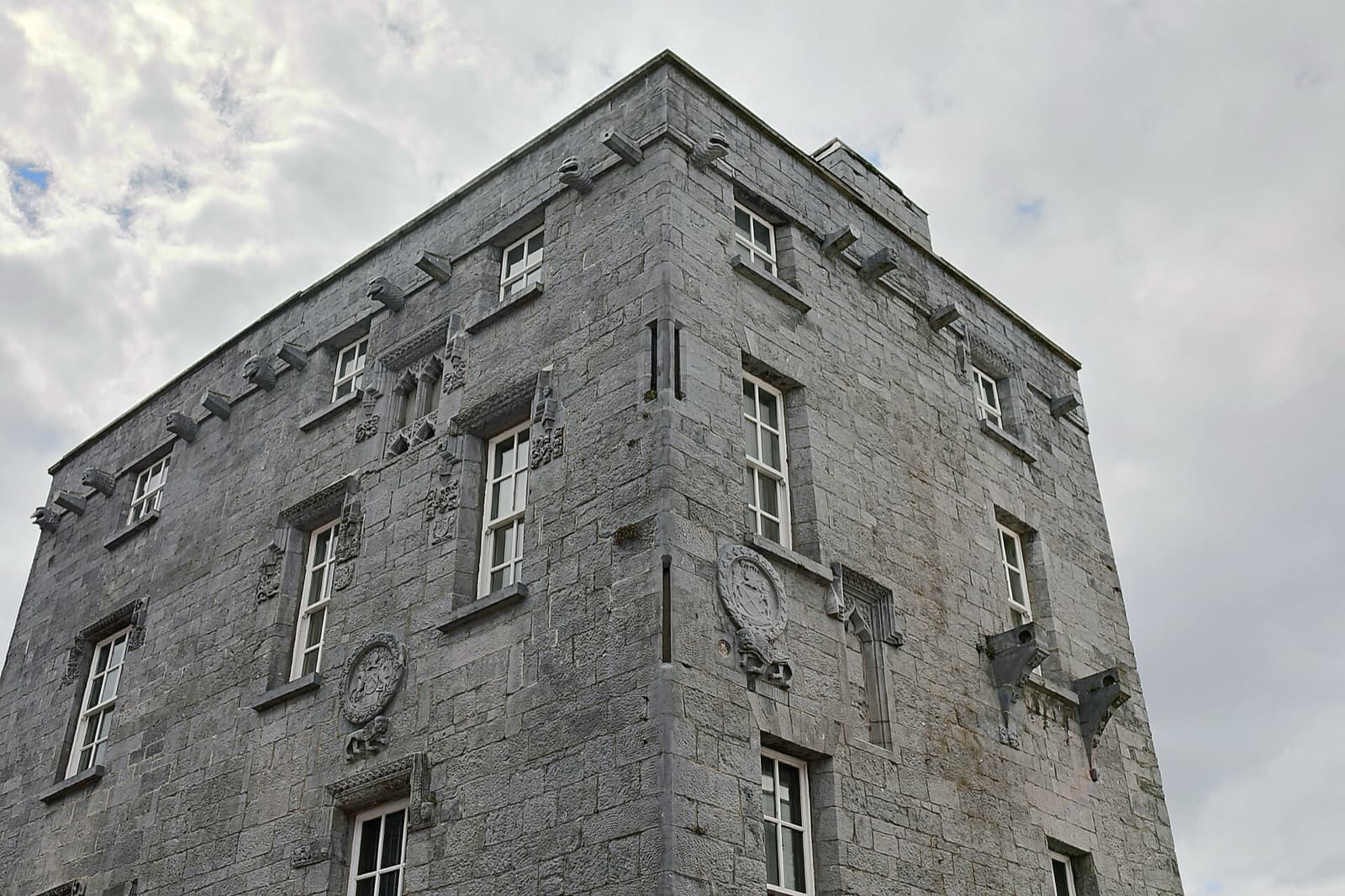
Lynch's Castle: Reading Galway's Merchant Power in Carved Stone
The Claddagh Ring: What Two Hands and a Crowned Heart Really Mean