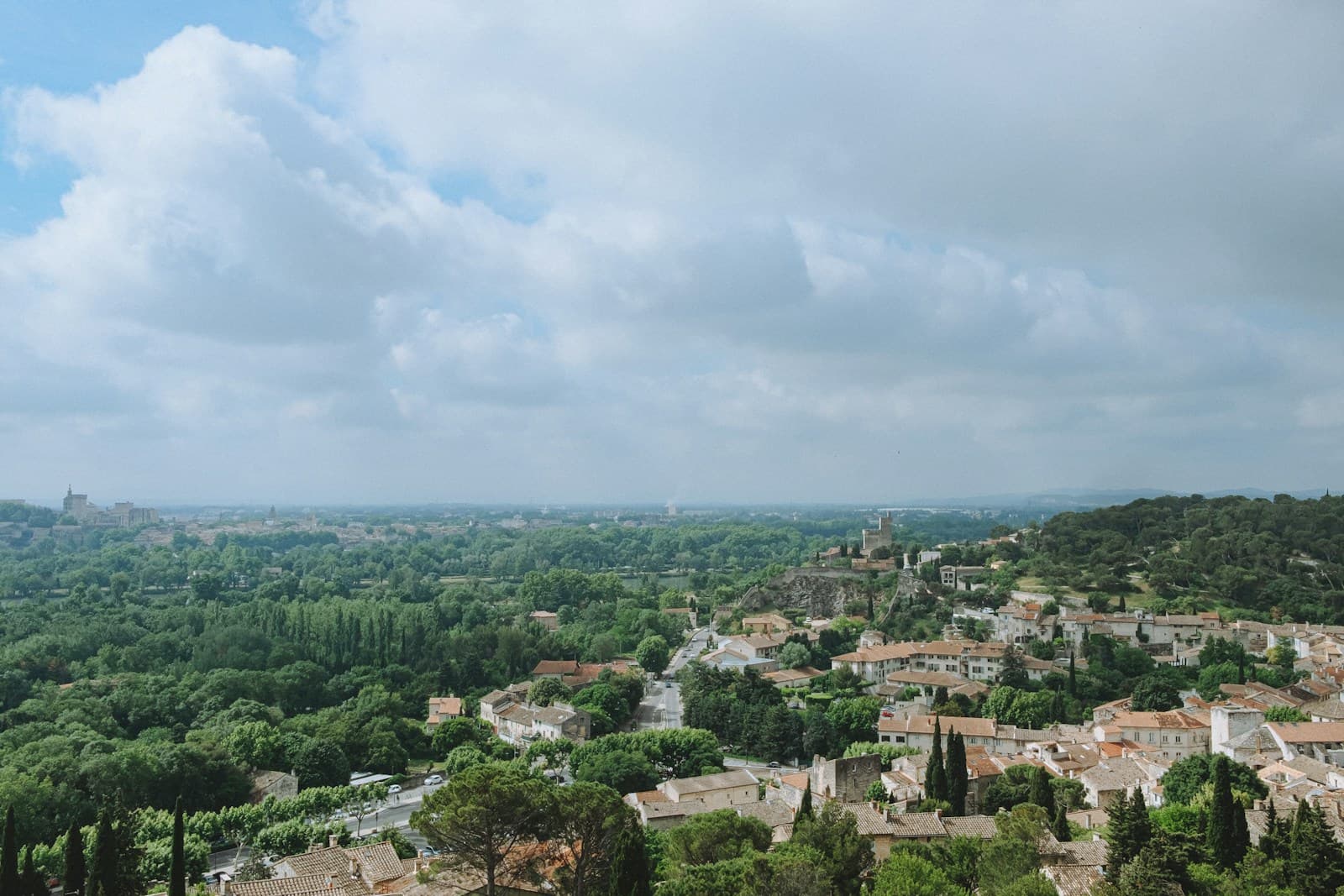
The best way to understand the Avignon papacy is to leave it. Cross the Rhône to the right bank, into Villeneuve-lès-Avignon, and turn around. The Palais des Papes fills the opposite skyline, close enough to read its towers. That reciprocal view is not scenery. It is the entire diplomatic situation of fourteenth-century Europe compressed into a single sightline, because the two banks belonged to two different sovereigns, and each one built to be seen from the other.
The border was a river
When the popes settled in Avignon in 1309, the town sat on land held by the Counts of Provence, who were then within the orbit of the Holy Roman Empire rather than France. The Rhône itself was the frontier. The left bank was papal; the right bank was the Kingdom of France. This mattered enormously to the French king, who now had the most powerful institution in Christendom parked on his doorstep but not under his flag. His response was to build his own statement directly across the water. That is what Villeneuve is: not an overflow suburb but a royal counter-capital, a "new town" (ville neuve) planted to project French power at the papal one. The background to the whole standoff is in how a provincial town became the capital of Christendom.
Reading the seven stops as a rivalry
Hear a stop from this walk
Collegiate Church of Notre-Dame: The Spillover Made Permanent
The Tour Philippe-le-Bel is where the tour opens and where the rivalry is at its rawest. King Philip IV, called Philip the Fair, built this tower at the French end of the Pont Saint-Bénézet. A two-storey tower was completed in 1302, with a third storey added in the mid fourteenth century. Its job was blunt: it commanded and taxed the bridge, so that anyone crossing from the papal side onto French soil passed under the crown's gatehouse. The pope owned the city; the king owned the doormat. A tour up the tower gives you the same view the French garrison had, straight into Avignon.
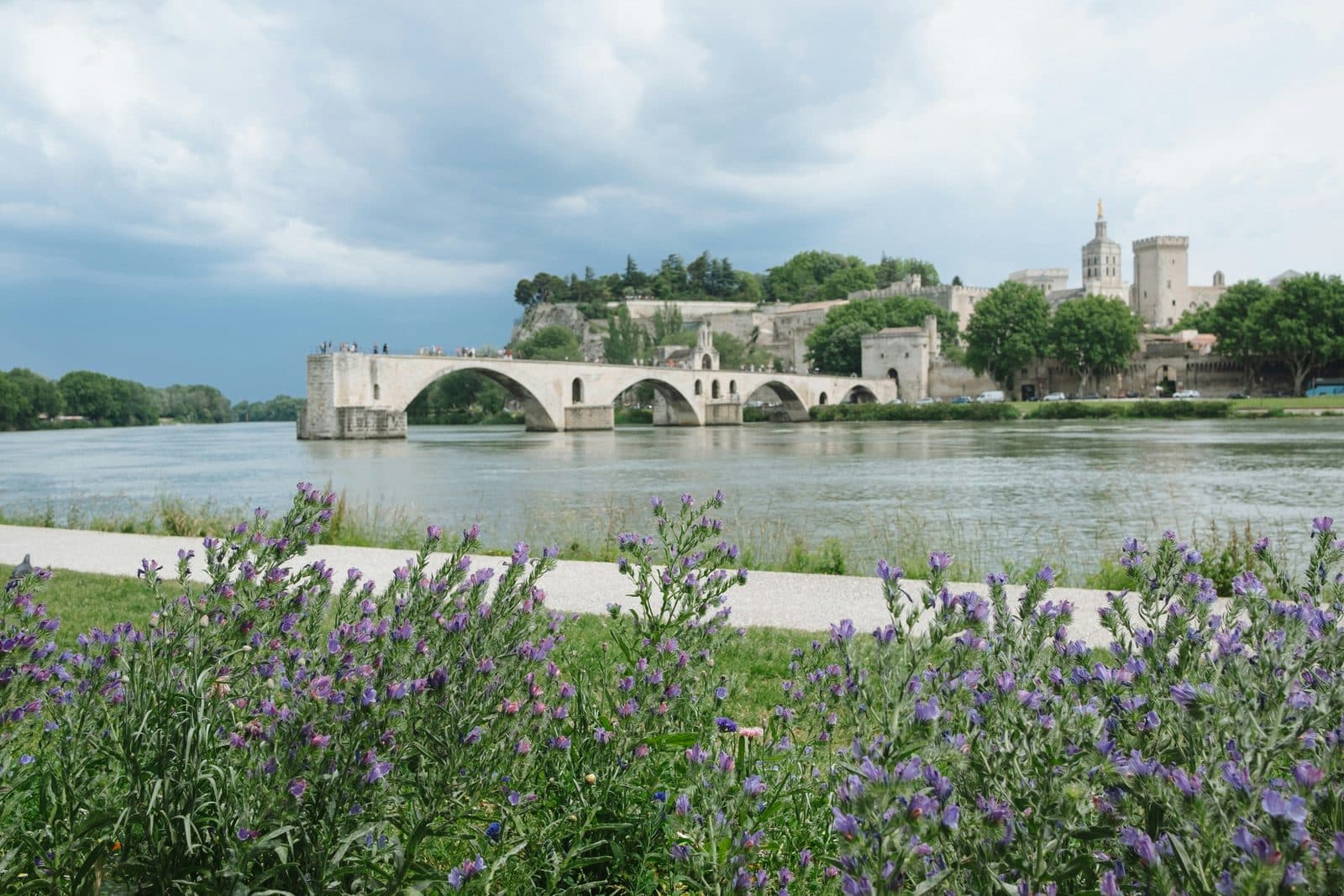
The Pont Saint-Bénézet view is the border made physical. The bridge, begun in 1177 according to the legend of the shepherd Bénézet, once ran roughly 900 metres across the Rhône on 22 arches, all the way to Villeneuve. Today only four arches survive, ending in mid-river. That severance, which happened over centuries of floods, accidentally dramatises the politics: a bridge that no longer connects the two states is the perfect emblem of two sovereigns who never fully joined. There is a dedicated read on the bridge and its legend.
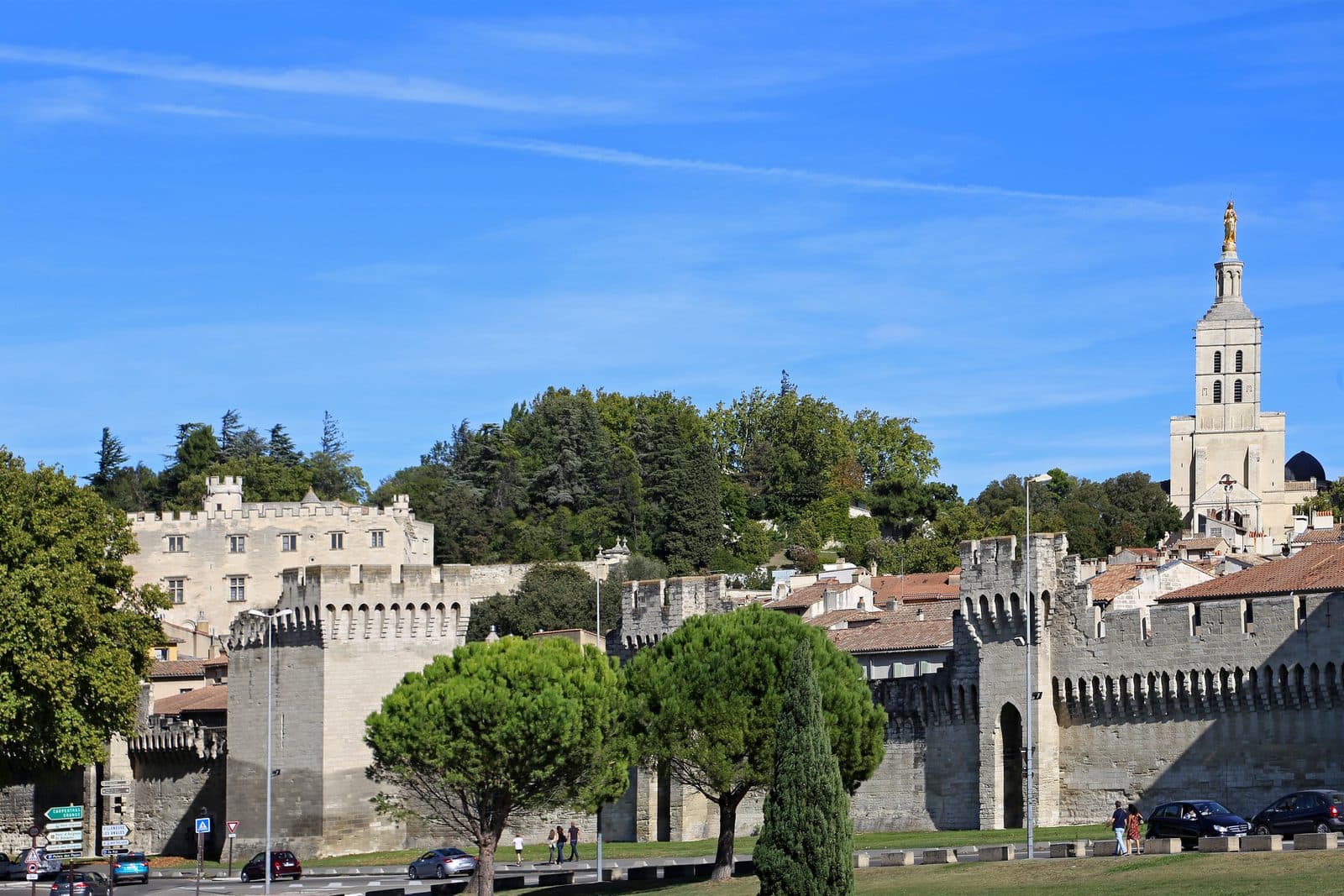
Fort Saint-André is the crown's heavy artillery. This royal citadel on the hilltop was begun around 1360 under King John II, called John the Good, on land belonging to the Saint-André Abbey. Its twin-towered gate and long curtain walls are French royal military architecture at full volume, built to loom over the valley and remind the papal court exactly whose kingdom began at the water's edge.
The Abbaye Saint-André, the Benedictine abbey the fort was built to protect and dominate, is the older religious anchor of the hill, its gardens now one of the loveliest terraces in the region, with the papal palace framed across the river.
The Chartreuse du Val-de-Bénédiction complicates the neat France-versus-papacy story, and that is why it is on the walk. It is a charterhouse, a Carthusian monastery, founded in 1356 by Pope Innocent VI, on the French bank. Innocent had been a cardinal here before his election and chose to be buried here; his tomb is inside. So the pope, whose seat was on the opposite shore, planted his own foundation and his own grave on the king's side of the river. The border was contested, not clean.
The Musée Pierre-de-Luxembourg holds the art that survived the two towns, most famously the great fifteenth-century Coronation of the Virgin by Enguerrand Quarton, painted for the Chartreuse. It is where the abstract rivalry becomes objects you can stand in front of.
The Collégiale Notre-Dame, the collegiate church founded in the early fourteenth century, closes the walk as the parish heart of the royal town, the everyday counterpart to all the grand statements around it.
What the two banks are saying to each other
Line the stops up and the argument is symmetrical. The pope built the largest Gothic palace in Europe; the king built a fortress to look down on it. The pope owned the city; the king owned the bridgehead. The pope's ramparts wrapped his capital; the king's citadel crowned the opposite hill. Even the holy foundations mirror: papal chapels in the palace, a papal charterhouse across the water. Two powers, one river, endless mutual surveillance, and the whole quarrel legible in stone from either bank.
The genius of walking Villeneuve is the reverse angle. From here you see the papal capital as its rivals saw it, and the Palais des Papes tour reads differently once you have. If the fortress instinct interests you, the ramparts of Avignon itself show the papal side arming against a different threat entirely.
Ready to experience it?
One Bridge, Two Sovereigns: Avignon and Villeneuve
150 min · 3.4 km · moderate
More from Avignon
Explore more at your own pace.
Avignon Travel Guide: How Many Days, Getting Around, When to Go (2026)
How a Provincial Town Became the Capital of Christendom: The Avignon Papacy
Two Popes, One Palace: How to Read the Palais des Papes

The Bridge to Nowhere: Why the Pont Saint-Bénézet Stops in the River

The Grande Chapelle: A Cathedral Hidden Inside a Palace