The tour walks eight stops across the Palais des Papes and the terrace above it. Before you take the first, hold one fact in your head, because it turns a confusing pile of stone into a readable argument: this is not a single palace. It is two palaces, built by two men with opposite temperaments, joined at a seam you can find with your own eyes.
The two builders
The Palais Vieux, the Old Palace, is the work of Benedict XII (pope 1334 to 1342), a former Cistercian monk. The Cistercians were the reform order of their age, famous for stripping ornament out of architecture and reducing a building to structure and light. Benedict brought that instinct to the papal seat. Working with the architect Pierre Poisson, he built a severe, fortified block around a cloister: four wings, high towers, thick walls, almost no decoration. It reads as what it is, a monastery crossed with a castle.
The Palais Neuf, the New Palace, is the work of his successor Clement VI (pope 1342 to 1352), and Clement was Benedict's opposite in every way. He was a grand aristocratic prince of the Church who spent enormously, collected art, and believed the papacy should look magnificent. With the architect Jean de Louvres he roughly doubled the palace, adding the great ceremonial spaces, and he brought the Italian painter Matteo Giovanetti from Viterbo to fresco the interiors. Where Benedict built a fortress, Clement built a court.
The whole complex was essentially finished around 1364, covers roughly fifteen thousand square metres, and is the largest Gothic building of the Middle Ages. It was made a UNESCO World Heritage Site in 1995. But the useful lens for the walk is always: am I standing in Benedict's fortress or Clement's palace? For the full background on why the popes were here at all, read how a provincial town became the capital of Christendom before you go.
Reading the eight stops as one argument
Hear a stop from this walk
Rocher des Doms: The Synthesis View, the Return to Rome, and the Schism
Place du Palais is the overture. From the square you see the seam. The plainer, more military western mass and the more articulated eastern mass are the two campaigns meeting. The facade is not a single design; it is a negotiation between two reigns.
The Cour d'Honneur, the main courtyard, is where the two palaces face each other across an open space. Benedict's austere wings on one side, Clement's ambitious additions on the other. In July the courtyard becomes the main stage of the Festival d'Avignon, the great theatre festival, which is a fitting afterlife for a space built for papal ceremony.
The Salle du Consistoire, the consistory hall, is where the political machinery ran. This is where the pope met the College of Cardinals, received ambassadors, and conducted the business of a curia that employed thousands. It is a room built for governing, not praying.
The Grande Chapelle, the Great Chapel of Clement VI, is the tour's climax and the clearest possible statement of the difference between the two builders. It is enormous, roughly fifty-two metres long, a cathedral-scale space stacked on top of the Grande Audience below it. Benedict would never have built it. Clement built it to say that the papacy in exile was still the papacy, and it should worship on a scale to match. The volume is the message.
The Chambre du Cerf, the Stag Room, is the human surprise of the whole palace. It was Clement VI's private study, and its walls are covered not with saints but with frescoes of hunting, fishing, and fruit-picking, secular scenes of aristocratic leisure, painted around 1343 by the court painters Clement VI had gathered in Avignon. After the vast public chapels, this small green room shows you the man behind the office at his ease.
The Grande Audience, the Great Audience hall, sits directly beneath the Grande Chapelle and housed the papal tribunal, the court that heard cases from across Christendom. Giovanetti frescoed its vault. A capital needs a supreme court, and this was it.
The Petit Palais at the far end of the square is the epilogue: originally the bishop's palace, later a residence for high clergy, now a museum of medieval and Renaissance painting. It reminds you the palace never stood alone; it anchored a whole quarter of ecclesiastical power.
The Rocher des Doms, the rock above the palace, is where you finally get the geography. From the garden terrace you see the Rhône, the broken bridge, and Villeneuve on the far bank, the French crown's answer to the papal capital. The rock is why the palace is here at all: high ground over the only major river crossing for miles.
What the palace is arguing
Put the stops together and the building makes a four-part case. It has to be defensible, so the walls are thick and the site commands the river. It has to be solvent and administratively serious, so there are consistory halls and tribunals. It has to be legible as the seat of Christendom, so Clement pushes the ceremonial spaces to cathedral scale and imports the best Italian painters. And it has to reconcile a monk's austerity with a prince's magnificence, which is why it never quite resolves into one style. The unresolved seam is the honest record of two very different popes trying to build the same institution.
Where to go next
The palace is one face of the story. Its counterweight is across the water: the same papal century seen from the French side, at Villeneuve-lès-Avignon and its rival state. And if the fortified character of the palace catches your eye, the medieval ramparts that ring the whole city are the same defensive logic scaled up to the size of a capital. For a single jewel, the Grande Chapelle deserves its own read.
Ready to experience it?
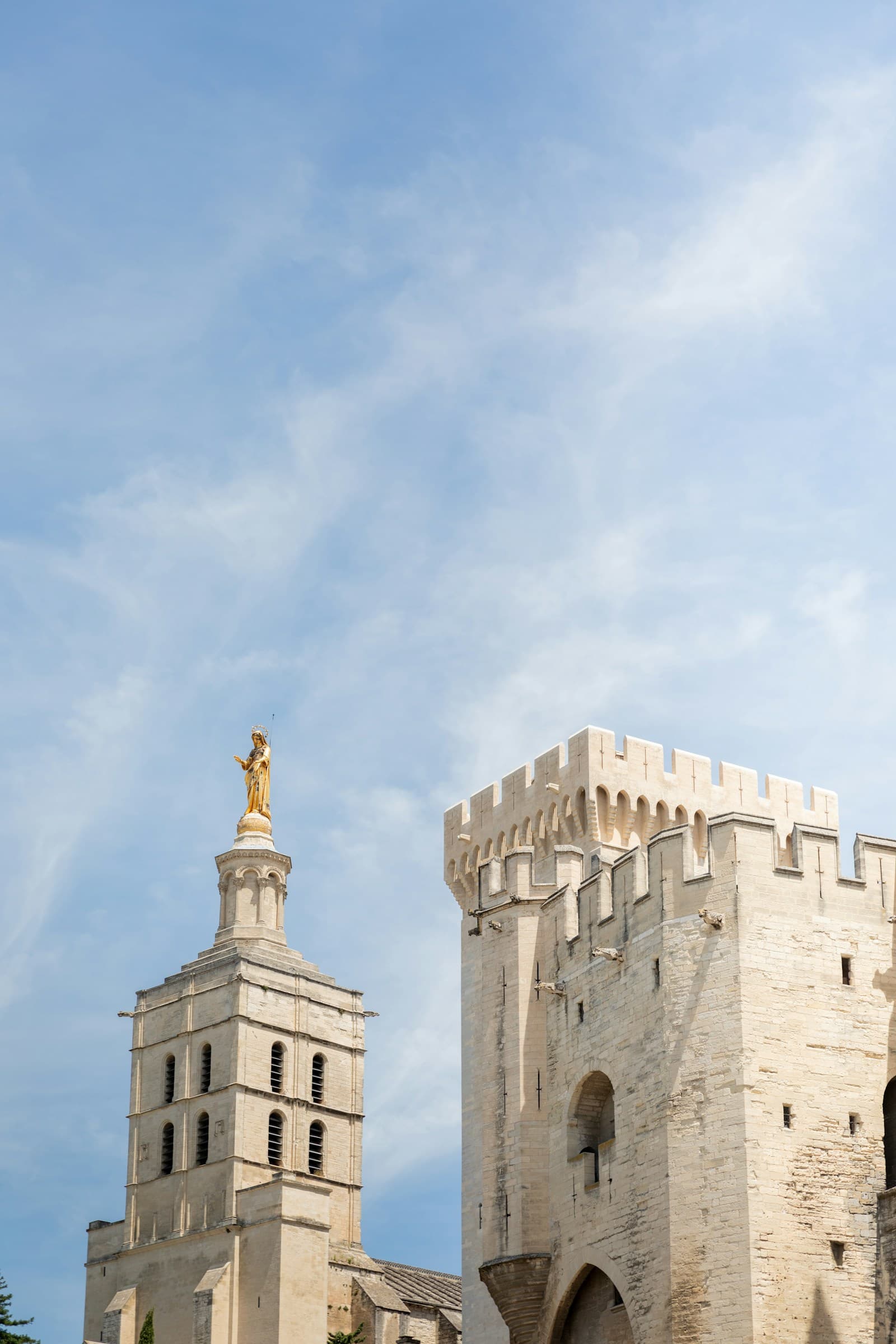
The Avignon Papacy: When Christendom Moved to Provence
90 min · 1.4 km · moderate
More from Avignon
Explore more at your own pace.
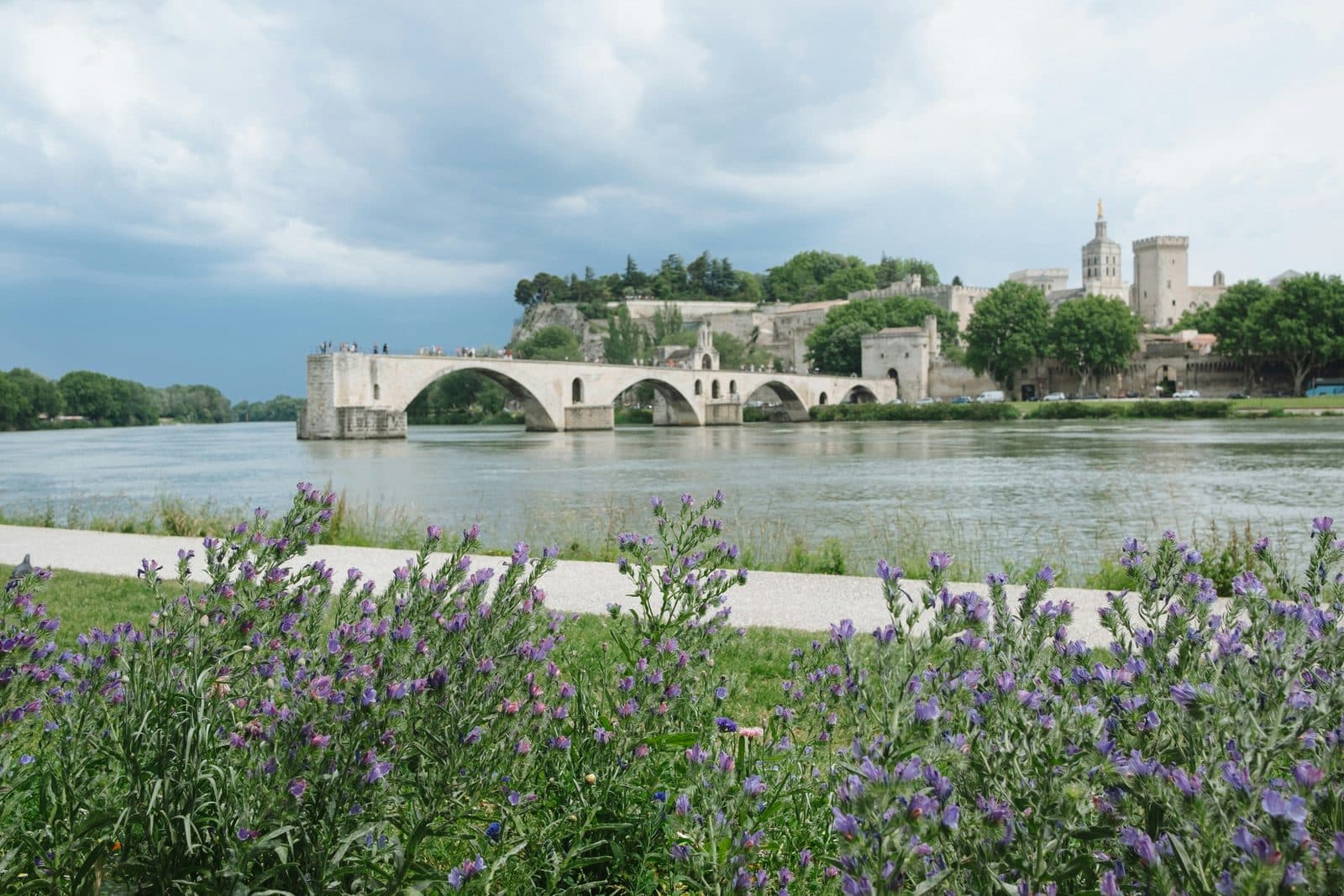
Avignon Travel Guide: How Many Days, Getting Around, When to Go (2026)
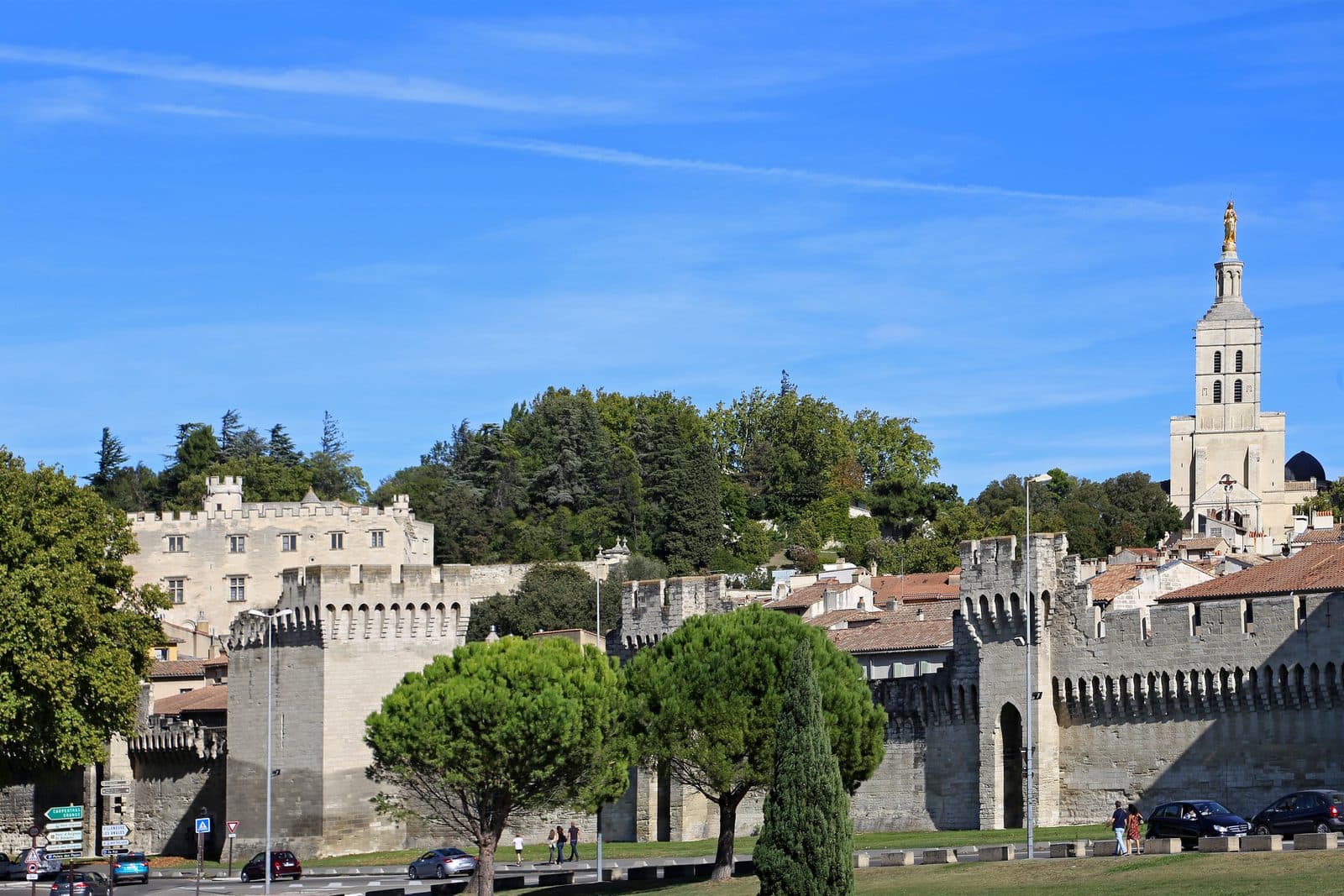
How a Provincial Town Became the Capital of Christendom: The Avignon Papacy
One Bridge, Two Sovereigns: The France That Watched Avignon Across the Rhône

The Bridge to Nowhere: Why the Pont Saint-Bénézet Stops in the River

The Grande Chapelle: A Cathedral Hidden Inside a Palace