Naples is a hollow city. It was quarried out of the same soft golden stone it stands on, cut straight down from beneath its own feet, and Napoli Sotterranea is the clearest way into that idea. What the Greeks and Romans dug out left a labyrinth of caverns, water channels, and cisterns roughly forty metres below the paving, and so much of the old center is, quite literally, the roof of the emptiness it came out of. This first descent shows one void serving three separate lives across the centuries: quarry, aqueduct, and wartime shelter. Understand that, and every square you cross afterward stops being a square and becomes a lid.
One Void, Three Lives
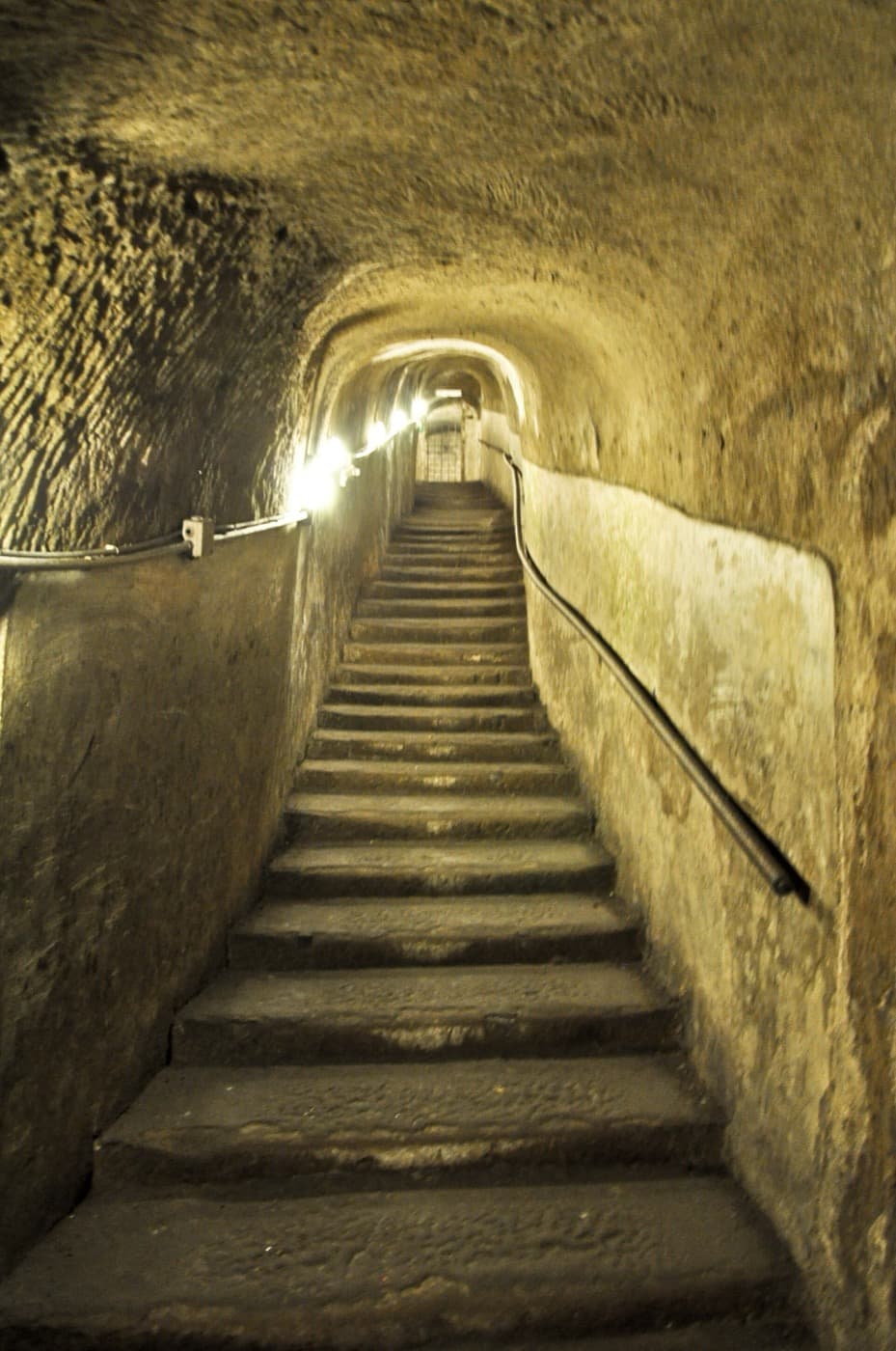
The entrance sits on Piazza San Gaetano, on Via dei Tribunali, right beside the Basilica of San Paolo Maggiore. If you go down, it is about one hundred and thirty-six steps to roughly forty metres below the street. Hold onto that number, because it is the depth of nearly everything on this walk.
What is down there began as a quarry. According to the site's own history, the Greeks opened the first underground tuff quarries here in the third century before the common era, cutting blocks to raise the walls and temples of their city, Neapolis. They dug the stone from directly beneath where they were building, which is why the hollow lies exactly under the old center. Later, Roman engineers turned the same cavities into an aqueduct network, fed by conduits carrying water from the springs of the Serino, about seventy kilometres away. Water moved through the tuff for centuries. Then, in the twentieth century, the shafts served a very different purpose: during the Second World War, families climbed down these same channels to shelter from the Allied bombing of the city.
Quarry, plumbing, refuge. The stone came out, water went in, and eventually people did too. The yellow Neapolitan tuff is soft enough to cut with hand tools yet hardens on exposure to air, which made it ideal both for quarrying and for building. Because the Greeks and later the Romans quarried downward from within the settlement, the cavity system maps almost exactly onto the ancient street grid above it. The city and its shadow are the same stone, turned inside out.
Why This Stop Opens the Whole Argument
Hear a stop from this walk
Santa Maria delle Anime del Purgatorio ad Arco: The Darker Hollow
You do not have to descend at Napoli Sotterranea to grasp what the rest of the walk is doing. Stand on the paving and let the scale settle. Beneath this ordinary square is a carved emptiness the size of a small district, and the buildings around you are made of exactly what was scooped out of it. That is the thesis the tour argues, downhill, from the ancient center toward the sea. The underground is not one ticketed novelty. It is a single continuous system that keeps surfacing.
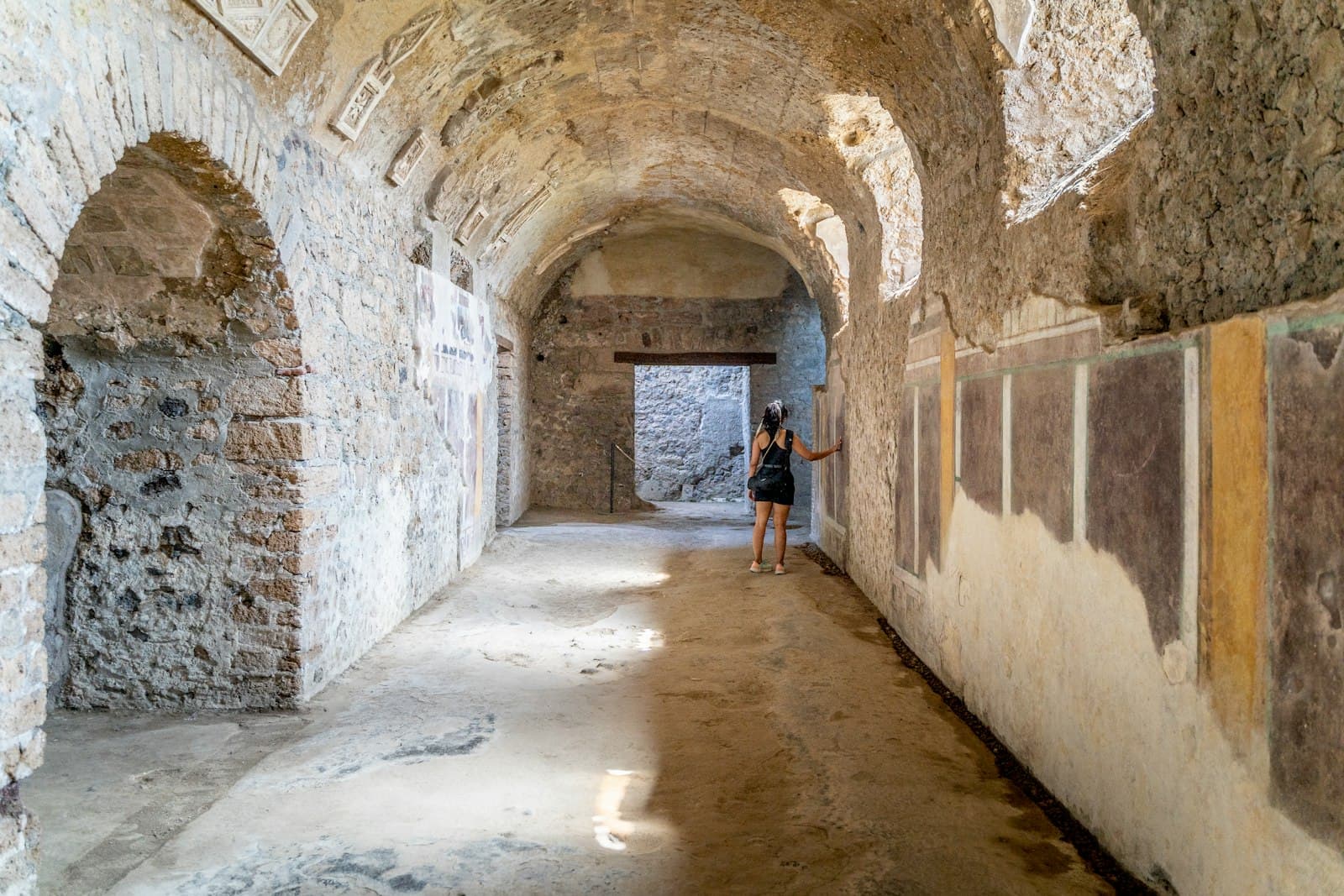
The next stop makes the point visible. At San Lorenzo Maggiore, the hollow breaks the surface under a Franciscan church. About half of an original Roman market, a structure the Romans called a macellum, has been excavated beneath its floor. Go further back and this was the Greek agora of the fifth and fourth centuries before the common era. In the fifth century of the common era, a mudslide buried the whole thing, and that burial is precisely what preserved the shops and paved street for the excavation that opened to the public in nineteen ninety-two after roughly a quarter century of work. You are not looking at a reconstruction of Neapolis. You are looking at Neapolis, simply lower down.
The Ceiling of the Ancient City
Step back up to Piazza San Gaetano and the geometry snaps into focus. This square sits on the site of the Greek agora and later the Roman forum, the civic heart of the old grid. The crossing here, where Via dei Tribunali follows the line of the ancient decumanus maior and Via San Gregorio Armeno runs down the slope, is not modern planning. It is the organizing logic of a Greek colony founded around the fifth century before the common era, still legible under your feet. San Paolo Maggiore rises on the ruins of a first-century Roman temple to the Dioscuri, Castor and Pollux, and two Corinthian columns from that temple are still visible, reused in plain sight on its facade. This square is the actual ceiling of the excavated market beneath the neighboring church. You are standing on the roof of the ancient marketplace.
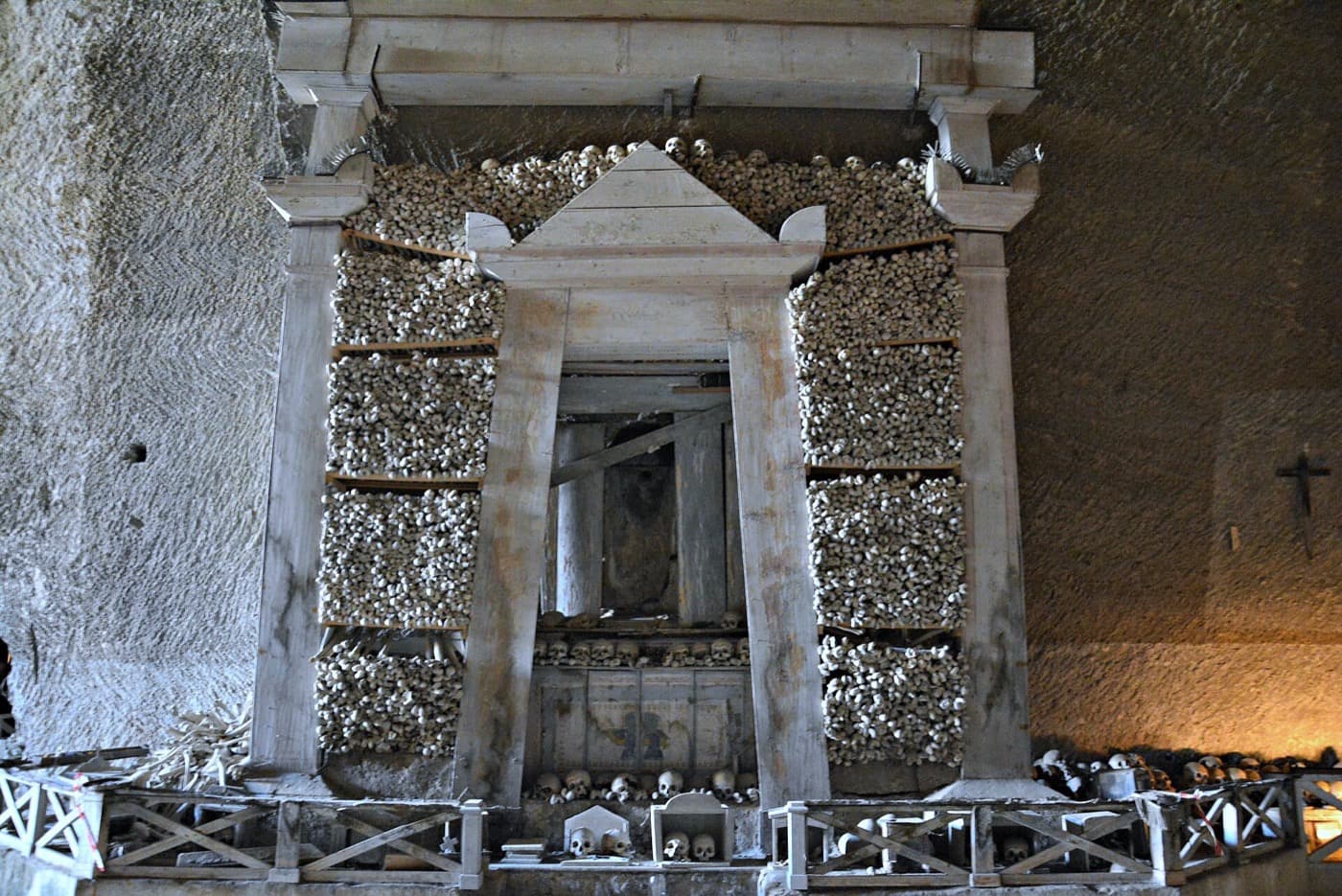
From there the walk turns darker and then deliberate. Santa Maria delle Anime del Purgatorio ad Arco, commissioned in sixteen sixteen and consecrated in sixteen thirty-eight, was built by the Opera Pia, a lay congregation founded by Neapolitan nobles. Its lower chamber became the center of the cult of the anime pezzentelle, the poor souls, where devotees adopted anonymous skulls and prayed for them in exchange for hoped-for grace. The most loved skull, called Lucia, wears a bridal veil and a crown. Here the void is not structure but grief given a room. Cardinal Corrado Ursi banned the practice in nineteen sixty-nine, but devotees kept it up until the nineteen eighty earthquake closed the church.
Then the hollow gets engineered on purpose. In eighteen fifty-three, Ferdinand the Second of Bourbon commissioned the Galleria Borbonica as a royal escape route toward the sea. As the diggers cut down, they ran straight into the older water system already carved into the tuff, proving the tour's point in real time. The escape route was abandoned after about two years, with the fall of the Bourbon dynasty, and it never reached the sea it was aimed at. The tunnel later became a wartime shelter and hospital before serving until nineteen seventy as a police pound for vehicles wrecked in the bombing.
Where the Lid Closes
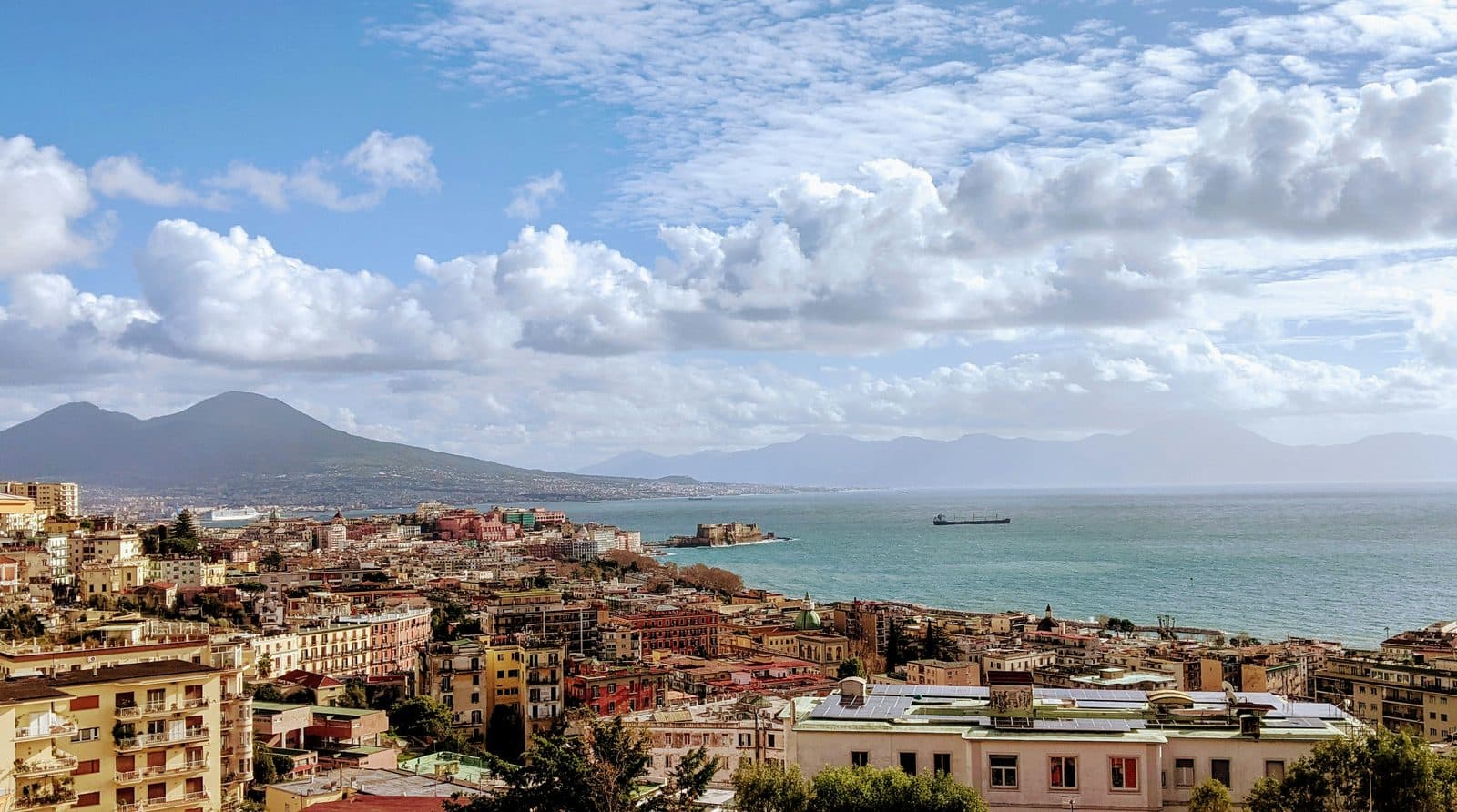
The transect ends at the water, at the Castel Nuovo, also called the Maschio Angioino. Construction began in twelve seventy-nine under Charles the First of Anjou, and building this castle freed the inland site the Franciscans received in exchange, the church over the buried market near the start of the walk. The white marble triumphal arch set between its dark towers commemorates Alfonso of Aragon's entry into Naples in fourteen forty-three and was built around fourteen seventy. The shape of the day resolves here: you begin above a shaft dropping into the dark, and you end at the surface, at the sea, where the city faces the world and builds upward instead of down.
If the idea of a city reading itself as a lid appeals to you, this is a walk best done slowly and downhill. Compare it with the other routes on our Naples walking tours hub, or start planning from the Naples city page. Wear closed shoes with grip, carry a light layer for the cool caverns, and pick one or two underground sites to actually enter rather than all of them.
Sources
- Napoli Sotterranea official site and FAQ: source for the roughly one hundred and thirty-six steps, the roughly forty metre depth, the Greek quarry origin, the Serino aqueduct, and the wartime shelter use.
- Complesso Monumentale di San Lorenzo Maggiore (laneapolissotterrata.it): the Franciscan church and the excavated first-century Roman market, the macellum, beneath it.
- Opera Pia Purgatorio ad Arco (purgatorioadarco.it) and the Comune di Napoli heritage sheet on the church: the sixteen sixteen commission and sixteen thirty-eight consecration, the cult of the anime pezzentelle, the veiled skull Lucia, Cardinal Ursi's nineteen sixty-nine ban, and the cult's survival until the nineteen eighty earthquake.
- Galleria Borbonica official history: Ferdinand the Second's eighteen fifty-three escape tunnel, its abandonment with the fall of the dynasty, and its use as a vehicle pound until nineteen seventy.
Ready to experience it?
Napoli Sotterranea: The City Below
90 min · 3.3 km · moderate
More from Naples
Explore more at your own pace.
Naples Travel Guide: Days, Transport, Timing, Safety, and Budget
Naples Read in Section: The Vertical City Above and Below the Street
The Catacombs That Taught the Rione Sanità to Rewrite Itself
Via San Gregorio Armeno: How the Crib Street Reveals the Greek Grid Under Naples
Cappella Sansevero: The Marble Veil That Reads as Cloth