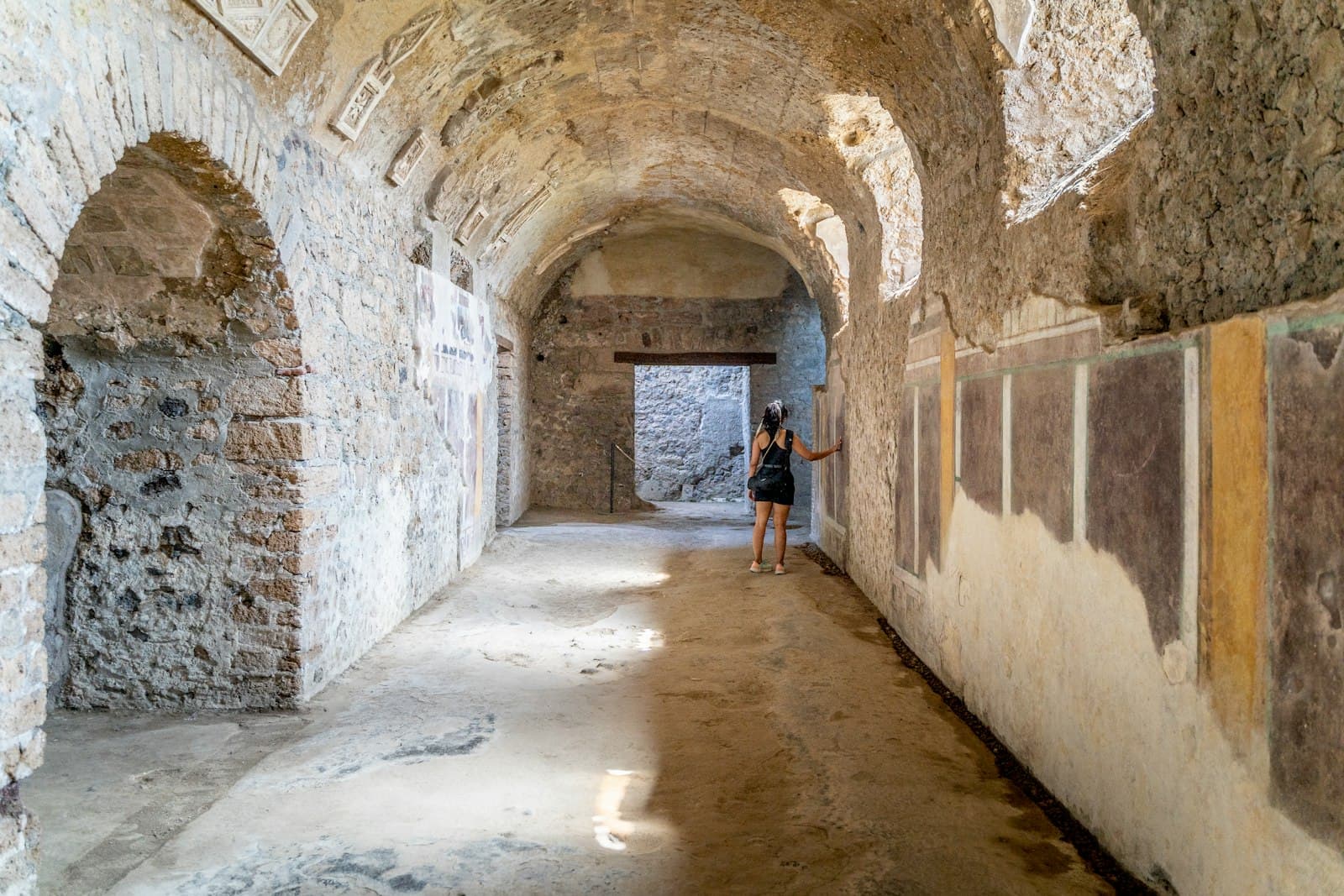
Naples is a hollow city, and this downhill walk reads the streets as the lid on an inverted city carved out of the tuff below, following the void from the ancient forum toward the sea.
Start · Napoli Sotterranea: The Literal Void
DirectionsStops
- 1
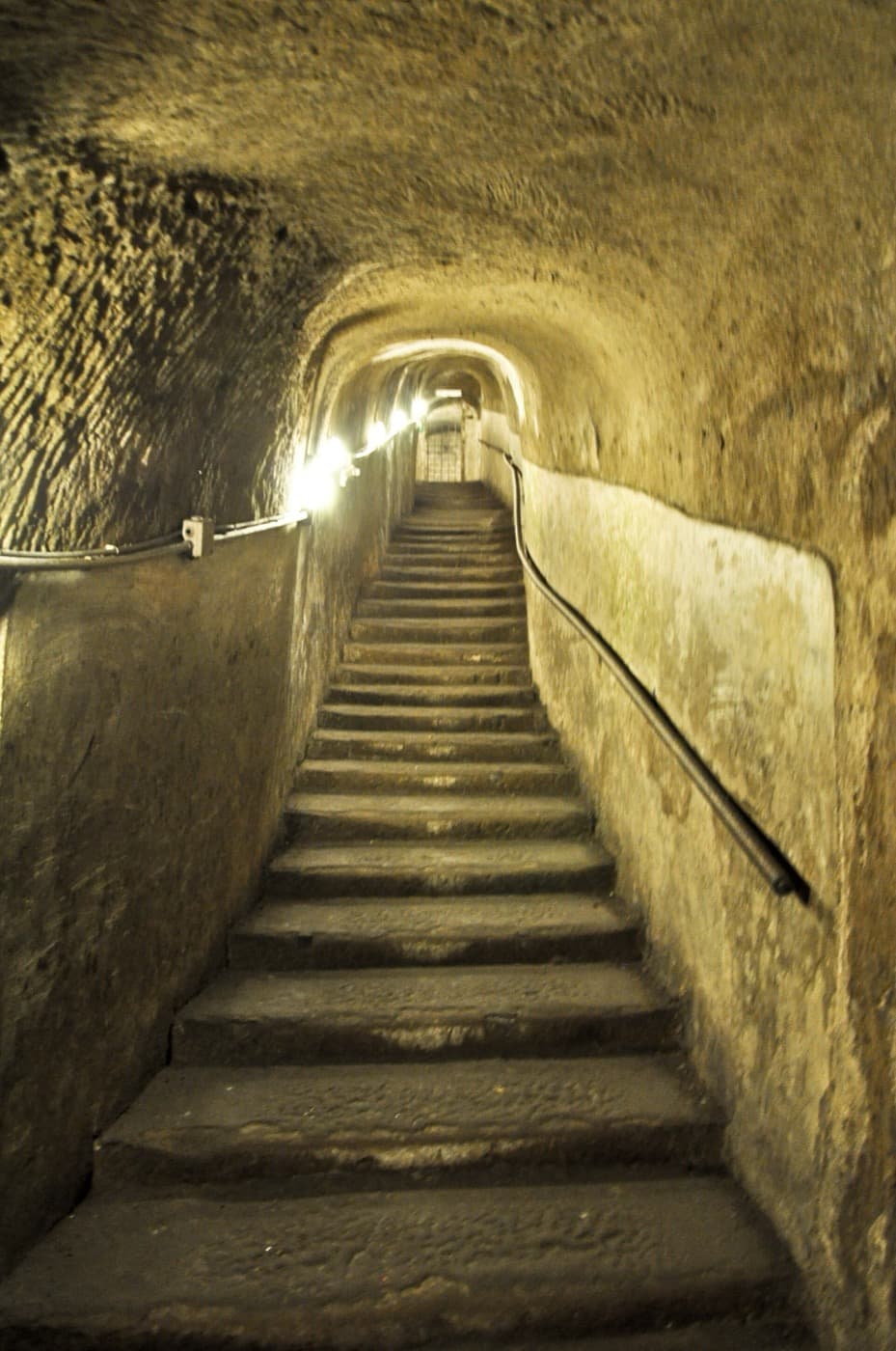
Napoli Sotterranea: The Literal Void
The descent beneath the old center, where a Greek quarry became a Roman aqueduct and later a wartime shelter, roughly forty metres down.
- 2
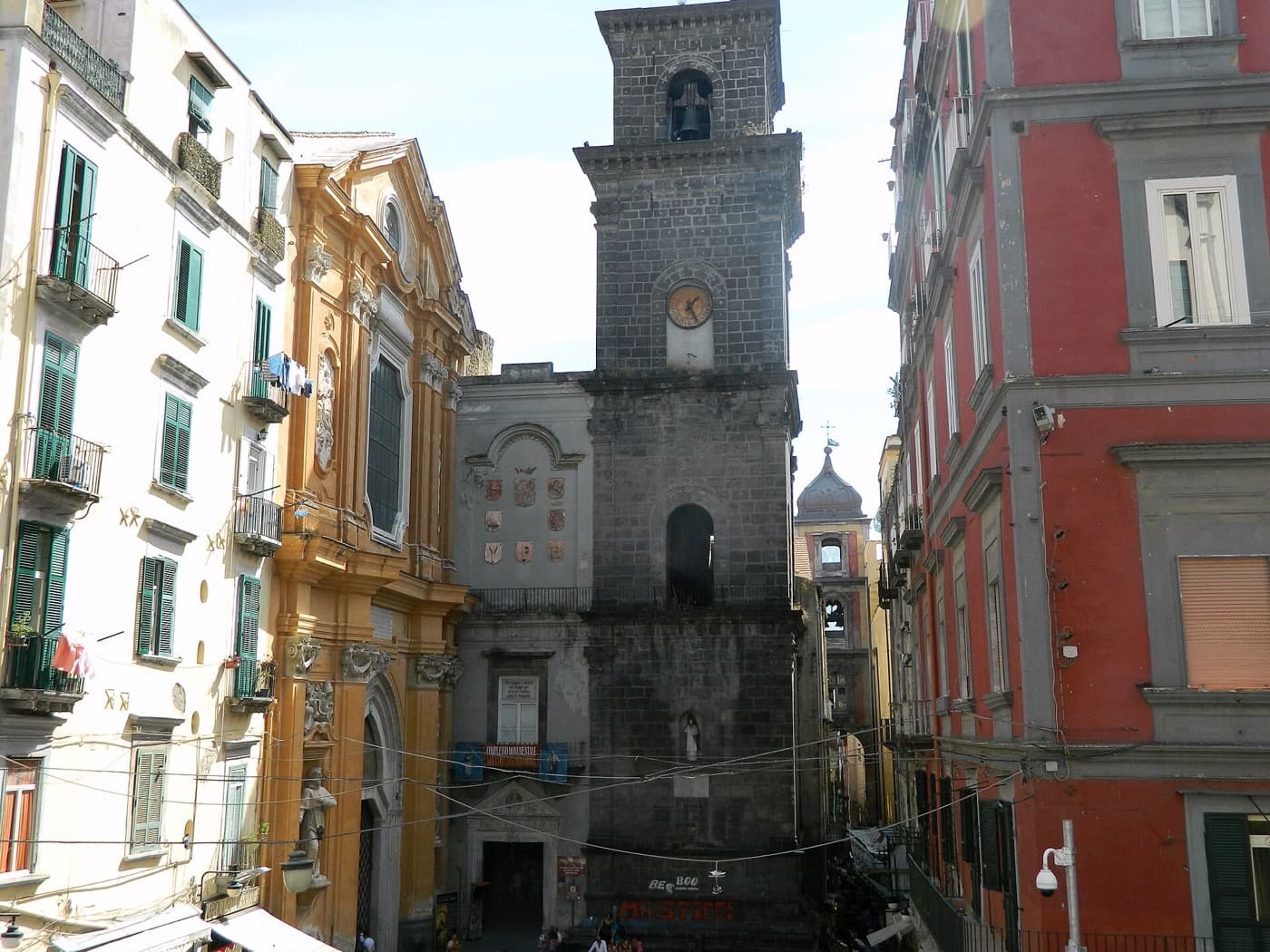
San Lorenzo Maggiore: The Void Breaks Surface
A Franciscan church whose floor became the lid on an excavated Roman market, the void of the walk surfacing under a place of worship.
- 3
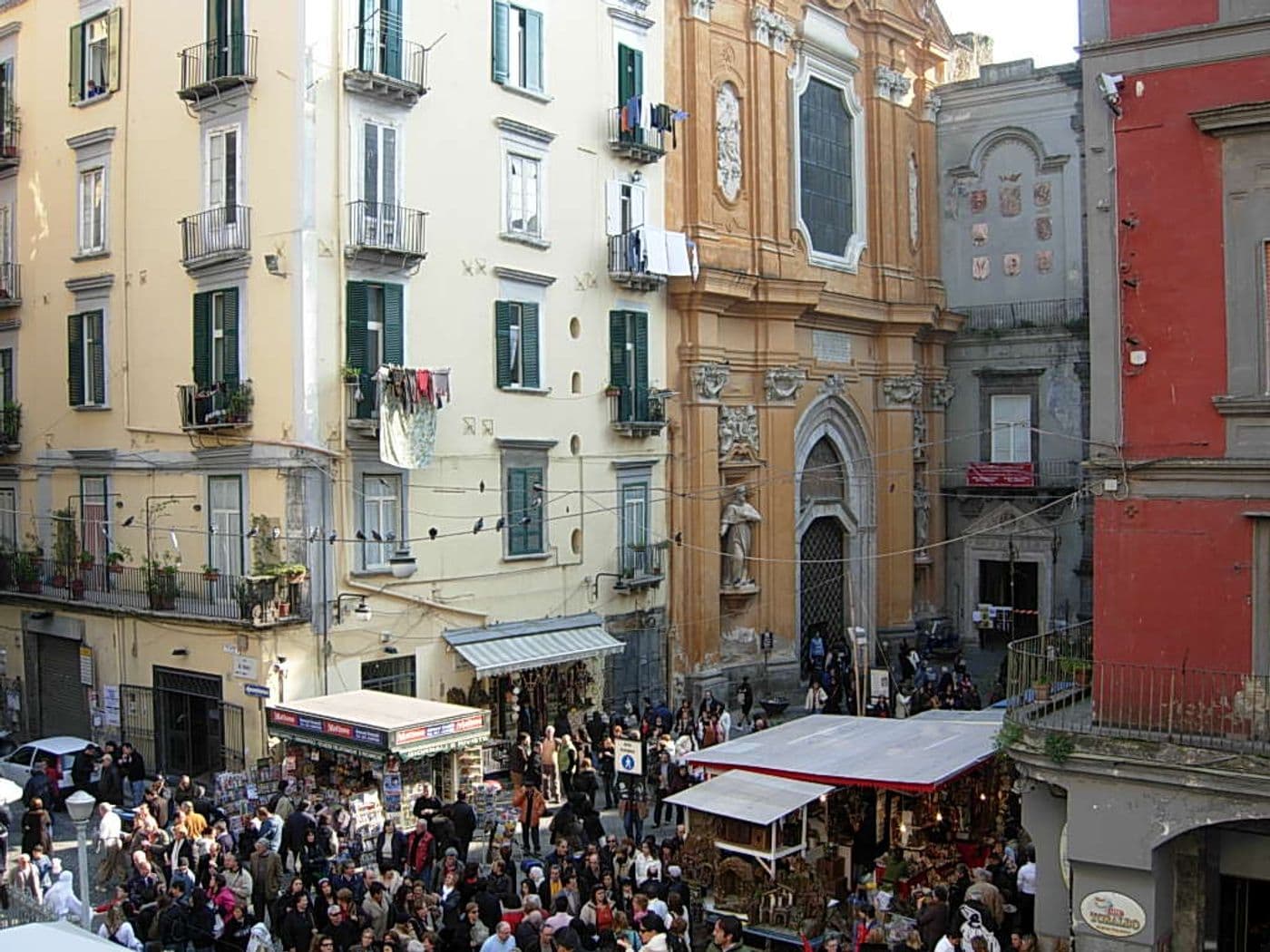
Piazza San Gaetano: The Ceiling of the Ancient City
The public square that sits on the ancient Greek agora and Roman forum, the civic hinge of the old grid and the literal ceiling of the excavated market.
- 4
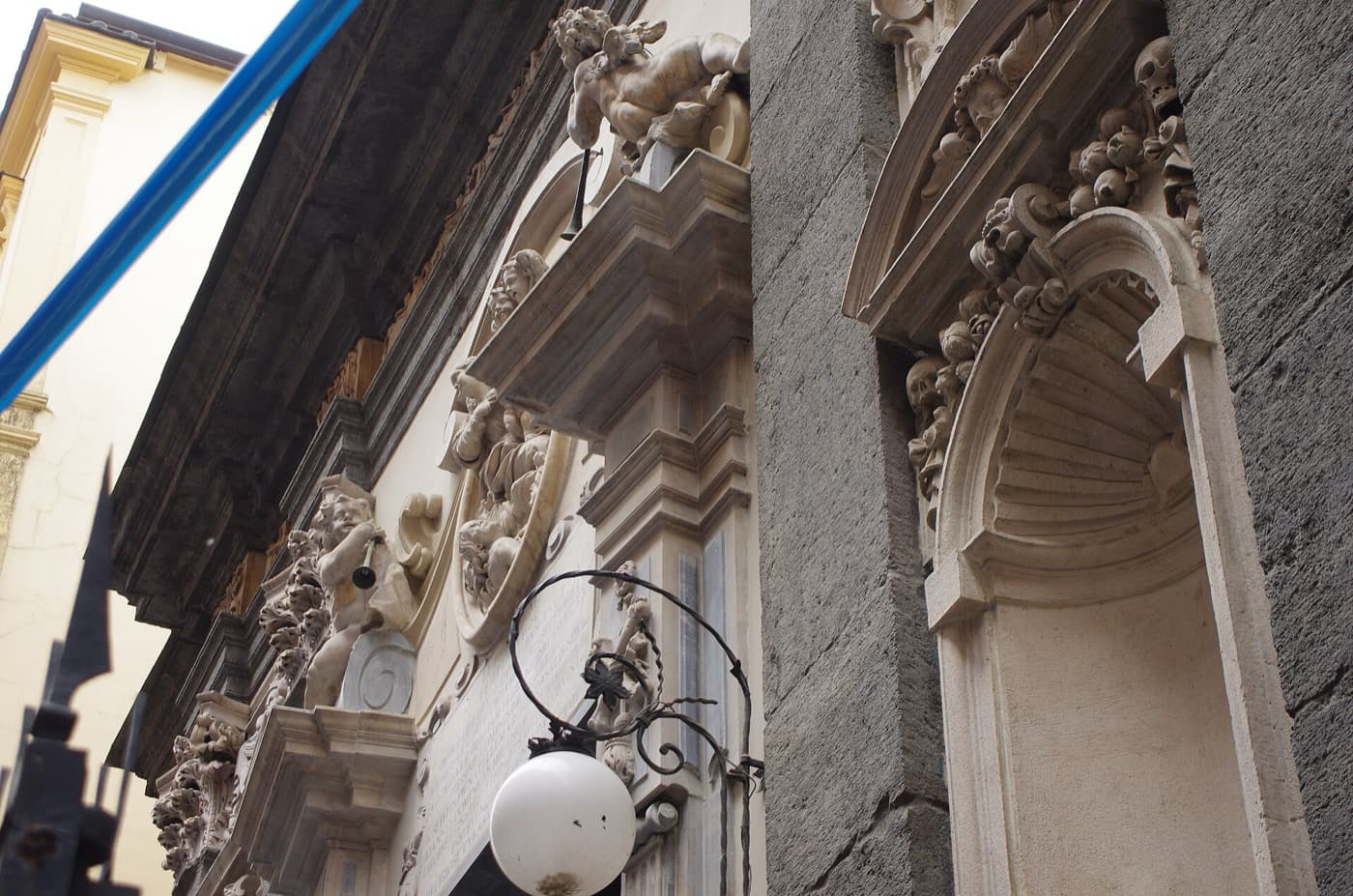
Santa Maria delle Anime del Purgatorio ad Arco: The Darker Hollow
A seventeenth-century church whose underground crypt became the center of a folk cult of anonymous skulls, where the city prayed downward for its abandoned dead.
- 5
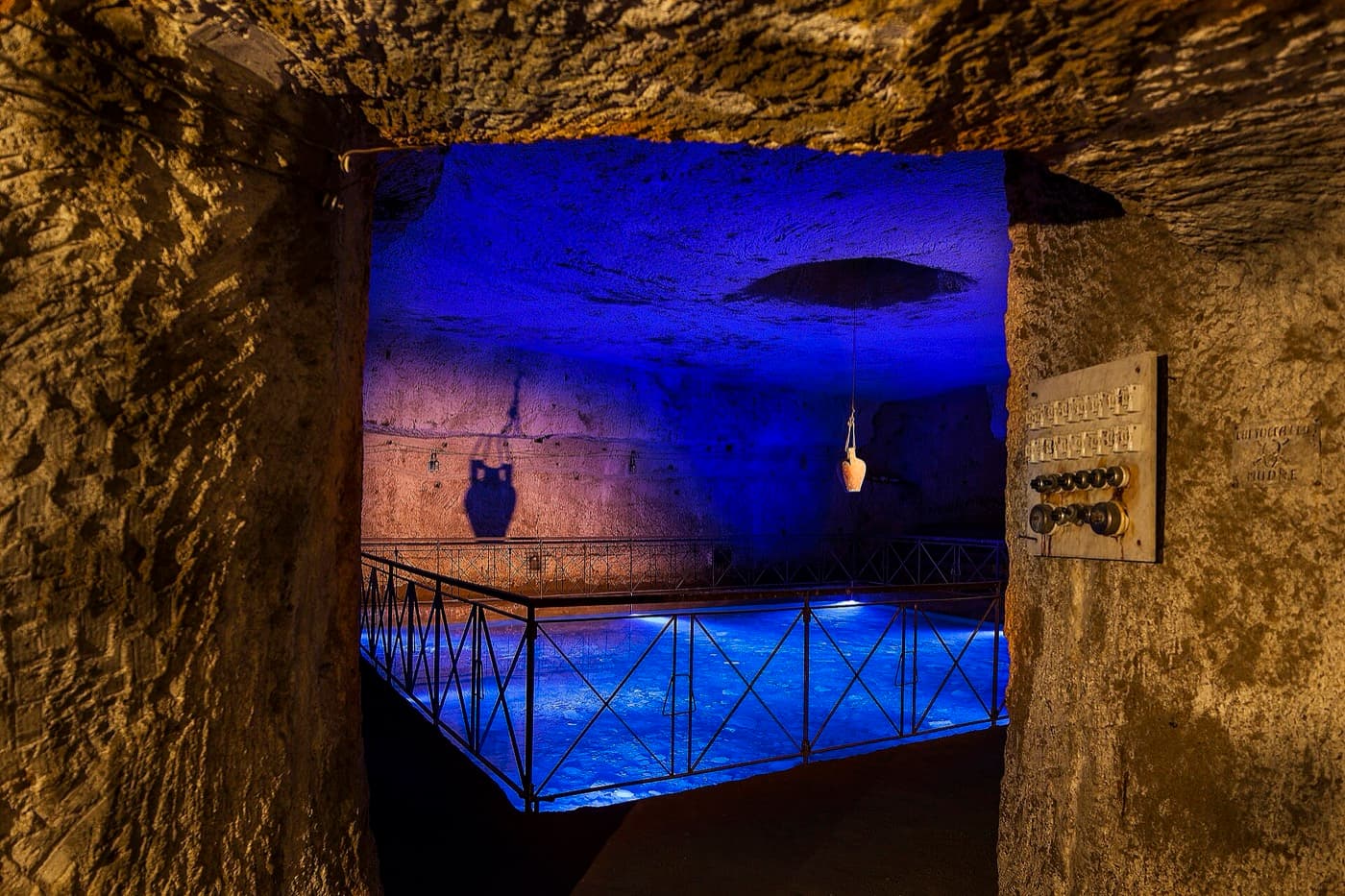
Galleria Borbonica: The Engineered Hollow
An unfinished nineteenth-century royal escape tunnel that cut into ancient cisterns and later sheltered thousands during wartime, the hollow deliberately engineered.
- 6
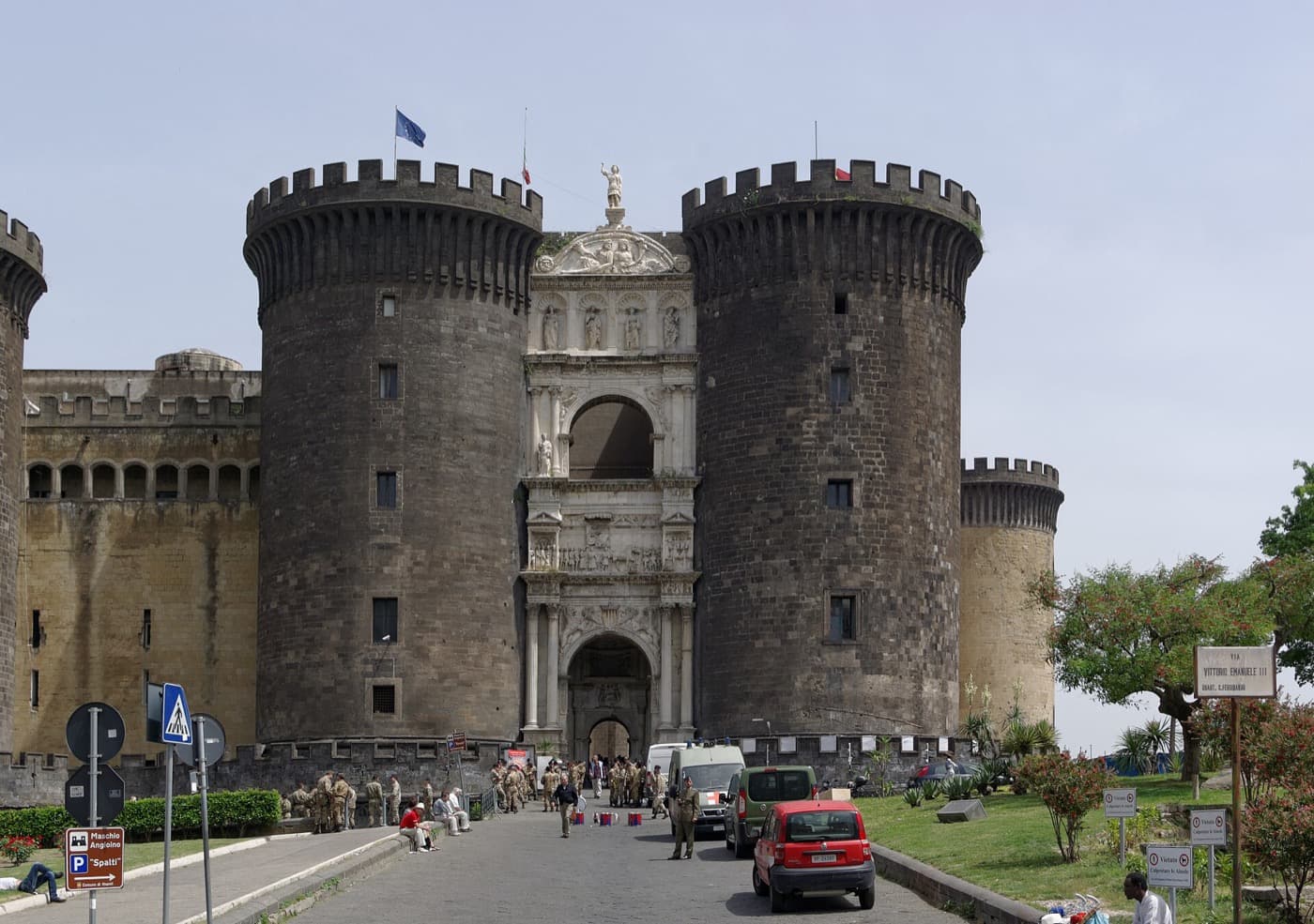
Castel Nuovo: The Lid Closed at the Sea
The Angevin castle by the port, read from the square, where the city surfaces fully and greets the sea with a marble arch of triumph.
Details
Best Time to Visit
Early morning or mid to late afternoon. The old center is busiest and hottest around midday, so starting by nine or after four keeps the narrow streets cooler and less crowded, and gives softer light on the tuff facades as you descend toward the sea.
Pro Tips
- •This is a downhill transect from the ancient center to the port, so start high at Piazza San Gaetano and let gravity work for you toward the sea.
- •The underground sites at stops one, two, four, and five are the real payoff. Pick one or two to actually descend into rather than trying to enter all of them, since each takes time and often runs on guided timeslots.
- •Ticketed underground sites can sell out or run on fixed entry times. Check hours in advance and book ahead where you can, especially for the guided tunnel and quarry descents.
- •Wear closed shoes with grip. The descents involve many steep steps and the underground floors can be damp and uneven.
- •Carry a light layer even in summer. The caverns stay cool year round, a sharp contrast to the heat at street level.
- •Keep some cash on hand. Smaller church crypts and underground sites do not always take cards smoothly.
Safety & Precautions
- •The old center draws crowds and pickpockets work the busy stretches of Via dei Tribunali and the port squares. Keep bags zipped and in front of you, and stay aware in tight throngs.
- •The historic streets are paved in old cobbles and the underground routes have steep, sometimes slick staircases. Watch your footing and use handrails on the descents.
- •The churches on this walk are active places of worship. Cover shoulders and knees to enter, and keep voices low, especially near the crypt shrines.
- •Midday heat is intense in summer and shade is scarce in the open squares. Carry water, use the cool underground stops to your advantage, and pace the walk gently downhill.
Travel advisory: Exercise Increased Caution (Level 2).
Gallery
Related Reading
Go deeper on what you'll see, hear, and walk through.
Overview
Best Self-Guided Walking Tours in Naples (2026)
3 min
Overview
Naples Travel Guide: Days, Transport, Timing, Safety, and Budget
7 min
Overview
One Day in Naples on Foot: A Walkable Morning-to-Evening Itinerary
6 min
Thematic
Best History Walking Tours in Naples (2026)
2 min
Thematic
Naples Read in Section: The Vertical City Above and Below the Street
8 min
Companion
The Hollow City: Reading Naples From the Void Beneath Napoli Sotterranea
7 min

Read
What to Eat in Naples: The Dishes, Their Origins, and How to Order
6 min
Read the walk
The full story of Napoli Sotterranea: The City Below, in words. Prefer to listen? Play it narrated, from home or on location.
Introduction
Here is the strange truth about Naples, in Italy. The city is built from the same soft golden stone it stands on, quarried straight down from beneath its own feet. What the Greeks and Romans cut out left a labyrinth of caverns, water channels, and cisterns roughly forty metres below the paving. So much of the old center is, quite literally, the roof of the emptiness it came out of. This walk follows that void downhill, from the civic hub in the ancient grid down toward the port. It reads the visible city as a lid, and asks what lies under each square you cross. There are six stops. Give yourself about two and a half to three hours at your own pace, walking about three and a half kilometres, all gently downhill toward the water. Stops themselves run just a few minutes each, short and skippable. Linger where a place holds you, move on where it does not. You will stand over a quarry that became a wartime shelter, over a Roman market buried by a mudslide, on the old agora itself, above a crypt of anonymous skulls, inside a royal escape tunnel that reused an ancient aqueduct, and finally at the sea, where the city surfaces with an arch of triumph. Along the way, notice how the underground is not one ticketed novelty but a single continuous system, surfacing again and again. Every square here is a ceiling. When you arrive at the entrance to Napoli Sotterranea on Piazza San Gaetano, begin with stop one.
1. Napoli Sotterranea: The Literal Void
Begin above the void. The entrance sits on Piazza San Gaetano, on Via dei Tribunali, right beside the Basilica of San Paolo Maggiore. If you go down, it is about one hundred and thirty-six steps to roughly forty metres below the street. That number, about forty metres, is worth holding onto, because it is the depth of nearly everything on this walk. What is down there began as a quarry. According to the site's own history, the Greeks opened the first underground tuff quarries here in the third century before the common era, cutting blocks to raise the walls and temples of their city, Neapolis. They dug the stone from directly beneath where they were building, which is why the hollow lies exactly under the old center. Later, in the Roman age, engineers turned the same cavities into an aqueduct network, fed by conduits carrying water from the springs of the Serino, about seventy kilometres away. Water moved through the tuff for centuries. Then, in the twentieth century, the shafts served a very different purpose. During the Second World War, families climbed down these same channels to shelter from the Allied bombing of the city. One hollow, three lives: quarry, plumbing, refuge. The site literature counts the total network in the millions of cubic metres. You do not have to descend today to understand the point. Just stand on the paving and let the scale settle. Beneath this ordinary square is a carved emptiness the size of a small district, and the buildings around you are made of exactly what was scooped out of it. The city and its shadow are the same stone, turned inside out.
2. San Lorenzo Maggiore: The Void Breaks Surface
Now the hollow breaks the surface. San Lorenzo Maggiore is a Franciscan church, and the ground it stands on came to the friars as compensation. When Charles the First of Anjou built his new fortress by the sea in the late thirteenth century, the Franciscans were granted this site in exchange. That is the church above. What makes this stop essential is what lies beneath the floor. About half of an original Roman market has been excavated here, a structure the Romans called a macellum. Go further back in time and this was the Greek agora, the open marketplace, in the fifth and fourth centuries before the common era. When the city became Roman, that agora was rebuilt as this covered market. Then, in the fifth century of the common era, a mudslide buried the whole thing, probably from flooding, and it vanished under the accumulating city. The excavation took about twenty-five years, and the site opened to the public in nineteen ninety-two. It is described as the only large-scale Greek and Roman site dug out in the heart of downtown Naples. What you can see, if you go down, are rows of barrel-vaulted shops opening onto a paved ancient street, storage rooms, and a round central structure once used to distribute water. Here is the key idea of the whole walk, made visible in one place. The underground is not a separate novelty. It is the earlier city, still standing, with the modern one built directly on its ceiling. You are looking at Neapolis, not a reconstruction of it, simply lower down.
3. Piazza San Gaetano: The Ceiling of the Ancient City
Stand still in this square, because you are standing on the hinge of the entire ancient city. Piazza San Gaetano sits on the site of the Greek agora and later the Roman forum of Neapolis, the civic heart of the old grid. Look at the streets meeting here. This is the crossing of…
Full narration for this stop unlocks with the tour.
4. Santa Maria delle Anime del Purgatorio ad Arco: The Darker Hollow
This stop descends into a darker part of the hollow. On Via dei Tribunali, at number thirty-nine, stands the church of Santa Maria delle Anime del Purgatorio ad Arco. It was erected in sixteen sixteen, designed by the architect Giovan Cola di Franco, and consecrated in sixteen…
Full narration for this stop unlocks with the tour.
5. Galleria Borbonica: The Engineered Hollow
Here the hollow is not inherited but engineered on purpose. This is the Galleria Borbonica, the Bourbon Tunnel. In eighteen fifty-three, Ferdinand the Second of Bourbon commissioned an underground passage, designed by the architect Errico Alvino, as a military route and escape…
Full narration for this stop unlocks with the tour.
6. Castel Nuovo: The Lid Closed at the Sea
The walk ends at the sea, and the void closes. Read this last stop from the square by the port, the Castel Nuovo, also called the Maschio Angioino. Construction of what was named the new castle began in twelve seventy-nine, on the initiative of Charles the First of Anjou, after…
Full narration for this stop unlocks with the tour.