Laneways and Arcades: The Hidden City Inside the Grid
75 min · 2 km · easy
Melbourne was laid out in eighteen thirty-seven as a plain rectangular grid, wide and rational and public, on Wurundjeri Woi-wurrung Country, and fourteen years later gold changed everything. Gold was found in Victoria in eighteen fifty-one, the town of about twenty-nine thousand people swelled past one hundred thousand within a decade, and the money that followed did two things at once. It paid for a secret second city of narrow service lanes and glass-roofed arcades inside the grid's blocks, and it raised, along the eastern edge of the grid on Spring Street, a civic quarter of parliament, treasury, theatre and cathedral to match the new wealth, beside the bluestone gaol where the bushranger Ned Kelly went to the gallows in eighteen eighty. To read Melbourne is to read those two answers to the same windfall: the hidden layer below and the grand quarter above. Both are best walked slowly, at your own pace.
The fortune that built a second city inside the grid
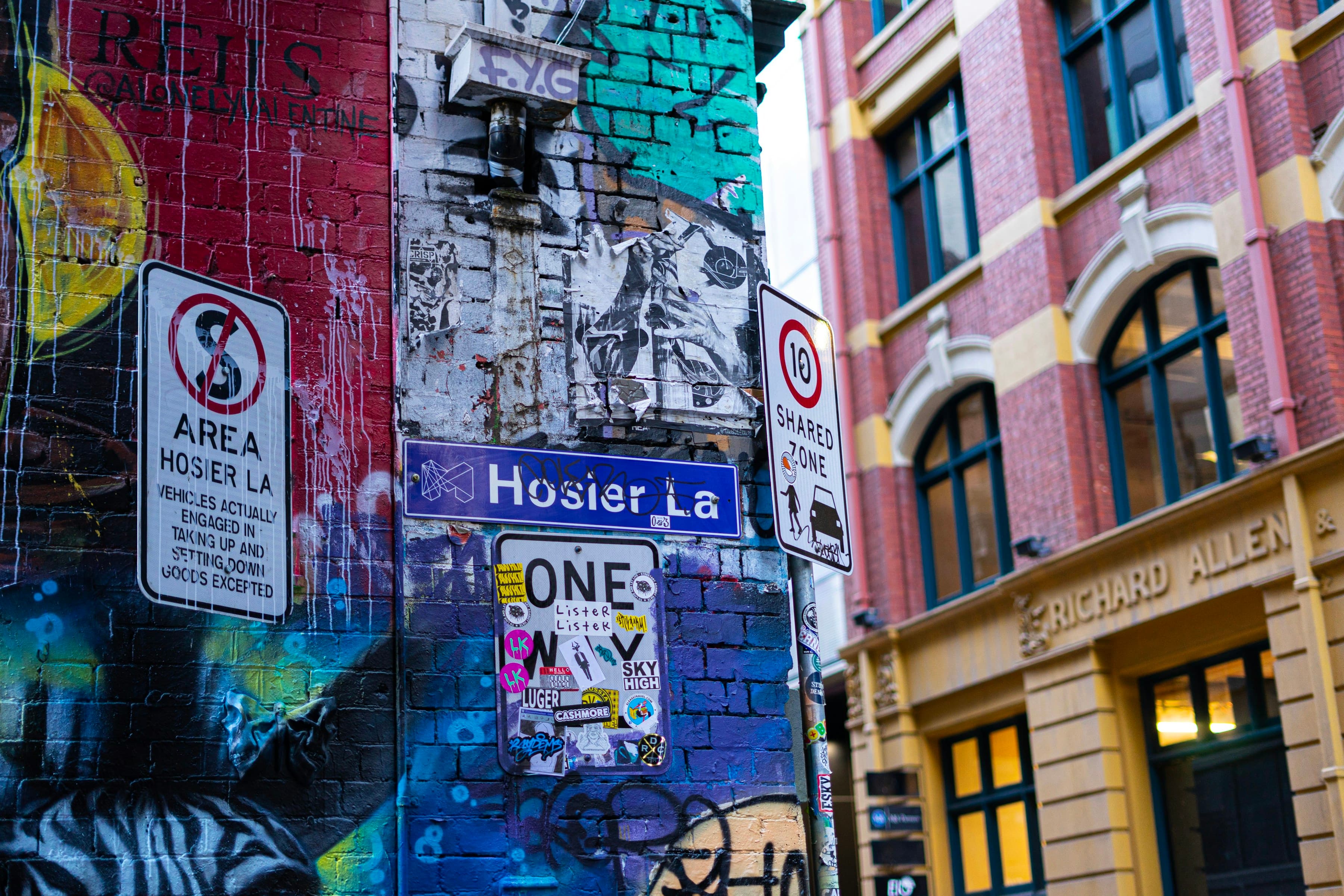
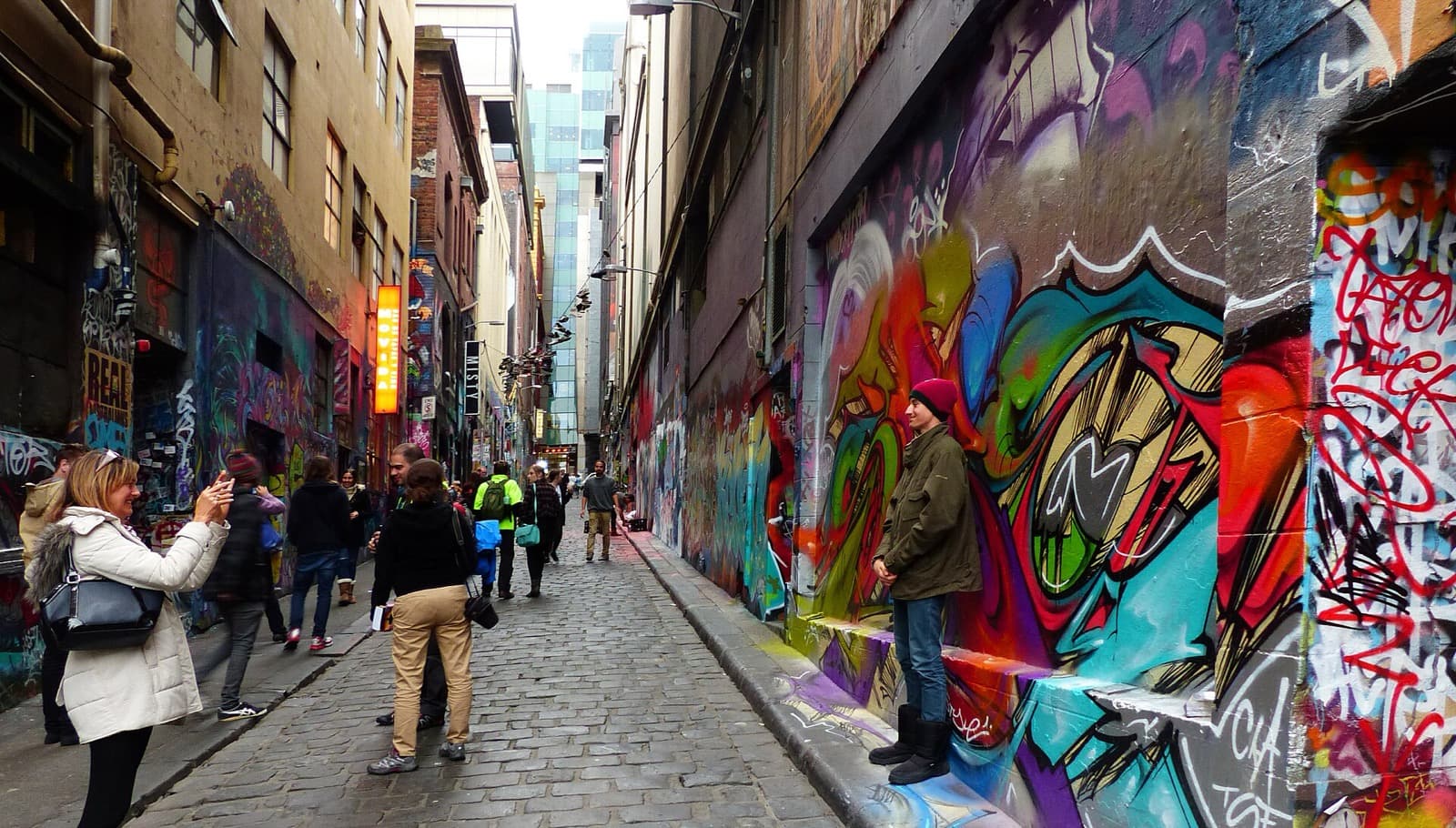
The gold did not just make Melbourne bigger. It made it double. Robert Hoddle's plan was a confident colonial grid of wide streets, and Governor Bourke had insisted on narrow "little" streets between them for rear access. As the town filled, the big blocks were subdivided and subdivided again, and lanes multiplied inside them: eighty named lanes by eighteen fifty-six. Those service alleys behind the grand thoroughfares became the soul of the town. On the Laneways and Arcades: The Hidden City Inside the Grid walk, the first reveal is Degraves Street and Centre Place. Degraves Street is named after William Degraves, a flour miller who came from Hobart in eighteen forty-nine and became a buyer of gold. Centre Place was Cummings Alley in the eighteen nineties, and in the nineteen eighties it was among the first lanes the city revived. Later the walk reaches Hosier Lane, which the City of Melbourne calls the birthplace of Melbourne street art. It is a long-standing de facto free-to-paint area that needs no permit, so the walls can change overnight and you are looking at a gallery you can never see twice. A twenty thirteen repaint, by its organisers' count, brought more than one hundred artists to these walls at once. This street-art culture grew straight out of the unglamorous gaps in the grid.
Between the lanes, the boom shows its other face. The Block Arcade, built between eighteen ninety-one and eighteen ninety-three to designs by the firm Twentyman and Askew, was modelled on Milan's Galleria Vittorio Emanuele the Second: an interior street with a mosaic floor of tiles imported from Europe, a glass roof on cast-iron trusses, and a glazed octagon where its two arms meet. It was built with land-boom money, not gold, and it opened as the boom broke: its developer, the financier Benjamin Fink, was insolvent in eighteen ninety-two, the year the first arm opened. Its name records an older social ritual: "doing the Block," the fashionable promenade along Collins Street from the eighteen sixties, which the novelist Fergus Hume compared in eighteen eighty-six to London's Bond Street and the boulevards of Paris. Nearby, the Royal Arcade opened in eighteen seventy to a design by Charles Webb, built on gold-rush wealth, and is the oldest surviving shopping arcade in Australia. Its carved pine giants, Gog and Magog, were installed at the Little Collins Street end in eighteen ninety-two, flanking a clock that carries the name of the watchmaker Thomas Gaunt, though Gaunt died in eighteen ninety and the clock is attributed to Frederick Ziegler. Wires from the clock set the giants striking the hours. Wait a few minutes before the hour and you will hear a Victorian machine keep time as it has for well over a century.
Chinatown, born of the gold rush
Hear a stop from this walk
Federation Square: The Lid Over the Railway
The hidden Melbourne is not only architecture. The eighteen fifty-one gold discovery drew Chinese migrants to what they called the New Gold Mountain, arriving in significant numbers from eighteen fifty-three. The first Chinese lodging houses were recorded in Little Bourke Street in late eighteen fifty-four, and by eighteen fifty-nine there were more than forty thousand Chinese migrants in Victoria. That year the Num Pon Soon Society bought land on the street for its clubrooms, and its building of eighteen sixty-one is the earliest surviving Chinese community building in Victoria. The community put down roots that never lifted. The City of Melbourne calls it Australia's oldest Chinatown and the longest continuous Chinese settlement in Australia, held without a break for over a century and a half. That continuity was hard-won: after the colonies federated, the Immigration Restriction Act of nineteen oh one, the law behind the White Australia policy, restricted Chinese immigration for decades, and the community here endured through it. The quarter the gold brought into being has outlasted every boom since.
Up the hill, the gold colony's grand end
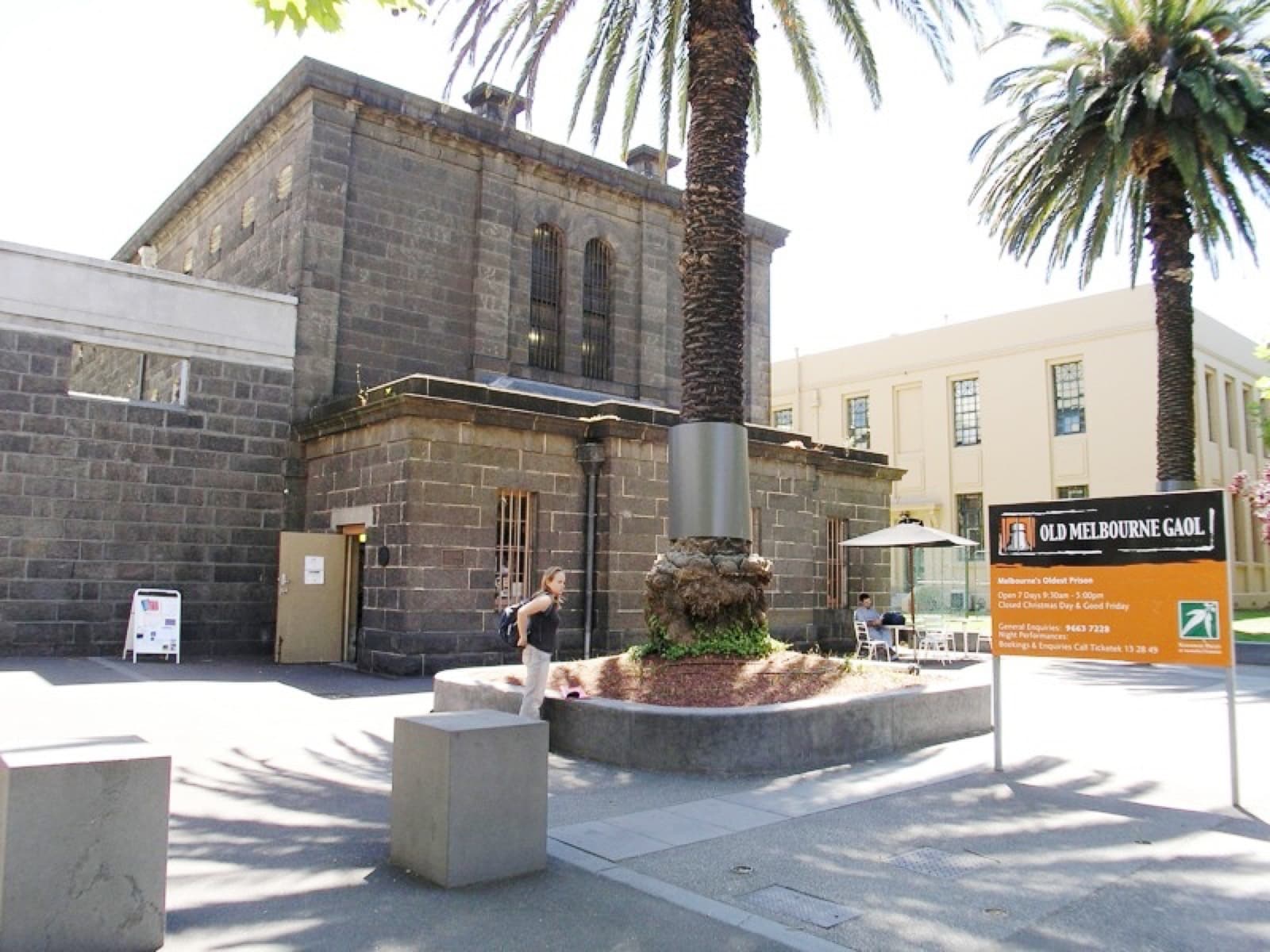
If the laneways are what the fortune whispered, Spring Street is what it announced. The Spring Street: The Gold Colony's Grand End walk reads the civic quarter at the top of the town, where grandeur and the gallows stand only a few blocks apart. It begins at the Old Melbourne Gaol, the oldest surviving penal establishment in Victoria, whose earliest cellblock opened on the first of January, eighteen forty-five, with a new bluestone wing rising between eighteen fifty-two and eighteen fifty-four in the first flush of gold. Well over one hundred and thirty people were hanged here. The most famous was Ned Kelly, hanged on the eleventh of November, eighteen eighty, recorded by the gaol as the one hundred and first person executed there. The place asks for a quiet, sober kind of attention, not a thrill.
A short walk away, the same wealth turned to spectacle. The Princess Theatre was rebuilt in its ornate Second Empire form in eighteen eighty-six by the architect William Pitt, in the years the city liked to call Marvellous Melbourne, and it is described as the oldest surviving entertainment site on mainland Australia. Its treasured ghost story, told as legend and not fact, holds that the baritone Frederick Federici died onstage in eighteen eighty-eight during Faust, after which a dress-circle seat was kept vacant for years in his honour.
Where a nation borrowed a house
The grandest claim on Spring Street is quieter than its columns. Parliament House, begun in the mid eighteen fifties to designs by Knight and Kerr, first sat on the twenty-fifth of November, eighteen fifty-six, and its planned crowning dome was never built, which makes it one of Melbourne's most famous unbuilt features. When the Australian colonies federated in nineteen oh one, there was no national capital yet, so the new federal parliament met right here until nineteen twenty-seven, when it left for Canberra and the Victorian parliament officially returned on the sixth of July that year. For the first quarter-century of the nation, the laws of all Australia were debated behind this colonnade. Across the road, the Hotel Windsor, Melbourne's only surviving purpose-built grand Victorian-era hotel, housed delegates finalising the constitution during the federal convention session of January eighteen ninety-eight.
The gold theme reaches its plainest statement at the Old Treasury Building, designed by John James Clark when he was just nineteen and built between eighteen fifty-eight and eighteen sixty-two. Its basement bluestone vaults were built to hold gold bullion, but by the time they were finished the first wild rush had passed, so they held government documents instead, a fortune already slowing written into empty cellars. The same confidence poured, patiently, into stone at Saint Patrick's Cathedral, begun in eighteen fifty-eight and not finished until its spires were completed in nineteen thirty-nine, the best part of a century of work. The walk ends among the roughly two hundred and seventy English elms of the Fitzroy Gardens, where Cooks' Cottage, shipped from Yorkshire in two hundred and fifty-three cases and forty barrels, reopened in nineteen thirty-four, the old world rebuilt in the new.
Two answers, one windfall
Read together, the laneways and Spring Street are a single story told twice. Gold gave Melbourne a hidden layer of lanes and arcades and a grand quarter of power and spectacle, both laid over far older Country. You can walk each at your own pace, with no group and no schedule. For the full set of routes through the gold-rush city, see our Melbourne walking tours.
Sources
- Old Melbourne Gaol, National Trust of Australia (Victoria): history of the gaol, executions, and Ned Kelly.
- Victorian Heritage Register / Heritage Victoria: listings for Flinders Street Station, the Block Arcade, the Royal Arcade, Parliament House, the Princess Theatre, and the Old Treasury Building.
- Old Treasury Building Museum: John James Clark, the bluestone vaults, and the Victorian gold rush.
- Parliament of Victoria: federal parliament in Melbourne, nineteen oh one to nineteen twenty-seven, and the return to Spring Street.
- City of Melbourne / Chinese Museum (Museum of Chinese Australian History): Chinatown and Little Bourke Street history, and Australia's oldest Chinatown.
- State Library Victoria: Chinese miners and the New Gold Mountain.
- eMelbourne (Encyclopedia of Melbourne) and the Australian Dictionary of Biography: the grid plan, lanes and alleys, Degraves Street, Centre Place, the Royal Arcade, Benjamin Fink and William Degraves.
- City of Melbourne: Hosier Lane street art and its de facto free-to-paint status.
Frequently asked questions
- Why does Melbourne have so many laneways and arcades?
- The surveyor Robert Hoddle laid out Melbourne's grid in eighteen thirty-seven, and Governor Bourke insisted on narrow "little" streets between the wide main ones so that allotments could be reached from behind. The laneways came next, as the big blocks were subdivided again and again: by eighteen fifty-six, with the gold rush filling the town, there were eighty named lanes. Gold and the land boom that followed paid for much of what was built along them, including grand glass-roofed shopping arcades. Those service alleys behind the main streets became the soul of the city, and today they carry Melbourne's street art and its Victorian arcades. The Block Arcade and the Royal Arcade are the grandest survivors of this hidden layer.
- What is the oldest arcade in Melbourne?
- The Royal Arcade is the oldest surviving shopping arcade in Australia. It opened in eighteen seventy to a design by Charles Webb, running from the Bourke Street Mall through to Little Collins Street. Its carved pine giants Gog and Magog were installed at the Little Collins Street end in eighteen ninety-two and still strike the hours, linked by wires to a clock that bears the name of the watchmaker Thomas Gaunt but is attributed to Frederick Ziegler.
- Where was Ned Kelly hanged?
- Ned Kelly was hanged at the Old Melbourne Gaol on the eleventh of November, eighteen eighty. The gaol records that he was the one hundred and first person executed there. It is the oldest surviving penal establishment in Victoria, with its earliest cellblock opening on the first of January, eighteen forty-five, and it now operates as a museum run by the National Trust.
- Did the Australian parliament ever meet in Melbourne?
- Yes. When the Australian colonies federated in nineteen oh one, Canberra had not yet been built, so the new federal parliament of the Commonwealth of Australia met in Parliament House on Spring Street, Melbourne. It stayed there until nineteen twenty-seven, when it moved to Canberra and the Victorian parliament officially returned to Spring Street on the sixth of July that year.
- Is Melbourne's Chinatown really one of the oldest?
- Yes, within Australia. Melbourne's Chinatown grew directly from the gold rush: gold was found in Victoria in eighteen fifty-one, and Chinese migrants began arriving in significant numbers from eighteen fifty-three, drawn to what they called the New Gold Mountain. The first Chinese lodging houses were recorded in Little Bourke Street in late eighteen fifty-four, and the settlement has continued without a break for over a century and a half. The City of Melbourne calls it Australia's oldest Chinatown and the longest continuous Chinese settlement in Australia.
Ready to experience it?
Laneways and Arcades: The Hidden City Inside the Grid
75 min · 2 km · easy
More from Melbourne
Explore more at your own pace.
Melbourne Travel Guide: How Many Days, Getting Around, and When to Go
One Day in Melbourne: A Walkable Itinerary Through the Laneways and the Gold-Boom Edge
Hosier Lane and the Hidden City Inside Melbourne's Grid
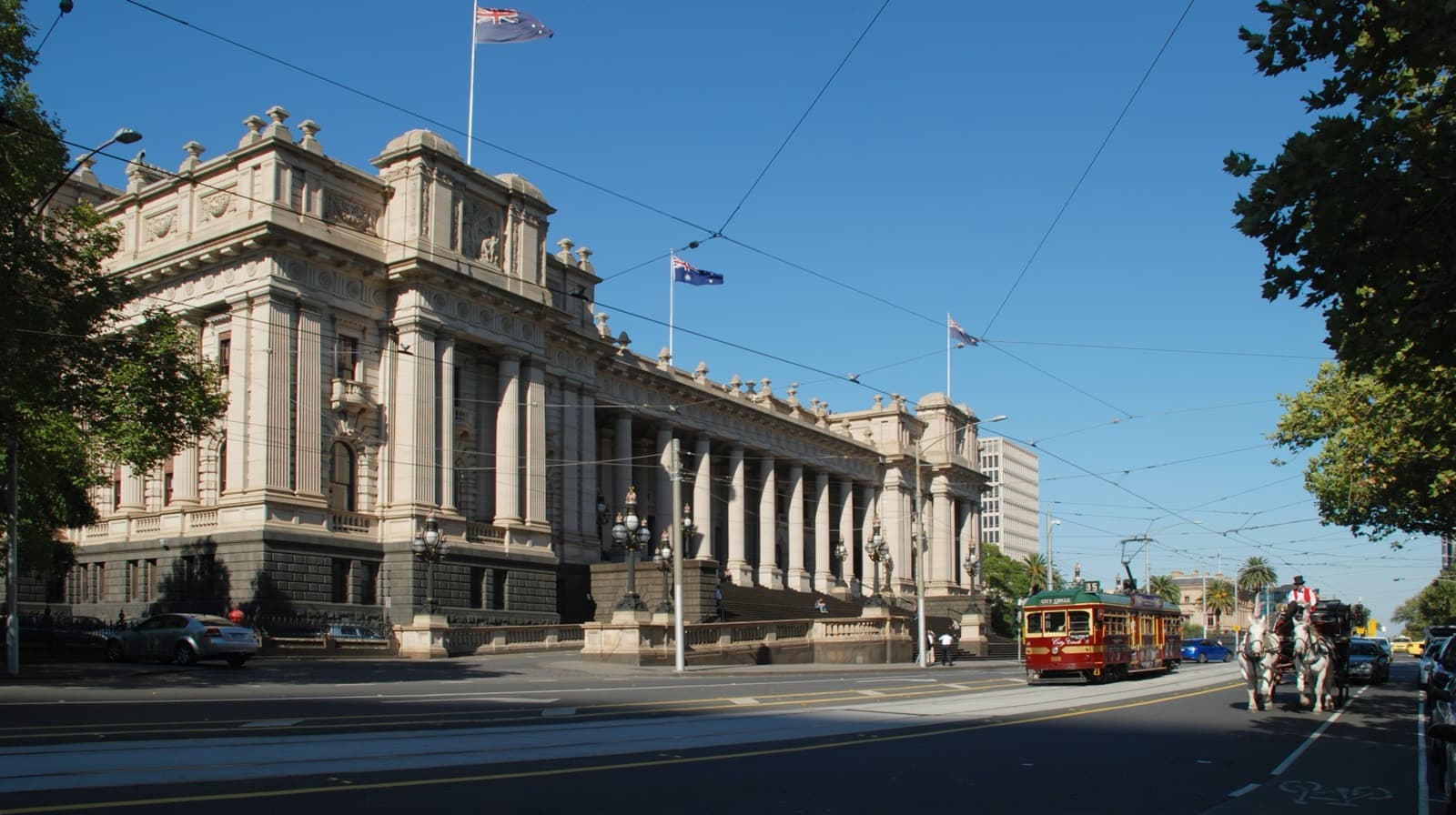
Parliament House, Melbourne: The Building That Governed a Nation It Was Never Meant To
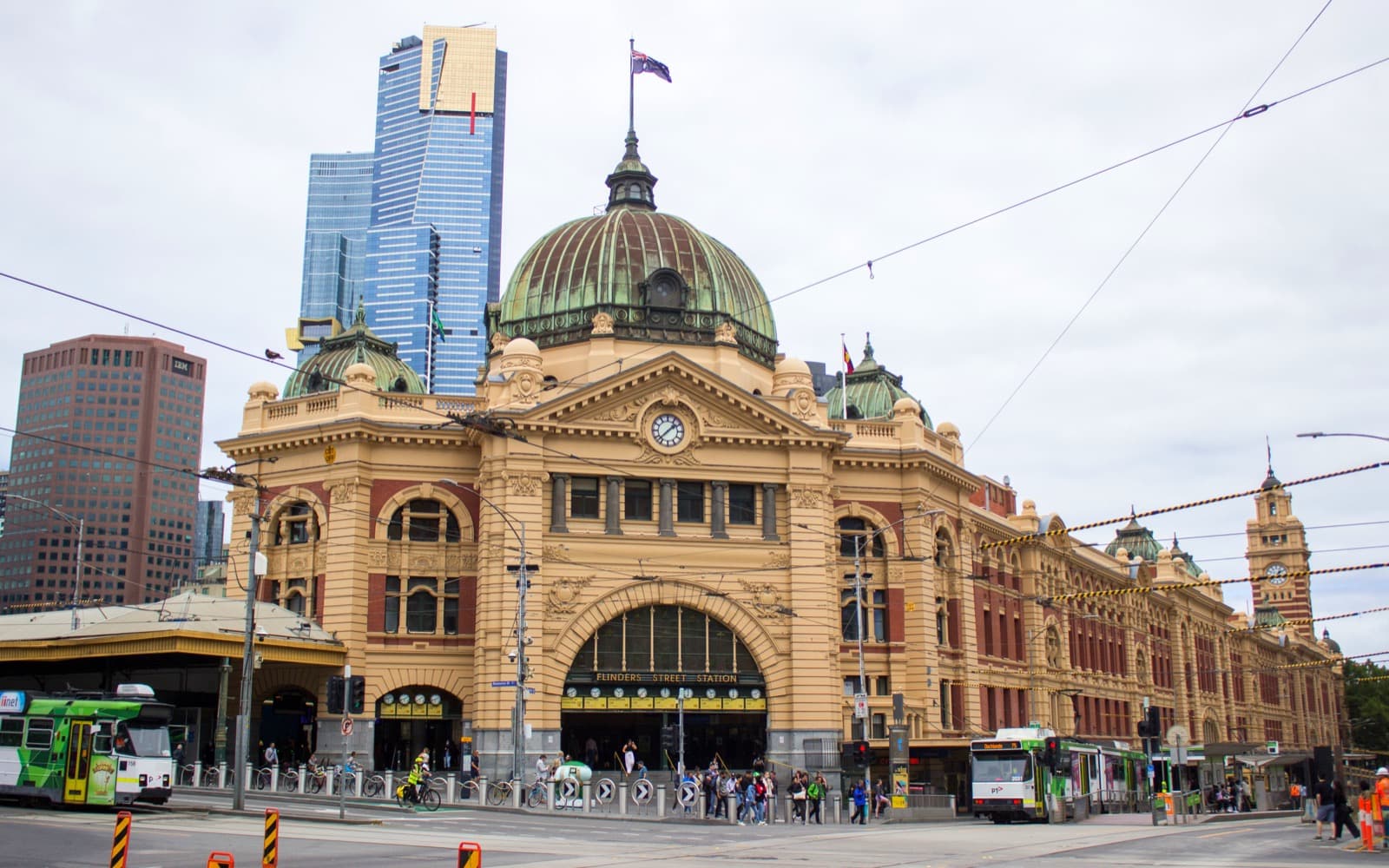
Flinders Street Station: Why Melbourne Meets Under the Clocks