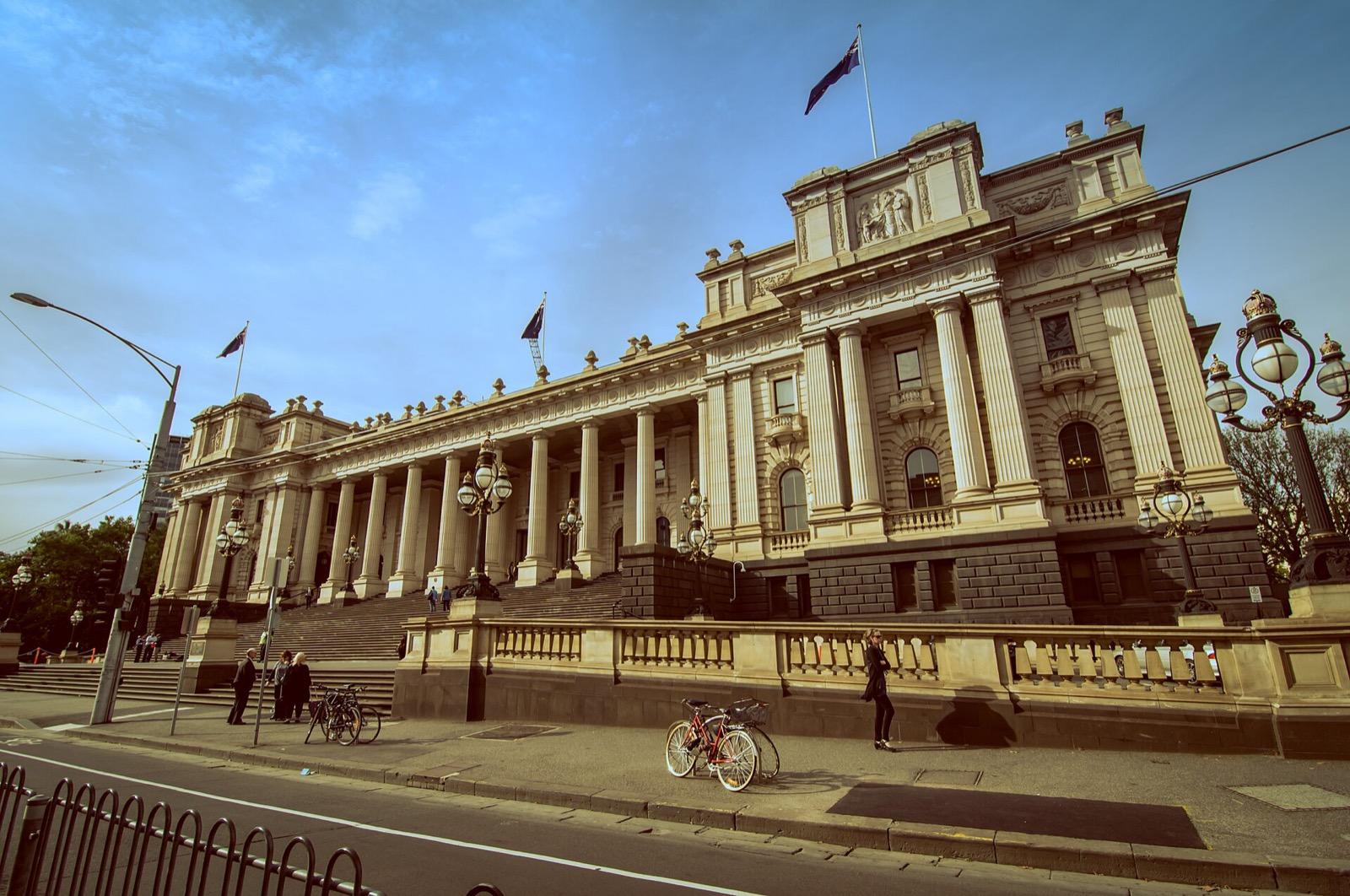
A walk along Melbourne's grand eastern edge, where gold-boom wealth raised a bluestone gaol, a gilded theatre, a nation's parliament, and a treasury built to hold a mountain of bullion. Grandeur and the gallows, a few blocks apart, at your own pace.
Start · The Old Melbourne Gaol: Where the Colony Hanged Its Condemned
DirectionsStops
- 1
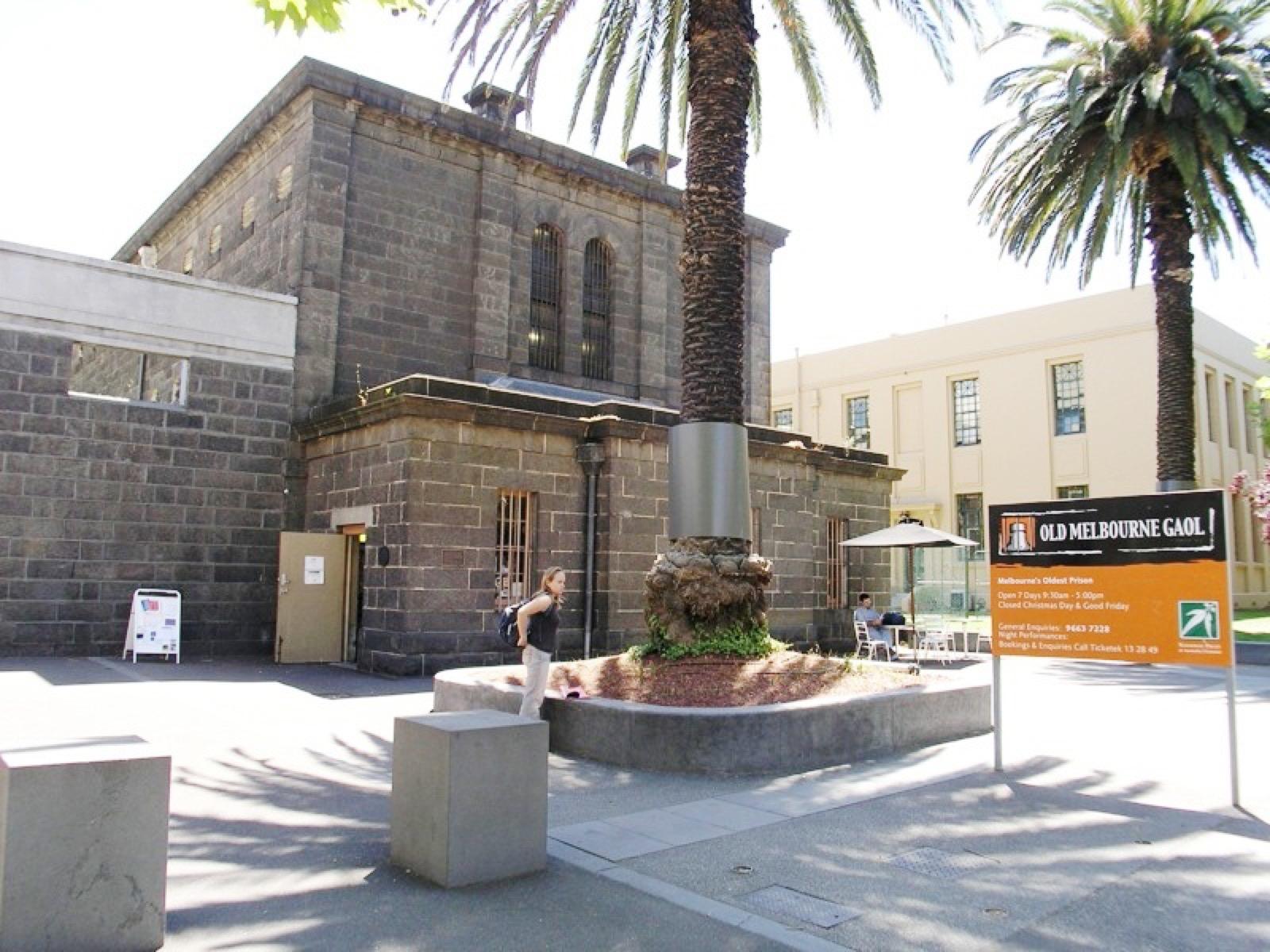
The Old Melbourne Gaol: Where the Colony Hanged Its Condemned
The grim bluestone prison where Victoria hanged its condemned, Ned Kelly among them, now a museum of the colony's harshest power.
- 2
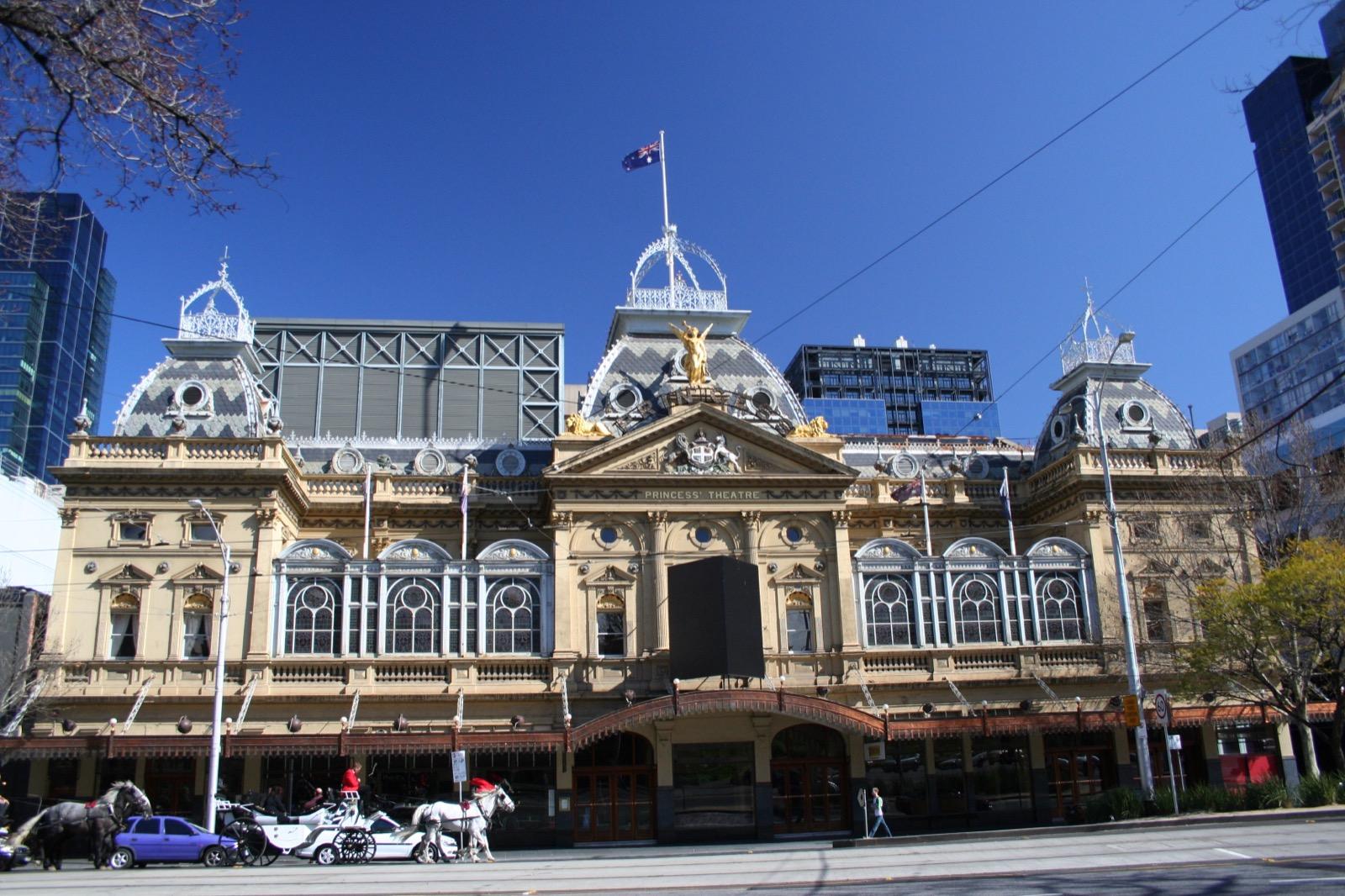
The Princess Theatre: The Gilded Boom-Time Stage
The ornate Second Empire theatre rebuilt in the gold boom, said to be the oldest surviving entertainment site on mainland Australia, and home to a famous stage legend.
- 3
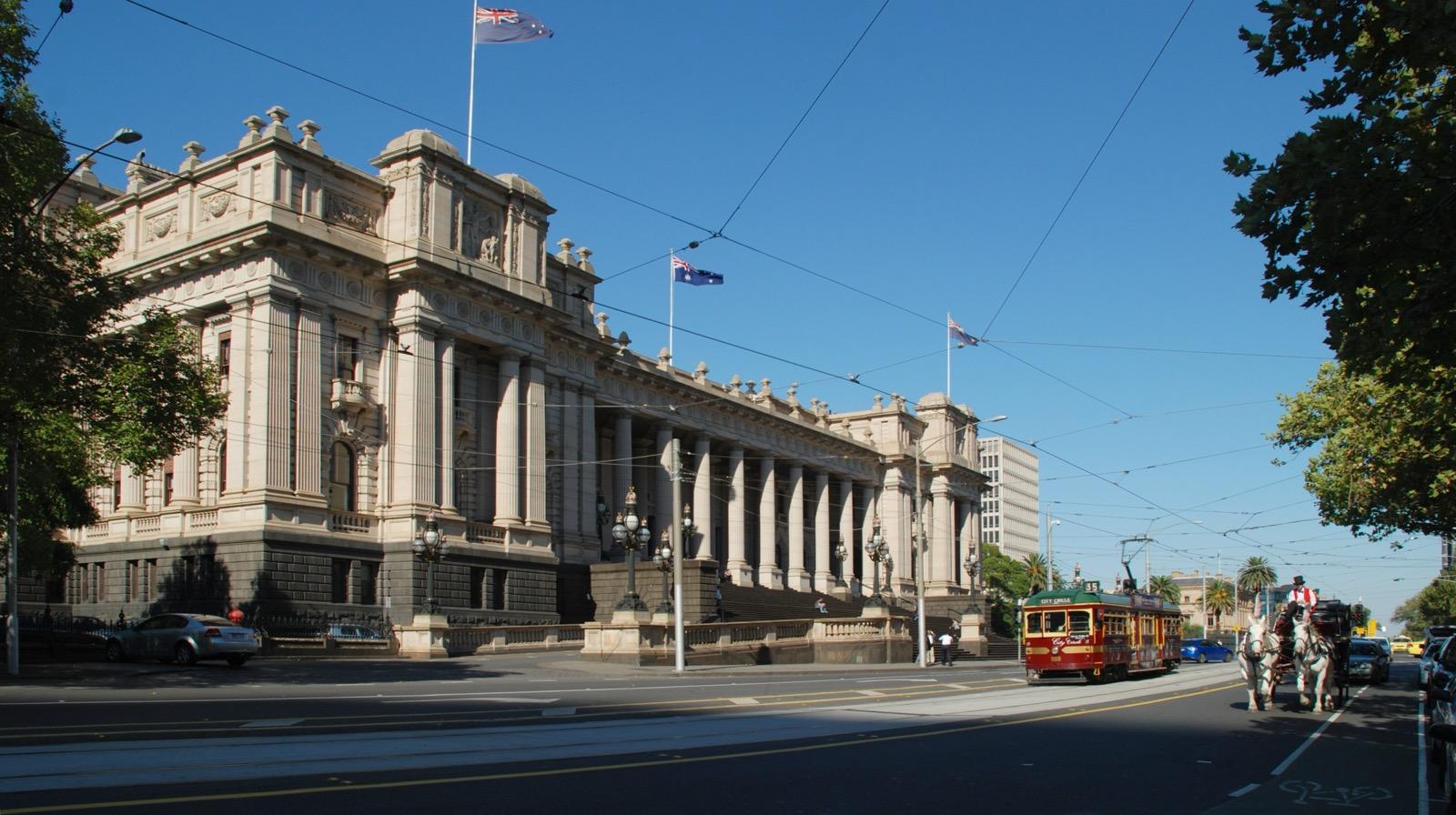
Parliament House: Where a New Nation's Parliament Met
The grand colonnaded parliament of Victoria, which for the first quarter-century of federation housed the parliament of the whole Australian nation.
- 4
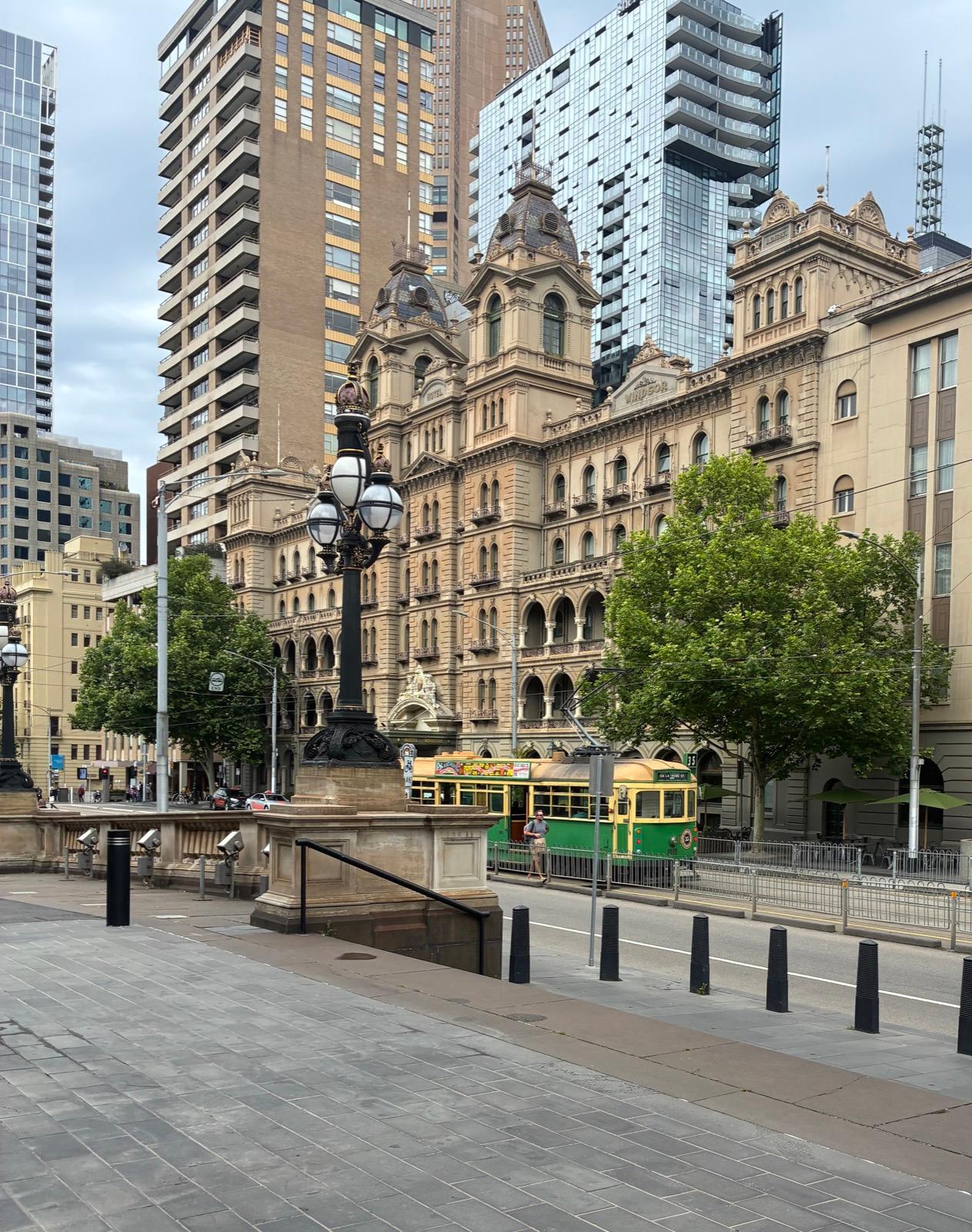
The Hotel Windsor: The Grand Hotel Across from Parliament
Melbourne's only surviving purpose-built grand Victorian hotel, opposite Parliament, associated by tradition with the making of the Australian constitution.
- 5
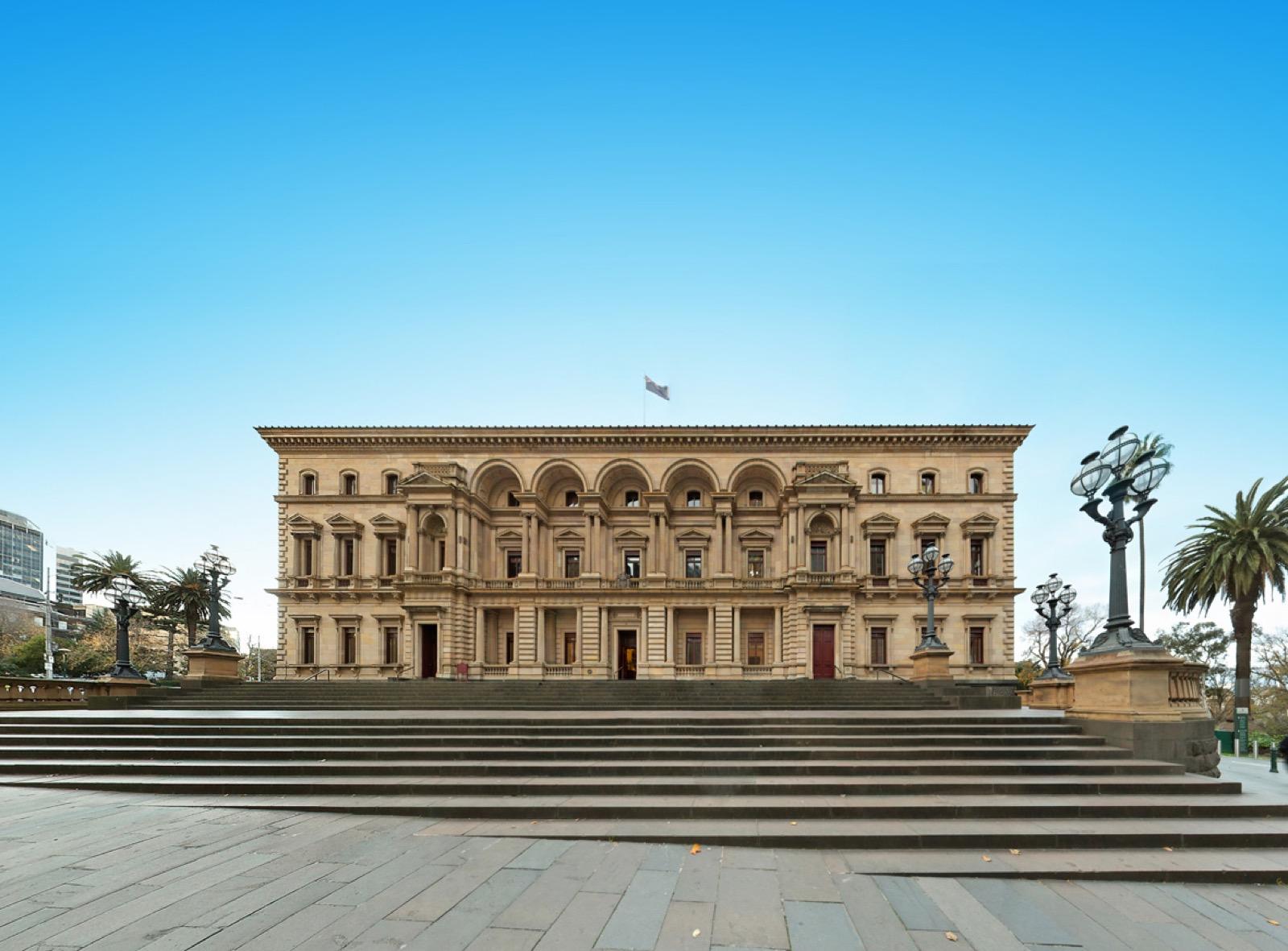
The Old Treasury Building: The Vaults Built for the Gold
A masterpiece of colonial architecture designed by a nineteen-year-old, its bluestone cellars built to hold the gold pouring off the Victorian goldfields.
- 6
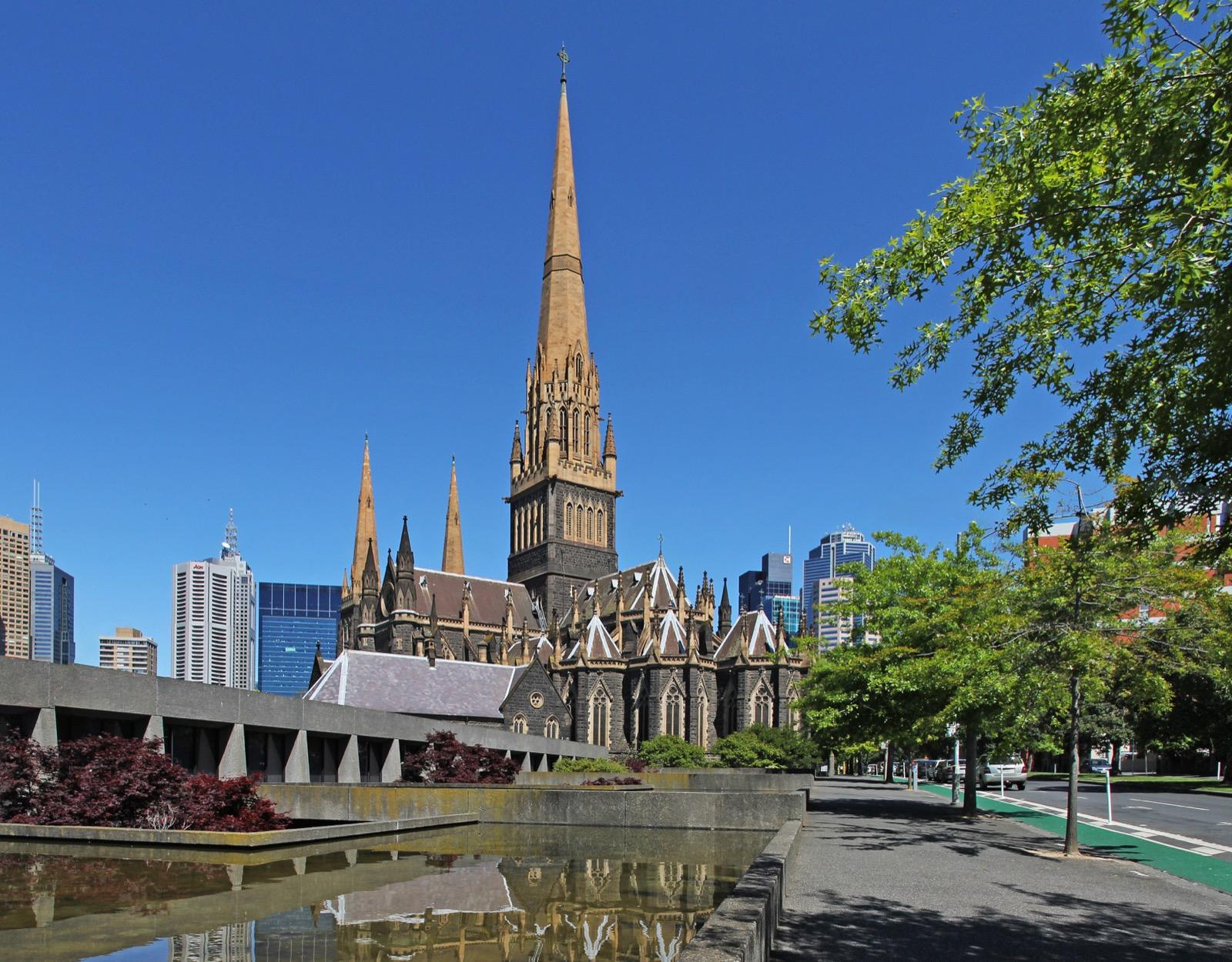
Saint Patrick's Cathedral: The Bluestone Gothic That Took a Century
A vast Gothic Revival cathedral in Footscray bluestone, begun in the gold era and not finished with its spires until nineteen thirty-nine.
- 7
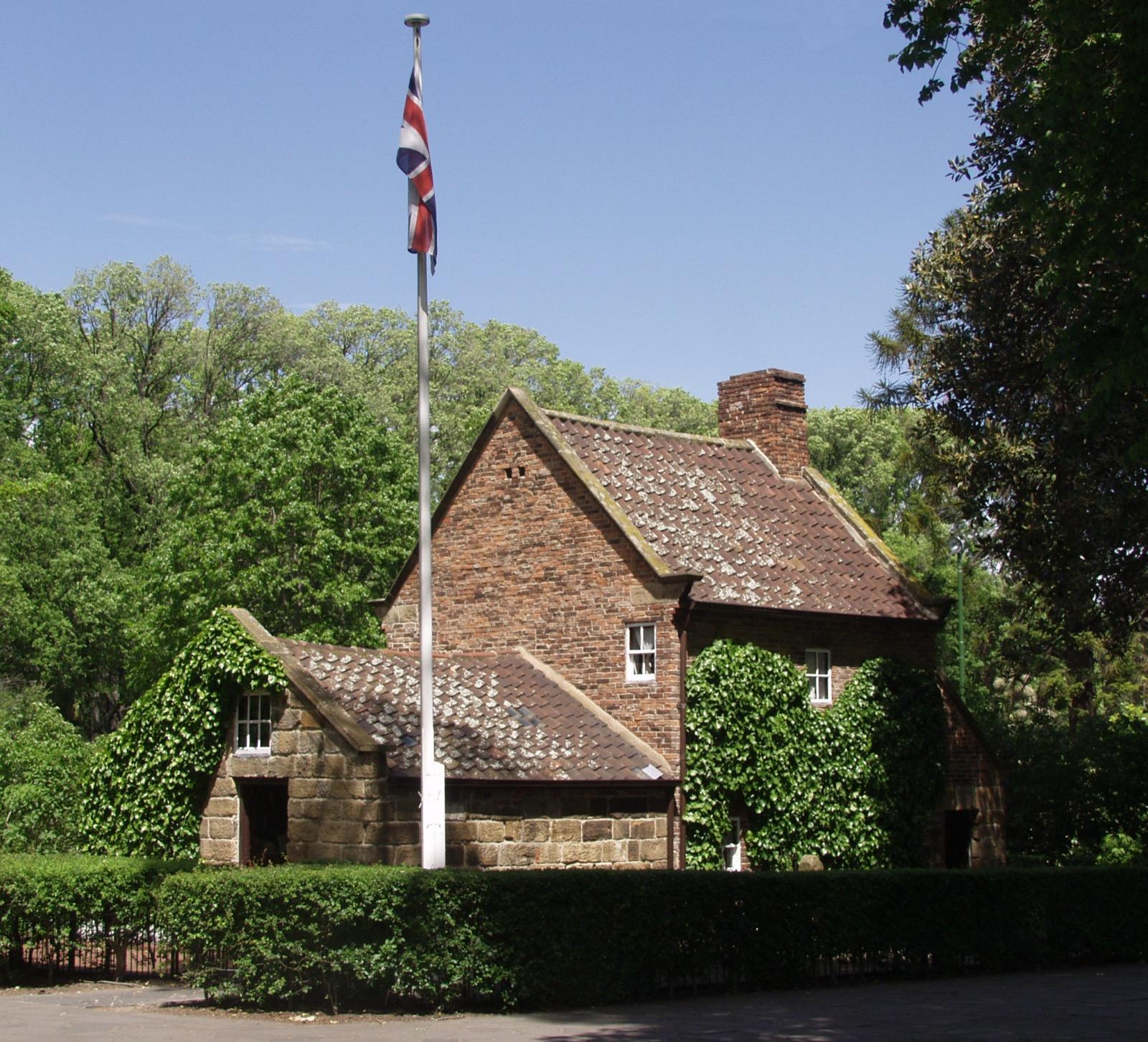
Fitzroy Gardens and Cooks' Cottage: A Yorkshire Cottage Among the Elms
A great Victorian garden of English elms holding a small Yorkshire cottage shipped stone by stone to Melbourne, the home of Captain Cook's parents.
Details
Best Time to Visit
Morning or early afternoon is ideal, when Parliament House and the Old Treasury are open and the light is good for the bluestone facades. On non-sitting days Parliament House offers free public tours. Weekdays are quieter than weekends. The Fitzroy Gardens are lovely in autumn when the English elms turn, and any dry day suits the walk, since Melbourne's weather can shift quickly.
Pro Tips
- •Go on a non-sitting day if you can, when Parliament House offers free public tours and you can step inside the chambers.
- •The Old Treasury Building Museum and Saint Patrick's Cathedral are both free to enter, so budget your time to go inside, not just admire the exteriors.
- •The Old Melbourne Gaol and Cooks' Cottage charge admission in Australian dollars, so carry a card or check current opening hours before you set out.
- •Set your own pace on this route. The stops are short and skippable, so linger longer at the treasury vaults or in the gardens and move quickly past anything that holds you less.
- •Save the Fitzroy Gardens for last and give yourself unhurried time among the elms, the perfect place to let a heavier walk settle.
- •Melbourne's weather is famously changeable, so carry a light waterproof and sun protection both, whatever the sky looks like when you begin.
Safety & Precautions
- •This is a flat grid walk on gentle city slopes, easy for most, though the footpaths and a few older cobbled edges can be uneven, so wear comfortable shoes.
- •Watch the trams carefully when crossing Spring Street and the surrounding intersections. Melbourne's trams are quiet, frequent, and give way to no one, so look both ways and cross at signals.
- •Keep a respectful quiet at the Old Melbourne Gaol, where real people were executed, and inside Saint Patrick's Cathedral, which is an active place of worship.
- •Keep valuables discreet in busier spots, use ordinary city street-awareness, and note that some historic sites charge entry in Australian dollars and keep their own opening hours.
Travel advisory: Exercise Normal Precautions (Level 1).
Gallery
Related Reading
Go deeper on what you'll see, hear, and walk through.
Overview
Best Self-Guided Walking Tours in Melbourne (2026)
4 min
Overview
Melbourne Travel Guide: How Many Days, Getting Around, and When to Go
7 min
Overview
One Day in Melbourne: A Walkable Itinerary Through the Laneways and the Gold-Boom Edge
6 min
Thematic
Gold-Rush Melbourne: The Hidden Laneways and the Boom City
8 min
Companion
Parliament House, Melbourne: The Building That Governed a Nation It Was Never Meant To
6 min
Deep dive
Old Melbourne Gaol: The Bluestone Prison Where a Gold Colony Hanged Its Condemned
6 min
Read
What to Eat in Melbourne: A Local's Guide to the City's Dishes
7 min
Read the walk
The full story of Spring Street: The Gold Colony's Grand End, in words. Prefer to listen? Play it narrated, from home or on location.
Introduction
In the eighteen fifties, the colony of Victoria struck gold and became, almost overnight, one of the richest places on earth. The wealth built the laneways and arcades of the lower town, and it raised something grander along the eastern edge of the Melbourne grid, a civic quarter of power, memory, and spectacle. This is the Country of the Wurundjeri of the Kulin nations, the traditional owners of the Melbourne area, whose culture continues here today. Over about seven stops and roughly three kilometres, in around eighty minutes, this quiet walk across the top of the town in Melbourne, Australia, reads that quarter at your own pace. There is no group, no schedule, no one hurrying you to the next stop, and no tip expected. You set the rhythm and linger wherever the story holds you. You will pass a bluestone gaol where the colony hanged its condemned, a gilded boom-time theatre, a colonnaded parliament that once governed a whole federated nation, a grand old hotel, a treasury with vaults built to hold gold, a vast Gothic cathedral that took the best part of a century, and, among the elms of a Victorian garden, a little English cottage carried stone by stone from the far side of the world. The route runs on gentle city slopes, an easy flat walk with a few gradual rises. The confidence and the shadows of a gold colony stand close together here, grandeur and the gallows only a few blocks apart, and this walk holds both. When you arrive at the Old Melbourne Gaol on Russell Street, begin with stop one.
1. The Old Melbourne Gaol: Where the Colony Hanged Its Condemned
This is the Old Melbourne Gaol, and it is the oldest surviving penal establishment in Victoria. The bluestone is the honest material of the colony, dark and heavy, quarried from the volcanic plains. Building began around eighteen thirty-nine and eighteen forty, the first cellblock opened on the first of January, eighteen forty-five, and a new bluestone wing rose between eighteen fifty-two and eighteen fifty-four, in the first flush of gold. By about eighteen seventy the gaol was complete. Behind these walls the colony held its power to condemn. Well over one hundred and thirty people were hanged here during its working years. They were real people, and their deaths were real. It is right to say their names quietly rather than turn them into a thrill. The most famous was the bushranger Ned Kelly, hanged on the gallows on the eleventh of November, eighteen eighty. The Old Melbourne Gaol records that he was the one hundred and first person hanged here. His story has been told a thousand ways, as folk hero and as outlaw, but the sober fact is a young man of twenty-five, tried and condemned, put to death by the state. His death mask is held here, along with the gallows beam. Making death masks of the executed for study was ordinary practice then, and it tells you how differently that century looked at the human head and the human end. The National Trust of Australia opened the gaol as a museum in nineteen seventy-two. You can move through it at your own pace, without a guide steering you, and give the place the weight of attention it asks for.
2. The Princess Theatre: The Gilded Boom-Time Stage
Along Spring Street stands the Princess Theatre, and its gilded, tiered front is pure gold-boom confidence. It was rebuilt in its present ornate form in eighteen eighty-six, designed by the architect William Pitt in an elaborate Second Empire style, in the years Melbourne liked to call itself Marvellous Melbourne. This was a city so suddenly rich it wanted spectacle, and here it built a palace for it. The theatre is described as the oldest surviving entertainment site on mainland Australia, and it carries a Victorian Heritage listing. It has raised its curtain, off and on, for well over a century, through good years and hard ones. Now, every theatre worth its salt has a ghost story, and this one is theatre legend, so take it as legend and not as fact. The story goes that on the third of March, eighteen eighty-eight, the baritone Frederick Federici was singing the role of Mephistopheles in the opera Faust. In the finale his character sinks down through a trapdoor, and as he descended, Federici suffered a heart attack and died. The legend says that some of the company, not yet knowing, swore they saw him take his bows onstage after his death. For many years a seat in the dress circle was kept vacant in his honour, and people have claimed ever since to glimpse a figure in evening dress. It is a story the theatre keeps fondly, part of the folklore of the boards. Stand outside, take in the gilding, and let the century of performances behind that front settle on you.
3. Parliament House: Where a New Nation's Parliament Met
At the top of Spring Street rises Parliament House, a great colonnaded building whose columns screen the front like a temple of government. Construction began in the mid eighteen fifties, around eighteen fifty-five and eighteen fifty-six, to designs by the architects Knight and Kerr, the engineer John George Knight and Peter Kerr. It went up in stages over decades, and the first parliamentary session sat here on the twenty-fifth of November, eighteen fifty-six. Here is a lovely detail: it was never truly finished. A great dome was planned to crown it and was never built, which makes that missing dome one of Melbourne's most famous unbuilt features. The colony, for all its gold, always had one more grand intention than it completed. This is the seat of the parliament of Victoria, the state legislature. But it holds a larger story. When the Australian colonies federated into one nation in nineteen oh one, there was as yet no national capital. Canberra had not been built. So the new federal parliament of the Commonwealth of Australia met right here, in this building, borrowing Victoria's house for the whole country. The parliament of Victoria records that the federal parliament stayed until nineteen twenty-seven, when it left for Canberra, and the Victorian parliament officially returned to Spring Street on the sixth of July that year. For the first quarter-century of the nation's life, then, the laws of all Australia were debated behind this colonnade. Take your time on the broad steps and read the scale of the ambition in the stone.
4. The Hotel Windsor: The Grand Hotel Across from Parliament
Across the road from Parliament stands the Hotel Windsor, and it is a survivor. Construction commenced in eighteen eighty-three for George Nipper of a shipping firm, to designs by the architect Charles Webb, and it opened in the mid eighteen eighties as The Grand. It has worn…
Full narration for this stop unlocks with the tour.
5. The Old Treasury Building: The Vaults Built for the Gold
Where Collins Street meets Spring Street stands the Old Treasury Building, and it is the climax of the gold theme on this walk. Here is the fact that makes it extraordinary: it was designed by John James Clark, who was just nineteen years old when work on the design began in…
Full narration for this stop unlocks with the tour.
6. Saint Patrick's Cathedral: The Bluestone Gothic That Took a Century
On Eastern Hill rises Saint Patrick's Cathedral, and it is vast. This is a Gothic Revival cathedral built in bluestone quarried at Footscray, designed by the architect William Wardell, and its scale is hard to take in all at once. It runs about one hundred and three and a half…
Full narration for this stop unlocks with the tour.
7. Fitzroy Gardens and Cooks' Cottage: A Yorkshire Cottage Among the Elms
The walk ends among the elms of the Fitzroy Gardens, a great Victorian landscaped garden established in eighteen forty-eight, designed by Clement Hodgkinson and planted by James Sinclair. It covers about twenty-six hectares, and through it run avenues of about two hundred and…
Full narration for this stop unlocks with the tour.