Spring Street: The Gold Colony's Grand End
80 min · 3.1 km · moderate
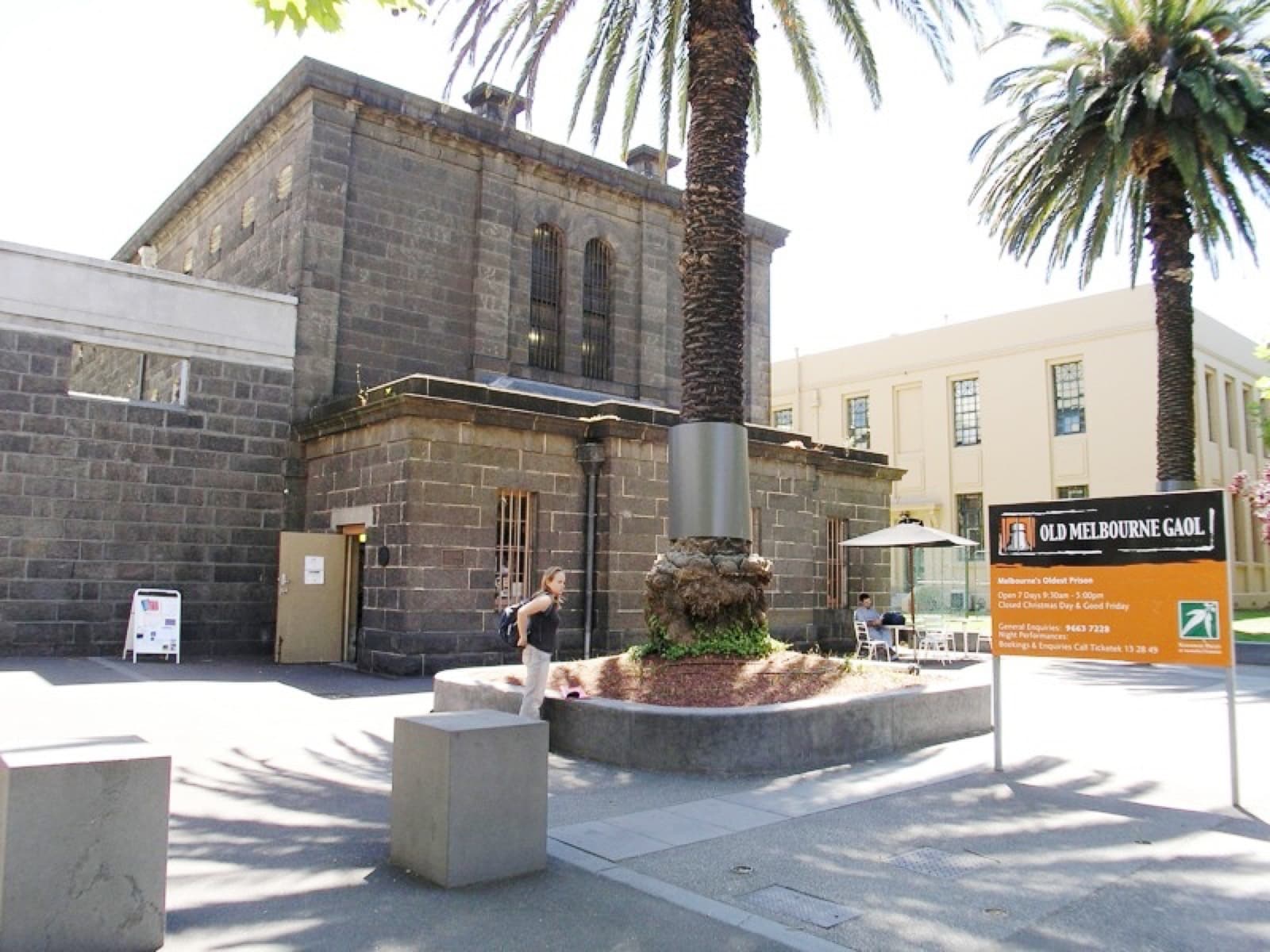
The Old Melbourne Gaol is the oldest surviving penal establishment in Victoria, a heavy bluestone prison on Russell Street where the colony hanged its condemned. More than one hundred and thirty people died on its gallows during its working years, the bushranger Ned Kelly among them. Stand in front of the dark stone today and the one thing worth carrying inside with you is this: those were real people, and their deaths were real. The building is a museum now, but it was first a machine for punishment, raised by the same gold-boom wealth that gilded the theatres a few blocks east.
What the building is
The gaol is made of bluestone, the honest material of the colony, quarried dark and heavy from the volcanic plains around Melbourne. Building began around 1839 and 1840, and the first cellblock opened on the first of January, 1845. A new bluestone wing rose between 1852 and 1854, in the first flush of the Victorian gold rush, and by about 1870 the gaol was substantially complete. That timeline matters. The prison was not a single act of construction but a thing that grew across three decades, expanding as the colony's population and its wealth swelled. The gold that built parliaments and treasuries also paid for cells.
You read the building from the outside as a wall before it is anything else. The bluestone was chosen to be forbidding, and it still is. Inside, the tiered cellblock with its iron catwalks is the shape most people picture when they imagine a nineteenth-century prison, because this is one of the surviving originals rather than a reconstruction.
The gallows, and the discipline of saying names quietly
Hear a stop from this walk
Fitzroy Gardens and Cooks' Cottage: A Yorkshire Cottage Among the Elms
Behind these walls the colony held its power to condemn. The gaol was the principal place of execution in Victoria through the second half of the nineteenth century and into the twentieth, and more than one hundred and thirty people were hanged here. It is easy to turn a prison museum into a spectacle, a place of shivers and true-crime drama. The more honest way to stand here is to say the condemned were people, tried and put to death by the state, and to give that fact the weight it asks for rather than the thrill.
The most famous of them was Ned Kelly, hanged on the eleventh of November, 1880. The gaol's own records note that he was the one hundred and first person hanged on the site. His story has been retold a thousand ways, as folk hero and as outlaw, and the retellings tend to crowd out the plain fact underneath them: a young man of twenty-five, tried and condemned, executed by the state. A cast of his death mask is held here, along with the gallows beam. Casting the heads of executed prisoners was ordinary practice at the time, done for phrenological study, the pseudoscience that claimed to read a person's character in the shape of the skull. That detail is not a curiosity so much as a window. It tells you how differently the nineteenth century looked at the human head and the human end, treating an executed person's skull as an object of measurement.
Why it matters to Melbourne
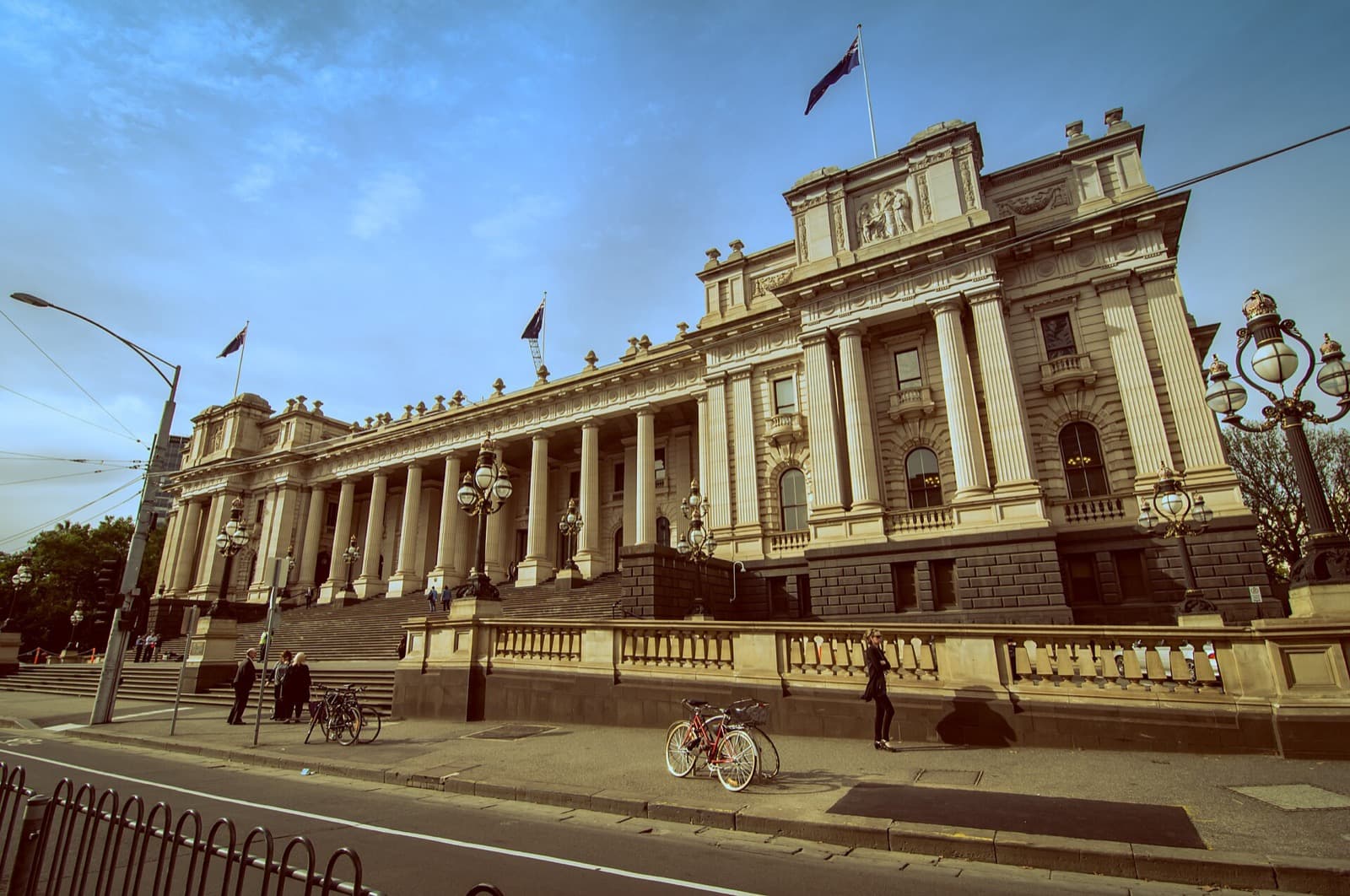
The Old Melbourne Gaol sits at the far edge of a walk that runs through gold-boom Melbourne at its grandest: a gilded theatre, a colonnaded parliament that once governed a whole federated nation, a treasury with vaults built to hold bullion. All of it was raised by the same sudden fortune. Victoria struck gold in the 1850s and became, almost overnight, one of the richest places on earth. The gaol is the other face of that wealth. The confidence and the shadows of a gold colony stand close together in this quarter, grandeur and the gallows only a few blocks apart, and the prison is where the shadows are honest and unmistakable.
That is the argument for beginning a walk here rather than ending it. A city that could pour money into spectacle could also pour it into the apparatus of punishment, and both impulses came from the same boom. The gaol keeps you from reading the gilding of the theatre or the ambition of the parliament as innocent. It is the same colony, the same decade, the same money, expressed in a wall and a gallows beam.
Visiting
The National Trust of Australia opened the gaol as a museum in 1972, and it has interpreted the site as a penal museum ever since, telling the story of crime, punishment, and the lives of the condemned. The best part of the experience is that you can move through it at your own pace, without a guide steering you from cell to cell. That freedom suits the place. It asks for a slower, quieter kind of attention than a scheduled group tour tends to allow, and you can give it exactly as much time as it deserves.
Entry is paid, with admission charged in Australian dollars, so carry a card and check current opening hours before you set out, since the museum keeps its own. Keep a respectful quiet inside. This is not a haunted-house attraction. It is a place where real people were executed, and it reads best when you treat it that way.
Walk the tour
The Old Melbourne Gaol is the first stop on Spring Street: The Gold Colony's Grand End, a self-guided audio walk of roughly three kilometres across the top of the Melbourne grid. From the gaol the route carries you past the Princess Theatre, Parliament House, the Hotel Windsor, the Old Treasury Building and its bluestone vaults, Saint Patrick's Cathedral, and finally the elms of the Fitzroy Gardens, where a small Yorkshire cottage was rebuilt stone by stone. It is an easy flat walk on gentle city slopes, about eighty minutes at an unhurried pace, with no group and no schedule. Begin at the bluestone wall on Russell Street, then walk east into the grandeur that the same gold built.
For more routes through the city, see our guide to the best Melbourne walking tours.
Sources
- Old Melbourne Gaol, Wikipedia: construction dates, the count of executions, and the 1972 museum opening under the National Trust.
- Old Melbourne Gaol official history (oldmelbournegaol.com.au): all construction complete by 1870 and Ned Kelly recorded as the one hundred and first person hanged on the site.
- Ned Kelly, Wikipedia: the execution on the eleventh of November, 1880, at the age of twenty-five.
- Victorian gold rush, Wikipedia: the 1850s discovery that made the colony of Victoria suddenly wealthy and paid for its civic building.
Ready to experience it?
Spring Street: The Gold Colony's Grand End
80 min · 3.1 km · moderate
More from Melbourne
Explore more at your own pace.
Melbourne Travel Guide: How Many Days, Getting Around, and When to Go
One Day in Melbourne: A Walkable Itinerary Through the Laneways and the Gold-Boom Edge
Gold-Rush Melbourne: The Hidden Laneways and the Boom City
Hosier Lane and the Hidden City Inside Melbourne's Grid
Parliament House, Melbourne: The Building That Governed a Nation It Was Never Meant To