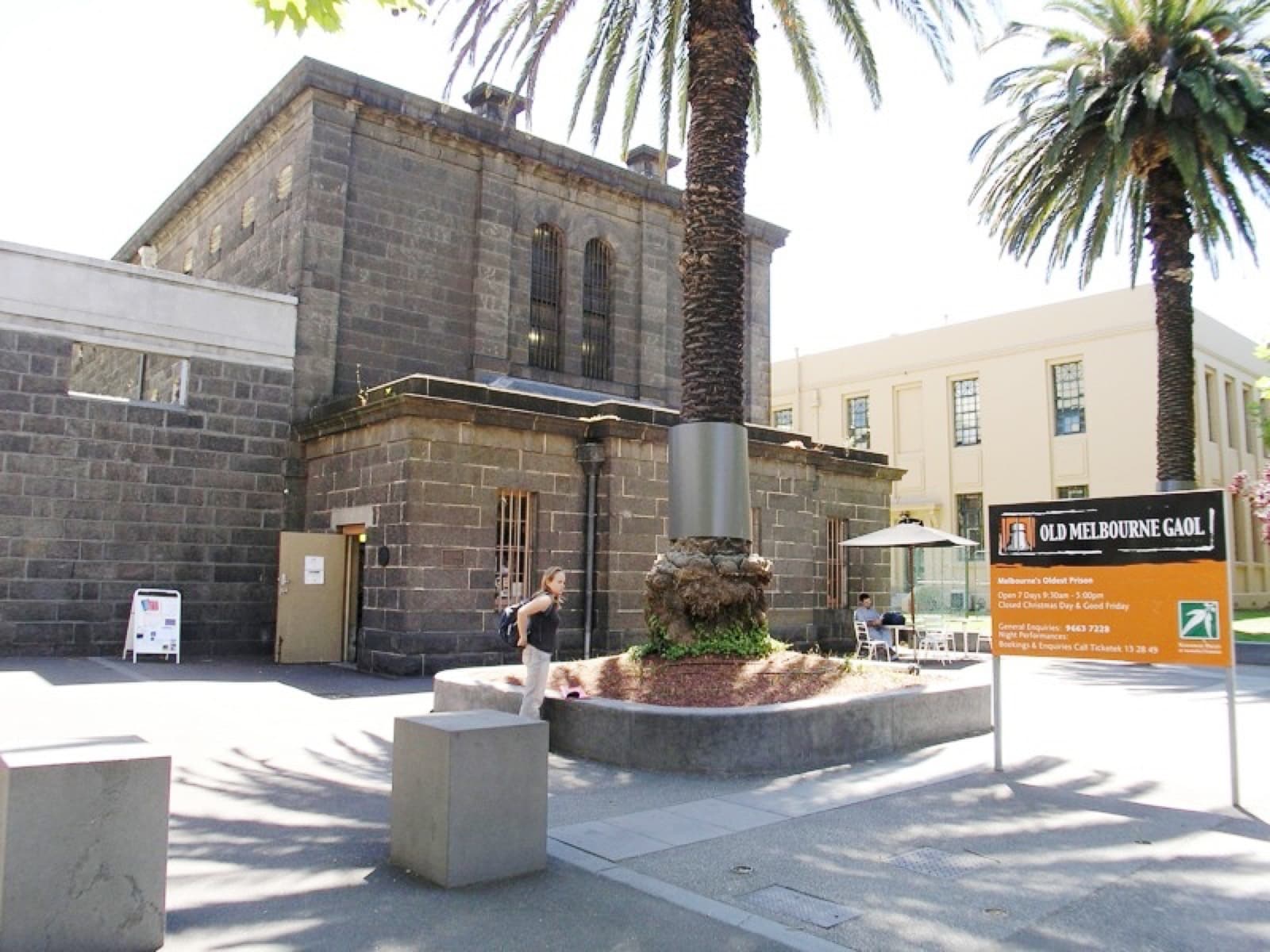
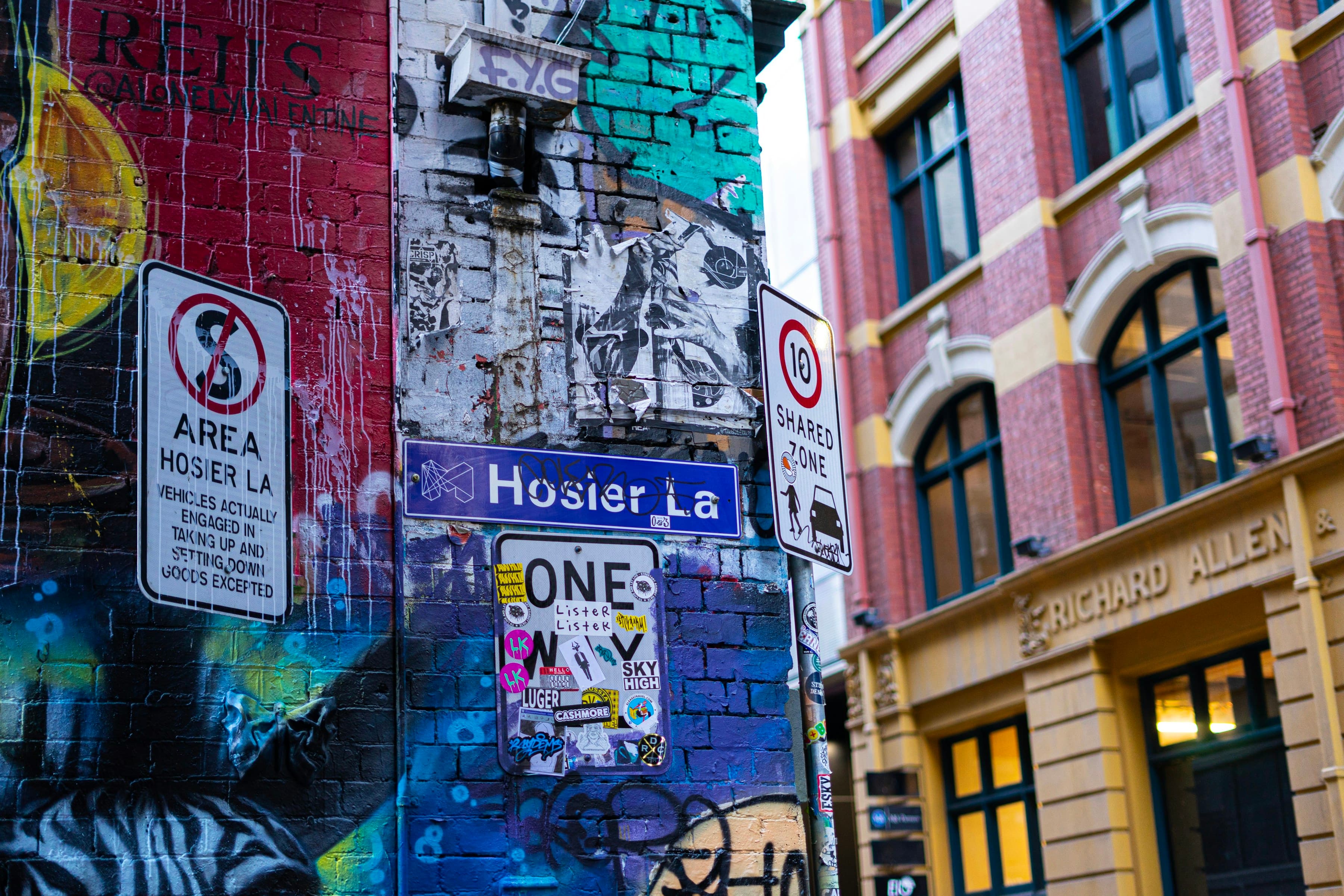
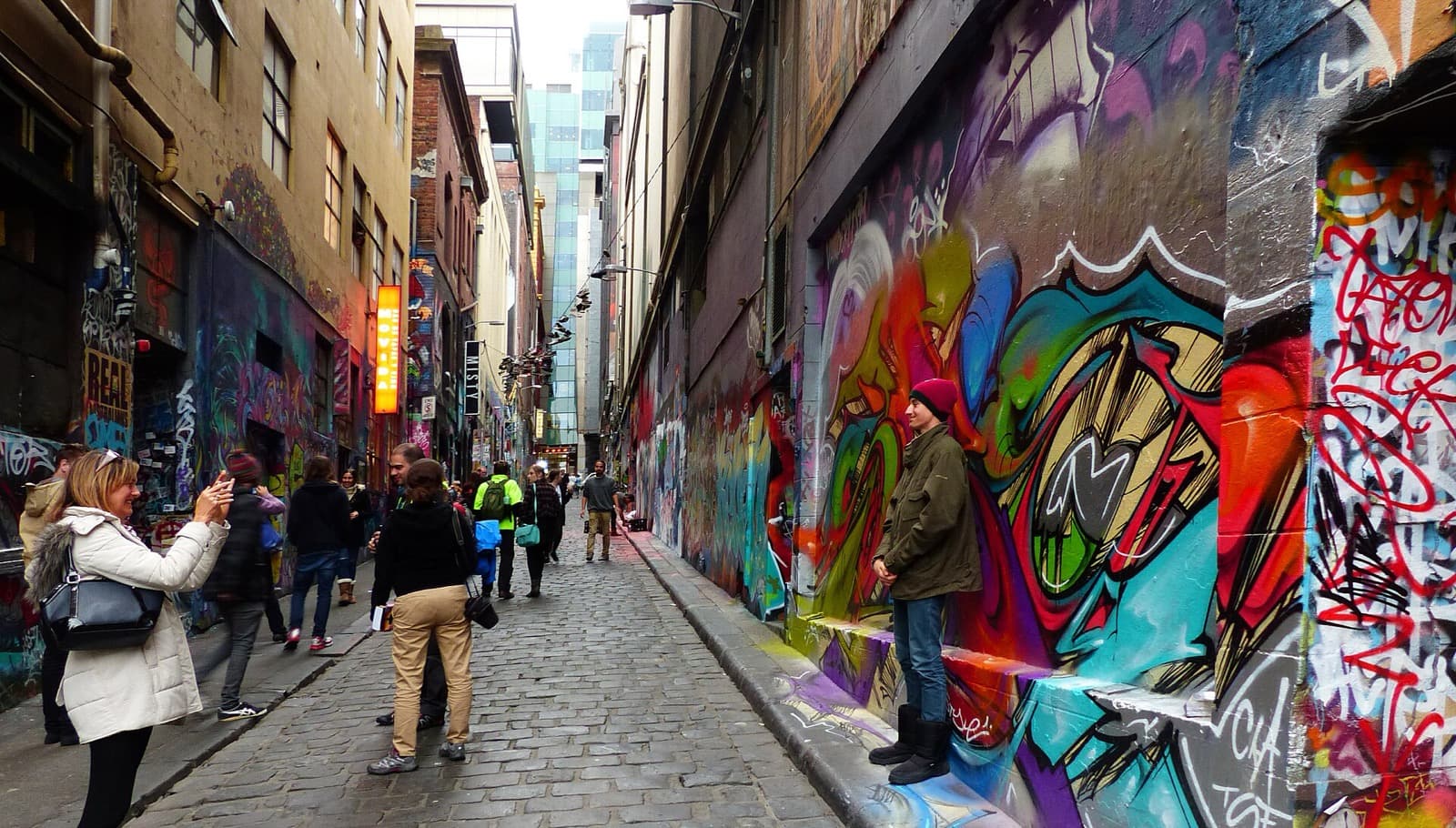
Hosier Lane can change overnight, and that single fact tells you how to read the whole hidden city folded inside Melbourne's grid. The lane is a narrow, cobbled service alley running between Flinders Street and Flinders Lane, and the City of Melbourne calls it the birthplace of Melbourne street art. Because the City treats it as a long-standing de facto free-to-paint area, where painting needs no permit, the walls are repainted constantly. What you are looking at may not be here the next time you come. Start here, and the rest of Melbourne's laneways and arcades start to make sense: they are all the same hidden layer, folded into the gaps of a wide and rational grid, each one repaying an unhurried, self-paced walk.
Why the lanes exist at all
Melbourne was laid out in eighteen thirty-seven as a plain rectangular grid, public and confident by design. Governor Bourke insisted on narrow "little" streets between the wide ones, so that allotments could be reached from behind. The lanes came next, as the big blocks were subdivided and subdivided again: by eighteen fifty-six, with the gold rush filling the town, there were eighty named lanes. Gold and the boom that followed paid for much of what was built along them, including, grander still, glass-roofed shopping arcades in the European fashion. By nineteen twenty, Hosier Lane sat in the clothing manufacturing district. So the constant change on Hosier Lane's walls is not an accident of fashion. It is the natural life of a place built to be unglamorous and overlooked, now claimed as the soul of the city.
The lane's street-art story began in the mid nineteen nineties, when the City Lights light boxes went up on the back wall of the Forum theatre, and their curator, Andy Mac, spent years as the lane's informal artist in residence. In November twenty thirteen, a repaint called All Your Walls brought more than one hundred artists to work these walls at once, by its organisers' count. The lane has had darker moments too. In February twenty twenty, a masked group sprayed over the murals with paint-filled fire extinguishers, and the Lord Mayor condemned the attack. That is the whole point of the place: this is a gallery you can never see twice, where new work can appear overnight.
The square that argues back
Hear a stop from this walk
Federation Square: The Lid Over the Railway
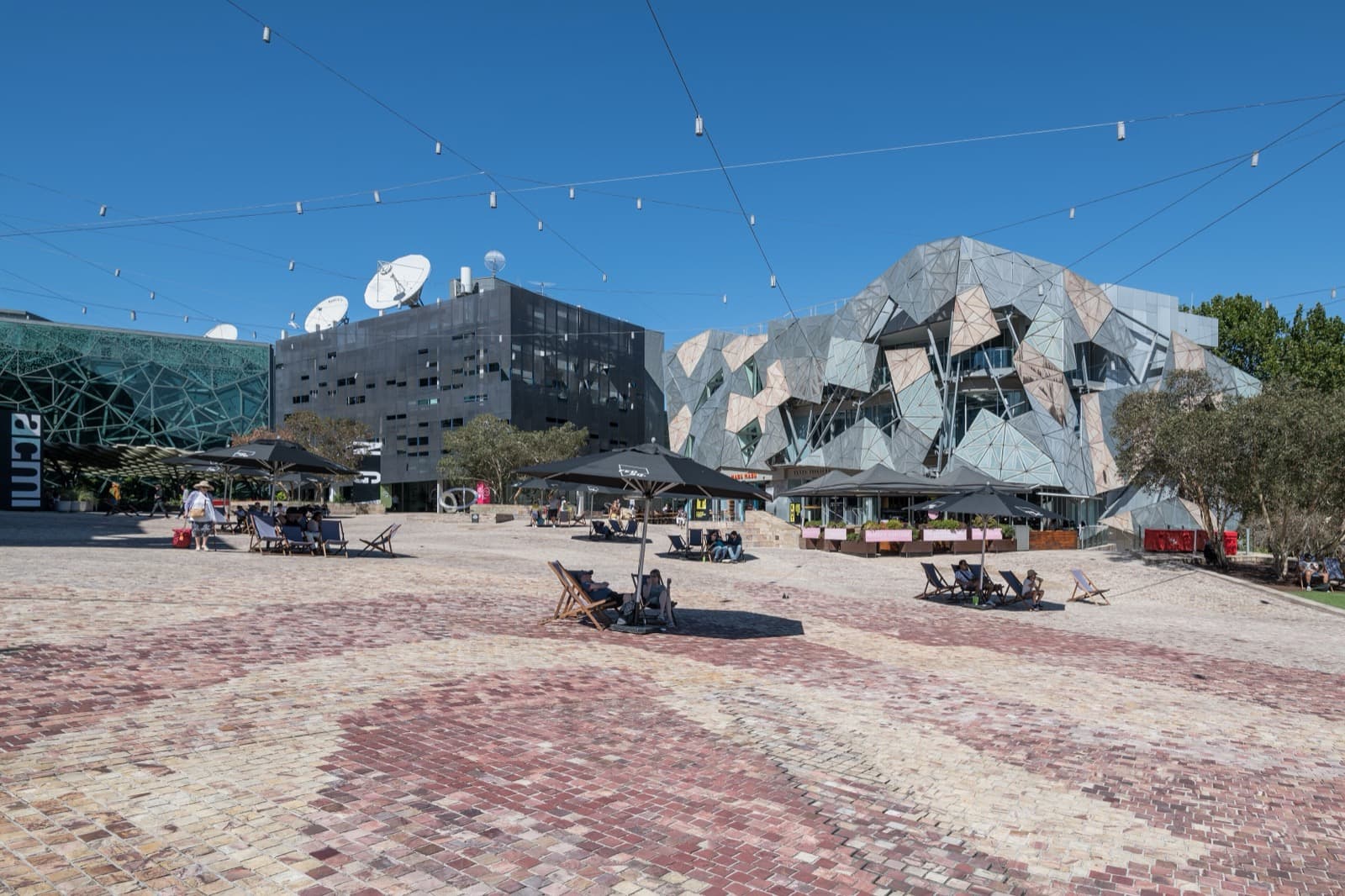
Cross Flinders Street from the painted lane and you reach the walk's last stop, one of the newest and most argued-over layers of the city. Federation Square opened in two thousand two on a deck built over the Jolimont railway yards, roofing directly over the tracks into Flinders Street Station. It was designed by LAB Architecture Studio, whose directors Donald Bates and Peter Davidson worked from London, together with the Melbourne firm Bates Smart. Its buildings are clad in triangles of sandstone, zinc and glass, and the plaza underfoot is itself an artwork by Paul Carter with LAB, made of about four hundred and sixty-seven thousand sandstone cobbles. It was controversial from the start, above all over the view of St Paul's Cathedral from Princes Bridge, which led to the Western Shard being cut down in height. That shard has since been demolished to make way for a new railway station entrance.
What matters most here lies beneath the architecture. Federation Square stands on Wurundjeri Woi-wurrung Country. The Wurundjeri Woi-wurrung, a people of the Kulin, are the Traditional Owners of central Melbourne, and their living culture continues today. The square houses the Koorie Heritage Trust, a living Aboriginal institution, in the Birrarung Building, once the Yarra Building. Birrarung is the Wurundjeri name for the Yarra River, which the City of Melbourne translates as "river of mists." The eighteen thirty-seven grid this walk keeps reading was laid over that Country, and this square puts the older presence at the very centre of the modern city.
Where the boom money went to be seen
Earlier on the same walk, after the lanes of Degraves Street and Centre Place, the route passes through the painted lane's opposite: the arcades where boom money went to display itself. The Block Arcade, built between eighteen ninety-one and eighteen ninety-three to designs by the firm Twentyman and Askew, is one of the great interiors of the boom city. Look down at the mosaic floor, its tiles imported from Europe, up at the glass roof on its cast-iron trusses, and ahead to the glazed octagon where the arcade's two arms meet. The whole conception was based on Milan's Galleria Vittorio Emanuele the Second. It opened as the land boom broke: its developer, Benjamin Fink, was insolvent in eighteen ninety-two. Its name carries a piece of social history older than the arcade itself. "Doing the Block" was the fashionable promenade along Collins Street from the eighteen sixties, and by eighteen eighty-six the novelist Fergus Hume was likening it to London's Bond Street and the boulevards of Paris. To do the Block was to see and be seen, walking slowly in your best clothes along the shady northern side of the street.
A short walk on brings the oldest of them all. The Royal Arcade opened in eighteen seventy, to a design by Charles Webb, and it is the oldest surviving shopping arcade in Australia. Its marvel waits at the southern, Little Collins Street end. The carved pine giants Gog and Magog, figures out of British legend, were installed there in eighteen ninety-two, flanking a clock that carries the name of the watchmaker Thomas Gaunt, though Gaunt had died in eighteen ninety and the clock is attributed to Frederick Ziegler. Wires from the clock set the giants striking the hours. Stand near them a few minutes before the hour, and wait. This is one of the moments the route is built around: an interior street raised on gold-rush wealth, with mythic giants keeping its time.
The public spine and the oldest quarter
The Royal Arcade delivers you into the Bourke Street Mall, the pedestrian retail spine of the boom city, where trams still run right through the crowds. Overlooking it stands the former General Post Office, its facade rising in tiers of columns: Doric, Ionic and Corinthian, one order per level. The first two storeys were finished in eighteen sixty-seven, the Corinthian top floor and the tower in the late eighteen eighties. After a fire in two thousand and one, it reopened as shops in two thousand and four. This is the grid at its most public, a deliberate contrast to the hidden arcades.
A short walk north lies Chinatown, centred on Little Bourke Street, which grew directly from the gold rush after gold was found in Victoria in eighteen fifty-one. Chinese migrants arrived in significant numbers from eighteen fifty-three, drawn to what they called the New Gold Mountain, and by eighteen fifty-nine there were more than forty thousand in Victoria. The City of Melbourne calls it Australia's oldest Chinatown and the longest continuous Chinese settlement in Australia, a street held without a break for over a century and a half, and it endured through the immigration restrictions that followed federation in nineteen oh one. From there the walk turns back south past Melbourne Town Hall, where the Beatles waved from the portico balcony in nineteen sixty-four, to Hosier Lane and the square beyond it.
Over about two kilometres and roughly seventy-five minutes, across nine stops from the clocks of Flinders Street Station to Federation Square, this is a hidden layer you read at your own pace, with no group and no one hurrying you on. Start planning your visit to Melbourne, or read more about the route in the Laneways and Arcades: The Hidden City Inside the Grid walk.
Sources
- City of Melbourne, street art page and the Hosier and Rutledge Lanes Improvement Project final report (October 2014); What's On Melbourne, street art guide. The birthplace of Melbourne street art, the de facto free-to-paint area, the City Lights light boxes of the mid-1990s, and walls that change overnight.
- eMelbourne, Lanes and Alleys, Hosier Lane and Royal Arcade. The lanes of the subdivided blocks, the 1920 clothing district, and the clock attributed to Frederick Ziegler.
- Victorian Heritage Database, Block Arcade (H0032) and Royal Arcade (H0023); Australian Dictionary of Biography, Benjamin Fink. Construction dates, the Milanese model for the Block, and Gog and Magog installed in 1892.
- Victorian Heritage Database, Federation Square (H2390); City of Melbourne, Aboriginal Melbourne; Koorie Heritage Trust. The 2002 opening over the Jolimont yards, LAB with Bates Smart, the Western Shard, and Wurundjeri Woi-wurrung Country.
- What's On Melbourne, Chinatown; Chinese Museum, CHIA database; State Library Victoria. Growth from the gold rush, Australia's oldest Chinatown, and over 40,000 Chinese in Victoria by 1859.
- Victorian Heritage Database, General Post Office (H0903), and the Australian Heritage Database. The stages of 1859 to 1867 and 1885 to 1890, the Doric, Ionic and Corinthian orders, and the 2001 fire.
Ready to experience it?
Laneways and Arcades: The Hidden City Inside the Grid
75 min · 2 km · easy
More from Melbourne
Explore more at your own pace.
Melbourne Travel Guide: How Many Days, Getting Around, and When to Go
One Day in Melbourne: A Walkable Itinerary Through the Laneways and the Gold-Boom Edge
Gold-Rush Melbourne: The Hidden Laneways and the Boom City
Parliament House, Melbourne: The Building That Governed a Nation It Was Never Meant To
Flinders Street Station: Why Melbourne Meets Under the Clocks