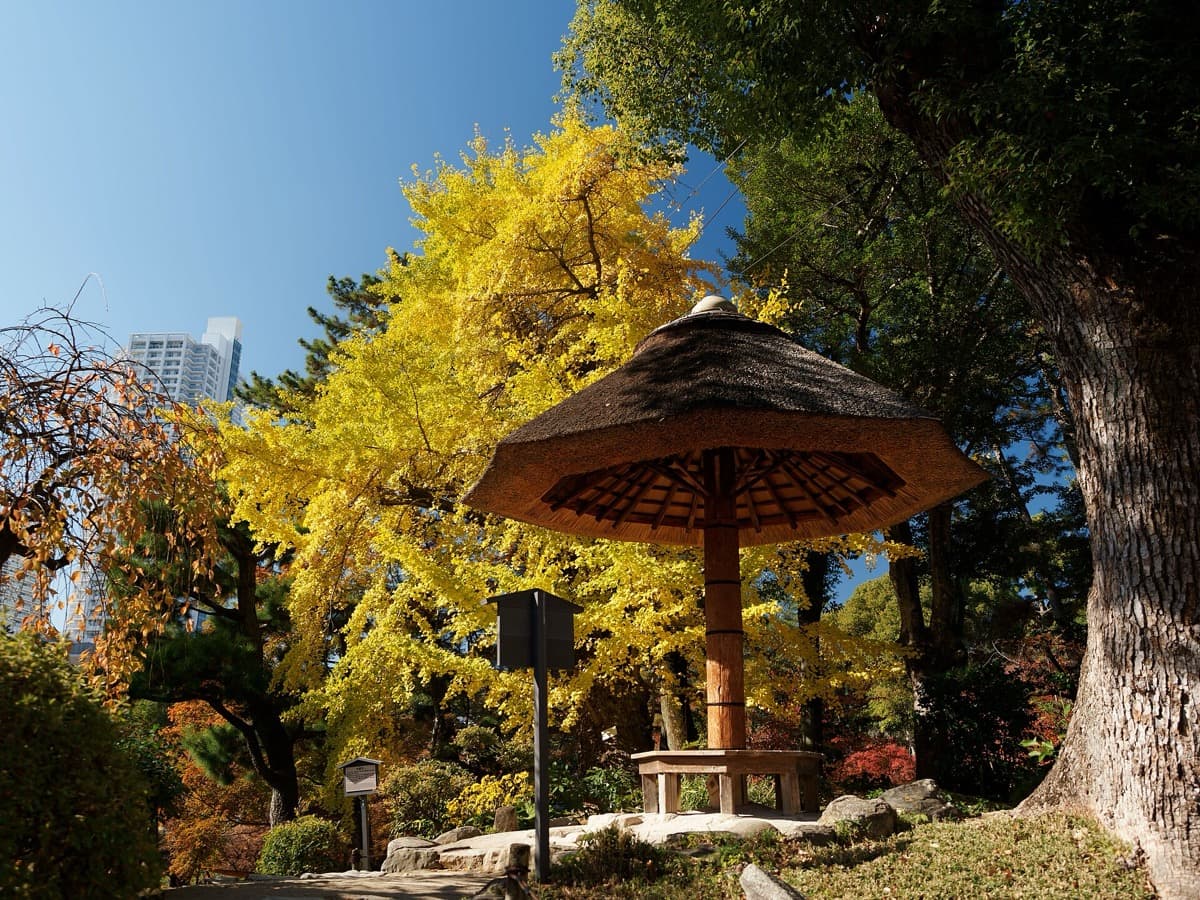
In Hiroshima's Shukkei-en garden stands a ginkgo tree that leans permanently toward ground zero. It was already about two centuries old when the atomic bomb detonated on August 6, 1945, it survived the blast, and it kept growing at the angle the explosion left it in. The lean is not decorative and not accidental. The blast first pushed outward from the hypocenter with tremendous force, then, an instant later, air rushed back inward to fill the vacuum, and that returning surge tilted the tree toward the very point that should have killed it. Nobody rebuilt this ginkgo. Nobody had to. It is the clearest object lesson in the city about the difference between what people restore and what simply lives.
A tree older than the disaster
The ginkgo was already about two centuries old on the morning of the bombing, the age given on its own plaque and in Hiroshima's survivor-tree records. It had stood through most of the Edo-period life of the garden before the twentieth century reached it. Shukkei-en itself was begun in 1620, a strolling garden whose name means, roughly, shrunken-scenery garden, a full landscape of hills, valleys, and a central pond composed in miniature to be walked. It was commissioned by Asano Nagaakira, daimyo of the Hiroshima domain, and designed by his chief retainer and tea master Ueda Soko. The Asano family held it for three centuries before donating it to Hiroshima Prefecture in 1940. By then the ginkgo was a fixture, one tree among many along the water.
The garden sits about 1,370 meters from the hypocenter, a little over a kilometer, less than a mile. On August 6, 1945, the bomb inflicted extensive damage. By the garden's own history, every structure was destroyed except the stone bridge. In the hours after the blast the garden became a refuge. Wounded and dying people fled to the water and the banks, and many did not leave. That is documented history, not atmosphere, and it is worth holding quietly. This is ground that held death before it held recovery.
Why it leans
Hear a stop from this walk
Hondori: The Rebuilt City Centre
The lean is the detail that makes people stop. The Official Guide to Hiroshima and the city's survivor-tree records describe it the same way: the tree tilts toward the hypocenter because, after the shockwave moved outward from the city center, the air gushed back in. A blast wave is not a single push. It is a pressure spike followed by a suction phase as the atmosphere collapses back toward the low-pressure void the explosion carved out. The ginkgo, standing broadside to that sequence, was bent inward by the return surge and then healed and grew on at that angle. More than eighty years later it is still leaning.
The physical record of what it endured is measurable. The tree stands about 21 meters tall with a trunk circumference of roughly 3.50 meters, and about a third of that trunk was left keloid-like by the bombing, scarred the way burned human skin scars. Buds still emerge from the damaged wood. Survival is attributed, here as with the other survivor trees around Hiroshima, to the underground portions of the root system escaping direct destruction even as everything above burned. Broad-leaved species regenerated most stubbornly of all, putting out new growth on ground where scientists had expected barren earth for years.
What "survivor tree" means
The Japanese term is hibaku jumoku, meaning A-bombed trees or survivor trees, and it applies to trees within roughly two kilometers of the hypocenter that lived through the bombing. Across Hiroshima about 170 such trees are documented that predate 1945, with a dozen standing within 1,000 meters of the blast and 48 within 2,000. The Shukkei-en ginkgo is one of the most photographed of them, and it does not stand alone in the garden. A black pine, taller than the ginkgo at about 25 meters, and a third survivor of roughly 11 meters with a hollow trunk also came through the bombing here and are documented as hibaku jumoku. Seeds from the ginkgo have since been shared with institutions around the world, so second-generation trees now grow far from the garden that raised the parent.
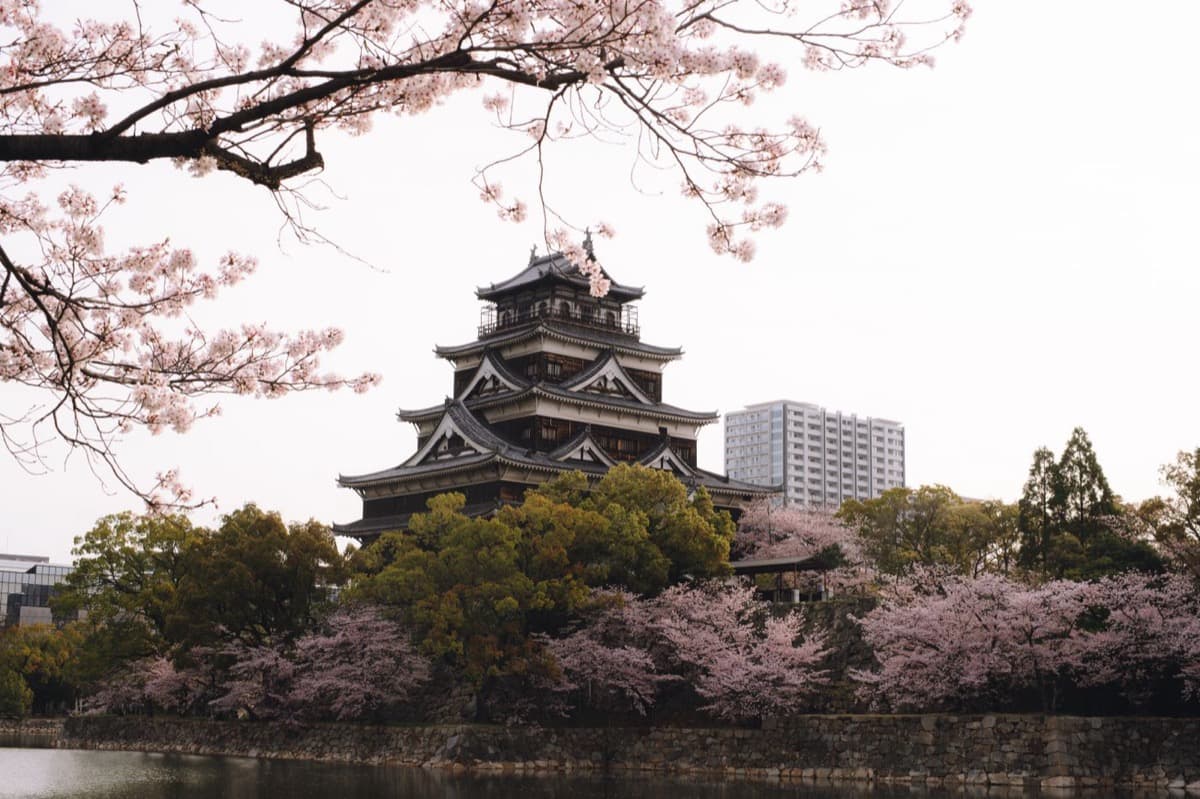
The distinction the ginkgo draws is the argument of the whole northern walk through Hiroshima. A short distance west, Hiroshima Castle's keep was flattened in 1945 and raised again in reinforced concrete in 1958, a copy honest about being a copy. Hiroshima Gokoku Shrine was rebuilt in 1965 with donations gathered from ordinary citizens. Shukkei-en's own structures were restored by hand, with the garden reopening in 1951 after work that continued for decades. All of that is return by human decision, deliberate and chosen. The ginkgo is the opposite kind of survival. It required no committee, no budget, no reconstruction plan. It was alive below the surface when the surface burned, and it carried on.
Standing with it
There is no way to touch or climb the tree, and there should not be. Its survival depends on aged, fragile roots, and it is a protected living monument, not a photo prop. The right response is a slow minute in front of it. In autumn the ginkgo goes gold, the season it is most worth timing a visit for, and the lean is easiest to read against a clear sky. Look for the small marker that labels it, then find the trunk, then the angle of it, tipped inward toward a point on the map a kilometer and change away.
A city that rebuilds its castle in concrete and its shrine with pocket money is a city practicing return as a habit. The ginkgo is what that habit is measured against. It was bent toward the thing that was meant to erase it, and instead of dying it kept leaning toward the light and growing. To walk the northern side of Hiroshima, from the rebuilt keep to this one old tree, follow the castle-and-garden route through Hiroshima.
Sources
- The Official Guide to Hiroshima (dive-hiroshima.com), "Black pine, ginkgo, etc. (within Shukkeien Garden)" : city tourism page giving the ginkgo's 21-meter height, 3.50-meter trunk circumference, one-third keloid scarring, and 1,370-meter distance from the hypocenter.
- Hiroshima Peace Tourism (peace-tourism.com), Shukkeien Garden survivor-tree entry : official record of the black pine (about 25 meters), the ginkgo, and an 11-meter hollow-trunked survivor as documented hibaku jumoku.
- "Hibakujumoku," Wikipedia : overview of Hiroshima's roughly 170 documented survivor trees, the within-1,000m and within-2,000m counts, and the root-survival explanation.
- "Shukkei-en," Wikipedia : the garden's 1620 founding, Asano Nagaakira and Ueda Soko, the 1940 donation to the prefecture, wartime destruction, and 1951 reopening.
- Shukkeien Garden, Japan National Tourism Organization (japan.travel) : official listing confirming the garden's history and public access.
Ready to experience it?
Hiroshima Rebuilt: Castle, Garden, and the Trees That Lived
90 min · 4 km · easy
More from Hiroshima
Explore more at your own pace.
Hiroshima Travel Guide: How Many Days, Getting Around, Miyajima, When to Go (2026)
One Day in Hiroshima: A Respectful, Walkable Itinerary (2026)
What to Eat in Hiroshima: A Food Guide (2026)
Itsukushima Shrine: The Miyajima Shrine Built Over the Sea So It Would Not Defile a Sacred Island
The Atomic Bomb Dome: Why Hiroshima Kept One Ruin Standing