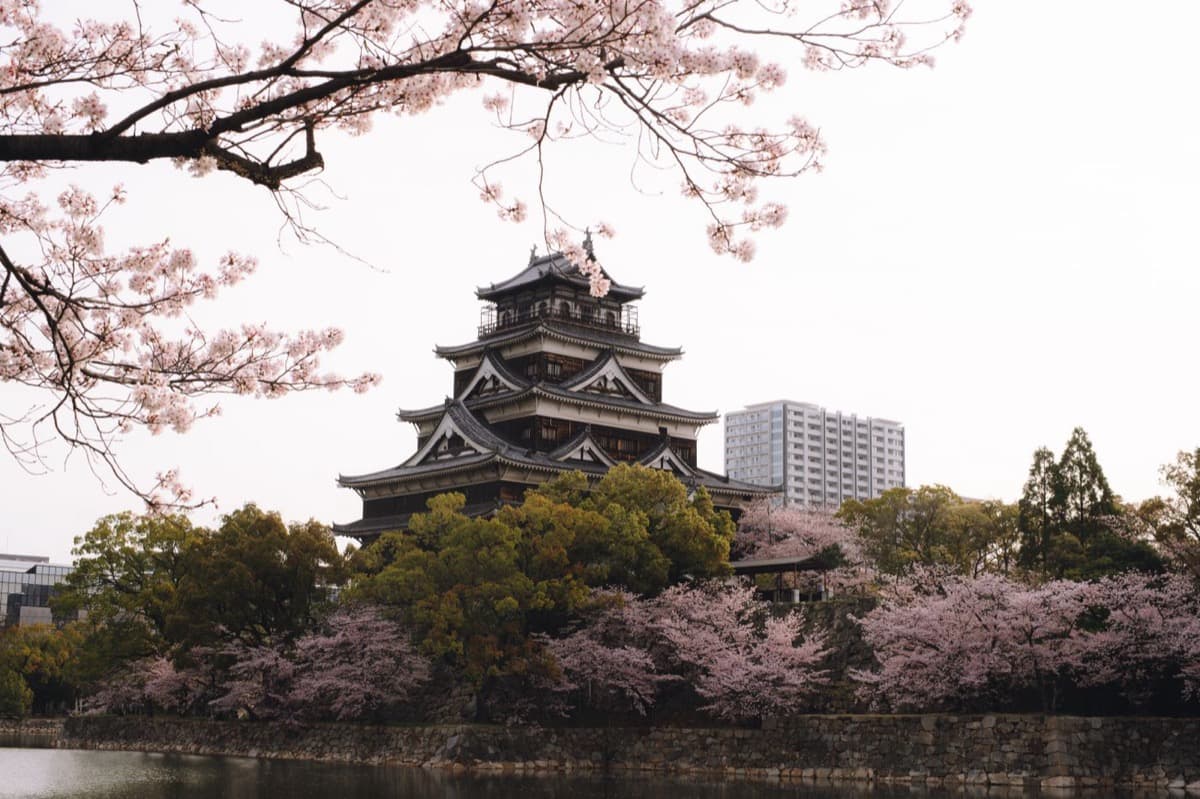
A short walk north of the epicentre, where Hiroshima's story turns from destruction to return, told through a castle rebuilt in concrete, a four-hundred-year-old garden brought back to life, and the survivor trees that refused to die.
Start · Hiroshima Castle: The Rebuilt Keep
DirectionsStops
- 1
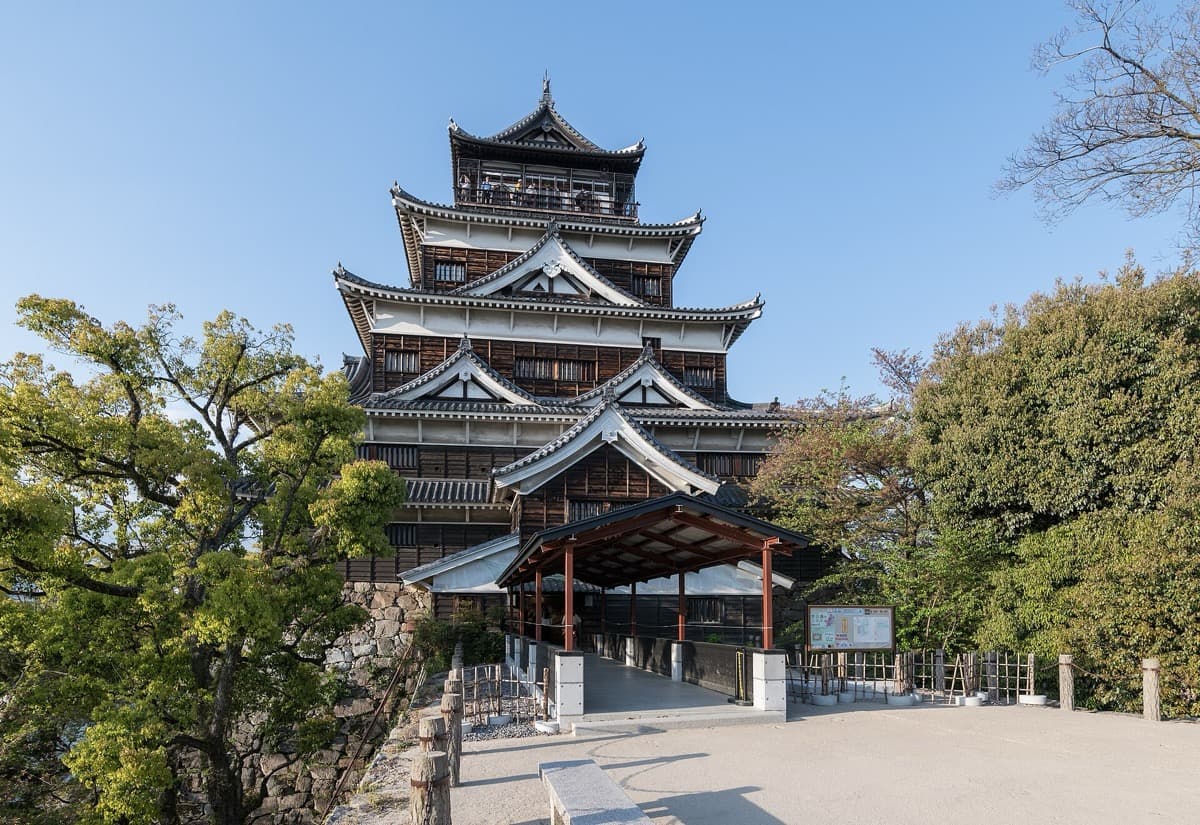
Hiroshima Castle: The Rebuilt Keep
The concrete resurrection of a sixteenth-century keep flattened by the atomic bomb, viewable from the free and open castle grounds.
- 2
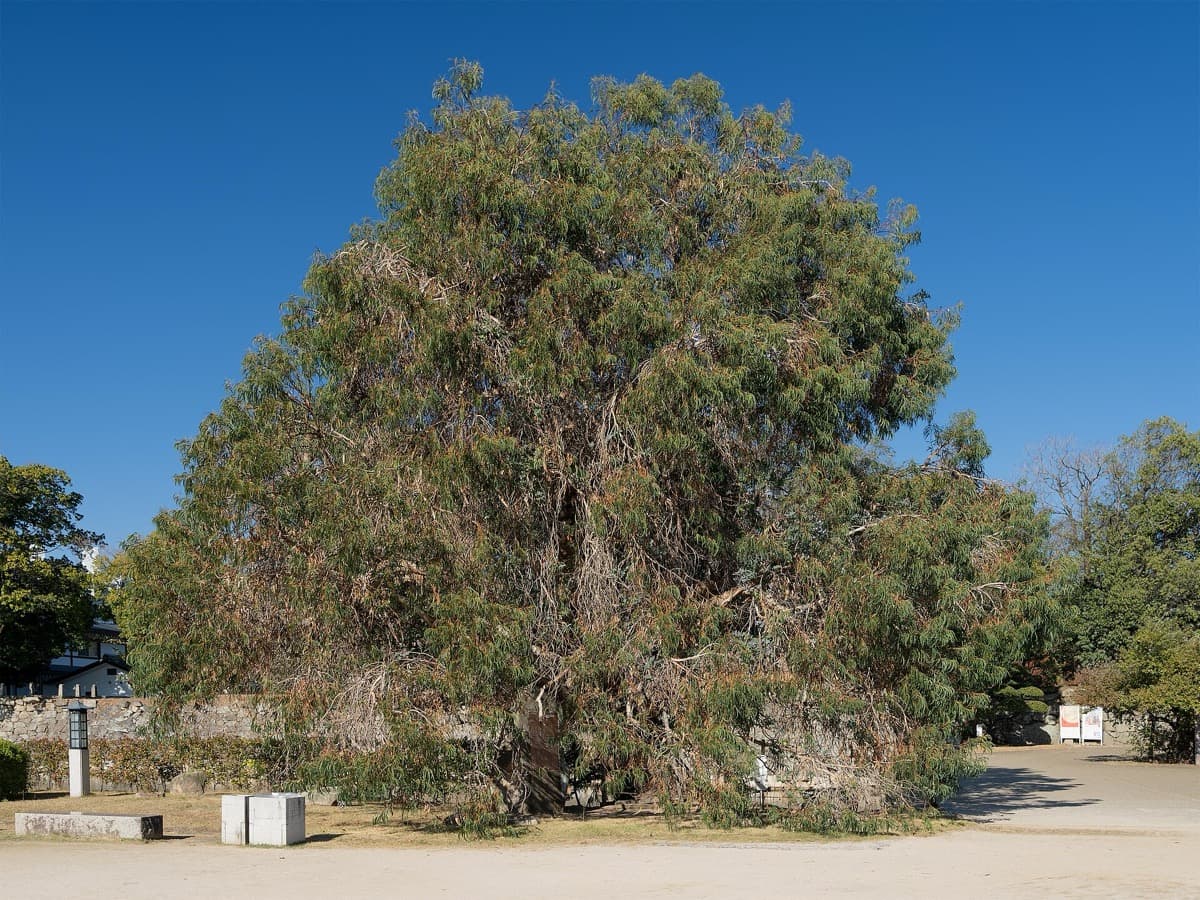
The Survivor Trees of the Castle Grounds
A eucalyptus and a willow that stood about seven hundred and forty metres from the hypocentre, were scorched above ground, and lived on from their undamaged roots.
- 3
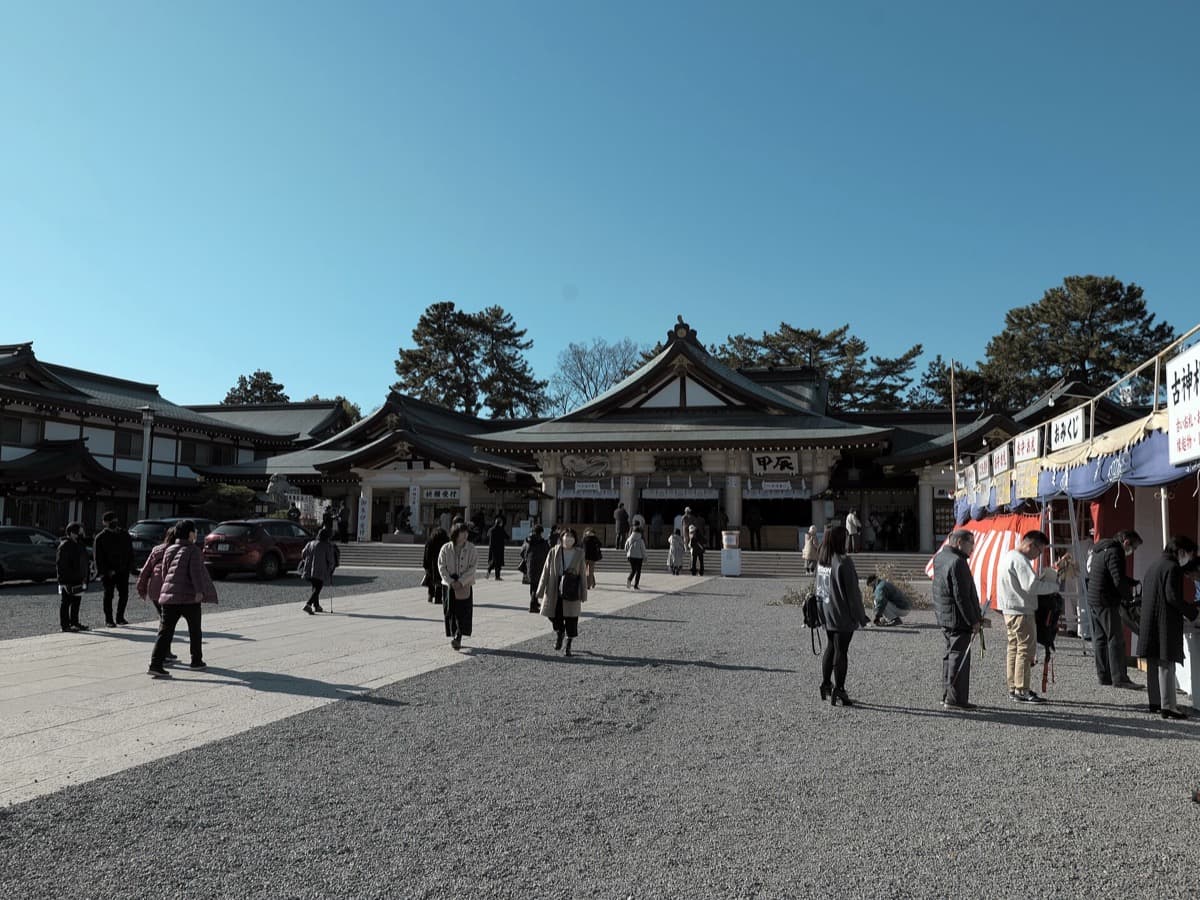
Hiroshima Gokoku Shrine: The Ritual of Return
A Shinto shrine destroyed in the bombing and rebuilt in nineteen sixty-five with citizens' donations, known for its lucky carp.
- 4
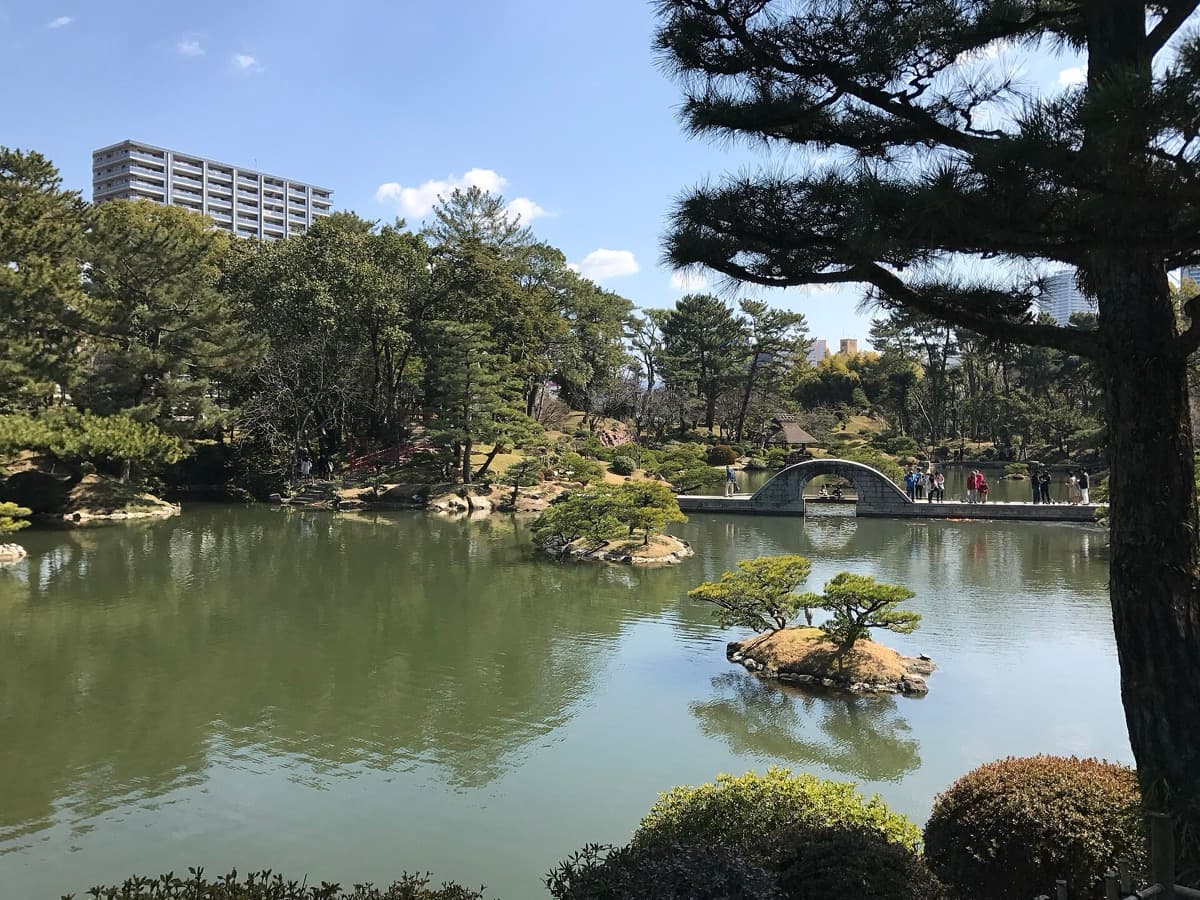
Shukkei-en Garden: Four Centuries, Scorched and Restored
A strolling garden begun in sixteen twenty, devastated by the bomb, a refuge for the dying, and reopened in nineteen fifty-one after painstaking restoration.
- 5
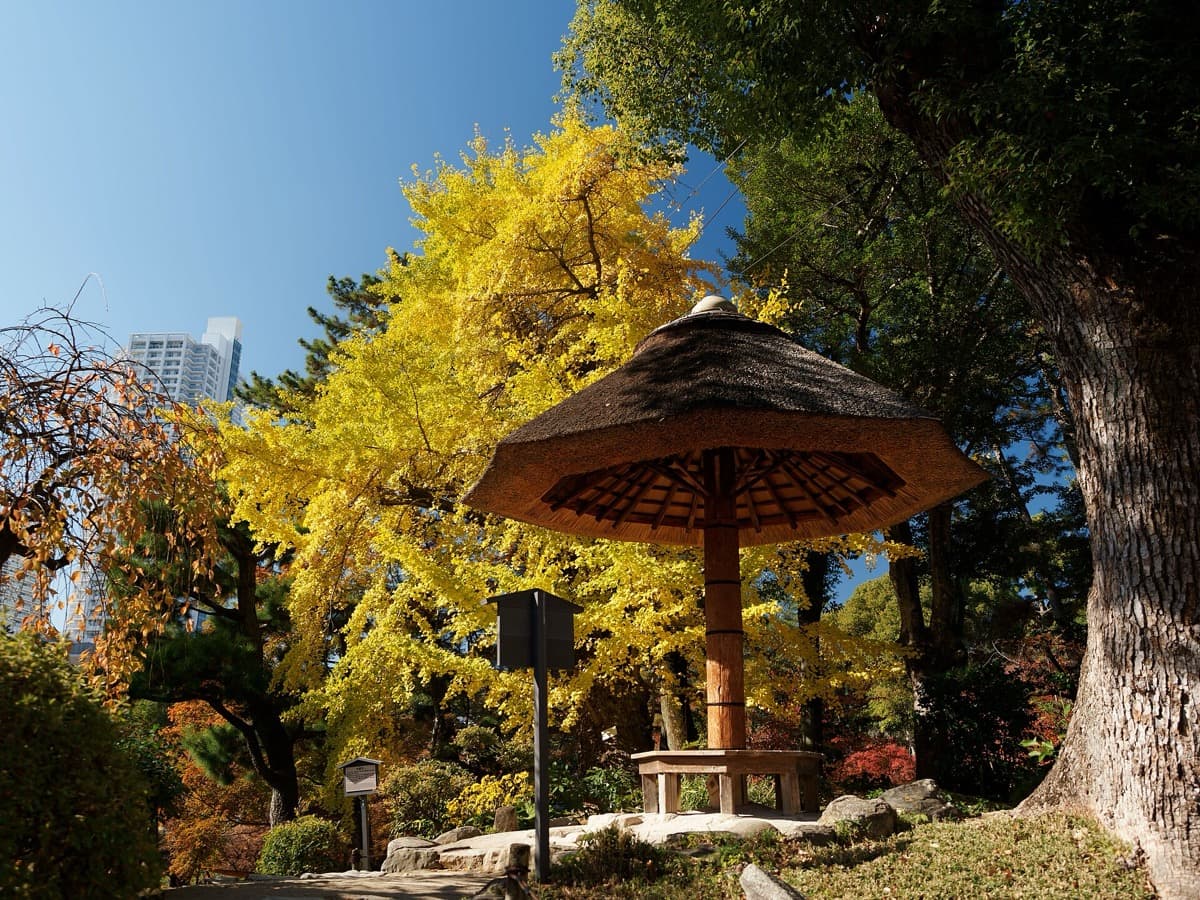
The Survivor Trees of Shukkei-en: The Leaning Ginkgo
Survivor trees within the garden, among them a ginkgo planted around seventeen forty that leans permanently toward ground zero and still lives.
- 6
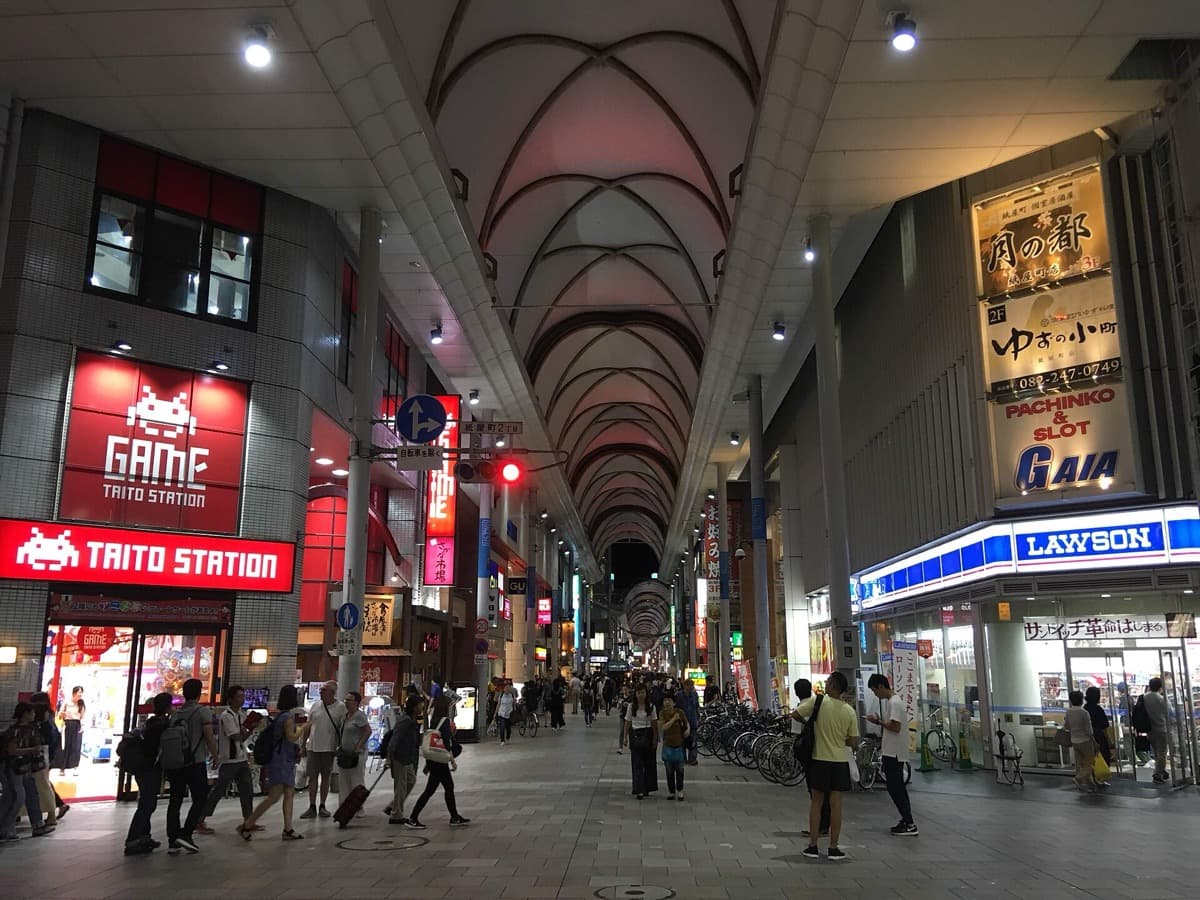
Hondori: The Rebuilt City Centre
A covered shopping arcade flattened in nineteen forty-five and rebuilt in the nineteen fifties, now the thriving retail heart of a city of over a million.
Details
Best Time to Visit
Morning is ideal. The castle grounds are free and open all day, and Shukkei-en opens at nine in the morning, so an early start lets you take the survivor trees at an unhurried pace before crowds and heat build. Spring, when the garden's plantings turn, and autumn, when the ginkgo goes gold, are the most rewarding seasons; a clear, mild day suits the reflective mood of this walk best.
Pro Tips
- •Begin in the castle grounds early. They are free and open even though the main keep closed to visitors in March, so plan to admire the keep from the outside and give your time to the moat, the stone base, and the trees.
- •Shukkei-en charges three hundred and fifty yen for adults, with reductions for students and free entry for children and seniors over sixty-five. It opens at nine in the morning and closes at six in the evening, or five in the evening from October through March, with last entry thirty minutes before closing.
- •Look for the small markers at the survivor trees. The hibaku jumoku are labelled, and finding the plaque before you find the tree helps you understand what you are seeing.
- •Wear comfortable shoes. The full walk runs roughly two and a half kilometres over gravel castle paths, a stretch of city street, and the uneven stone paths of the garden.
- •Give yourself permission to linger. This is a walk to do slowly and solo, at your own pace, pausing at each tree rather than pressing on to the next stop.
- •Carry water and, in summer, sun cover. Much of the castle grounds and the garden's central pond area are open and exposed.
Safety & Precautions
- •These grounds hold real grief, especially the garden, where wounded and dying people took refuge after the bombing. Keep your voice low near the shrine and the survivor trees, and treat the trees as the memorials they are.
- •Do not touch, lean on, or climb the survivor trees. Their survival depends on fragile, aged root systems, and they are protected living monuments.
- •The castle's main keep is closed to visitors for earthquake safety. Do not attempt to enter it; view it only from the grounds outside.
- •Garden and castle paths can be uneven, and stone surfaces near the pond may be slippery after rain, so watch your footing.
Travel advisory: Exercise Normal Precautions (Level 1).
Gallery
Related Reading
Go deeper on what you'll see, hear, and walk through.
Overview
Best Self-Guided Walking Tours in Hiroshima (2026)
3 min
Overview
Hiroshima Travel Guide: How Many Days, Getting Around, Miyajima, When to Go (2026)
5 min
Overview
One Day in Hiroshima: A Respectful, Walkable Itinerary (2026)
5 min
Thematic
Best History Walking Tours in Hiroshima (2026)
2 min
Deep dive
The Leaning Ginkgo of Shukkei-en: A Tree That Bent Toward the Bomb and Lived
6 min
Read the walk
The full story of Hiroshima Rebuilt: Castle, Garden, and the Trees That Lived, in words. Prefer to listen? Play it narrated, from home or on location.
Introduction
North of the river, a few hundred metres from the ground the world remembers, Hiroshima tells a different story. Not the one most travelers walk south to find, the Dome and the Cenotaph and the loss, but a quieter counter-story about return. This is a walk about resurrection. Over six stops and roughly four kilometres, about ninety minutes to two hours at your own unhurried pace, you will move through two clusters here in Hiroshima, in Japan. First the castle grounds, where a keep flattened in nineteen forty-five was raised again in concrete, and where a eucalyptus and a willow lived through the same morning untouched. Then a walk of about one kilometre east to a strolling garden begun four centuries ago, scorched, and patiently restored, with survivor trees of its own including a ginkgo that leans toward ground zero and keeps growing. You will end back in the ordinary present, in a covered arcade rebuilt in the nineteen fifties, in a city of over a million people. Along the way you will feel two things at once: the sincerity of a city willing itself back into being, and the uncanny fact that the most authentic survivors here are the ones nobody had to reconstruct. The rebuilt is honest about being rebuilt. The trees simply lived. Take your time, skip any stop that does not call to you, and let the living details do the talking: a scar on bark, carp in a moat, new leaves where scientists expected barren ground. When you arrive at Hiroshima Castle, begin with stop one.
1. Hiroshima Castle: The Rebuilt Keep
You are standing at the foot of Hiroshima Castle, and the keep rising in front of you is a rebuilt one. The first castle here was raised by the warlord Mori Terumoto between fifteen eighty-nine and fifteen ninety-nine, one of the great flatland fortresses of its age, its dark tiers earning it the nickname Carp Castle. For centuries it stood. Then, on the sixth of August nineteen forty-five, the atomic bomb detonated a short distance to the south, and the keep was destroyed. Evidence uncovered in twenty ten suggests the blast shattered the lower pillars and the whole structure then collapsed in on itself. What you see now went up in nineteen fifty-eight. Look closely and the honesty of it comes through: this is reinforced concrete, ferroconcrete, dressed in a partly wooden exterior faithful to the original silhouette. It stands twenty-six point six metres tall, five stories, on a twelve point four metre stone base, and inside it long served as a museum of pre-war Hiroshima. There is a detail you should know before you plan your visit. The main keep closed to visitors on the twenty-second of March twenty twenty-six, because the concrete structure no longer meets modern earthquake-safety standards, so today you take it in from the outside. That is no loss for this walk. The grounds, the wide moat, the stone base, all of it is free and open. Stand here and hold the idea that will run through everything ahead. A city can rebuild what it loved, and it can be truthful that the rebuilding is a copy. The castle does not pretend to be original. It is a concrete act of return.
2. The Survivor Trees of the Castle Grounds
Somewhere near you in these grounds, in the Ninomaru, the second bailey at the south of the castle, stand two trees that change the whole tone of this walk. They are hibaku jumoku, a Japanese term meaning A-bombed trees, or survivor trees. One is a eucalyptus, the other a willow, and on the morning of the sixth of August nineteen forty-five they stood roughly seven hundred and forty metres from the hypocentre, the point directly beneath the blast. Nearby, a kurogane holly stood about nine hundred and thirty-five metres out. Everything above ground was scorched. And yet they lived. According to the survivor-tree record, they came through because the underground portions of their roots escaped direct damage even as the world above them burned, and in the seasons that followed they put out new growth on ground that scientists expected to stay barren. Broad-leaved species regenerated most stubbornly of all. The eucalyptus carries a second chapter: in a nineteen seventy-one typhoon it broke at about two and a half metres above the ground, and it simply sprouted again. Across Hiroshima, roughly one hundred and seventy such trees are documented that predate the bombing. Twelve of them stood within one thousand metres of the blast, forty-eight within two thousand. The closest known survivor of all is not here but on the Motomachi riverbank of the Ota River, a weeping willow about three hundred and seventy metres from ground zero that fell at the moment of the bombing, then sent new buds up from its roots. This is the pivot of the walk. The castle behind you is what people rebuilt. These trees are what nobody had to. They were simply alive, and they still are.
3. Hiroshima Gokoku Shrine: The Ritual of Return
You have come to Hiroshima Gokoku Shrine, tucked inside the castle grounds, and it carries the same arc of loss and return in a more human, ritual key. The shrine was founded in eighteen sixty-nine, the first year of the Meiji era. In the bombing of nineteen forty-five its…
Full narration for this stop unlocks with the tour.
4. Shukkei-en Garden: Four Centuries, Scorched and Restored
You have walked east, about one kilometre from the castle, and arrived at Shukkei-en, a strolling garden begun in sixteen twenty during the Edo period. Its name means, roughly, shrunken-scenery garden, and that is exactly its art: a whole landscape of mountains, valleys, and a…
Full narration for this stop unlocks with the tour.
5. The Survivor Trees of Shukkei-en: The Leaning Ginkgo
Somewhere along these paths, a little over one kilometre from the hypocentre, stand several of the city's survivor trees, and one of them is the emotional heart of this whole walk. It is a ginkgo, planted around seventeen forty, which means it was already two centuries old on…
Full narration for this stop unlocks with the tour.
6. Hondori: The Rebuilt City Centre
You have come back into the living city, and you are standing in Hondori, whose name simply means Main Street. It is a covered shopping arcade in the Naka ward, running from Hatchobori toward the edge of the Peace Memorial Park, and it is the retail heart of Hiroshima. In the…
Full narration for this stop unlocks with the tour.