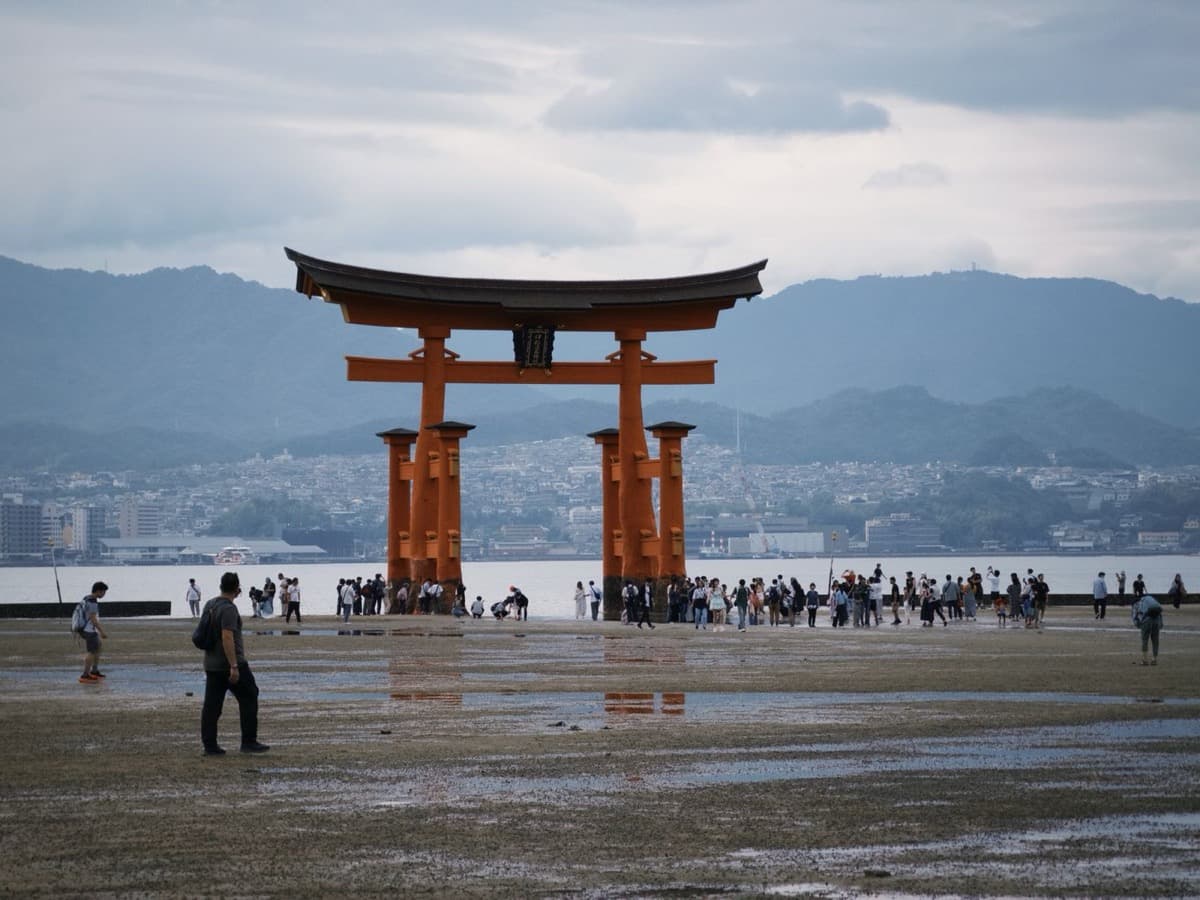
The most famous image of Miyajima is a shrine that appears to float on the sea, its halls and corridors standing on piers above the water, its great vermilion gate rising from the waves offshore. Most visitors assume the over-water design is for beauty, and it is beautiful. But the real reason is stranger and more revealing: the island of Miyajima was held so sacred that ordinary human life was not permitted to defile its soil, so the shrine was built out over the sea, on the tide, rather than on the holy ground. Understand that purity taboo and the floating shrine stops being scenery and becomes the physical expression of a whole idea of the sacred.
An island too holy to build on
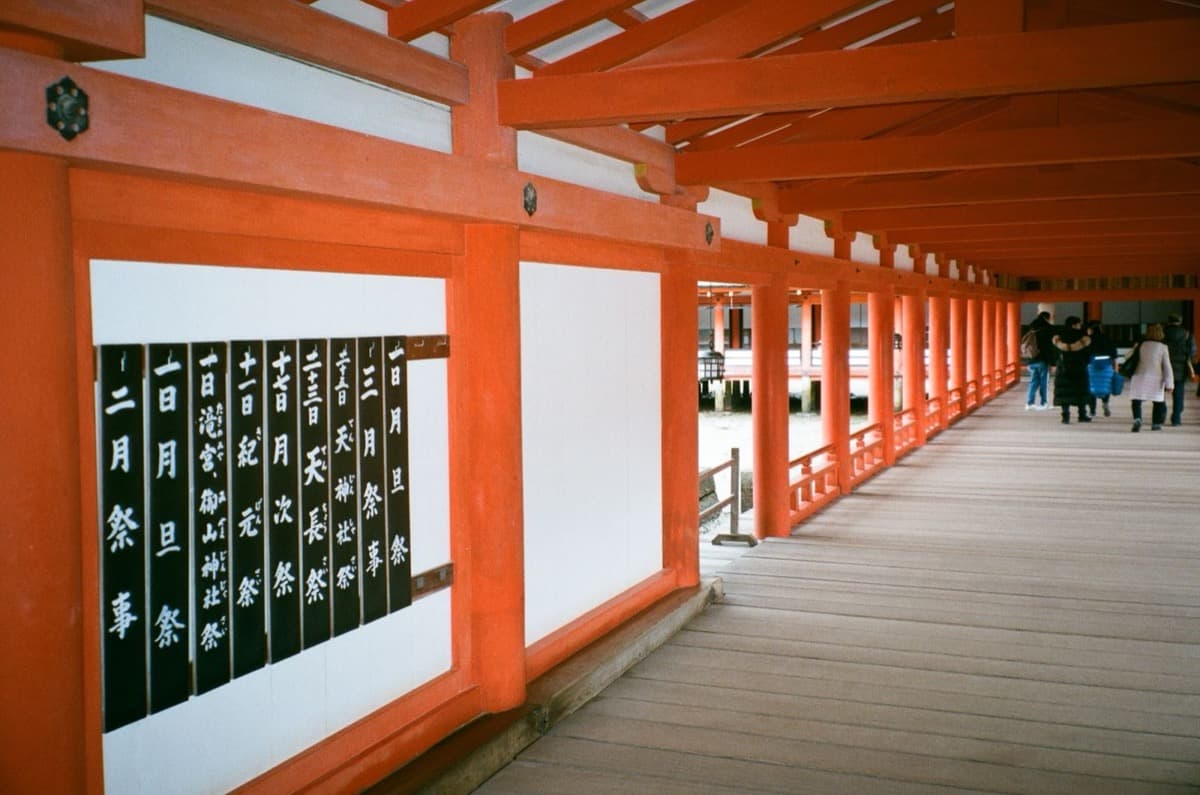
In the old Shinto understanding, the entire island of Miyajima was sacred, a dwelling of the gods that ought not to be disturbed by the ordinary business of human life. That belief had radical architectural consequences. Rather than clear and build on the holy soil, the shrine was constructed on pier-like foundations extending over the bay, so that it seemed to hover between the sacred island and the sea. The design is in the elegant shinden-zukuri style of aristocratic Japan, a series of halls and covered corridors on stilts, arranged so that at high tide the whole complex reflects in the water and appears to float. The great torii gate stands out in the sea itself, marking the approach, so that pilgrims historically came by boat, passing through the gate from the water rather than stepping onto the island's soil.
The purity taboo was taken to remarkable lengths. To keep the sanctity of the site, births and deaths were kept away from the shrine, a restriction observed since the nineteenth century, so that neither the beginning nor the end of human life would touch the holy ground.
The nobleman who made it magnificent
Hear a stop from this walk
Mount Misen: The Summit and the Flame
A shrine has stood on this site since ancient times, its founding traditionally dated to the sixth century. But the shrine as we know it, the grand floating complex, is largely the achievement of one man: Taira no Kiyomori, the powerful twelfth-century nobleman and warrior who governed the province and rose to dominate the imperial court. Around 1168 Kiyomori lavished his patronage on Itsukushima, rebuilding and expanding it into the magnificent over-water shrine whose form survives today. The Taira clan adopted Itsukushima as their tutelary shrine, and Kiyomori's wealth and power raised it from a local sanctuary into one of the great shrines of Japan. So the floating shrine is both an expression of an ancient purity taboo and a monument to the ambition of a medieval warlord who wanted the gods, and the world, to see his glory.
What is enshrined, and why it matters
The shrine is dedicated to three goddesses, Ichikishimahime, Tagorihime, and Tagitsuhime, daughters in myth of the storm god Susanoo and deities associated with the sea and safe passage. That dedication fits the setting exactly: a shrine to sea goddesses, built on the sea, on an island of the gods. In 1996 the shrine and its surroundings were inscribed as a UNESCO World Heritage Site, and many of its structures are designated National Treasures of Japan. Roamer's Miyajima: The Floating Shrine reads the whole island as a journey from the profane shore, where the deer and the shops are, through the great torii to this over-water shrine and up toward the sacred summit of Mount Misen.
Reading it in place
The single most important thing to do at Itsukushima is to time the tide. Come at high tide to see the shrine and its corridors seem to float, the reflection completing the illusion, and understand that the design exists to keep human life off the sacred soil. Walk the covered corridors on their piers and feel the water beneath. Then look out at the torii in the sea and remember pilgrims once approached by boat, through the gate, never stepping on the island directly. Low tide reveals the piers and lets you walk out toward the gate, a different but equally revealing view. Either way, move quietly; the whole island is, in the old belief, a shrine.
The shrine anchors Roamer's Miyajima: The Floating Shrine. To plan a day, see one day in Hiroshima, and for the full set of routes, browse Hiroshima walking tours.
Sources
- Wikipedia, Itsukushima Shrine: the shrine built in the shinden-zukuri style on pier-like structures over the bay so that it appears to float at high tide and preserves the sacred purity of the island by keeping the shrine separate from land, the torii in the sea with commoners historically approaching by boat, the three enshrined goddesses Ichikishimahime, Tagorihime, and Tagitsuhime as daughters of Susanoo and deities of seas, the major expansion under Taira no Kiyomori as Aki Province governor with a torii on the site since 1168, the prohibition of births and deaths near the shrine since 1878, and the UNESCO World Heritage inscription in 1996 with multiple National Treasures.
- Roamer tour transcript, Miyajima: The Floating Shrine (hiroshima-miyajima), fact-audited: Itsukushima Shrine as the building that will not touch the ground.
Ready to experience it?
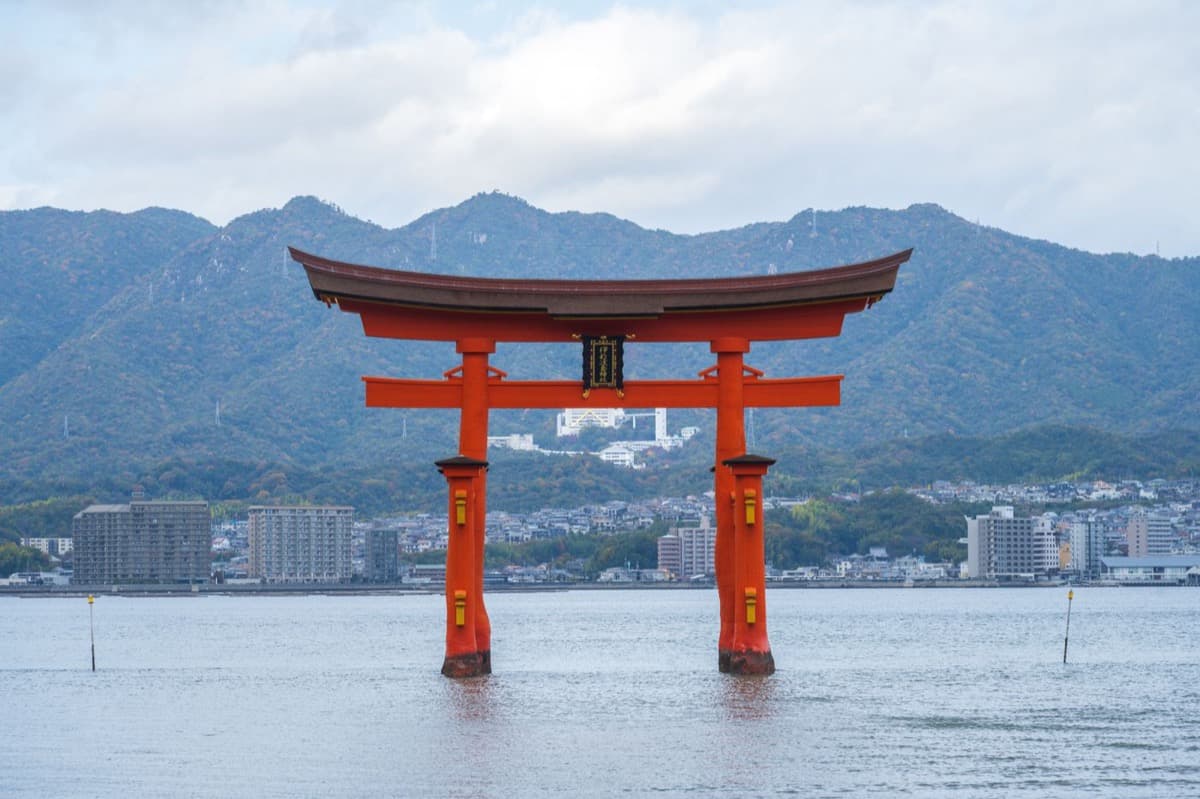
Miyajima: The Floating Shrine
180 min · 4 km · moderate
More from Hiroshima
Explore more at your own pace.
Hiroshima Travel Guide: How Many Days, Getting Around, Miyajima, When to Go (2026)
One Day in Hiroshima: A Respectful, Walkable Itinerary (2026)

What to Eat in Hiroshima: A Food Guide (2026)
The Atomic Bomb Dome: Why Hiroshima Kept One Ruin Standing
The Children's Peace Monument: Sadako, the Paper Cranes, and a City's Vow