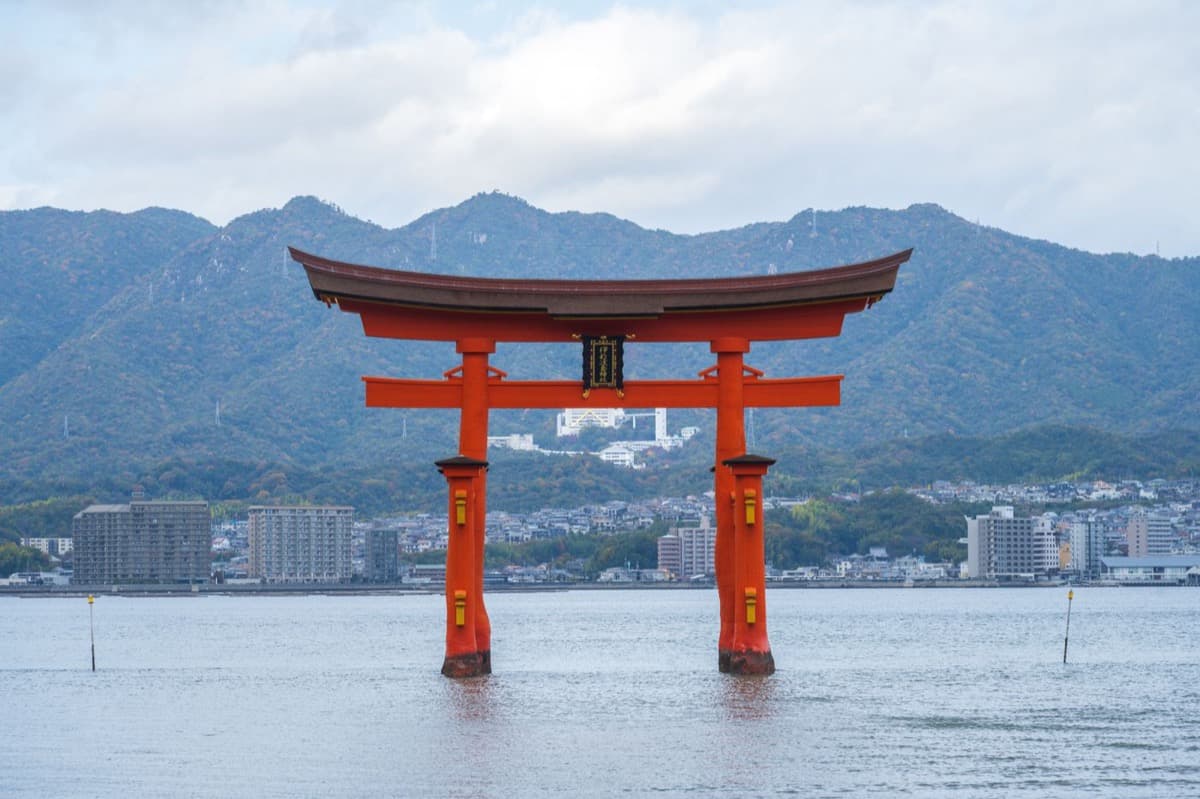
A walk across the tideline of a sacred island, from the deer and shops of the shore to a vermilion gate that seems to float on the sea, a shrine built on stilts, and a mountaintop flame that reaches all the way back down to Hiroshima.
Start · The Deer and Omotesando: The Profane Shore
DirectionsStops
- 1
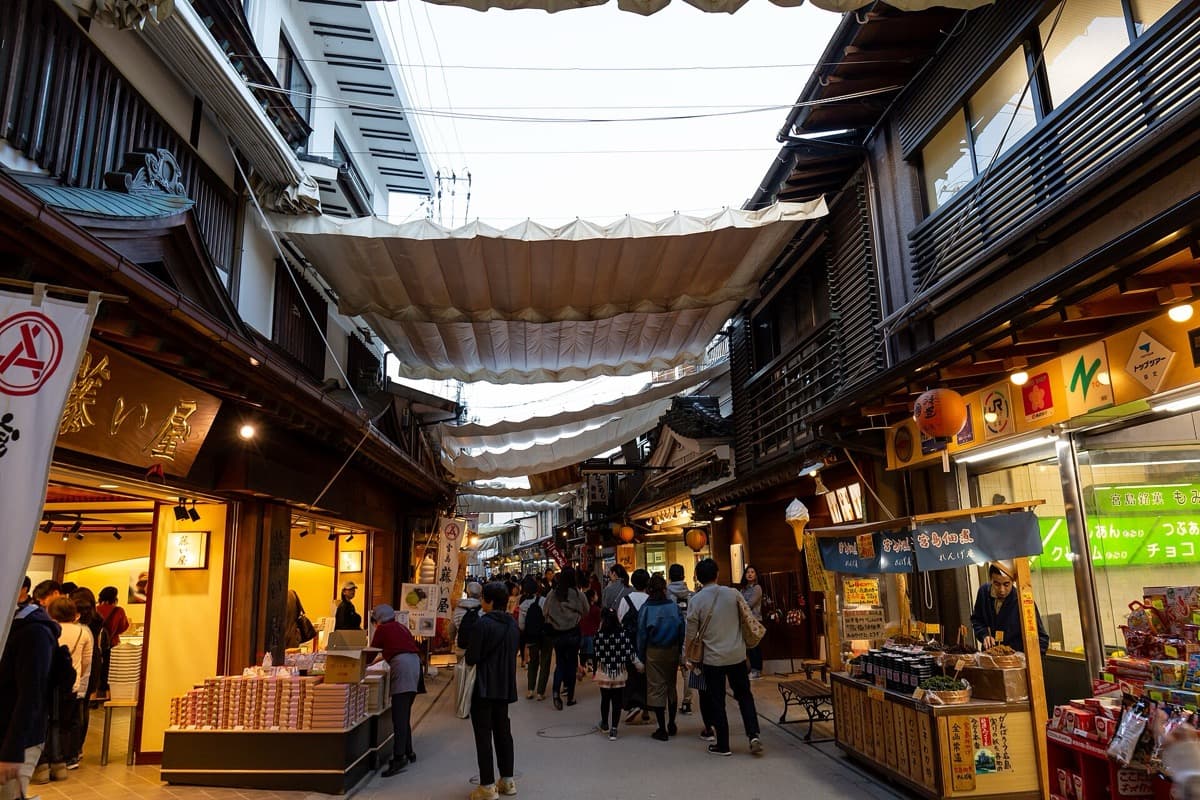
The Deer and Omotesando: The Profane Shore
The ordinary ground of an extraordinary island, where wild deer wander freely and the purity taboo that shapes everything begins.
- 2
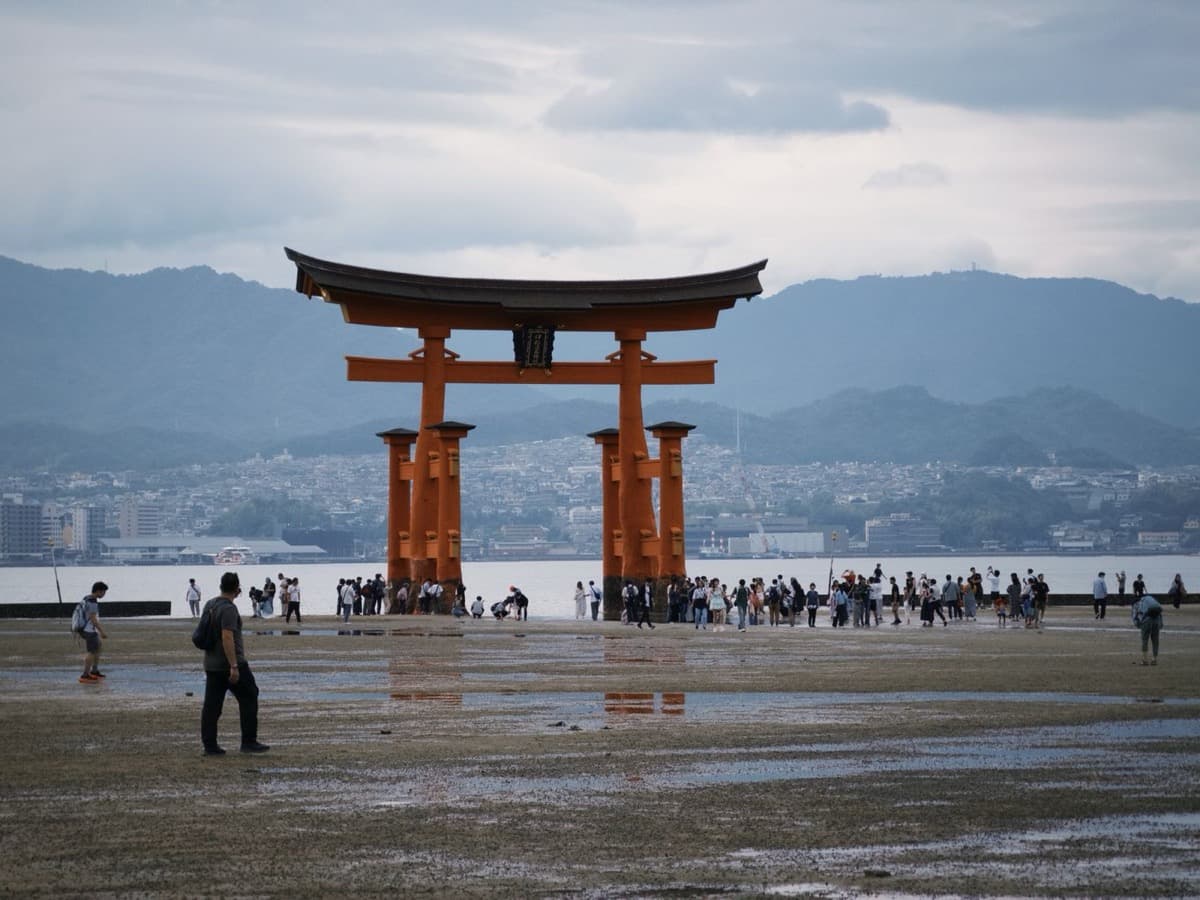
The Great Torii: A Threshold in the Sea
The floating vermilion gate that stands on the tideline, held up by nothing but its own weight.
- 3
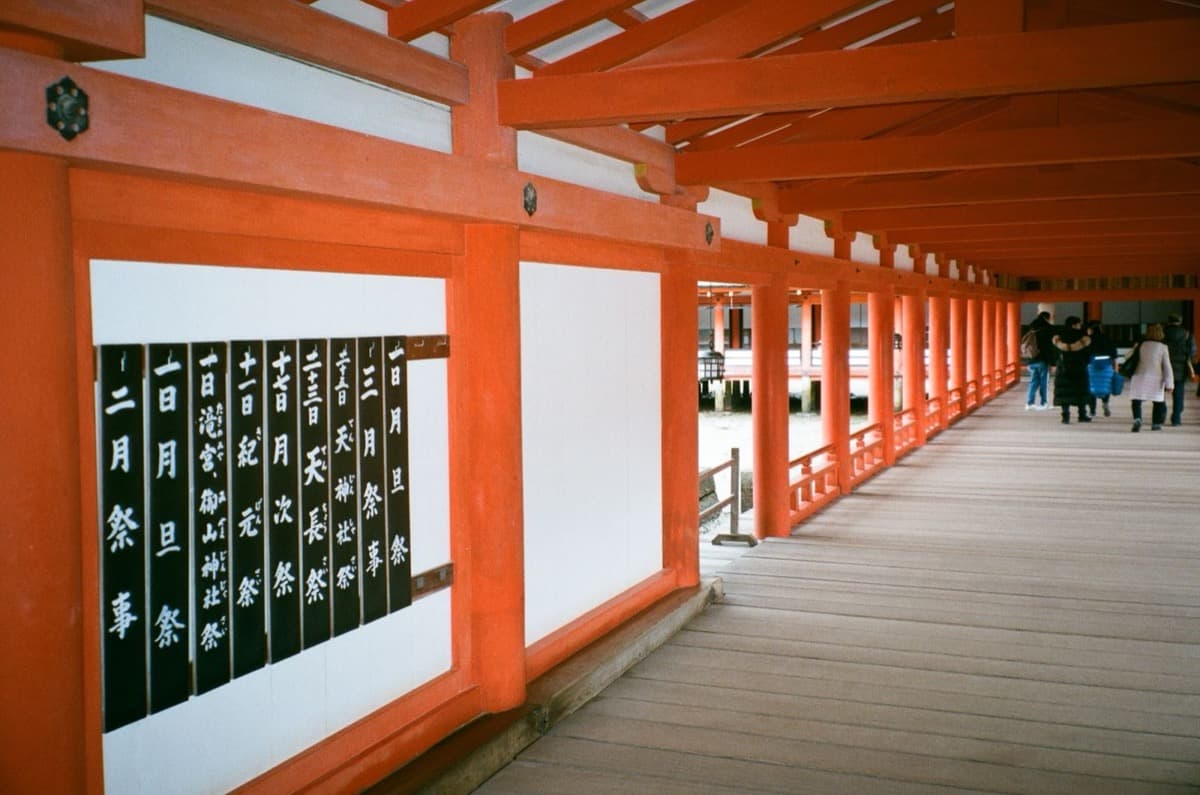
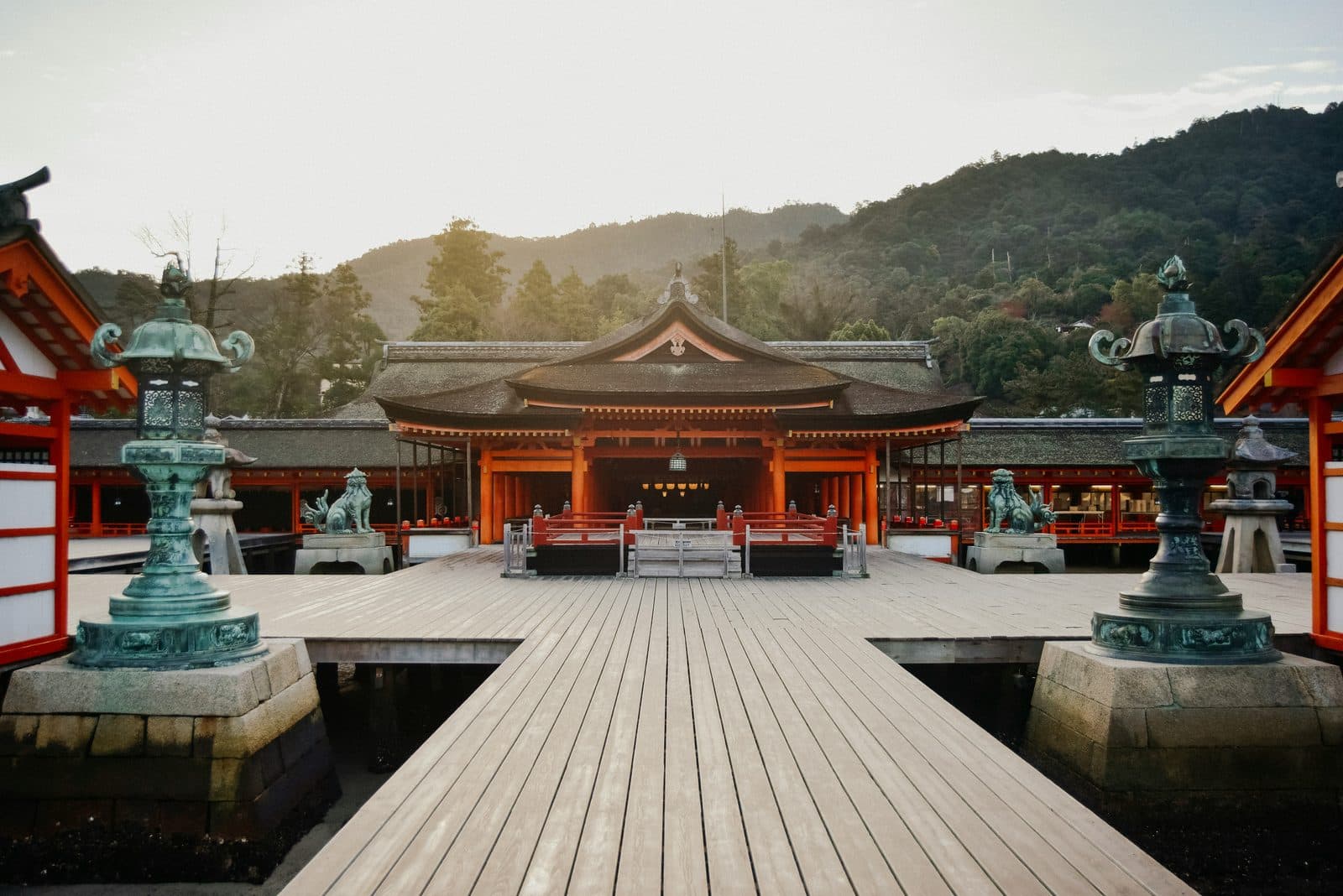
Itsukushima Shrine: The Building That Will Not Touch the Ground
A shrine on stilts above the tideline, built so worshippers need never set foot on the sacred island itself.
- 4
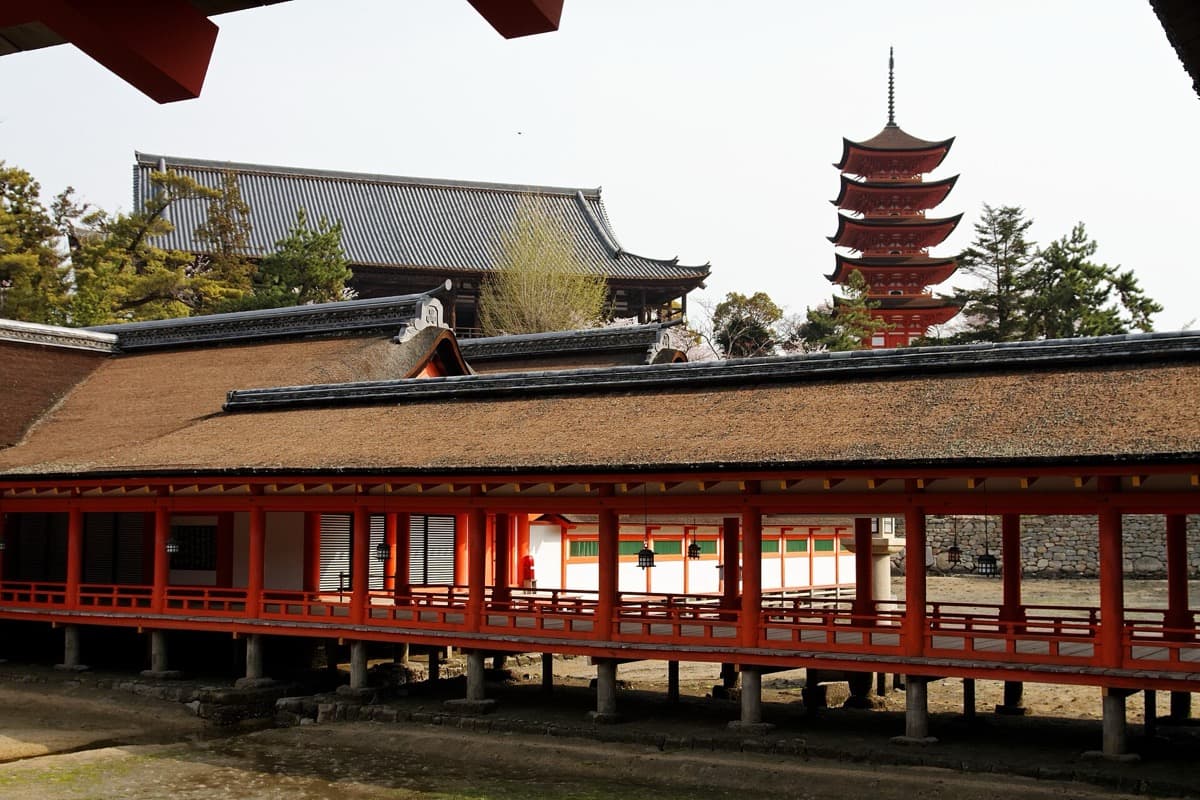
Five-Storey Pagoda and Senjokaku: Where Piety Meets Power
On the hill above the shrine, a slender vermilion pagoda beside a vast hall left forever unfinished.
- 5
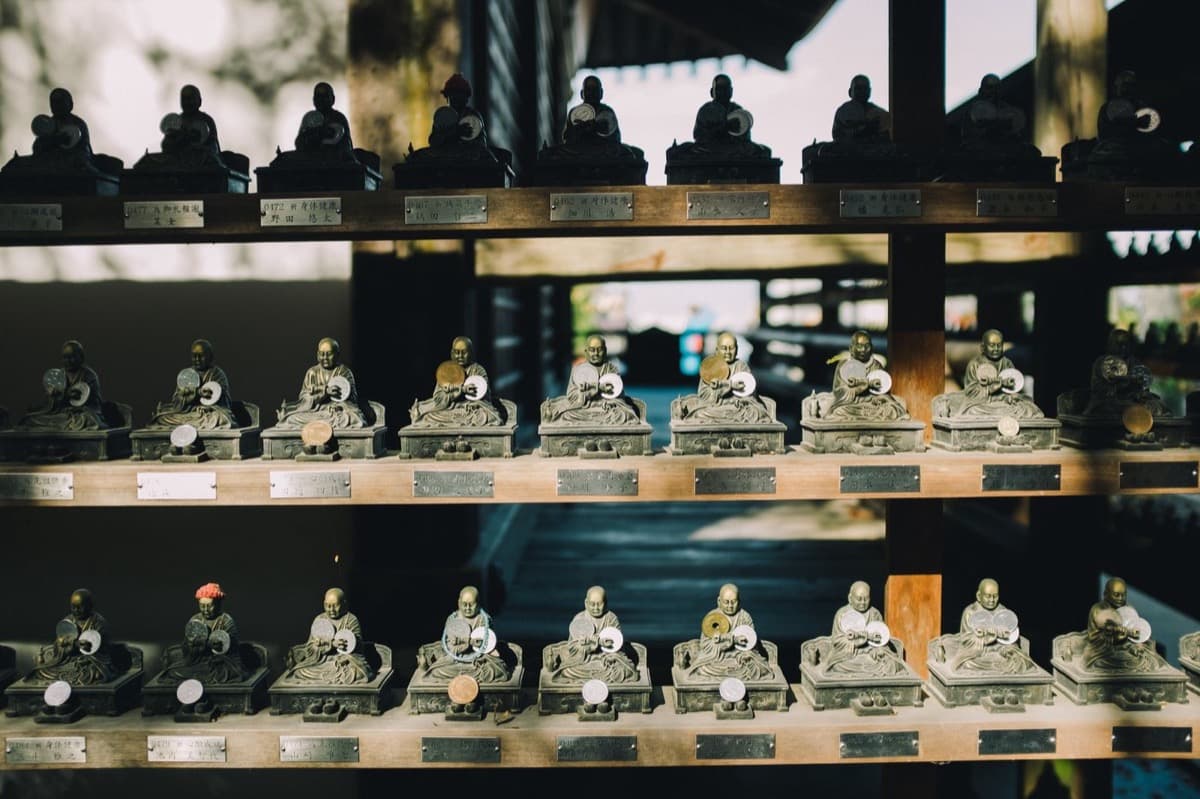
Daisho-in Temple: Where the Island Turns Buddhist
A Shingon temple at the foot of Mount Misen, the pivot from the sea goddesses below to the sacred mountain above.
- 6
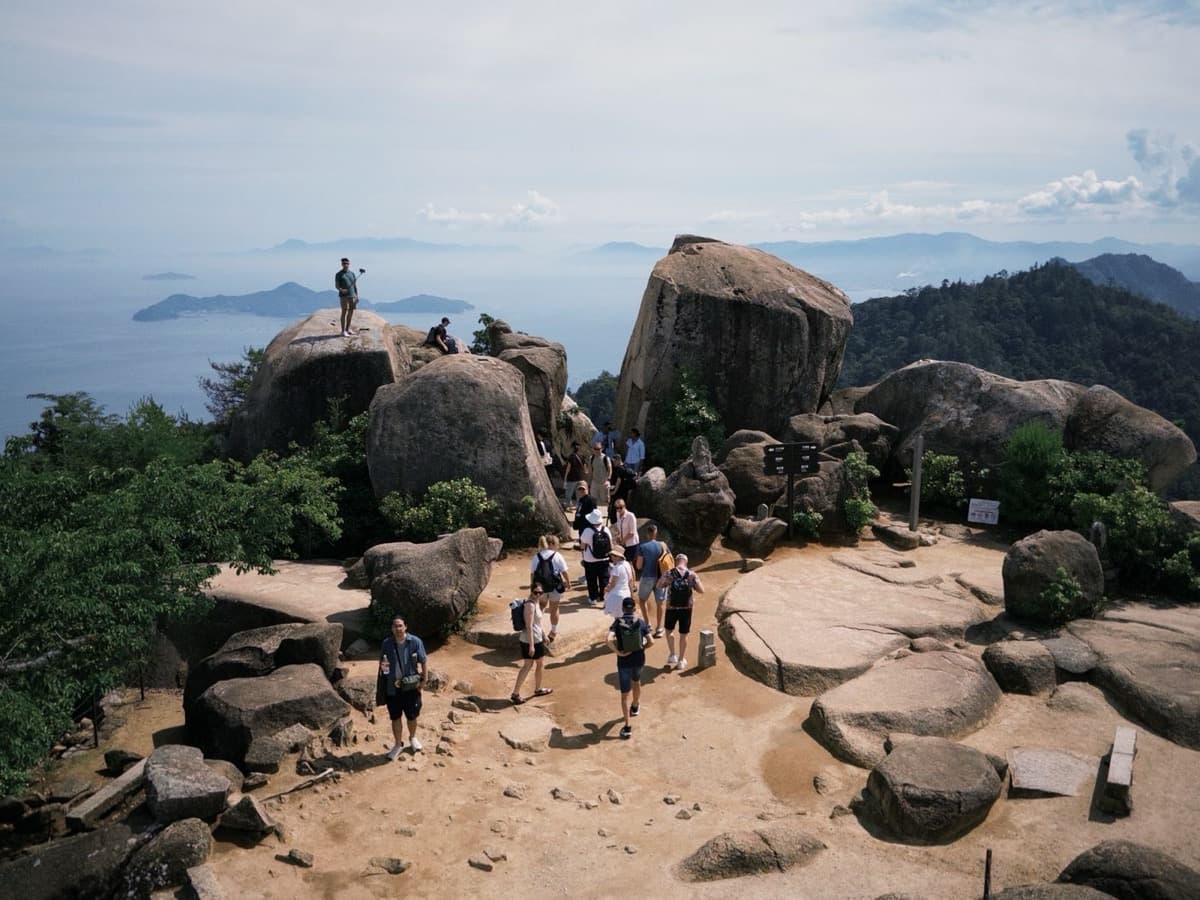
Mount Misen: The Summit and the Flame
The sacred crown of the island, home to a flame said to have burned for twelve hundred years and joined to Hiroshima's Flame of Peace.
Details
Best Time to Visit
Miyajima rewards a full day. Aim to be on the island around a low tide if you want to walk out across the sand to the base of the great gate, and around a high tide if you want to see the gate and the shrine appear to float on the water. Check the day's tide times before you cross. Morning light and late afternoon are gentlest for the foreshore and the shrine, and starting early leaves time for the climb to Mount Misen before the last ropeway down. Autumn brings brilliant maple color to the mountainside, and spring brings cherry blossom near the shrine.
Pro Tips
- •Check the tide chart for the day before you go. Low tide lets you walk out to the gate, while high tide makes both the gate and the shrine appear to float. Many travelers try to catch both.
- •Carry cash. Itsukushima Shrine is about three hundred yen and Senjokaku about one hundred yen, while Daisho-in, the gate, the foreshore, and the deer cost nothing.
- •For Mount Misen, the Miyajima Ropeway costs about two thousand yen round trip and runs most of the way up. From the upper station allow about a forty-minute climb to the summit, and confirm the last downhill departure so you are not stranded.
- •Every stop stands on its own and the walk is yours to shape. If the climb is too much, the shore, the gate, the shrine, the pagoda, and Daisho-in make a complete and gentle half day on their own.
- •Wear shoes you do not mind getting sandy or wet if you plan to walk out to the gate at low tide, and bring a layer for the cooler, breezier summit.
- •Keep food and paper tickets tucked away. The deer are bold and will investigate open bags and maps.
Safety & Precautions
- •Miyajima is a place of living worship. Move quietly in the shrine and temple halls, follow posted rules about photography, and give any ceremony a wide berth.
- •Do not feed or crowd the deer. They are wild animals and are known to nibble maps, tickets, and food left within reach, so keep your belongings closed.
- •The route to the summit is steep and can be slippery in rain. Wear proper footwear, carry water, and check ropeway and weather conditions before you climb.
- •The Reikado Hall on Mount Misen burned in twenty twenty-six and the area may be under reconstruction. Respect any closures or barriers and do not enter restricted zones.
Travel advisory: Exercise Normal Precautions (Level 1).
Gallery
Related Reading
Go deeper on what you'll see, hear, and walk through.
Overview
Best Self-Guided Walking Tours in Hiroshima (2026)
3 min
Overview
Hiroshima Travel Guide: How Many Days, Getting Around, Miyajima, When to Go (2026)
5 min
Overview
One Day in Hiroshima: A Respectful, Walkable Itinerary (2026)
5 min
Thematic
What to Eat in Hiroshima: A Food Guide (2026)
4 min
Deep dive
Itsukushima Shrine: The Miyajima Shrine Built Over the Sea So It Would Not Defile a Sacred Island
5 min
Deep dive
Why Miyajima's Floating Torii Gate Stands on Nothing but Its Own Weight
6 min
Read the walk
The full story of Miyajima: The Floating Shrine, in words. Prefer to listen? Play it narrated, from home or on location.
Introduction
Miyajima sits in the Seto Inland Sea just southwest of Hiroshima, in Japan, and it may be the strangest and most beautiful argument in wood and vermilion that you will ever walk through. This tour has six stops and takes about three hours at an easy pace, longer if you climb to the summit. The walking route runs roughly three kilometres from the shore toward the mountain, and the final climb adds more. You set your own pace, and every stop stands on its own, so linger where you like and skip whatever you please.
The island's real name is Itsukushima, and for centuries it was held to be a god in its own right, so sacred that ordinary people were not allowed to be born or to die on its ground. That single idea explains almost everything you are about to see. The great gate was built out in the sea. The shrine was raised on stilts above the tideline, neither fully on the holy island nor off it. The deer wander unbothered because no blood may be shed here.
This walk reads the island from the profane shore, across the threshold of the water, and up into the sacred mountain. You begin among the shops and the deer, cross to the floating gate and the over-water shrine, climb past a pagoda and an unfinished hall of power, and end at a mountainside temple and a summit flame that reaches all the way back down to Hiroshima. Foreshore first, mountain last: the walk itself is the theology.
When you arrive at the Omotesando approach near the ferry terminal, begin with stop one.
1. The Deer and Omotesando: The Profane Shore
You are standing on the ordinary ground of an extraordinary island. The Omotesando approach leads from the ferry terminal toward the shrine, and the first thing most travelers notice is the deer. Wild sika deer wander here freely, the same species you may know from Nara, and they move among people without much fear. There is a reason they are so at ease. On this island, shedding blood was taboo, so killing them was forbidden, and over the centuries they came to be regarded as near sacred, messengers rather than game.
That taboo is the key to the whole place. Itsukushima, the island's proper name, was itself considered a deity, and it was kept so pure that no one was permitted to be born or to die on it. According to Wikipedia's account of the shrine, since eighteen seventy-eight no deaths or births have been permitted on the island. Pregnant women and the seriously ill traditionally crossed back to the mainland, so that the great passages of human life happened elsewhere, off the holy ground.
Take a moment here on the approach before you go any further. The shops and the crowds feel worldly and busy, and that is exactly the point. This is the profane shore, the everyday edge of a place too sacred to stand on lightly. Everything ahead of you is built around a single question: how does a person come close to something this holy without trespassing upon it. The deer, unbothered and unafraid, are your first clue. Watch them, keep your food packed away, and when you are ready, turn toward the water and the gate that seems to float upon it.
2. The Great Torii: A Threshold in the Sea
Look out across the water to the great vermilion gate. This is the O-torii, the floating gate of Miyajima, and it is the reason many people cross the sea to stand here. According to the Miyajima Tourist Association, it rises about sixteen point six metres overall, with main pillars roughly thirteen point four metres tall. At high tide the sea slides in beneath it and the gate appears to float, cut loose from the earth. At low tide the water pulls back and you can walk out across the wet sand to stand at its base and touch the enormous pillars.
Here is the thing that surprises almost everyone. The gate is not buried in the seabed. It stands held up by nothing except its own tremendous weight, resting on a bed of stakes driven into the tidal flat, a foundation called senbon-gui, the thousand pillars. The main pillars are camphor wood, chosen because it resists decay in the salt and the damp. The gate you see is the ninth to stand on this spot, and it was raised in eighteen seventy-five.
A gate has no wall and no door, yet this is the most important structure on the island. Why build a threshold in the sea. Because the island is the shrine, and the gate marks the edge of something too holy to stand upon. You pass through it by boat at high tide, or across the sand at low tide, and either way you cross from the human world into the divine one. A torii has stood on this tideline since the time of Taira no Kiyomori, more than eight hundred years ago. Stand with it a while, and watch the water decide whether it floats.
3. Itsukushima Shrine: The Building That Will Not Touch the Ground
You are looking at a shrine that refuses to touch its own sacred ground. Itsukushima Shrine is built on stilts out over the tideline, its vermilion halls and corridors raised above the water on wooden posts, so that worshippers need never set foot on the holy island itself. At…
Full narration for this stop unlocks with the tour.
4. Five-Storey Pagoda and Senjokaku: Where Piety Meets Power
Climb the short rise above the shrine and the walk lifts off the water for the first time. Two very different buildings stand together on the hill. The first is the Five-Storey Pagoda, called Goju-no-to, a slender tower of vermilion and cedar that you admire from outside rather…
Full narration for this stop unlocks with the tour.
5. Daisho-in Temple: Where the Island Turns Buddhist
Follow the path toward the base of the mountain and you come to Daisho-in, a Shingon Buddhist temple set into the slope, historically the most important temple on the island. If the shrine below belongs to the sea goddesses of Shinto, this is where the island turns Buddhist, and…
Full narration for this stop unlocks with the tour.
6. Mount Misen: The Summit and the Flame
This is the summit, the sacred crown of the island and the end of the walk. Mount Misen is the highest point on Miyajima at five hundred and thirty-five metres, and Kukai is said to have climbed it in eight oh six and lit a fire here to sanctify the mountain. From that fire…
Full narration for this stop unlocks with the tour.