Hill Station: The Empire's Escape
180 min · 8 km · hard
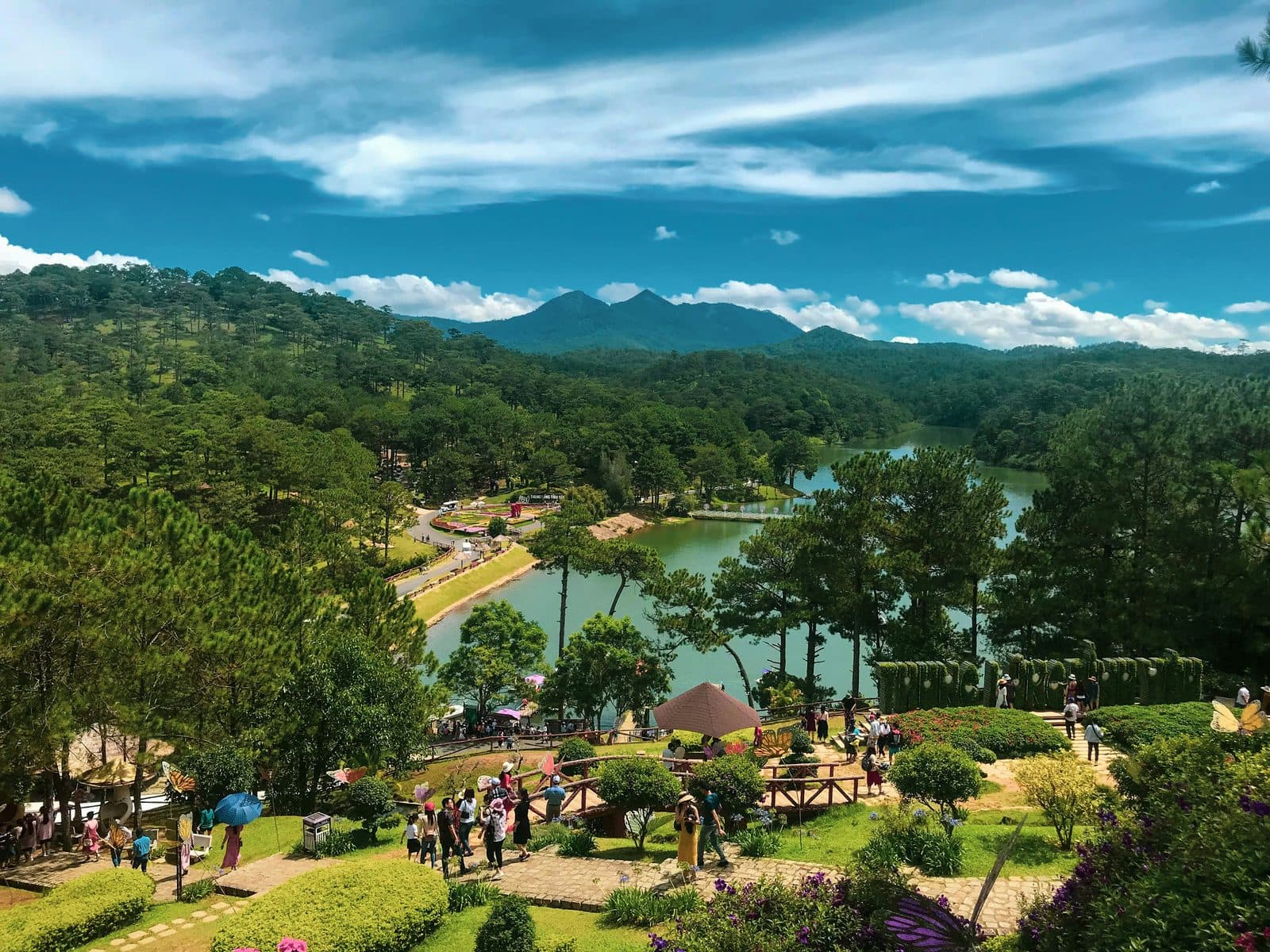
Da Lat sits near fifteen hundred metres in the southern highlands of Vietnam, and the first thing to understand about it is that almost none of it is native to the mountain. The pine forests are real and the cool air is real, but the town on top of them is an argument made in stone. The French built it, over a single generation, as a place to stop being in the tropics. The Vietnamese who inherited it kept the bones and changed the meaning. To see Da Lat honestly is to hold both of those facts at once.
The town exists because of one man's note about the weather. In 1893 a bacteriologist named Alexandre Yersin, Swiss by birth and later naturalized French, climbed onto this cool pine plateau in the Lang Biang highlands. He was not looking for a town. He was mapping the interior, and he happened to reach the plateau on June 21, 1893, a year before he would go on to identify the bacillus behind bubonic plague in Hong Kong. What struck him was the climate. He urged the colonial administration, and the governor-general Paul Doumer, to build a mountain sanatorium up here where the French could escape the heat of the lowlands. Da Lat grew out of that suggestion. The entire city is downstream of a doctor deciding the air was good.
An empire that was homesick
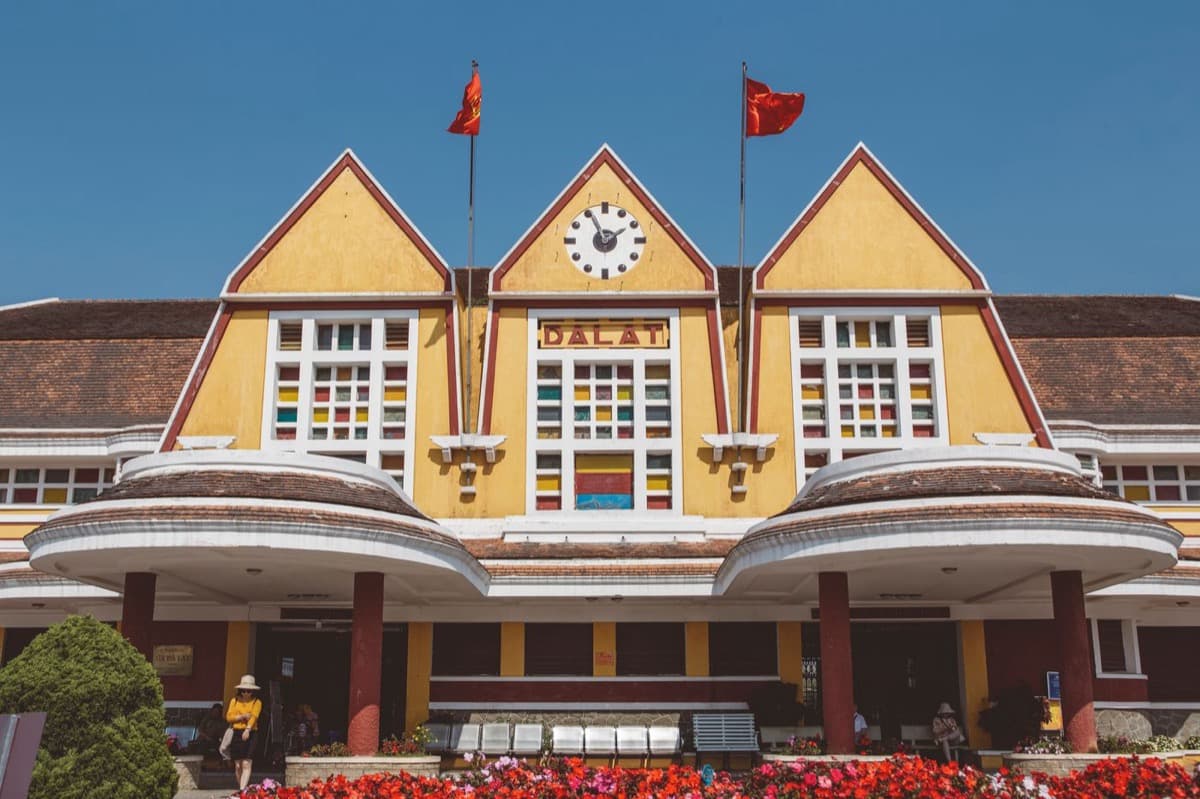
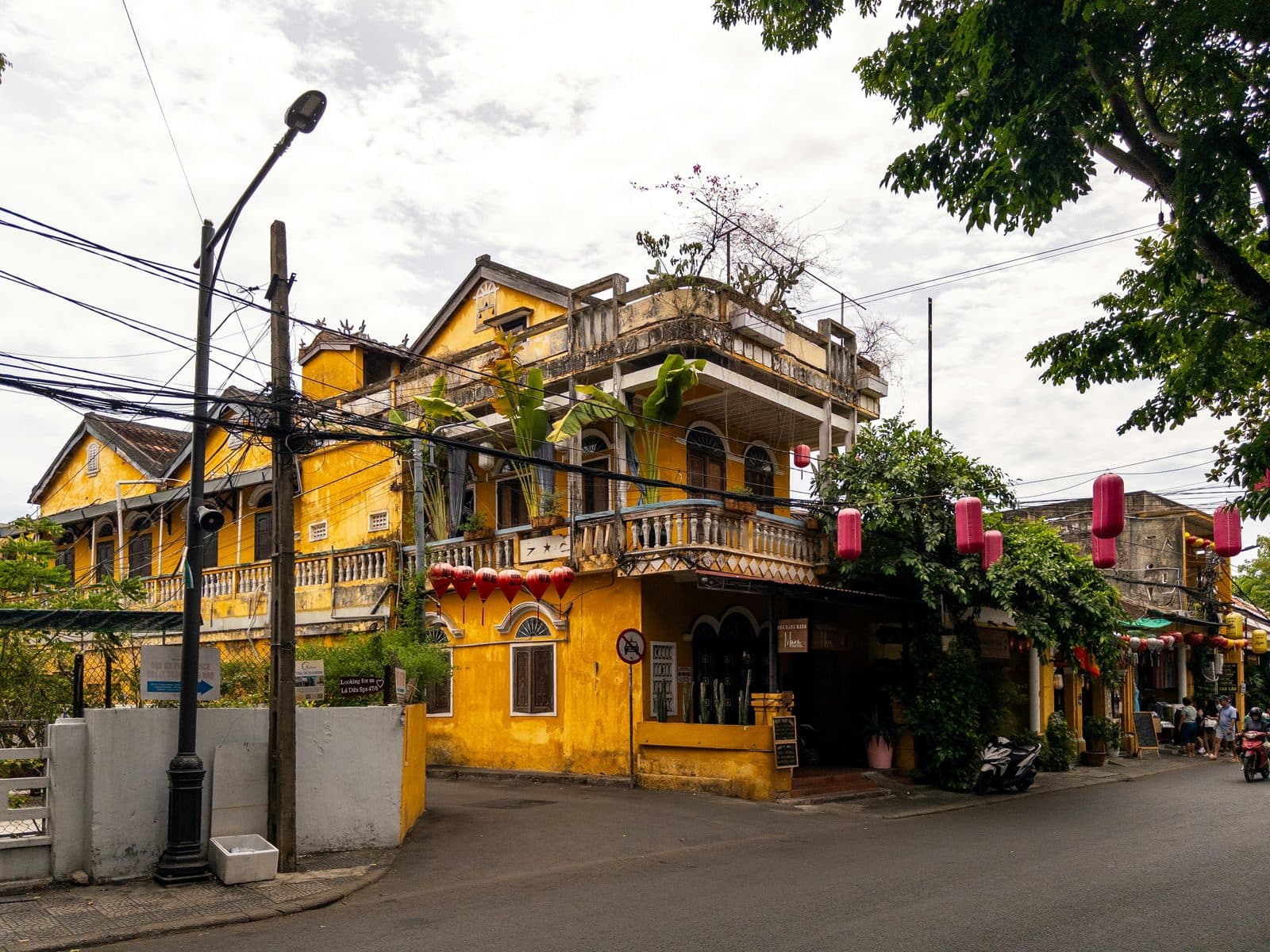
What the French built next was not a colonial outpost in the usual sense. It was a reconstruction of home. On this Vietnamese ridge they assembled a small alpine Europe: an Art Deco railway station reached by a cog railway that climbed nearly fourteen hundred metres out of the delta heat, streets of steep-roofed villas set in pine and hydrangea, a palace hotel above a lake built to rival Raffles in Singapore, a red-brick lycee curved like something out of provincial France, and a cathedral crowned with a rooster. Da Lat still holds well over a thousand villas from the colonial era, one of the largest such collections in the country.
Read together, these buildings are an act of homesickness. An empire built the countryside it missed in the middle of a country it governed by force. That is the argument of the first walk, The Empire's Escape, which reads the town as a piece of France assembled to hide from the tropics, and ends on the Vietnamese city that outlived it. The station alone is worth its own visit; its three peaked roofs and rack-and-pinion engineering get a closer look in the Art Deco terminus that hauled France up the mountain.
A lake that was manufactured
Hear a stop from this walk
Hoa Binh Square: The City That Kept the Stage
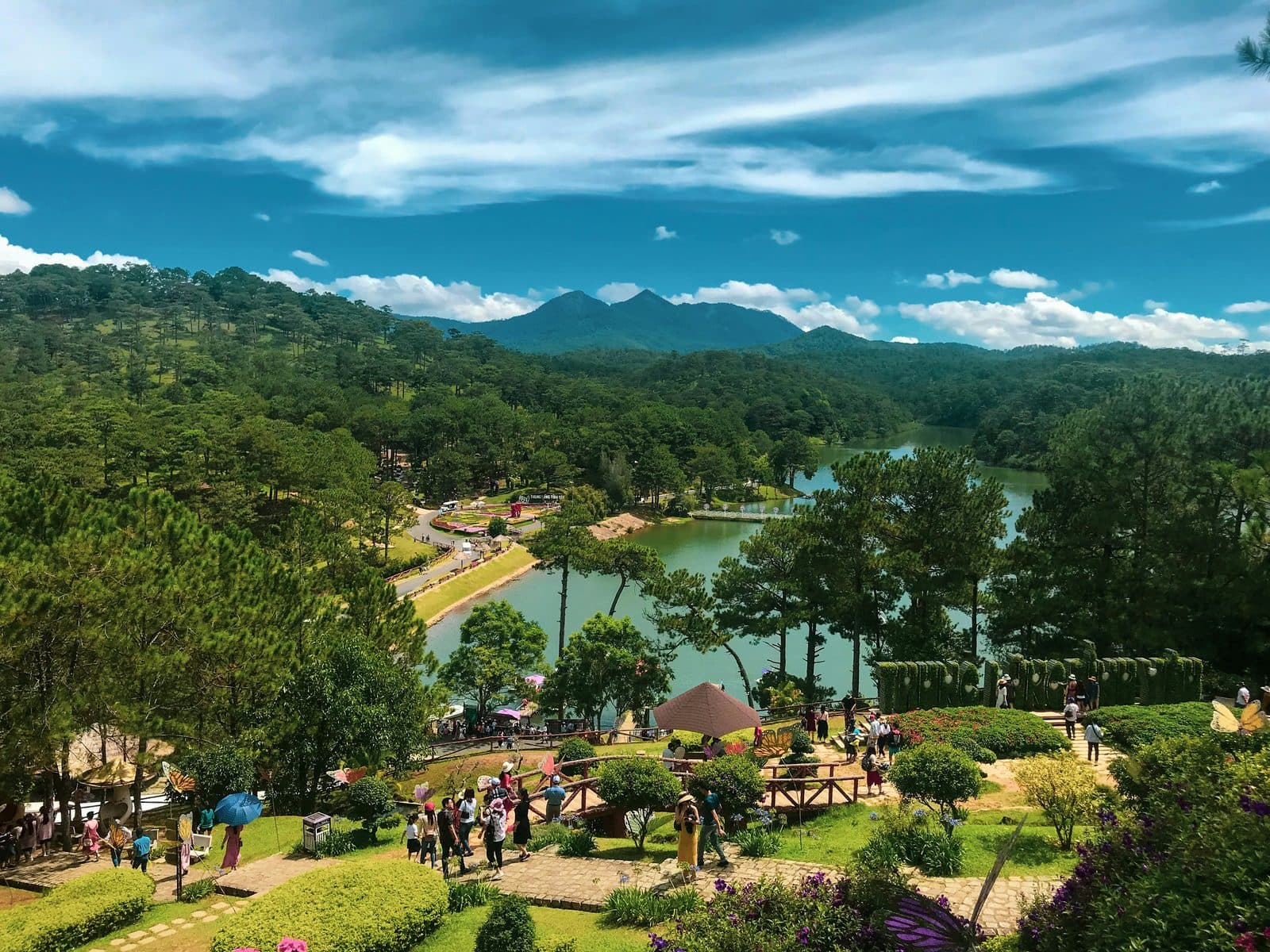
The most photographed thing in Da Lat is a piece of infrastructure. Before 1919 there was no lake here at all, only the Cam Ly stream running down the valley. French engineers dammed it, lost the work to a storm in March 1932, and rebuilt a larger stone dam in 1934 and 1935 that finally held. The crescent of water at the center of town, twenty-five hectares and roughly five kilometres around, is the reservoir behind that dam. In 1953 the town chairman Nguyen Vy renamed it Xuan Huong, and the town wrote itself over the map the French had drawn.
Everything the second walk touches arranges itself around that water. The Garden City runs west to northeast, from the last emperor's summer villa, through the Vietnamese-built downtown market, across the dam that made the lake, and out to the flower gardens that gave Da Lat its nickname, the City of Flowers. The highlands here supply cut flowers to much of Vietnam, so the beds are the ornamental face of a serious farm economy. When the country wanted a monument to itself, on Lam Vien Square it did not build an arch. It built two glass buildings shaped like an artichoke and a wild sunflower, opened in 2016.
A ridge full of private heavens
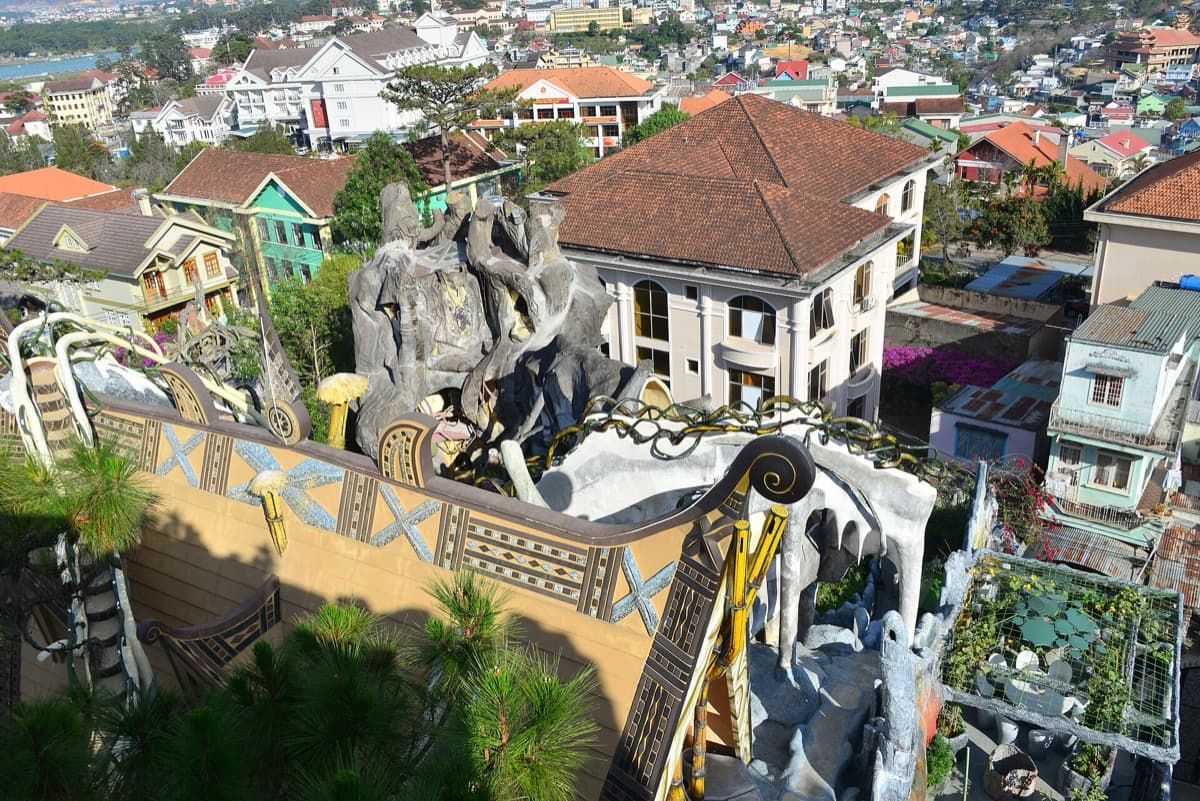
Once the health resort existed, the dreamers arrived. Monks founded the town's first pagoda in 1931. French nuns raised a pink convent roofed like a Central Highlands longhouse. A Communist general's daughter poured a house in the shape of a giant concrete tree. A priest of royal blood shaped a Catholic church like a Buddhist temple. The third walk, Sacred and Strange, reads the devout and the eccentric side by side and finds they share one impulse: to build an idiosyncratic heaven on a cool mountain and invite the world up to see it. Its strangest stop, the Crazy House, has its own deep dive into the architect Dang Viet Nga.
How to walk the three lines
Da Lat is hilly and spread out, which is its own kind of honesty. The French laid it out as a landscape, not a grid, so the distances between sights are longer than the map suggests. Wear real shoes, bring a light layer because the air stays cool even under a bright sun, and start early: clear mornings on the plateau tend to give way to afternoon rain, and the light on the station and the cathedral is best before midday.
Take the walks in any order. The Empire's Escape is the origin story, the six colonial landmarks and the Vietnamese square that reclaimed them. The Garden City is the sensory transect, pine resin and lake mist and flowers, first as gardens, then as market steam, then as architecture. Sacred and Strange is the counter-intuitive one, the pagodas and convents and eccentric houses that turn out to be the same age and the same instinct.
They converge on a single recognition. Da Lat is not a French town and it is not a town that erased its French past. It is a town that inherited a stage set built to look like somewhere else, kept the beautiful bones, and filled them with Vietnamese life. The rooster still turns above the cathedral. The lake still curves where the dam put it. And the market steams every evening with the plateau's own harvest, flowers and strawberries and coffee and artichokes, a city living on the ridge an empire built to be homesick on.
Frequently asked questions
- How many self-guided walking tours does Roamer have in Da Lat?
- 3 tours: dalat-hill-station, dalat-xuan-huong-lake, dalat-crazy-house. Every tour is free to preview.
- How much do the Da Lat tours cost?
- Free to preview, then $4.99 per tour for lifetime access. A 30-day pass covering every tour in every city is $19.99, and a 7-day pass is $12.99.
- Do the Da Lat tours work offline?
- Yes. Download a tour in the Roamer app before you go and it plays with no signal, which is ideal when travelling without mobile data.
Ready to experience it?
Hill Station: The Empire's Escape
180 min · 8 km · hard
More from Dalat
Explore more at your own pace.
Da Lat Travel Guide: How Many Days, Getting Around, When to Go (2026)
One Day in Da Lat: A Walkable Hill-Station Itinerary (2026)

What to Eat in Da Lat: A Food Guide (2026)
The Empire of Homesickness: How France Built Da Lat to Hide From Vietnam
The Manufactured Paradise: Da Lat's Beloved Lake Was Once a Stream