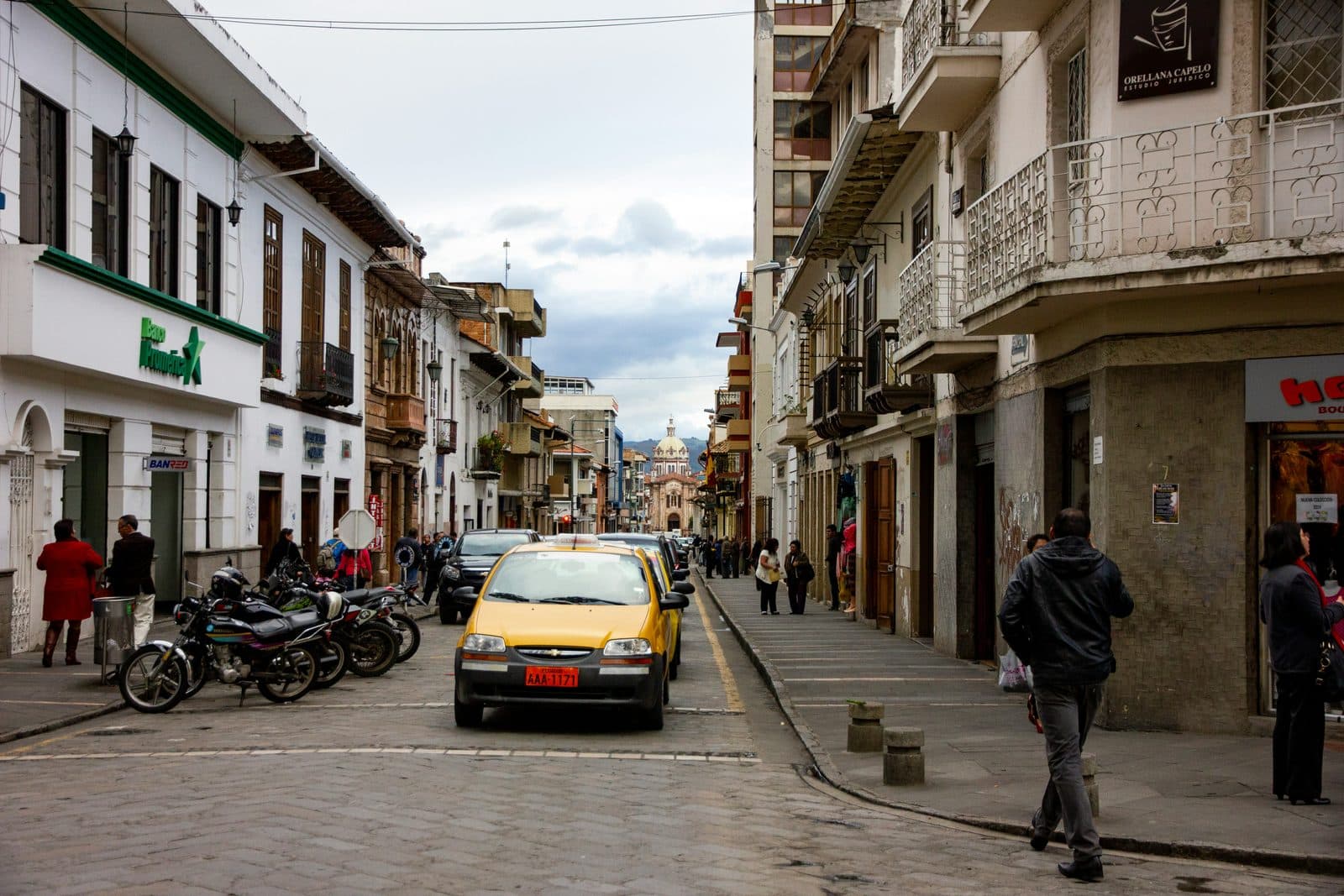
Historic Center: French Faces on Colonial Houses
85 min · 2 km · easy
Cuenca, in the southern Ecuadorian Andes, is a city of about six hundred thousand people. It is the third largest in Ecuador after Guayaquil and Quito, but it sits a long way down the list of recognizable Latin American cities. For most of its history it has been provincial, agrarian, and conservative in the strict sense of the word: institutions persist, churches accumulate, families inherit. It is therefore surprising, when you start counting, how many of Ecuador's writers were born here.
The list begins with Remigio Crespo Toral, who was born in Cuenca in 1860 and who wrote the patriotic poetry that shaped a generation of Ecuadorian schoolroom recitation. It continues through Luis Cordero Crespo, his contemporary, a Cuenca-born botanist and poet who also served as president of the country. It runs forward through the twentieth century in a chain of names that includes the novelist Honorato Vázquez, the modernist poet G. Humberto Mata, the historian Octavio Cordero Palacios, the essayist Hugo Salazar Tamariz, and the contemporary novelist Eliécer Cárdenas. The pattern is too dense for chance.
The city's own answer to the pattern is to call itself the Athens of Ecuador. The phrase is a self-description, not a tourist board invention, and it began as a jab: the Cuenca historian Juan Cordero Iñiguez, writing in El Mercurio in 2025, says Juan Montalvo first used it in the context of a political critique, and Cuencanos later took it up with pride. The label is not arrogance. It is an observation. So the question worth asking is: why did this particular Andean city, no larger than a mid-sized Spanish provincial capital, produce so many writers?
Geography first
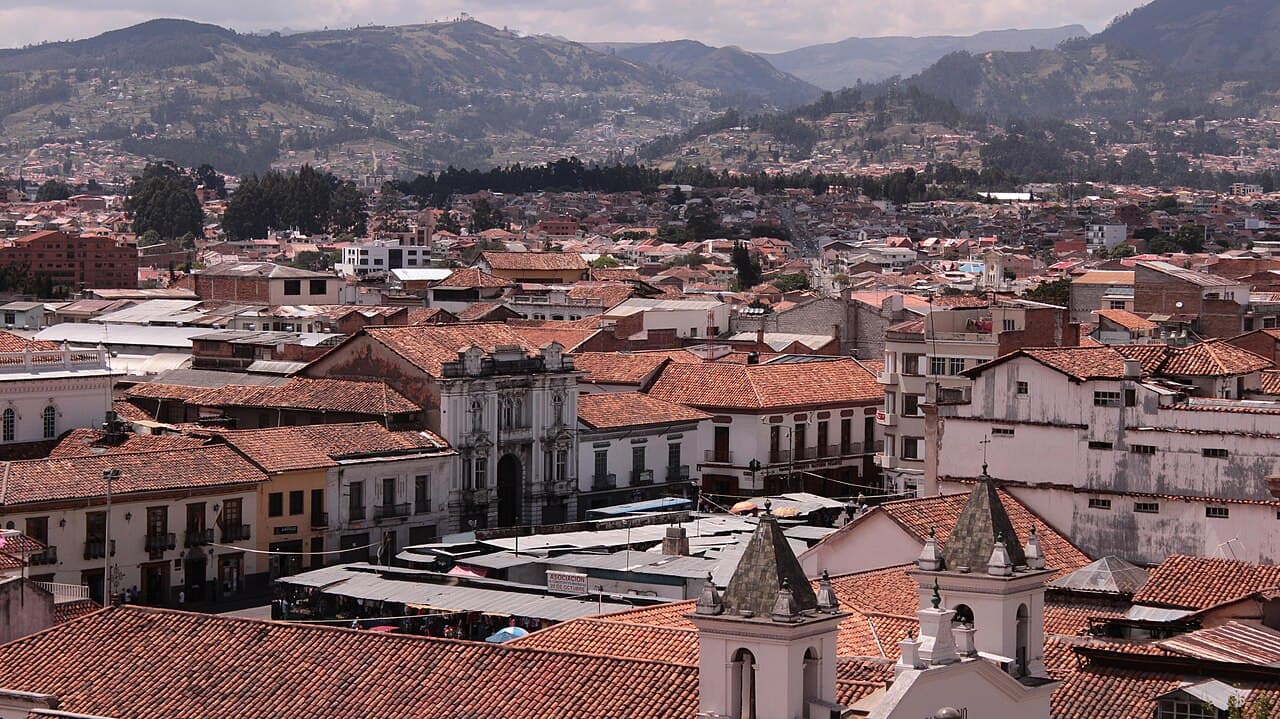
Cuenca sits in a basin at 2,560 metres, about four hundred metres lower than Quito, in a wide valley drained by four rivers. The geography matters because, unlike Quito, Cuenca had room. The colonial city laid out in the 1550s could expand on both banks of the Tomebamba river without running out of flat ground, and over the next three centuries it grew into a substantial agricultural and trading centre. The basin produced wheat, dairy, and cinchona bark, the last of which became globally valuable in the eighteenth century as the source of quinine. Cuenca had wealth, and the wealth was inherited locally rather than extracted to Spain, because the city was far enough from the colonial trade routes to be of marginal interest to the Spanish Crown.
The cathedrals
Hear a stop from this walk
San Alfonso and the Banco del Azuay: Hats Into a Bank
The wealth funded two cathedrals that face each other across the central Parque Calderón. The Old Cathedral, El Sagrario, stands on the site of the colony's first main church; sources disagree on when it was built, and it became the cathedral when the bishopric of Cuenca was created in the 1780s. By the late nineteenth century it was too small, and the city began a New Cathedral, formally the Cathedral of the Immaculate Conception, on the opposite side of the square. Construction began in 1885 under the Redemptorist lay brother Juan Bautista Stiehle, and the design was ambitious in a way that suggests its patrons were thinking beyond local needs: a church begun for a city of under thirty thousand people, with seven domes, the central one about fifty-five metres high. Its towers were never raised to full height, because the building was judged unable to carry their weight. It was consecrated in 1967 and declared finished in 1975, ninety years after work began. Both cathedrals are the visible record of who funded what in Cuenca: church orders, merchant families, and the hat and cinchona fortunes. Even the stone is local: the twelve entrance columns were carved in marble from Tarqui, south of the city.
The university
The single most important institution in Cuenca's intellectual history is the Universidad de Cuenca, founded in 1867. It is the third oldest university in Ecuador after the Universidad Central in Quito and the Universidad Estatal in Guayaquil, but for most of the twentieth century it was the only Andean university outside Quito with a serious literature faculty. Generations of Cuencano writers trained there, taught there, and ran the literary supplements of its journals. The university's law school, in particular, became the funnel through which provincial families sent their second sons into Quito politics, with literature as the side career. Crespo Toral was a law graduate; Cordero Crespo was a law graduate; almost every writer on the list above passed through the same building.
The artisan tradition that pays for everything
There is a less romantic factor, which is the local economy. Cuenca's nineteenth and twentieth-century wealth rested on three artisan industries: ceramic ware, gold and silver filigree, and most importantly the toquilla-straw hat. The hats are woven by hand in the Azuay and Cañar provinces around Cuenca and, according to the UNESCO nomination file, were exported from about 1880 for some seventy years. They are misnamed Panama hats because, in the late nineteenth and early twentieth centuries, they were shipped to the Isthmus of Panama for distribution to North American and European buyers, and the buyers attributed them to the port of shipment rather than the place of origin. UNESCO inscribed the weaving tradition on the Representative List of the Intangible Cultural Heritage of Humanity in 2012, which formally confirms what Cuencanos have argued for a hundred and fifty years: the hats are theirs.
The hat economy mattered to the literary tradition because it provided the foreign-exchange base that supported a substantial educated middle class. Hat exporters financed bookshops, theatres, and small literary magazines through the late nineteenth and early twentieth centuries. The city was rich enough to subsidize its own intellectual life, but not so rich that the writers left.
Reading the city through this lens
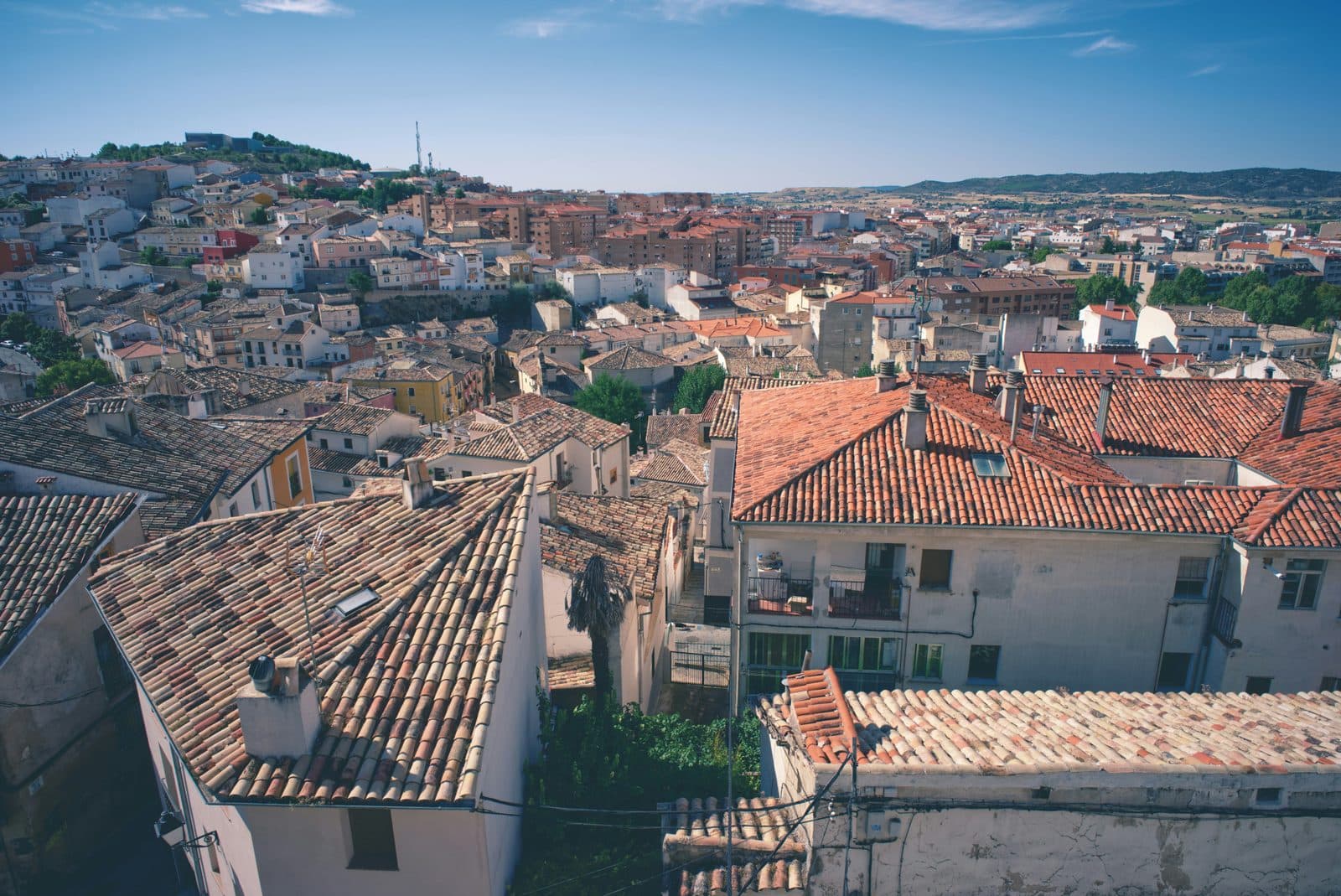
Walk the colonial centre with the Athens framing in mind and the layout starts to make sense. Parque Calderón is the centre, and the two cathedrals on either side of it are the donor record of the religious patrons. The Old Cathedral was the seat of the bishop from the 1780s. The New Cathedral is the late-nineteenth-century ambition statement. Across Calle Sucre from it, the Plaza de las Flores holds the flower market in front of the convent church of El Carmen. The Mercado 10 de Agosto is where the household economy of the city happens. The Tomebamba river, four blocks south of the centre, is the geographic spine: the colonial city sits on the north bank, the Barranco cliff above the river holds the row of old houses that UNESCO counts among the city's strongest vernacular architecture, and the modern university and museum district sits across the river to the south. Two self-guided walks cover this ground: the historic-centre tour across the grid, and the El Barranco walk along the cliff and the river.
Cuenca is not Athens. It is a small Andean city with an unusual concentration of writers, supported by an unusual concentration of religious and artisan wealth, channeled through an unusual concentration of educational institutions. The self-description is half observation and half ambition. It has been the city's organizing label for a hundred and fifty years, and the layout of the colonial centre is the proof that the ambition was acted on.
Frequently asked questions
- How many self-guided walking tours are there in Cuenca?
- Roamer currently has 2 self-guided audio walking tours in Cuenca. Every tour is free to start: the introduction and first stop play in full, and every later stop plays a short preview before you decide to buy.
- How much does a self-guided walking tour in Cuenca cost?
- Each tour is free to preview and $4.99 for lifetime access. If you want more than one, a 7-day pass is $12.99 and a 30-day pass covering every tour is $19.99, which works out to well under a dollar a day.
- Can I do the Cuenca tours offline?
- Yes. Tours can be downloaded in advance in the Roamer app and played with no signal, which is useful when you are travelling without mobile data.
- How long are the Cuenca walking tours?
- They run about 80 to 85 minutes, covering 1.8 to 2.0 km on foot, with 10 stops on each route. You set the pace and can pause any time.
Ready to experience it?
Historic Center: French Faces on Colonial Houses
85 min · 2 km · easy
More from Cuenca
Explore more at your own pace.
Best Self-Guided Walking Tours in Cuenca (2026)
Cuenca Travel Guide: How Many Days, Altitude, Getting Around, Safety (2026)
One Day in Cuenca: A Walkable UNESCO Itinerary (2026)
What to Eat in Cuenca: A Food Guide (2026)
French Faces on Colonial Houses: Reading Cuenca's Historic Centre