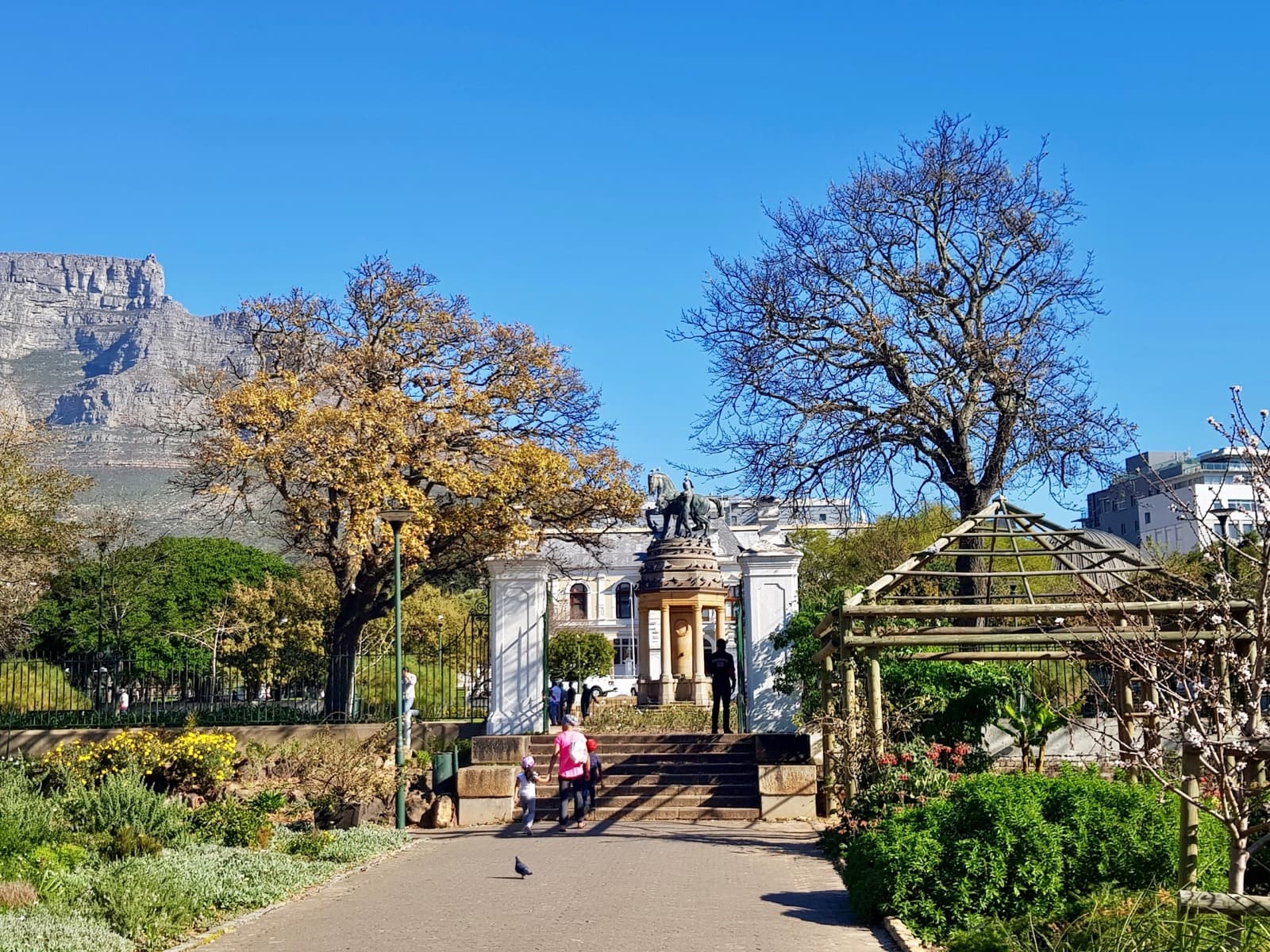
Cape Town began as a vegetable patch. In 1652 the Dutch East India Company planted a garden under Table Mountain to feed its ships, and the whole old town grew downhill from that plot toward the sea. If you want to understand how a global port city started, and how its wealth, its bondage, and eventually its liberation all trace to one piece of ground, you start where the ground itself started: the Company's Garden, still green at the top of the City Bowl. This is the anchor of a downhill walk that reads the old town from its root, and the garden is the way in.
The garden that was never meant to be a park
Stand in the Company's Garden today and it looks like a civic park: an oak-lined avenue, a rose garden, an aviary, a fish pond, about three point two hectares run by the City of Cape Town. None of that was the point. The point was scurvy. Ships on the long Dutch East India Company route to the East Indies were losing sailors for want of fresh food, so the Company did the most practical thing available to it. It planted vegetables.
On the twenty-ninth of April, 1652, the master gardener Hendrik Boom prepared the first ground here for sowing. That date is as close as South Africa has to a founding day, and it is worth sitting with how ordinary the first crops were: peas, beans, radish, beet, spinach, cabbage, wheat, asparagus. Within a year the little settlement had food year-round, and ships that had been dying at sea could be revived. This is the oldest garden in the country, watered historically from the springs of the mountain above. Remarkably, it still holds a cultivated pear tree that traces back to about 1652, close to those very first plantings. The ornamental rose garden came much later, laid out in 1929, centuries after the vegetables.
Look at what gathered around the green edges over time: Parliament, the national library, the Iziko museums. Power and knowledge settled around the plot that fed everyone. That is the quiet argument of this stop. Everything ahead of you on the walk runs downhill from this modest kitchen garden.
The single thread, most beautiful and most painful
Hear a stop from this walk
The Castle of Good Hope: The Star Fort Where the Colony First Dug In
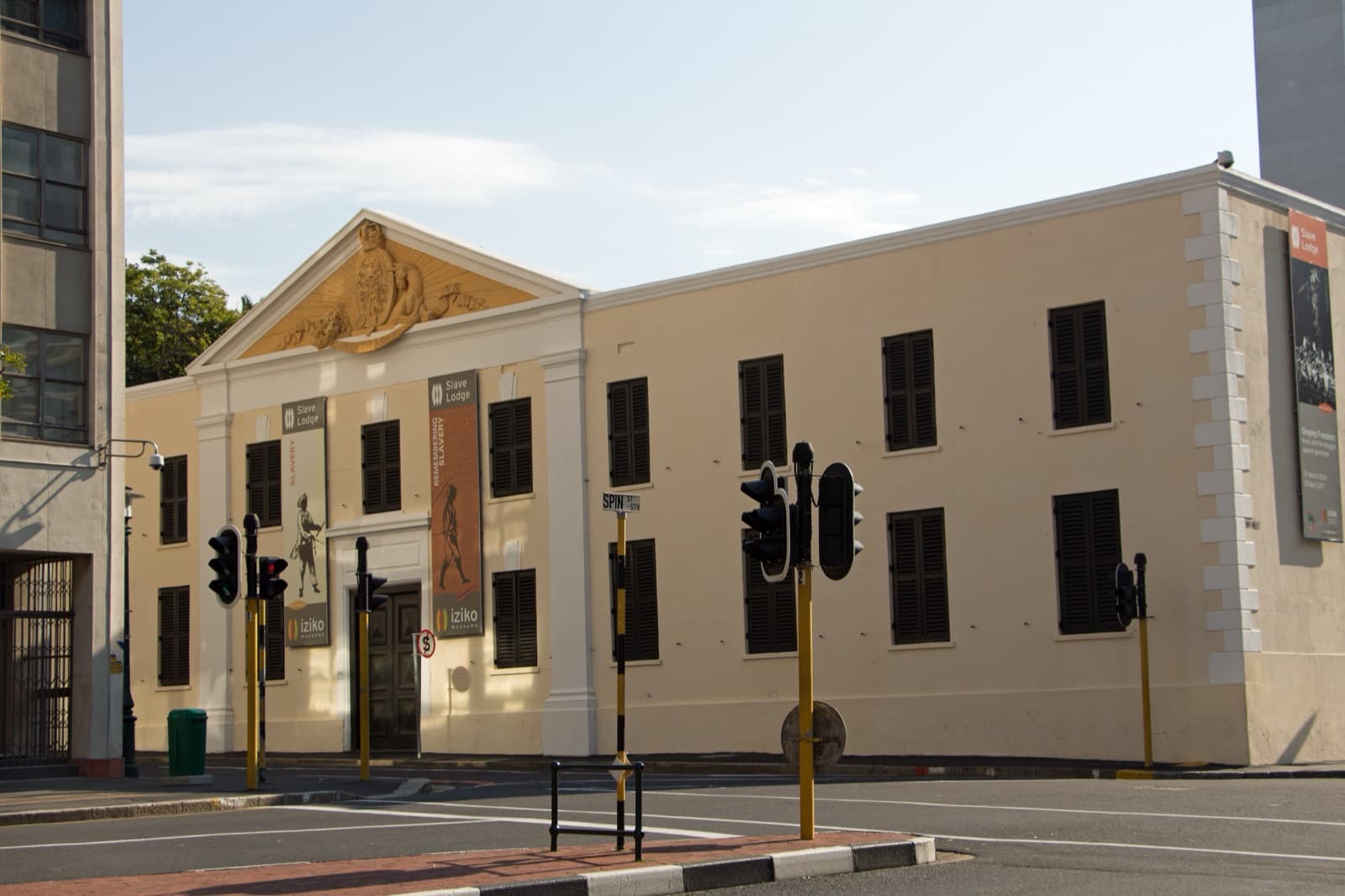
The refreshment station that fed a sea empire did not run on free labour. Walk a few minutes down from the garden and you reach the Iziko Slave Lodge, put up by the Company in 1679 to house enslaved people brought to the Cape from East Africa, Madagascar, India, and Southeast Asia. The garden you just left, and much of the town you are walking through, was built by their hands. This is one of Cape Town's oldest buildings, and its later life reads like a ledger of who held power: after slavery at the Cape was abolished in the 1830s, the lodge became government offices, then the Old Supreme Court, then a cultural history museum, and since 1998 the Slave Lodge Museum. The honest sources give ranges, not a single count, for the people held here, and each was a life rather than a statistic.
That is the thread this walk follows. The founding that was practical and even beautiful, a garden to save lives at sea, and the cruelty it rested on are the same story. Holding both at once is the whole point of the route, and it starts in the garden.
Downhill, toward the balcony
From the Slave Lodge the walk keeps descending, and the story keeps turning. St George's Cathedral, designed by Sir Herbert Baker with its foundation stone laid in 1901, is built of the same honey-grey Table Mountain sandstone that stands over the whole city. People call it the People's Cathedral, a name earned in the streets outside: Desmond Tutu, the first black Archbishop of Cape Town, led marches against apartheid from these front steps, and his ashes are interred before the high altar inside. The institution that had long blessed the order around it learned, on this exact spot, to stand against it.
Then Greenmarket Square, a market square since 1696, where the Old Town House of 1761 now holds the Michaelis art collection. The square has worn every face the town has: a slave market, a produce market, even a car park in the mid-twentieth century, before traders reclaimed it in the late 1980s as the daily craft market you find today. From there the route follows Long Street, the iron-laced Victorian spine of the old town, its wrought-iron balconies known locally as broekie lace. Its Palm Tree Mosque, completed in 1788 and used as a mosque from the early 1800s, is the oldest substantially unaltered building on the street, a reminder that the Cape Muslim community was woven into this town from very early on.
The walk bends back on itself at the Grand Parade. This open square sits over the buried remains of Jan van Riebeeck's first fort of 1652, the Fort de Goede Hoop, whose foundations still lie a few centimetres beneath the tarmac. Facing it is the Edwardian City Hall of 1905, built of oolitic limestone shipped from Bath, England. From that balcony, on the eleventh of February, 1990, the day he walked free after twenty-seven years in prison, Nelson Mandela gave his first public speech, telling the crowd that the march to freedom was irreversible. The colony first dug in on this ground in 1652, and on this same ground, three and a half centuries later, a free man told a free people there was no going back.
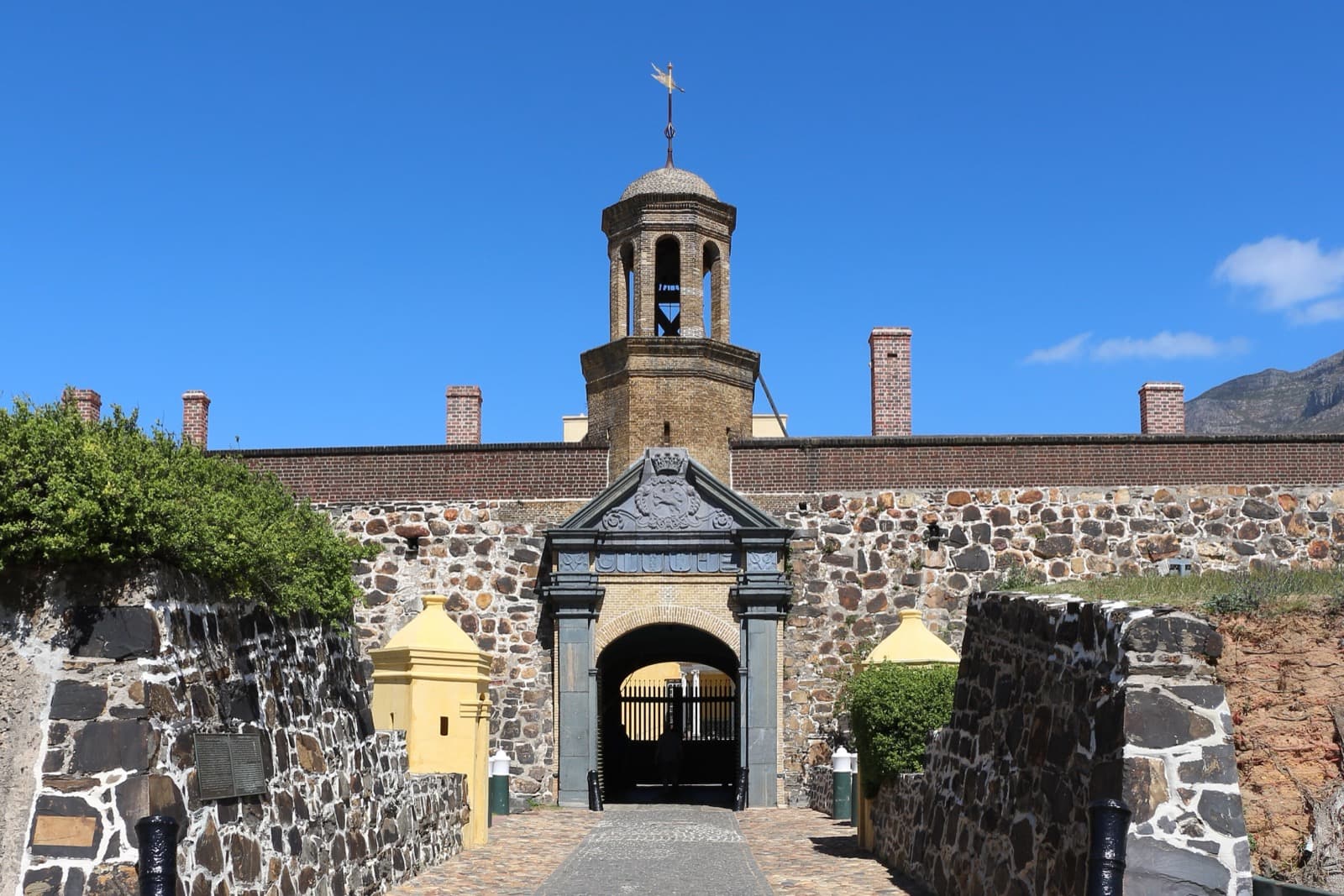
The route ends at the Castle of Good Hope, the five-pointed star fort the Company built between 1666 and 1679 to replace van Riebeeck's flimsy first fort. It is the oldest surviving colonial building in South Africa, its bastions named after the titles of William of Orange, its walls painted yellow to cut the glare of the Cape sun.
Why start in the garden
You could see all seven stops in any order. The reason to start at the Company's Garden is that it is the source, and the walk only makes sense read downhill from it. The garden explains the wealth, the wealth explains the Slave Lodge, and both explain why the balcony at City Hall mattered so much when apartheid finally fell. Sit in the garden as long as you like. No group, no schedule, no one steering you. The whole route is roughly two and a half kilometres and about two hours at your own pace. For more routes through the city, see our guide to Cape Town walking tours, or browse everything on offer in Cape Town.
Sources
- Company's Garden, Wikipedia. Founding date, VOC provisioning purpose, and the garden's continuous cultivation since 1652.
- Company Gardens, Cape Town, South African History Online. The garden as origin point of the Cape settlement and its heritage status.
- Slave Lodge, Cape Town, Wikipedia and Iziko Museums. Construction in 1679, the Old Supreme Court period, and the 1998 museum.
- St. George's Cathedral, Cape Town, South African History Online. Herbert Baker design, the People's Cathedral role, and Tutu's tenure and interment.
- Cape Town City Hall and Castle of Good Hope, Wikipedia. The 1990 Mandela speech, the City Hall's limestone, and the star fort's dates.
Ready to experience it?
City Centre: Where the Cape Colony Began
120 min · 2.3 km · moderate
More from Cape Town
Explore more at your own pace.
Cape Town Travel Guide: Days, Transport, Seasons, Safety, and Budget
Cape Town in Three Layers: The Garden, the Painted Hill, and the Harbour That Still Works
Auwal Mosque: The Door That Reframes Bo-Kaap's Painted Lanes
Chiappini and Rose Streets: The Steep, Coloured Heart of the Bo-Kaap
Nelson Mandela Gateway: The Cape Town Quay Where Boats Leave for the Prison Island