A downhill walk through the historic City Bowl of Cape Town, from the kitchen garden that fed a sea empire to the star fort where the colony first dug in, at your own pace under Table Mountain.
Start · The Company's Garden: The Kitchen Garden a City Grew Out Of
DirectionsStops
- 1
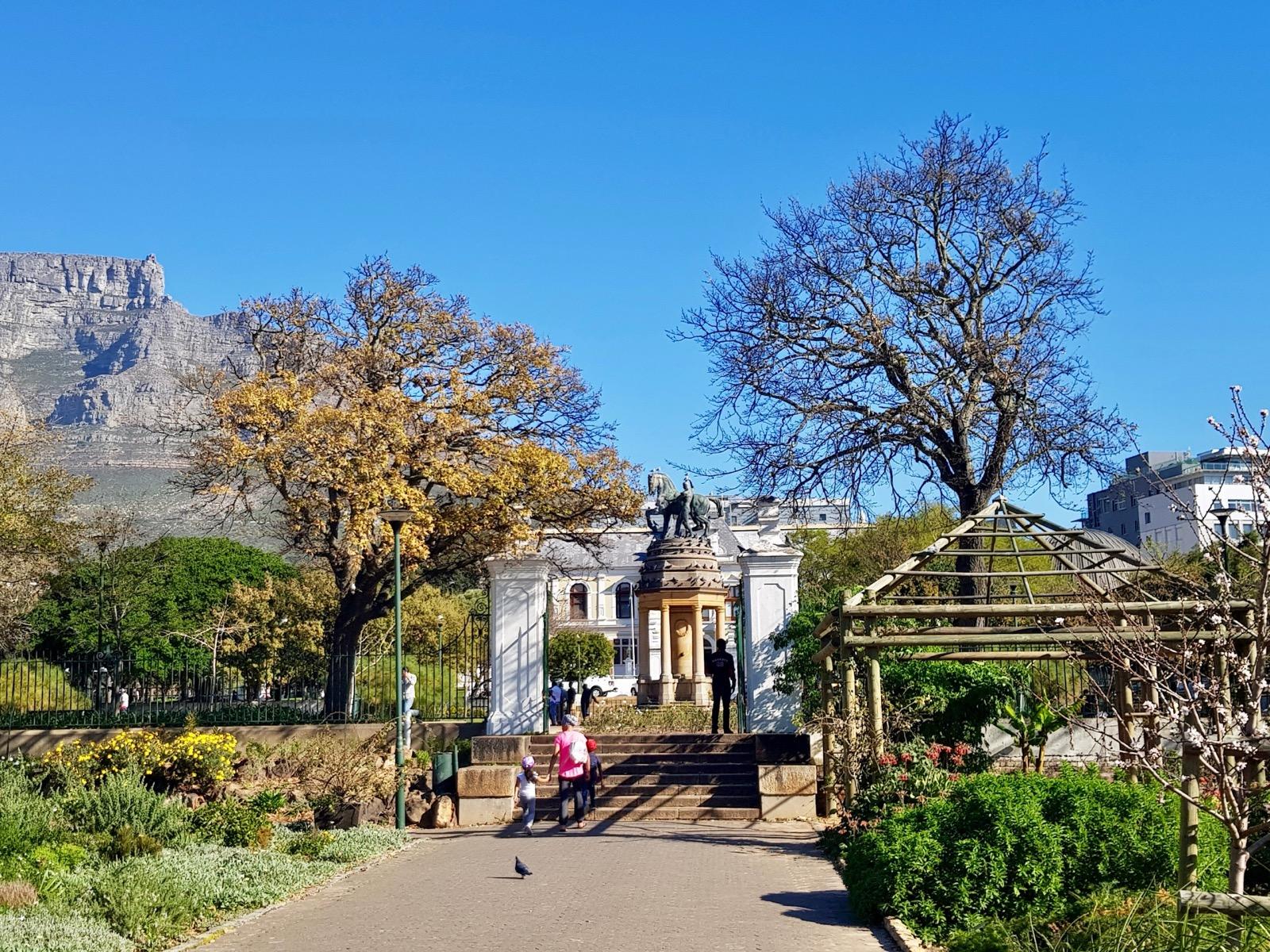
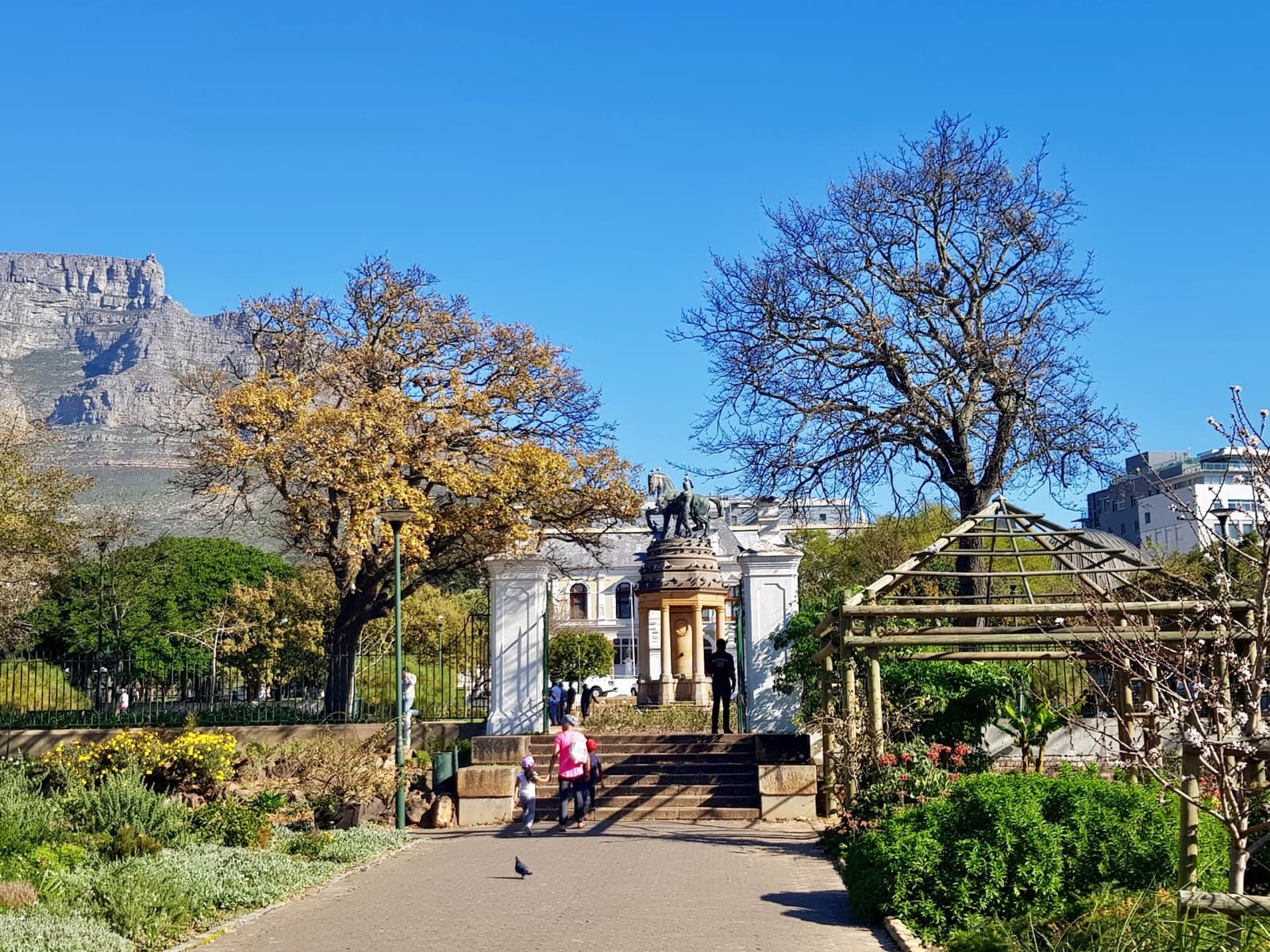
The Company's Garden: The Kitchen Garden a City Grew Out Of
The oldest garden in South Africa, planted by the Dutch East India Company in sixteen fifty-two to feed passing ships, and the seed from which the whole old town grew.
- 2
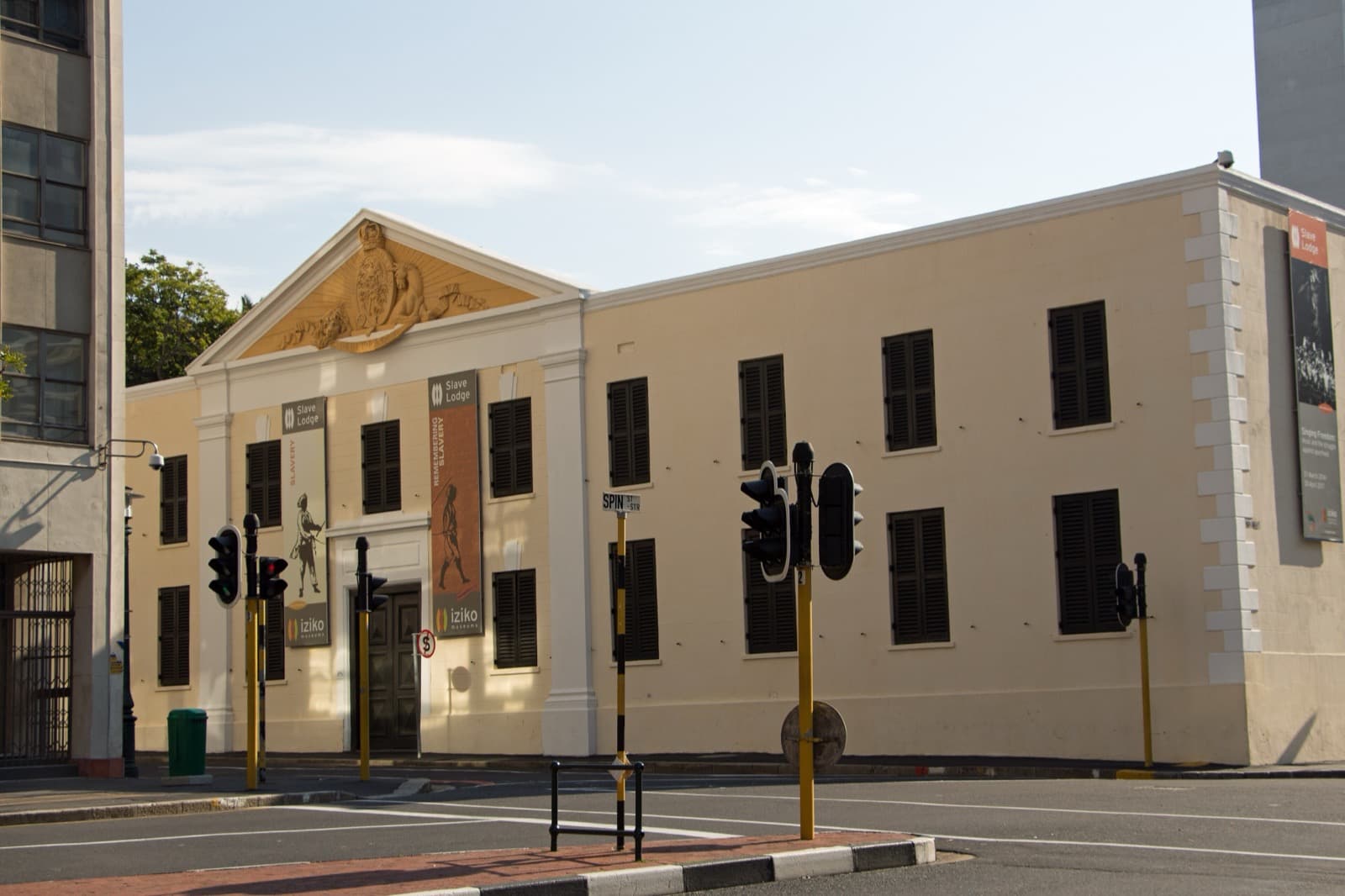
The Iziko Slave Lodge: The Building Where the Company Kept the People It Enslaved
Built in sixteen seventy-nine to house enslaved people brought to the Cape from across the Indian Ocean world, and now a museum that tells their story.
- 3
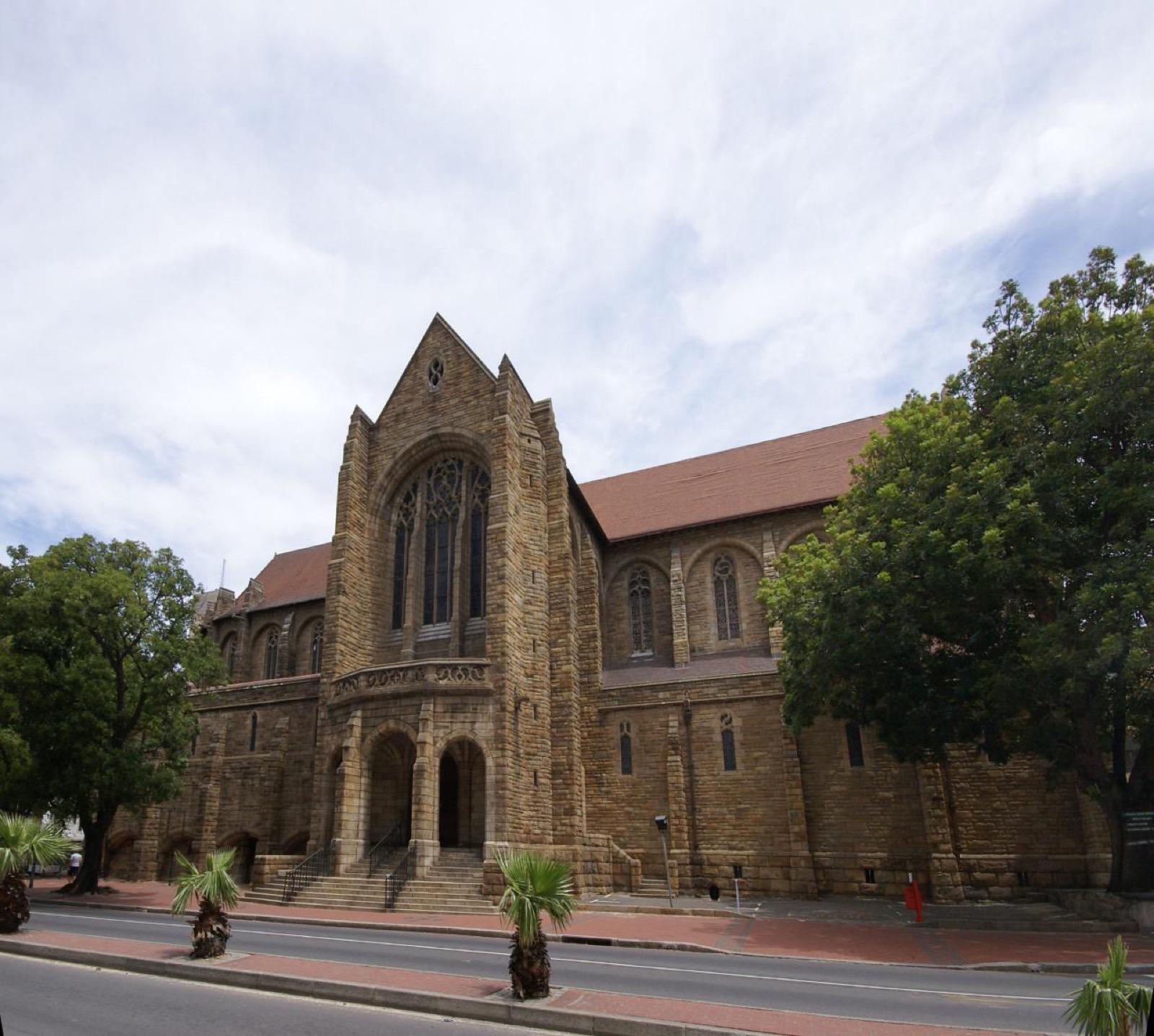
St George's Cathedral: The Cathedral That Became a Front Line
A Gothic sandstone cathedral by Sir Herbert Baker, known as the People's Cathedral for the marches Archbishop Desmond Tutu led from its steps against apartheid.
- 4
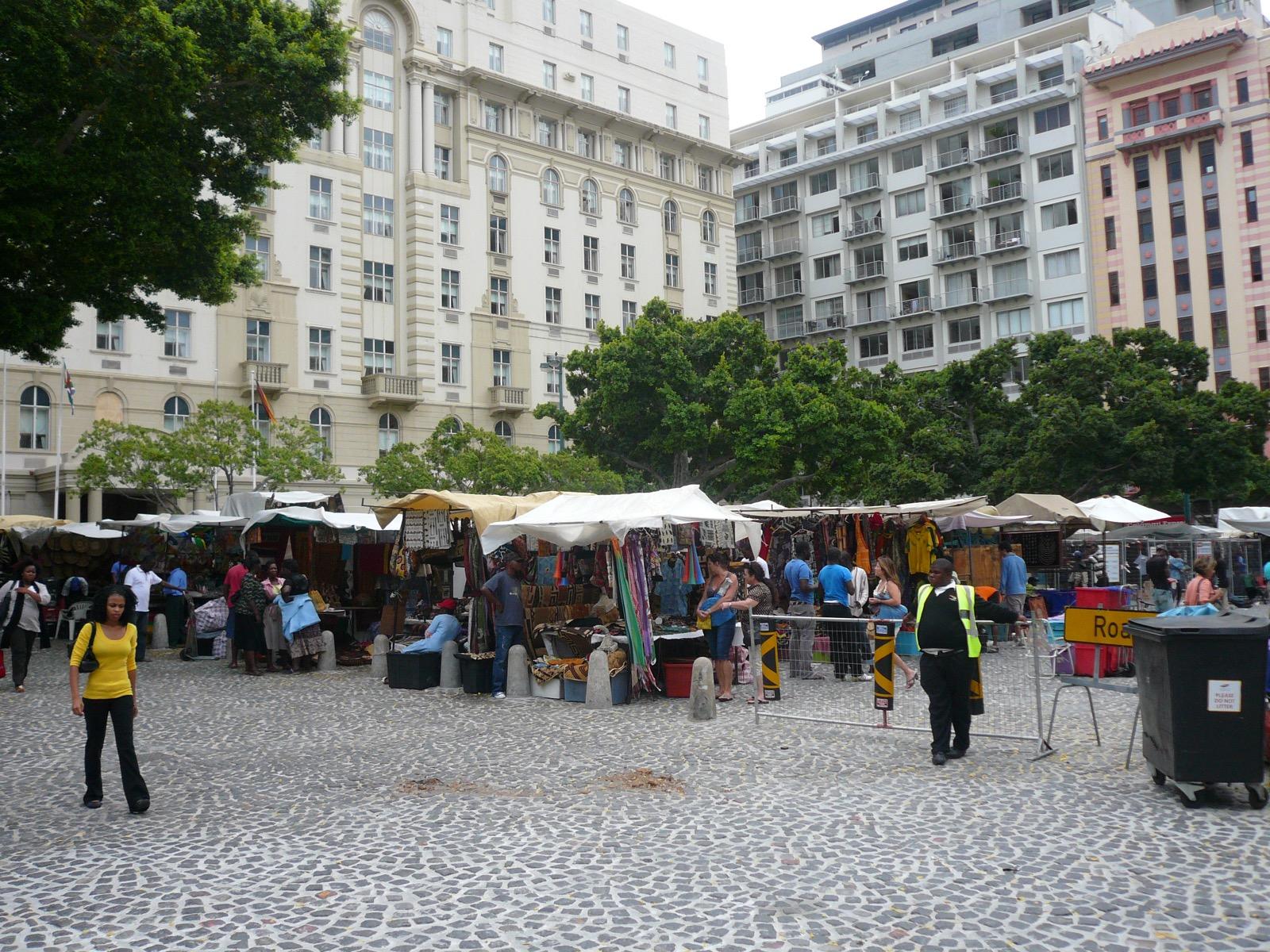
Greenmarket Square: The Cobbles That Have Been a Market for Three Centuries
A cobbled City Bowl square dating to sixteen ninety-six, layered with three centuries of trade and framed by the Old Town House and Art Deco facades.
- 5
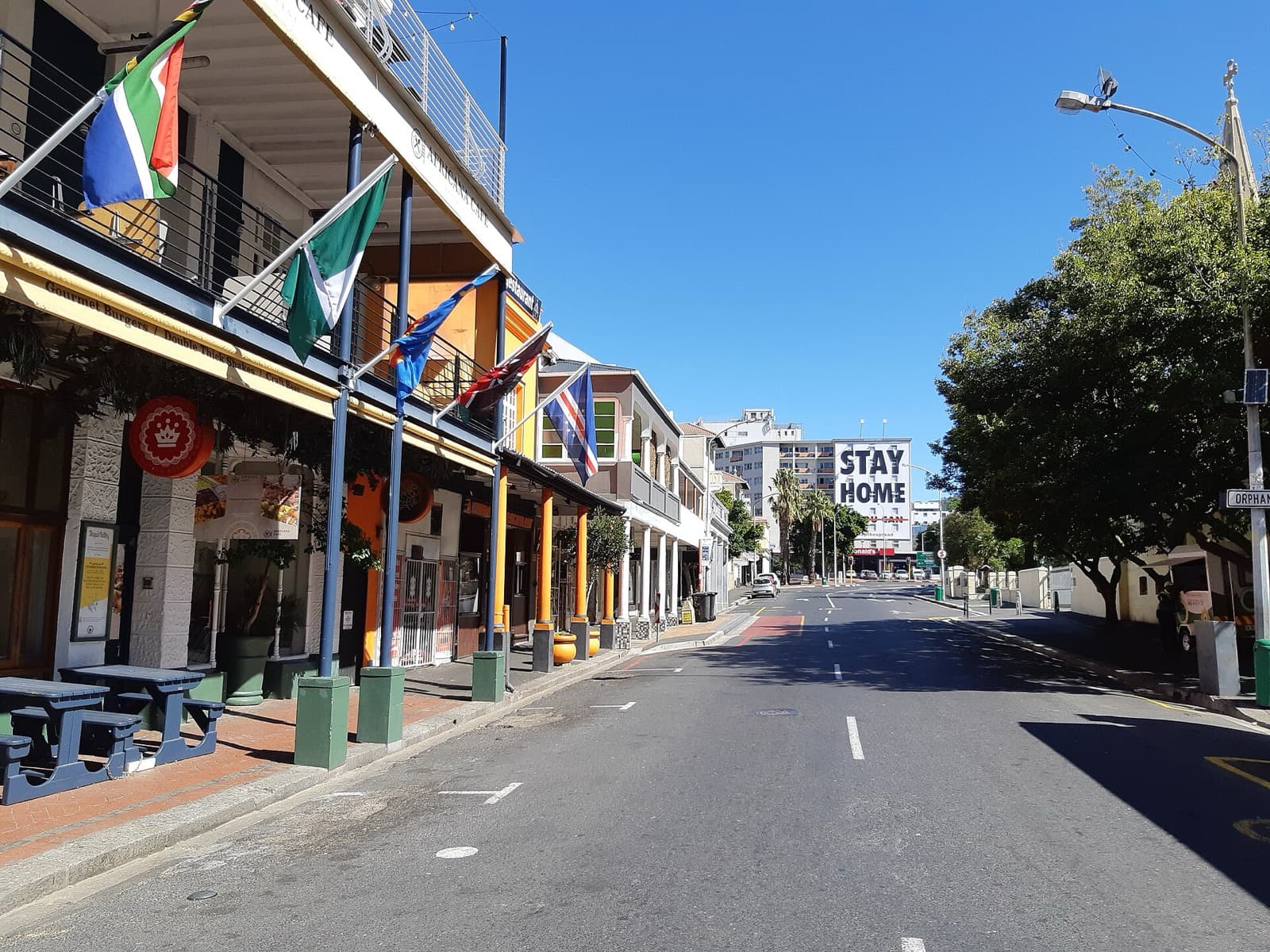
Long Street: The Iron-Laced Backbone of the Old Town
The historic spine of the City Bowl, lined with Victorian buildings whose wrought-iron balconies are known locally as broekie lace.
- 6
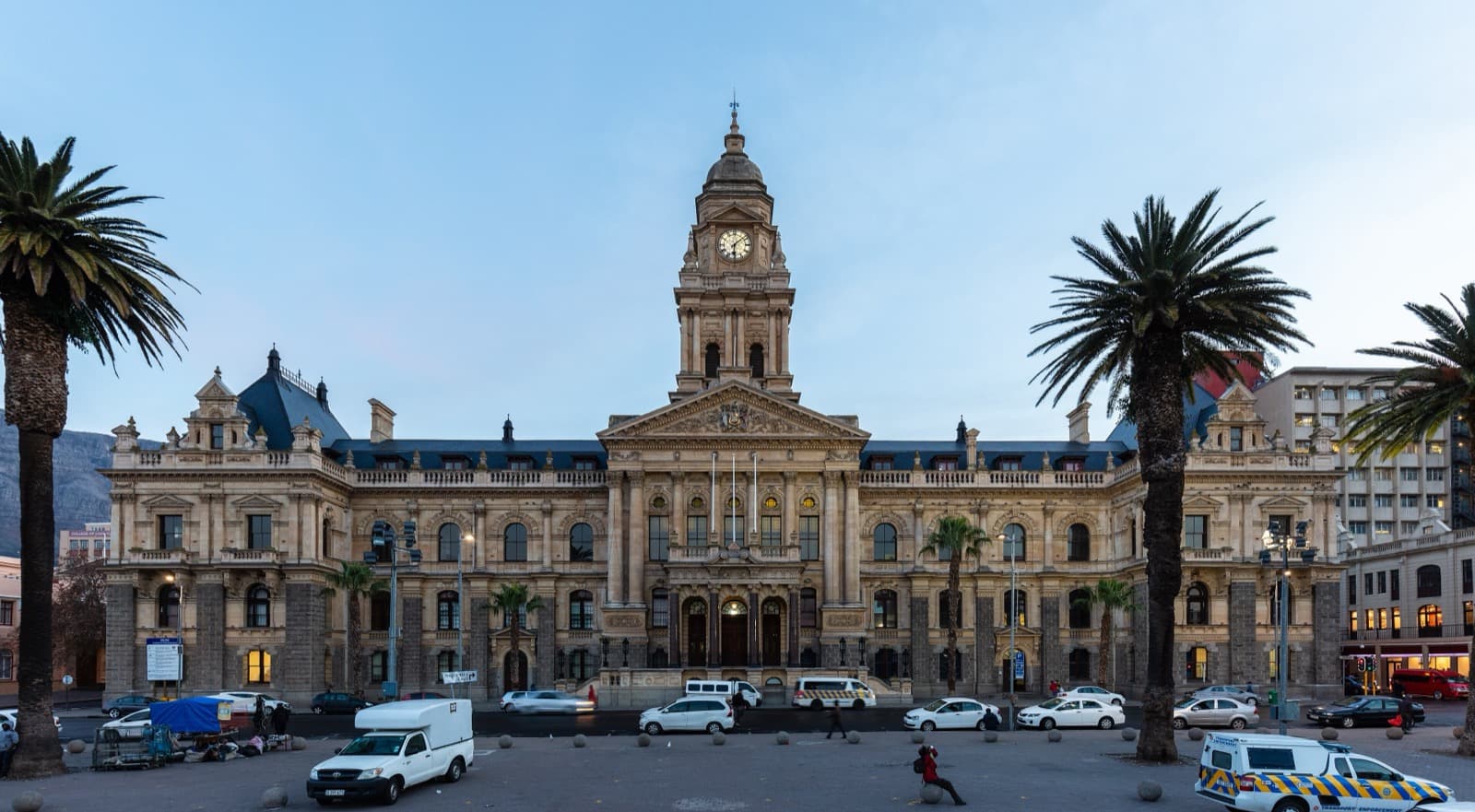
The Grand Parade and the City Hall: The Balcony Where a Free Man First Spoke
The city's main square sits over the site of the first fort. That fort dates to sixteen fifty-two, and the square faces the balcony from which Nelson Mandela spoke on the day of his release.
- 7
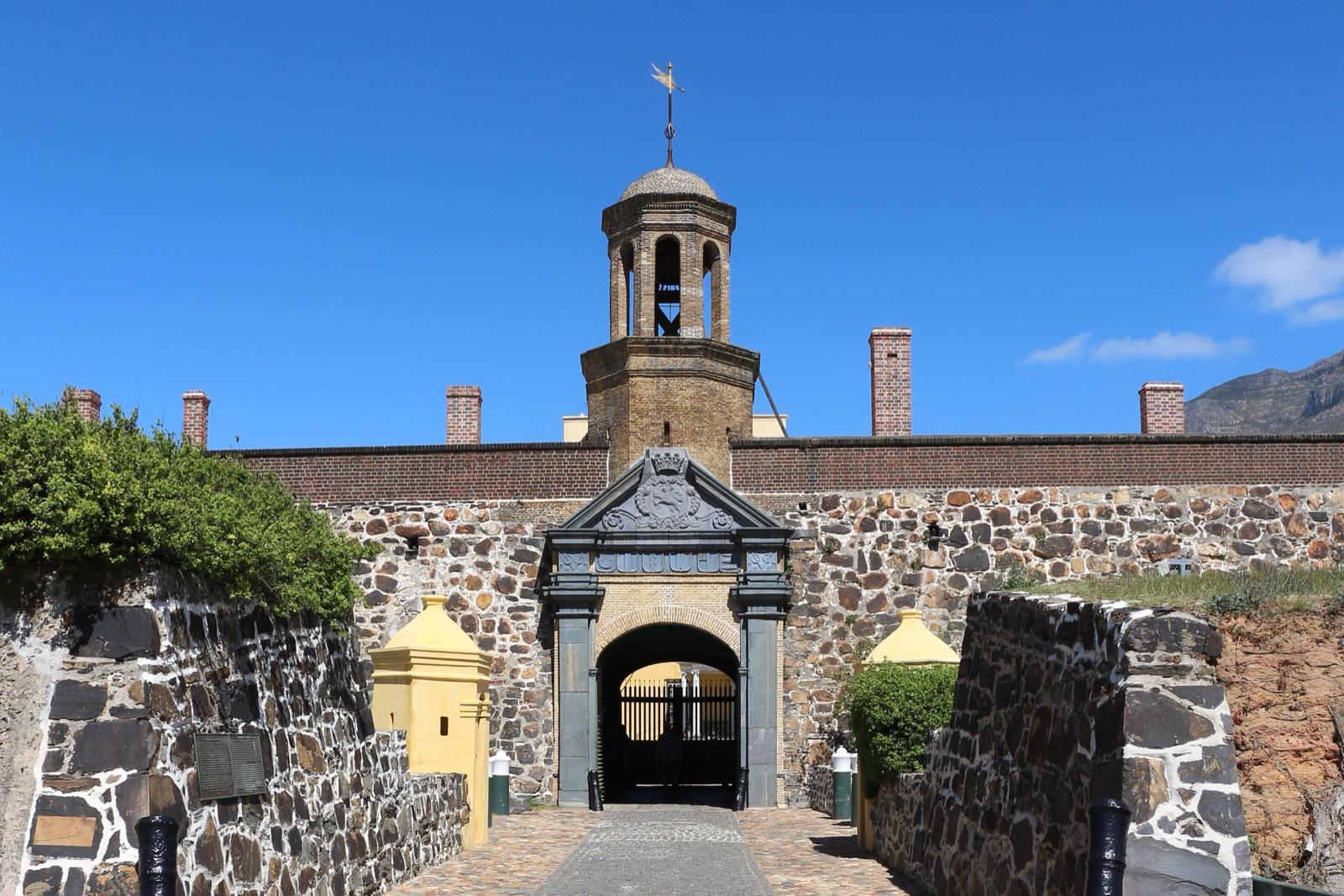
The Castle of Good Hope: The Star Fort Where the Colony First Dug In
A five-pointed star fort built by the VOC between sixteen sixty-six and sixteen seventy-nine, the oldest surviving colonial building in South Africa.
Details
Best Time to Visit
Start in the morning, ideally between nine and eleven, when the Company's Garden is cool and green and the light on Table Mountain is soft. Weekday mornings are calmest at Greenmarket Square and along Long Street, while the Iziko museums, the Slave Lodge and the Castle keep daytime hours, so an earlier start leaves time to step inside any of them. Cape Town's summer sun, from about November to March, is strong by midday, so the shaded garden and the sandstone cathedral are welcome mid-walk pauses.
Pro Tips
- •The walk runs mostly downhill from the Company's Garden toward the Castle and the sea, so start at the top and let gravity work for you.
- •The Company's Garden, Greenmarket Square, Long Street, St George's Cathedral exterior and the Grand Parade are all free; the Slave Lodge, the Castle and the surrounding Iziko museums charge entry in rand, so carry a little cash or a card if you want to go inside.
- •Give yourself extra time at the Grand Parade and City Hall; standing where Mandela spoke rewards a slow, unhurried few minutes rather than a quick photo.
- •Greenmarket Square and Long Street are liveliest on weekday mornings; if you want quieter cobbles and open stalls, go earlier rather than later.
- •Inside St George's Cathedral and the Slave Lodge, keep your voice low and your manner respectful; these are a working cathedral and a memorial to enslaved people, not just photo stops.
- •Water and a hat make the whole walk easier, since much of it is in open sun with only the garden and the cathedral offering deep shade.
Safety & Precautions
- •Cape Town's sun is strong and the wind off the mountain can be sharp; wear sunscreen and a hat, and bring a layer, as conditions can shift quickly even on a clear day.
- •This is an ordinary city centre, so keep phones, cameras and valuables discreet, stay aware of your surroundings around the busier squares and streets, and use normal city street sense.
- •Several stops, including the Slave Lodge and the Grand Parade, carry real emotional weight as places of slavery and of the struggle against apartheid; give yourself permission to pause or move on at your own pace.
- •Some museums, including the Slave Lodge and the Castle, charge entry in rand and keep set daytime hours, so check timings if you plan to go inside and carry water for the open stretches between stops.
Travel advisory: Exercise Increased Caution (Level 2).
Gallery
Related Reading
Go deeper on what you'll see, hear, and walk through.
Overview
Best Self-Guided Walking Tours in Cape Town (2026)
4 min
Overview
Cape Town Travel Guide: Days, Transport, Seasons, Safety, and Budget
7 min
Overview
One Day in Cape Town: A Walkable Morning-to-Evening Itinerary
7 min
Thematic
Cape Town in Three Layers: The Garden, the Painted Hill, and the Harbour That Still Works
8 min
Companion
The Company's Garden: The Vegetable Patch Cape Town Grew Out Of
7 min
Deep dive
The Castle of Good Hope: South Africa's Oldest Colonial Building, Explained
6 min
Read
What to Eat in Cape Town: Cape Malay Food and Where to Find It
8 min
Read the walk
The full story of City Centre: Where the Cape Colony Began, in words. Prefer to listen? Play it narrated, from home or on location.
Introduction
This is the oldest ground in Cape Town, South Africa, and it begins with a vegetable patch. In sixteen fifty-two the Dutch East India Company, the VOC, planted a garden under Table Mountain to feed its ships on the long haul to the East Indies, and the whole old town grew downhill from that plot and the earth fort beside it. Over about two hours and roughly two and a half kilometres, and seven stops, this walk reads the City Bowl from its root: the Company's Garden still green at the top, the Slave Lodge that records the enslaved people the Company's economy was built on, the cathedral that became a pulpit against apartheid, the cobbled market square, the iron-laced Victorian spine of Long Street, and the Grand Parade before the City Hall, where Nelson Mandela spoke to a free nation on the day he walked out of prison. It ends at the star-shaped Castle, the oldest surviving colonial building in the country. The single thread that is most beautiful and most painful here is the same thread. The station that fed an empire built its wealth on bondage, and the same old town those colonizers laid out became, three centuries later, the stage where that order was dismantled from a balcony. You set the pace. Linger in the garden as long as you like, sit with a hard stop in your own silence, or move straight on. No group, no schedule, no one steering you. When you arrive at the Company's Garden, begin with stop one.
1. The Company's Garden: The Kitchen Garden a City Grew Out Of
You are standing in the reason Cape Town exists. When the Dutch East India Company, the VOC, sent ships around the Cape on the long route to the East Indies, sailors were dying of scurvy for want of fresh food. So the Company did the most practical thing imaginable. It planted a garden. On the twenty-ninth of April, sixteen fifty-two, the master gardener Hendrik Boom prepared the first ground here for sowing, and that date is as close as this country has to a founding day. The earliest crops were plain and useful: peas, beans, radish, beet, spinach, cabbage, wheat, asparagus. By the following year the little settlement had food the whole year round, and the ships that had been dying at sea could be revived. This is the oldest garden in South Africa. What you see now is a public park of about three point two hectares, run by the City of Cape Town, watered historically from the springs of the mountain above you. There is an oak-lined avenue running through it, a rose garden laid out in nineteen twenty-nine, an aviary and a fish pond, and, remarkably, a pear tree that traces back to those very first plantings around sixteen fifty-two. Around the green edges sit Parliament, the national library, and the Iziko museums, so power and knowledge gathered around the garden that fed everyone. Sit here as long as you like. Everything ahead of you on this walk, the trade, the wealth, the bondage, and eventually the liberation, all of it runs downhill from this modest kitchen plot toward the sea.
2. The Iziko Slave Lodge: The Building Where the Company Kept the People It Enslaved
The refreshment station that fed a sea empire did not run on free labour. It ran on enslaved labour. This building, put up by the VOC in sixteen seventy-nine, was the Company's slave lodge. Here the Company held enslaved people brought to the Cape from East Africa, from Madagascar, from India and from Southeast Asia, and put them to work in agriculture, in construction, and in domestic service. The garden you just left, and much of the town you are walking through, was built by their hands. This is one of the oldest buildings in Cape Town, with a history spanning more than three centuries, and it stands on the corner of Wale and Adderley Streets. Its later life reads like a ledger of who held power. After slavery at the Cape was abolished in the eighteen thirties, the lodge became government offices, then the Old Supreme Court, then a cultural history museum, and since nineteen ninety-eight it has been the Slave Lodge Museum, part of the Iziko Museums of South Africa, dedicated to the history of enslavement at the Cape. I will not give you a precise count of the people held here, because the honest sources give ranges rather than a single number, and each of those people was a life, not a statistic. Stand with that for a moment if you wish, or walk on when you are ready. There is no group here to hurry you and no one watching how long you take. The point of this stop is only that the beauty of the founding and the cruelty of it are the same story, and it began right here.
3. St George's Cathedral: The Cathedral That Became a Front Line
For centuries the church at the Cape blessed the order around it. This cathedral is where, in living memory, the church turned and stood against that order. St George's was designed by Sir Herbert Baker in the Gothic style, and its foundation stone was laid on the twenty-second of August, nineteen oh one. Work paused during the Boer War and resumed afterward, and the north transept was finished in nineteen thirty-six. It is built of Table Mountain sandstone, the honey-grey stone of the mountain that stands over the whole city, and it is the mother church of the Anglican Church of Southern Africa, the seat of the Archbishop of Cape Town. But people here do not usually call it by its formal titles. They call it the People's Cathedral, and that name was earned in the streets outside. Desmond Tutu, the first black Archbishop of Cape Town, held this seat from the seventh of September, nineteen eighty-six, and from these very front steps he led marches and campaigns against apartheid, at a time when doing so was dangerous. When the state tried to silence protest, this doorway became a place where people gathered anyway, under a moral authority the state could not easily arrest. His ashes are interred in front of the high altar inside. The interior is open to visitors, and you are welcome to step in quietly if you wish, or simply to stand out here where the marches formed. Take it at your own pace. What matters is that the same institution that had long stood with power learned, on this spot, to stand against injustice, and it did so in full public view.
4. Greenmarket Square: The Cobbles That Have Been a Market for Three Centuries
These cobbles have been a place of trade for more than three centuries, and they carry every layer of the town's history underfoot. The square dates to sixteen ninety-six, when a burgher watch house was built here, a little guardhouse for the citizens' watch. That watch house…
Full narration for this stop unlocks with the tour.
5. Long Street: The Iron-Laced Backbone of the Old Town
This is the backbone of the old town, running straight toward Table Mountain, and its signature is written in iron. Look up as you go and you will see tier upon tier of wrought-iron balconies, delicate lacework in cast metal that locals call broekie lace. They front rows of…
Full narration for this stop unlocks with the tour.
6. The Grand Parade and the City Hall: The Balcony Where a Free Man First Spoke
This open square is where the whole story you have been walking bends back on itself. The Grand Parade sits over the site of Cape Town's first fort. Within days of the landing in sixteen fifty-two, Jan van Riebeeck and the VOC threw up an earth-and-timber fort here, the Fort de…
Full narration for this stop unlocks with the tour.
7. The Castle of Good Hope: The Star Fort Where the Colony First Dug In
The walk ends where the colony truly settled in for good. When van Riebeeck's first earth-and-timber fort, the one now buried under the Grand Parade, proved too flimsy, the VOC built something meant to last. Between sixteen sixty-six and sixteen seventy-nine, with the first…
Full narration for this stop unlocks with the tour.