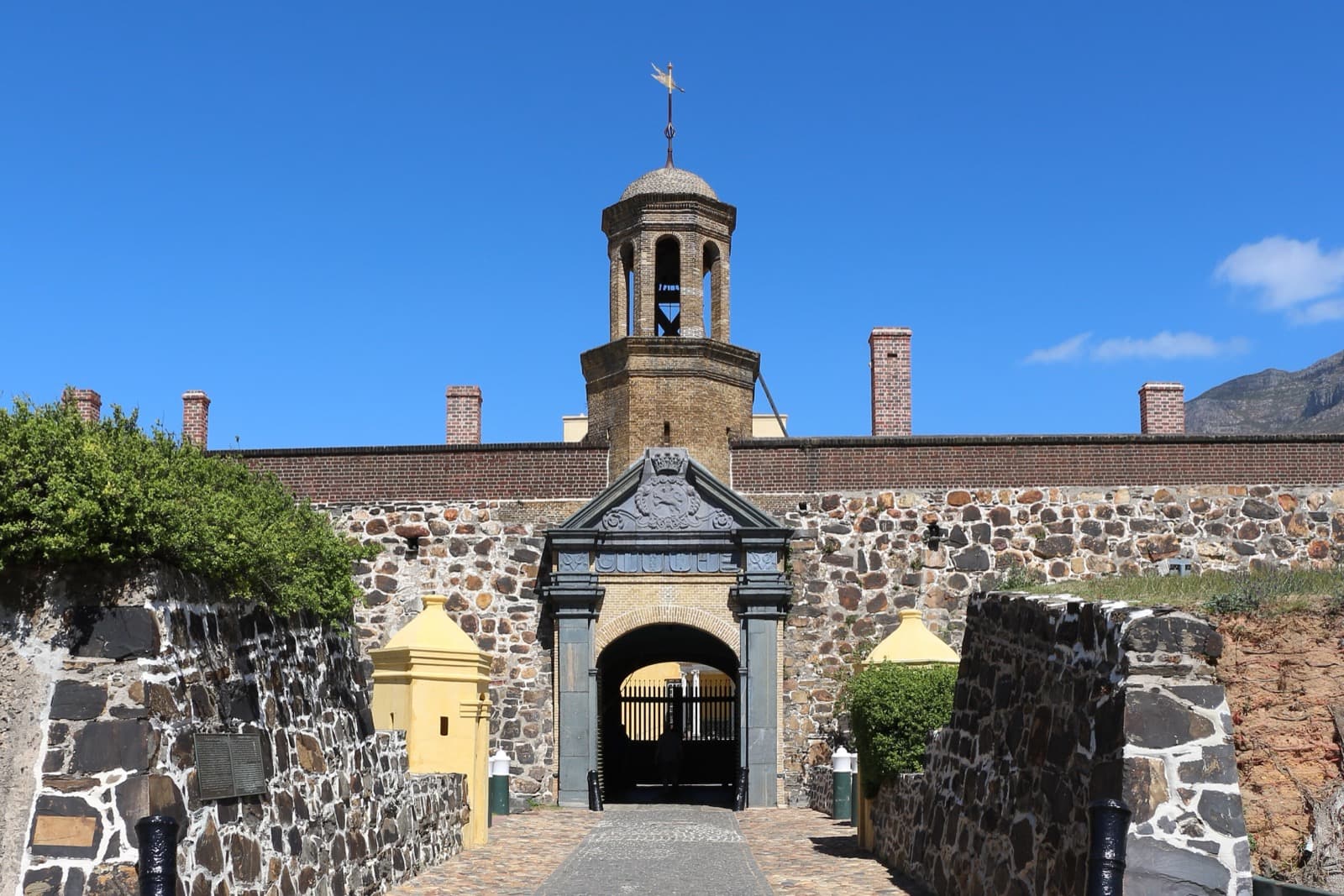
The Castle of Good Hope is the five-pointed star fort the Dutch East India Company built between 1666 and 1679, and it is the oldest surviving colonial building in South Africa. It stands at the eastern edge of Cape Town's City Bowl, low and heavy against the sea light, its yellow walls holding a shape that looks strange until you understand what it was for. This is where the colony stopped improvising and dug in for good. Everything else in the old town, the garden that fed the ships, the wealth, the bondage, the churches and squares, radiates outward from the decision this fort represents: to stay.
Why a Star, and Why Here
To understand the Castle, start with what it replaced. When Jan van Riebeeck landed for the Company in 1652, his men threw up a fort of earth and timber within days, the Fort de Goede Hoop, a square structure with four pointed bastions named after ships. Its remains still lie a few centimetres under the tarmac of the Grand Parade nearby. That first fort was flimsy, a stopgap for a refreshment station that was only ever meant to provision passing fleets. When the Company decided the Cape was worth defending permanently, it built something meant to last.
The first cornerstones were laid on the second of January, 1666, and construction ran until 1679. What rose was a pentagon: five straight walls meeting at five sharp bastions, with a moat around the whole. The star shape is not decoration. A pointed bastion lets defenders on the walls fire along the face of the adjacent wall, so an attacker at the base of any wall is caught in crossfire with nowhere to shelter. This was the standard European answer to gunpowder artillery in the seventeenth century, and the Company built its Cape stronghold to that same logic. Standing inside the star today, the geometry that reads as ornamental from a distance resolves into cold engineering once you know what each angle was calculated to do.
Reading the Walls
Hear a stop from this walk
The Castle of Good Hope: The Star Fort Where the Colony First Dug In
The Castle is a document you can walk through, and its details carry the names and dates of the power that raised it. The five bastions were named on the twenty-sixth of April, 1679, after the titles of William of Orange: Leerdam, Buuren, Katzenellenbogen, Nassau and Oranje. To name your defences after your prince is to stamp ownership into the stone itself, and here the House of Orange is written across every corner.
Over the main entrance sits a bell tower built in 1684. Its bell was cast in Amsterdam and weighs just over three hundred kilograms, a reminder that a fort at the far end of the known world was still tethered to a workshop in the Netherlands, its parts shipped down the same sea route the whole colony existed to service. Across the courtyard runs the de Kat cross-wall, first built in 1695, which divides the interior and carries a ceremonial balcony. And the walls themselves were painted yellow, plainly to cut the glare and heat of the Cape sun, a practical touch that also gives the Castle the warm colour visitors notice first.
The One Thing to Understand Standing Here
If you take only one idea away from the Castle, let it be this: it is the physical root of a country, and it is not a neutral one. The building holds military and art museums today, including the William Fehr Collection of paintings and antique furniture, and it was declared a provincial heritage site in the year 2000. It is easy to treat a heritage fort as a pretty relic, a place for a photo and a coffee. The Castle rewards a harder reading.
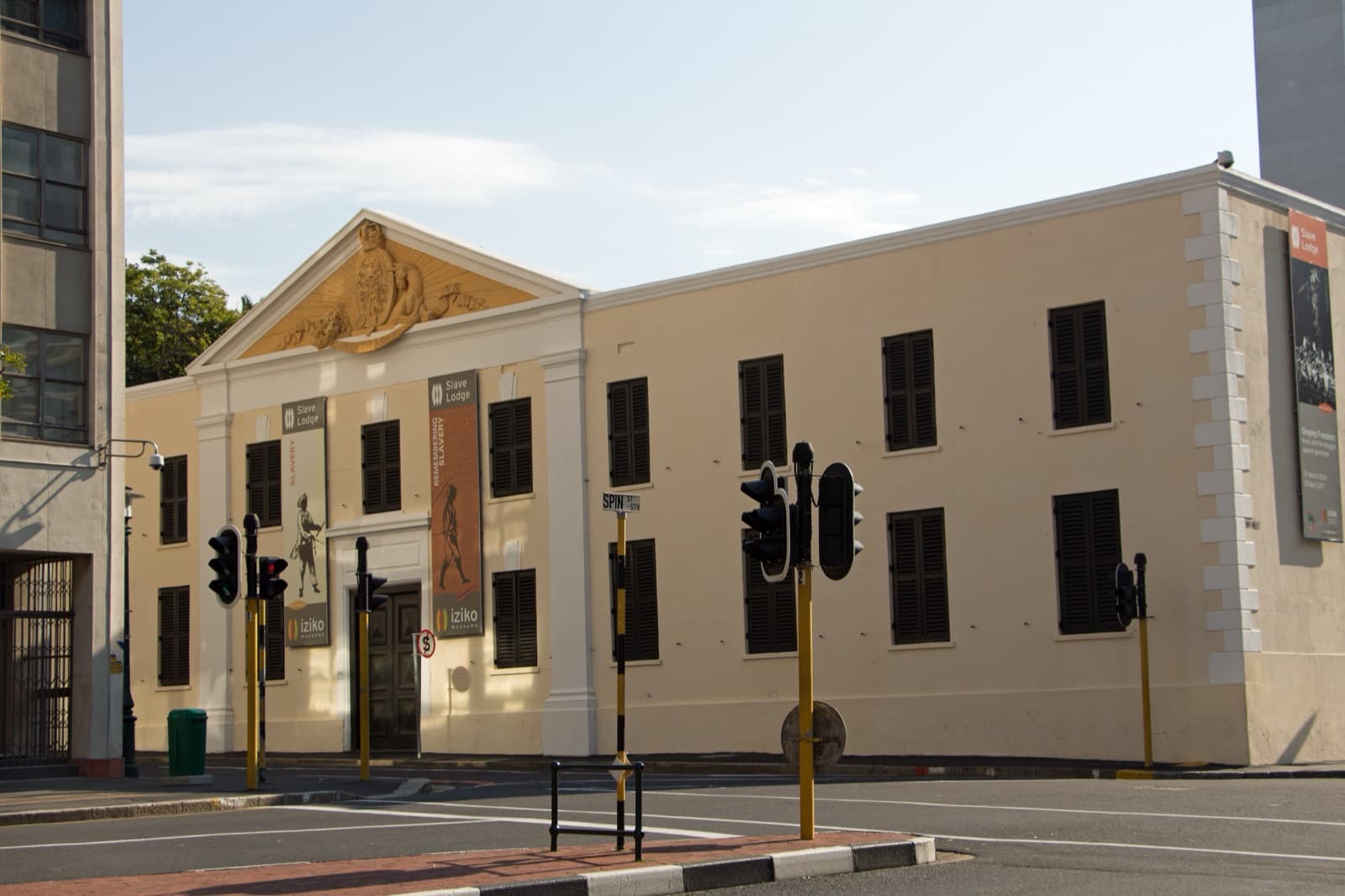
This was the Company's seat of power at the Cape, and the Company's economy was built on enslaved labour. A short walk up the hill, the Slave Lodge, put up by the same Company in 1679, held people brought to the Cape from East Africa, Madagascar, India and Southeast Asia. The same institution that laid these yellow walls kept human beings as property to build the town around them. The Castle is beautiful precisely because it was permanent, and its permanence was paid for by people whose names the Company did not bother to record. Holding both of those truths at once, the craftsmanship and the cruelty, is what this stop asks of you.
There is a long arc that runs from this fort to freedom, and Cape Town lets you walk it in an afternoon. The colony dug in here in the 1660s and 1670s. Three and a half centuries later, on the eleventh of February, 1990, Nelson Mandela gave his first public speech as a free man from the balcony of the City Hall across the Grand Parade, telling the crowd that the march to freedom was irreversible. The order this Castle was built to defend was dismantled, in public, a few hundred metres from where you stand. The oldest stone the colony ever laid and the stage where that colony's system finally fell are almost within sight of each other.
Walking It Yourself
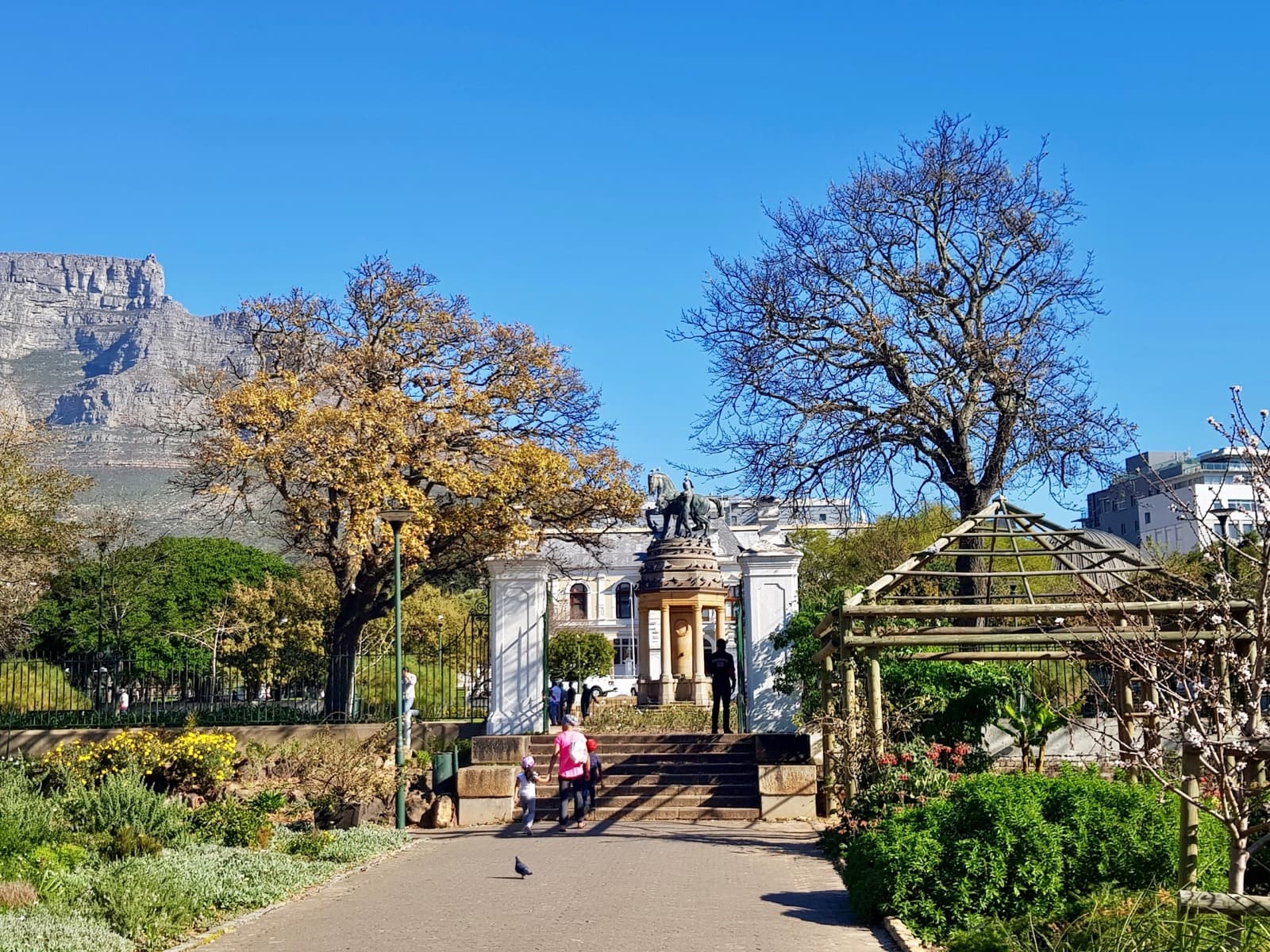
The Castle is the final stop on our self-guided Cape Town City Centre walk, a roughly two and a half kilometre route that runs downhill from the Company's Garden, the 1652 kitchen plot the whole town grew out of, through the Slave Lodge, St George's Cathedral, Greenmarket Square, Long Street and the Grand Parade before ending inside the star. Walking it in that order means you arrive at the Castle already carrying the full weight of what it represents, rather than meeting it cold.
The Castle charges admission in rand and keeps daytime hours, so bring a card or a little cash if you want to go inside and see the de Kat balcony and the museums up close. You set your own pace: linger in the courtyard, read the bastion names, or simply stand in the star and look back up the hill toward the garden where it all began.
For the full route and the other stops that lead here, see our guide to Cape Town walking tours. The audio walk hands you the whole story stop by stop, at your own speed, under Table Mountain.
Sources
- Castle of Good Hope, Wikipedia: construction dates, star-fort layout, bastion names, bell tower and de Kat cross-wall.
- Castle of Good Hope, South African History Online: the fort as the oldest surviving colonial building in South Africa and its heritage status.
- Slave Lodge, Cape Town, Iziko Museums of South Africa: the VOC's use of enslaved labour that underpinned the colony the Castle defended.
- Cape Town City Hall, Wikipedia: the 1990 balcony speech by Nelson Mandela on the Grand Parade, a short walk from the Castle.
Ready to experience it?
City Centre: Where the Cape Colony Began
120 min · 2.3 km · moderate
More from Cape Town
Explore more at your own pace.
Cape Town Travel Guide: Days, Transport, Seasons, Safety, and Budget
Cape Town in Three Layers: The Garden, the Painted Hill, and the Harbour That Still Works
Auwal Mosque: The Door That Reframes Bo-Kaap's Painted Lanes
The Company's Garden: The Vegetable Patch Cape Town Grew Out Of
Chiappini and Rose Streets: The Steep, Coloured Heart of the Bo-Kaap