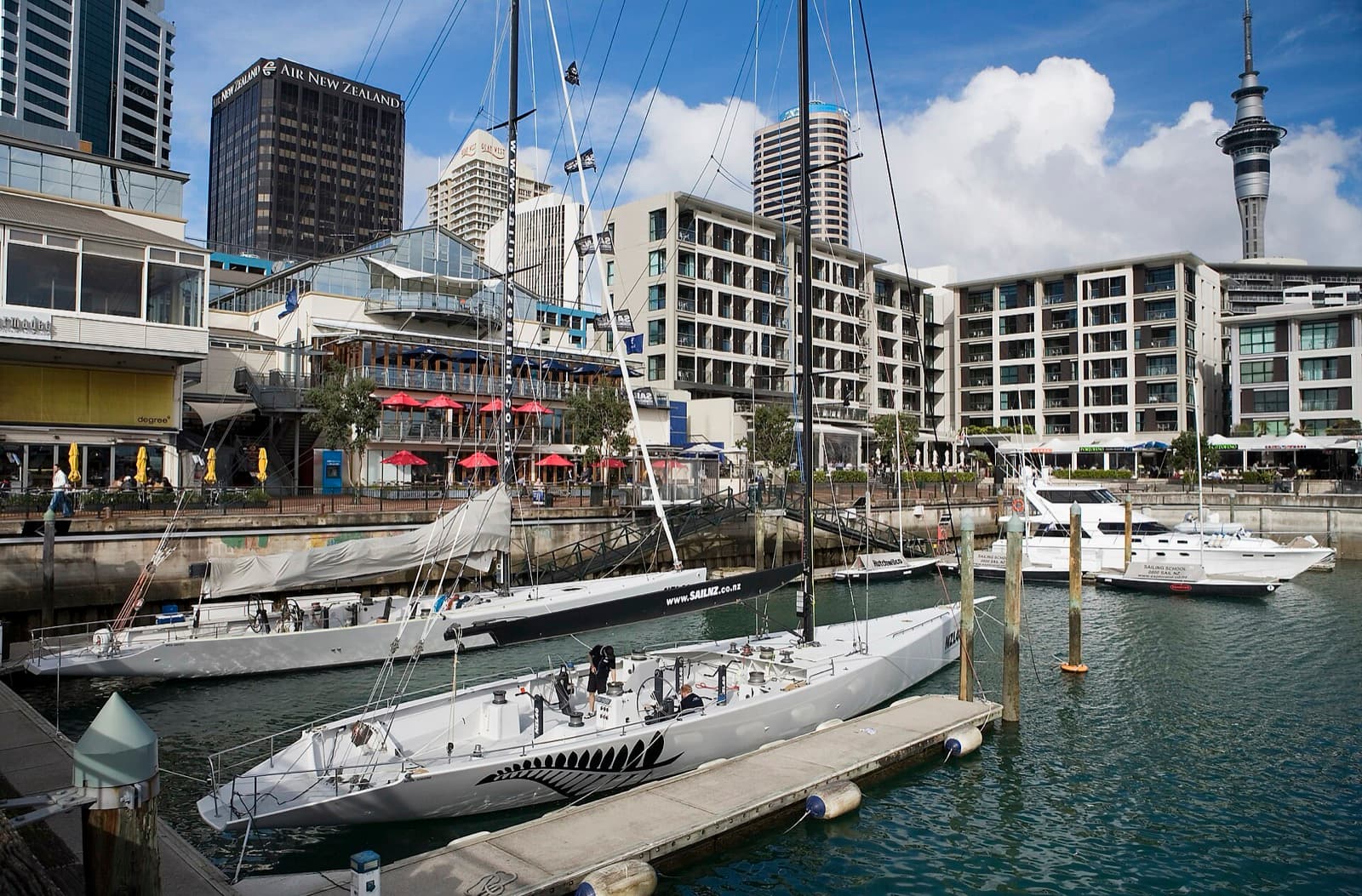
Viaduct Harbour is a former commercial fishing and cargo basin on Auckland's western waterfront that a single sailing victory rebuilt into a yacht village, and standing at its rail you read both New Zealand's America's Cup triumph and the year the Cup slipped away. Before the redevelopment this was a tired basin west of the wharves, home to only a few fishing boats among disused cargo edges. Today it is a bright marina ringed with masts and quaysides full of life. The reason for that change is one of the more concentrated stories of civic transformation on this shore: a boat race won on the far side of the world came back and remade the water.
What you are looking at
The basin itself is the point. Where you now see moored yachts and a promenade of eating places, there was working harbour: fishing craft, cargo, disuse. What turned it around was not a slow drift of gentrification but a deliberate project built around a sailing campaign. Team New Zealand won the America's Cup in San Diego in 1995, sailing far from home in the waters off California. That win created a problem and an opportunity at once, because the Cup is defended on the home waters of the holder. New Zealand would have to host, and Auckland needed somewhere to do it.
The man who carried the vision for this basin was Sir Peter Blake, the New Zealand yachtsman who led the campaign. The plan was to take this run-down basin, then home to just a handful of fishing boats, and turn it into a Cup Village, backed by the national government and the Auckland City Council. That meant syndicate bases where the racing teams could build and berth their boats, public viewing areas for the crowds, a proper harbour entrance, and wave-protection walls so the sheltered water inside stayed calm. The Cup Village opened on the tenth of October 1999. What had been an industrial afterthought became the front row for an international regatta.
The one thing to understand standing here
Hear a stop from this walk
Commercial Bay: The Buried Beach
If you take away a single idea from this stop, make it this: the water in front of you holds both the triumph and the loss, and the second matters as much as the first.
In 2000, New Zealand defended the Cup on its own waters and won a clean defence, with Russell Coutts sailing the yacht known as New Zealand 60. That was the high point, a small country beating the world's best sailors at their own game, in a basin the country had built for the purpose. Then in 2003 the Swiss challenger, Alinghi, took the Cup away. The sting in that story is personal: Russell Coutts, who had helmed the winning defence in 2000, was by then sailing for the other side. The champion who won it here helped carry it off.
That is why this basin reads as something more honest than a victory monument. It is a civic and sporting story, not a nationalist one. The quaysides remember the year the country was gripped by the racing and the year the Cup left. A place that only celebrated would flatten the history. Viaduct Harbour keeps both, and that doubleness is the thing worth carrying with you as you walk the promenade.
Why the basin was worth saving
The redevelopment mattered beyond the sport. It became a template for how Auckland would treat the rest of its old industrial harbour edges. The move here was to reuse a working basin rather than erase it, to add a marina and public space onto an existing piece of maritime infrastructure. That same logic runs along this whole stretch of shore. Just east, the Britomart precinct wrapped a quarter of shops around Victorian and Edwardian warehouses and a former post office. Just west, the Wynyard Quarter turned a bulk petrochemical yard, long known as the Tank Farm, into public space while keeping its concrete silos as landmarks. Viaduct Harbour came first among these transformations in spirit, driven by a hard deadline that a sailing regatta imposed, and it showed the city what the reclaimed working front could become.
It helps to remember how much of this ground is made ground. Almost all the flat downtown land near here was reclaimed from the sea after Auckland's founding in 1840. The original shoreline of the tidal Commercial Bay now runs a block inland, near Fort Street. So when you stand at the Viaduct rail, you are standing at the far western end of a shoreline that has been remade again and again: from whaling and fishing to cargo to a yacht basin to a public quarter. The Cup Village is one more layer on a waterfront that keeps being rebuilt.
Walking it for yourself
The Viaduct rewards an unhurried visit. Toward evening the western basins come alive, and the low light off the Waitematā, the harbour Auckland is built on, throws the masts and the quaysides into relief. There is a lively scene along these edges, plenty of places to eat and drink, but the pleasure of coming on your own terms is that you set the tempo. You can wander the marina promenade at your own pace, find the water where the boats once mustered for the racing, and choose your own place to pause. No group is calling you back to a coach.
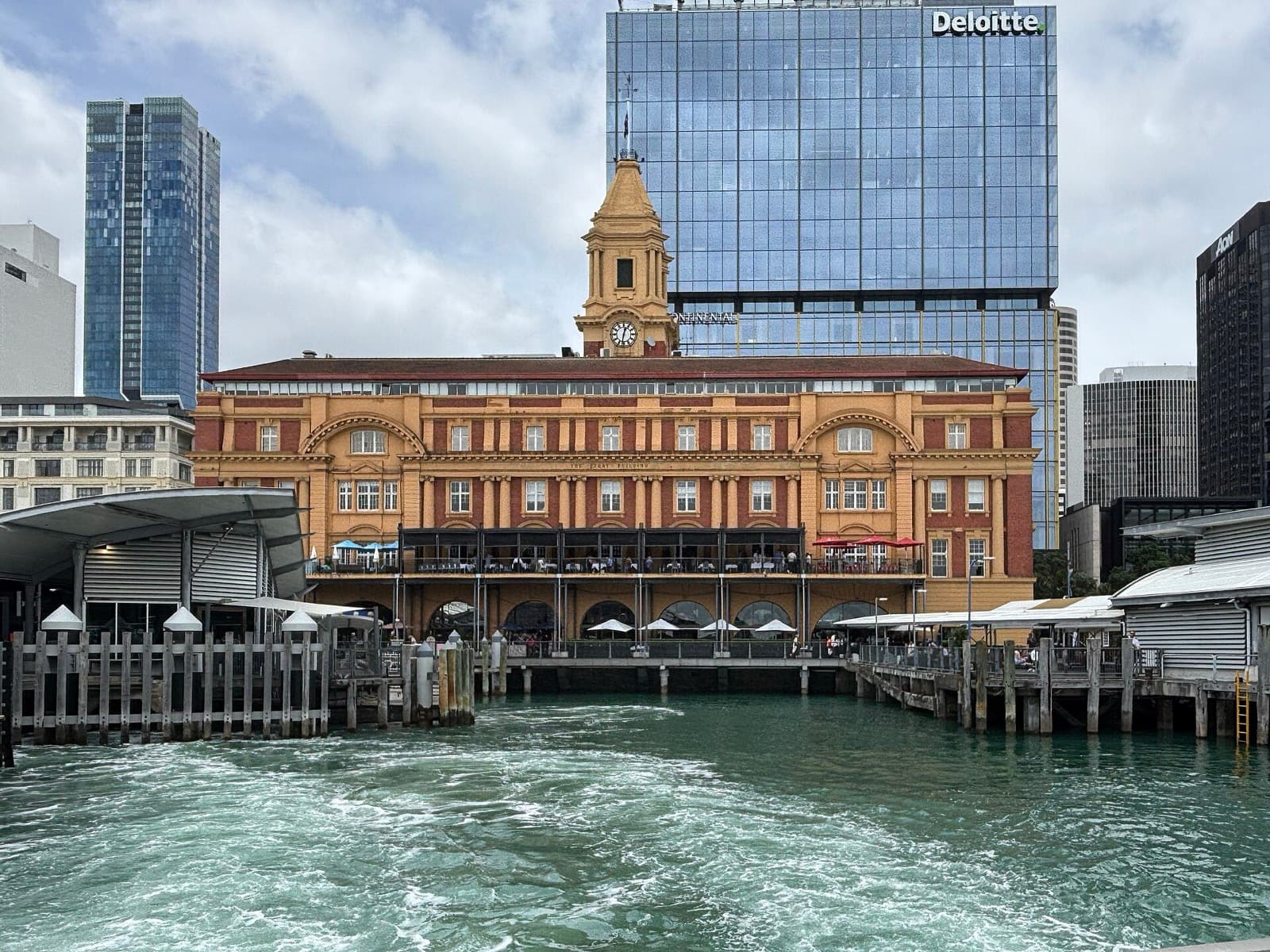
Viaduct Harbour is stop six on Roamer's self-guided audio walk of the Britomart and waterfront district, a level two-and-a-half-kilometre route that reads the whole reclaimed edge of the city, from the Edwardian Ferry Building to the silos of Wynyard Quarter. The audio arrives as you reach each stop, so you keep your hands free and your eyes on the harbour. If you want the fuller picture of what to see here, start with our guide to Auckland walking tours, or browse everything on offer in Auckland. Then come down to the basin, stand among the masts, and let the water tell you both halves of its story.
Sources
- NZHistory, "New Zealand wins the America's Cup for the first time": records Team New Zealand's 1995 San Diego victory that set the defences in motion.
- New Zealand Herald, "Viaduct Harbour created a hugely successful America's Cup village": documents the basin's redevelopment into the Cup Village.
- Roamer tour transcript, "Britomart & the Waterfront: From Whaling Port to America's Cup": fact-audited narration for the Viaduct Harbour stop, including the 1999 village opening, the 2000 defence, and the 2003 loss.
- Auckland Council waterfront heritage records: context for the successive reclamations and the industrial-to-public reuse of the harbour edge.
Ready to experience it?
Britomart & the Waterfront: From Whaling Port to America's Cup
75 min · 2.7 km · easy
More from Auckland
Explore more at your own pace.
Auckland Travel Guide: How Many Days, Getting Around, Safety, and Budget
Auckland: The Harbour City Read in Layers
Albert Park and the Barracks Wall: The Garden Auckland Built Over a Fort
The Auckland Domain: A City Park Built in a Volcano's Crater
The Auckland Ferry Building: A Front Door Built on Water