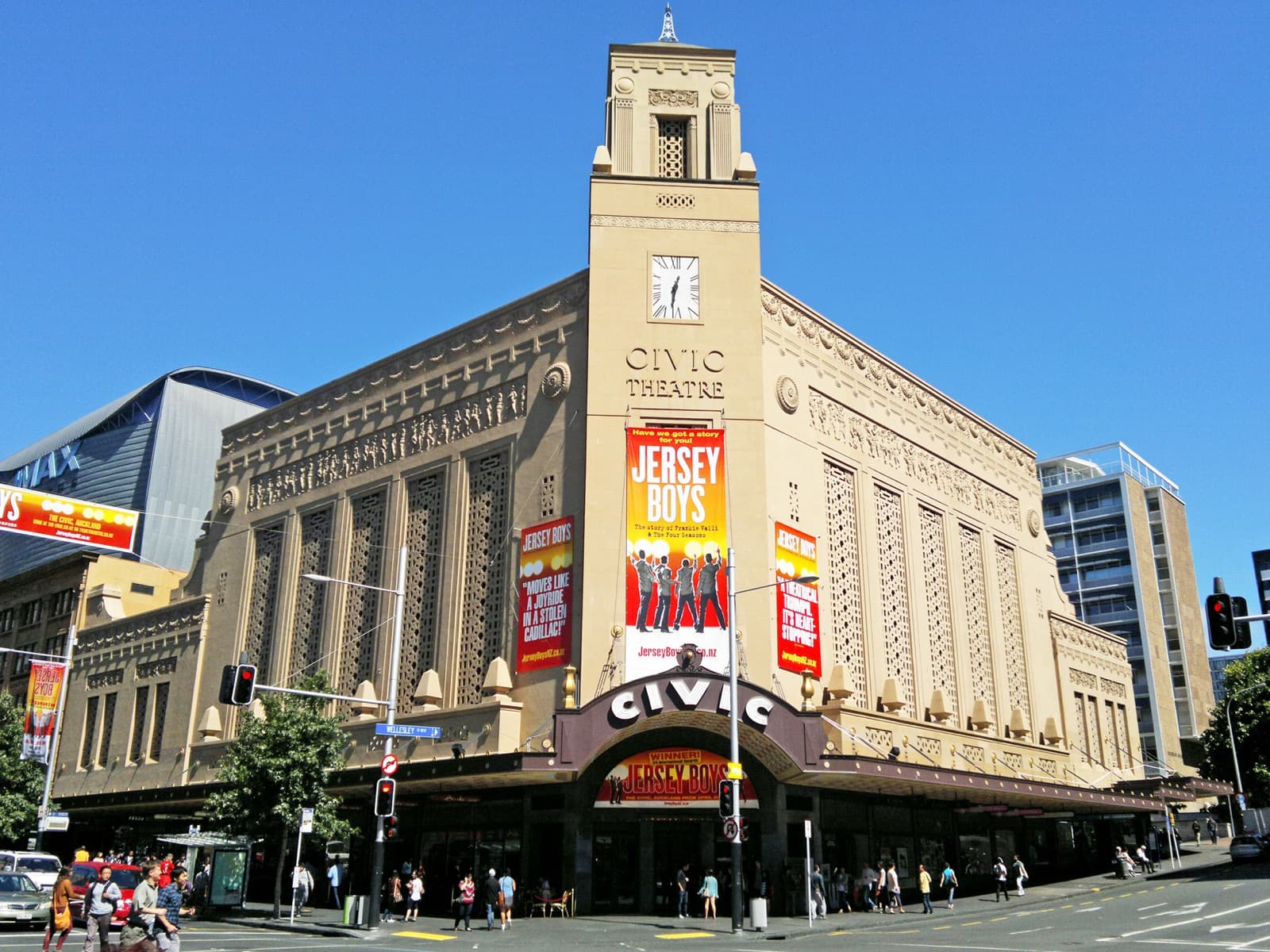
Auckland's Civic Theatre is an atmospheric picture palace that opened at the corner of Queen and Wellesley Streets in December 1929, built to make an audience forget it was indoors: a foyer of seated Buddhas and twisted columns, an auditorium dressed as a Moorish garden, and a ceiling engineered to imitate an open night sky with drifting clouds and twinkling stars. To understand the building, you have to understand the promise it was selling. The Civic did not offer you a room to watch a film. It offered you the illusion of sitting outdoors, at night, under the heavens, in a courtyard that never existed. That promise is the whole point of the place, and it survives largely intact almost a century later.
What an atmospheric theatre actually is
The word "atmospheric" is not marketing gloss here. It names a specific style of cinema architecture from the 1920s, and the Civic is one of its most complete surviving examples. The idea was to abandon the conventional decorated ceiling entirely. Instead of plaster molding and chandeliers overhead, the atmospheric theatre gives you a smooth, dark, dome-like vault painted to read as sky. Small lights are set into it to mimic stars. A projector drifts artificial clouds across the surface, and a sunset machine fades a blue evening down into full darkness while you settle into your seat. You are meant to feel that the walls have fallen away and you are sitting in an open-air courtyard somewhere warm and old and far from a rainy New Zealand street.
The Civic pushes the fantasy further than most. The lower walls carry turrets, minarets, and panther statues flanking the stage, so that the "courtyard" reads as a garden inside a Moorish palace. The foyer takes a different route into the same reverie, an Indian fantasy of domed ceilings and seated figures. The whole sequence, street to foyer to auditorium, is designed as a graduated escape. By the time the house lights dim into a false dusk, the ordinary city outside has been edited out of your evening entirely.
The date, the architects, and the man who lost everything
Hear a stop from this walk
Albert Park and the Albert Barracks Wall: The Garden Over the Fort
The Civic opened on the twentieth of December, 1929, the work of the architects Charles Bohringer and William T. Leighton. It was commissioned by the New Zealand impresario Thomas O'Brien, who had brought the atmospheric format to the country a year earlier when he opened Dunedin's Moorish-style Empire De Luxe in 1928, and who clearly believed in it enough to build the grandest example of it he could.
The timing is worth sitting with. December 1929 is not a neutral moment in economic history. The Civic opened its doors into the opening months of the Great Depression, and O'Brien, the man whose ambition had conjured the star ceiling and the panther statues, went bankrupt within about ten months of the opening. There is a hard irony baked into the building. It was designed as the ultimate machine for forgetting your circumstances, and it arrived exactly as its own creator's circumstances collapsed. Standing on the pavement outside, you are looking at a monument to escapism built on the eve of the decade that made escapism a necessity.
The one thing to understand standing in front of it
If you take a single idea away from this stop, make it this: the Civic is the largest surviving atmospheric cinema in Australasia, and it remains the largest theatre in New Zealand, seating around two thousand seven hundred and fifty when it opened. That scale is the argument. Atmospheric theatres were built all over the world in the 1920s, and most have been demolished, gutted, or subdivided. Auckland kept its example, and kept it working. That is not a small thing. It means the illusion is not a museum reconstruction. When the ceiling dims and the false stars come out over a live audience of thousands, you are watching a nearly century-old idea about wonder do exactly the job it was designed to do.
From the street, you get the grandeur but not the trick. The interior opens only for shows and scheduled tours, so seeing the ceiling depends on your timing. If your visit does let you inside, the instruction is simple and it is the instruction the whole building is built to earn: look up. The stars are the entire reason the place exists.
The building read as a clause in the valley
The Civic sits on Queen Street, and Queen Street sits on something older. Auckland's main commercial street runs up the floor of a valley that once carried the Waihorotiu Stream, an open watercourse that flowed down to the Waitematā Harbour before the growing colonial town walled it, canalised it, and finally buried it in culverts that still run beneath the road. The self-guided walking tour that includes this theatre reads the whole street that way, as a sentence written over a stream, with each grand building a clause the settler and boom city added as it climbed the gully.
In that reading, the Civic is the most extravagant clause of all. On a main street built over hidden water, the boom city of the late 1920s reached up and built a fake night sky out of plaster and electric light. There is a neat symmetry to it. The real stream was hidden below the pavement, and a false heaven was raised above the seats, both of them acts of a city rewriting what nature had put there. You do not need to know the geology to enjoy the ceiling, but knowing it changes what the ceiling means. The Civic is not just a beautiful anomaly. It is the loudest statement in a long argument the whole valley is having with itself.
Walk the valley for yourself
The Civic Theatre is the third stop on a self-guided audio walk up the Queen Street valley, from the harbour flat to the civic ridge, that also takes in a Gothic cathedral from the town's beginning, an Edwardian town hall shaped like a wedge of cheese, the Victorian lanes of the old shopping quarter, and a flower garden laid over an army barracks. You walk it at your own pace, with no group and no schedule, each stop short and skippable. If you are planning a wider visit, browse more Auckland walking tours or start from the Auckland city page, then let the audio guide carry you up the buried stream one grand building at a time.
Sources
- Heritage New Zealand, Civic Theatre Building listing. Category One heritage record noting the theatre as the largest surviving atmospheric cinema in Australasia.
- Civic Theatre (Auckland), Wikipedia. Overview of the 1929 opening, architects Bohringer and Leighton, and the atmospheric design.
- AudioCulture, "The Civic." New Zealand music-and-culture history of the venue, its impresario Thomas O'Brien, and its place in Auckland life.
- Te Ara, the Encyclopedia of New Zealand, Civic Theatre exterior. Reference on the theatre's design and standing among New Zealand cinemas and halls.
- Atmospheric theatre, Wikipedia. Background on the 1920s atmospheric-cinema style, including the illusion of an open night sky.
Ready to experience it?

Historic Heart: The City in the Queen Street Valley
75 min · 2.6 km · moderate
More from Auckland
Explore more at your own pace.
Auckland Travel Guide: How Many Days, Getting Around, Safety, and Budget
Auckland: The Harbour City Read in Layers
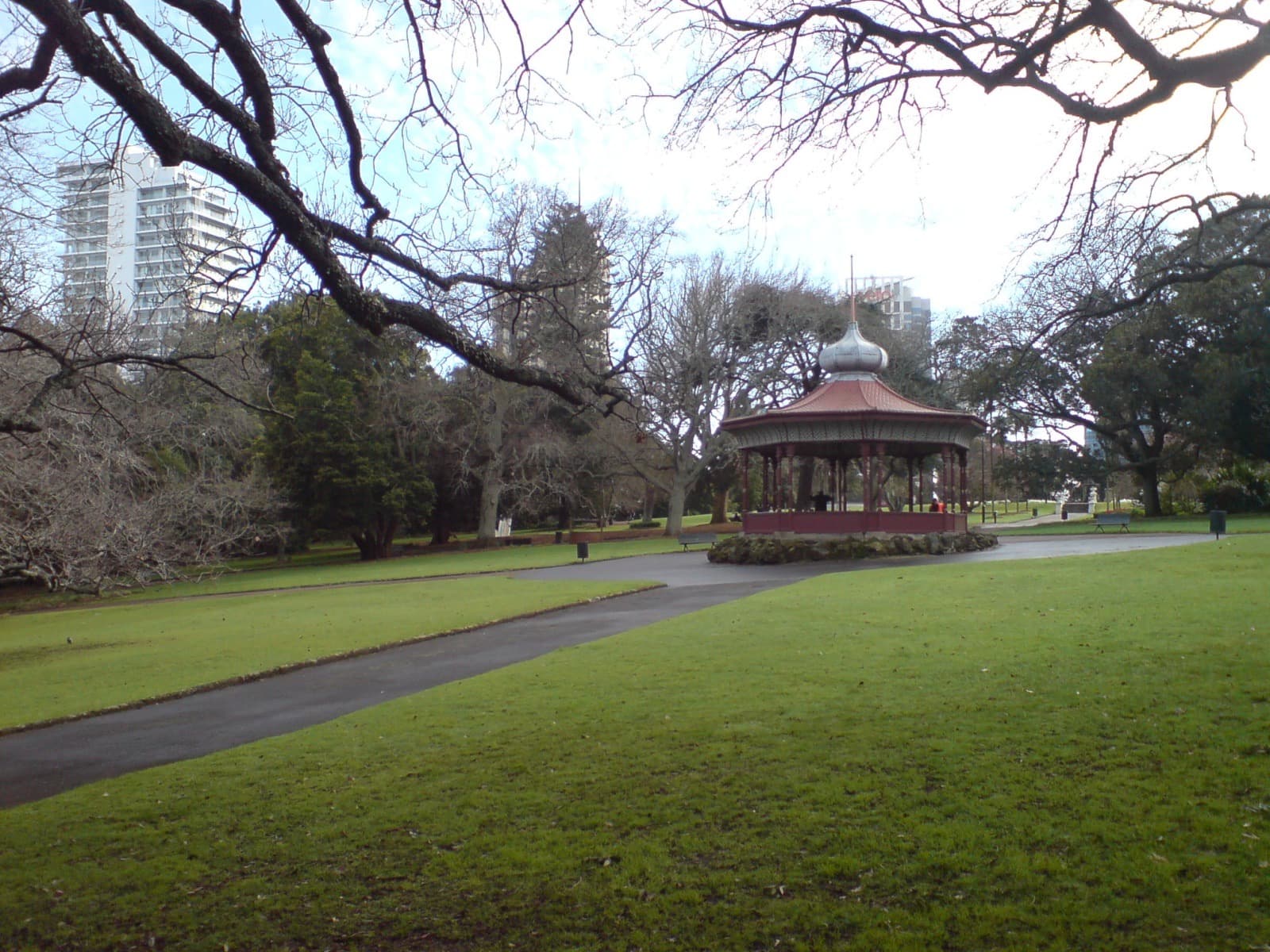
Albert Park and the Barracks Wall: The Garden Auckland Built Over a Fort
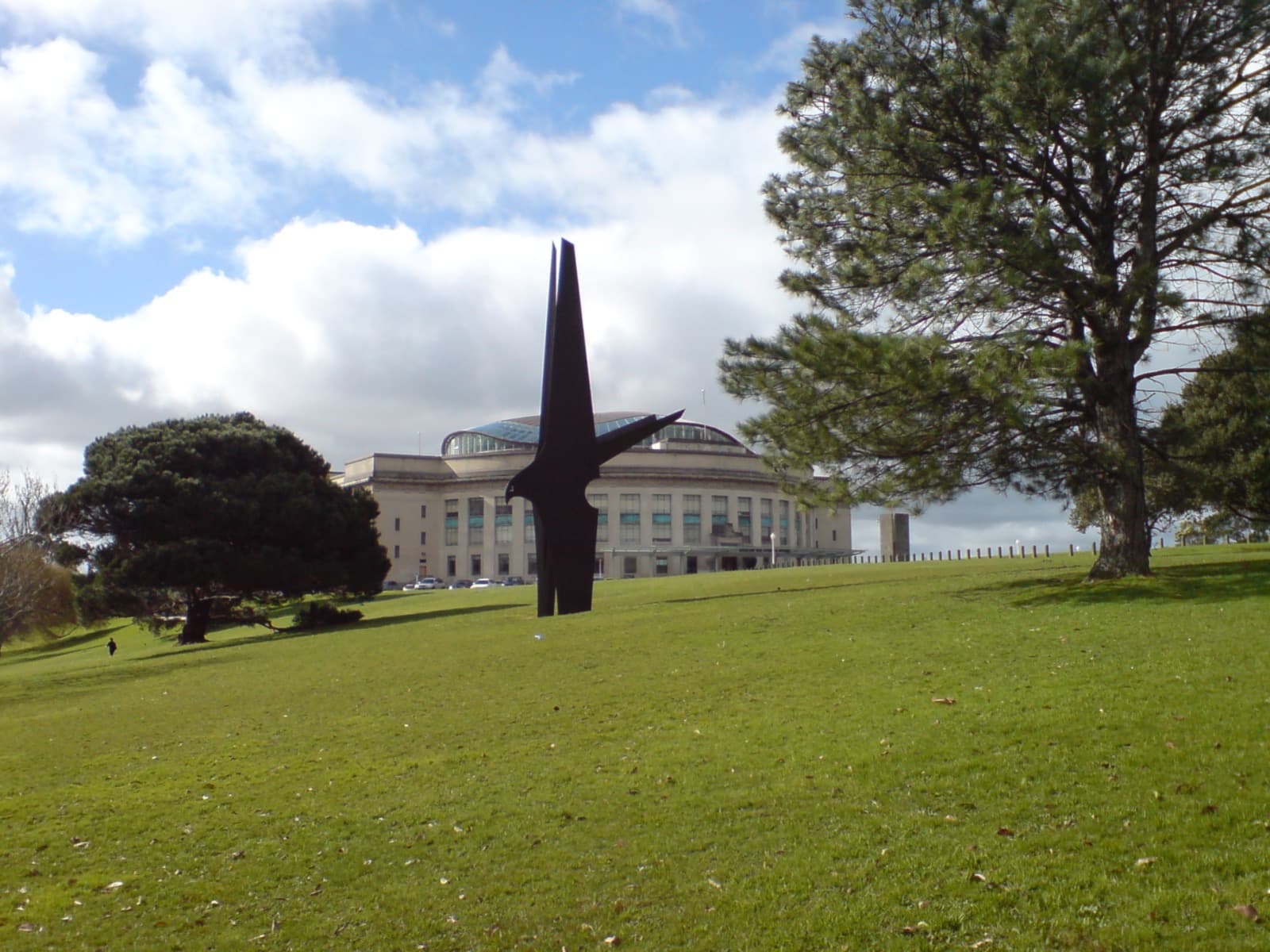
The Auckland Domain: A City Park Built in a Volcano's Crater
The Auckland Ferry Building: A Front Door Built on Water