Sheikh Zayed Grand Mosque: A Vision in Marble
60 min · 1.2 km · easy
Abu Dhabi is the capital that turned oil into a country, and you can read the whole transformation by walking from a single coral fort raised beside a well of sweet water to a white-marble mosque that gathers the craft of the whole Islamic world. The city sits on a low island where the desert meets the Persian Gulf, founded in the late eighteenth century by the Al Nahyan family, the branch of the Bani Yas confederation that moved its permanent seat from the inland Liwa oasis to this coast. Everything that Abu Dhabi became grew outward from that well and the fort built to guard it. Two self-guided walks trace the arc: one begins at the founding fort and follows the capital to the sea, and the other ends at the founder's grave inside his final vision. Together they let you read the making of a nation, at your own pace, from the founding well to the marble domes.
From one well, a capital
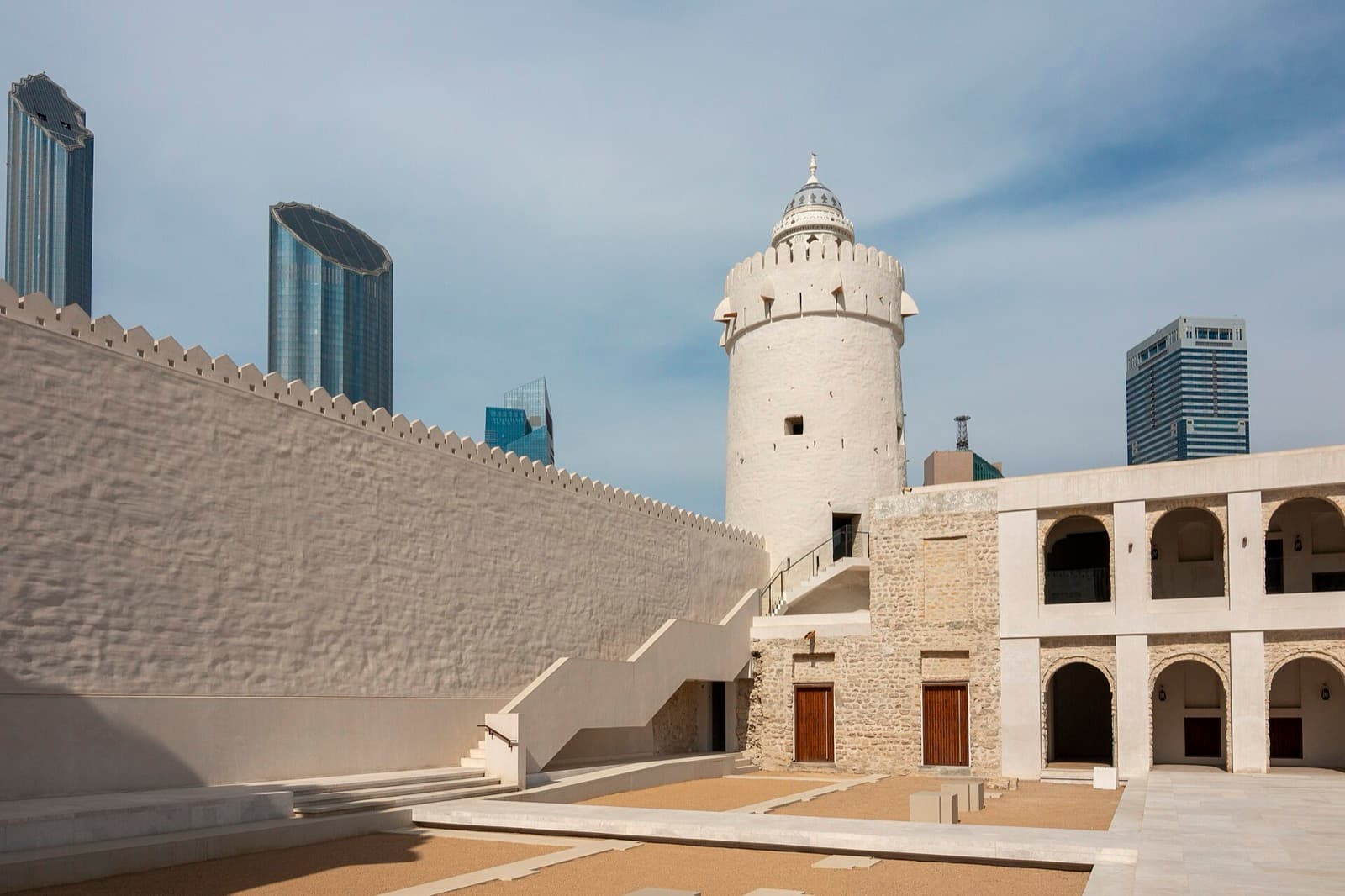
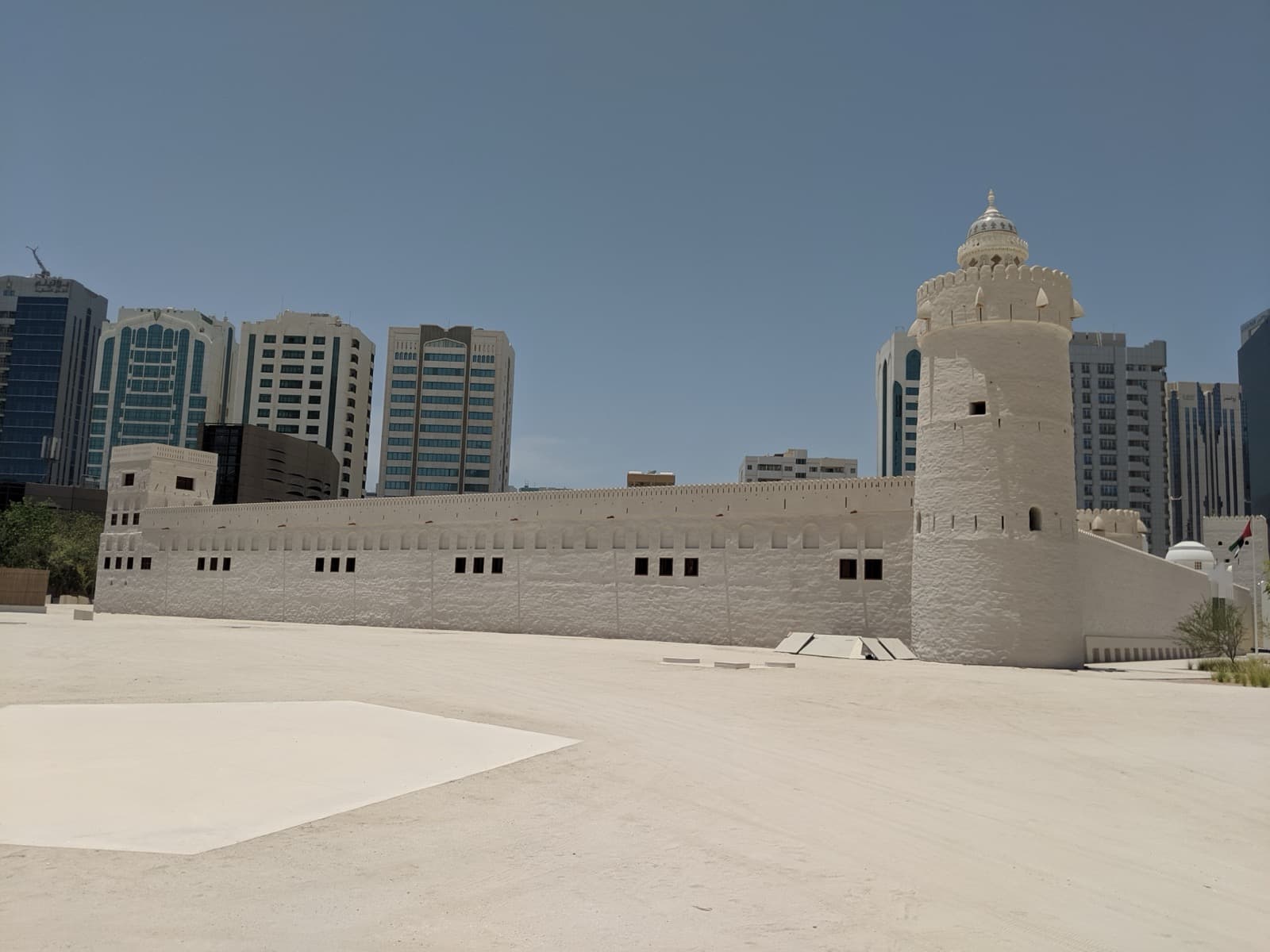
The oldest stone building in Abu Dhabi is Qasr Al Hosn, the white fort. It began as a single watchtower of coral and sea stone raised in the late seventeen hundreds to protect the island's only source of fresh water. The exact year is genuinely uncertain, with sources placing the inner watchtower variously in the seventeen sixties or seventeen nineties, so the honest reading is simply the late eighteenth century. What is not uncertain is the long life that followed. The ruling Al Nahyan family lived and governed from the fort until nineteen sixty-six, close to two centuries. Its walls were built of coral and sea stone, then rendered with burned and crushed seashells mixed with white sand. After more than eleven years of conservation, it reopened as a museum in December of two thousand and eighteen.
The founding story arrives in two voices, and the tour holds them apart with care. Tradition dates the settlement to about seventeen sixty-one, when a Bani Yas hunting party, associated with Dhiyab bin Isa Al Nahyan, is said to have tracked a gazelle to fresh water on the island, giving the place a name popularly translated as father of the gazelle. That is a story, passed down rather than documented. The firmer history is that the Al Nahyan descend from the Bani Yas through the Al Bu Falah, and that toward the end of the seventeen hundreds they moved their seat here to a coast that lived by fishing and, above all, by pearling. What legend and record share is the well. Sweet water on a dry island is the reason a family would move, and the reason a fort was raised.
A young country writes itself large
Hear a stop from this walk
The Main Entrance: A Founder's Last Vision
Independence made Abu Dhabi a capital, and the walk shows how a new nation chose to define itself. Beside the fort stands the Cultural Foundation, which opened in nineteen eighty-one, when the United Arab Emirates was only about a decade old. It held the emirate's first national library, a performance auditorium and an exhibition centre, then closed for renovation around two thousand and eight and reopened in two thousand and eighteen with a nine-hundred-seat theatre and the Abu Dhabi Children's Library. A country only ten years old chose to build its first home for art next door to its oldest fort, placing memory and imagination side by side.
Nearby, Al Ittihad Square carries the name of the union itself. On the second of December nineteen seventy-one, six emirates came together as the United Arab Emirates: Abu Dhabi, Dubai, Sharjah, Ajman, Umm Al Quwain and Fujairah, with Ras Al Khaimah joining in nineteen seventy-two. The square commemorates that union with oversized sculptures of ordinary Emirati objects: a dallah coffee pot poured for guests, a mabkhara incense burner, a fort tower, a cannon and a makkabah food cover. These are not monuments to kings or battles. A young nation blew up its own daily life, the coffee poured for a visitor and the fort that guarded the coast, to the scale of a public square.
The turn to the sea
Then the walk reaches the water, and the scale of the change becomes physical. The Abu Dhabi Corniche runs about eight kilometres along the northwestern shore of the island, with a beach, palms, cafes and separate paths for cyclists and walkers, running toward the Emirates Palace at its western end. Much of what you stand on is new ground. The modern promenade was extended by land reclamation, principally between two thousand and one and two thousand and five, adding roughly eight hundred thousand square metres of shore. This coast fed itself for centuries on fish and pearls gathered by divers at real risk, until Japanese cultured pearls and the Great Depression destroyed the pearl trade in the nineteen thirties. Oil was struck in the late nineteen fifties and first exported in nineteen sixty-two, and the wealth that followed let the city reshape its own shoreline and turn, deliberately, to face the Gulf. The Corniche is that turn made visible, the polished face of a capital that decided the sea was no longer only its livelihood but its front door.
The founding walk closes at the Founder's Memorial on the Corniche, a tribute to Sheikh Zayed bin Sultan Al Nahyan, first president of the United Arab Emirates, who died in two thousand and four. It was inaugurated on the twenty-sixth of February in two thousand and eighteen and opened to the public that April. Its centrepiece, The Constellation by the American artist Ralph Helmick, suspends one thousand three hundred and twenty-seven geometric shapes on one thousand one hundred and ten fine cables. From most angles they read as a scattered cloud, but from certain viewing points the pieces line up and a three-dimensional portrait of the founder resolves against the sky. The leader who guided the country from a poor pearling coast to a modern nation is shown not as a solid statue but as a face you have to move to see.
The founder's final vision
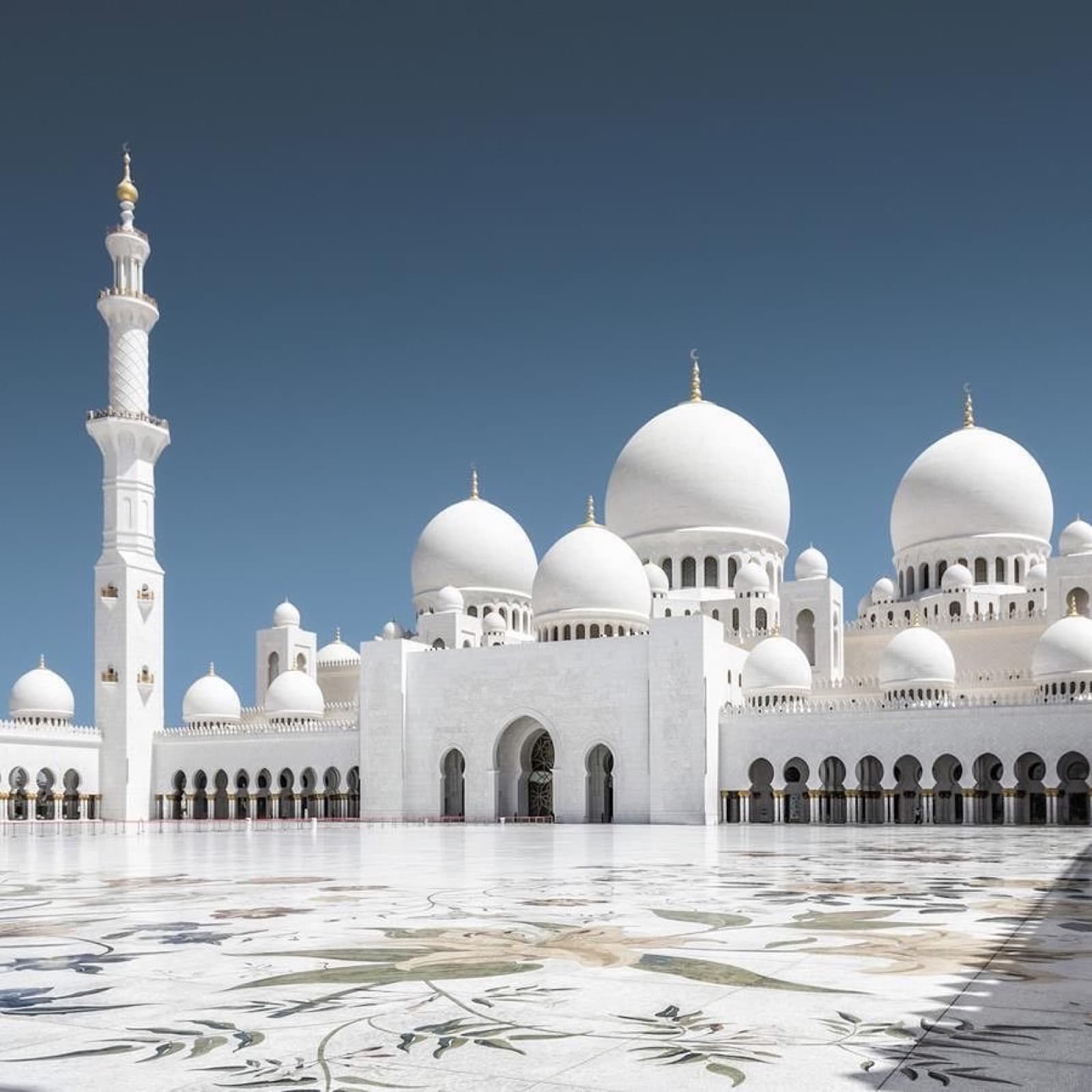
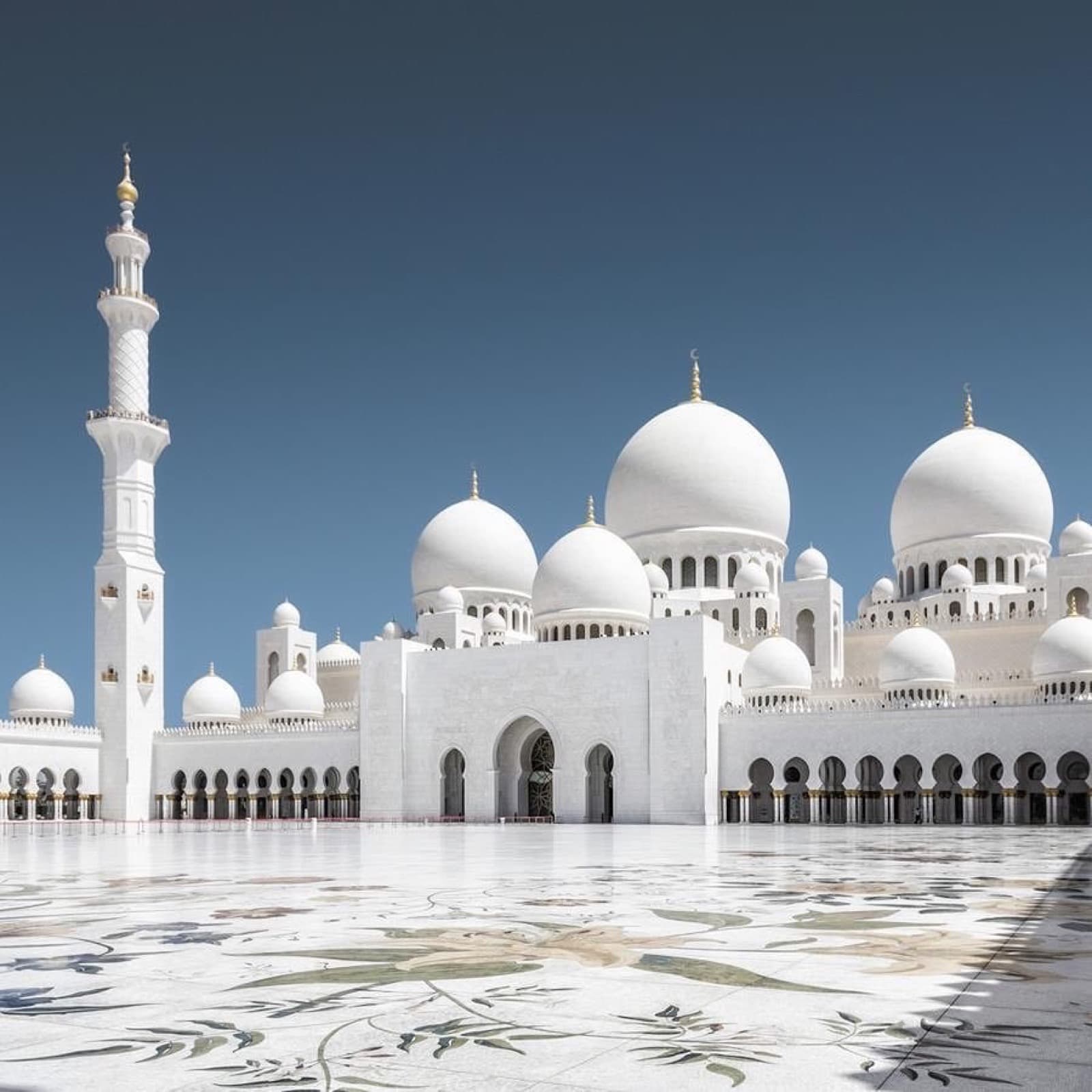
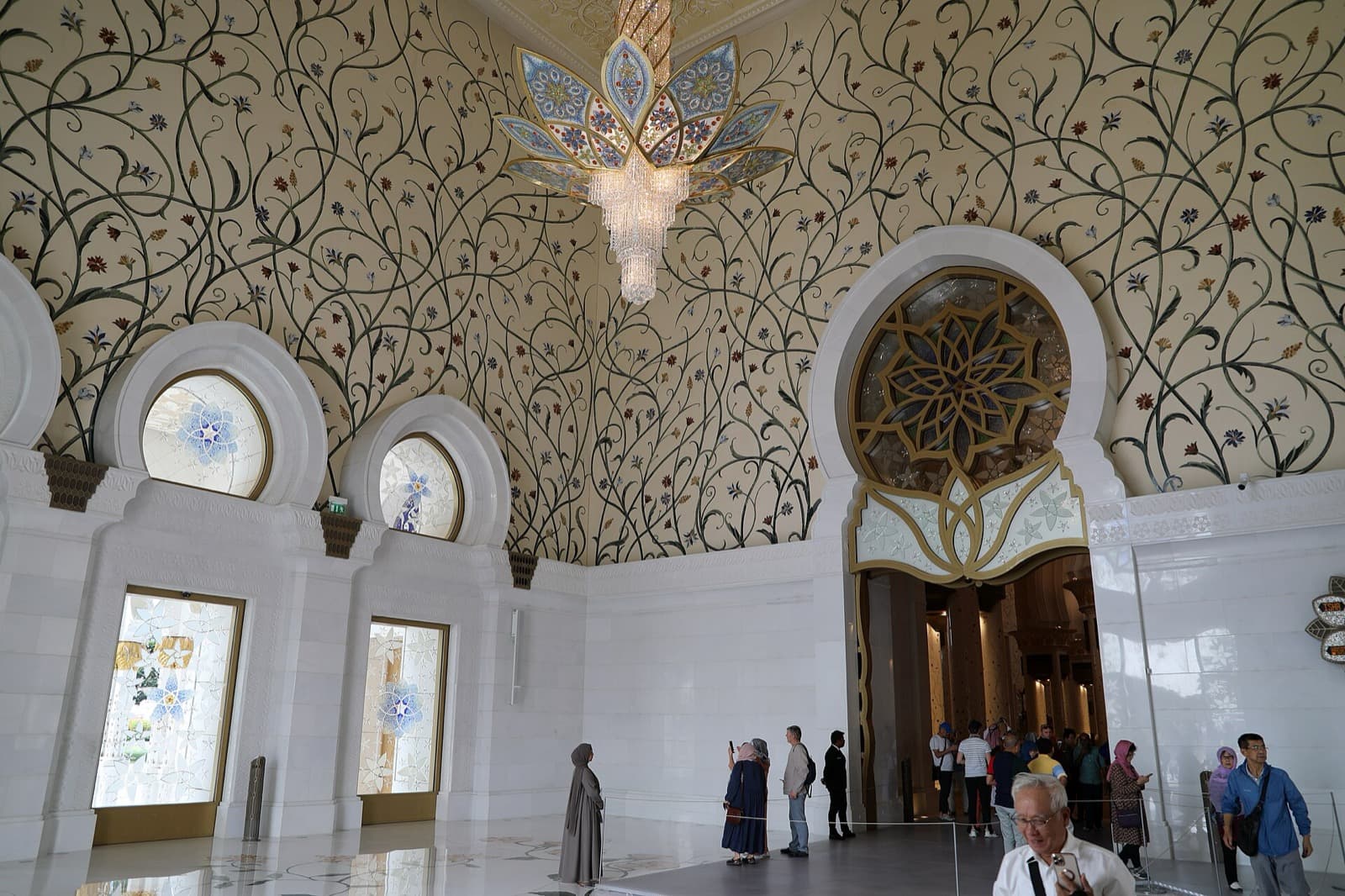
If the fort is where Abu Dhabi began, the Sheikh Zayed Grand Mosque is where the founder's story rests. It was the last great vision of Sheikh Zayed, who founded the United Arab Emirates in nineteen seventy-one and served as its first president, and it opened in two thousand and seven, three years after his death. Its whole argument is welcome. Unlike most working mosques, it was designed to receive visitors of every faith, with entry free, abayas lent to women, and free guided tours in Arabic and English.
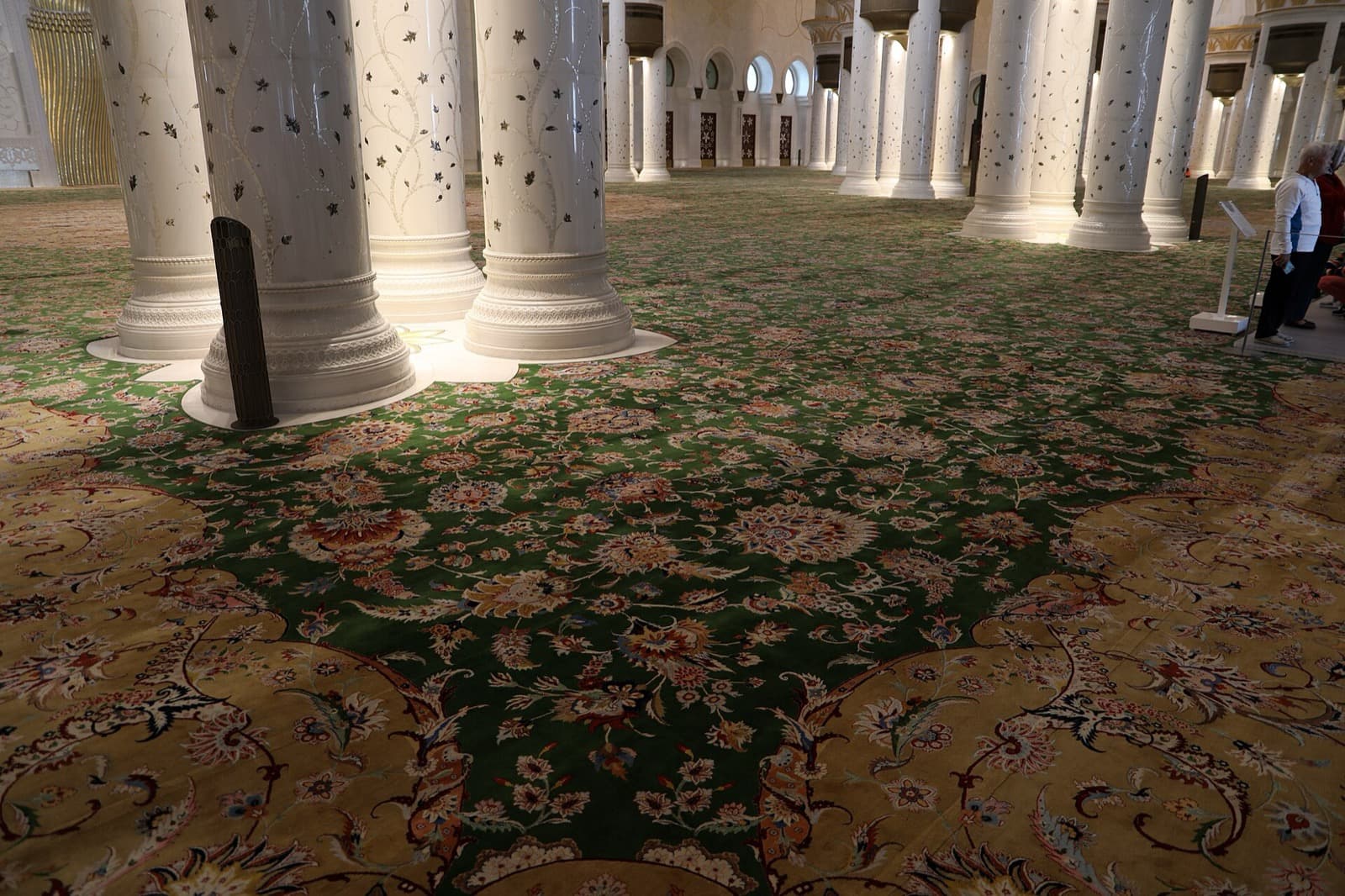
The mosque gathers the craft of the entire Islamic world into one building. Its main courtyard is paved with a marble mosaic of roughly seventeen thousand square metres worked in pietra dura, the Italian stone-inlay art. Eighty-two domes rise in seven sizes above one thousand and ninety-six columns, their forms borrowing from Mughal India and Moorish Spain, designed by the Syrian architect Yusef Abdelki. Dark reflecting pools double the whole structure in water, and its exterior lighting follows the lunar cycle. The main prayer hall is floored with a single hand-knotted carpet, recorded as the world's largest at about five thousand, six hundred and twenty-seven square metres, made by Iran's Carpet Company and designed by Ali Khaliqi. Above it hang seven chandeliers made in Munich by the firm Faustig with millions of Swarovski crystals. One country's floor, another continent's ceiling.
The walk ends not at a treasure but at a grave. Sheikh Zayed lies in a mausoleum in a quiet courtyard beside the mosque, where certified reciters read the Quran continuously, day and night. A man who lived through the collapse of the pearl trade and the coming of oil, who united a scattering of emirates, built a mosque to hold the craft of the whole Islamic world and took his place quietly beside it. Plan your own visit with the full set of Abu Dhabi walking tours, and read the capital stone by stone.
Sources
Frequently asked questions
- What is the oldest building in Abu Dhabi?
- Qasr Al Hosn, the white fort, is the oldest stone building in Abu Dhabi. It began as a single coral-and-sea-stone watchtower raised in the late eighteenth century to guard the island's only well of fresh water, and the ruling Al Nahyan family governed from it until nineteen sixty-six. After more than eleven years of conservation it reopened as a museum in December of two thousand and eighteen.
- Can non-Muslims visit the Sheikh Zayed Grand Mosque?
- Yes. Unlike most working mosques, the Sheikh Zayed Grand Mosque was designed to receive visitors of every faith. Entry is free, women are lent an abaya and headscarf, men wear long trousers and cover their shoulders, and free guided tours run in Arabic and English. It remains a living place of worship, with restricted access during Friday midday congregational prayer.
- How was Abu Dhabi founded?
- The founding is traditionally dated to about seventeen sixty-one, tied to a legend in which a Bani Yas hunting party tracked a gazelle to fresh water on the island, giving the place a name popularly translated as father of the gazelle. The documented history is that the Al Nahyan family, descended from the Bani Yas through the Al Bu Falah, moved their permanent seat from the inland Liwa oasis to this coastal island toward the end of the seventeen hundreds. Both accounts turn on the same well of sweet water.
- When did the United Arab Emirates form?
- The United Arab Emirates was founded on the second of December nineteen seventy-one, when six emirates united: Abu Dhabi, Dubai, Sharjah, Ajman, Umm Al Quwain and Fujairah. Ras Al Khaimah joined in nineteen seventy-two. Al Ittihad Square in central Abu Dhabi commemorates the union, and Sheikh Zayed bin Sultan Al Nahyan became the country's first president.
- What is special about the Grand Mosque carpet and chandeliers?
- The main prayer hall is floored with a single hand-knotted carpet recorded as the world's largest, about five thousand, six hundred and twenty-seven square metres, made by Iran's Carpet Company and designed by Ali Khaliqi. Above it hang seven chandeliers made in Munich by the firm Faustig using millions of Swarovski crystals. The Iranian floor and the German and Austrian ceiling deliberately pair the craft of different nations in one room.
Ready to experience it?
Sheikh Zayed Grand Mosque: A Vision in Marble
60 min · 1.2 km · easy
More from Abu Dhabi
Explore more at your own pace.
Abu Dhabi Travel Guide: Days, Transport, Season, Costs, and Safety
One Day in Abu Dhabi: A Walkable Morning-to-Evening Itinerary
The Grave at the Center of Abu Dhabi's Grand Mosque
The Well That Made Abu Dhabi: Reading a Capital From Its First Fort
Qasr Al Hosn: The Coral Fort Where Abu Dhabi Began