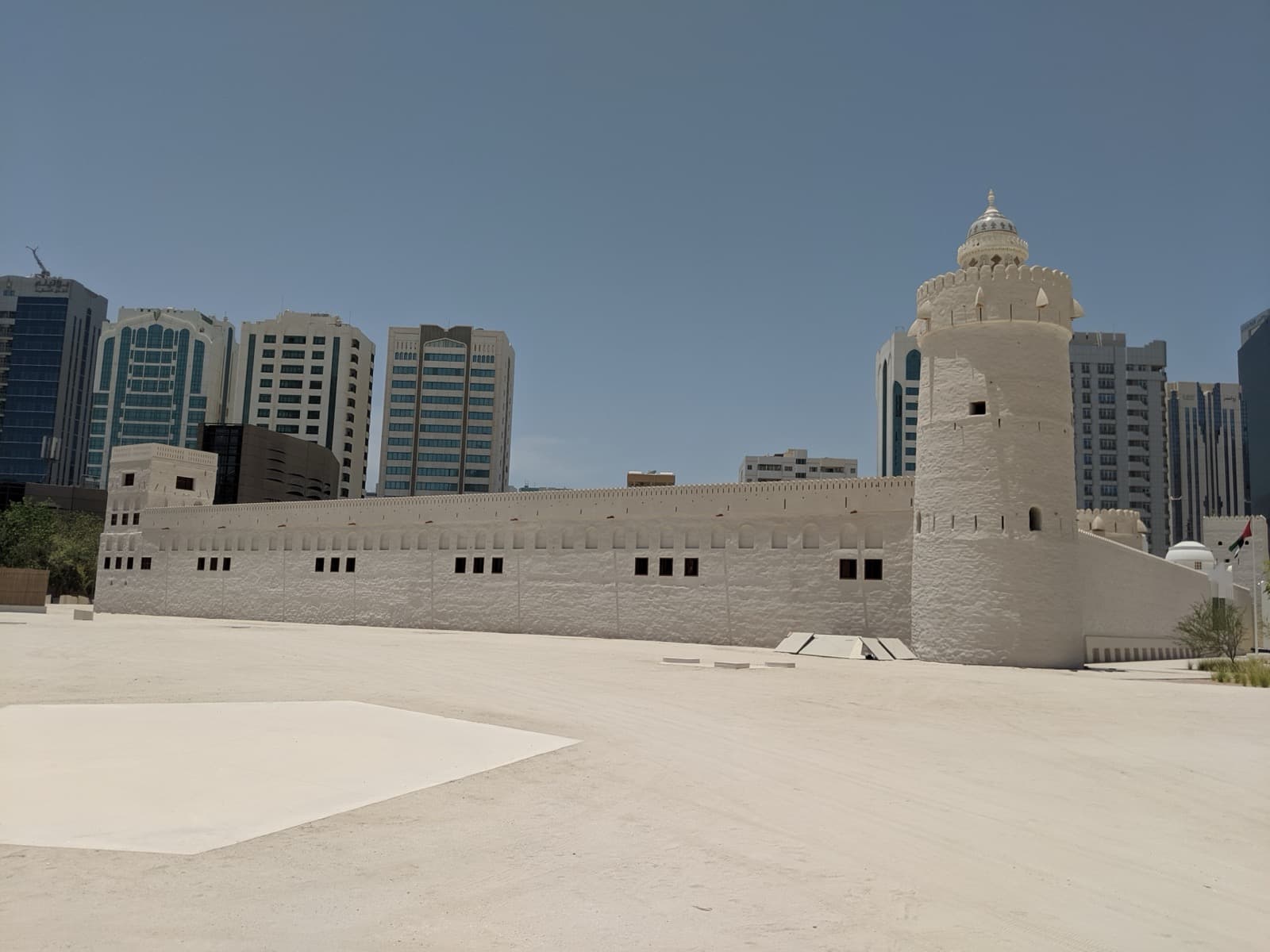
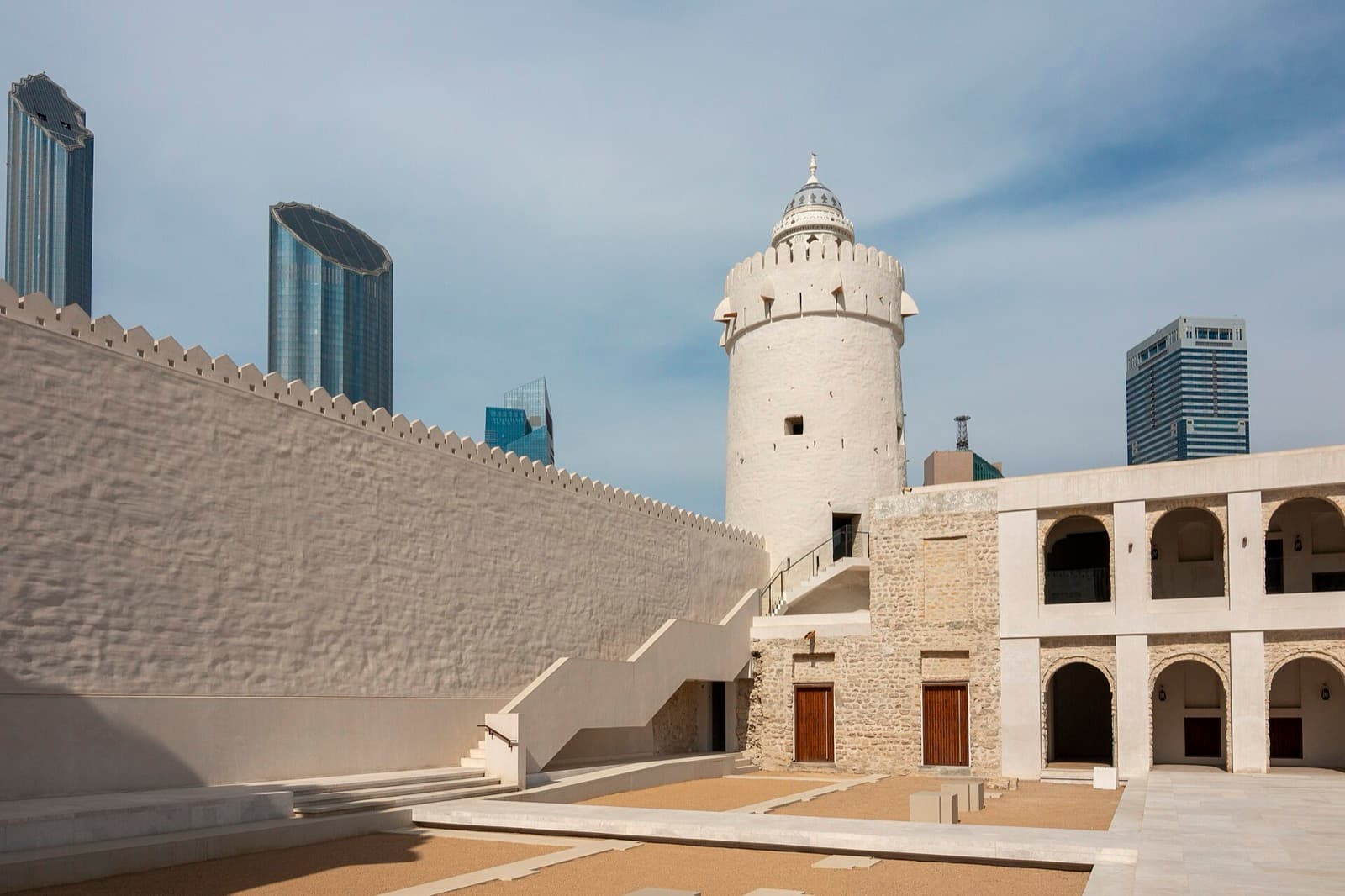
Qasr Al Hosn is the oldest stone building in Abu Dhabi, a coral-and-sea-stone fort raised in the late eighteenth century to guard the island's only well of fresh water, and everything the capital became grew outward from it. Stand in front of the white fort and you are looking at the first stone of a national capital, the stronghold that held the whole idea of Abu Dhabi before there was a city around it. The word qasr means palace or great fort, and hisn means fort, so the name itself tells you what this place was: the fortified center of an island that depended on one thing above all, sweet water on otherwise dry ground.
A watchtower before it was a fort
Qasr Al Hosn did not begin as the grand rendered building visitors photograph today. It began as a single watchtower of coral and sea stone, built to protect the freshwater well that made human life on the island possible. That sequence matters. The tower came first because the water came first. A hunting party could pass through, but only a reliable well would persuade people to stay, and only a permanent settlement would justify raising stone against the coast.
The founding date is honestly uncertain, and it is worth respecting that uncertainty rather than papering over it. Some sources date the inner conical watchtower to the seventeen sixties, supervised by a man named Mohammed Al Bastaki, with its expansion into a fort in the seventeen nineties under Shakhbut bin Dhiyab Al Nahyan. Other sources place the tower at around seventeen ninety and the fort at seventeen ninety-five. The responsible reading is the late seventeen hundreds. What is not in doubt is the long life that followed: the ruling Al Nahyan family lived here and governed from here until nineteen sixty-six, close to two centuries of continuous authority run from a fort on a pearling island.
How to read the walls
Hear a stop from this walk
Qasr Al Hosn: The White Fort Where the City Began
The material is the history. The walls were built of coral and sea stone, then rendered with burned and crushed seashells mixed with white sand. This is architecture made entirely from what the sea and the shore provided, on an island that had almost nothing else to give. There was no imported marble, no quarried granite hauled across a desert. There were coral heads, beach stone, and the lime that comes from burning shells. When you look closely at the surface, you are looking at the Gulf itself, ground down and set into walls.
The bright white that gives the fort its popular name is younger than the fort. It came from renovations in the late nineteen seventies and early eighties, which is why locals call it the white fort even though the original render was a rougher shell-and-sand finish. An outer fort with a taller watchtower was added around nineteen thirty-one, so the building you walk around is really a record of layered additions, each one answering the needs of its moment. After more than eleven years of careful conservation, Qasr Al Hosn reopened to the public as a museum in December of two thousand and eighteen. The interior is ticketed at roughly thirty dirhams, while the surrounding grounds are free to walk.
The one thing to understand standing here
If you take a single idea away from this spot, make it the well. A small brackish supply of fresh water on a desert island is not a footnote to the founding story. It is the founding story. It is the reason a Bani Yas hunting party, associated in tradition with Dhiyab bin Isa Al Nahyan, would stay long enough to matter. It is the reason the ruling family, descended from the Bani Yas confederation through its Al Bu Falah subsection, shifted its permanent seat from the inland Liwa oasis to this island by the sea toward the end of the seventeen hundreds. And it is the reason a fort was raised at all. Everything downstream, the pearling economy, the treaties, the oil, the towers, traces back to the fact that this one patch of ground could keep people alive.
The traditional name of the city carries the same weight. Abu Dhabi is popularly translated as father of the gazelle, from the legend of a hunted gazelle that led the way to fresh water. That is a story passed down rather than documented, and it is best held as exactly that, a tradition rather than a record. But the legend and the firmer history agree on the essential point. Both are stories about water found on a dry island, and both explain why anyone would build a stronghold here in the first place.
From a coral tower to a capital
The astonishment of Qasr Al Hosn is best measured against what surrounds it now. The Al Nahyan governed from this fort until nineteen sixty-six, within living memory. The pearling trade that sustained the whole coast collapsed in the nineteen thirties, undone by Japanese cultured pearls and the Great Depression, and for a time this was a poor place. Then Abu Dhabi's oil, first exported in nineteen sixty-two, changed the scale of everything, and the six emirates united into the United Arab Emirates on the second of December nineteen seventy-one. A settlement organized around a single well became the seat of a modern nation within a single lifetime. Stand at the fort and the glass skyline behind it is not a backdrop. It is the second half of the same sentence that begins with a coral watchtower.
That compression, fort to skyline in decades, is exactly what the full walk is built to let you feel. Qasr Al Hosn is the first of six stops that read the capital outward from this ground: the founding legend held honestly as tradition, the Cultural Foundation that gave the young country its first home for art, the oversized everyday objects of Al Ittihad Square, the reclaimed sweep of the Corniche, and the Founder's Memorial where Sheikh Zayed's face resolves out of suspended geometry. If you want the fort to land as the beginning of something rather than an isolated monument, walk the sequence and let the change accumulate.
To see how this stop fits the larger story, browse Abu Dhabi walking tours, or plan the whole route from the Abu Dhabi city page. Begin at the white fort, read the walls slowly, and let the well do its work.
Sources
- Qasr Al Hosn, Wikipedia. Founding chronology, coral-and-sea-stone construction, and the two thousand and eighteen museum reopening.
- Qasr Al Hosn, Department of Culture and Tourism Abu Dhabi. Official history of the fort, its conservation, and visiting details.
- Dhiyab bin Isa Al Nahyan, Wikipedia. Background on the Al Nahyan line and the traditional founding of Abu Dhabi.
- History of Abu Dhabi, Abu Dhabi Registration Office. The move of the ruling seat from Liwa to the island and the settlement's early economy.
Ready to experience it?
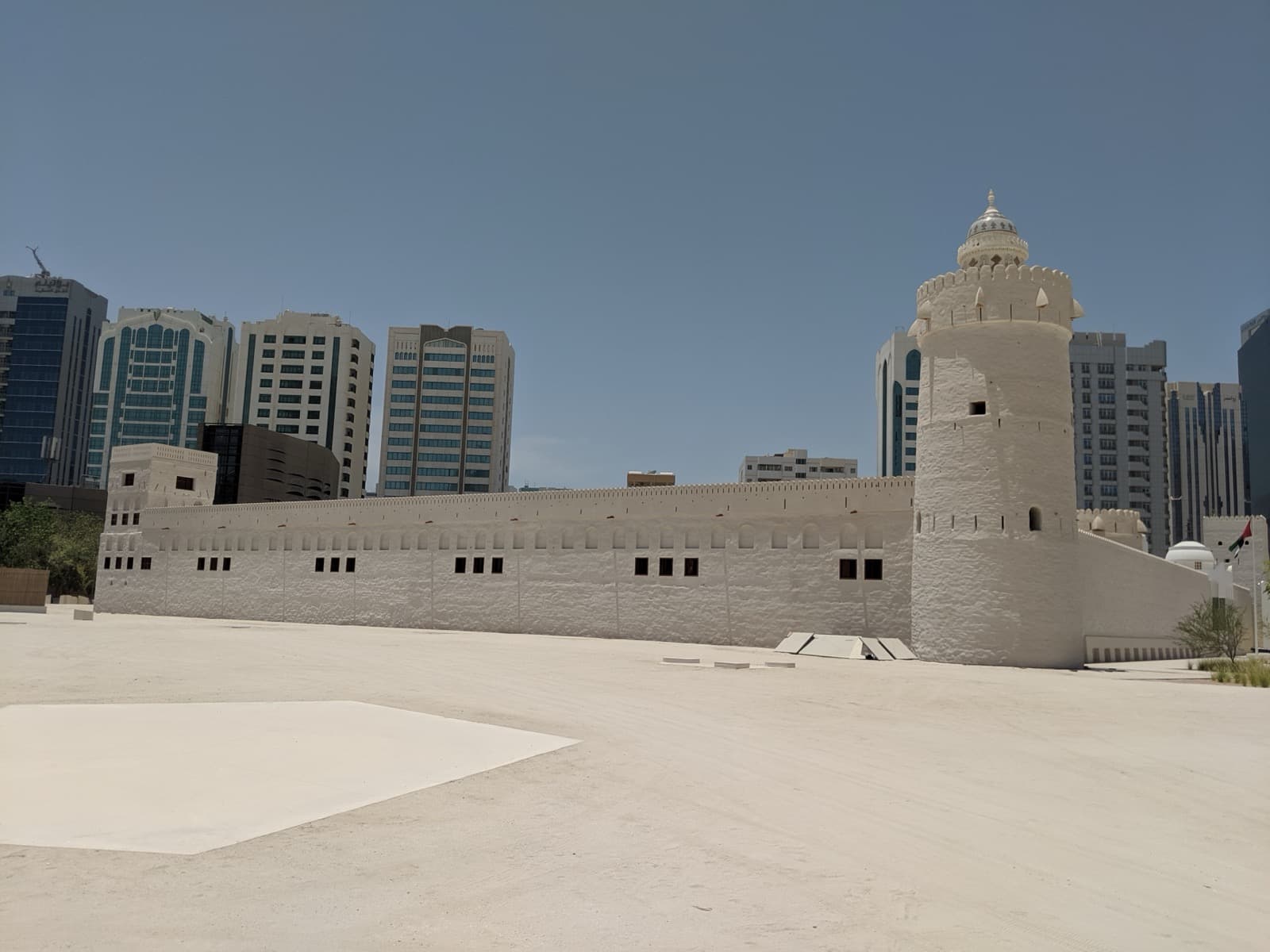
Qasr Al Hosn & the Corniche: Abu Dhabi's Founding Fort
90 min · 14 km · moderate
More from Abu Dhabi
Explore more at your own pace.

Abu Dhabi Travel Guide: Days, Transport, Season, Costs, and Safety
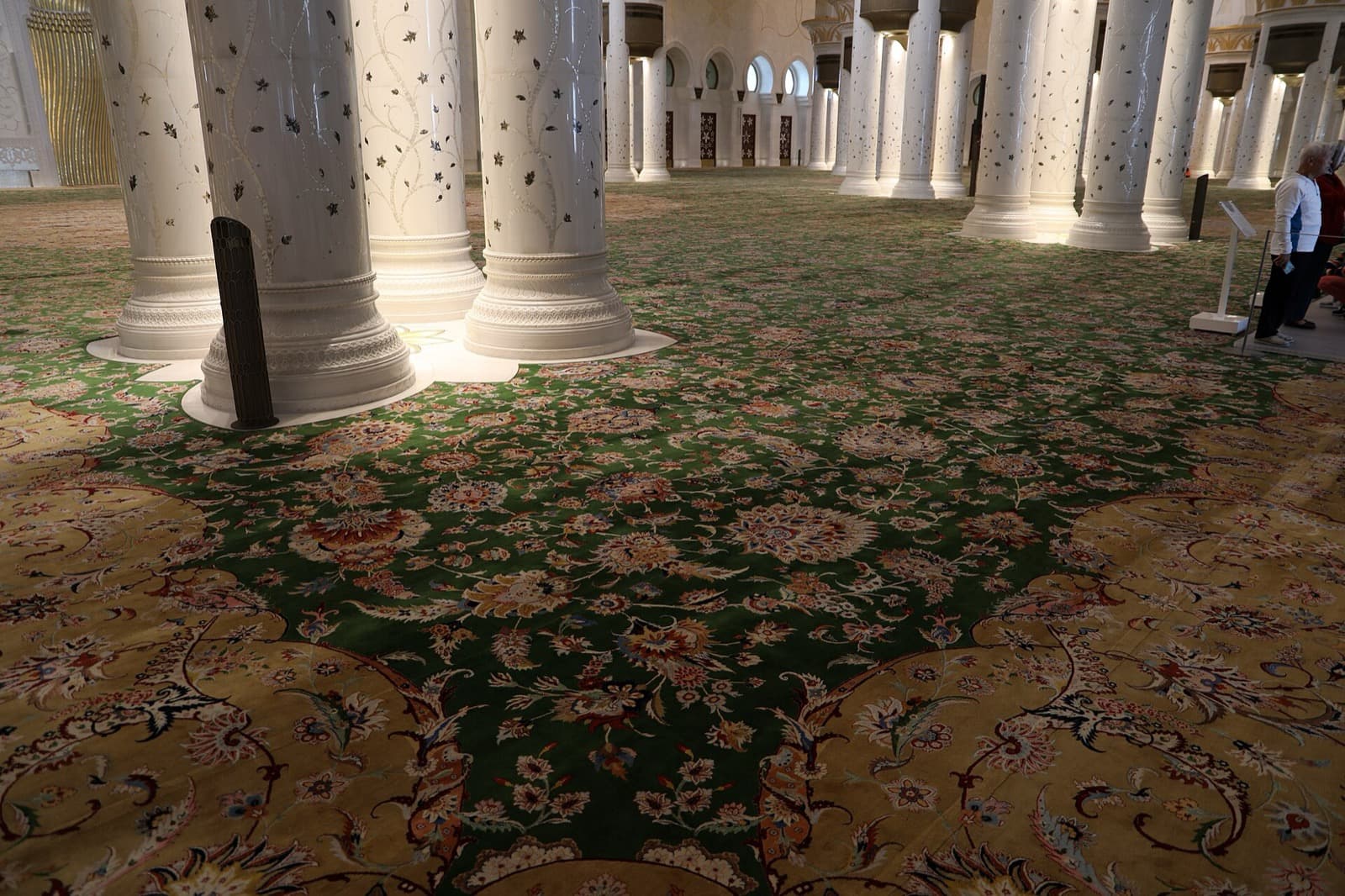
One Day in Abu Dhabi: A Walkable Morning-to-Evening Itinerary
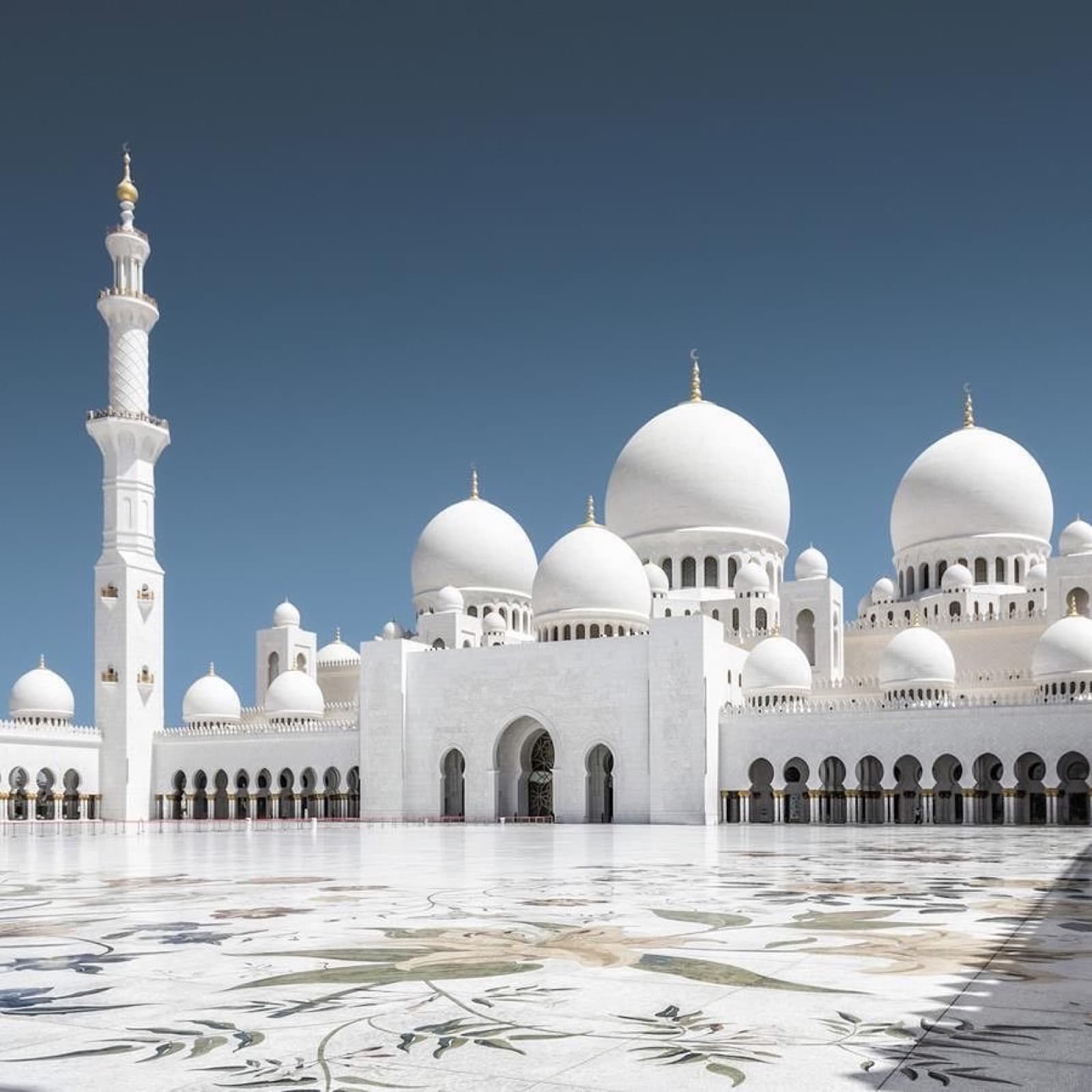
Abu Dhabi: The Capital That Turned Oil Into a Country
The Grave at the Center of Abu Dhabi's Grand Mosque
The Well That Made Abu Dhabi: Reading a Capital From Its First Fort