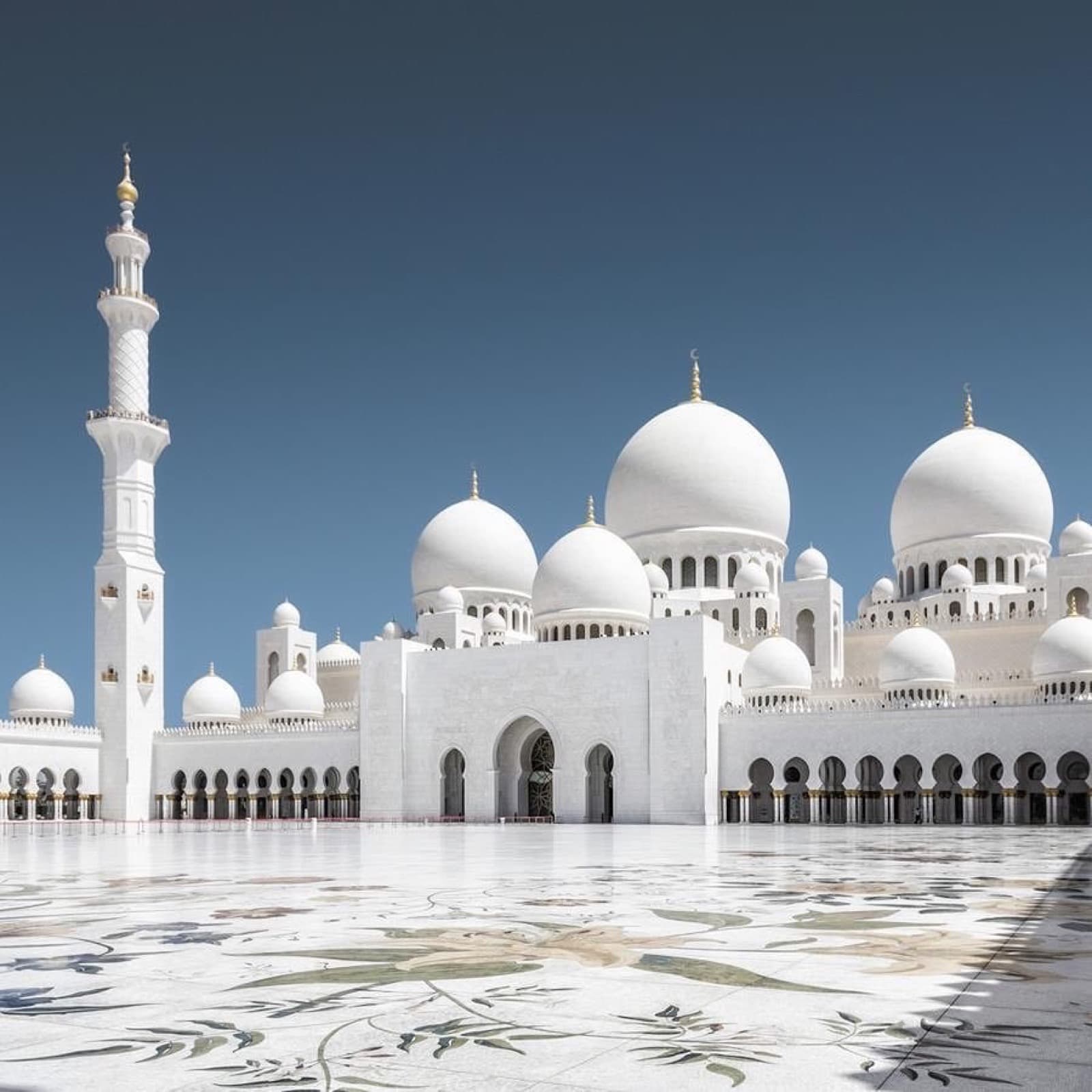
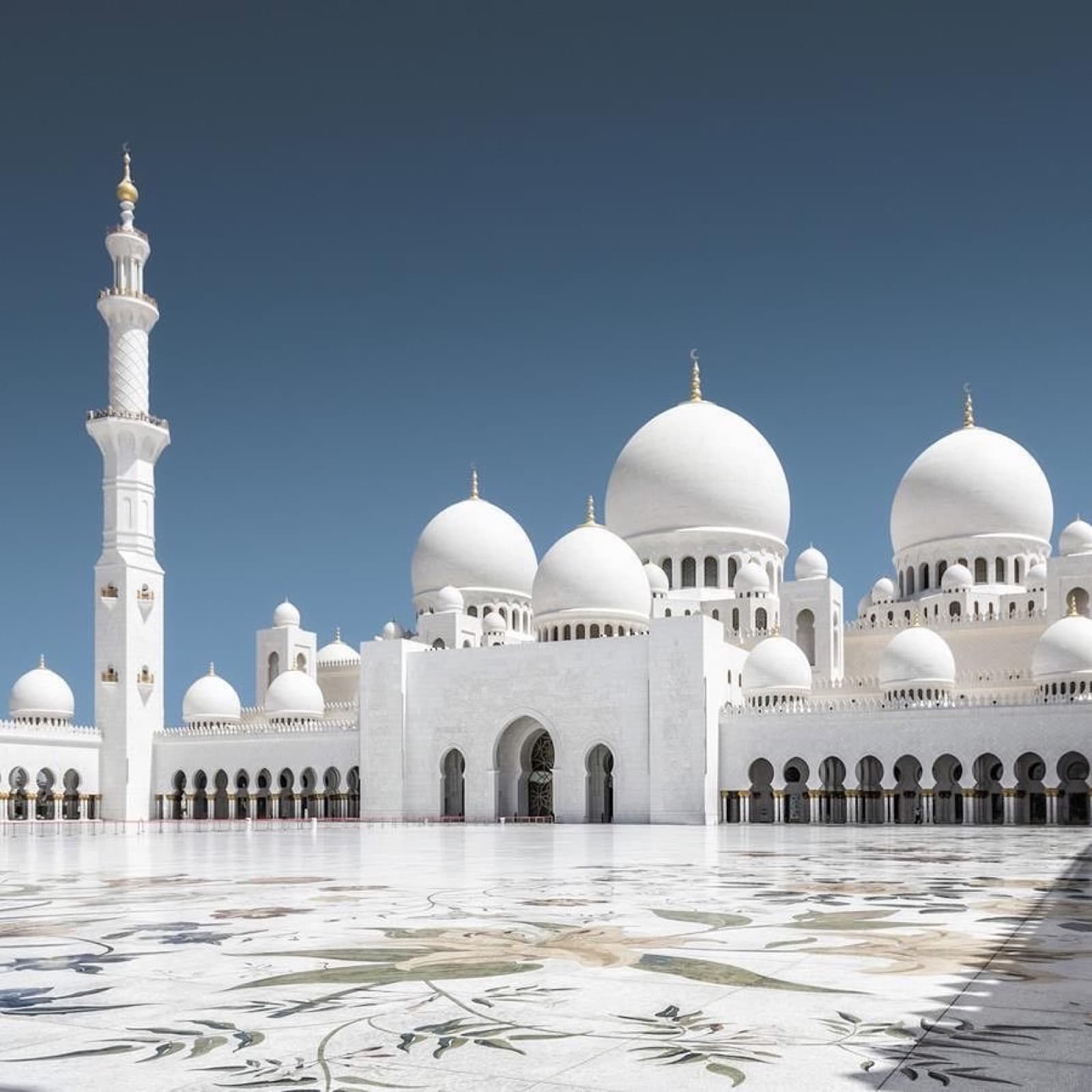
Sheikh Zayed Grand Mosque: A Vision in Marble
60 min · 1.2 km · easy
You can see the essential Abu Dhabi in two full days: give one day to the Sheikh Zayed Grand Mosque and the founding sites around Qasr Al Hosn, and a second to the Corniche waterfront, the museums on Saadiyat, and whatever draws you personally, whether that is Yas Island or a quiet afternoon by the sea. Get around by regulated silver taxi or ride-hailing app for door-to-door convenience, or by the cheap zone-based public bus if you want to travel like a resident. Come between November and March for comfortable walking weather, budget in UAE dirhams, and travel with the reassurance that Abu Dhabi is one of the safer capital cities you will visit. The rest of this guide fills in the detail.
If you would rather listen than read while you walk, our two self-guided Abu Dhabi walking tours narrate the mosque and the founding-fort route stop by stop, on your own schedule.
How many days do you need
Two full days covers the headline Abu Dhabi. Travel writers who plan the city consistently land on two days as enough for the major sights, since the core is compact, with a third day adding breathing room rather than new essentials.
A practical split: dedicate one day to the Sheikh Zayed Grand Mosque plus the historic core around Qasr Al Hosn, and a second day to the Corniche, the cultural district on Saadiyat Island, and a personal choice such as the mangroves or Yas Island. If your trip runs over a weekend, note that a third day mostly buys you a slower pace and optional day trips, not a longer sightseeing list.
Both of Roamer's Abu Dhabi tours fit inside a single day. The mosque walk is a compact one-hour loop on foot. The founding-fort tour is a dispersed route: because the capital's origin sites sit a few kilometers apart across the island, that tour links its six stops by short taxi or car rides, roughly fourteen kilometers in all, with an easy walk at each site. Plan about ninety minutes for it plus transfer time.
How to get around
Hear a stop from this walk
The Main Entrance: A Founder's Last Vision
Abu Dhabi has no metro. A rail-transit network is planned, but as of 2026 it is not operational, so the two everyday options are taxis and buses, and both are cheap by the standards of most world capitals.
Taxis are the simplest for visitors. The official silver taxis are metered and government-regulated. The meter starts at 5 dirhams (5.82 dirhams after 10 pm), then runs at roughly 1.82 dirhams per kilometer, with a minimum fare of 12 dirhams. Every taxi carries CCTV, and you can book through the official Abu Dhabi taxi app or by phone. Ride-hailing apps also operate in the city. For a dispersed itinerary like the founding-fort route, taxi or car is the sensible way to move between stops.
Buses are the budget option. They are air-conditioned and use a zone-based fare that starts at about 2 dirhams a ride. Most standard routes run from roughly 6 am to 1 am, while core city lines, the night buses, and the airport services run around the clock, so late-night travel is possible if you plan your route. You pay with a Hafilat card, the city's rechargeable transit card, which costs around 10 dirhams and is sold at bus stations, many supermarkets, and online, then topped up as you go. The Darb app handles route planning.
Distances matter here. Abu Dhabi is spread out, so walking works beautifully inside a site (the mosque complex, the Corniche promenade) but not usually between them. Combine short walks with a taxi or bus for the gaps. Full city-page details, including which tours are on-foot versus dispersed, live on the Abu Dhabi city page.
Best time to visit
Come between November and March. That is the mild season, when daytime temperatures sit in a comfortable range of roughly 20 to 28 degrees Celsius and a full day outdoors is a pleasure rather than an endurance test. December through February is the peak of that window and the busiest.
Avoid the deep summer if you can. From about June to September, daytime highs climb well past 40 degrees Celsius and the humidity is heavy, which turns any long outdoor walk into a genuine health question rather than a comfort one. If you do travel then, treat the open, sun-exposed places (the mosque's marble courtyard, the waterfront Corniche) as early-morning or after-dark activities only, and carry more water than you think you need. April, May, and October are workable shoulder months, hotter than winter but short of the summer extreme.
Two timing notes for the sights themselves. The mosque is spectacular at dusk, when its moon-phase lighting comes on, so many visitors go late in the day. During Ramadan, visiting hours at religious sites shorten and shift around prayer times, and eating, drinking, and smoking in public during daylight are restricted out of respect for those fasting, so plan meals and breaks accordingly.
Entry fees and what things cost
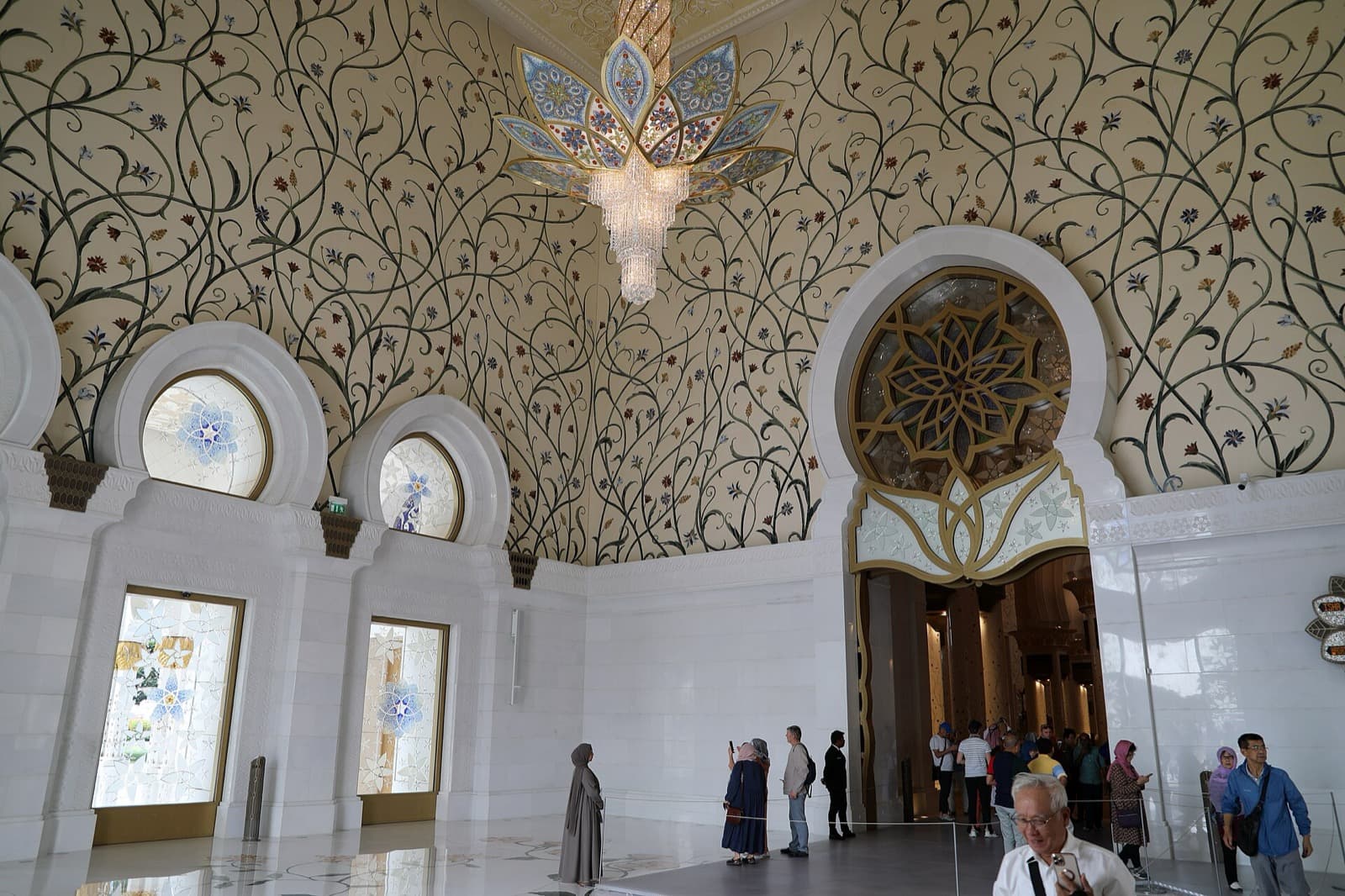
The single best-known sight is free. Admission to the Sheikh Zayed Grand Mosque costs nothing, and it welcomes visitors of every faith. What it asks in return is modest dress: women wear long, loose, ankle-length clothing and cover their hair with a scarf, men wear long trousers and cover their shoulders. Abayas are lent to women at the entrance if they arrive without suitable clothing, and shoes come off before the prayer halls. The free guided cultural tour, offered in Arabic and English, is worth timing your visit around.
Its normal hours run Saturday to Thursday from 9 in the morning to 10 at night, with last admission around 9:30 pm. On Fridays it closes for midday congregational prayer, opening roughly 9 am to noon and then again from 3 pm to 10 pm, so a Friday visitor should plan around that gap.
The founding-fort route is mostly free public space: the Corniche promenade, Al Ittihad Square, and the Founder's Memorial (which also offers free guided tours) cost nothing to enter. Qasr Al Hosn's grounds are open to walk, while the restored fort interior and its museum charge a modest entry fee in dirhams, so keep a card or some cash handy. Qasr Al Hosn opens daily from 9 am to 8 pm, except Fridays when it opens in the afternoon (about 2 pm to 8 pm). Many of Abu Dhabi's other museums and attractions charge admission, so the mosque being free is the exception, not the rule.
Budget in UAE dirhams. Cards are accepted almost everywhere, but a little cash smooths bus top-ups, taxi tips, and site tickets.
A word on safety
Abu Dhabi is one of the safer big cities you can travel to, and it is reasonable to relax on that front. Crime rates are low, violent crime is rare, the city is heavily policed, and CCTV is everywhere. Street harassment is uncommon, and solo travelers, including solo women, generally report feeling safe at all hours. The regulated taxis (metered, camera-equipped, app-bookable) add another layer of reassurance for getting home at night.
Framed honestly, the real cautions here are not about crime. They are the heat, which is a serious hazard in summer and demands water, shade, and sensible timing, and local etiquette, which rewards a bit of preparation. Dress modestly in public and especially at religious sites, keep your voice down and follow photography rules inside the mosque and at the Sheikh Zayed mausoleum, and observe the Ramadan daytime customs if you visit during the holy month. Respect those norms and the city meets you warmly.
Route into the tours
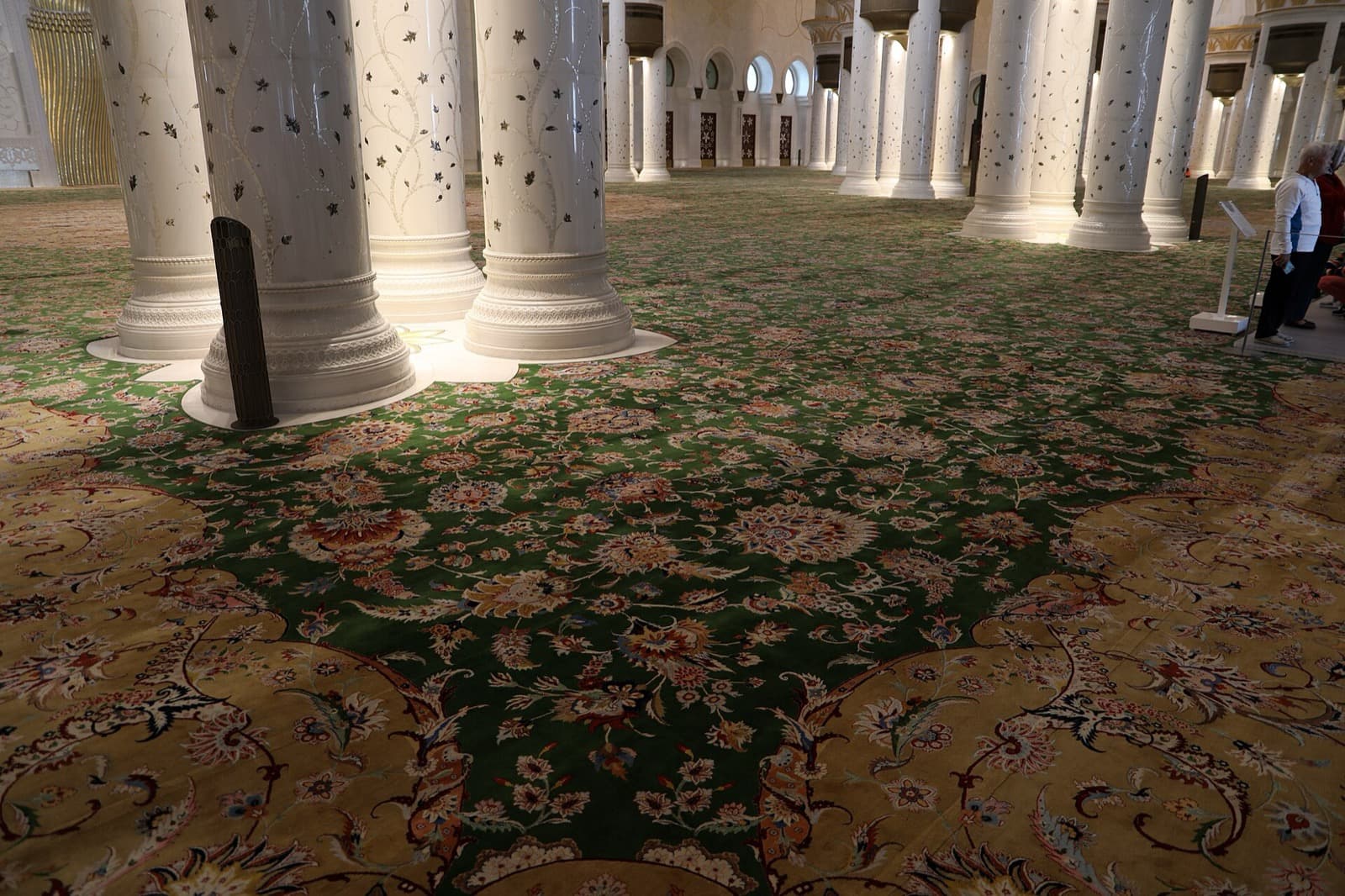
The two Roamer tours map directly onto a first day. Start with the Sheikh Zayed Grand Mosque walk, a one-hour loop through the courtyard, the colonnades, the main prayer hall with its enormous hand-knotted carpet, and the founder's mausoleum. Then follow the founding story with the Qasr Al Hosn and Corniche route, which reads the capital outward from the coral watchtower where the settlement began to the waterfront it now faces. Between them you get both halves of Abu Dhabi: the monument the country built to be seen, and the small fort it grew out of.
Sources
Frequently asked questions
- How many days do you need in Abu Dhabi?
- Two full days covers the major sights. Spend one day on the Sheikh Zayed Grand Mosque and the historic core around Qasr Al Hosn, and a second on the Corniche, the Saadiyat cultural district, and a personal pick like the mangroves or Yas Island. A third day adds a slower pace and optional day trips rather than new sights.
- Does Abu Dhabi have a metro?
- No. Abu Dhabi has no metro as of 2026; a network is planned but not yet operational. The everyday options are metered silver taxis (regulated, camera-equipped, bookable by app) and air-conditioned public buses on a zone-based fare starting around 2 dirhams, with core routes, night buses, and airport lines running around the clock. Buses use the rechargeable Hafilat card, which costs about 10 dirhams.
- When is the best time to visit Abu Dhabi?
- Between November and March, when daytime temperatures sit in a comfortable 20 to 28 degrees Celsius range. Avoid deep summer from about June to September, when highs pass 40 degrees Celsius with heavy humidity and long outdoor walks become a health risk. April, May, and October are workable but hotter shoulder months.
- Is the Sheikh Zayed Grand Mosque free to visit?
- Yes. Admission is free and the mosque welcomes visitors of every faith. A dress code applies: women wear long loose ankle-length clothing and a headscarf, men wear long trousers with covered shoulders, and abayas are lent to women at the entrance if needed. Normal hours run Saturday to Thursday 9 am to 10 pm, with a Friday midday closure for prayer.
- Is Abu Dhabi safe for tourists and solo travelers?
- Abu Dhabi is one of the safer capital cities to visit. Crime rates are low, violent crime is rare, the city is heavily policed with CCTV throughout, and street harassment is uncommon, so solo travelers including solo women generally feel safe at all hours. The real cautions are summer heat and local etiquette, especially modest dress and respect at religious sites, rather than crime.
- What currency does Abu Dhabi use and do I need cash?
- Abu Dhabi uses the UAE dirham. Cards are accepted almost everywhere, but keep a little cash or a card handy for bus top-ups, taxi tips, and small site entry fees. Qasr Al Hosn's grounds are free to walk while the fort interior and museum charge a modest fee, and many other city museums charge admission.
Ready to experience it?
Sheikh Zayed Grand Mosque: A Vision in Marble
60 min · 1.2 km · easy
More from Abu Dhabi
Explore more at your own pace.
One Day in Abu Dhabi: A Walkable Morning-to-Evening Itinerary
Abu Dhabi: The Capital That Turned Oil Into a Country
The Grave at the Center of Abu Dhabi's Grand Mosque
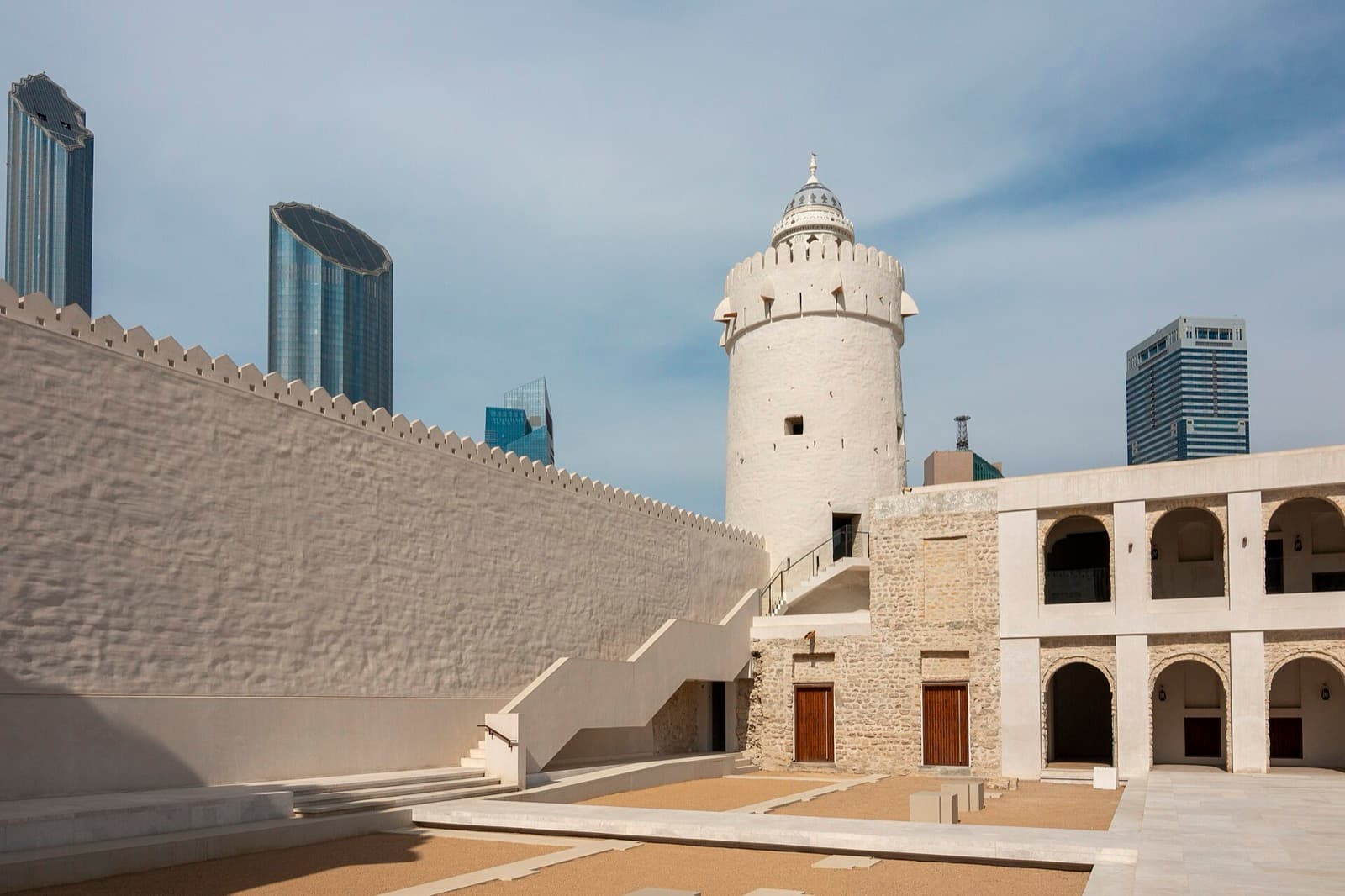
The Well That Made Abu Dhabi: Reading a Capital From Its First Fort
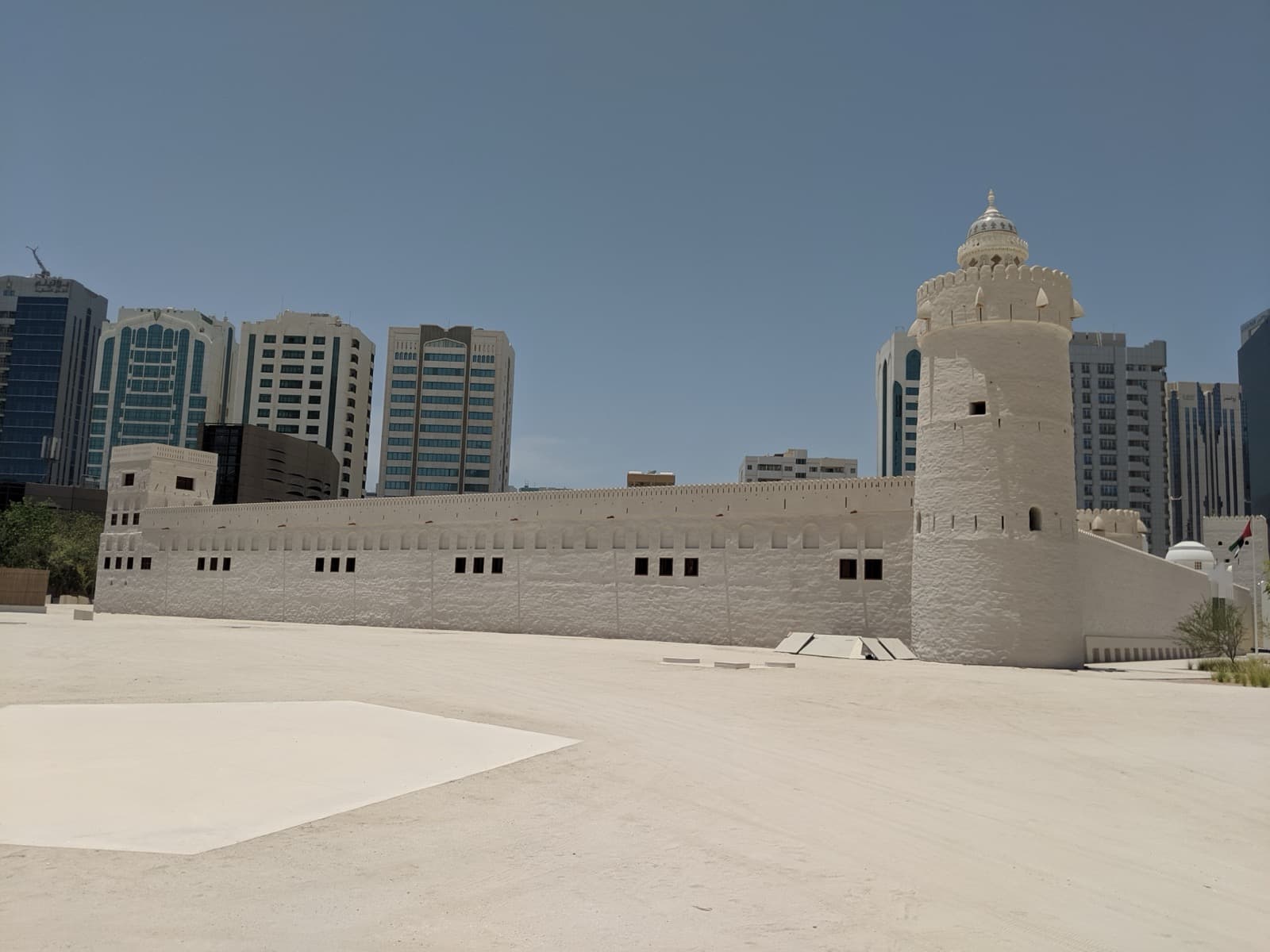
Qasr Al Hosn: The Coral Fort Where Abu Dhabi Began