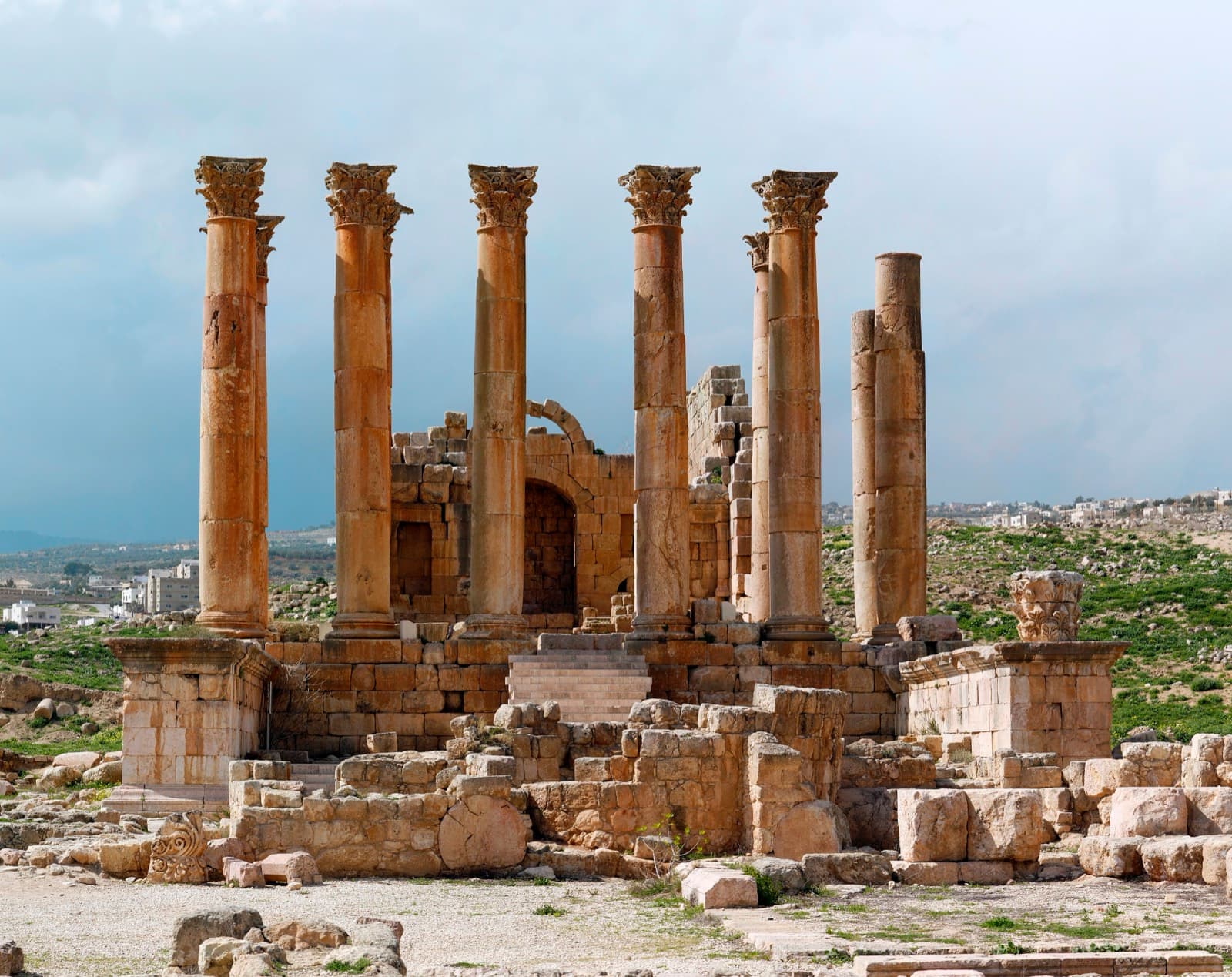
A self-guided walk through the sacred and Christian half of ancient Gerasa, from a great fountain on the colonnaded street up the sacred stair to the swaying columns of the Temple of Artemis and the mosaic churches that supplanted the old gods.
Start · The Nymphaeum: The Fountain That Dressed the Street
DirectionsStops
- 1
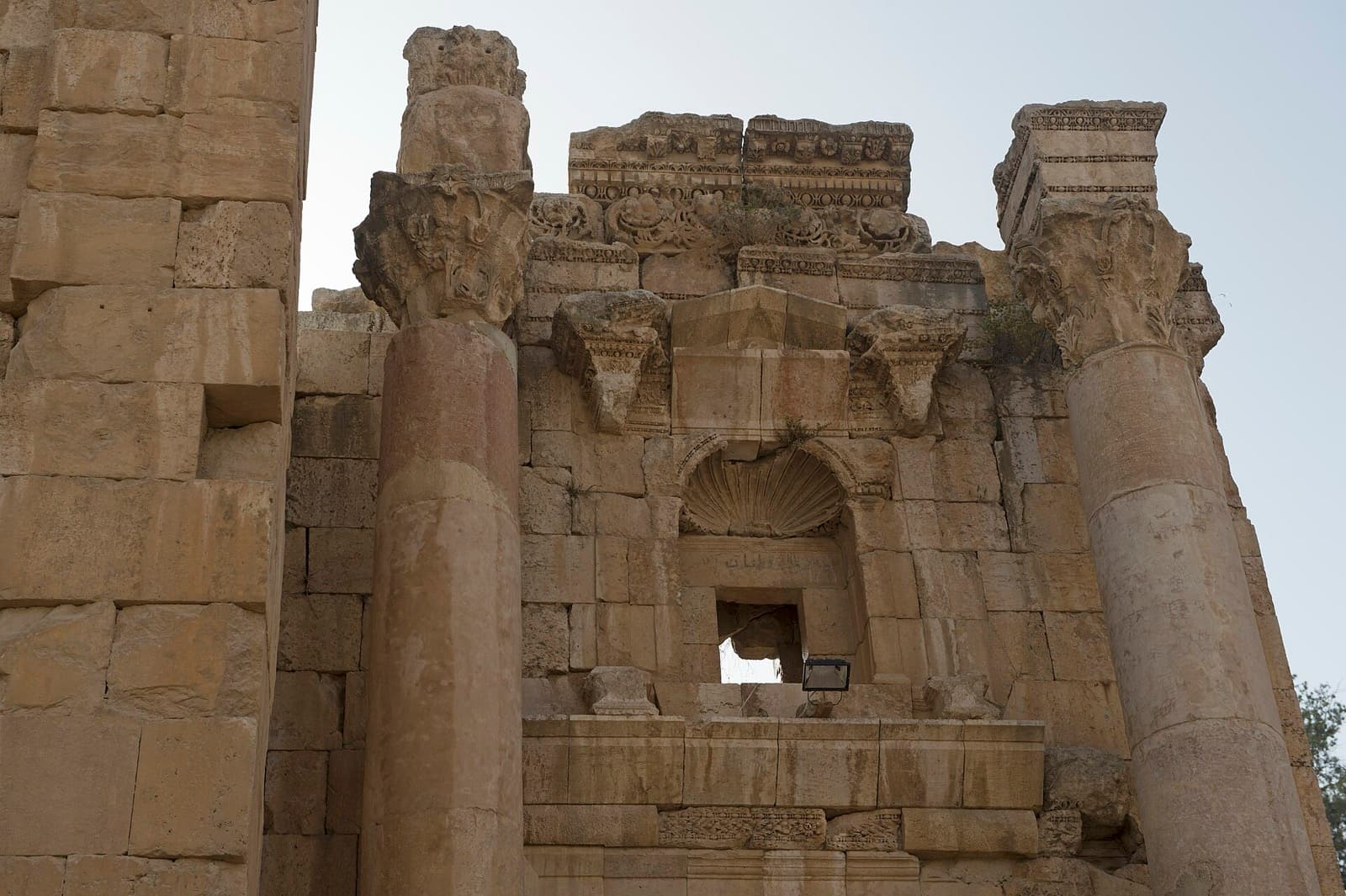
The Nymphaeum: The Fountain That Dressed the Street
The city's chief ornamental fountain, a two-storey half-domed monument on the colonnaded street where water once poured from carved lion heads into a great basin.
- 2
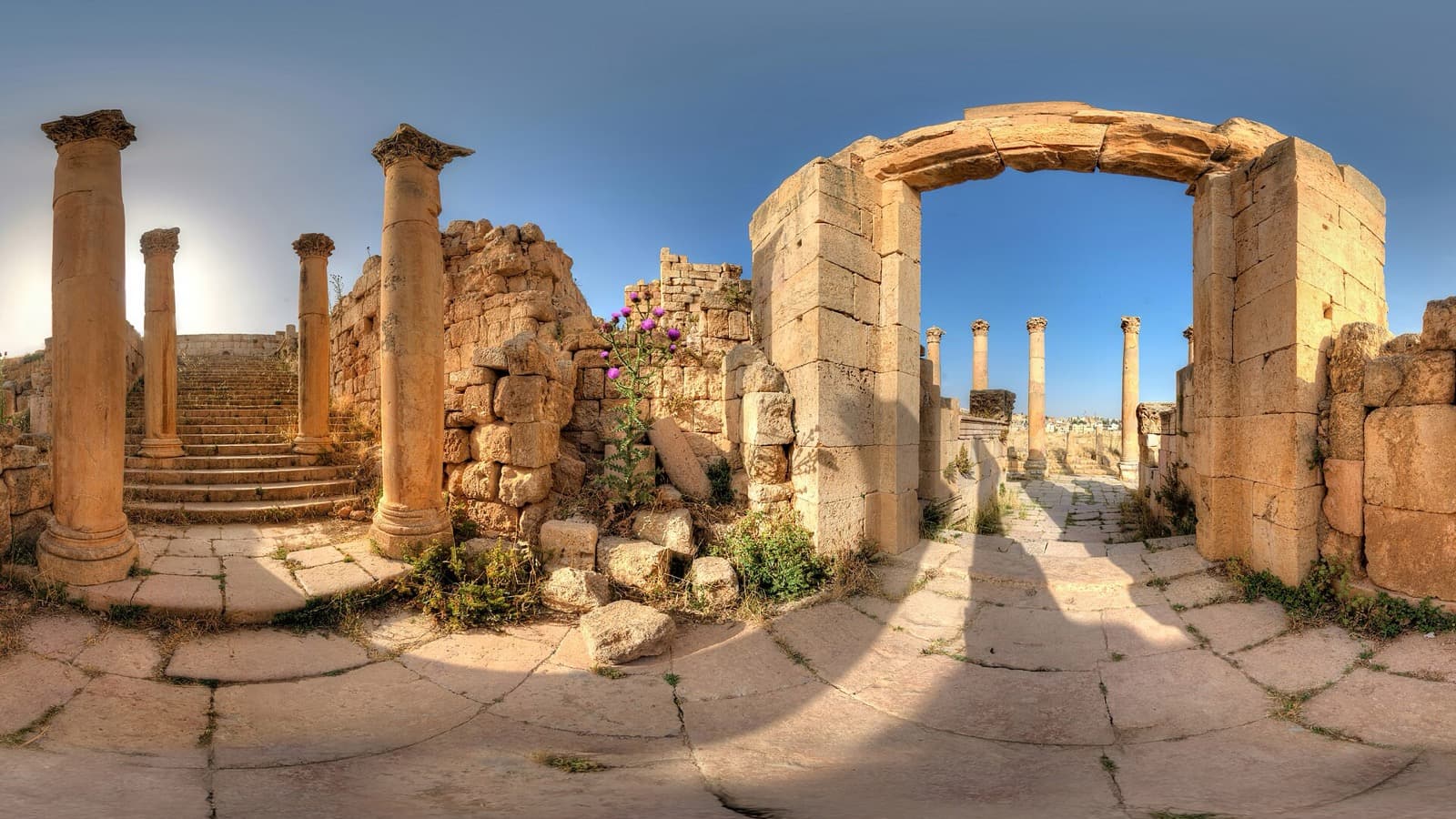
The Cathedral and the Sacred Way: A Church Built From a Temple
The oldest church in the city, raised in the fourth century on the platform of an older temple, standing at the foot of the monumental stair that once carried processions up to the goddess.
- 3
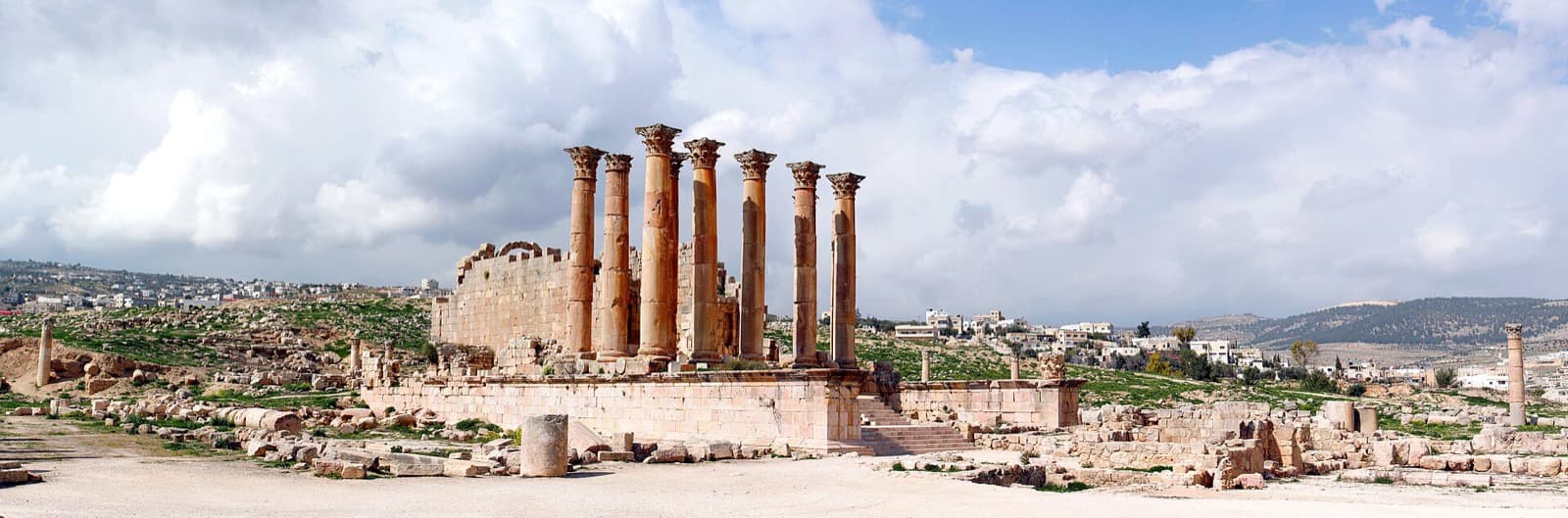
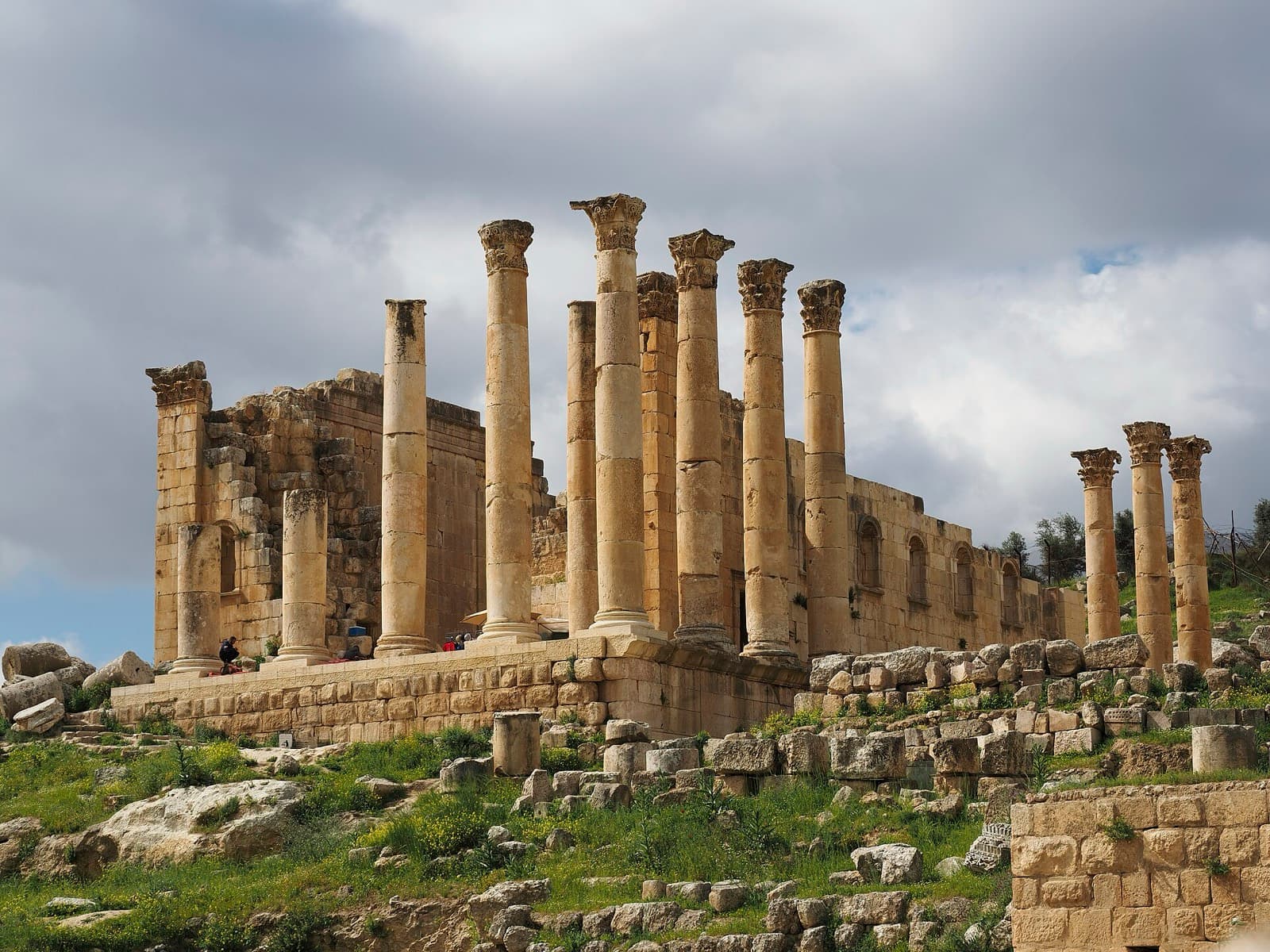
The Temple of Artemis: The Columns That Sway and Never Fall
The sanctuary of the city's patron goddess, an unfinished temple whose eleven surviving Corinthian columns stand more than thirteen metres tall and are engineered to flex in an earthquake.
- 4
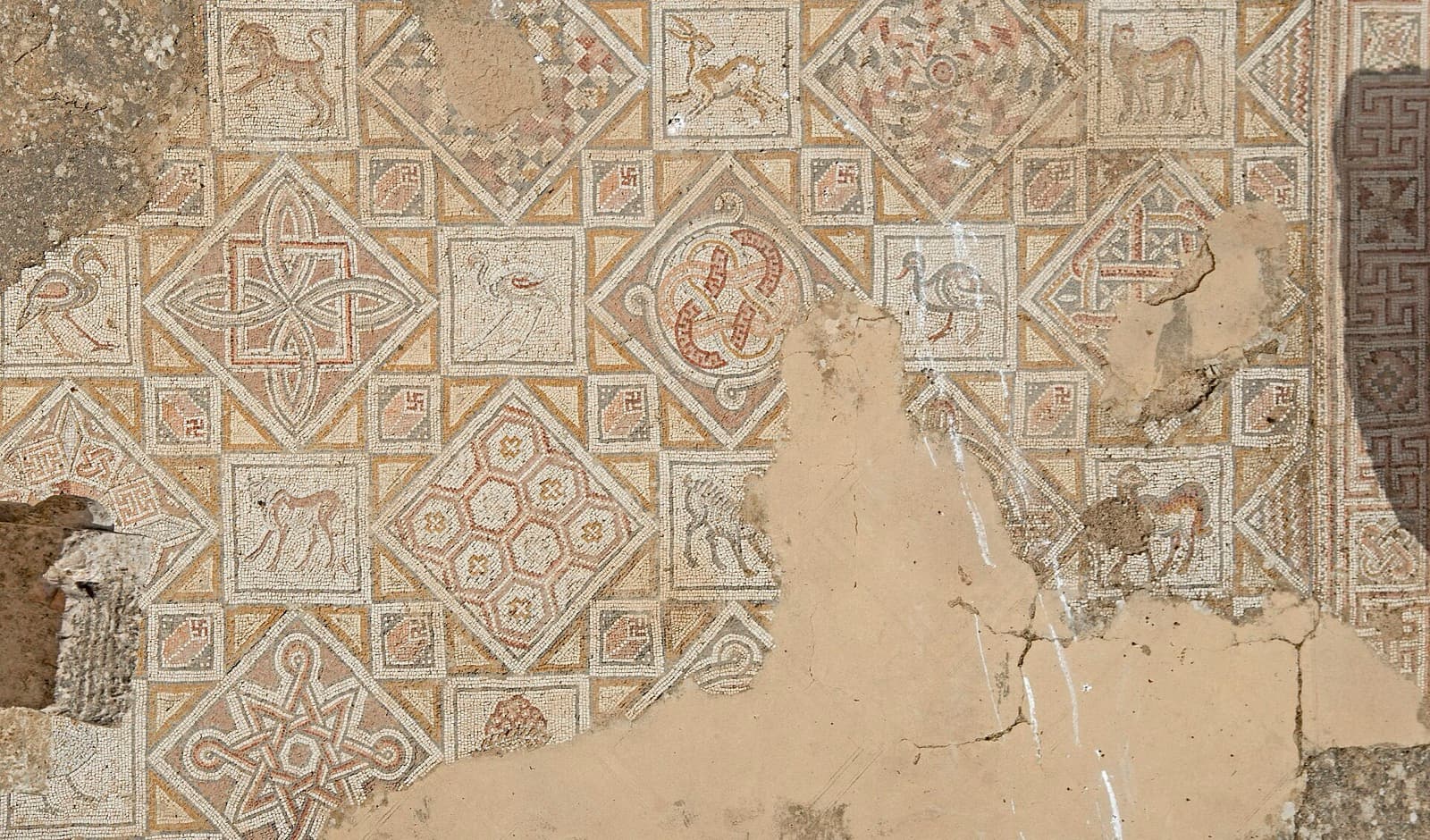
The Byzantine Churches and Mosaics: Floors Where the Old Gods Were Left Behind
A linked group of three sixth-century churches beside the temple terrace, whose mosaic floors, laid where the pagan sanctuaries were abandoned, name the ordinary people who paid for them.
- 5
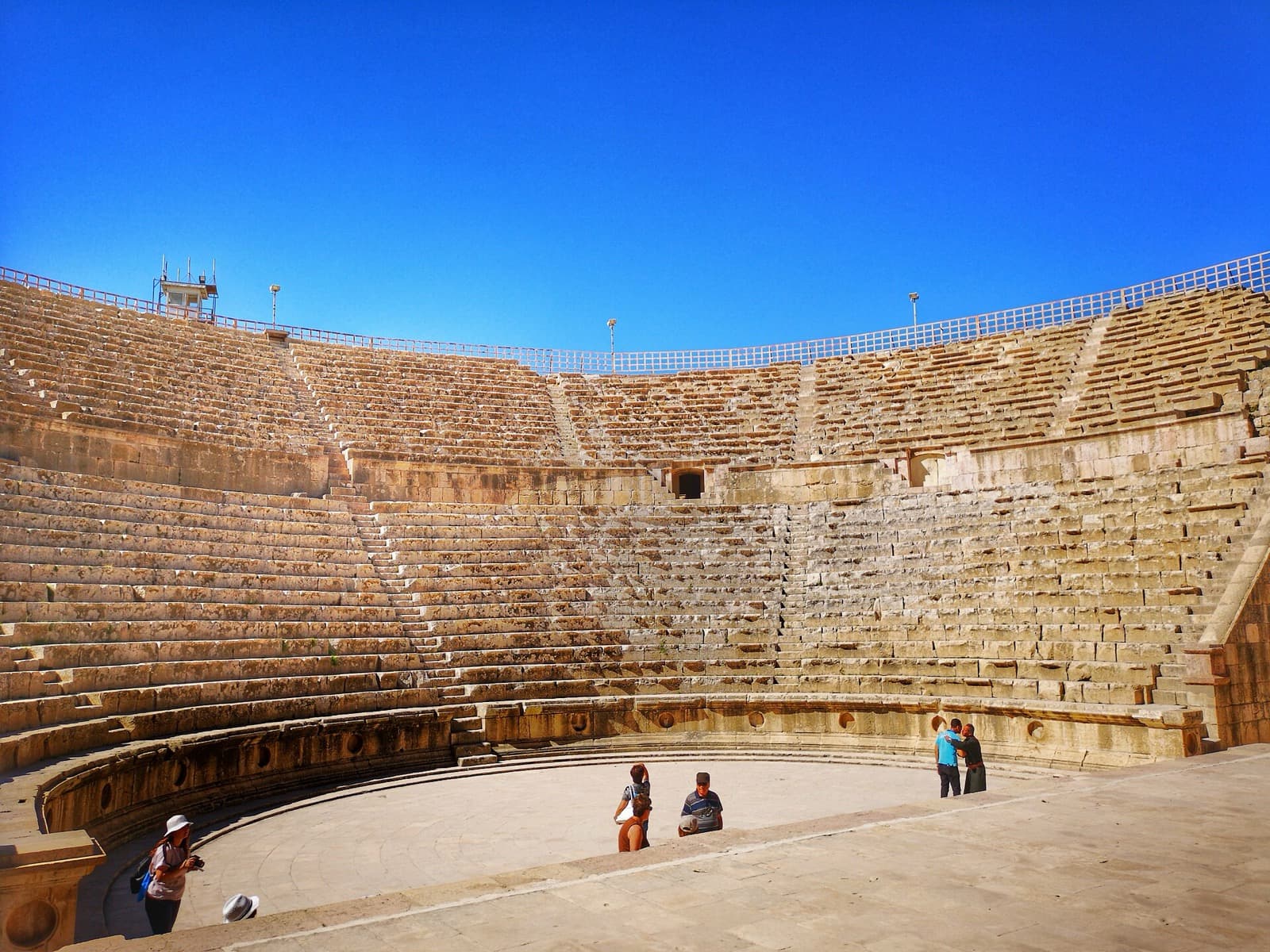
The North Theatre: Where the City Council Took Its Seat
An intimate theatre that began as the council chamber of Gerasa, its stone seats still inscribed in Greek with the names of the voting tribes and delegations who sat there.
- 6
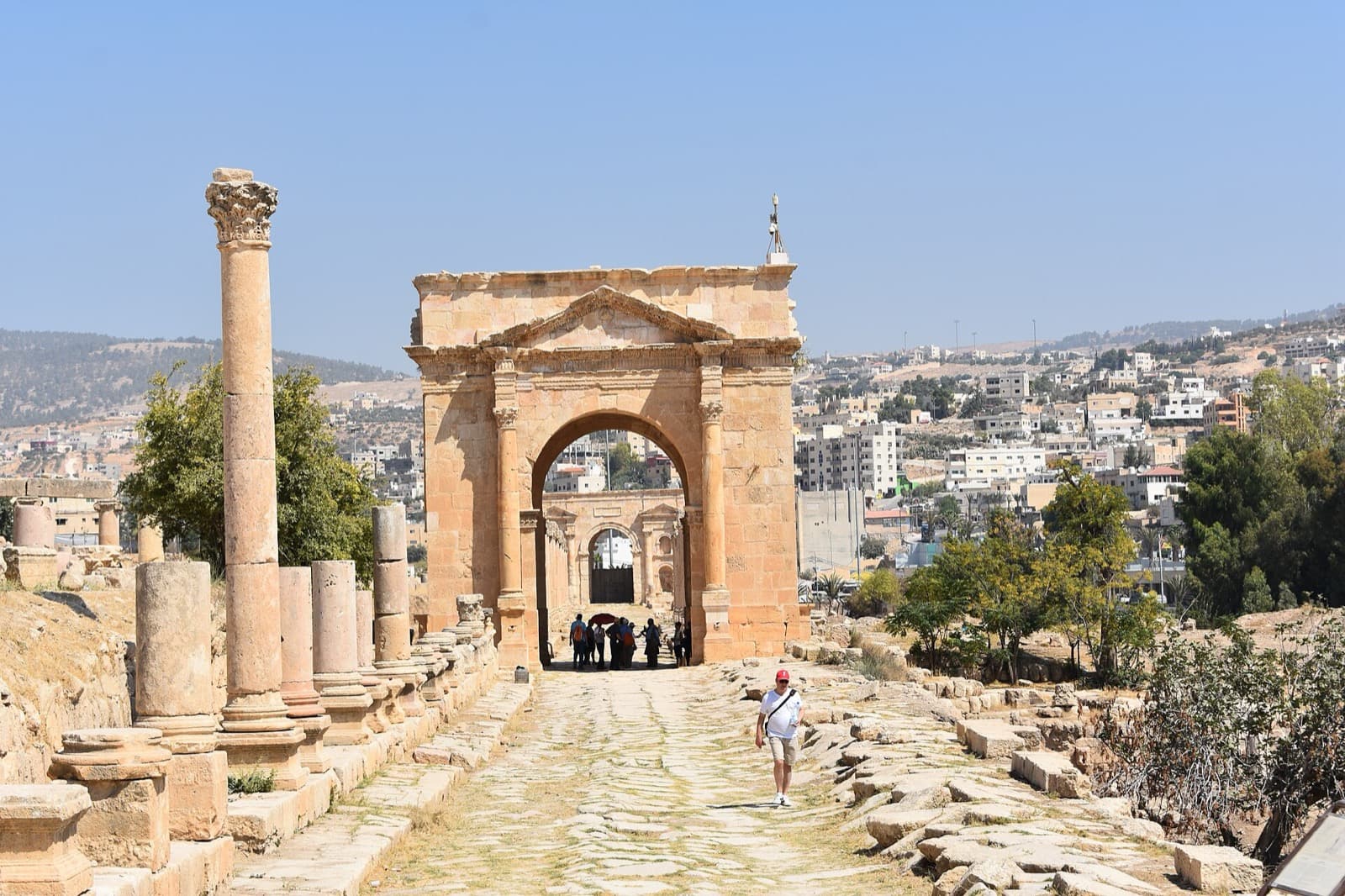
The North Cardo and the North Gate: The Crooked End of the Great Street
The oldest, plainest stretch of the colonnaded street, running past a rebuilt four-arched monument to a wedge-shaped gate that was cleverly angled to meet the Roman road arriving from Pella.
Details
Best Time to Visit
Come early in the morning or in the last hours before closing, when the low sun rakes across the columns and the tour groups thin out; the ground is fully exposed, so the midday heat of late spring through early autumn is punishing. Spring and autumn are the most comfortable seasons overall. Note that Friday and the daily prayer times change the rhythm of the surrounding town, and that opening hours can be shorter in winter.
Pro Tips
- •Buy the Jordan Pass before you travel if Jerash is part of a longer trip; it bundles the site entry with Petra and many others and can save real money.
- •Do this northern, sacred half as its own loop rather than racing the whole vast site in one push; you will see the temple, the churches, and the theatre properly and skip nothing that matters here.
- •At the Temple of Artemis, wait for the on-site demonstration of the swaying columns, or simply watch the shafts against the sky in a breeze; it is the single most memorable moment on the walk.
- •Crouch to read the inscribed seats in the North Theatre, and use the low seats of the odeon to rest in shade between stops.
- •Carry small notes in Jordanian dinars for water, restrooms, and any handling fees, since not every kiosk takes cards.
- •Save the mosaics of the three-church complex for when the light is soft, morning or late afternoon, so the coloured tile reads clearly rather than washing out in glare.
Safety & Precautions
- •The ground across Jerash is stony, uneven ancient paving with worn stairs and few railings, so wear sturdy, closed shoes and watch your footing on polished stone.
- •The site is almost entirely open to the sun with very little shade; bring plenty of water, a hat, and sunscreen, especially from late spring through early autumn, and pace yourself.
- •Guides, horse and carriage touts, and stall-holders work the main gates and marquee monuments; a firm, friendly no is enough, and you are free to explore at your own pace with no obligation to hire anyone.
- •Dress modestly out of respect for local custom, keep small cash in Jordanian dinars handy, and remember that Friday and daily prayer times can change opening hours and the rhythm of the nearby town.
Travel advisory: Reconsider Travel (Level 3).
Gallery
Related Reading
Go deeper on what you'll see, hear, and walk through.

Overview
Best Self-Guided Walking Tours in Jerash (2026)
3 min
Overview
One Day in Jerash: A Walkable Morning-to-Evening Plan
7 min
Overview
Visiting Jerash: A Practical 2026 Planning Guide
7 min
Thematic
Best History Walking Tours in Jerash (2026)
2 min
Companion
The Jerash Cathedral: A Church Built From a Temple, and the Sacred Way Behind It
6 min
Deep dive
The Temple of Artemis in Jerash: Columns Engineered to Sway
6 min
Read
What to Eat in Jerash: Mansaf, Knafeh, and Where to Find Them by the Ruins
6 min
Read the walk
The full story of Jerash: The Temple of Artemis and the Sacred Way, in words. Prefer to listen? Play it narrated, from home or on location.
Introduction
The northern half of ancient Gerasa belongs to its gods. This self-guided walk through Jerash, in Jordan, reads that sacred and Christian city in six stops, over roughly ninety minutes and about one and a half kilometres on foot, though the whole point is that there is no clock but yours. You move from a two-storey fountain on the colonnaded main street, up a processional stair, to the Temple of Artemis, patron goddess of the city, whose thirteen-metre columns are famous for swaying in the wind and never falling. Around and above that temple stands a Christian city: more than a dozen Byzantine churches paved with mosaics, a small civic theatre where the council once sat, and the quiet north end of the great street where the Roman road came in crooked. The hidden thread running through it all is that the pagan and the Christian city are stacked on the same ground, a fourth-century cathedral rising on the platform of an older temple, and that so much survives because these places were abandoned and reused rather than torn down. Jerash is a marquee site, busy with tour groups, guides, and the touts who work the great gates, so the pleasure here is doing it on your own terms: linger under the columns as long as you like, skip a stop, double back, no van, no schedule, no tip pressure. The ground is stony and open to the sun, and there are stairs, so wear real shoes and carry water. When you arrive at the Nymphaeum, the tall fountain on the west side of the colonnaded street, begin with stop one.
1. The Nymphaeum: The Fountain That Dressed the Street
Here on the west side of the Cardo Maximus, the great colonnaded street, stands the Nymphaeum, the city's chief ornamental public fountain, built about one hundred and ninety-one A D. An inscription that named the city as its commissioner gives us that date, and the monument was dedicated to the water nymphs, the divine spirits of springs and streams. That dedication is why we call it a nymphaeum at all. Picture it whole. Two storeys rose above the pavement, both carrying columns with Corinthian capitals, and the centre opened into a great semicircular apse crowned by a half-dome of concrete. The lower level was faced with panels of marble, cool and reflective; the upper level was finished in painted stucco, so the whole facade glowed with colour and pattern. Water poured from the mouths of carved lion heads into a large, deep basin that ran the full width of the monument, and the overflow drained away into the street. As Gerasa grew, this was the main source of water on the cardo, feeding the public baths downstream. Think about what that meant to a walker in antiquity. You came up a stone street lined with columns, in the dry heat of the hills, and here the architecture simply dressed itself in falling water, marble, and colour, a piece of civic theatre you could hear before you saw. This is a busy stop on the group route, so let the crowds move through and give yourself a minute. On your own clock, you can read the whole facade slowly, apse, lions, and basin, before you turn to the sacred way climbing behind it.
2. The Cathedral and the Sacred Way: A Church Built From a Temple
A short way along the street, an ornamental gateway opens off the cardo, and behind it stands the Cathedral, sometimes called the Cathedral of Saint Mary, the oldest church in the city, built in the fourth century A D. What makes it more than an old church is what lies beneath it. The Cathedral rises on the platform of an earlier Roman temple, long identified by tradition with Dionysus, the god of wine, though excavations in the nineteen nineties found no evidence to confirm that dedication, so we should hold it as an old identification rather than settled fact. That temple, in turn, is said to have stood over a still older shrine of the Nabataean god Dushara, the chief deity of the Arab people who ruled this region before Rome. Layer upon layer, then, one holy ground reused for the next god in line. The builders even took columns and stones from the earlier temple and set them into the church. The gateway you passed through was itself a grand Roman temple gate, kept and reused. Now turn to the slope behind the Cathedral, because this is where the city staged its devotion. A sacred way, a via sacra, ran here from the eastern residential quarter, crossed a bridge over the Chrysorhoas stream that splits the valley, passed through gates on the cardo, and then climbed a wide monumental staircase up to the walled courtyard of the Temple of Artemis. A second stair led on through a colonnade of twenty-two Corinthian columns into that sacred enclosure. This is the choreography of an ancient procession, built in stone to make the approach to the city goddess feel like a slow, rising ceremony. Take the stair on your own time and let it do to you what it was designed to do.
3. The Temple of Artemis: The Columns That Sway and Never Fall
At the top of the sacred stair you reach the climax of the whole northern city, the Temple of Artemis, sanctuary of the patron goddess of Gerasa. Artemis here is a Greek name laid over an older local deity worshipped long before Greek colonists arrived, one goddess wearing…
Full narration for this stop unlocks with the tour.
4. The Byzantine Churches and Mosaics: Floors Where the Old Gods Were Left Behind
Just below and beside the temple terrace, the city that replaced the gods spreads out in stone and coloured tile. Jerash held at least fourteen churches, built between the fourth and seventh centuries A D as the city turned Christian, and several of them cluster here, right…
Full narration for this stop unlocks with the tour.
5. The North Theatre: Where the City Council Took Its Seat
Move north now, toward the quieter end of the site, and step into the North Theatre, a smaller, more intimate cousin of the great South Theatre. Its origins are what make it special. In the first half of the second century A D it was built not as an entertainment hall but as a…
Full narration for this stop unlocks with the tour.
6. The North Cardo and the North Gate: The Crooked End of the Great Street
Follow the colonnaded street north to its quiet end, and the character of the whole city changes under your feet. Where the cardo meets the north decumanus, the cross-street, stands the North Tetrapylon, a four-arched domed monument about twelve metres to a side that once marked…
Full narration for this stop unlocks with the tour.