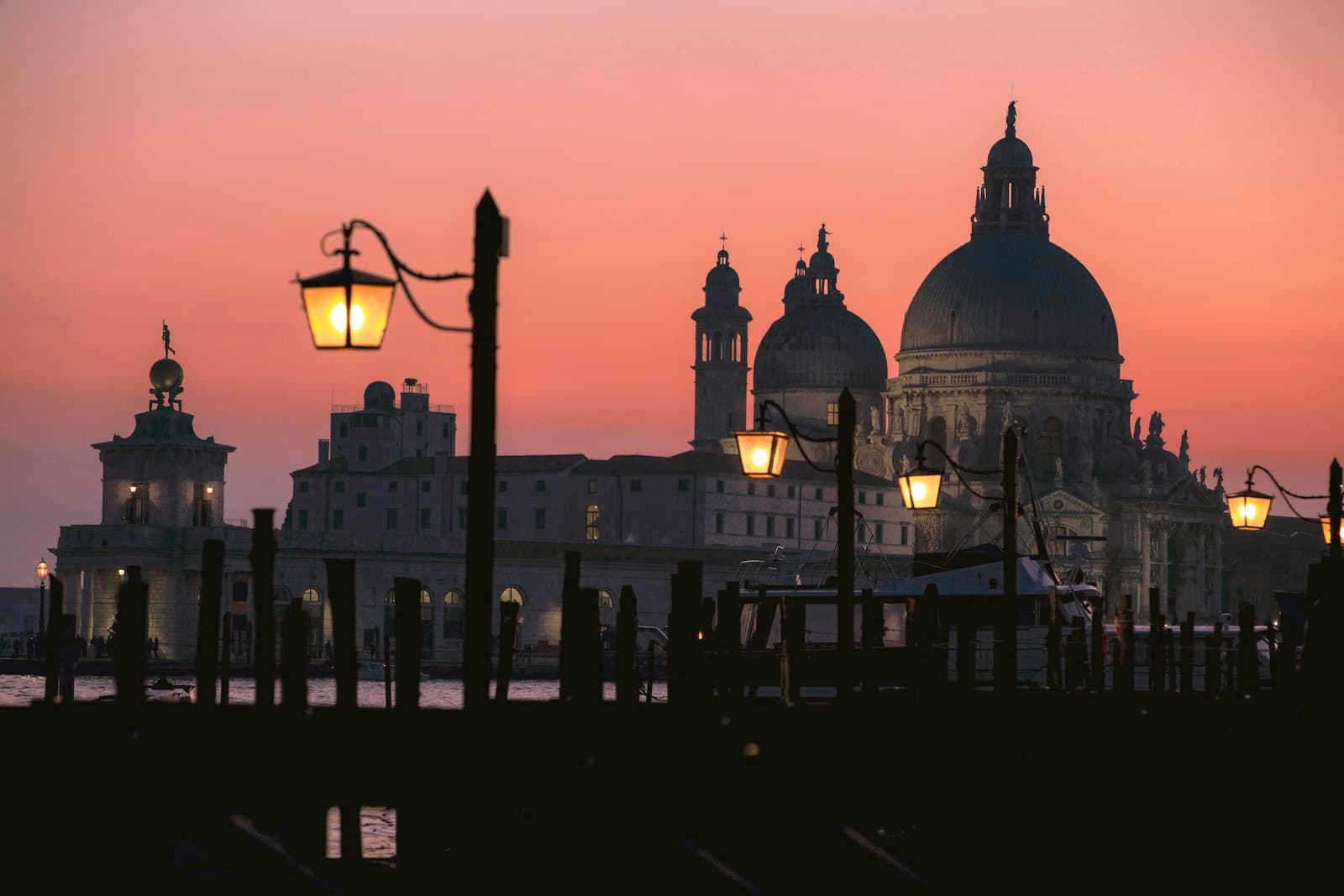
A slow reading of Dorsoduro, the quiet southern back of Venice, as a lesson in light on water: from a plague-born white dome and a turning golden Fortune to the sunlit Zattere, the paintings, the gondola boatyard, and a campo that simply lives.
Start · Basilica di Santa Maria della Salute: The White Answer to a Plague
DirectionsStops
- 1
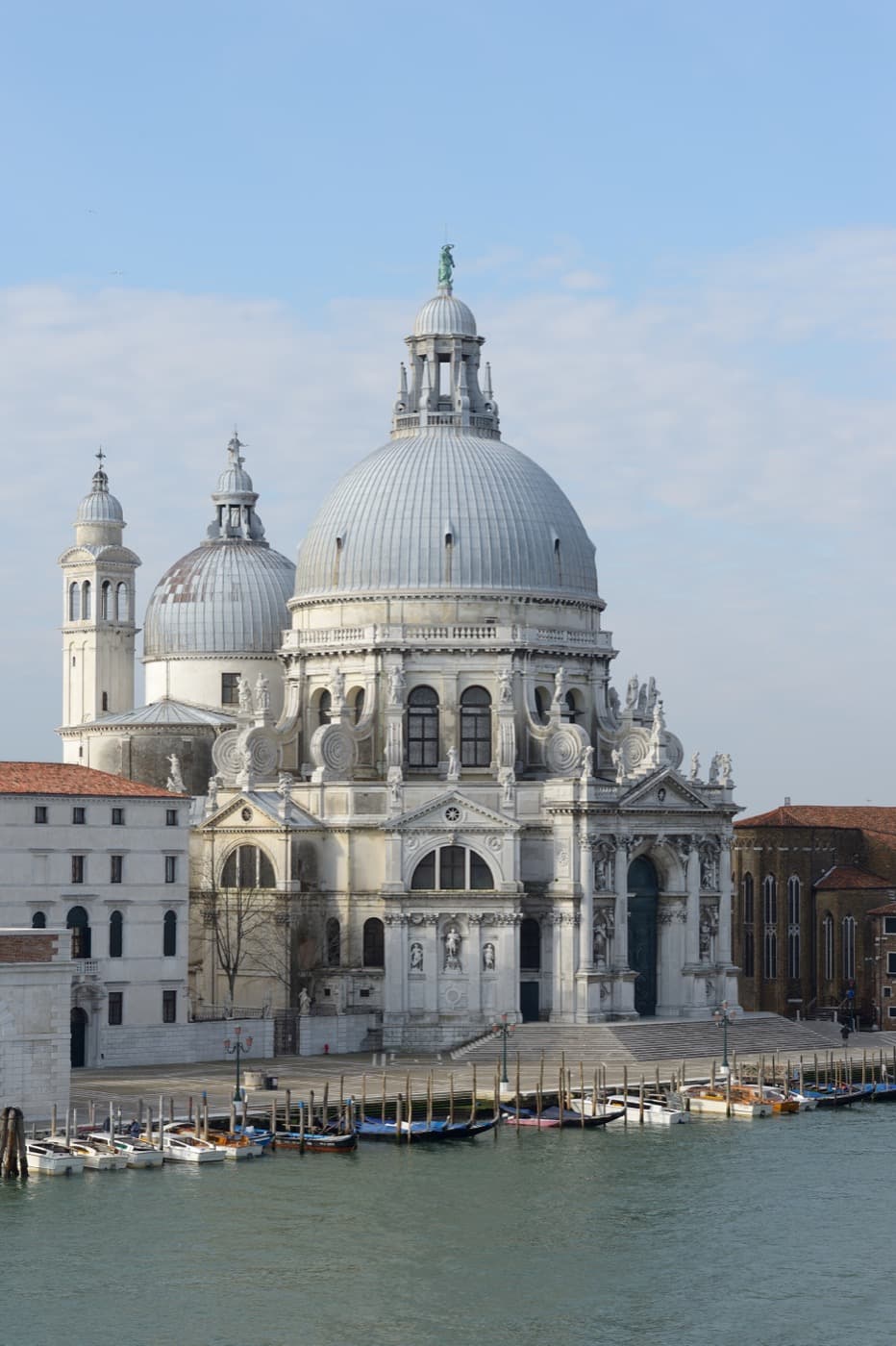
Basilica di Santa Maria della Salute: The White Answer to a Plague
A vast Baroque votive church swelling white at the mouth of the Grand Canal, built by a grieving city as thanks for the end of a plague.
- 2
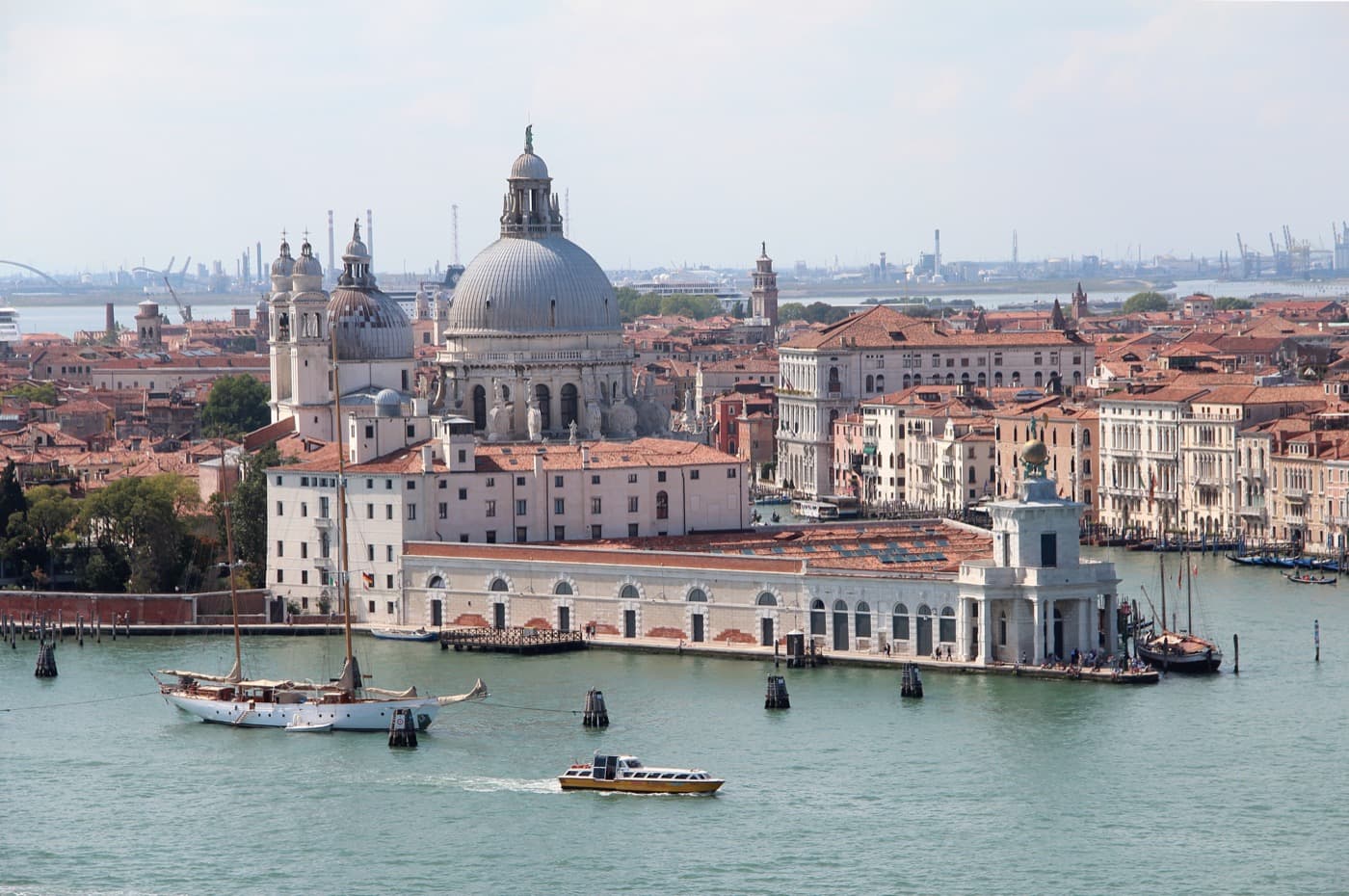
Punta della Dogana: The Golden Fortune That Turns With the Wind
The old sea customs house at the very tip of Dorsoduro, crowned by two Atlas figures, a golden globe, and a statue of Fortune that spins as a weathervane.
- 3
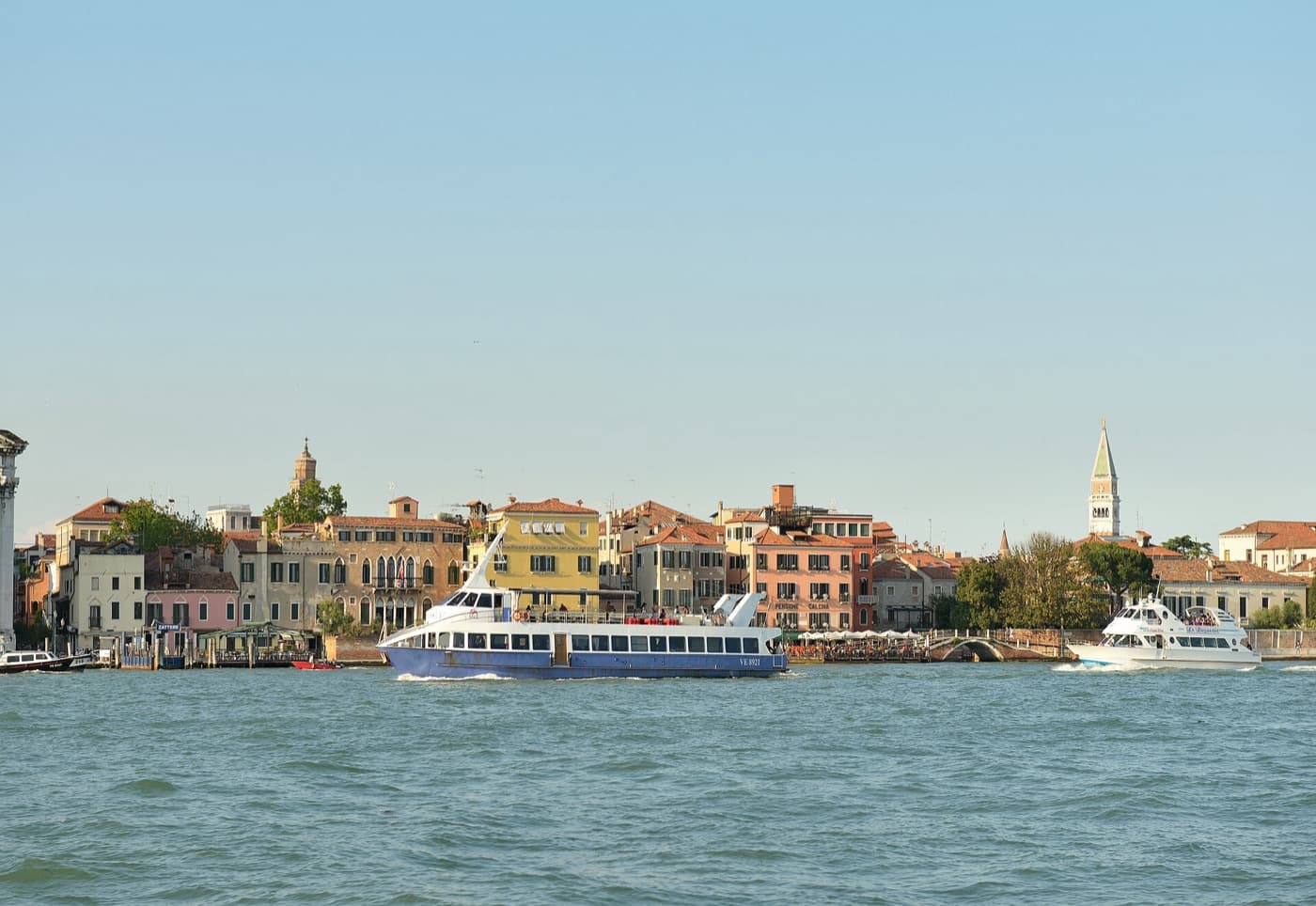
Le Zattere: The Quay Where the Mountains Arrived
Dorsoduro's long, sun-facing waterfront promenade, named for the timber rafts that once floated down from the Dolomites to be landed here.
- 4
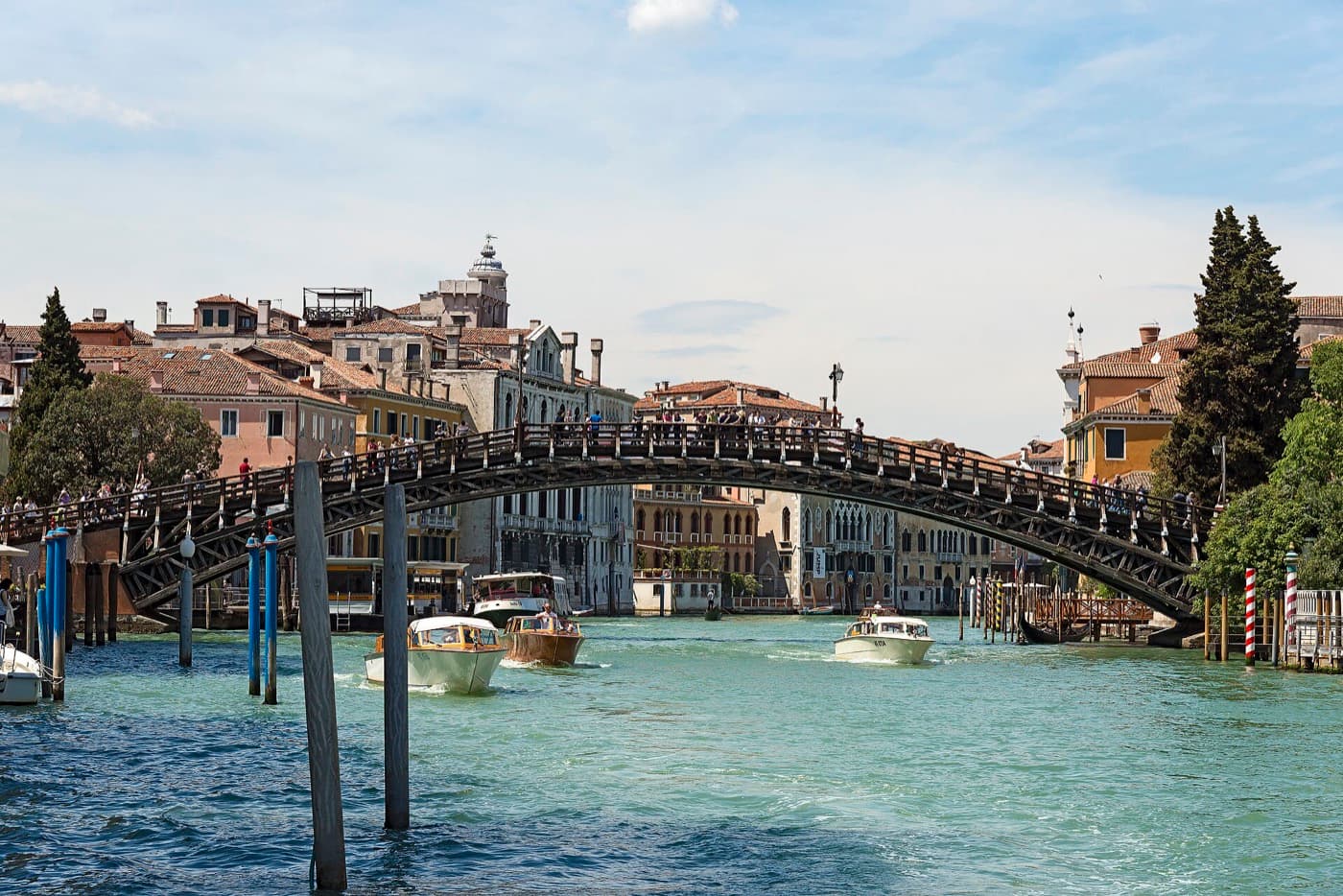
Gallerie dell'Accademia and the Ponte dell'Accademia: The Painted Results
The great gallery of Venetian painting beside a wooden arch bridge over the Grand Canal, where the light of the lagoon is finally caught on canvas.
- 5
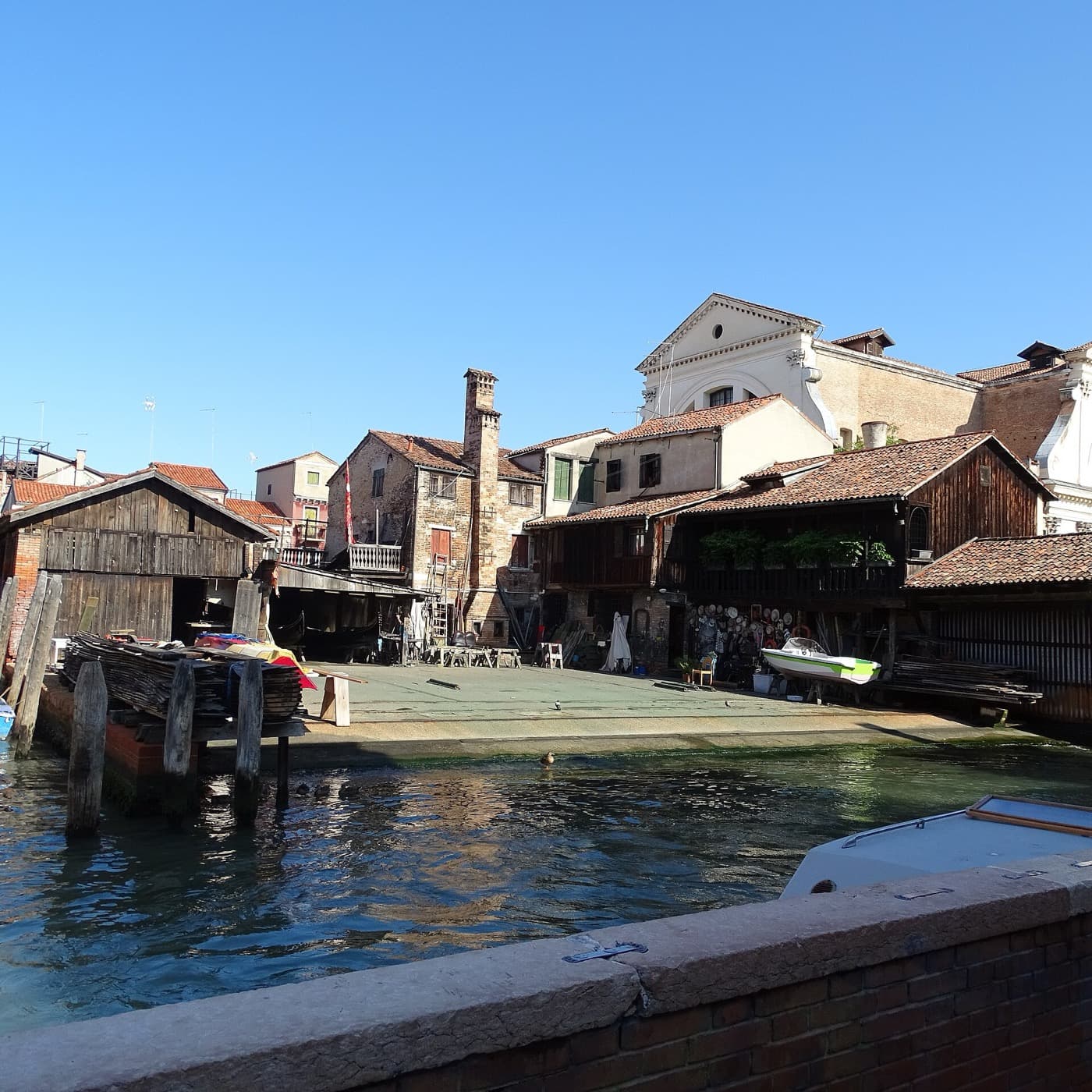
Squero di San Trovaso: Where the Black Gondola Is Shaped
A working gondola boatyard with Alpine-style wooden buildings, among the oldest of its kind still shaping and mending Venice's gondolas.
- 6
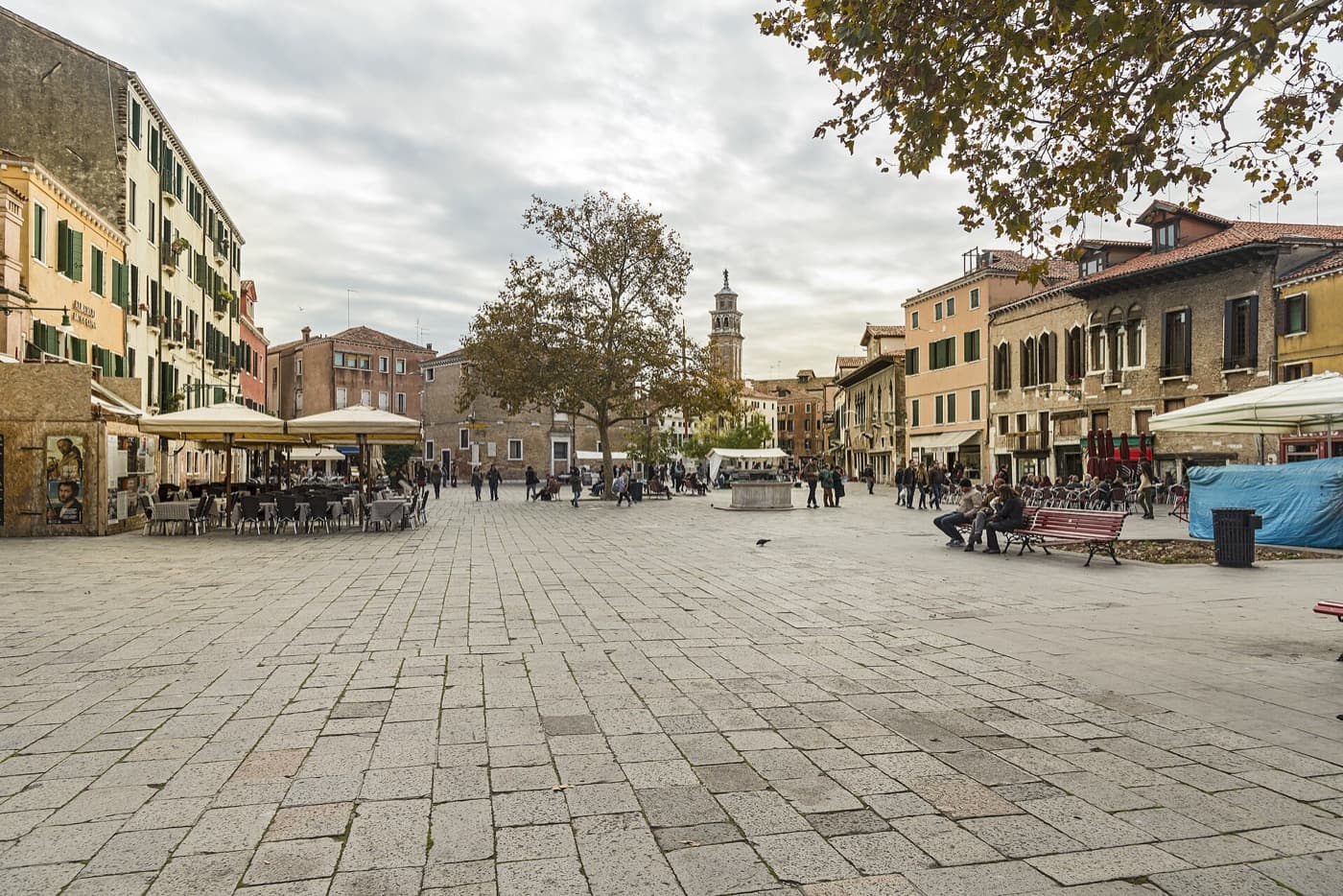
Campo Santa Margherita: Where Dorsoduro Simply Lives
A broad, lived-in square ringed by medieval houses, with a weekday market and student life, the everyday heart of the neighborhood.
Details
Best Time to Visit
Late afternoon into early evening, when the low sun rakes across the south-facing Zattere and warms the white dome of the Salute. The morning market brings Campo Santa Margherita to life on weekdays, so a start around ten and a finish near sunset catches both the working city and the long light this walk is named for.
Pro Tips
- •Walk this route east to west as laid out, so the sun moves onto the Zattere as your afternoon goes on and you finish in the evening buzz of Campo Santa Margherita.
- •You do not need any ticket for this walk. The Salute basilica, the point at the Punta della Dogana, the Zattere, the Accademia bridge, the boatyard view, and the campo are all free from the outside.
- •If you do want to go inside the Gallerie dell'Accademia or the art space at the Punta della Dogana, book a timed entry online ahead of your visit to skip the queue, then step back onto this route.
- •Watch the Squero di San Trovaso from across the rio San Trovaso, never from inside. It is a working boatyard, not a museum, and the view from the opposite bank is the whole point.
- •Carry a refillable water bottle and use the public fountains. Dorsoduro is calmer than San Marco, but the flat Zattere offers little shade at midday.
- •Pause on the crown of the Ponte dell'Accademia for the classic view down the Grand Canal to the Salute, but keep moving so you do not block the narrow bridge for others.
Safety & Precautions
- •Even quiet Dorsoduro draws crowds around the Salute, the Accademia bridge, and Campo Santa Margherita on weekends and evenings. Keep bags zipped and in front of you, as pickpockets work the busier pinch points.
- •Venetian pavement is uneven, and canal bridges mean frequent steps with no ramps. Wear flat, grippy shoes, watch worn stones near the water, and take the steps slowly, especially in rain when they turn slick.
- •The Salute is an active church with a dress code. Cover your shoulders and knees to go inside, keep your voice low, and do not enter during a service.
- •In summer the south-facing Zattere and open campo take full midday sun with little shade. Carry water, wear a hat, and rest in the shade of arcades or narrow calli during the hottest hours.
Travel advisory: Exercise Increased Caution (Level 2).
Gallery
Related Reading
Go deeper on what you'll see, hear, and walk through.
Overview
Best Self-Guided Walking Tours in Venice (2026)
4 min
Overview
One Day in Venice: A Walkable Morning-to-Evening Itinerary
6 min
Overview
Venice Travel Guide 2026: Days, Transport, Fees, and Getting Around
7 min
Thematic
Best Culture Walking Tours in Venice (2026)
2 min
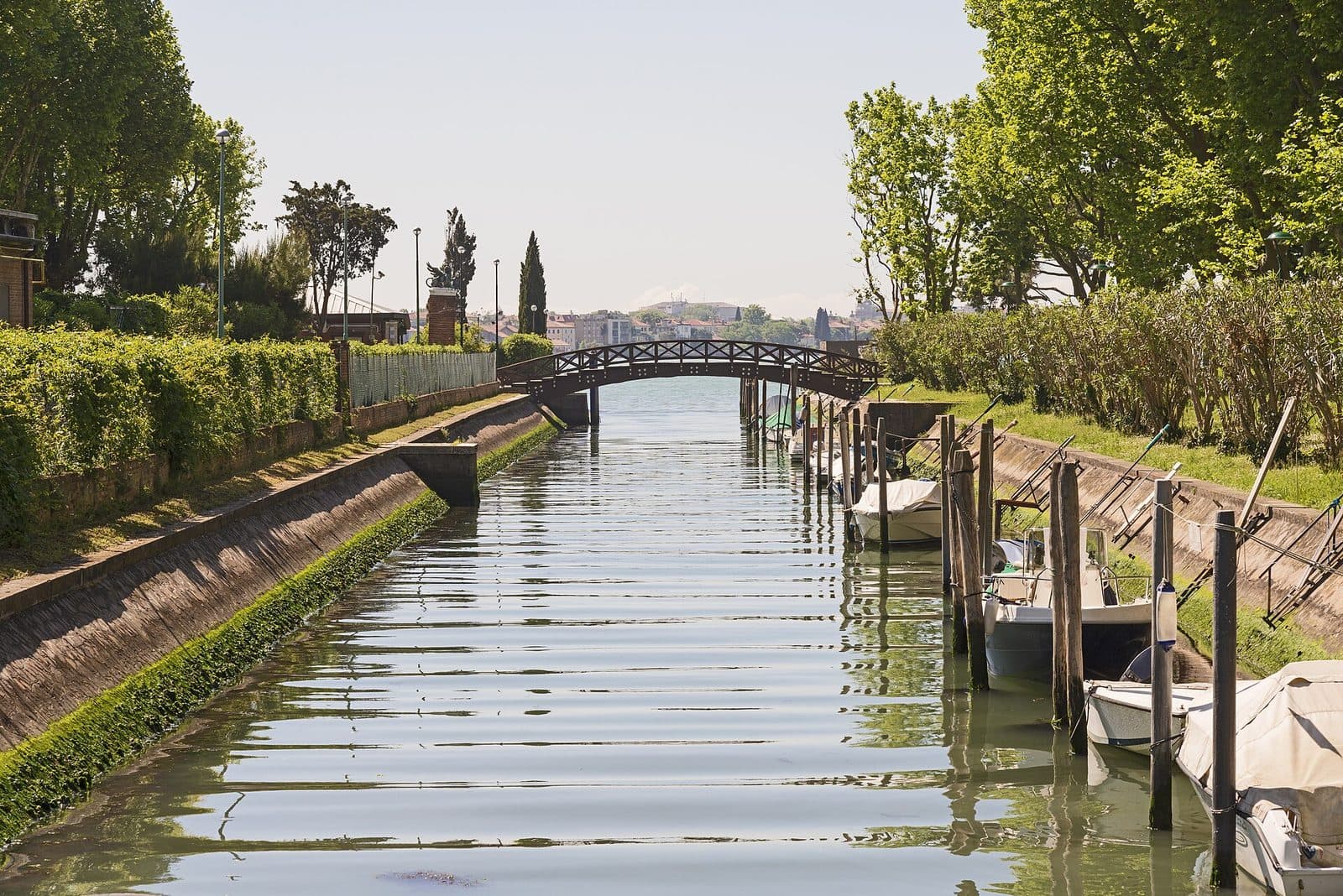
Thematic
Venice: The City Engineered on Water for Trade
7 min
Companion
The Gondola Boatyard That Explains All of Dorsoduro
7 min
Deep dive
Santa Maria della Salute: The White Church a Grieving Venice Built to a Plague
6 min
Read
What to Eat in Venice: Cicchetti, Bacari, and the Dishes to Order by Name
6 min
Read the walk
The full story of Dorsoduro: The Long Light, in words. Prefer to listen? Play it narrated, from home or on location.
Introduction
Most people meet Venice at San Marco and the Rialto, packed and ticketed, and they never learn the quieter argument this city makes on its southern side. Dorsoduro, whose name means hard back, is the firm-grounded sestiere along the bottom edge of Venice, and it is where the famous Venetian way of painting light on water was learned and kept. On this walk you will read that idea as it actually sits on the ground. Six stops, roughly ninety minutes at your own unhurried pace, about four kilometres of flat waterfront and narrow calli, here in Venice, Italy. You set the rhythm. Every stop is short, and any one of them is easy to skip if your feet or your attention pull you elsewhere. We begin at the tip where the Grand Canal opens into the lagoon, at a great white votive church and, beside it, a customs house crowned by a golden globe and a turning figure of Fortune. From there the route releases westward onto the long sunlit quay called the Zattere, where rafts of mountain timber once landed. Then it steps inland to the paintings themselves, to a boatyard that still shapes the black gondola from about eight kinds of wood, and finally to a broad, lived-in square where Dorsoduro stops performing for anyone. Bring water, watch the uneven stones, and let the light do the guiding. When you arrive at the Basilica di Santa Maria della Salute, begin with stop one.
1. Basilica di Santa Maria della Salute: The White Answer to a Plague
Stand where the Grand Canal opens into the lagoon and look up at this great white octagon crowned by its dome. This is Santa Maria della Salute, and the word Salute means health. It is a promise made in fear and kept in stone. In the plague of sixteen thirty to sixteen thirty-one, a catastrophe that killed roughly forty-six thousand people in the city, the Venetian Senate met on the twenty-second of October, sixteen thirty, and vowed to build a church to the Virgin Mary if she would lift the sickness. According to Wikipedia, they dedicated it deliberately to Our Lady of Health, protector of the whole Republic, rather than to any single plague saint. The commission went to a young architect named Baldassare Longhena, who was around twenty-six when he was chosen. Notice what he did with light. The church is white and it is round, so it catches the sun from the water on every side and throws it back at you. Groundbreaking came in sixteen thirty-one, but Longhena did not live to see the whole thing finished. It was consecrated in sixteen eighty-one and completed in sixteen eighty-seven, more than half a century of building for a single act of thanks. Every year on the twenty-first of November, at the Festa della Salute, Venetians still lay a temporary pontoon bridge across the Grand Canal and walk out here to light a candle. You are standing at a place the city returns to on purpose. Take your time with the white curves before we walk on. The inside is free if you wish to step in.
2. Punta della Dogana: The Golden Fortune That Turns With the Wind
A few steps from the white church, walk out to the sharp point where the Grand Canal meets the wide Giudecca canal. This wedge of stone is the Punta della Dogana, the point of the customs house. For centuries every ship trading with Venice had its cargo weighed and taxed near here. The building you see, the Dogana da Mar, was raised between sixteen seventy-eight and sixteen eighty-two by the architect Giuseppe Benoni. Now look up at the little tower at the very tip. Two straining stone figures, Atlas figures, hold up a golden globe, and balanced on top of that globe stands a gilded statue of Fortune. The Italians called her Occasio, opportunity. She is sculpted by the seventeenth-century artist Bernardo Falconi, and here is the wonderful part. She is a weathervane. She turns in the wind, so a merchant Republic that lived and died by which way the wind blew put luck herself up there, spinning to show the breeze. It is one of the most honest self-portraits any trading city ever made. In our own time this customs house was rescued from decay. According to Wikipedia, it was restored between two thousand eight and two thousand nine by the Japanese architect Tadao Ando, funded by the French collector Francois Pinault, and reopened in the summer of two thousand nine as a space for contemporary art. You only need the point itself, which is free. Stand here and feel the water push from two directions at once. This is the hinge of the whole city.
3. Le Zattere: The Quay Where the Mountains Arrived
Now the walk opens up. Turn your back on the crowds and follow the broad stone quay that runs along the whole southern edge of Dorsoduro. This is Le Zattere, and the name tells a story most visitors never hear. Zattere means rafts. Down the rivers from the foothills and…
Full narration for this stop unlocks with the tour.
4. Gallerie dell'Accademia and the Ponte dell'Accademia: The Painted Results
Step inland from the water and you reach the place where all this light was turned into paint. The Gallerie dell'Accademia holds masterpieces of Venetian painting reaching up to the nineteenth century, hung in roughly the order the artists worked. The collection lives inside an…
Full narration for this stop unlocks with the tour.
5. Squero di San Trovaso: Where the Black Gondola Is Shaped
Just off the western end of the Zattere, a small canal called the rio San Trovaso opens a view onto something rare: a squero, a boatyard where gondolas are still built and repaired by hand. This is the Squero di San Trovaso, and it looks unlike anything else around it. Instead…
Full narration for this stop unlocks with the tour.
6. Campo Santa Margherita: Where Dorsoduro Simply Lives
End your walk where Dorsoduro stops performing for anyone and simply gets on with its day. Campo Santa Margherita is a large, long, irregular square, around eight thousand square metres of open air, and it feels nothing like the polished set-pieces at the water's edge. Children…
Full narration for this stop unlocks with the tour.