From the temples of Largo Argentina through Campo de' Fiori and Piazza Farnese to Pasquino, Piazza Navona and Sant'Ivo's spiral, then Bernini's elephant, the Pantheon, Hadrian's temple and Sant'Ignazio.
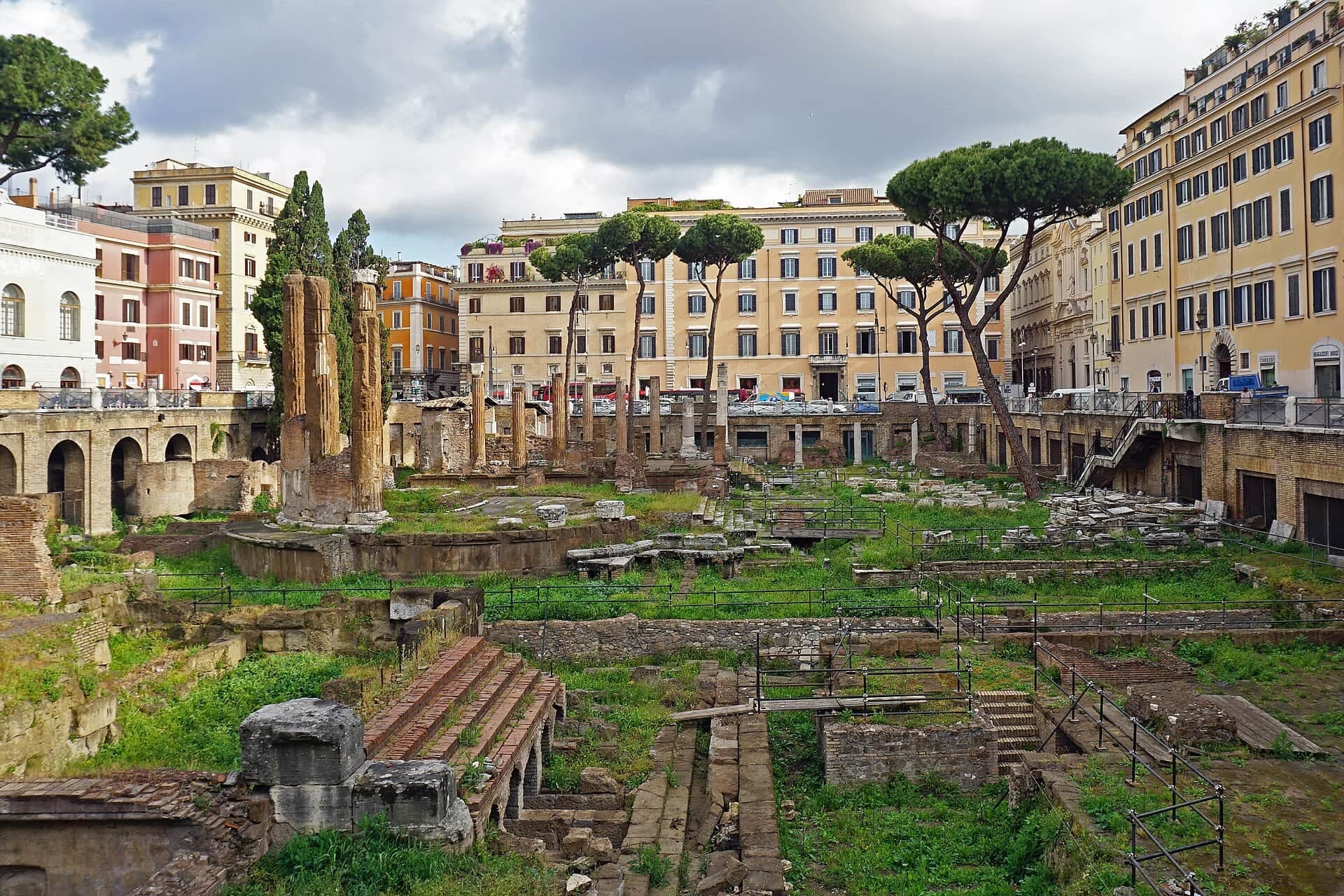
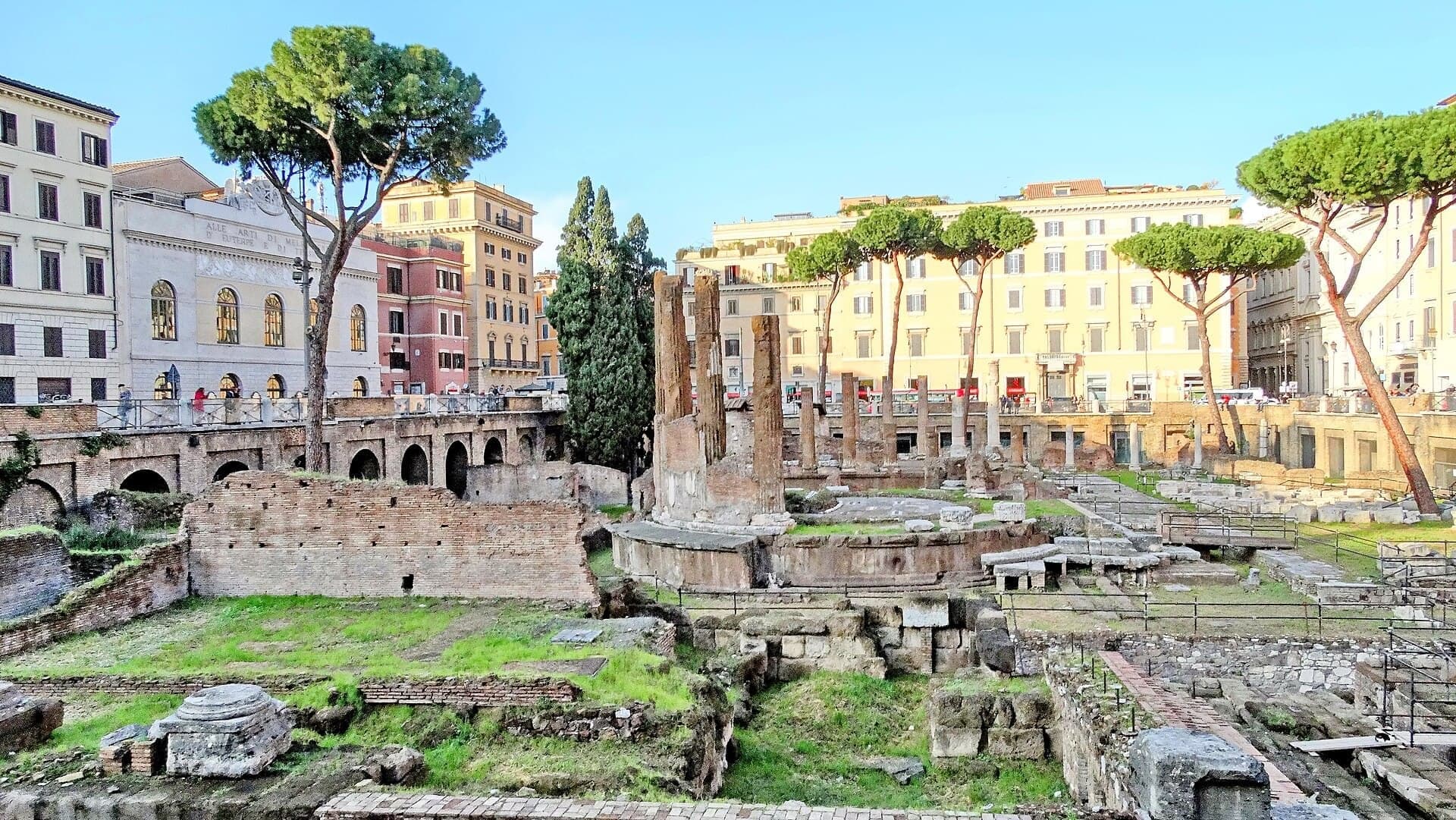
Start · Largo di Torre Argentina: Temples in a Pit
DirectionsStops
- 1
Largo di Torre Argentina: Temples in a Pit
Four temples sunk below the street, beside the site of the hall where Julius Caesar was killed.
- 2
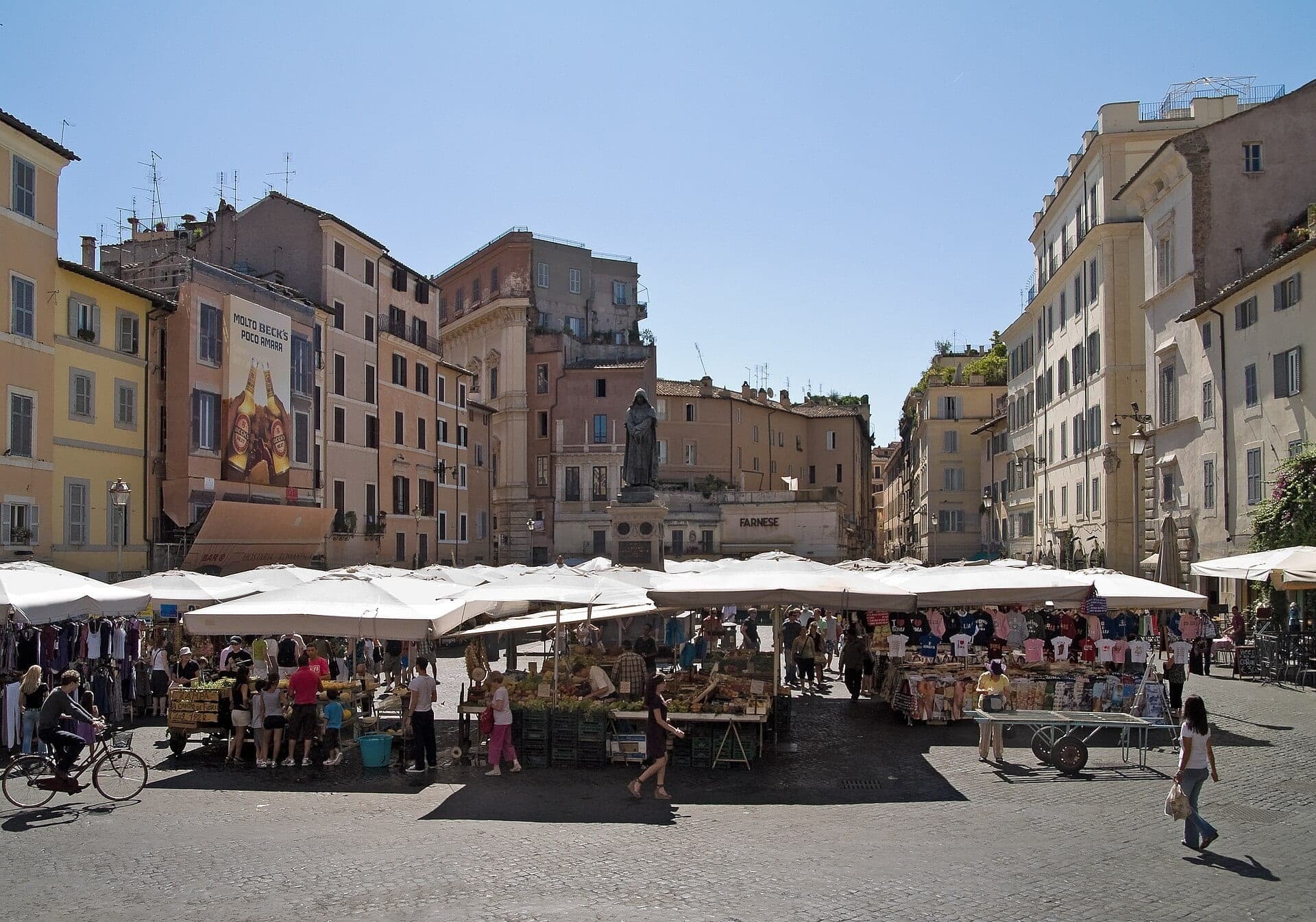
Campo de' Fiori: Market and Pyre
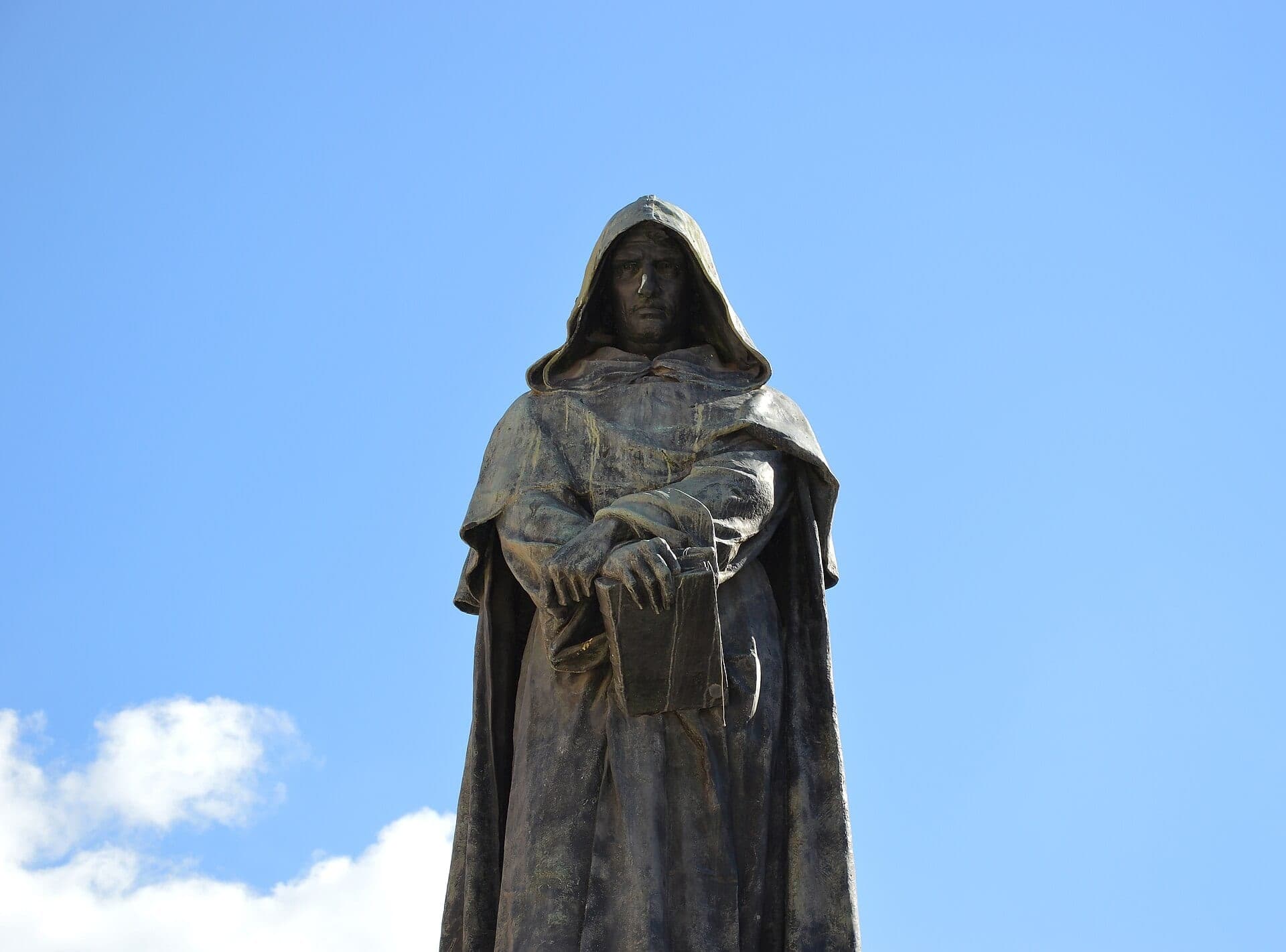
A market square and execution ground, watched over by a hooded bronze of Giordano Bruno.
- 3
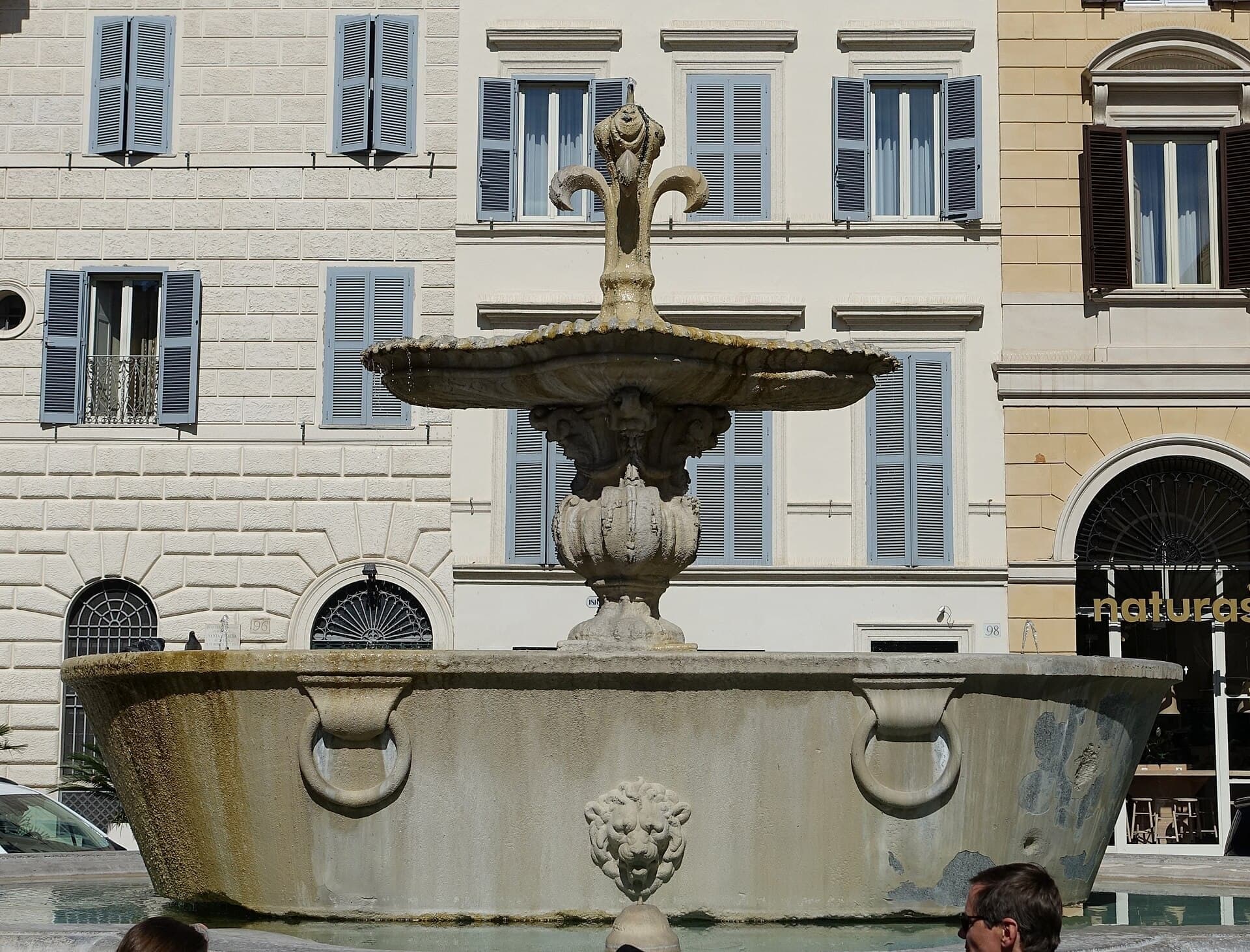
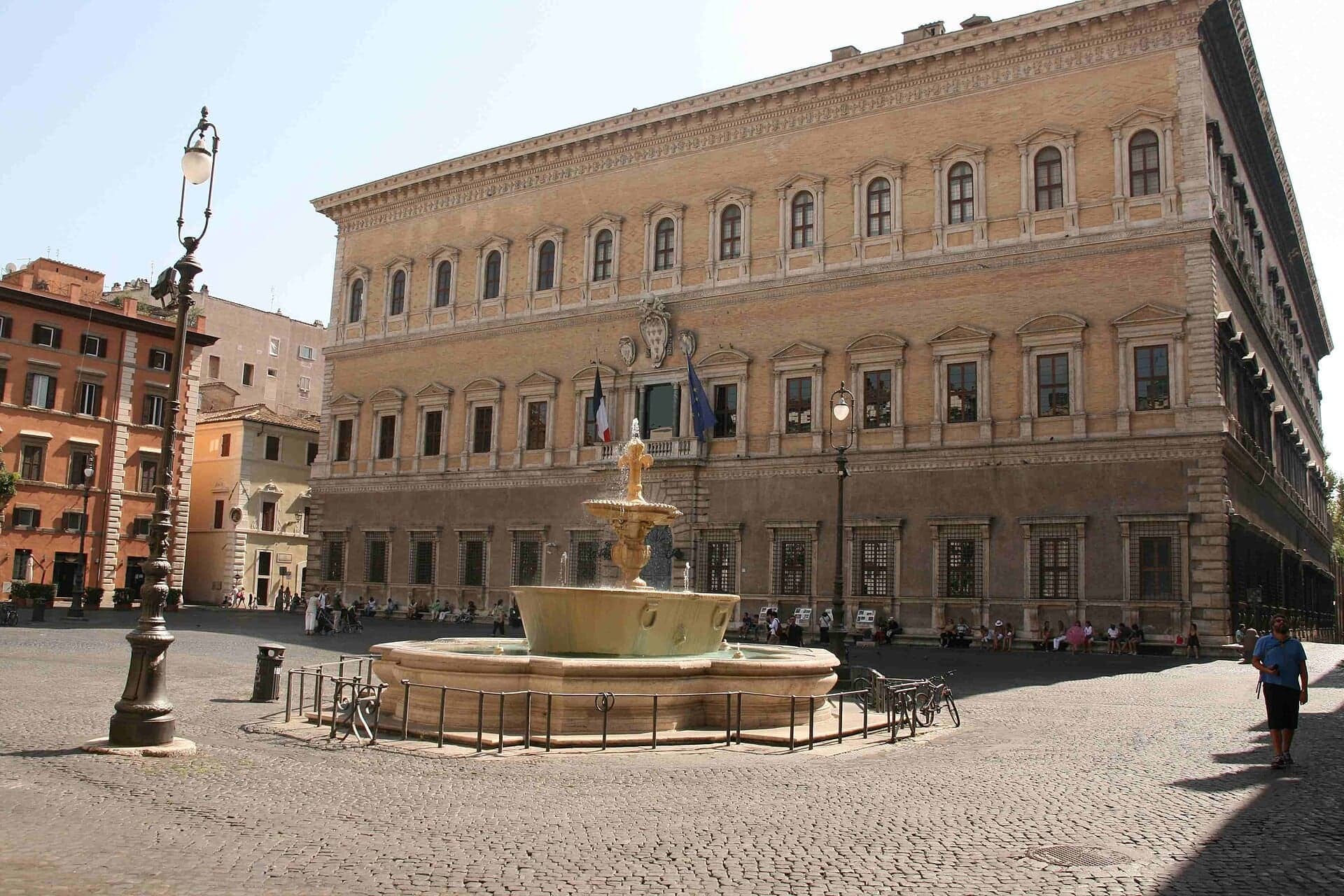
Piazza Farnese: Bath Tubs for Fountains
A severe palace housing the French Embassy, fronted by two ancient granite bath tubs reused as fountains.
- 4
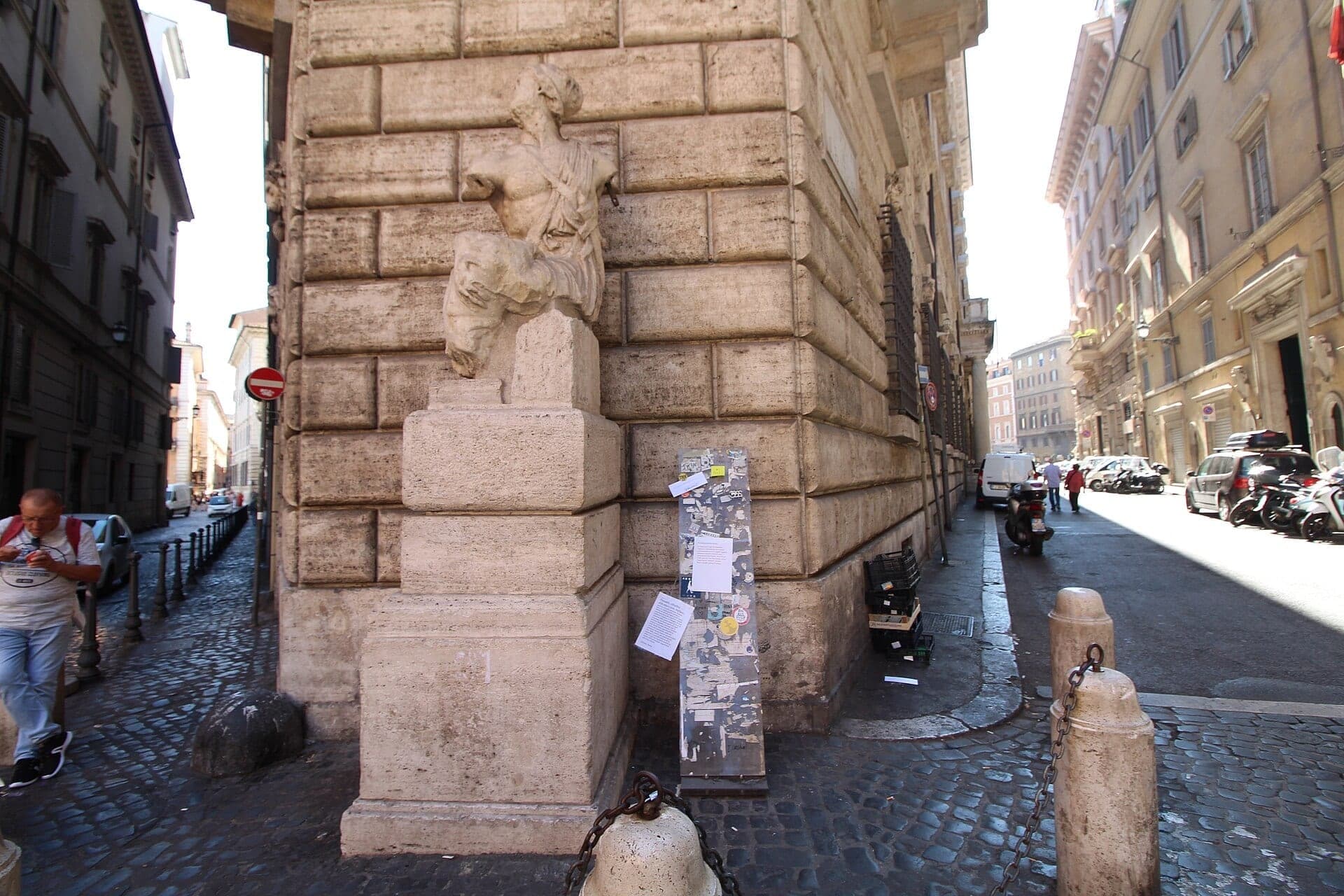
Pasquino: The Statue That Talks Back
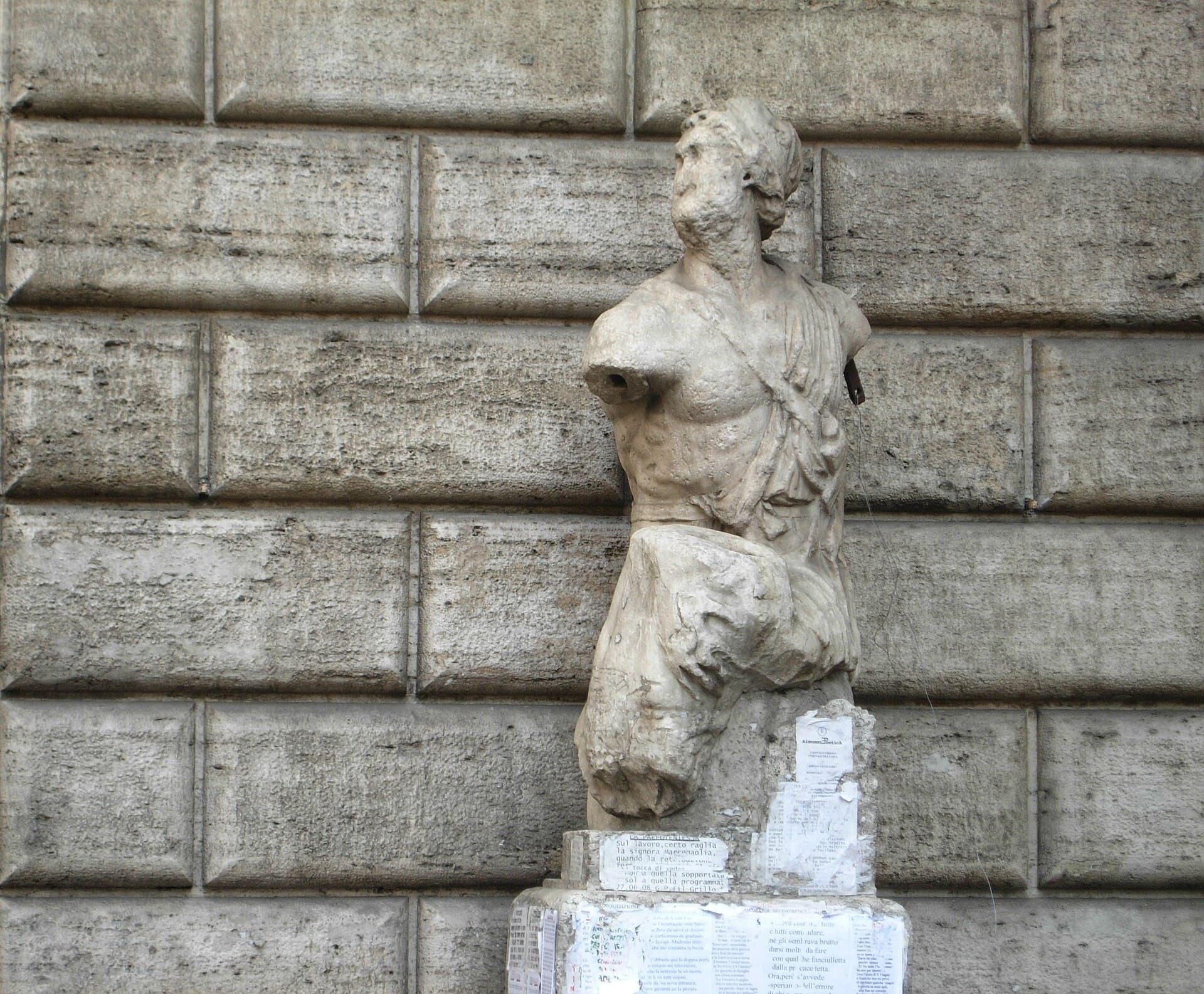
A battered statue as the city's voice, found in 1501, where Romans still leave satirical notes.
- 5
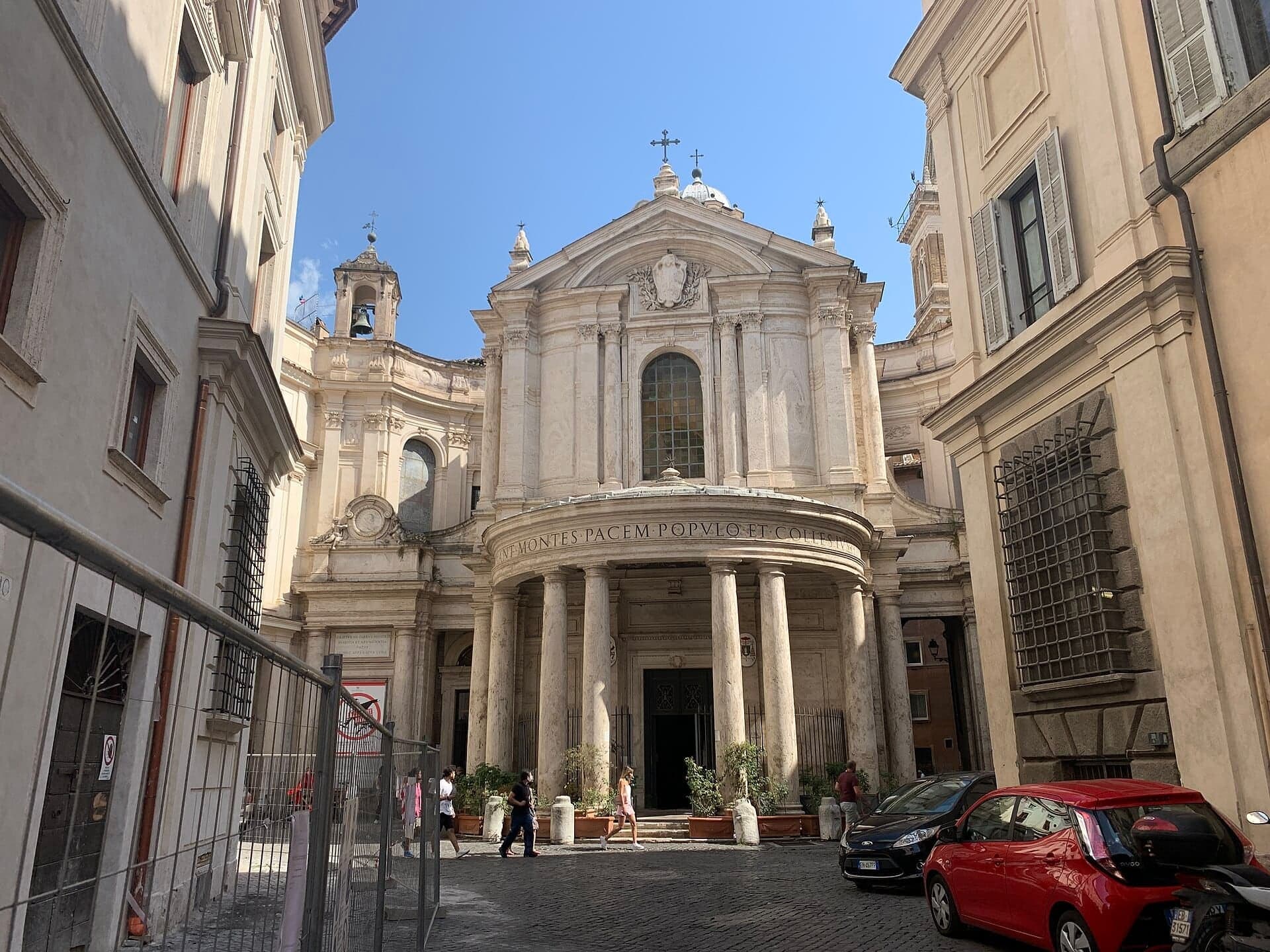
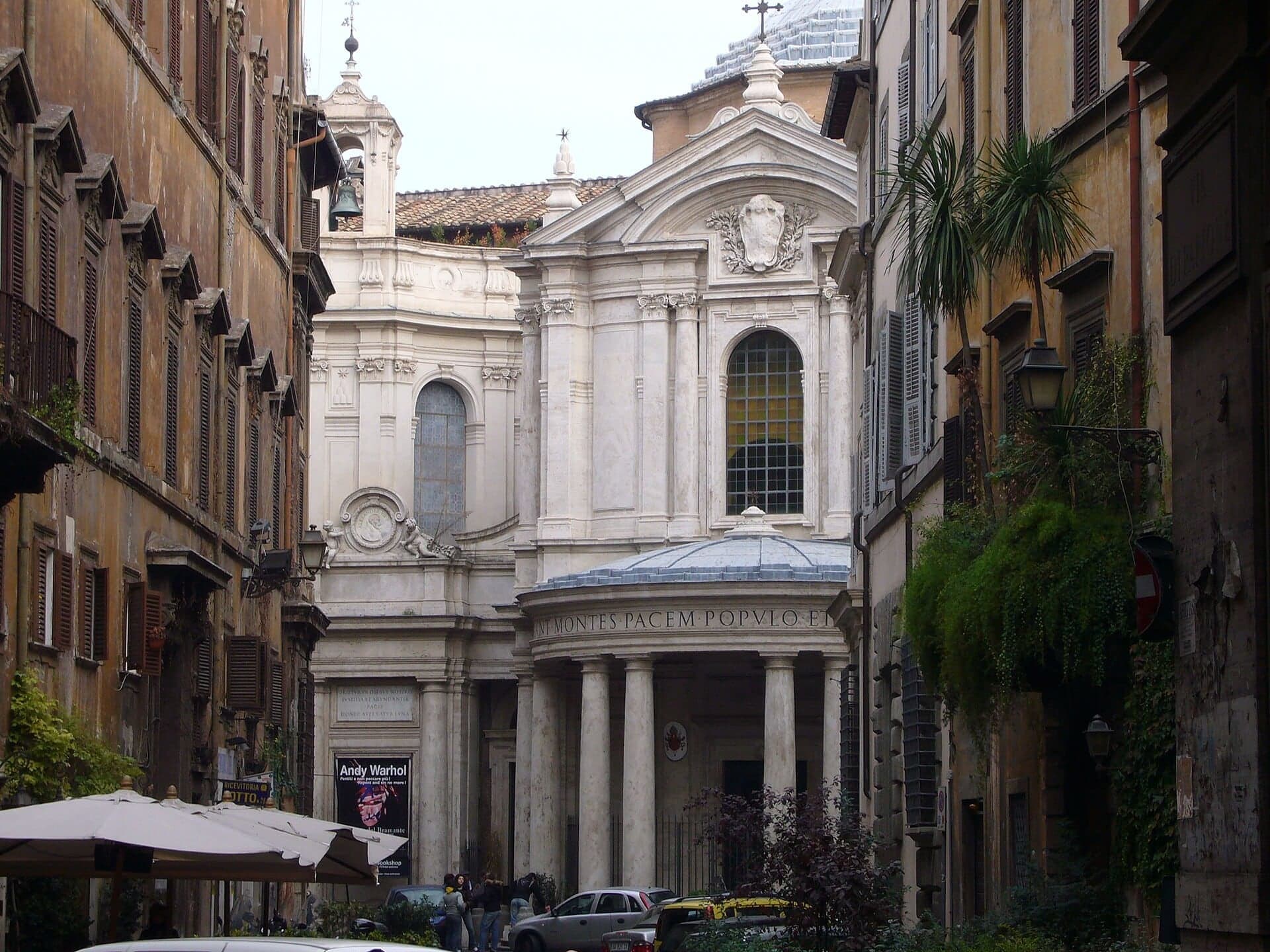
Santa Maria della Pace: A Front That Steps Out
A curved porch pushing into a tiny square, cleared from old houses in 1656 to make a stage for a church.
- 6
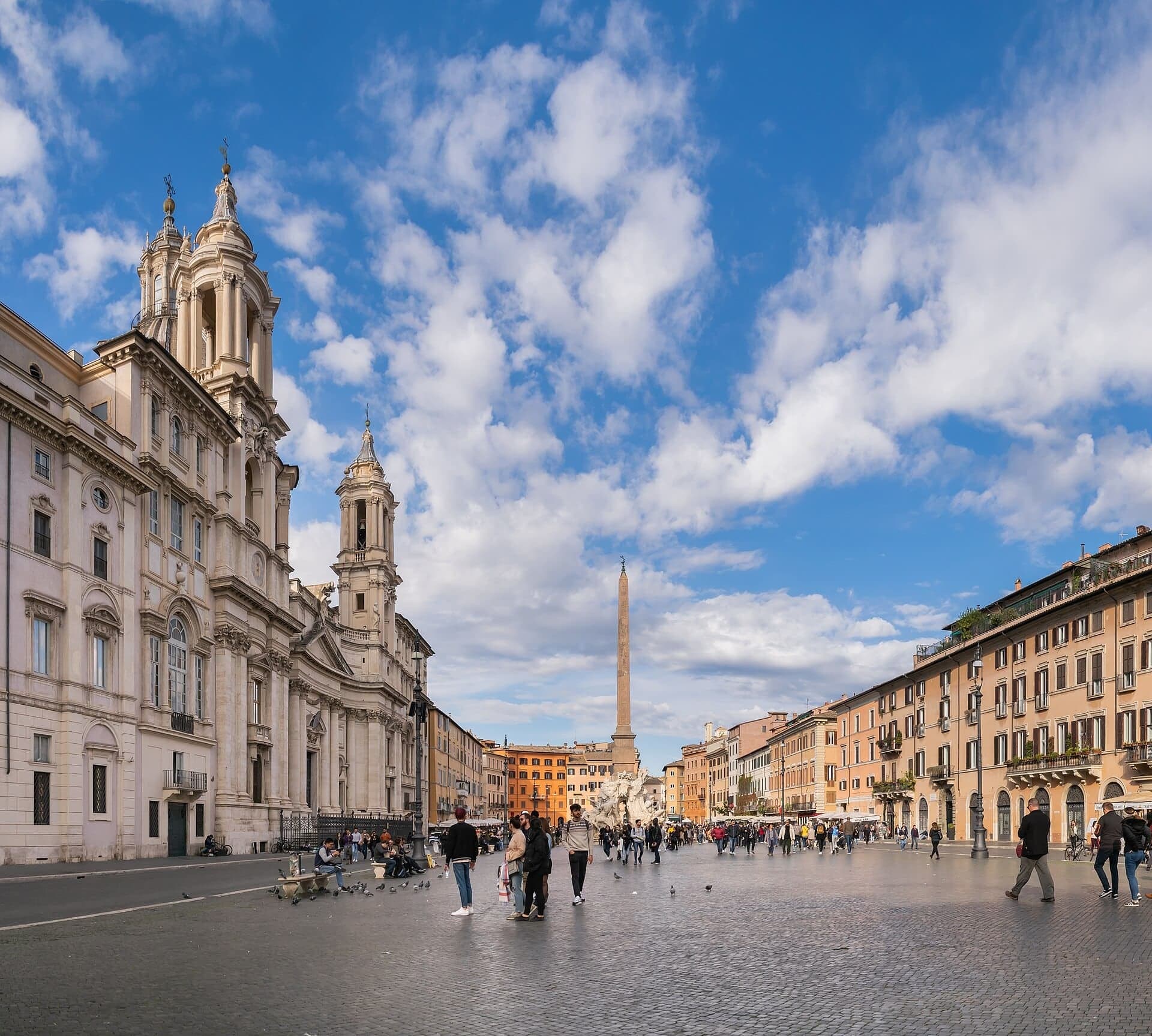
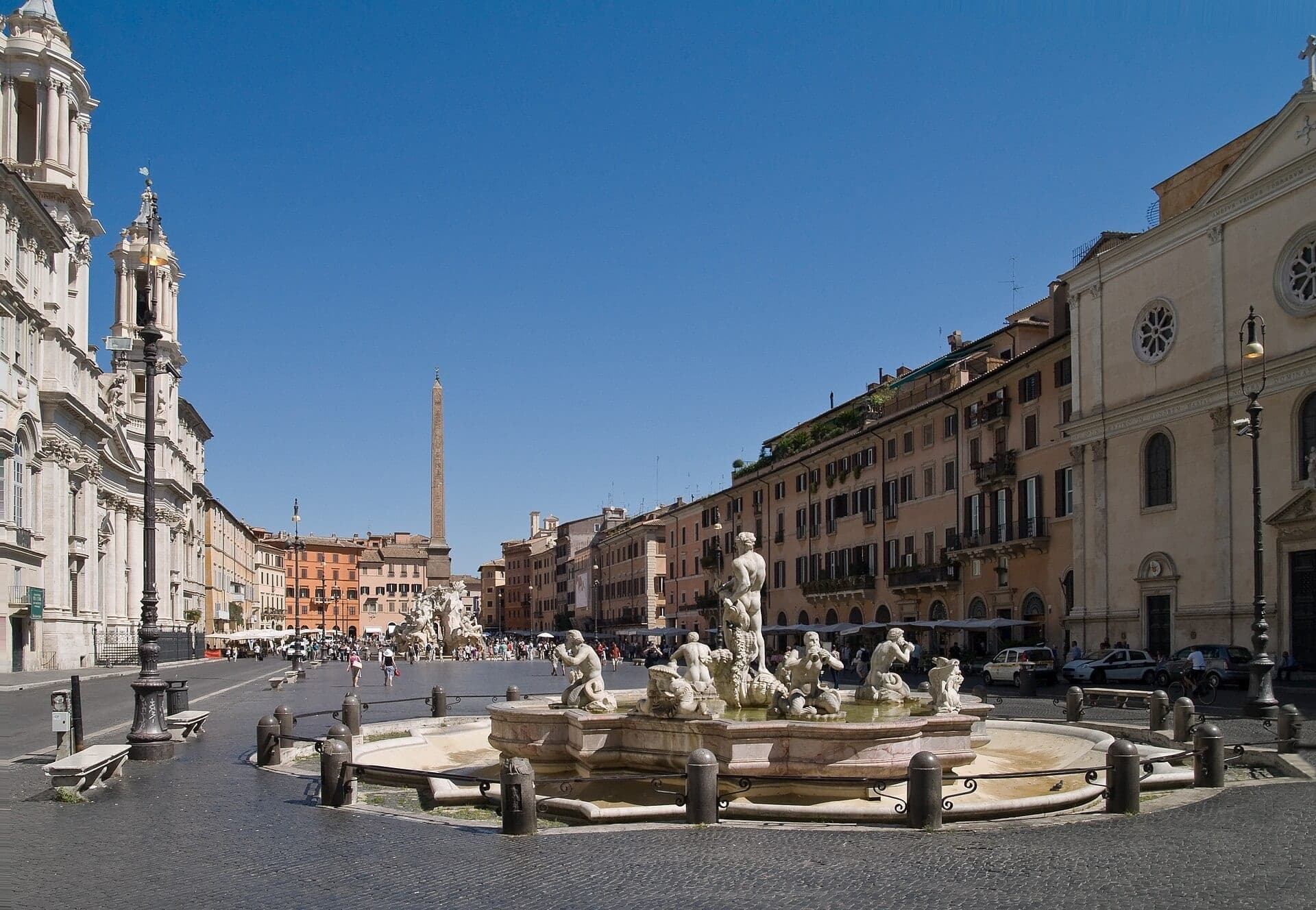
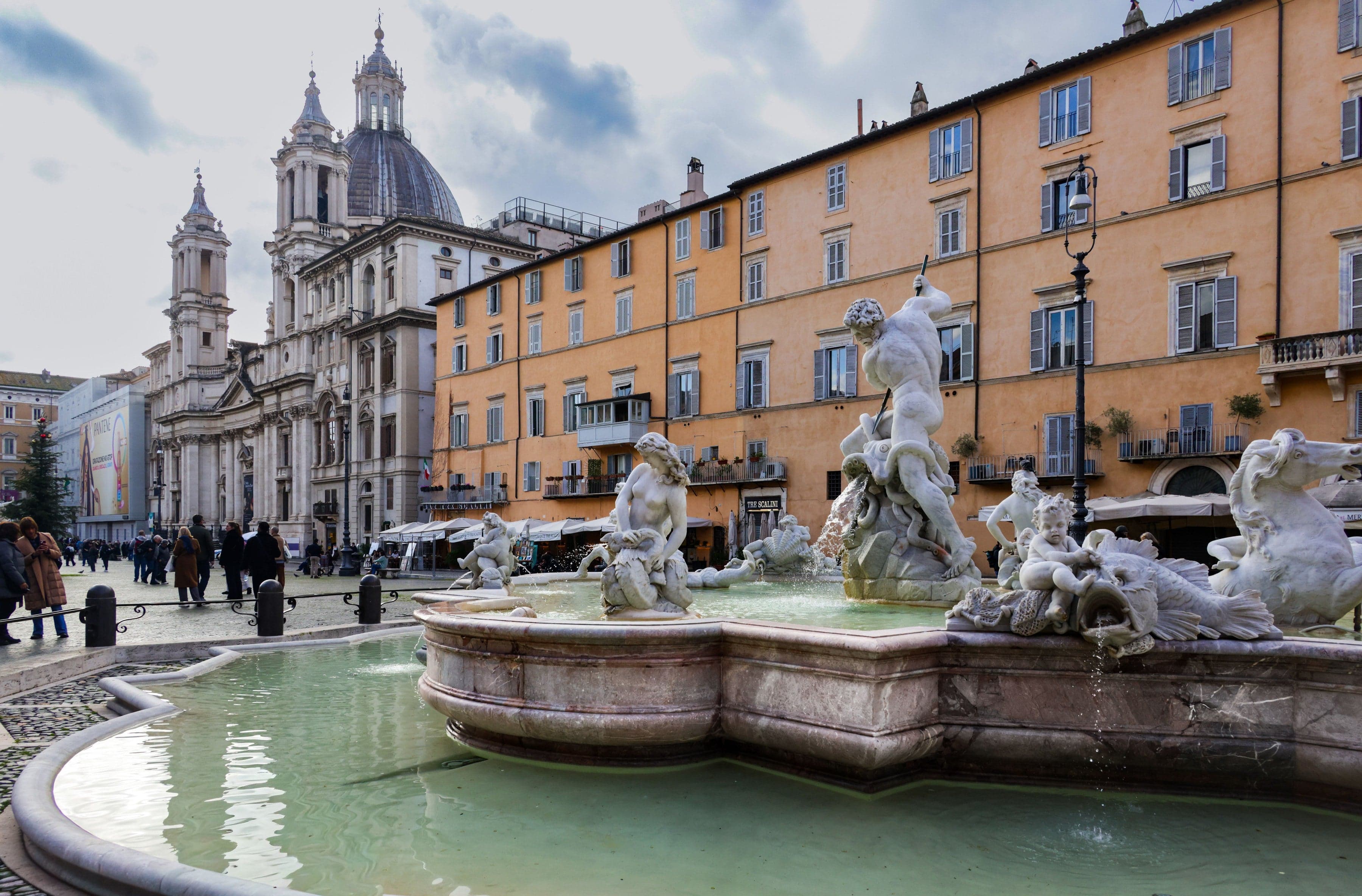
Piazza Navona: A Stadium Turned Square
The long oval of an ancient stadium, now a square, with Bernini's Four Rivers fountain and a Roman-made obelisk.
- 7
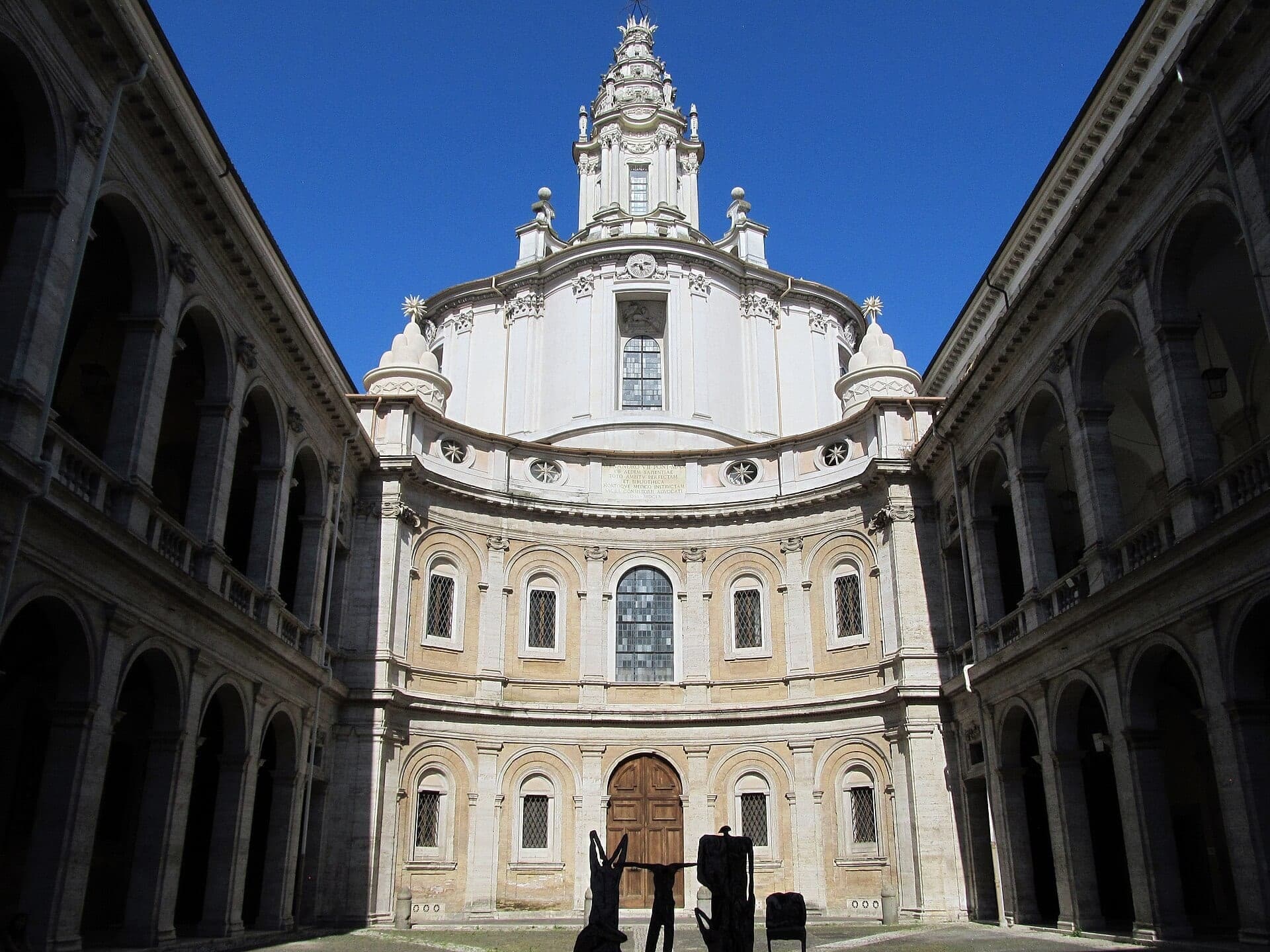
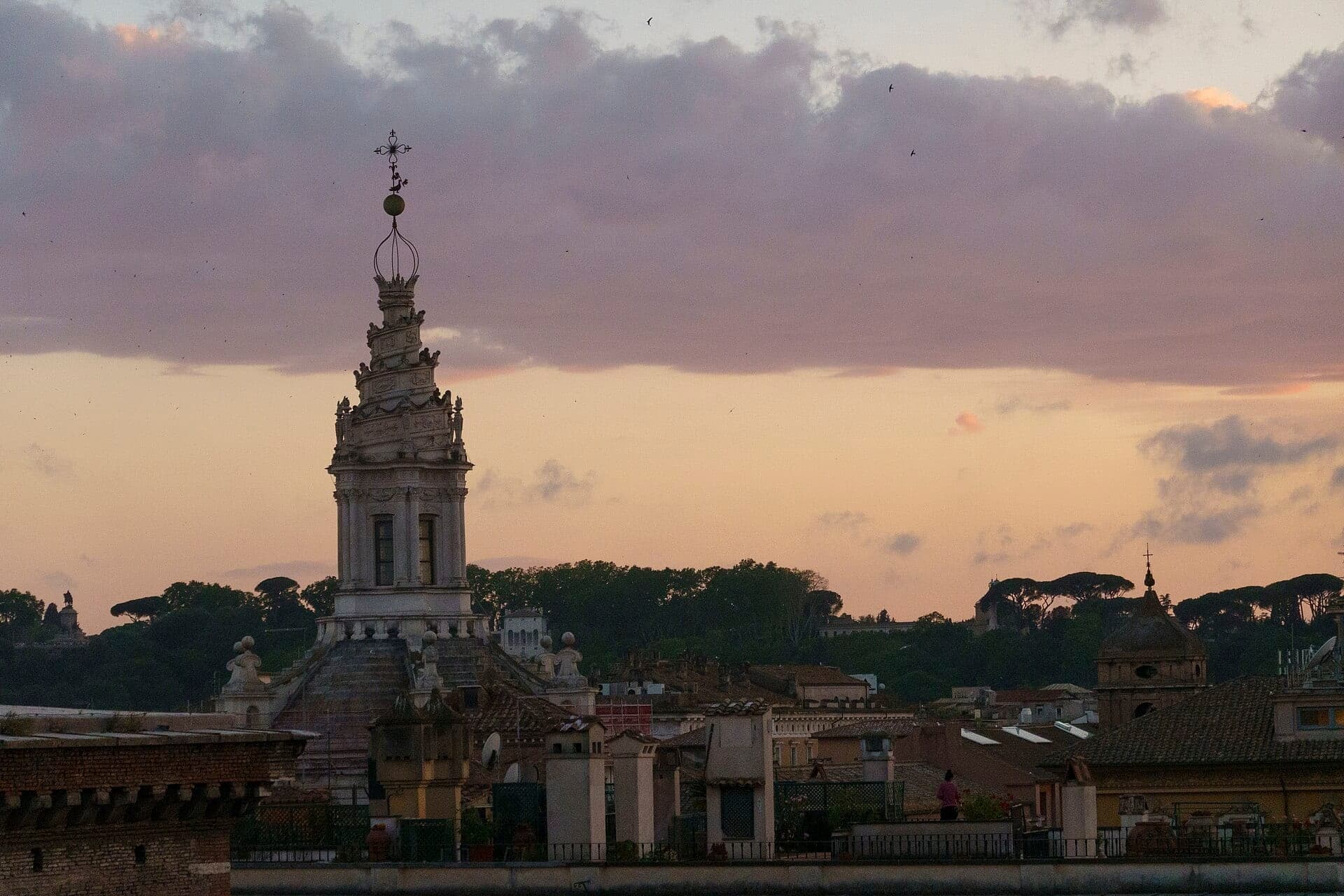
Sant'Eustachio and Sant'Ivo: A Spiral on the Roof
A small square under a stag-crowned church, steps from Borromini's spiral lantern on the old university chapel.
- 8
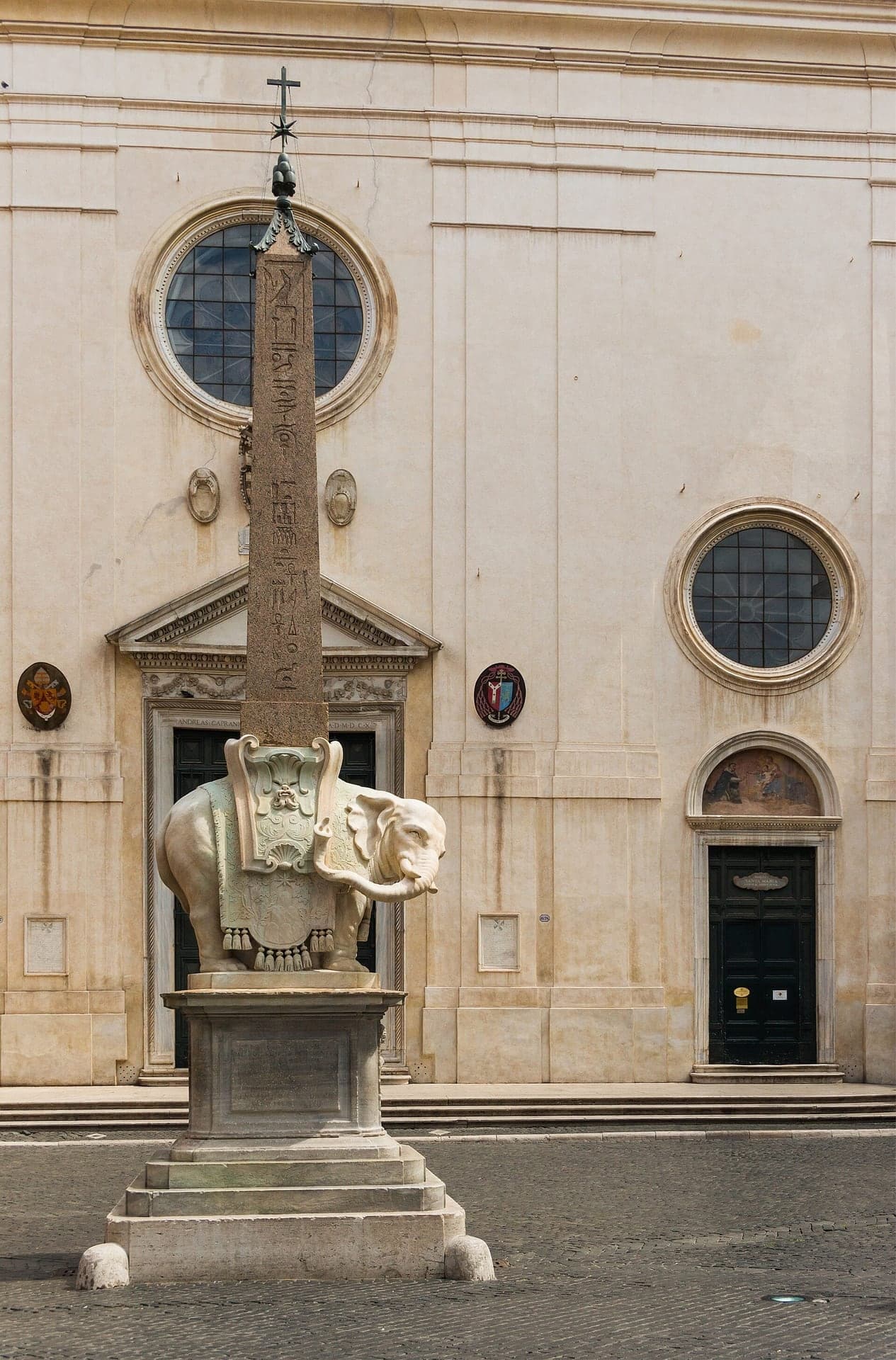
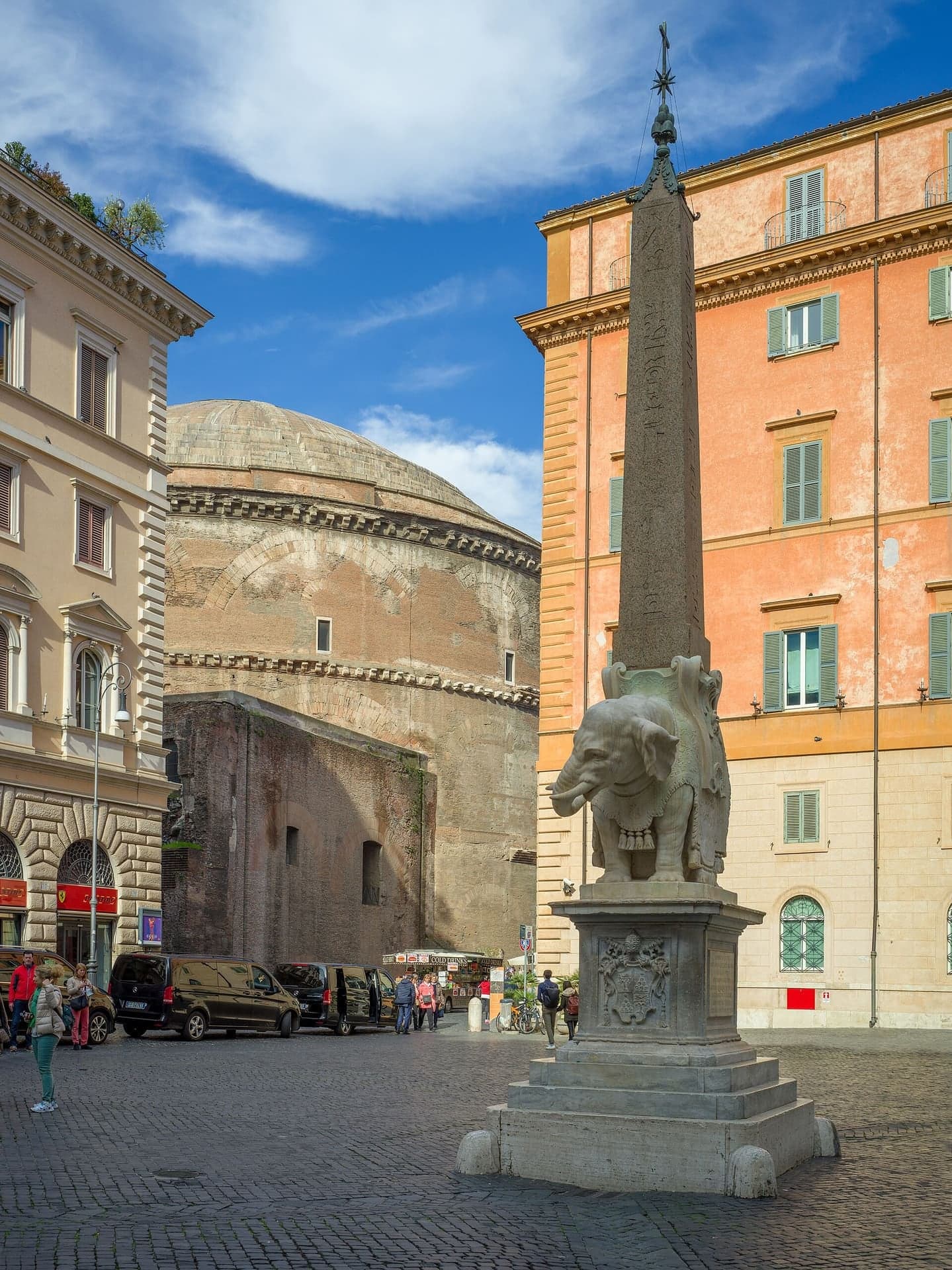
Piazza della Minerva: An Elephant's Obelisk
Bernini's elephant carrying a real obelisk, carved about 580 BC and dug up next door in 1665.
- 9
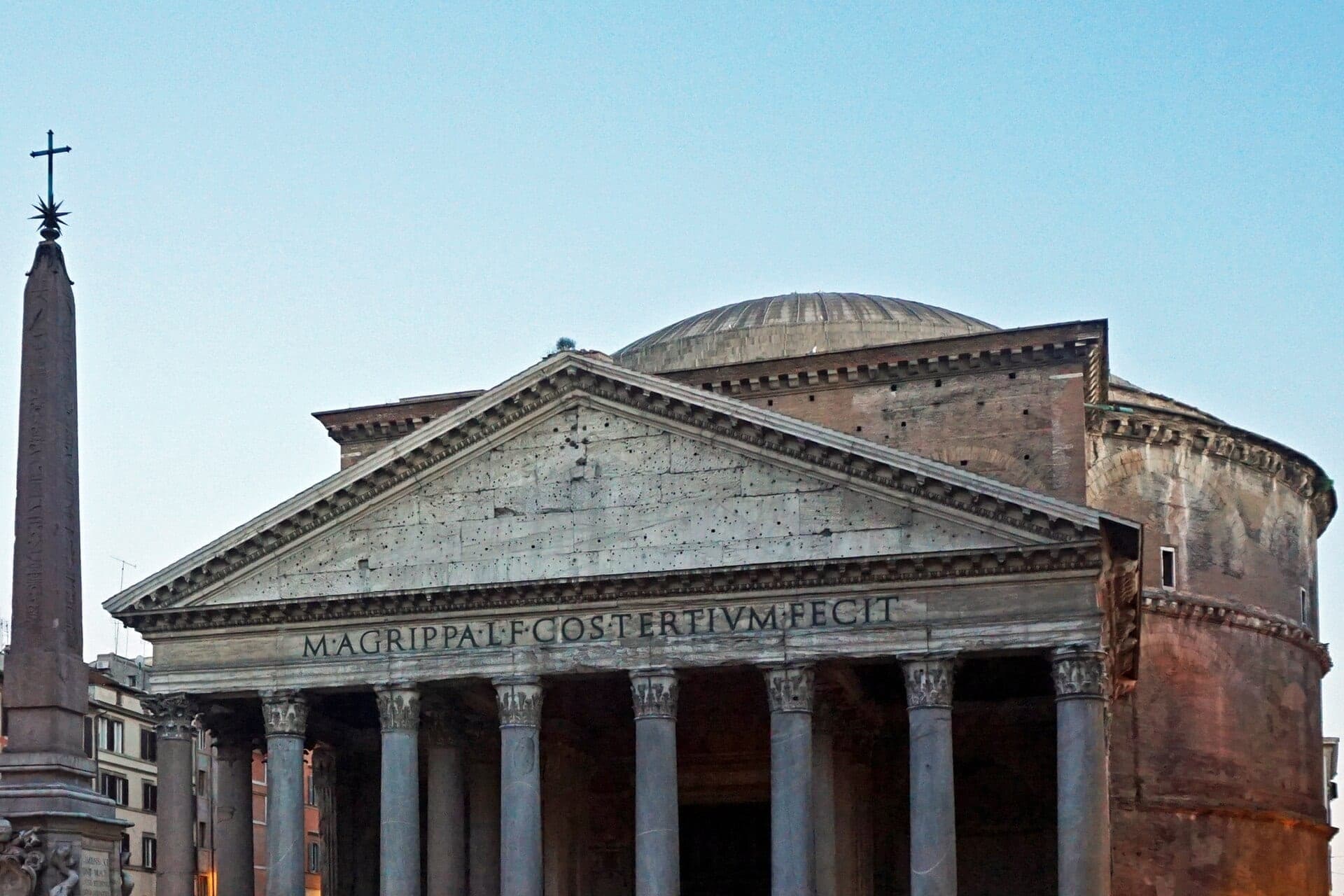
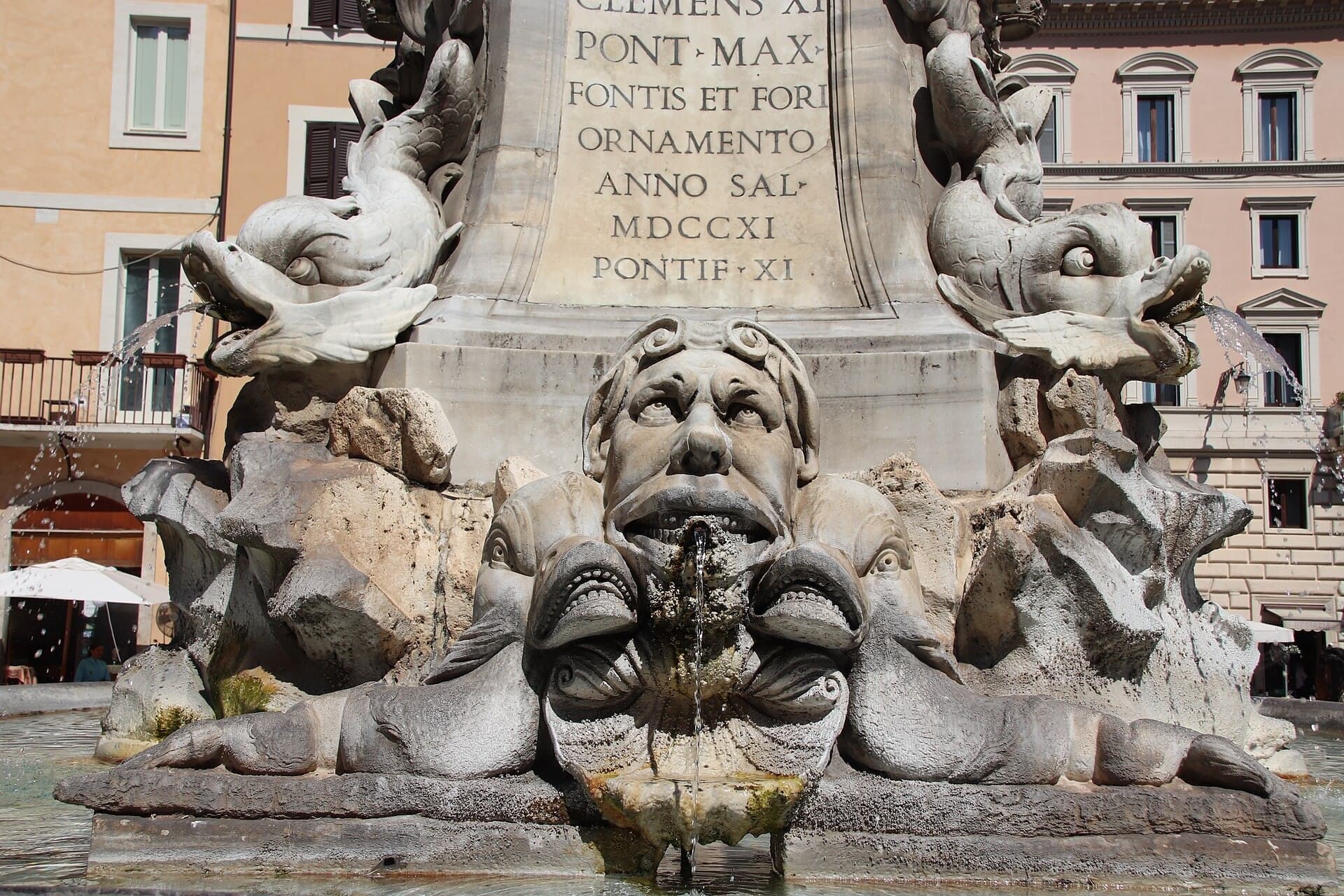
Pantheon: Saved by Becoming a Church
Hadrian's temple to all the gods, saved by becoming a church, under a concrete dome exactly as wide as the building is tall.
- 10
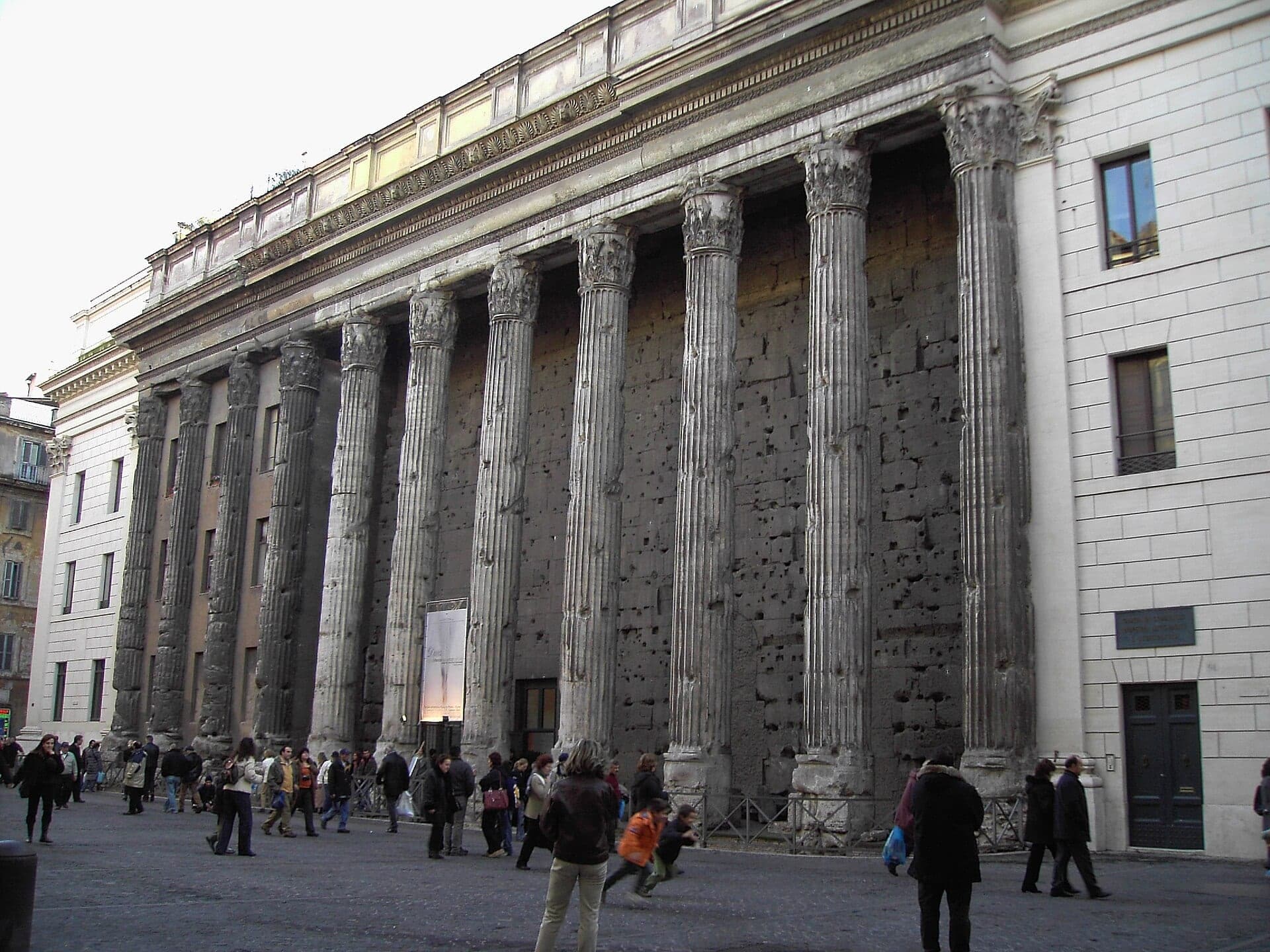
Piazza di Pietra: A Temple Turned Office Front
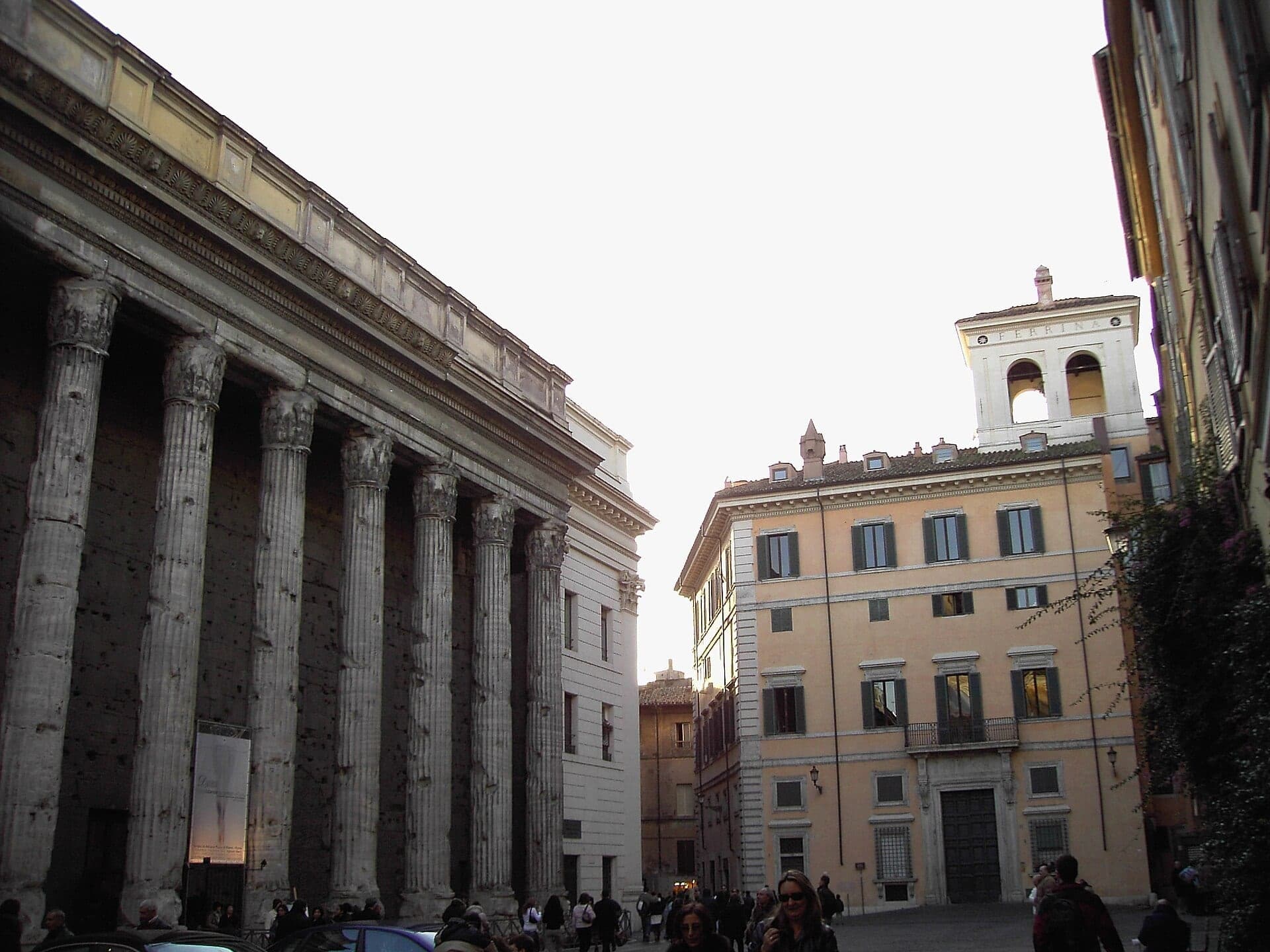
Eleven columns of the Temple of Hadrian, finished in AD 145, now form the front of an office building.
- 11
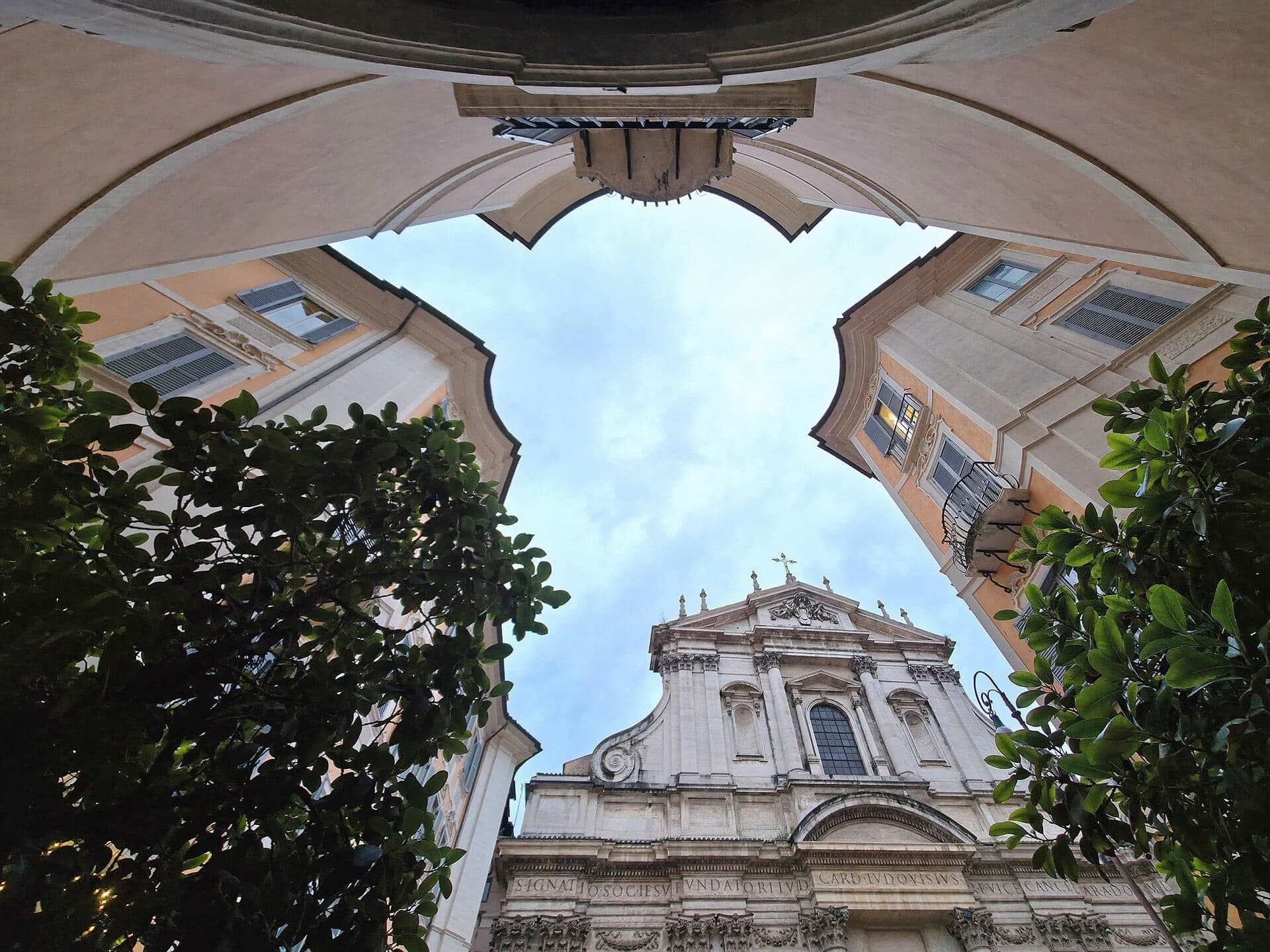
Sant'Ignazio: The Dome That Isn't There
A Jesuit church whose dome was never built, so a painted one, copied in 1823 after a fire, hangs in its place.
Details
Best Time to Visit
A weekday morning, starting by about 9am. Campo de' Fiori's market runs on Monday to Saturday mornings, the Pantheon opens at 9am and its queue grows through the day, and the Sapienza courtyard behind Sant'Ivo is a government building that opens, if at all, on weekdays. The walk is all on the street and works at any hour in daylight; Sant'Ignazio stays open until 11.30pm, so the last stop also works in the evening, when Navona and Campo de' Fiori are busy with bars and restaurants.
Pro Tips
- •Getting to the start: there is no Metro station at Largo di Torre Argentina (Metro C's Venezia station is still being built). The nearest are Colosseo on line B, about 1.4 km away, and Barberini or Spagna on line A, about 1.5 km. Largo Argentina is a major bus and tram interchange; tram 8's terminus has been reported moved to Piazza Cairoli, about 100 m away; check before you travel. Check the ATAC or Roma Mobilità journey planner for buses. On foot it is about six minutes from Piazza Venezia. Checked 8 October 2026.
- •Area Sacra di Largo Argentina (stop 1): the walkways down among the temples are a ticketed visit, booked ahead on the Sovrintendenza Capitolina's site, Tuesday to Sunday, with shorter hours from the last Sunday of October to March. The only official tariff found dates from the 2023 reopening (5 EUR plus a 1 EUR booking fee for non-residents); check the current price and hours before you go. Checked 8 October 2026.
- •Pantheon (stop 9): 7 EUR from 1 July 2026, 2 EUR for ages 18 to 25, free under 18; daily 9am to 7pm, last entry 6.30pm. Book a named ticket ahead on the official Musei Italiani portal. Not included in the Roma Pass. Checked 8 October 2026.
- •Palazzo Farnese (stop 3) is the French Embassy: the inside, including the Carracci gallery and the basements, can be seen only on a guided tour booked on the official visite-palazzofarnese.it site, with reinforced security checks. Checked 8 October 2026.
- •Sant'Ivo alla Sapienza (stop 7): the church and courtyard, entered from Corso del Rinascimento 40, are run by the State Archive, and published opening times disagree; parts of the courtyard and church have been under restoration in 2026. Treat a visit inside as a bonus and check before you go. Checked 8 October 2026.
- •Sant'Ignazio (stop 11) is free and open every day from 9am to 11.30pm; Mass is at 6.30pm daily and also 11.30am on Sundays and holidays. Checked 8 October 2026 at chiesasantignazio.it.
- •Rome's free drinking fountains, the nasoni, run all day: there are ones on Campo de' Fiori, at Piazza Navona and at the Pantheon's square. Shade is scarce on this route in summer, so fill a bottle.
Safety & Precautions
- •The streets are paved with sampietrini, small, uneven cobbles: wear good shoes, and expect a bumpy ride with a stroller or wheelchair. There are no steps on the route.
- •Between Campo de' Fiori and Pasquino the route crosses Corso Vittorio Emanuele II at a zebra crossing with no lights, and between its two zebras the route runs about twenty metres along the road itself, where buses pass; the lane that follows, Via di San Pantaleo, has no pavement. Between Navona and Sant'Eustachio it crosses Corso del Rinascimento, also at a zebra with no lights. Wait for a clear gap.
- •Between Pasquino and Santa Maria della Pace, and in several other lanes, there is no pavement. Cars are few in this traffic-limited zone, but scooters and delivery vans are not: keep to the side.
- •Pickpockets work the crowds at the Pantheon and in Piazza Navona, and Campo de' Fiori is crowded at lunchtime. Keep bags closed and in front of you.
- •Churches on the route are places of worship: cover shoulders and knees to go in, and do not walk around during Mass.
Travel advisory: Exercise Increased Caution (Level 2).
Gallery
Related Reading
Go deeper on what you'll see, hear, and walk through.
Overview
Best Self-Guided Walking Tours in Rome (2026)
4 min
Overview
One Day in Rome on Foot: A Walkable Morning-to-Evening Itinerary
7 min
Overview
Rome Travel Guide 2026: How Many Days, Getting Around, Costs, and Safety
7 min
Thematic
Best Architecture Walking Tours in Rome (2026)
2 min
Thematic
Rome Keeps Nothing New: The City Built by Reusing Itself
6 min
Deep dive
The Fountain That Reads Like a Sentence: Bernini's Four Rivers in Piazza Navona
5 min
Deep dive
The Pantheon: The Source Code Rome's Baroque Was Quoting
7 min
Read
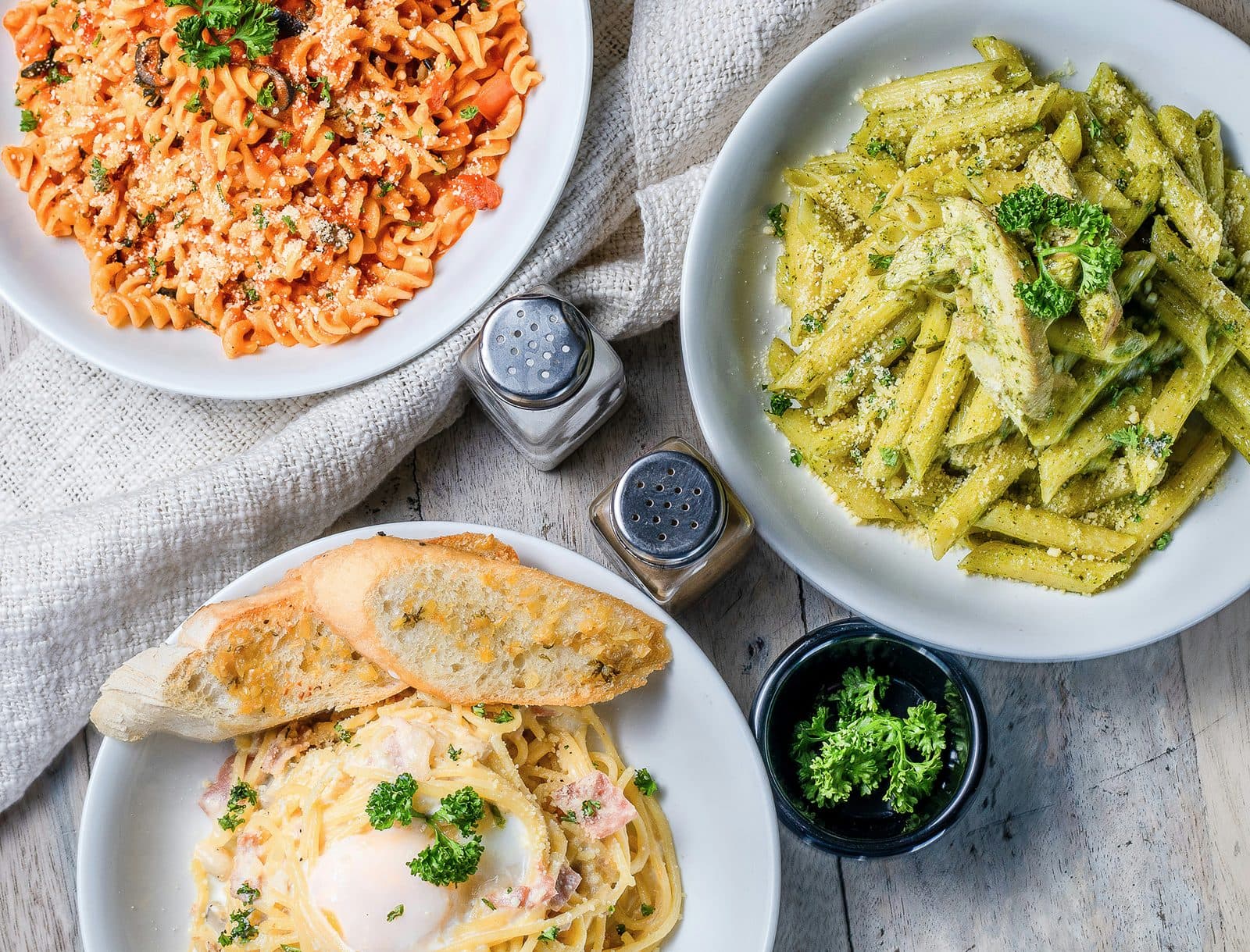
What to Eat in Rome: A Local's Guide to the City's Signature Dishes
7 min
Read the walk
The full story of Historic Center: The City That Reuses Everything, in words. Prefer to listen? Play it narrated, from home or on location.
Introduction
Rome, the capital of Italy, has never been in the habit of throwing things away. In its old center, inside a bend of the Tiber, a stadium became a square, a temple became a church, and the stone of ancient ruins became the walls of palaces. Even the ground keeps the past: it has risen over the centuries, and ancient Rome often lies several metres below the street.
This walk follows that habit through the historic center. It starts among temples in a pit at Largo di Torre Argentina, crosses the market square of Campo de' Fiori, runs through the long oval of Piazza Navona, reaches the Pantheon, and ends in front of the Jesuit church of Sant'Ignazio.
Three people come back along the way. Gian Lorenzo Bernini and Francesco Borromini, two architects who reshaped Rome in the sixteen hundreds and left fountains, church fronts and a spiral on a rooftop. And Hadrian, the emperor who rebuilt the Pantheon, and whose own temple you meet near the end.
The Pantheon is ticketed; the details are on its stop's card. Everything else can be seen free from the street, and the church at the end is free to enter.
The walk is eleven stops over just under two and a half kilometres, about a mile and a half, and takes about ninety minutes. It is flat, with no steps, but the streets are paved with small, bumpy cobbles.
1. Largo di Torre Argentina: Temples in a Pit
Welcome to Largo di Torre Argentina. You are on the pavement by the mouth of a side street, Via del Sudario. Cross at the zebra crossing here and walk to the railing above the sunken ground, about forty steps away, and stop there. Down below, well under the level of the traffic, lie the remains of four temples, older than the Colosseum. Archaeologists label them A, B, C and D.
Find the round one, with some of its columns still standing. It is a circular temple, built in one hundred and one BC.
None of this was on show a hundred years ago. The city had grown over the ruins, and a block of buildings stood here. In nineteen twenty-six and twenty-seven the block was demolished, and the demolition found the temples. The site opened in nineteen twenty-nine. That is the first thing to notice in Rome: the ground has risen, and you will meet the ancient city again, always a few metres down.
The second thing is in one of these temples. More than a thousand years ago, in the early nine hundreds, a church was built into it, and its curved ends, the apses, still stand among the ruins.
One more ruin here is easy to miss. On this side of the pit stood a hall belonging to the great theatre complex of Pompey, and only a stretch of its wall is left. The Senate was meeting in it on the Ides of March, forty-four BC, when Julius Caesar was stabbed to death at the foot of Pompey's statue.
The walkways down among the temples are a booked, ticketed visit. The view from the railing is free.
When you have looked, come back over the same zebra crossing and follow the route west along the pavement of the main road. At the second side street, turn left into the narrow lanes toward a market square.
2. Campo de' Fiori: Market and Pyre
Walk on into the open square and stop where you can see the dark, hooded figure on a tall stone base in the middle. This is Campo de' Fiori, and on most mornings, Monday to Saturday, it fills with market stalls.
For centuries the square did two jobs. It was a market, and it was a place of execution. The figure on the base is Giordano Bruno. He was condemned for heresy and burned alive here on the seventeenth of February, sixteen hundred.
The statue came almost three centuries later, in eighteen eighty-nine, in the new Italy, where Bruno had become a symbol of freedom of thought. He faces toward the Vatican. The inscription on the monument, in Italian, dedicates it to Bruno from the century he foresaw, here, where the fire burned. That it stands on the very spot of the pyre is the local tradition.
Look at how the square is used. The statue simply stands in the middle of the square, and on market mornings the stalls of fruit, vegetables and flowers set up around it. In Rome even a place of execution went on being a place to shop.
Follow the route along a short lane into a wider, quieter square in front of a great palace.
3. Piazza Farnese: Bath Tubs for Fountains
Walk on into the broad, open square and stop where you can take in the long, plain palace front that closes it. This is Piazza Farnese, and that is Palazzo Farnese.
A cardinal of the Farnese family commissioned it in fifteen thirteen, and he later became pope. Four architects worked on it in turn, and it was finished only in fifteen eighty-nine, more than seventy years later. Look at how plain and severe the front is. Its grandeur is its size.
Today it is the French Embassy, which is why you see the French flag and security outside. Visits inside are by guided tour only, booked ahead on the official site.
Now look at the two fountains in front of it. Each one is built around a huge basin of Egyptian granite. They were not made for this square. They are ancient bath tubs from one of Rome's great public baths, said to be the Baths of Caracalla, brought here and turned into fountains in the fifteen and sixteen hundreds. Exactly where they came from has been debated for a long time. That they are ancient, and reused, is not in doubt.
Keep the question of where Rome's building stone came from in mind. On the way to the next stop you pass a palace whose stone has a famous answer.
Follow the route along a lane past the edge of the market square and on past a long, pale palace front. Then cross the main road by the two zebra crossings, which have no lights. Between them the route runs a few steps along the road itself, where buses pass, so wait for a clear gap. The lane after it has no pavement either.
4. Pasquino: The Statue That Talks Back
Walk on into the little square and stop near the corner of the building, where a battered stone figure, its face worn away and its arms gone, stands against the wall, with paper notes pinned on a board beside it. This is Pasquino.
First, though, the palace you just passed, with the long, pale front. That is the Cancelleria, built from fourteen eighty-five for a cardinal and still owned by the Vatican. Rome's own tourist office says its bone-colored stone was taken from ancient ruins, among them the Colosseum and the Theatre of Pompey, the same theatre whose hall stood at the first stop. A palace built out of a ruin: there is the city's habit, in a single wall.
Now Pasquino. He is a piece of an ancient sculpture, usually identified as the Greek hero Menelaus holding up the body of his friend Patroclus. Even the city's own experts disagree on his age, by about four hundred years. He was found in fifteen oh one, and he probably once decorated the ancient stadium that lies under the next big square of the walk.
Romans gave the broken statue a second career. From the fifteen hundreds people hung anonymous verses on him, mocking the pope's court and the powerful, and he became one of Rome's six talking statues. His sparring partner, a statue called Marforio, is now in a courtyard on the Capitoline Hill, across town, and the verses were posted as if the two were answering each other.
The notes still appear. Today they go on the board beside him, not on the stone itself.
Follow the route into the lanes ahead. They have no pavements, and while cars are rare, scooters are not, so keep to the side.
5. Santa Maria della Pace: A Front That Steps Out
Walk on up the narrow lane and stop where it opens, just before the tiny square at its end. At the end of the lane, a curved porch of columns pushes out toward you, as if the church were stepping into the street. This is Santa Maria della Pace. The church behind the porch is…
Full narration for this stop unlocks with the tour.
6. Piazza Navona: A Stadium Turned Square
Walk on into the square and stop near the great fountain in the middle, with the obelisk rising from its rocks. This is Piazza Navona. Look at the shape of the square: long and narrow, with one end rounded. That is the outline of a stadium. The emperor Domitian built it for…
Full narration for this stop unlocks with the tour.
7. Sant'Eustachio and Sant'Ivo: A Spiral on the Roof
Walk on into the small, irregular square and find the church front with a stag's head high up on it, a cross standing between the antlers. This is Piazza Sant'Eustachio, and that is the church of Sant'Eustachio. The stag recalls the saint's legend: a vision of a stag carrying a…
Full narration for this stop unlocks with the tour.
8. Piazza della Minerva: An Elephant's Obelisk
Walk on along the lane and stop where it meets the edge of a small square. In front of a plain church front stands a marble elephant with a little obelisk on its back. This is Piazza della Minerva. The design is Bernini's again, the sculptor of the Four Rivers fountain at…
Full narration for this stop unlocks with the tour.
9. Pantheon: Saved by Becoming a Church
Walk on into the square and stop near the fountain with the obelisk, then turn to face the great porch of granite columns. This is the Pantheon. Going inside takes a ticket, booked ahead, and it is worth it; the details are on this stop's card. Read the big letters across the…
Full narration for this stop unlocks with the tour.
10. Piazza di Pietra: A Temple Turned Office Front
Walk on into the small square and stop facing the row of tall, fluted columns built into the front of a later palace. This is Piazza di Pietra, the Square of Stone, and the stone is Hadrian's. These eleven columns, and the wall behind them, are what is left of the Temple of…
Full narration for this stop unlocks with the tour.
11. Sant'Ignazio: The Dome That Isn't There
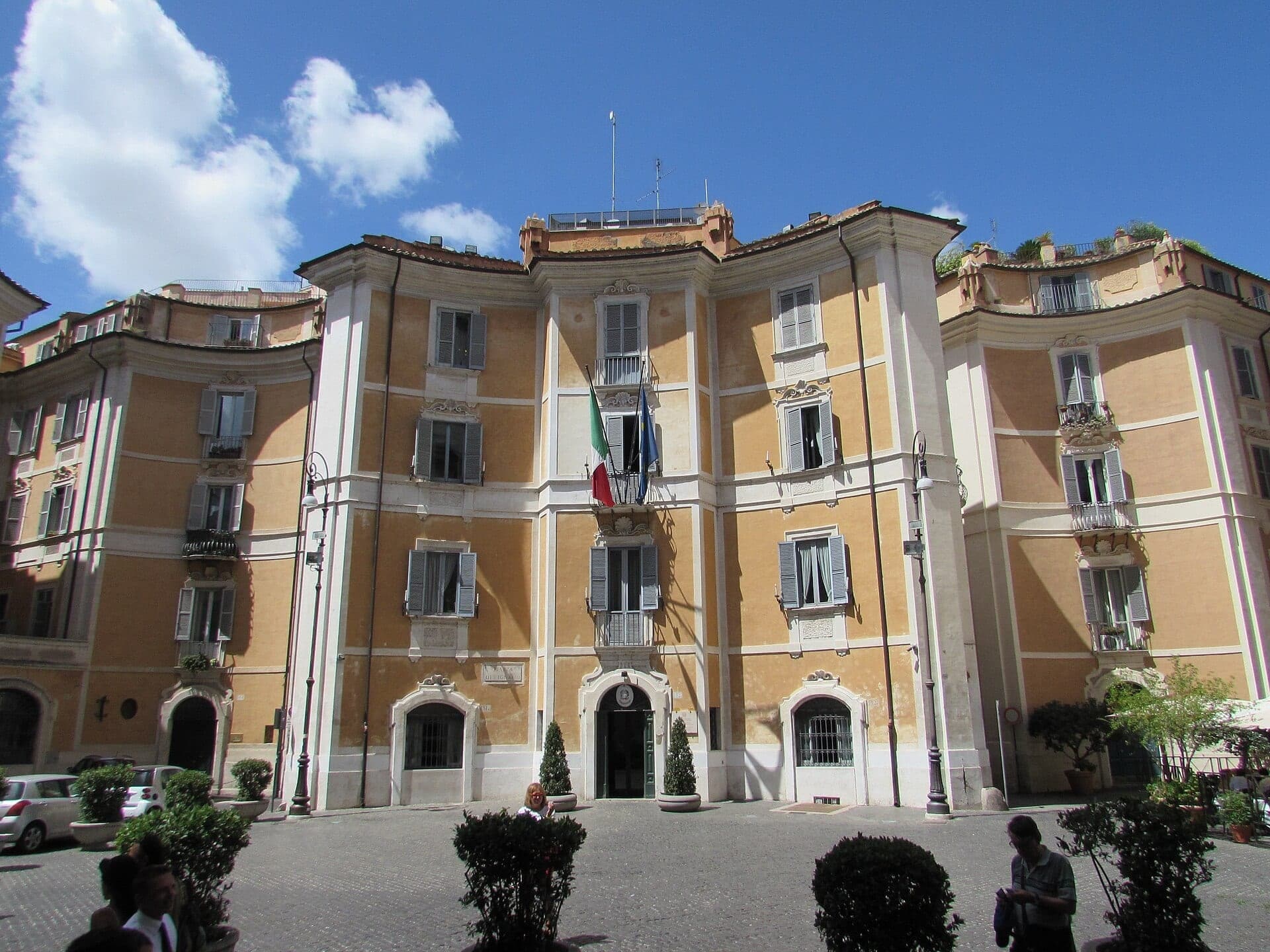
Walk on into the last square, a small space framed by curving house fronts like the wings of a stage, and stop where you can see the tall church front across it. This is Piazza di Sant'Ignazio, and that is the Jesuit church of Sant'Ignazio. It is free to enter, open late into…
Full narration for this stop unlocks with the tour.
- Largo di Torre Argentina, Rome. — Mariordo (Mario Roberto Durán Ortiz), CC BY-SA 4.0 · source
- Largo di Torre Argentina, Area Sacra dal IV al I sec. a.C. — Luciano Tronati, CC BY-SA 4.0 · source
- Giordano Bruno in Campo de' fiori — Livioandronico2013, CC BY-SA 4.0 · source
- Piazza Campo dei Fiori, Rome: the market with the statue to Giordano Bruno in the background. — Myrabella, CC BY-SA 3.0 · source
- Pasquino statue in Rome, Italy in May 2009 — Acediscovery, CC BY 4.0 · source
- Pasquino — Girolamus, CC BY-SA 4.0 · source
- Église Santa Maria della Pace, Rome. — Chabe01, CC BY-SA 4.0 · source
- Roma, via della Pace e S. Maria della Pace. A sinistra, palazzo Gambirasi. — Lalupa, CC BY-SA 4.0 · source
- Piazza Navona in Rome, Lazio, Italy — Krzysztof Golik, CC BY-SA 4.0 · source
- Piazza Navona, Rome — Myrabella, CC BY-SA 3.0 · source
- Our discovery of this place was purely accidental. We were walking down Corso del Rinascimento and just happened to spot the courtyard entra — daryl_mitchell from Saskatoon, Saskatchewan, Canada, CC BY-SA 2.0 · source
- The lantern of Sant'Ivo alla Sapienza in Rome at sunset — Nhartmannphotos, CC BY-SA 4.0 · source
- The Elephant and Obelisk in Rome. — This Photo was taken by Wolfgang Moroder. Feel free to use my photos, bu, CC BY-SA 3.0 · source
- Top of the Pantheon, Rome — Mariordo (Mario Roberto Durán Ortiz), CC BY-SA 4.0 · source
- 03 Piazza Sant'Ignazio — NateBergin, CC BY 4.0 · source
- Sant'Ignazio Palace (Rome) — Cezar Suceveanu, CC BY-SA 4.0 · source
Images may be cropped or resized. Other photos via Unsplash and Pexels.