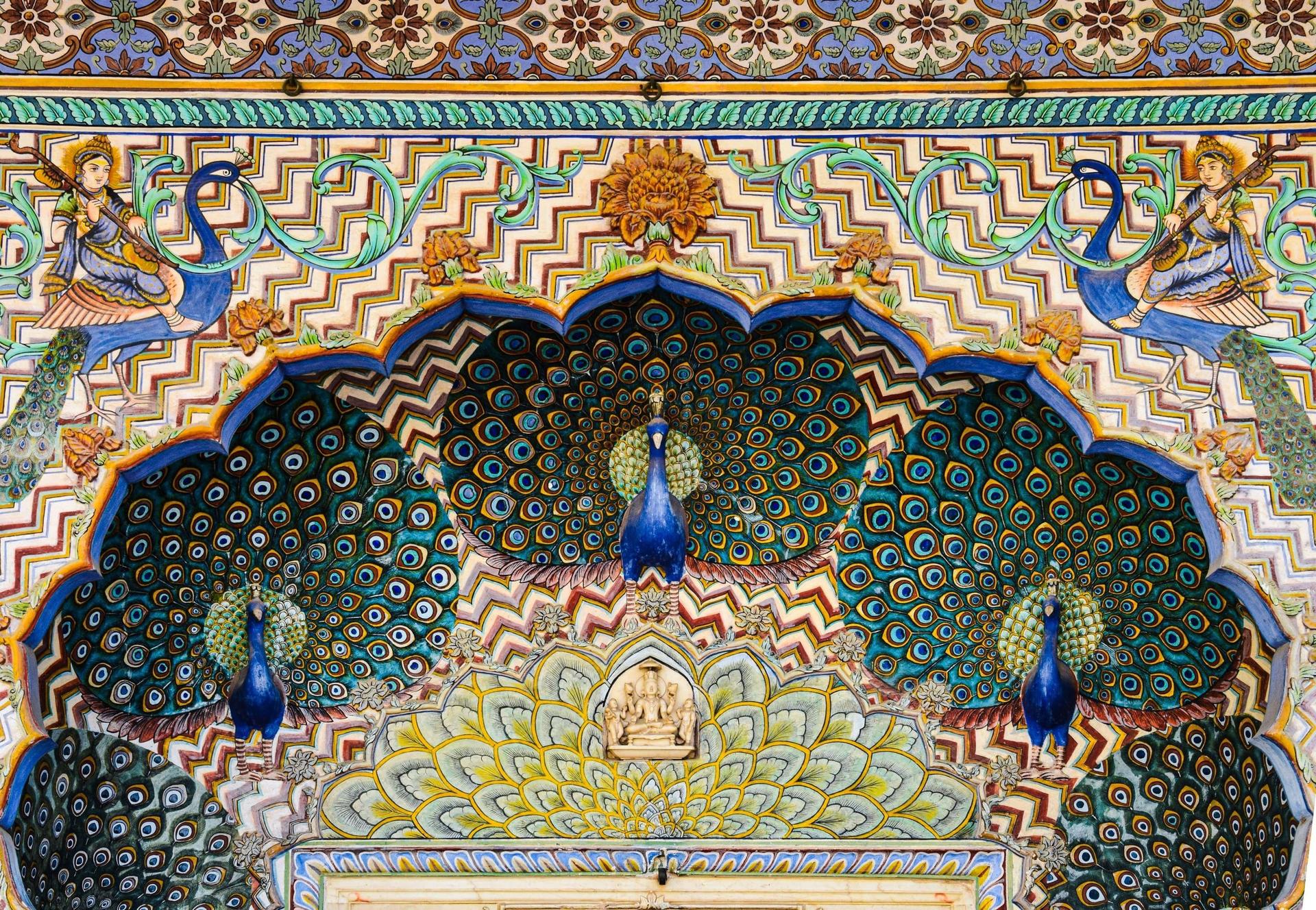
Inside Jaipur's City Palace from gate to gate: in through Virendra Pol to the Mubarak Mahal and its gallery wings, through Rajendra Pol to the open Sarvato Bhadra hall and its giant silver Gangajalis, into Pritam Niwas Chowk's painted doorways under the Chandra Mahal, past the Sabha Niwas throne room and the Rath Khana, and out by Uday Pol to Jaleb Chowk.
Start · Virendra Pol
DirectionsStops
- 1
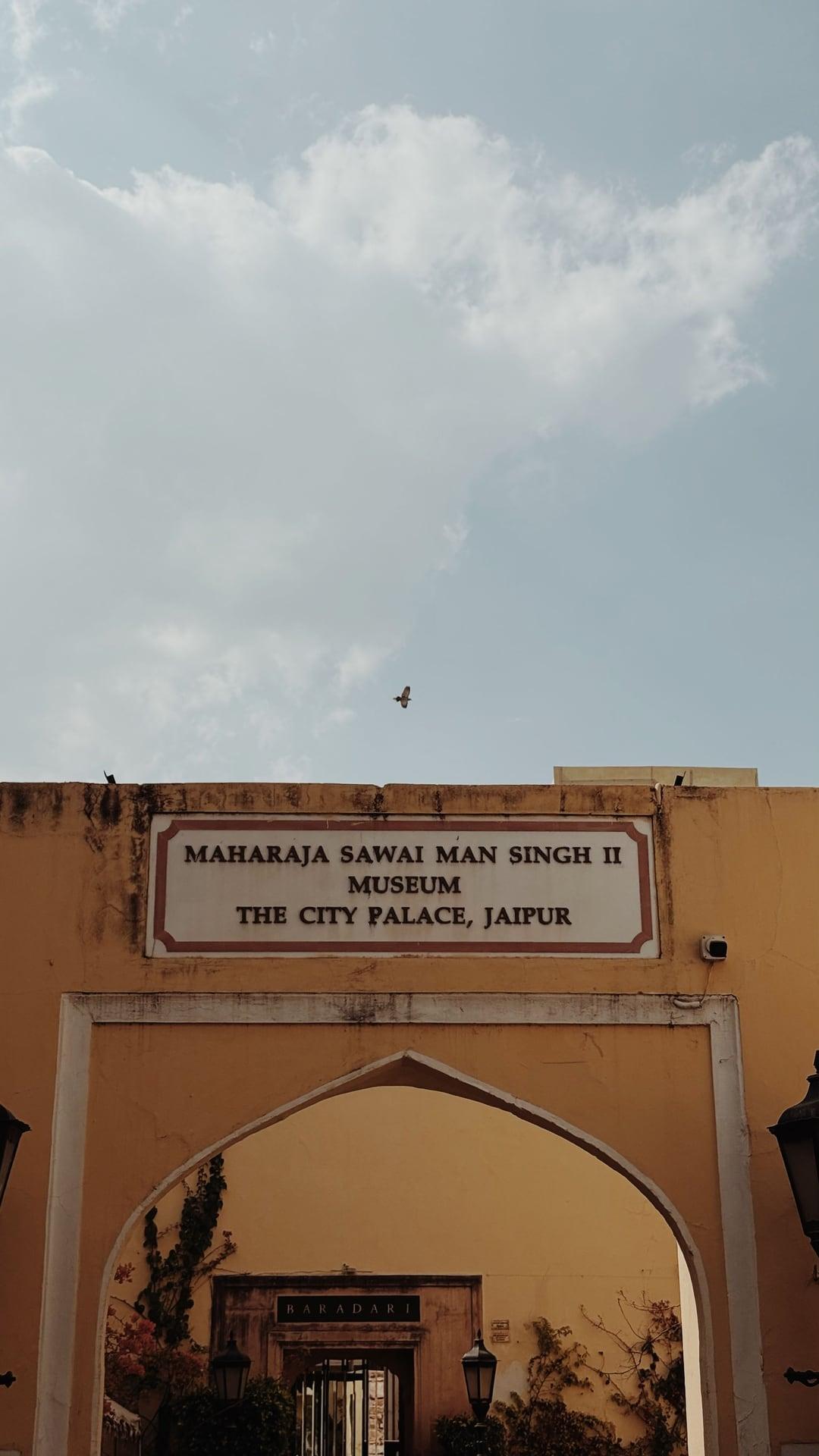
Virendra Pol
The front door of a lived-in palace. Virendra Pol, the City Palace's first gate beside the Jantar Mantar, opens into a chain of seven courtyards: four are a museum, and at the heart the Chandra Mahal is still the royal family's home.
- 2
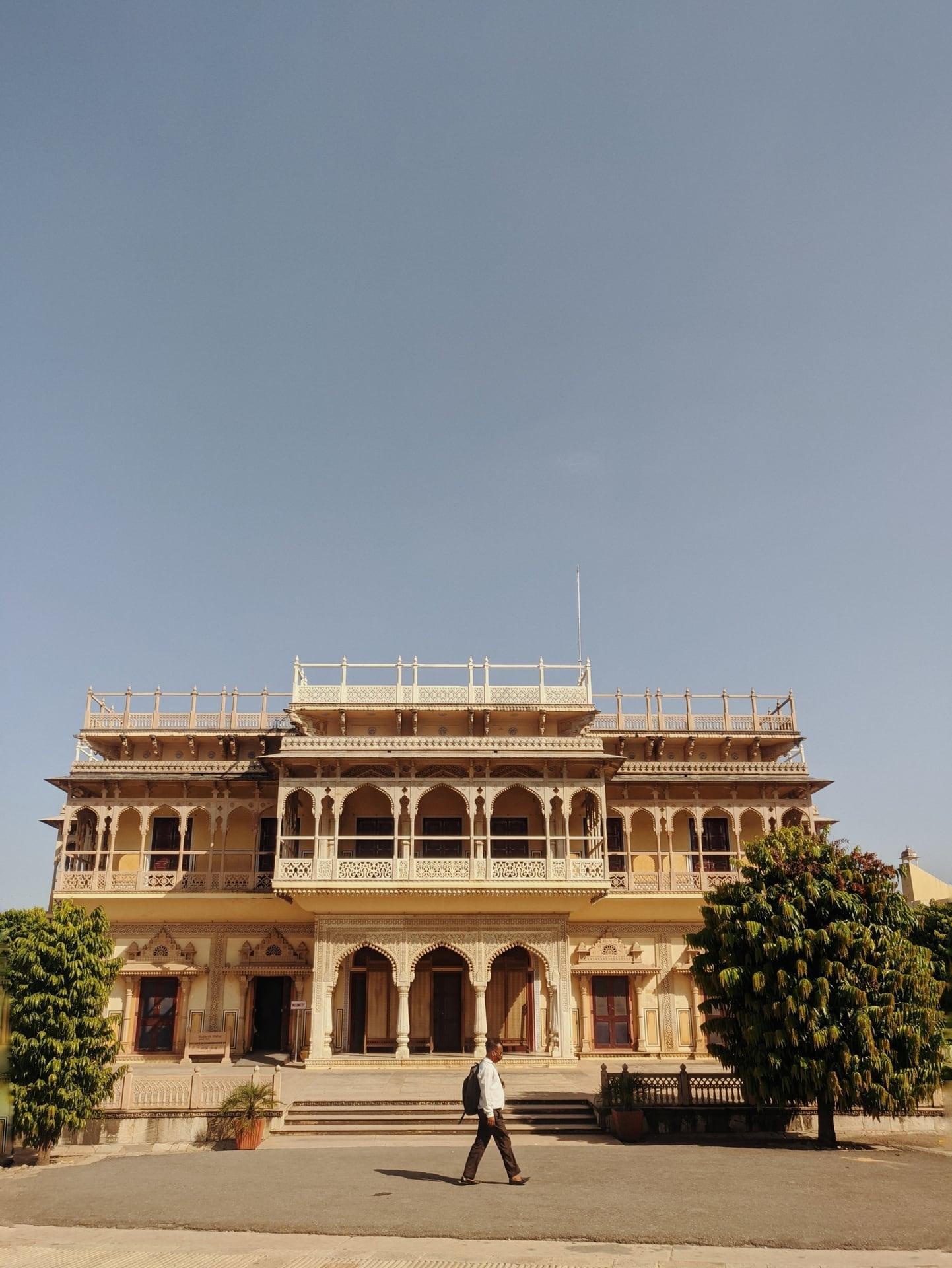
Mubarak Mahal
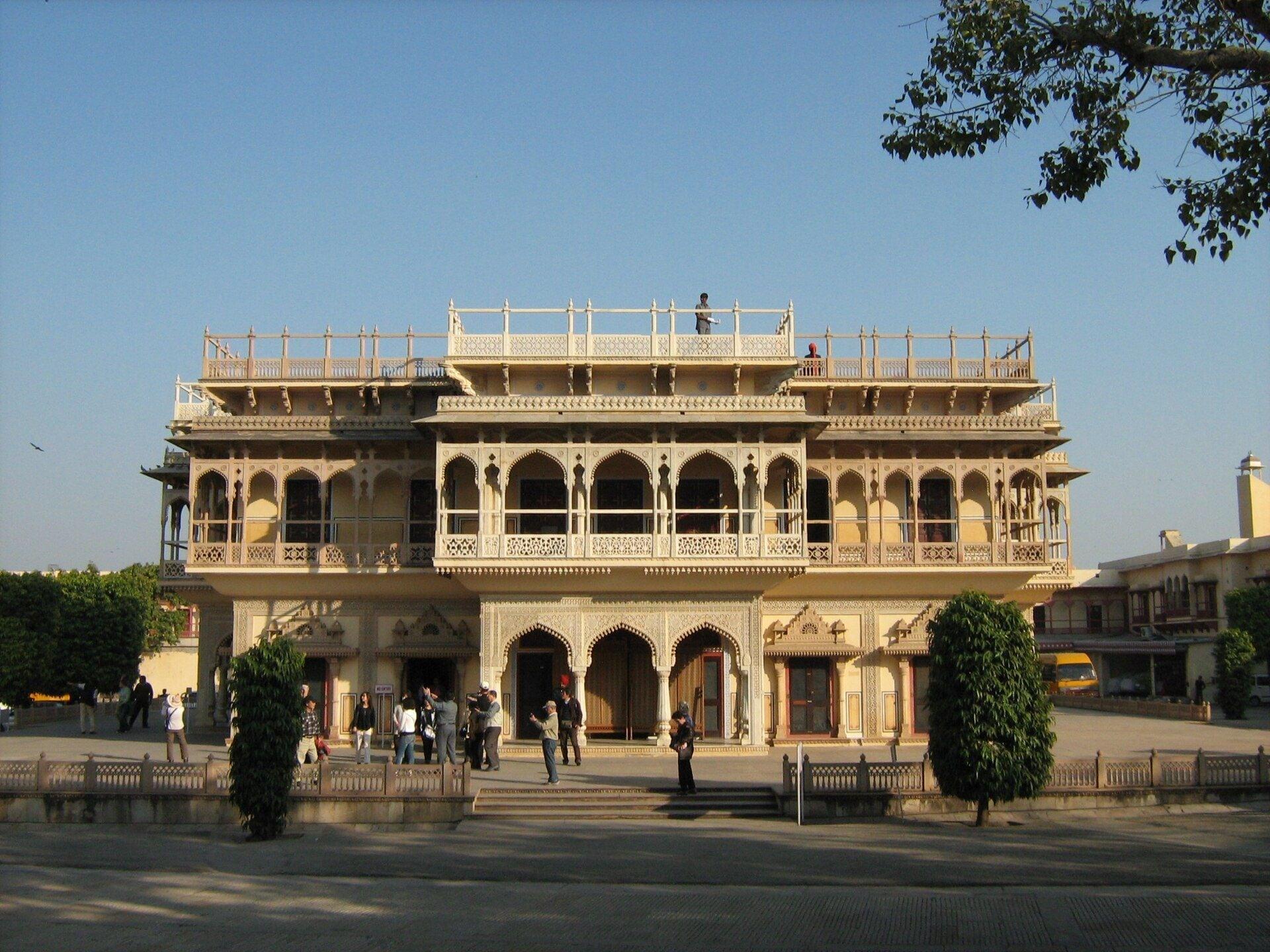
A guest house built for the empire. The Mubarak Mahal, the Auspicious Palace, built around 1900 under Sawai Madho Singh II to receive foreign visitors, now the museum's textile gallery (closed for restoration since March 2026).
- 3
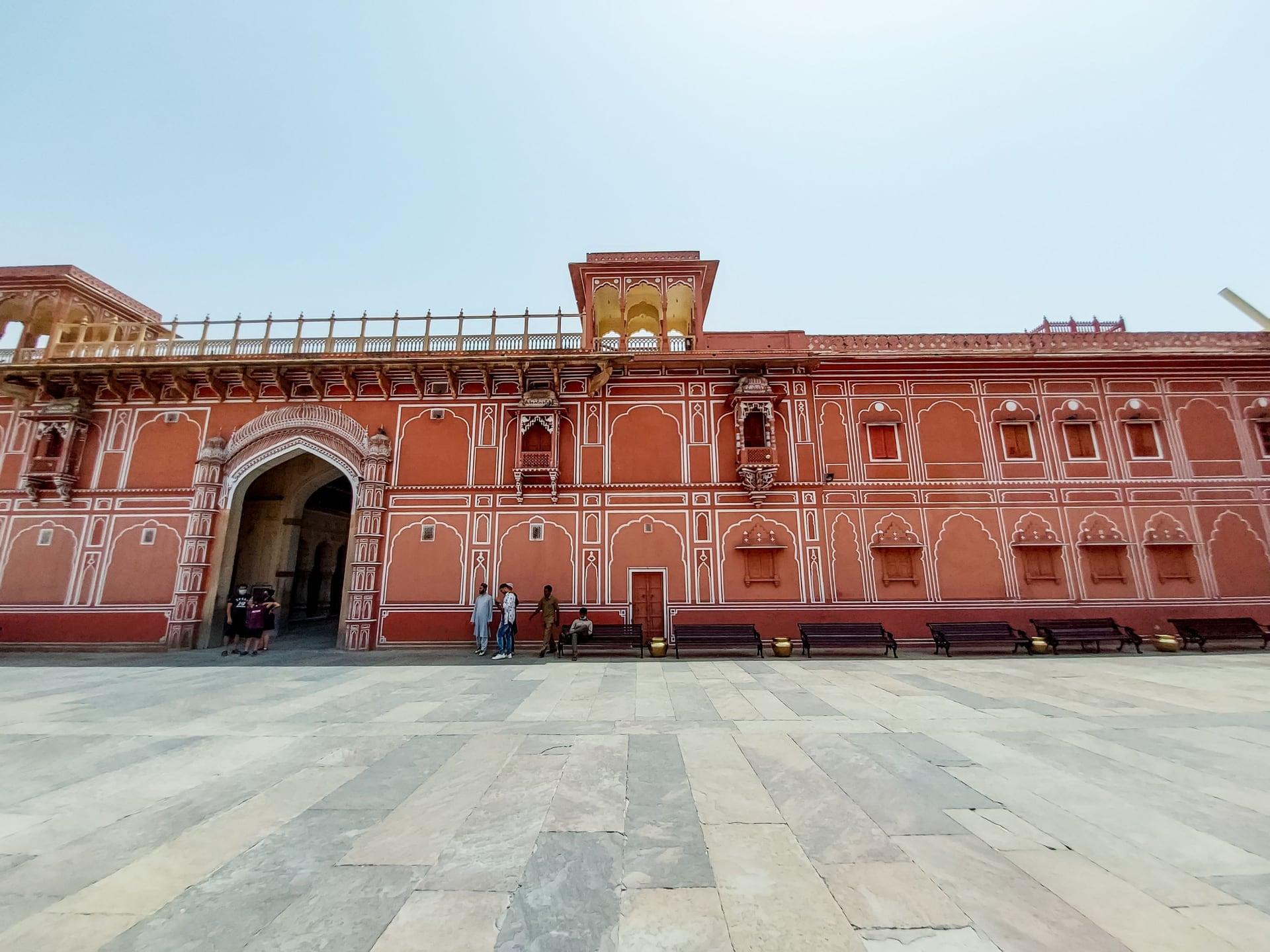
The Gallery Wings
A king who worked behind a camera. The wings round the Mubarak Mahal's court hold paintings, the photographs Sawai Ram Singh II took from the 1860s, and the Sileh Khana, the royal armory.
- 4
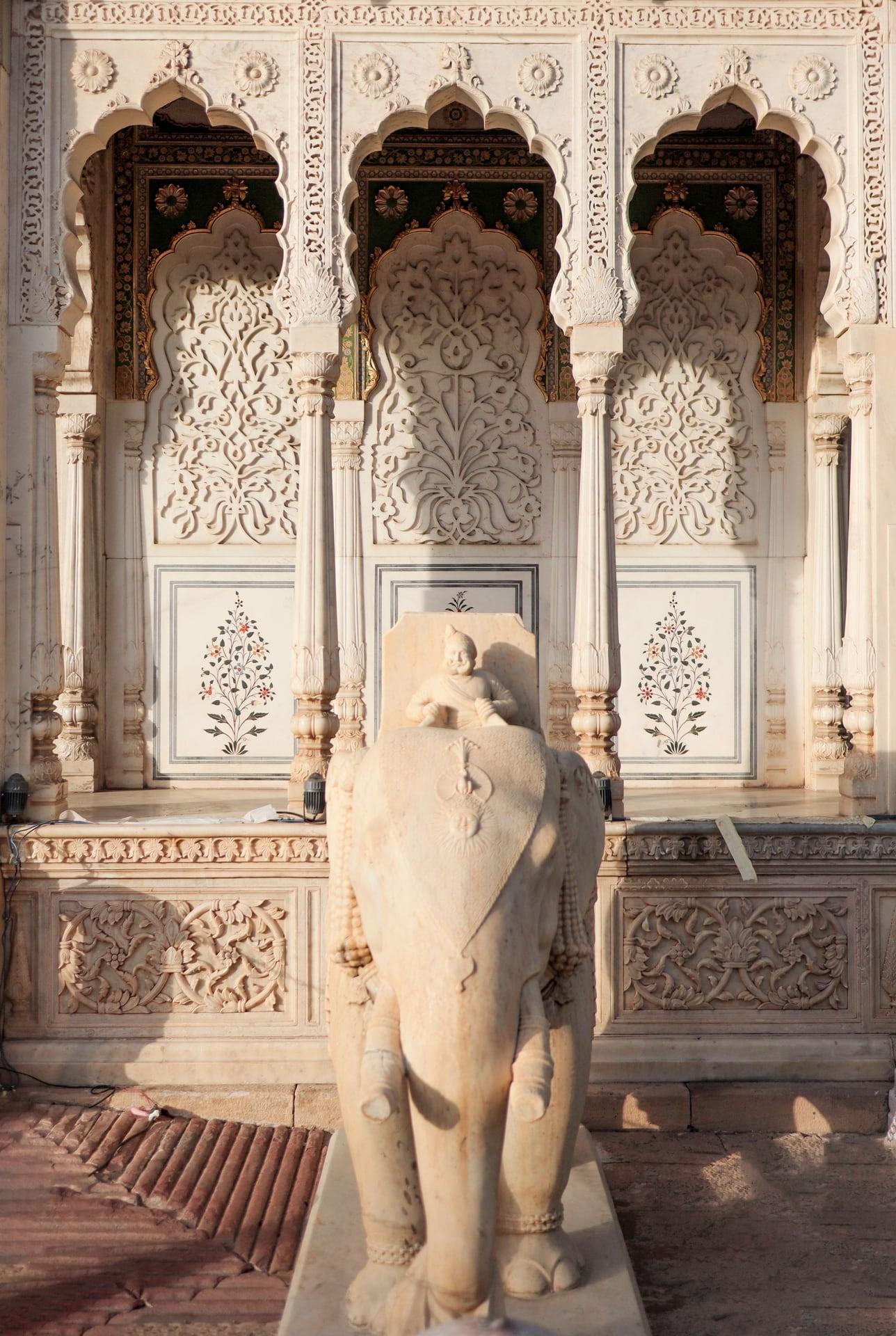
Rajendra Pol
A gateway said to mark a birth. Rajendra Pol, the gate from the Mubarak Mahal's court into the court of private audience, flanked by marble elephants said to celebrate an heir born in 1931.
- 5
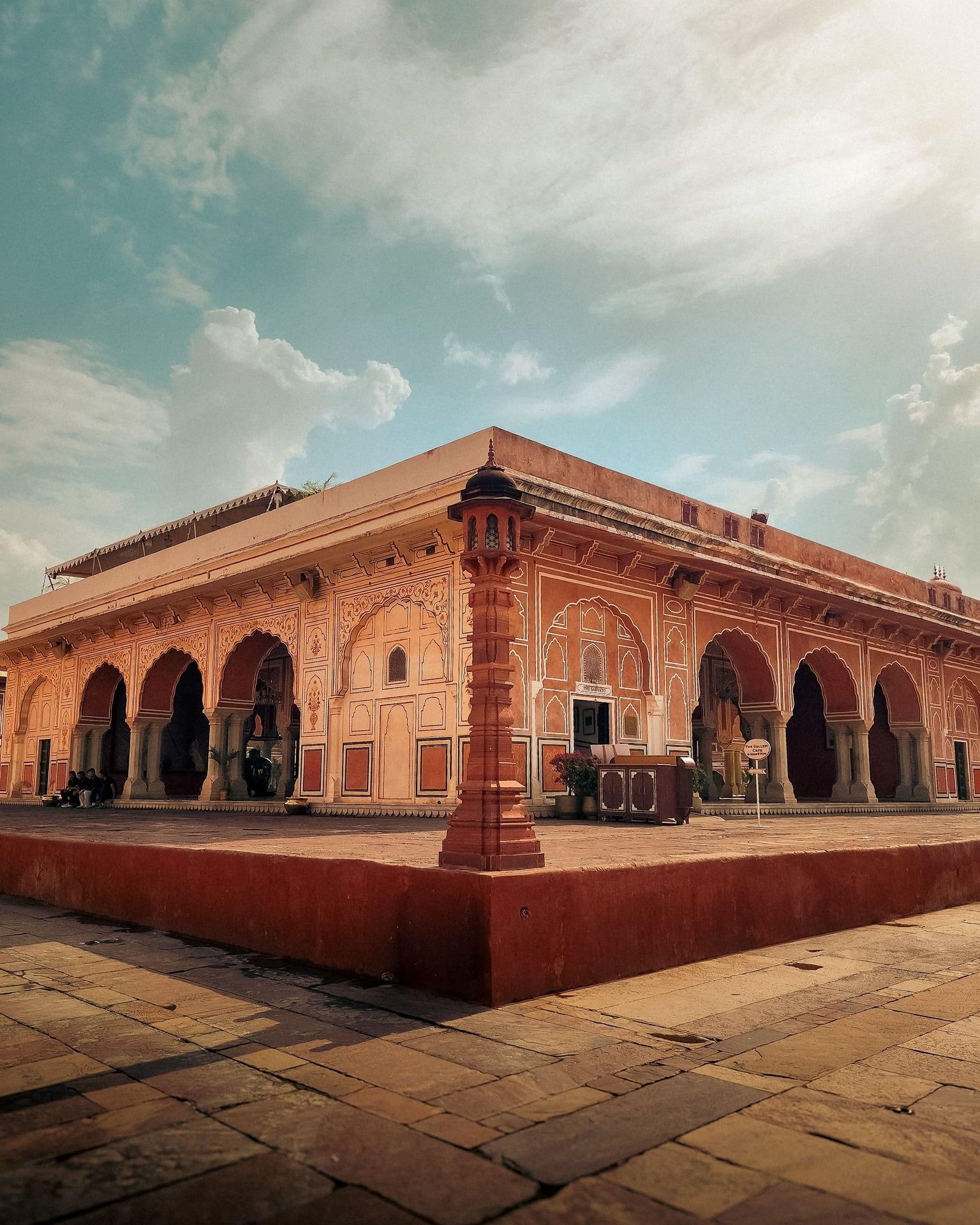
Sarvato Bhadra
Private councils met in an open hall. The Sarvato Bhadra, the Diwan-i-Khas or hall of private audience, a square pavilion open on four sides, where the Maharaja met his ministers and held rites of the year.
- 6
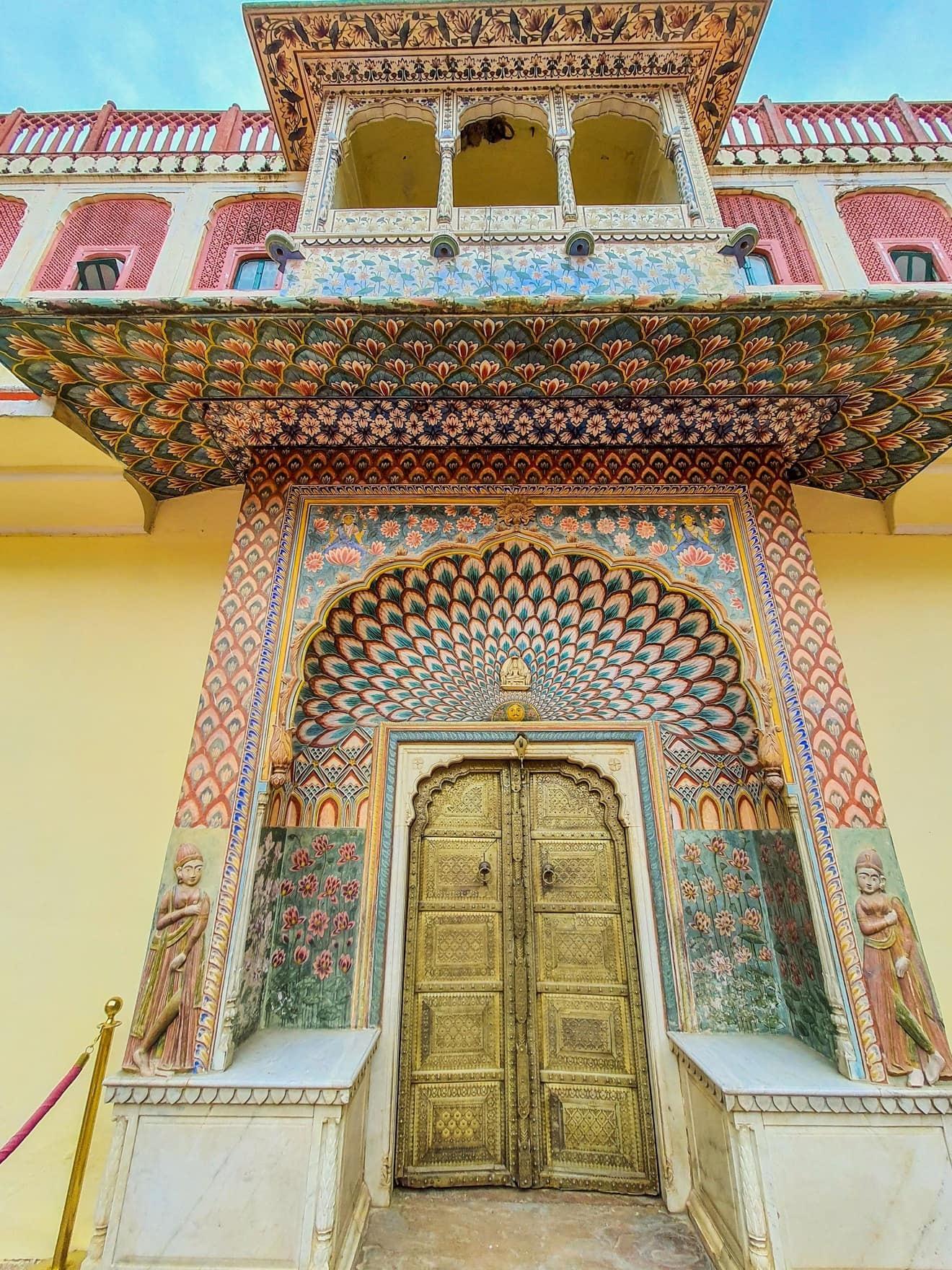
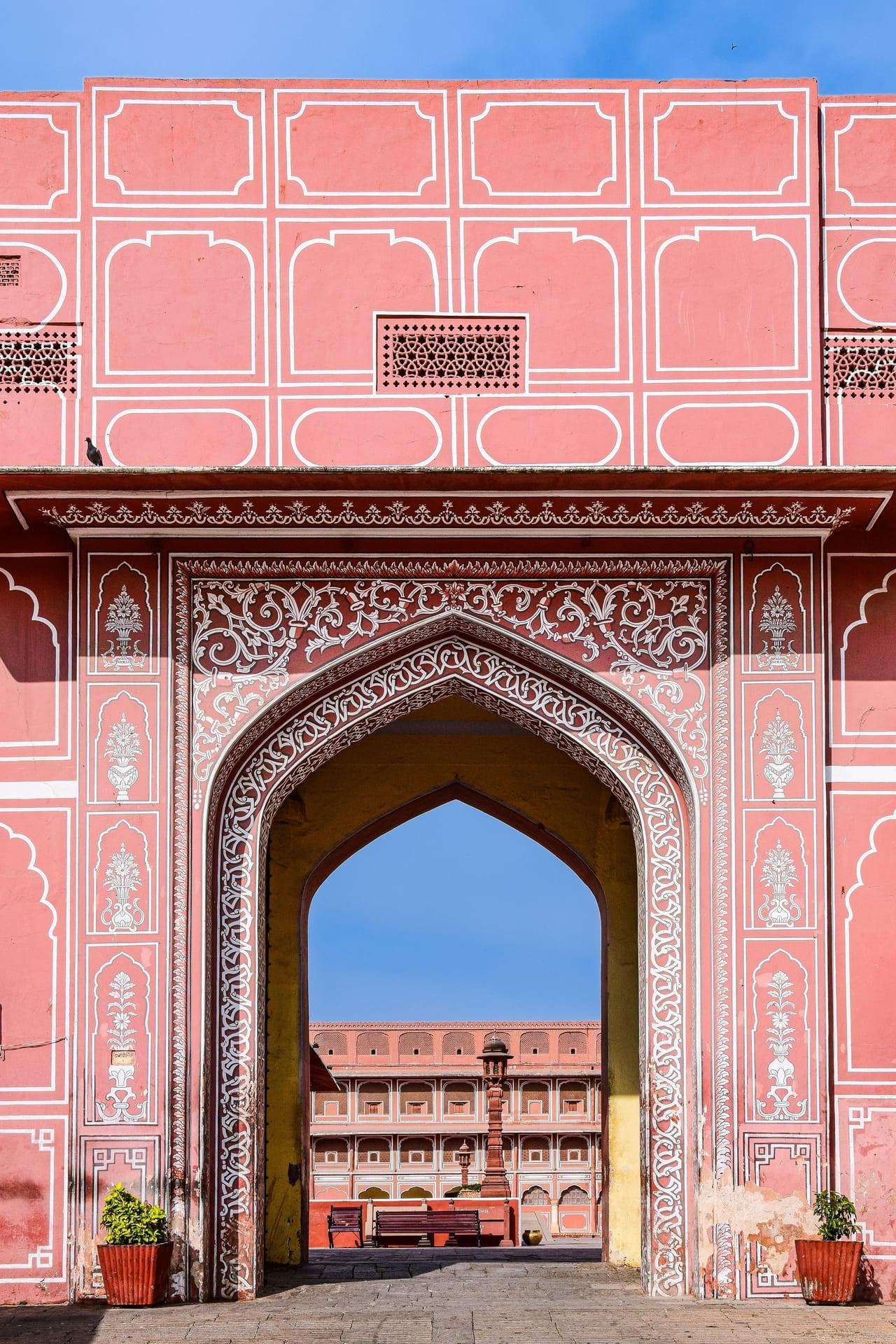
Pritam Niwas Chowk
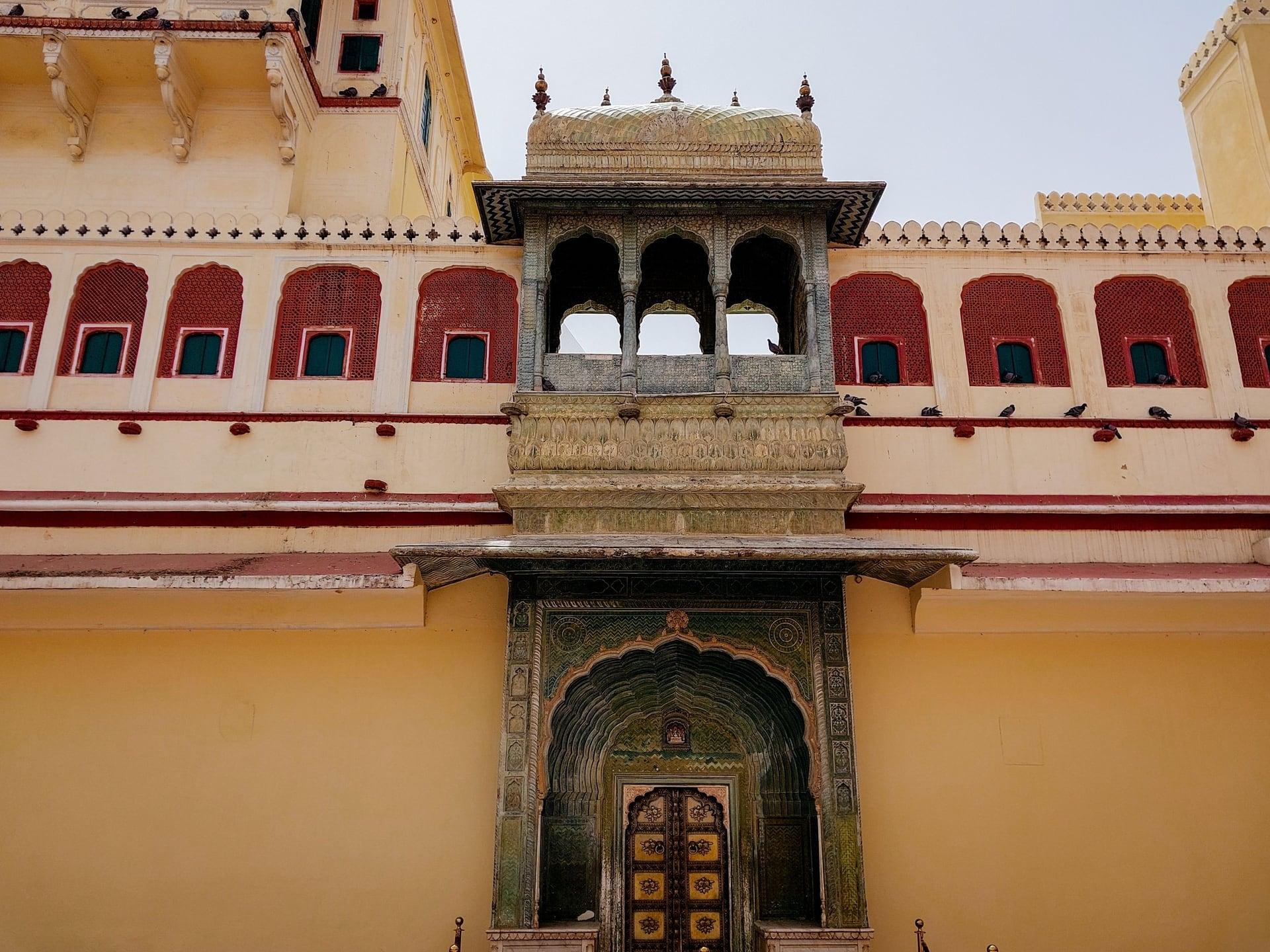
The palace corrects its own legend. Pritam Niwas Chowk, the small court before the Chandra Mahal, with four painted doorways popularly read as the seasons, which the palace itself says are more likely each dedicated to a god.
- 7
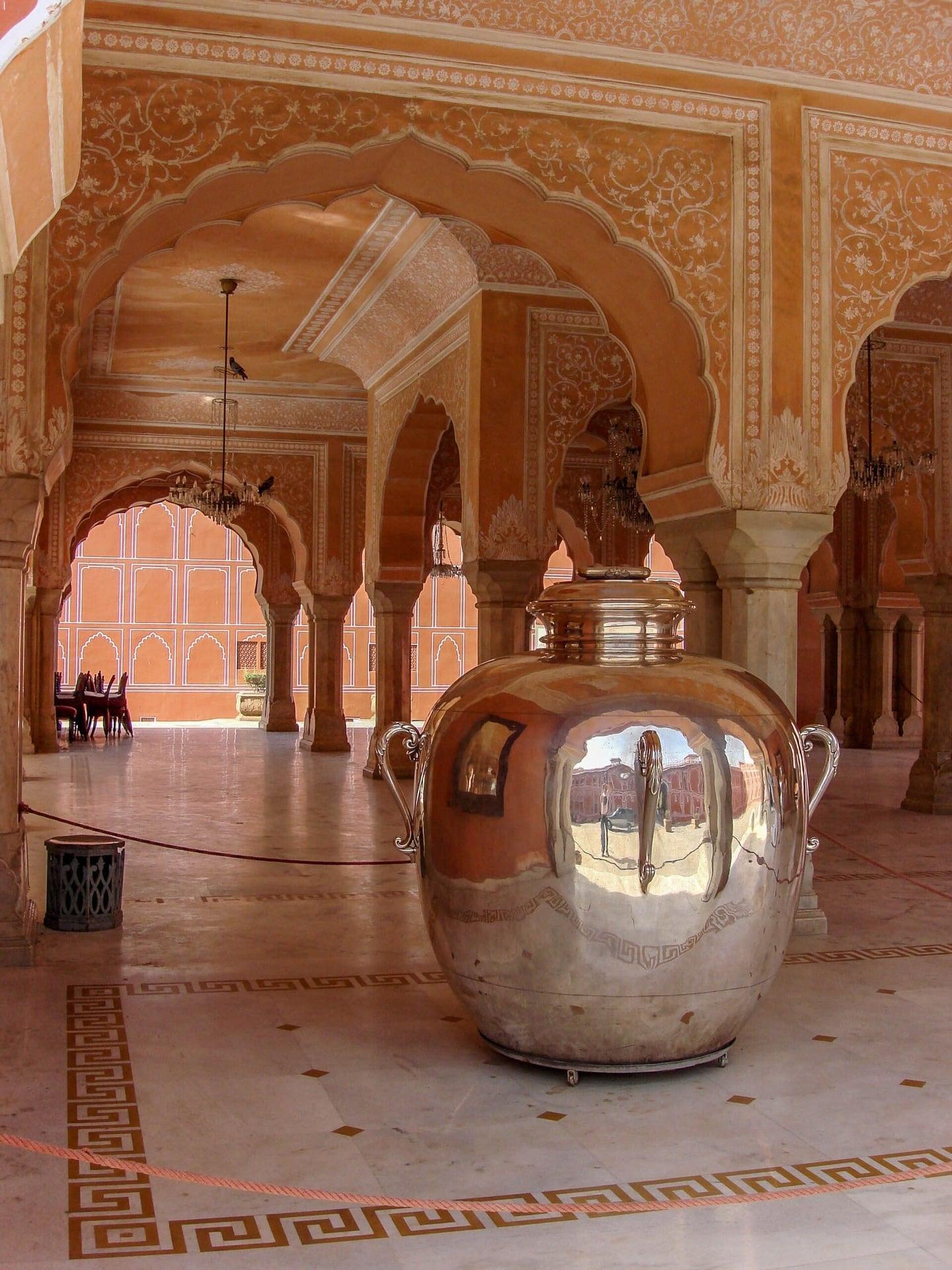
The Gangajalis
A king took his river to England. The Gangajalis, two giant silver urns in the Sarvato Bhadra hall, made from over 14,000 silver coins to carry Ganges water on Sawai Madho Singh II's journey to England.
- 8
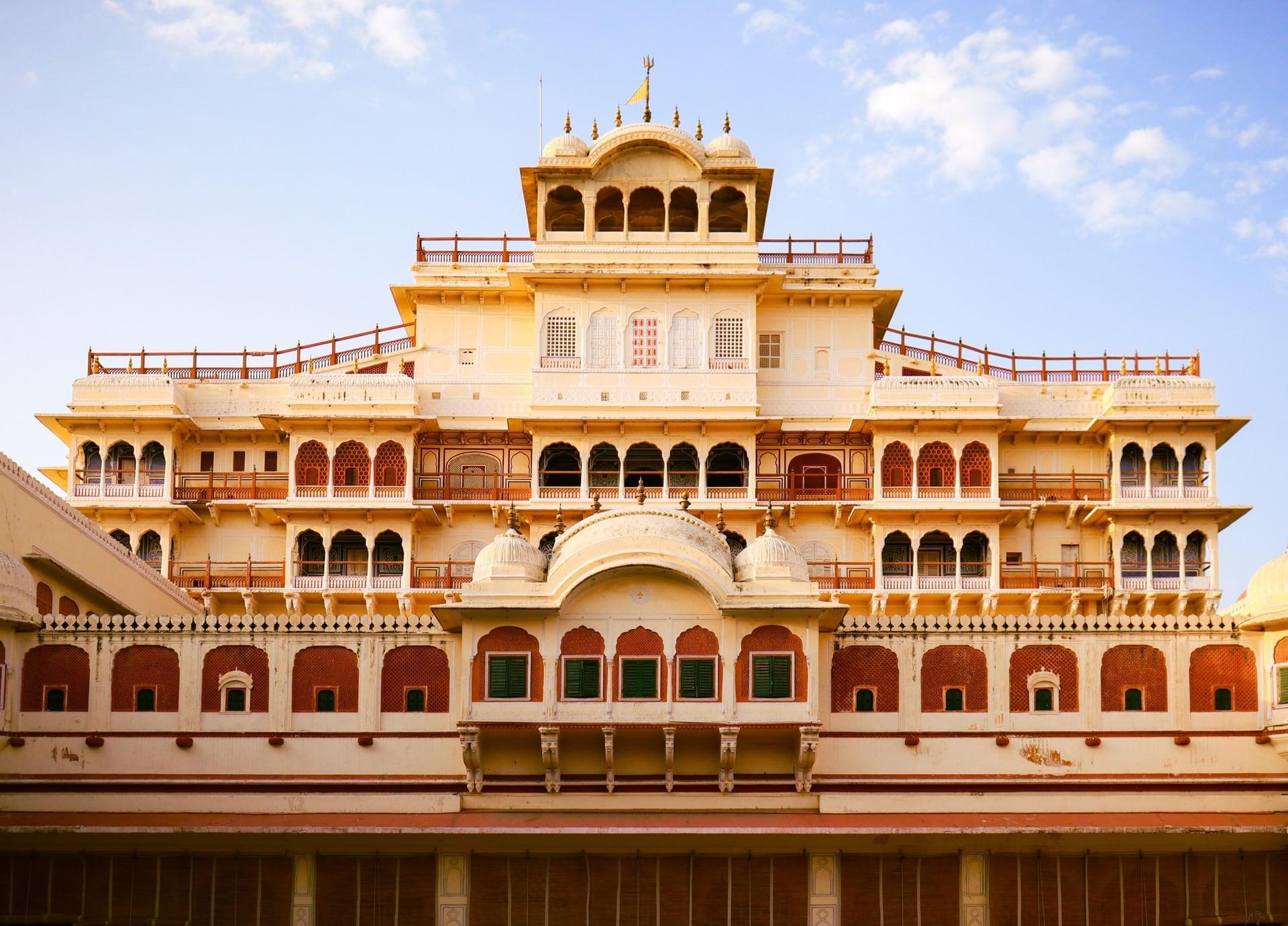
Chandra Mahal
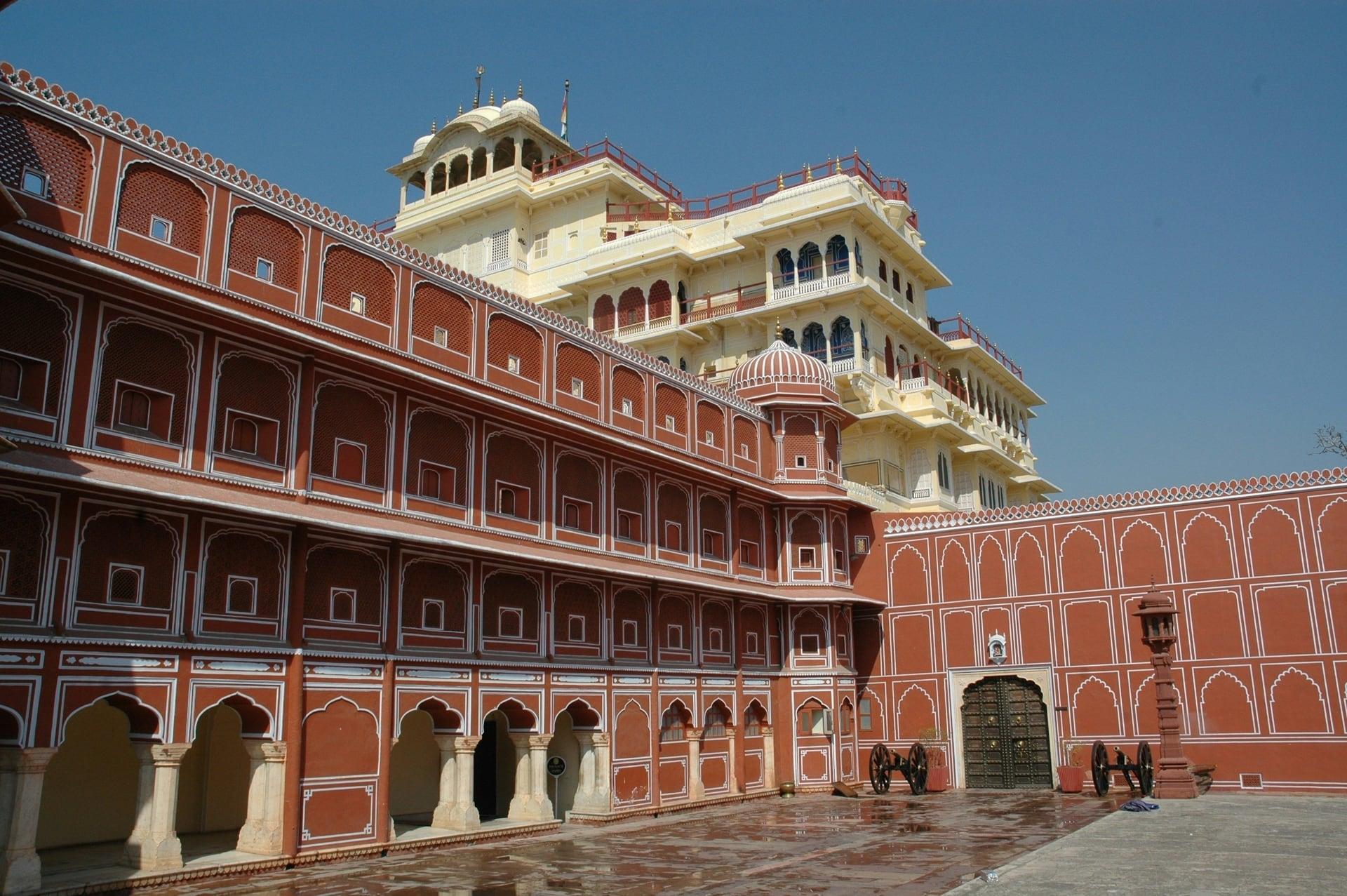
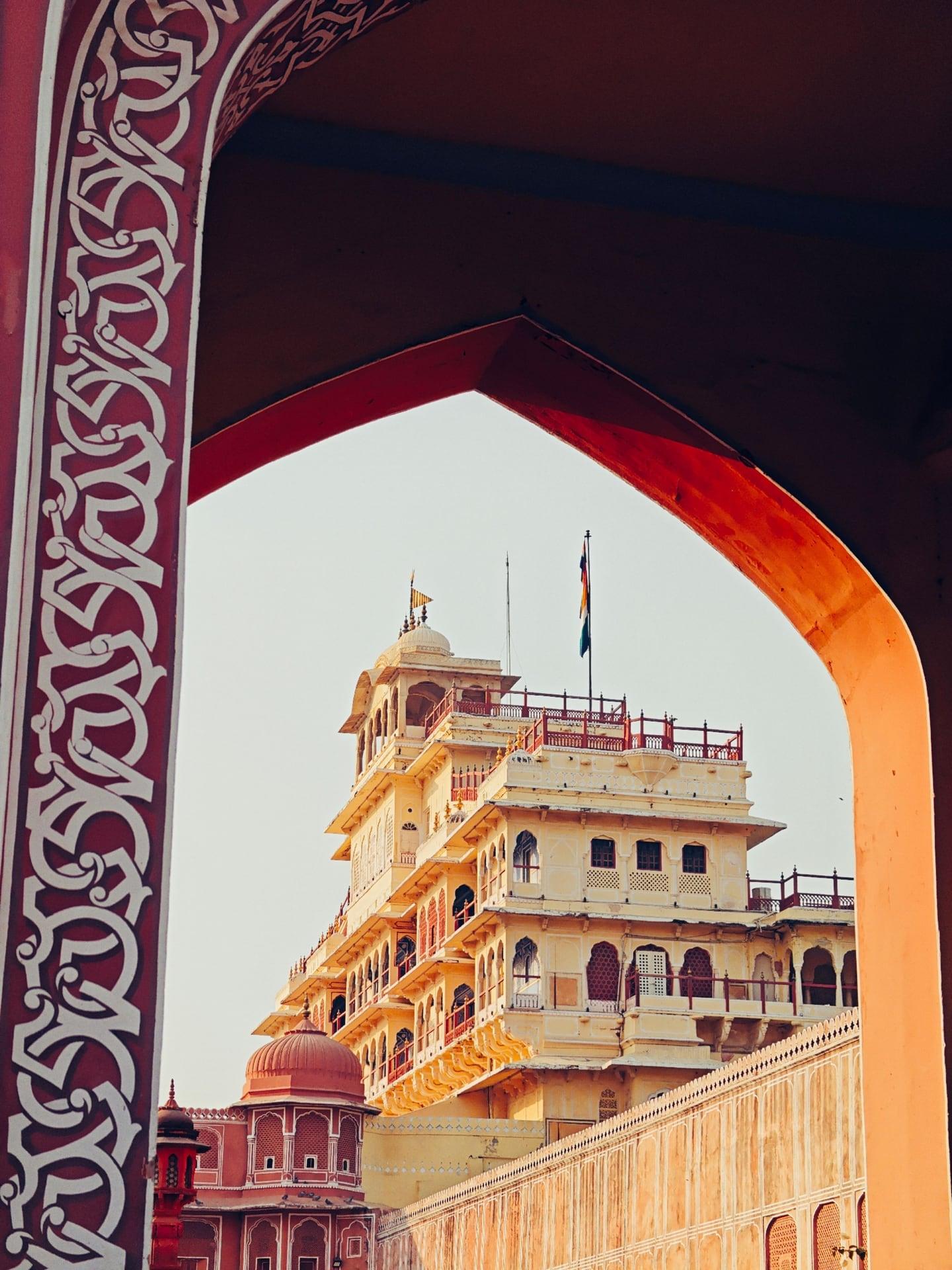
The palace is still a family's home. The Chandra Mahal, the seven-story residence at the palace's heart, seen across the court of private audience; a few rooms open only on a separate guided tour.
- 9
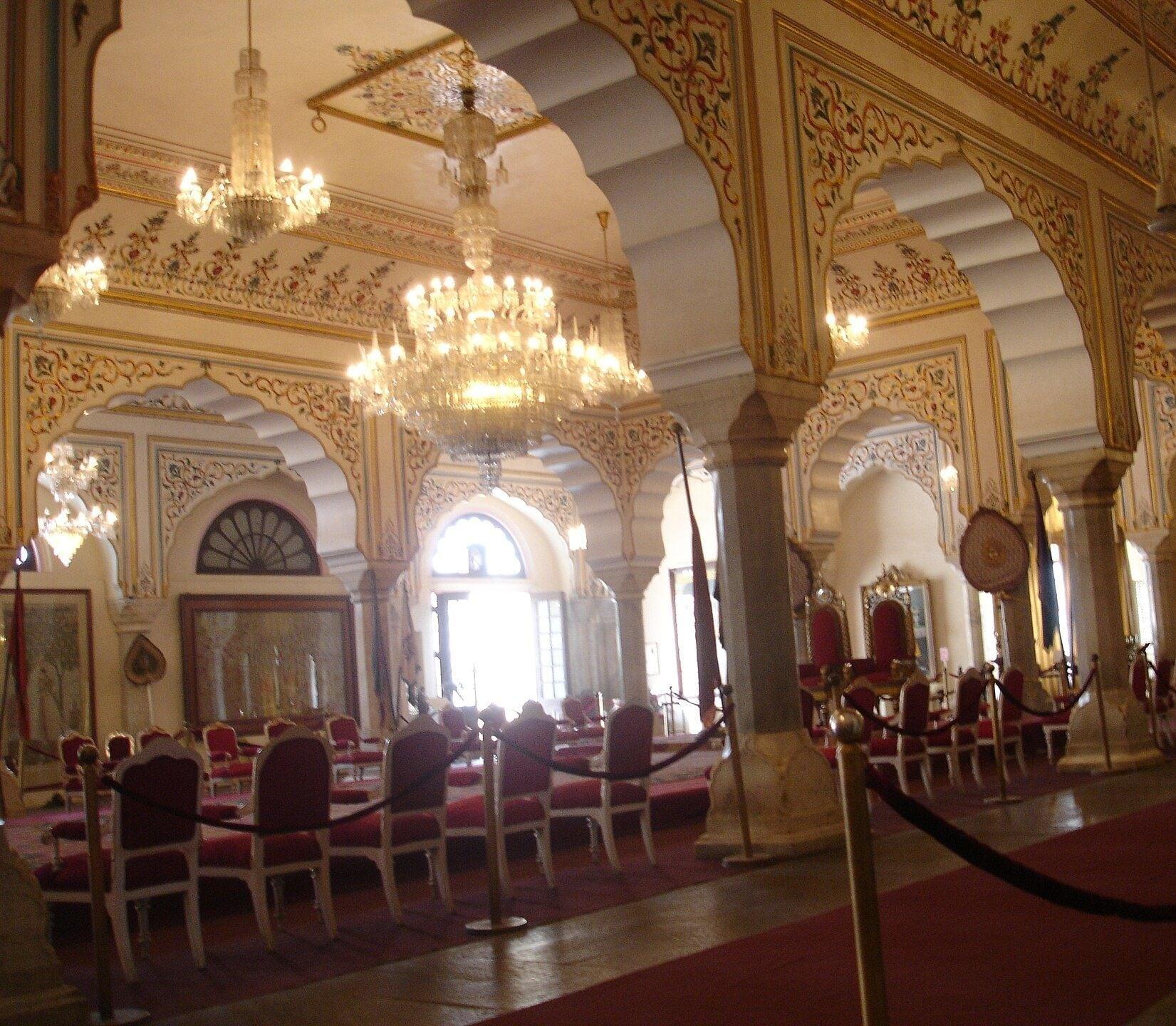
Sabha Niwas
Where the state received its guests. The Sabha Niwas, the Diwan-i-Aam, once open to its court: the Jaipur State's throne room for nobles, envoys and British Viceroys, now a period room.
- 10
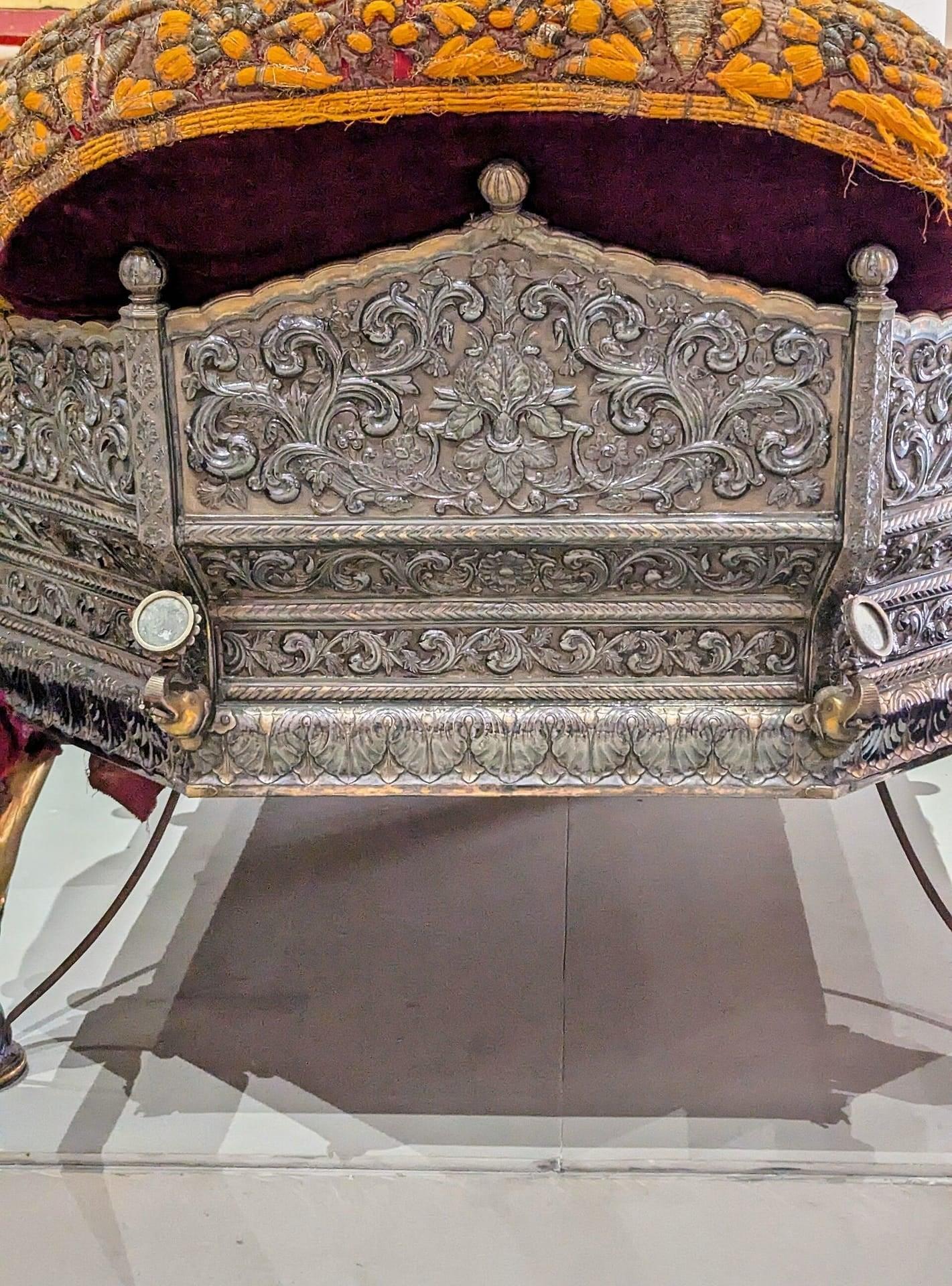
Rath Khana and Uday Pol
A palanquin that still goes out. The Rath Khana transport gallery, with a festival boat, a royal buggy, elephant armor and the silver palanquin that still carries the goddess Gauri for Teej and Gangaur, beside Uday Pol, the second gate.
Details
Best Time to Visit
Morning from opening at 9:30 am, before the courts fill and the stone heats; or mid-afternoon, starting by about 5:00 pm in December and January (last tickets 6:00 pm, closing 6:30 pm; sunset about 5:33 pm in early December, 5:43 pm on 1 January, 6:07 pm on 1 February, computed). Open every day except Dhulandi, the second day of Holi (about 23 March 2027: check). October to March is the season. Checked 22 November 2026.
Pro Tips
- •Start outside Virendra Pol (Gate 1), across the lane from the Jantar Mantar's gate. Taxi or auto: ask for City Palace Gate 1, near the Jantar Mantar.
- •Parking is only at Gate 2 (Uday Pol, Jaleb Chowk), where the walk finishes (the Trust).
- •Getting there: Badi Chaupar on the Pink Line is the nearest metro station (the Trust). From it, about 450 m west under Tripolia Bazaar's arcade, then north past the Jantar Mantar to the gate. Badi Chaupar is a busy roundabout with no mapped signals: cross with great care. Traffic keeps left, and drivers do not reliably stop at crossings (Government of Canada travel advice, updated 6 November 2026). Checked 22 November 2026.
- •The entry ticket is NOT included. City Palace Museum ticket: Indian adult Rs 400 (student, child below 12, senior or defence Rs 200); international adult Rs 1,200, youth Rs 600. The Trust's own Composite (adds Jaigarh and the Royal Cenotaphs) Rs 500 / 1,700. The City Palace is a private trust and is NOT on the Rajasthan government's composite monument ticket. Tickets are sold at both gates; the Trust's site showed no online booking. Buy only at the palace's own counter, and decline unsolicited guides and offers (Government of Canada travel advice); the Trust's guides are hired at the desk. Checked 22 November 2026.
- •Hours: 9:30 am to 6:30 pm daily, last tickets 6:00 pm; closed only on Dhulandi, the second day of Holi. Museum at Night is temporarily closed; the Textile Gallery in the Mubarak Mahal has been closed for restoration since 27 March 2026 (citypalace.org). Checked 22 November 2026.
- •The Chandra Mahal's rooms open only on the Royal Tour (Rs 4,000 Indian, Rs 5,000 international, with a guide), sold only at the ticket counter.
- •Photography: the Trust publishes no rule on its site or brochure. Check the signs in each gallery before you take a picture, and ask before photographing anyone.
- •Golf carts run inside for Rs 150 per person (children below 5 free); wheelchair access at all major entrances, with ramps where possible (the Trust).
- •Next: our Jantar Mantar walk starts across the lane from Gate 1; Hawa Mahal and our Pink City walk are close by; Amber Fort and Amer town are about 11 km north by taxi, ride-hailing or the city bus; Nahargarh is on the ridge above the city, by road.
Safety & Precautions
- •The Chandra Mahal is a private residence and the zenana courts are closed: stay in the open courts and on the paths.
- •Golf carts share the paths inside the palace: keep to the side when one comes through.
- •Pritam Niwas Chowk (stop 6) is small and walled: it is often crowded with people photographing the doors, and GPS may start the stop a few steps late.
- •Weather and air: in Jaipur December highs average about 25 C and lows about 10 C, January about 22 C and 8 C (IMD normals, 1991 to 2020). The courts are open stone with little shade: glare at midday. Check the day's air quality index; a mask helps if you have asthma.
- •At the gates, touts may offer guides, shops or special tickets: decline, and buy only at the palace's counter (Government of Canada travel advice).
- •Outside Gate 2, Jaleb Chowk has traffic and the palace car park: cross with care; traffic keeps left.
- •On the Gangaur and Teej procession days, crowds and road closures gather round the palace's Tripolia side; the museum's hours on those days are not published.
Travel advisory: Exercise Increased Caution (Level 2).
Gallery
Related Reading
Go deeper on what you'll see, hear, and walk through.
Overview
Jaipur Travel Guide: Days, Transport, Tickets, Timing, and Safety
5 min
Overview
One Day in Jaipur: A Walkable Pink City and Amber Fort Itinerary
5 min
Thematic
Best History Walking Tours in Jaipur (2026)
3 min
Thematic
Jaipur: The City That Was Planned Before It Was Built
4 min
Companion
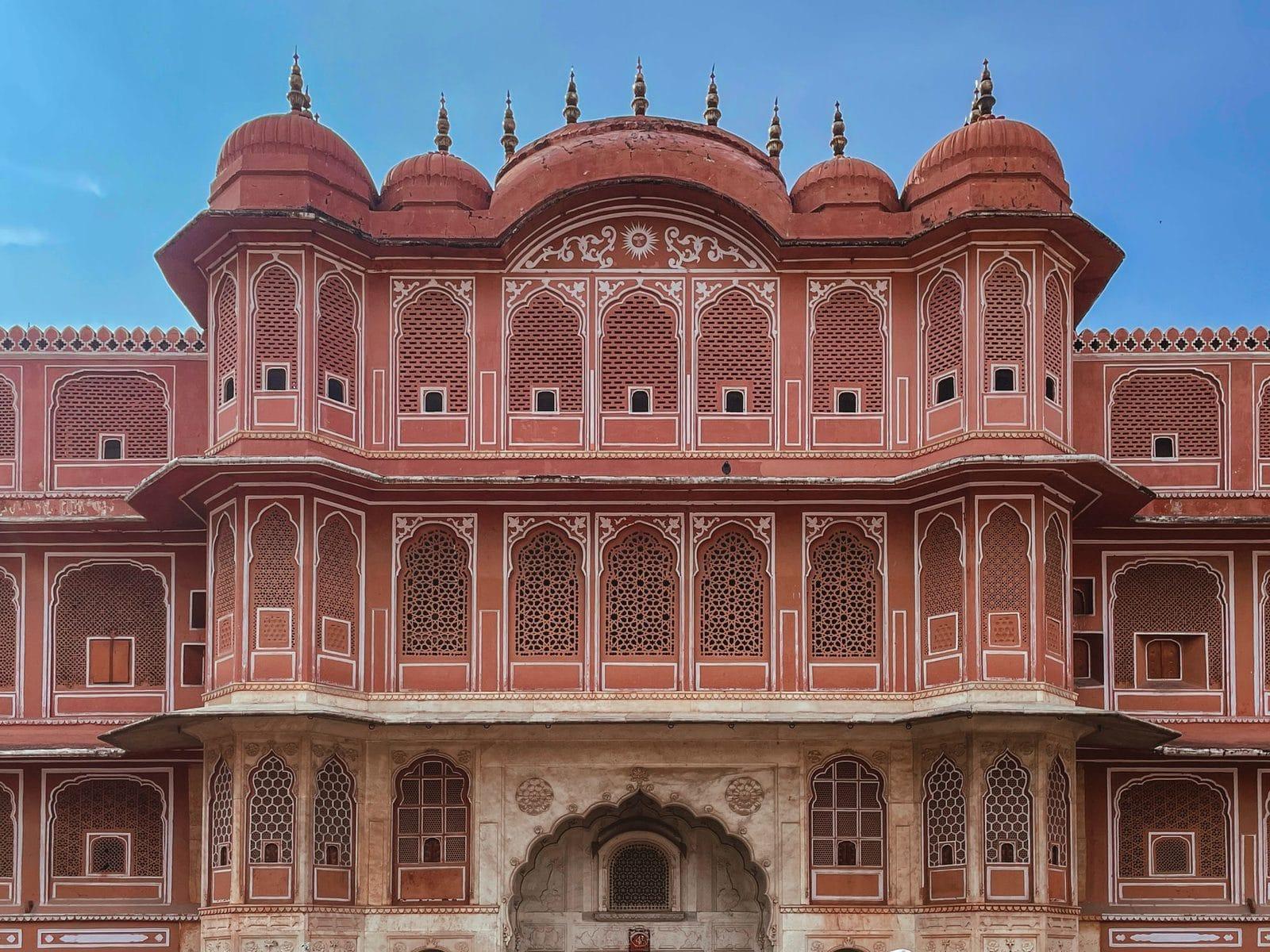
City Palace: The Museum Built Around a Home
5 min
Companion
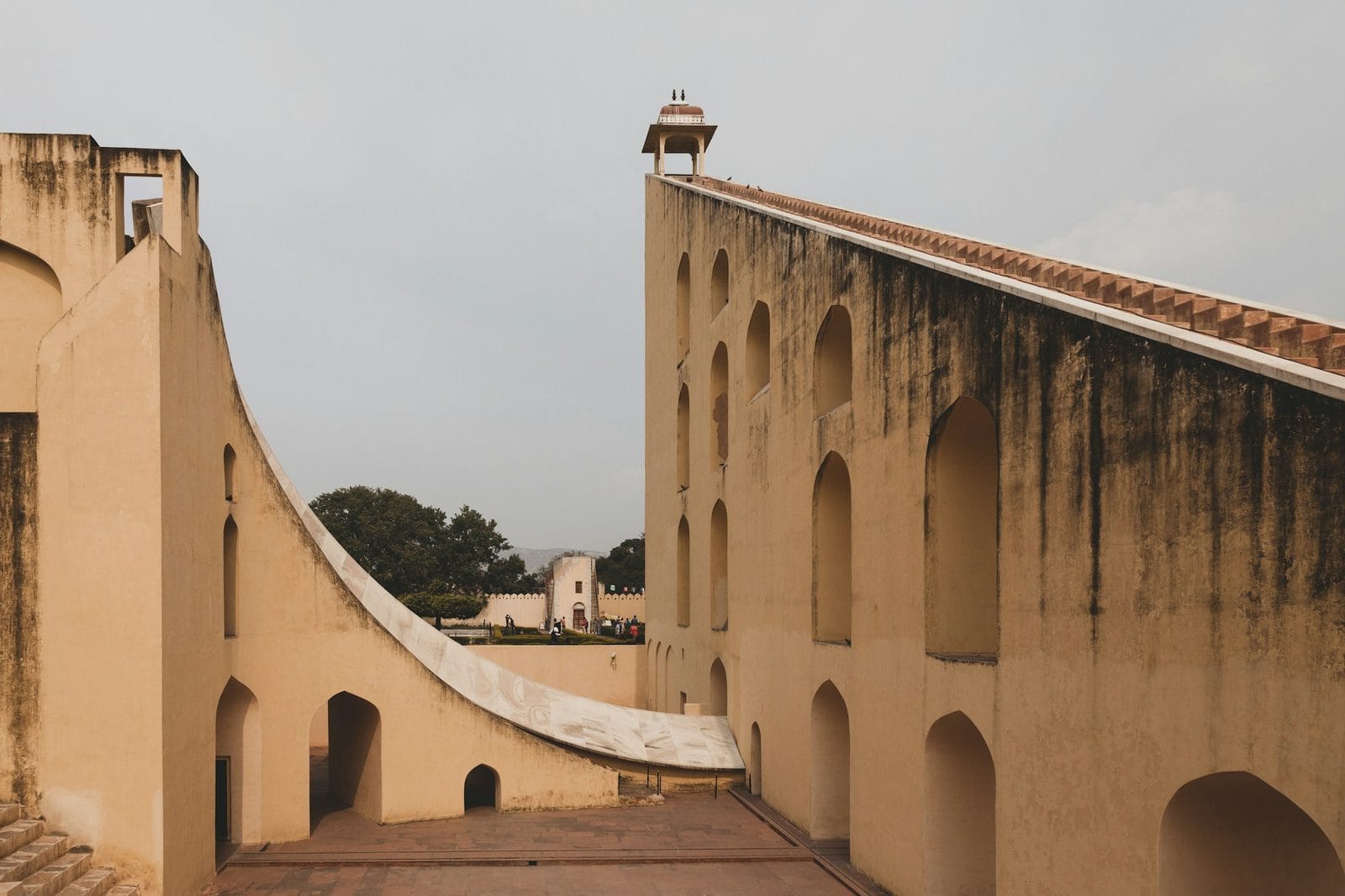
Jantar Mantar: Instruments the Size of Buildings
5 min
Companion
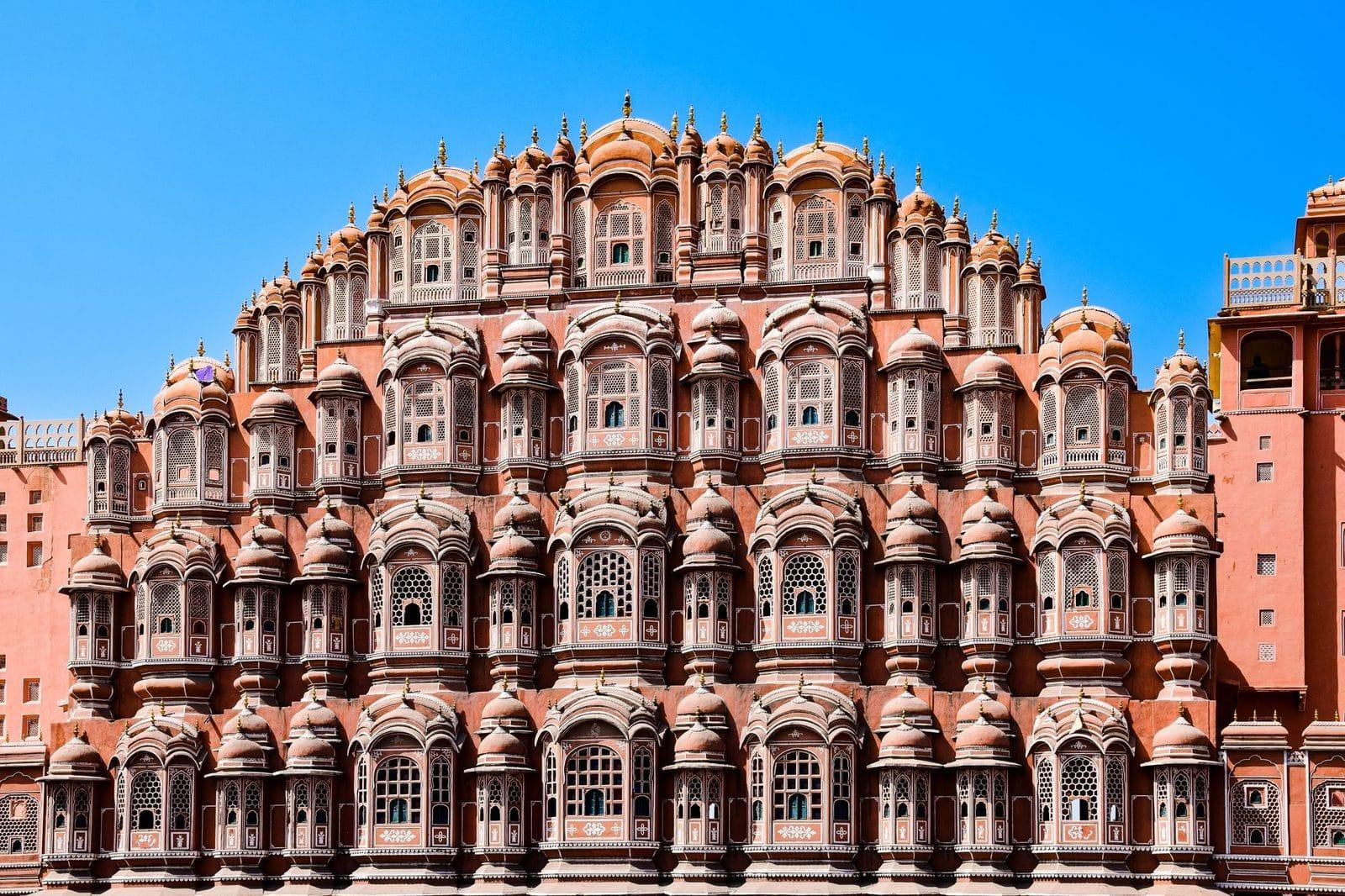
Pink City: Why Jaipur Was Built as a Machine for Trade
5 min
Read the walk
The full story of City Palace: The Museum Built Around a Home, in words. Prefer to listen? Play it narrated, from home or on location.
Introduction
Jaipur's City Palace is a museum built around a home. Its entry ticket is not included with this tour: buy it at the palace's own counter at either gate. It is twelve hundred rupees for international visitors and four hundred for Indian visitors. It is run by a private trust, and the state's combined monument ticket does not cover it.
Building began soon after the city itself was founded, and in seventeen twenty seven Maharaja Sawai Jai Singh the Second moved his court here from Amber, in the hills to the north. The palace is a chain of seven courtyards. Four of them have been a museum since nineteen fifty nine. At the heart stands the Chandra Mahal, still the royal family's home.
This walk crosses the museum's courts from gate to gate: a guest palace built for British visitors, the galleries round it, a hall of private audience with two giant silver urns, a small court of painted doorways under the residence, the old throne room, and the gallery of carriages and palanquins. There are ten stops over about half a kilometer, under a third of a mile, and it takes about an hour. It is flat, and there is no road to cross.
The museum is open every day from nine thirty in the morning to six thirty in the evening, with the last tickets at six. It closes on one day a year, Dhulandi, the day of colors at Holi. The galleries and the residence are told from outside, so the walk works whichever rooms are open. In winter, start by about five.
From December to February the days are mild and the mornings cool and sometimes hazy. Check the day's air quality index; a mask helps if you have asthma.
The walk ends at Uday Pol, the palace's second gate, on Jaleb Chowk. When you arrive at Virendra Pol, begin with stop one.
1. Virendra Pol
Stop on the paved forecourt, out of the way of the ticket queue. A few steps away, the gateway in the palace wall is Virendra Pol, the City Palace's first gate. Pol means gate. Across the lane is the wall of the Jantar Mantar, the observatory.
From here on the palace is ticketed, and the ticket is not part of this tour. It is sold at this gate, at the palace's own counter, and checked on the way in. Buy it only there.
The palace was begun soon after Jaipur itself was founded, and in seventeen twenty seven Maharaja Sawai Jai Singh the Second moved his court here from Amber, in the hills to the north. It was the seat of the rulers of the Jaipur State.
Inside, it is not one building but a chain of courtyards, seven of them, joined by gates. Some are open to the public. Others, such as the zenana, the women's quarters, are still closed. Since nineteen fifty nine, four of the courts have been a museum, run by a private trust. And at the heart of it all stands the Chandra Mahal, seven stories tall, still the home of the royal family of Jaipur.
So this is a visit with a boundary. You will cross the museum's courts from this gate to the second one, and look at the home from its doorstep.
Follow the route through the gate, into the courtyard of the guest palace.
2. Mubarak Mahal
Ahead, in its own lawn, stands a white and cream pavilion, cut back in steps on every side so that its plan makes a cross. This is the Mubarak Mahal. The name means the Auspicious Palace.
It was built around nineteen hundred, under Maharaja Sawai Madho Singh the Second, by the court's own architect. Its purpose was hospitality. The museum says it was made to receive dignitaries from abroad, and the palace's guide calls it a royal guest house for British visitors. Its style is the one the guide calls Indo-Saracenic, a hybrid style of British India.
Today the guest house keeps the wardrobe. It is the museum's textile gallery: more than two thousand seven hundred pieces, spanning over three hundred and fifty years, among them nearly a thousand garments and accessories of the maharajas and the royal house. The museum says no other Indian princely state kept a textile collection to compare with it, except Hyderabad.
When this tour was written the gallery was closed for restoration, so let the building be the exhibit: a palace made for visitors, now kept for its clothes.
Follow the route round the lawn, past the far side of the pavilion.
3. The Gallery Wings
Across the lawn, the long ranges of buildings round this court hold more of the museum: rooms of paintings and photographs, and the armory, called the Sileh Khana.
The photographs hold a surprise. Maharaja Sawai Ram Singh the Second, who ruled from eighteen thirty five to eighteen eighty, did not only collect pictures. From the eighteen sixties he took them. The museum's photograph collection, which begins with his work, holds nearly two thousand glass plate negatives, some six thousand prints in a hundred and five albums, and old camera equipment. So among the old photographs of this court, some were made by the man who ruled it.
The painting rooms run from the eighteenth to the twentieth century: illustrated sacred texts, ragamala paintings, which picture musical modes, scenes from the life of Krishna, and royal portraits.
The armory holds the royal collection of arms and armor, among them weapons that belonged to two Mughal emperors, with their inscriptions, in a hall with painted ceilings. The palace's guide singles out two swords that share one sheath.
The palace does not publish a photography rule, so check the signs in each gallery before you take a picture.
Follow the route along the lawn to the gateway at the head of the court.
4. Rajendra Pol
As you turn onto the short path, the gateway in front of you is Rajendra Pol. It joins this court to the next. Look for the pair of white marble elephants on either side of it. They are said to have been added to celebrate a birth: an heir to the throne, born in nineteen thirty…
Full narration for this stop unlocks with the tour.
5. Sarvato Bhadra
You come out of the gate into a wide court, and in its middle stands a square hall on a raised platform, pink with white trim, open on all four sides. This is the Sarvato Bhadra, also called the Diwan-i-Khas, the hall of private audience. Sarvato Bhadra means auspicious on every…
Full narration for this stop unlocks with the tour.
6. Pritam Niwas Chowk
Through the doorway, called Riddhi-Siddhi Pol, you are in a small court with four doorways set into its walls, each one painted and decorated. This is Pritam Niwas Chowk. A chowk is a courtyard. Look up: the tall building rising over the court is the Chandra Mahal, the royal…
Full narration for this stop unlocks with the tour.
7. The Gangajalis
Turn to face the open hall again, from its other side. Inside it stand two enormous silver urns. They are called Gangajalis: vessels for the water of the Ganga, the river Ganges. Maharaja Sawai Madho Singh the Second had them made to carry sacred Ganges water on his journey to…
Full narration for this stop unlocks with the tour.
8. Chandra Mahal
Turn round, and look back the way you came, over the corner of the court where you stood for the silver urns. The tall building rising in tiers beyond it is the Chandra Mahal, seven stories high. It is the heart of the palace, and it is still the residence of the royal family…
Full narration for this stop unlocks with the tour.
9. Sabha Niwas
Beside this court stands a long hall: the Sabha Niwas, which the palace also calls the Diwan-i-Aam, the hall of public audience. Here the ruler of the Jaipur State held ceremonial assemblies for the nobles, the court's officials and visiting dignitaries. The museum says the…
Full narration for this stop unlocks with the tour.
10. Rath Khana and Uday Pol
Ahead is the palace's second gate, Uday Pol, and beyond it the square called Jaleb Chowk. The building just behind you, on your right, is the Rath Khana, the transport gallery. Inside are the ways royalty and the gods traveled: a nineteenth century boat on which an image of…
Full narration for this stop unlocks with the tour.
- Gangajalis are the largest silver objects in the world as per the entry in the Guinnes Book of World Records. They were made in the Mistry K — Jorge Láscar from Australia, CC BY 2.0 · source
- The vehicle transport display at The City Palace in Jaipur is housed in the Rath Khana gallery, featuring historic royal carriages, buggies, — Sourabh.biswas003, CC BY-SA 4.0 · source
Images may be cropped or resized. Other photos via Unsplash and Pexels.