Preserved by Catastrophe
Walk through a colonial capital frozen in the moment of its collapse, and meet the people who stayed when power left.
Start
Parque Central: The Grid That Organized an Empire
Parque Central: The Grid That Organized an Empire
The civic heart of colonial Santiago de los Caballeros, laid out in 1543.
The Cathedral: Built for Eternity. Wasn't.
A parish church on a fragment of the colonial cathedral the earthquake brought down.
Palacio de los Capitanes: The Seat of Power That Left
The seat of colonial government for a territory the size of Spain, abandoned after 1773.
Compañía de Jesús: Four Lives in One Building
The Jesuit complex that became a factory, a market, and a Spanish cultural centre.
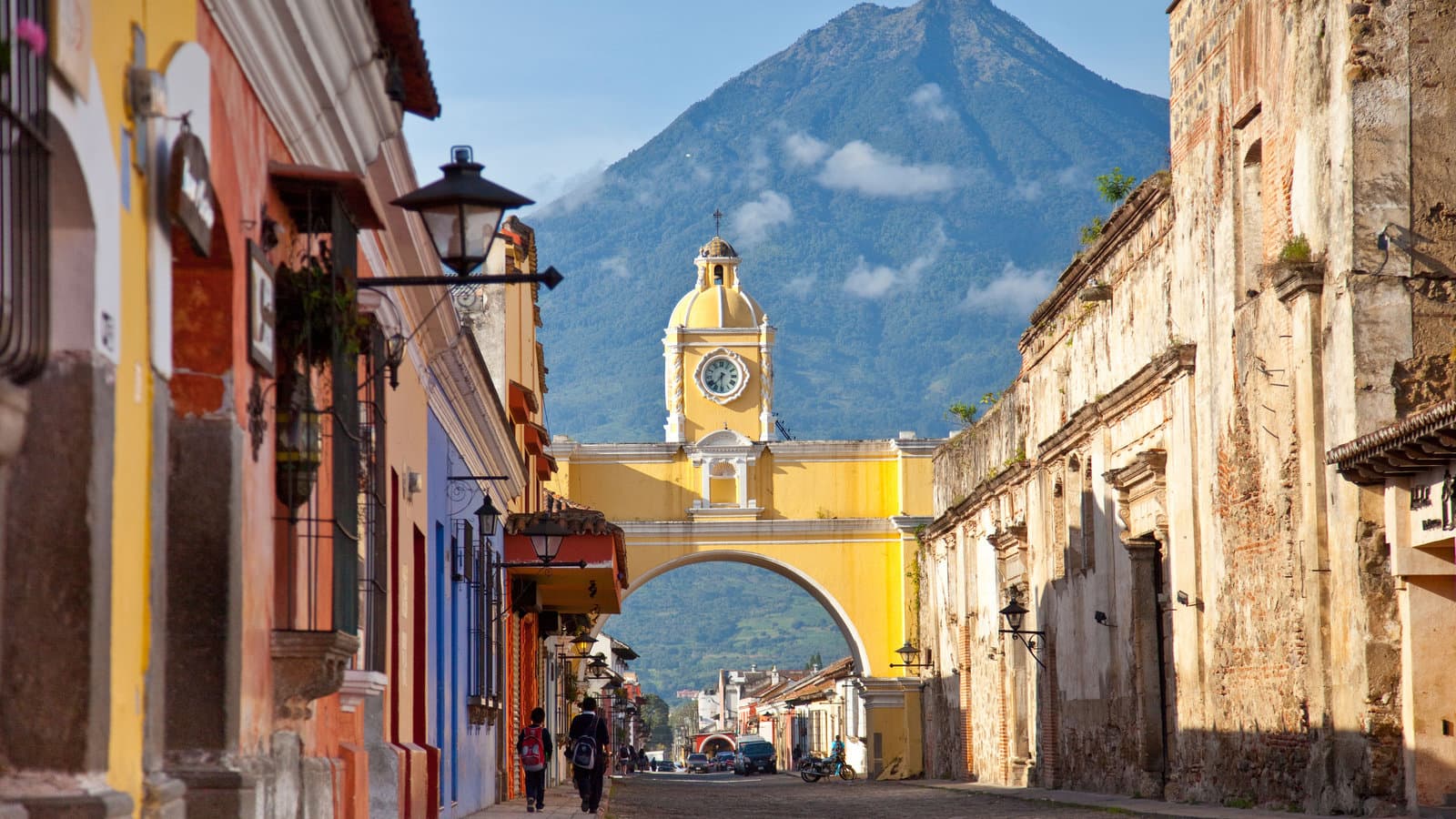
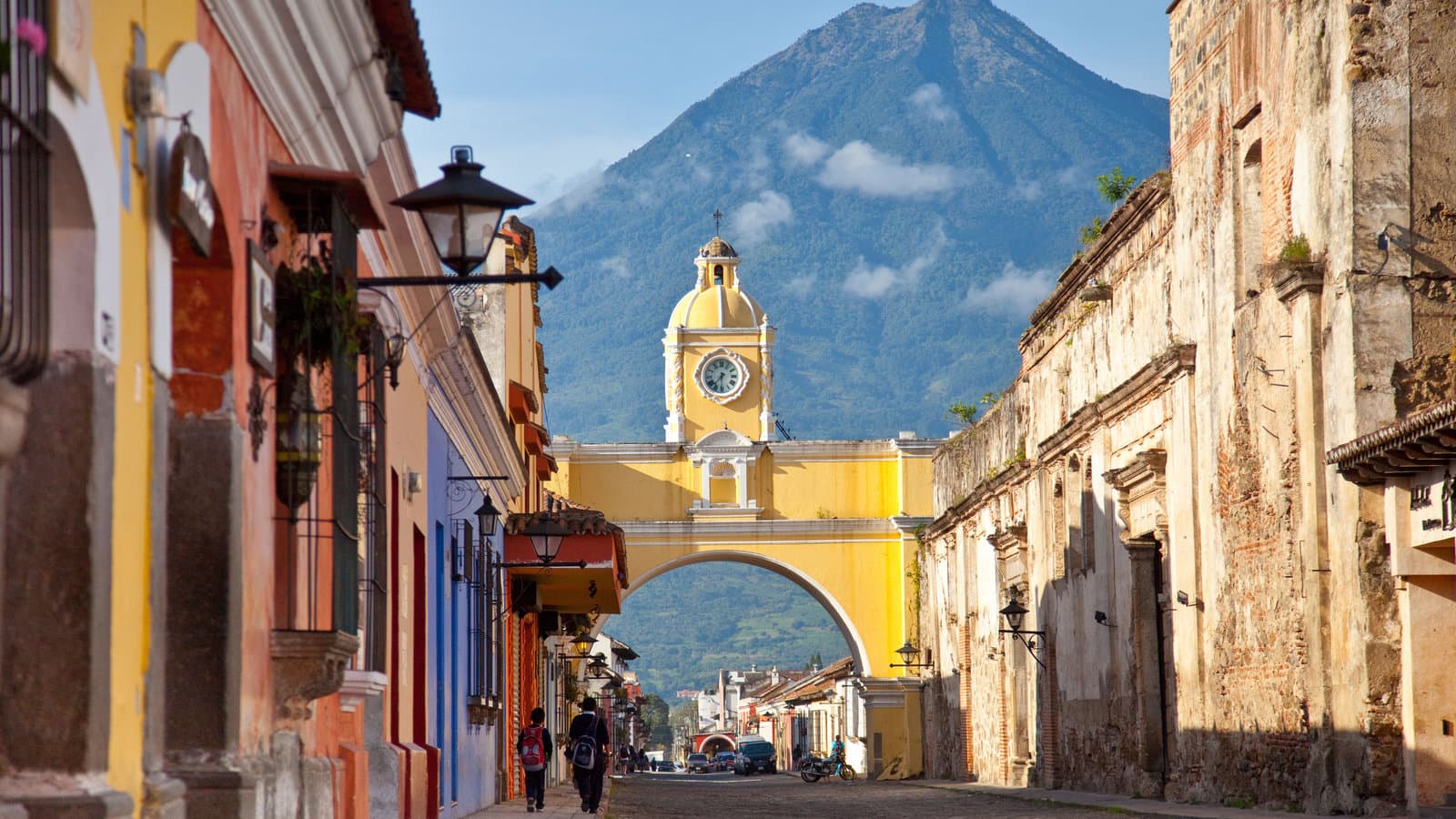
Arco de Santa Catalina: Built to Hide, Now Impossible to Miss
The skybridge built in 1694 for cloistered nuns, now the most photographed view in Guatemala.
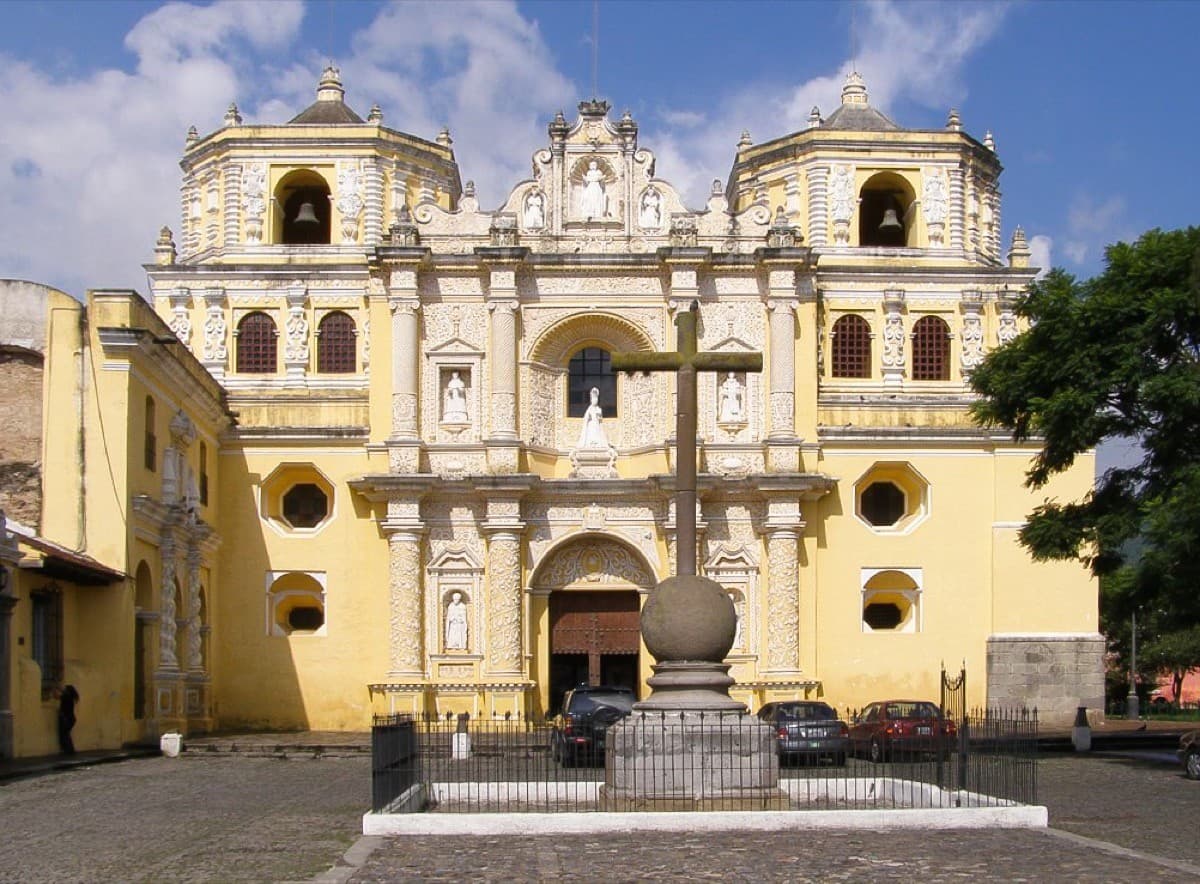
La Merced: The Church That Learned
The Mercedarian church that survived the earthquake while its older convent behind did not.
Capuchinas: The Last Thing They Built
The last colonial religious building in Antigua. Diego de Porres, 1731 to 1736.
Monasterio de Santo Domingo: The Monastery That Commerce Preserved
A 16th-century Dominican monastery, ruined in 1773, absorbed into a luxury hotel in 1989.
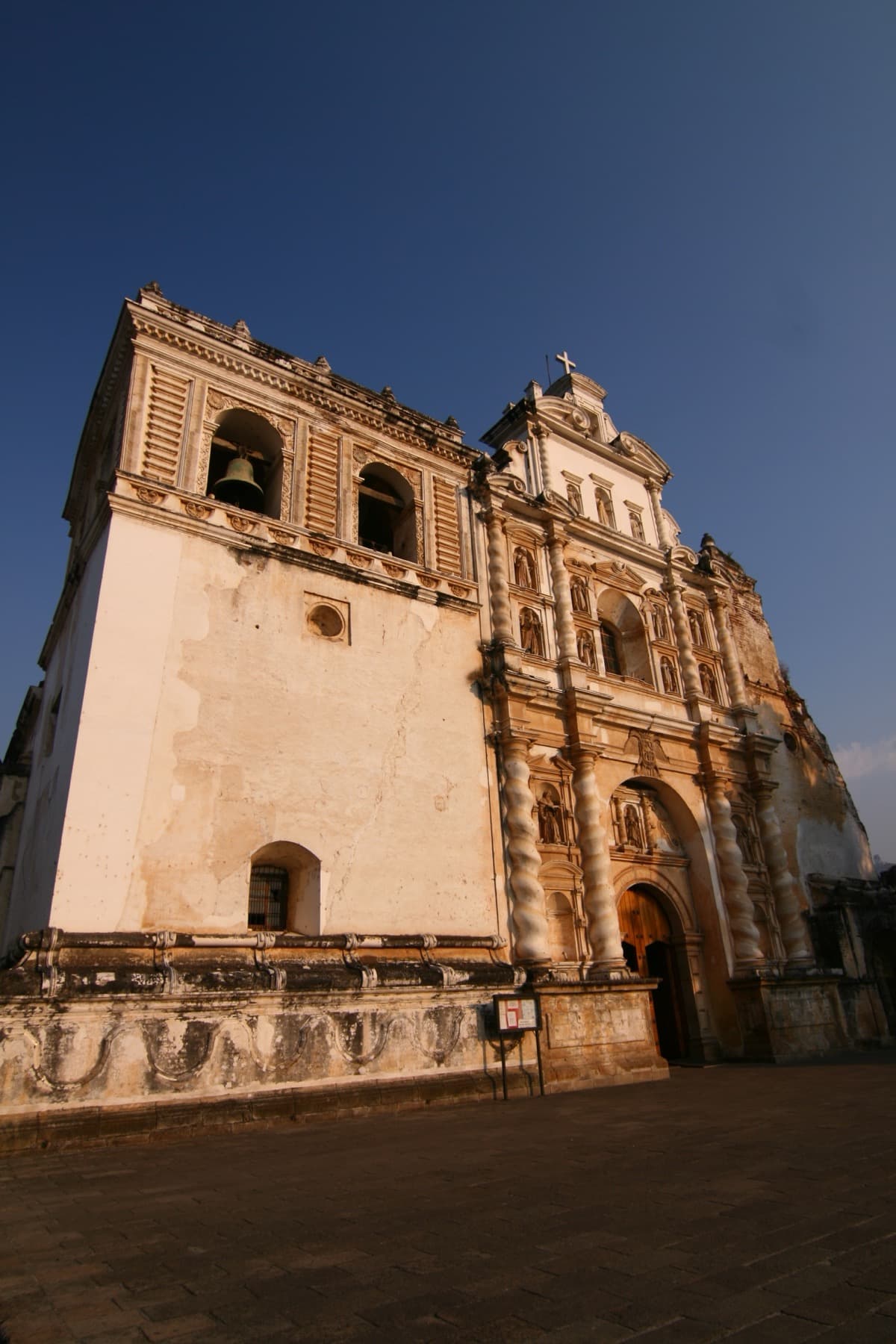
San Francisco: The Saint Who Chose What the Earthquake Imposed
Tomb of Hermano Pedro, the first Central American saint, canonized in 2002.
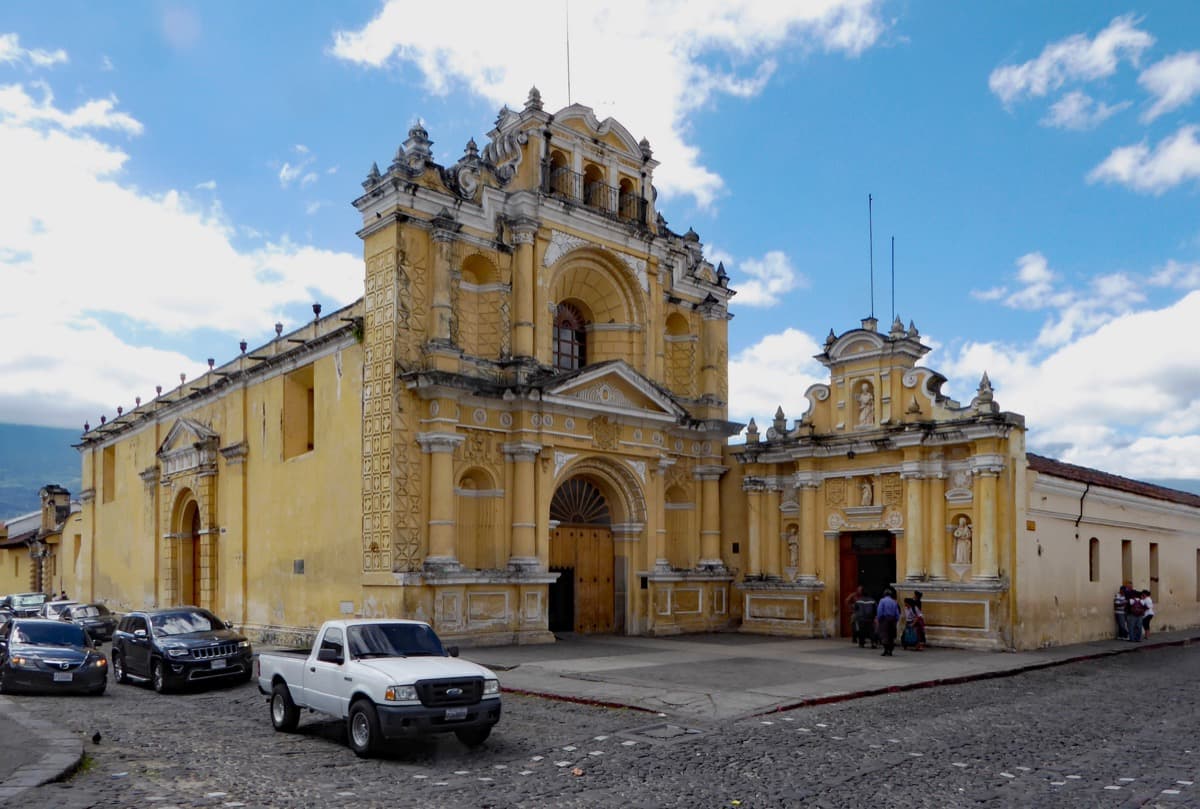
Iglesia y Hospital de San Pedro: The Mission That Outlasted the Institution
A 1654 hospital, still operating, run today by the association that continues Hermano Pedro's mission.
Tanque de la Unión: The City That Stayed
Public washing basins from 1853, the monument of the people who stayed.
Best Time to Visit
Dry-season weekday mornings, December through April, eight to noon. The tour covers eleven stops over roughly 3.8 kilometres of cobblestone grid between Parque Central and the Tanque de la Unión, and the audio runs about two hours including walking time. Morning light is kinder to the ruins (Cathedral, Capuchinas, San Francisco) where the audio asks you to read fallen vault stones, leaning walls, and open-sky naves. Rainy season runs May through October with heavy afternoon thunderstorms that can close some ruined sites for safety. Sunday mornings the active sites (Cathedral parish, La Merced, San Francisco's pilgrim church around Hermano Pedro's tomb) are in use for mass. The exterior reading still works; interior access is restricted during services.
Pro Tips
- •Bring small Quetzales for site entry. Several stops on the tour, including the Cathedral ruins behind the parish, Capuchinas, and Santo Domingo, charge a small entry fee. Parque Central, the Palacio arcade, the Arco de Santa Catalina from below, and the Tanque de la Unión are public-realm free reads.
- •San Francisco at Stop 9 is the climactic stop and Hermano Pedro's tomb is an active pilgrimage site. The audio names him by name, sources his life dates (born Tenerife 1619, arrived Guatemala 1651, died 1667, canonised 2002 by John Paul II). Read the architecture; do not photograph the pilgrims praying.
- •The Compañía de Jesús ruins at Stop 4 are partly stabilised and partly closed. Check the gate before committing to the interior; the audio anchors on the courtyard view either way.
- •Stop 8 is Casa Santo Domingo, now a luxury hotel built around stabilised monastery ruins. The grounds are accessible to non-guests during museum hours; the audio reads commerce-as-preservation from inside the gate. There is a small museum admission.
- •The Tanque de la Unión at Stop 11 is open public space and was built 1850 to 1853 by Governor Palomo y Montúfar, seventy-seven years after the 1773 earthquake. The audio finishes here because it is the only stop on the corridor that is not colonial. Read the lavadero as the city that stayed.
- •Christopher Lutz's published demographic history of Santiago de Guatemala is the source the Stop 11 audio cites for the post-1773 population collapse. The framing of 'the people who could not afford to leave' is his.
Safety & Precautions
- Antigua's cobblestone streets are 18th-century paving with deep gutters and uneven blocks. Wear flat closed shoes with grip; the surface between every stop is uneven.
- Several stops are partial ruins with open masonry and fallen stones still on the ground. Watch your footing inside the Cathedral ruins (Stop 2), Capuchinas (Stop 7), and the San Francisco ruined nave (Stop 9). Do not climb on the masonry.
- Sun protection is essential at 1500 metres elevation. Most of the walk is exposed cobblestone in direct sun. Carry water and a hat for the four-kilometre route.
- May through October the afternoon thunderstorms are sudden and heavy. Schedule the walk for the morning and do not stand inside roofless ruins during a storm. Active churches (Cathedral parish, La Merced, San Francisco) are working places of worship; lower your voice and cover shoulders and knees if entering.
Gallery
Tap to explore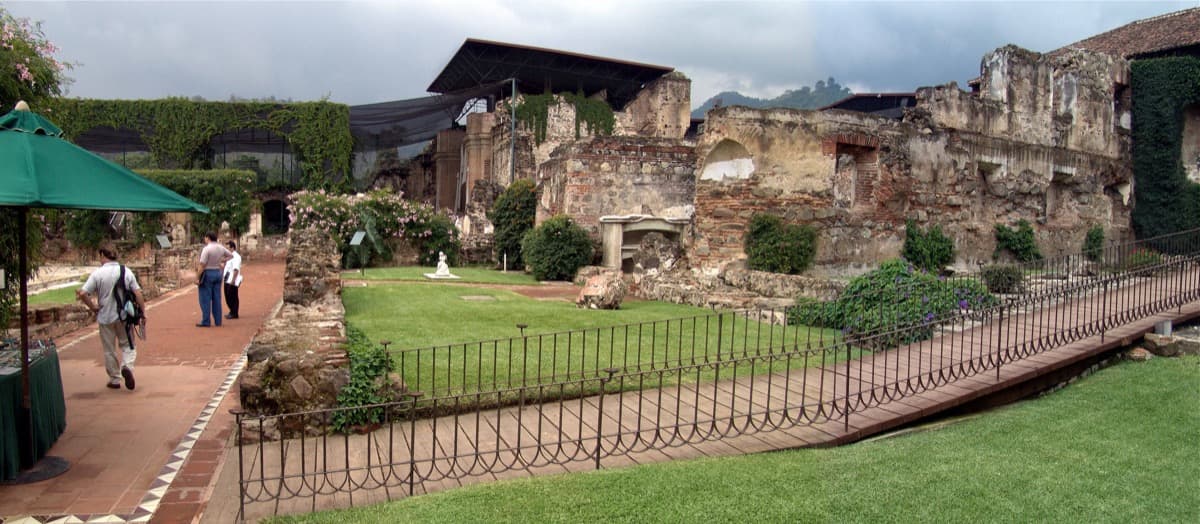
Related Reading
Go deeper on what you'll see, hear, and walk through.
The Preserved Capital: How to See Antigua
How Antigua Became a UNESCO World Heritage Site
Poverty as Preservation: A Companion to the Catastrophe Walk
Santo Domingo: How a Hotel Saved a Monastery
The Arch of Santa Catalina: A Skybridge for Cloistered Nuns
10 Best Things to Do in Antigua Guatemala
7 Hidden Gems in Antigua Guatemala: Beyond the Tourist Trail
A First-Timer's Guide to Guatemala