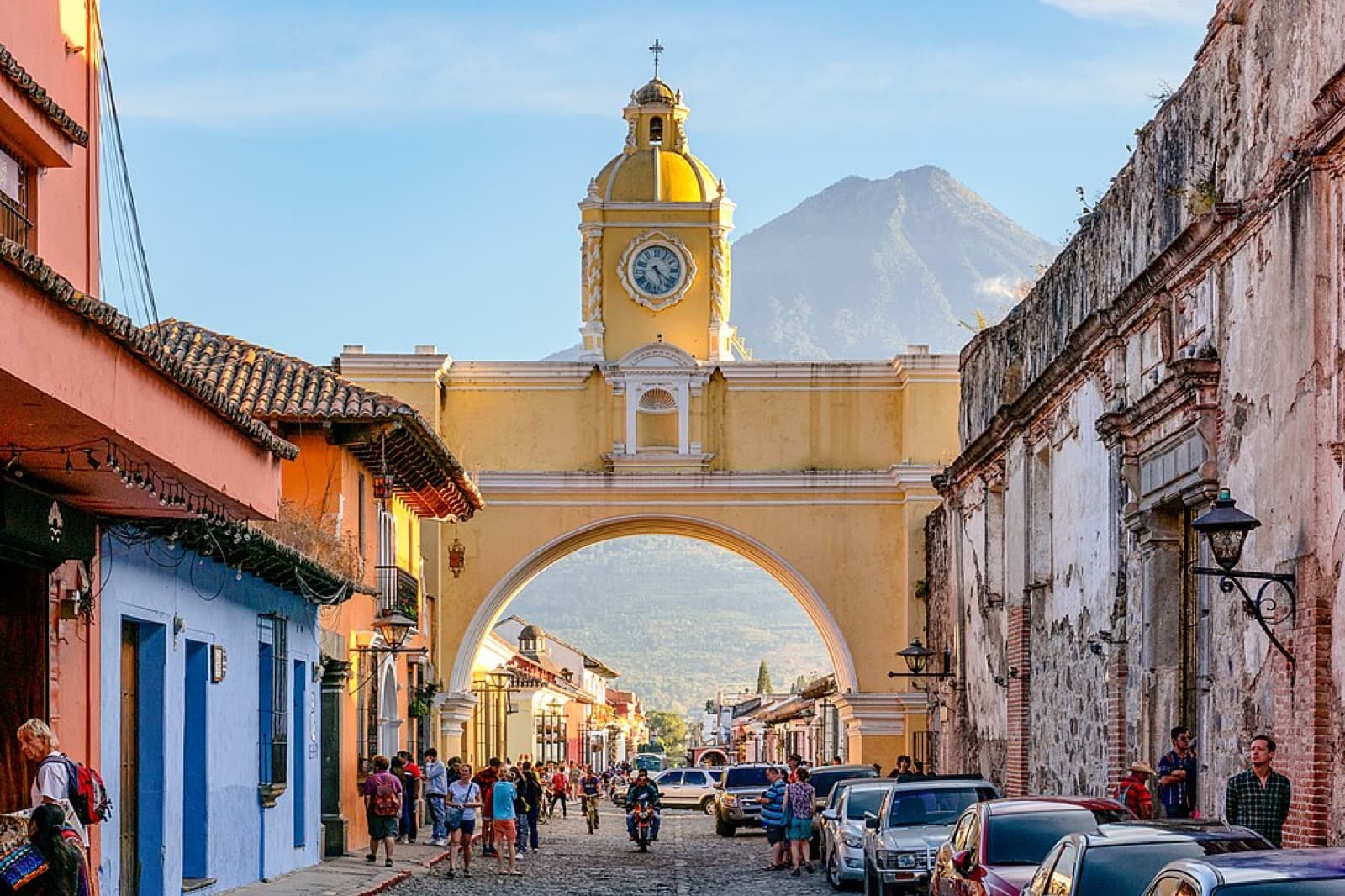
The Preserved by Catastrophe tour walks eleven stops in a loop through the colonial city. The headline is in the title. Catastrophe is preservation. The audio plants the argument in the intro and pays it off at the lavadero on Stop 11. The page you are reading is the extended version of the case the audio compresses into ninety minutes.
What the catastrophe actually did
The Santa Marta earthquakes hit on July twenty-ninth, 1773. A sequence of shocks over several minutes destroyed enough of the city that the colonial government declared Antigua uninhabitable. The decision to relocate the capital was political as much as structural. Engineers debated whether the city could be repaired. The Captain General, Martín de Mayorga, wanted to move. The Archbishop, Pedro Cortés y Larraz, wanted to stay. The wealthy followed the Captain General. The Archbishop was eventually forced out by royal decree in 1779.
That is the story the audio handles in three minutes. What the audio cannot handle is the next two centuries.
The collapse the textbooks miss
Hear a stop from this walk
San Francisco: The Saint at the Tomb
At its peak Antigua held sixty to sixty-five thousand people. By the early 1800s, the population was somewhere below twenty thousand. Christopher Lutz, the historian who spent decades on the social history of Santiago de Guatemala, documents that the city did not reach thirty thousand again until the 1990s. For more than two hundred years, this was a small town living among monumental ruins. The ratio of inhabitants to former capital infrastructure went from comfortable to absurd.
Who stayed is the question that organises the tour. The answer is the part of the city's population that had no capital to move with. Indigenous families. Mestizo artisans. Free Africans. By the early 1700s, Lutz's data shows, the mixed-race majority had already become the demographic core of the city. After the move, that core was almost the entire city.
These were not preservationists by ideology. They were not historians or architects. They lived in adobe rooms in the corners of patios where Captains General had once held audience. They drew water from public fountains. They washed clothes at the Tanque de la Unión, the public lavadero built between 1850 and 1853 on Governor Palomo y Montúfar's orders. They maintained the Semana Santa processions, the same processions documented from March tenth, 1543, the day the city was founded. The processions never stopped. Not after the earthquake. Not during the population collapse. Not through two centuries of poverty.
What did not happen
The argument for preservation by poverty turns on what did not happen during those two centuries. Nobody, for the most part, demolished a ruined church to build a shopping centre, because there was no demand. Nobody paved the cobblestones, because there was no budget. Nobody modernised the Renaissance grid, because there was no will. Nobody bulldozed an open-air ruin to put up an apartment block, because the city was shrinking, not growing. Nobody updated the colonial bell towers with reinforced concrete, because there was no money for reinforced concrete. The lack of investment is what preserved the colonial fabric.
Compare with Guatemala City, where the population kept growing and the same earthquake-prone setting kept producing the same architectural problems. Major shocks in 1902, 1917, and 1976 produced major rebuilds. Each rebuild reflected the resources and ideology of its decade. Modernist concrete in the wealthy zones in the 1950s. Defensive post-1976 reconstruction. Brutalist civic buildings. Glass towers from the 2000s. Guatemala City is a working capital and it shows its age in layers.
Antigua does not show layers. It mostly shows 1773 and a slow decline afterwards.
The commerce footnote
The audio handles one wrinkle at Stop 8 of the Catastrophe walk: Santo Domingo. In the late twentieth century, a luxury hotel called the Casa Santo Domingo absorbed a colonial ruin into a working business. Tourists pay to walk the cloister; the hotel pays to maintain it. The site is a UNESCO inscription that is also a five-star property.
The wrinkle matters because it complicates the thesis. Santo Domingo is preservation by commerce, not by poverty. The arrangement keeps the ruin standing and accessible. It also raises questions the audio names but does not resolve. Who is the preservation for. Who benefits. Whose neighbourhood gets gentrified next.
Honest answer: both forces have kept the city up. The poor preserved it by not changing it. Modern commerce now keeps the ruins from collapsing further. Each form of preservation does what the other cannot. Together they have produced a city that is more or less the city of 1773, plus eighteenth-century stucco repairs, plus nineteenth-century lavaderos, plus a few twentieth-century coffee shops, plus a UNESCO inscription.
The man at the centre
The tour ends with two stops that personify the argument. Stop 9 is San Francisco el Grande, the church that holds the tomb of Pedro de San José de Betancur. He was a Canary Islander who arrived in Guatemala in 1651, destitute, and joined the Franciscan bread line at the door of this very order. He founded a hospital, a hostel, and a school for the poor in 1658. He created the Bethlehemite Order, the first male religious order founded in the Americas. He died in 1667. Pope John Paul the Second canonised him in 2002, three hundred and thirty-five years later, in Guatemala City.
Stop 10 is the building Stop 9 led to: the Hospital de San Pedro, still operating, still housed in a colonial structure on the same street. The Obras Sociales del Santo Hermano Pedro is the institutional descendant of the hospital that opened in 1658. Three hundred and seventy years of unbroken service.
What the audio is doing at these two stops is matching the city's argument to a man's argument. The institutions that built grandeur are the ruins. The man who built nothing permanent at all, a hospital of gathered materials, a school of personal dedication, founded the most durable institution on the tour. The ratio between grandeur and persistence is the same at the level of one biography and at the level of one city.
What the lavadero is for
Stop 11, the Tanque de la Unión, looks at first like an architectural afterthought. Twenty-two stone basins built between 1850 and 1853. Not colonial. Not grand. Not on the UNESCO core inscription.
The reason it ends the tour is that it is the cleanest evidence of who lived here. The basins were paid for by the public budget of a city that had no money. They were used for a century and a half by women who could not afford to send their laundry elsewhere. The basins are still there. The processions still go through. The city still washes its colonial bones in nineteenth-century stone basins, and the result is what UNESCO eventually noticed.
Preservation by decree is what UNESCO did in 1979. Preservation by the ordinary persistence of people who had nowhere else to go is what the lavadero stands for. The first is famous. The second is what made the first possible.
Ready to experience it?
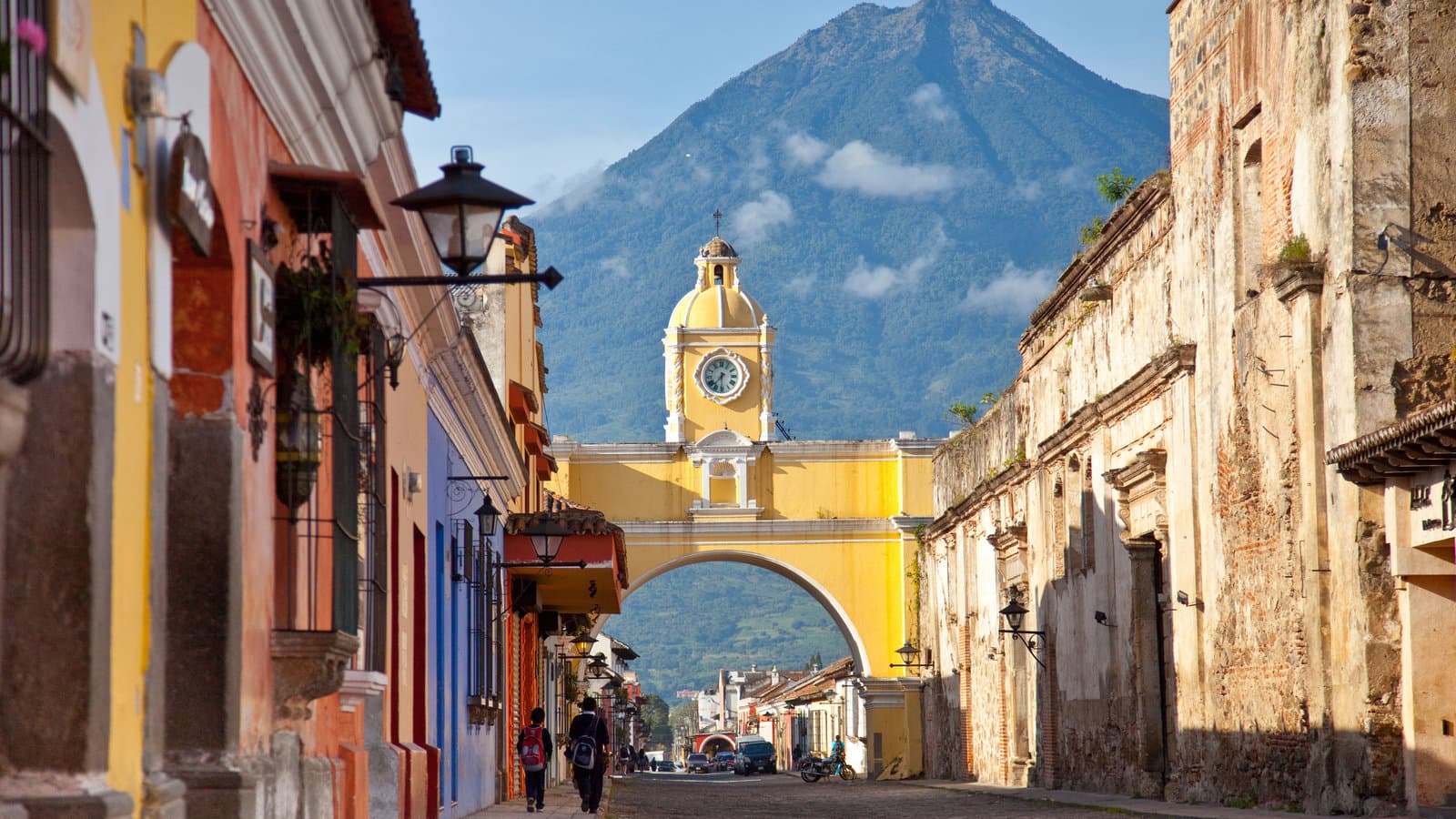
Historic Center: Preserved by Catastrophe
105 min · 3.69 km · easy
More from Antigua
Explore more at your own pace.
Antigua Guatemala Travel Guide: How Many Days, Getting There, When to Go (2026)
Best Self-Guided Walking Tours in Antigua Guatemala (2026)
One Day in Antigua Guatemala: A Walkable Itinerary (2026)
What to Eat in Antigua Guatemala: A Food Guide (2026)
The People Who Stayed: A Companion to the Historic Center Walk