When travelers think of the Maya, they picture pyramids buried in jungle: Tikal, Chichen Itza, Copan. Ancient cities. Collapsed civilizations. But in Guatemala, the Maya never left. More than six million Guatemalans identify as Maya today, comprising roughly 40% of the population and belonging to over 20 distinct ethnic groups, each with its own language, textile tradition, and spiritual practices. This isn't cultural nostalgia. It's ongoing life.
The Languages That Never Died
Guatemala officially recognizes 22 Maya languages, and they're spoken everywhere: in markets, courtrooms, schools, and homes. Kaqchikel dominates around Antigua and the central highlands. K'iche' is the most widely spoken Maya language, concentrated around Chichicastenango and Quetzaltenango. Mam prevails in the western highlands near the Mexican border. Q'eqchi' spreads across the northern lowlands.
These aren't dialects of one language. Kaqchikel and K'iche' are as different from each other as Spanish is from Italian. A K'iche' speaker from Chichicastenango and a Q'eqchi' speaker from Alta Verapaz cannot understand each other. They communicate in Spanish, the colonial language that ironically became the bridge between indigenous nations.
In Antigua, you'll hear Kaqchikel in the central market, at Tanque La Union where women still wash clothes by hand, and in the surrounding villages of San Antonio Aguas Calientes and Santa Catarina Barahona. Listen for it, because the sounds are distinctive, with glottal stops and consonant clusters that don't exist in Spanish.
Textiles as Identity
Hear a stop from this walk
San Francisco: The Saint at the Tomb
Maya textiles are not folk art. They're identity documents woven in thread.
Each of Guatemala's Maya communities has a distinctive textile pattern, the traje, that identifies the wearer's village, ethnic group, and social status. A woman wearing a red and yellow huipil (blouse) with geometric diamond patterns is almost certainly from Chichicastenango. Deep purple with zigzag motifs points to Santiago Atitlan. The bold stripes and animal figures of Nebaj are unmistakable from across a market.
The patterns themselves encode meaning. The diamond shape represents the four cardinal directions and the center of the universe. Zigzag lines symbolize mountains and serpents. Bird motifs reference the quetzal, the sacred bird that gave Guatemala's currency its name. Colors carry weight too: red for blood and life, yellow for corn and sustenance, blue for sky and sacrifice.
Women learn backstrap loom weaving from their mothers and grandmothers, typically beginning around age eight. The backstrap loom, a deceptively simple arrangement of sticks and string anchored to the weaver's body, has been used continuously for over two thousand years. No power source, no factory, no mechanization. Just human skill and patience.
A single huipil takes one to three months of daily work to complete. When you see one in a market priced at Q800 ($100), it represents hundreds of hours of labor. The tourist who haggles it down to Q400 is paying the weaver less than pennies per hour.
The Calendar That Still Runs
The Maya developed multiple calendar systems, the most famous being the Long Count (responsible for the misinterpreted "2012 apocalypse" predictions). But in Guatemala, it's the Cholq'ij, the sacred 260-day calendar, that still matters.
Maya spiritual guides called ajq'ijab' (singular ajq'ij, meaning "daykeeper") track the Cholq'ij to determine auspicious dates for ceremonies, plantings, business ventures, births, and marriages. Each of the 260 days has a specific energy governed by one of 20 day signs (nahual) and a number coefficient from 1 to 13. Your birth day determines your nahual, which in turn reveals your personality, talents, and spiritual purpose.
This isn't fringe practice. Millions of Maya Guatemalans consult ajq'ijab' for major life decisions. New businesses open on favorable days. Couples marry when the calendar aligns. Children receive both a Christian name and a nahual name at birth. The system runs parallel to the Gregorian calendar, intersecting with Catholic feast days in ways that create Guatemala's uniquely syncretic spiritual landscape.
Syncretic Faith: Where Maya Meets Catholic
When Spanish missionaries arrived in the 16th century, they expected to replace Maya religion with Catholicism. What happened instead was fusion. Maya communities adopted Catholic saints but mapped them onto existing deities. Churches were built on temple platforms. Incense and candles, already central to Maya ritual, became shared symbols.
The result is visible everywhere. In Chichicastenango's Santo Tomas church, Maya priests burn copal incense on the steps while Catholic Mass proceeds inside. In Santiago Atitlan, Maximon, a syncretic deity who is part Maya god, part Catholic saint, part colonial-era folklore, receives offerings of cigarettes, liquor, and cash from a constant stream of petitioners. In Antigua's churches, you'll notice how indigenous congregants interact with the space differently than Western visitors expect, touching altars, leaving flower arrangements in specific patterns, murmuring prayers in Kaqchikel.
This isn't confusion or cultural corruption. It's a sophisticated theological negotiation that has been refined over five centuries. Maya communities absorbed Catholicism without abandoning their own cosmology. They added layers rather than replacing foundations.
Corn: The Sacred Crop
The Popol Vuh, the K'iche' Maya creation narrative, states that humans were made from corn. Not metaphorically. The gods tried making people from mud (they dissolved) and wood (they had no souls) before finally succeeding with corn dough. Corn is literally the flesh of humanity in Maya thought.
This belief permeates daily life. Corn tortillas accompany every meal. Corn-based atole (a warm, thick drink) marks celebrations and mourning. Tamales wrapped in corn husks or banana leaves carry social significance, with particular types for weddings, funerals, holidays, and everyday meals. The milpa farming system, where corn grows alongside beans, squash, and chiles, has sustained Maya communities for millennia and remains the dominant agricultural practice in the highlands.
When you eat a tortilla hand-patted by a woman at an Antigua market stall, you're participating in a chain of cultivation and preparation that stretches back at least four thousand years. The corn varieties she uses, criollo varieties with names in Kaqchikel, are genetically distinct from commercial corn and have been selectively bred by generations of Maya farmers.
Markets: The Original Social Network
Highland markets are economic events, but they're also social infrastructure. The market cycle rotates through towns on specific days: Chichicastenango on Thursdays and Sundays, Solola on Tuesdays and Fridays, San Francisco el Alto on Fridays. Families travel from surrounding villages to buy, sell, gossip, arrange marriages, settle disputes, and maintain community bonds.
Antigua's market, held daily but largest on Mondays, Thursdays, and Saturdays, reflects this pattern on a smaller scale. The vegetable section is dominated by Maya women from surrounding villages who arrive before dawn with produce carried on their heads or in pickup trucks. They sell in Kaqchikel, negotiate in Spanish, and calculate prices with a speed that puts any smartphone to shame.
How to Engage Respectfully
Understanding Maya heritage enriches your Guatemala experience, but engagement requires sensitivity. These are living communities, not exhibits.
- Don't call it "Mayan." "Maya" is both the singular and plural adjective. "Mayan" refers only to the language family. It's "Maya culture," "Maya people," "Maya traditions."
- Ask before photographing. Many Maya people, particularly elders, are uncomfortable being photographed. Some believe cameras capture part of the soul. Always ask, and accept "no" gracefully.
- Buy directly from artisans. Cooperative shops and market stalls where weavers sell their own work ensure fair compensation. Mass-produced imitations in tourist shops benefit nobody except middlemen.
- Learn a few words. Even "maltyox" (thank you in Kaqchikel) earns genuine smiles. It signals that you see people as individuals, not as scenery.
- Don't romanticize poverty. Maya communities face real challenges like land displacement, discrimination, and economic marginalization. Appreciating cultural richness doesn't require ignoring structural injustice.
Experiencing Maya Culture in Antigua
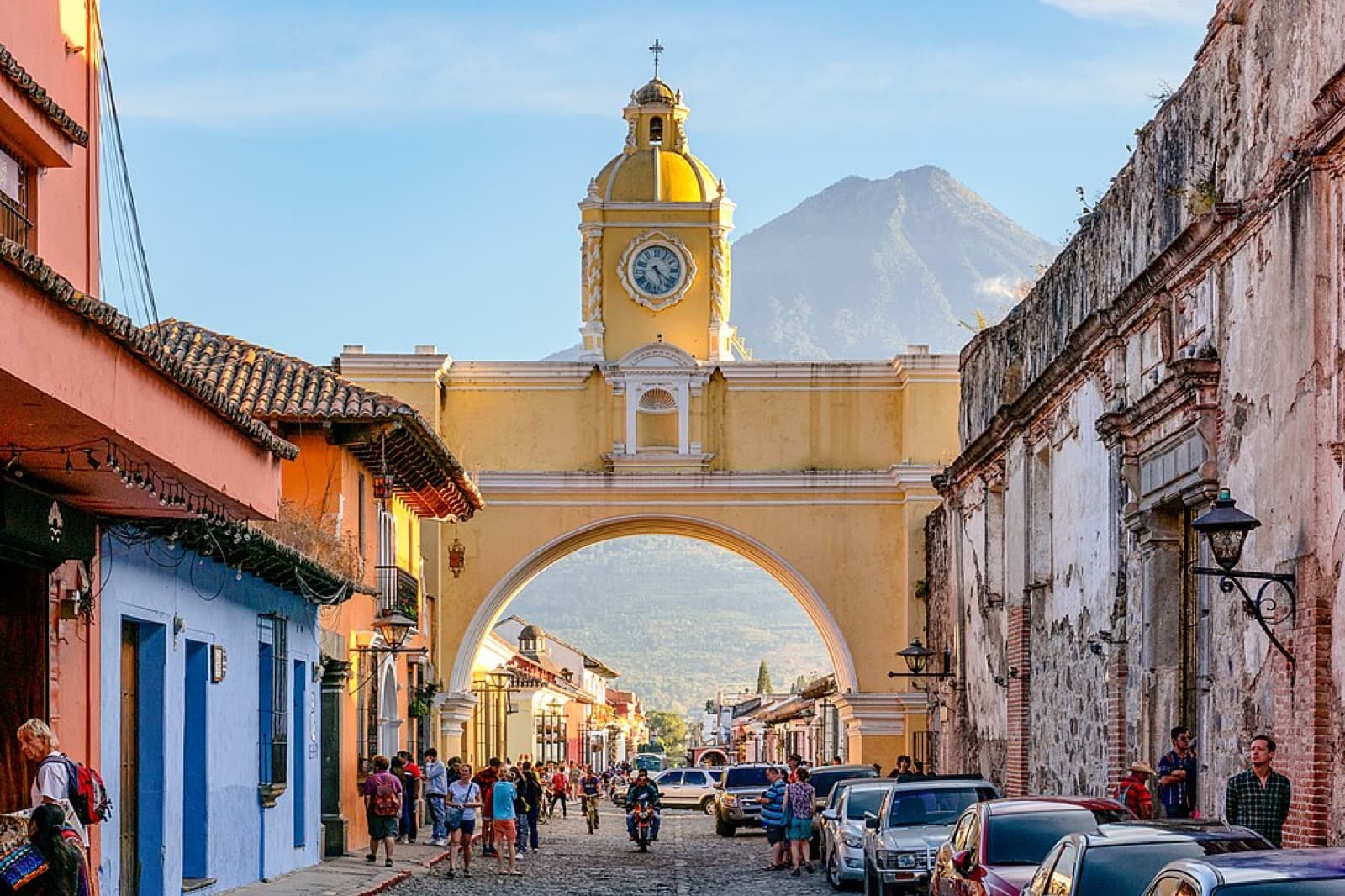
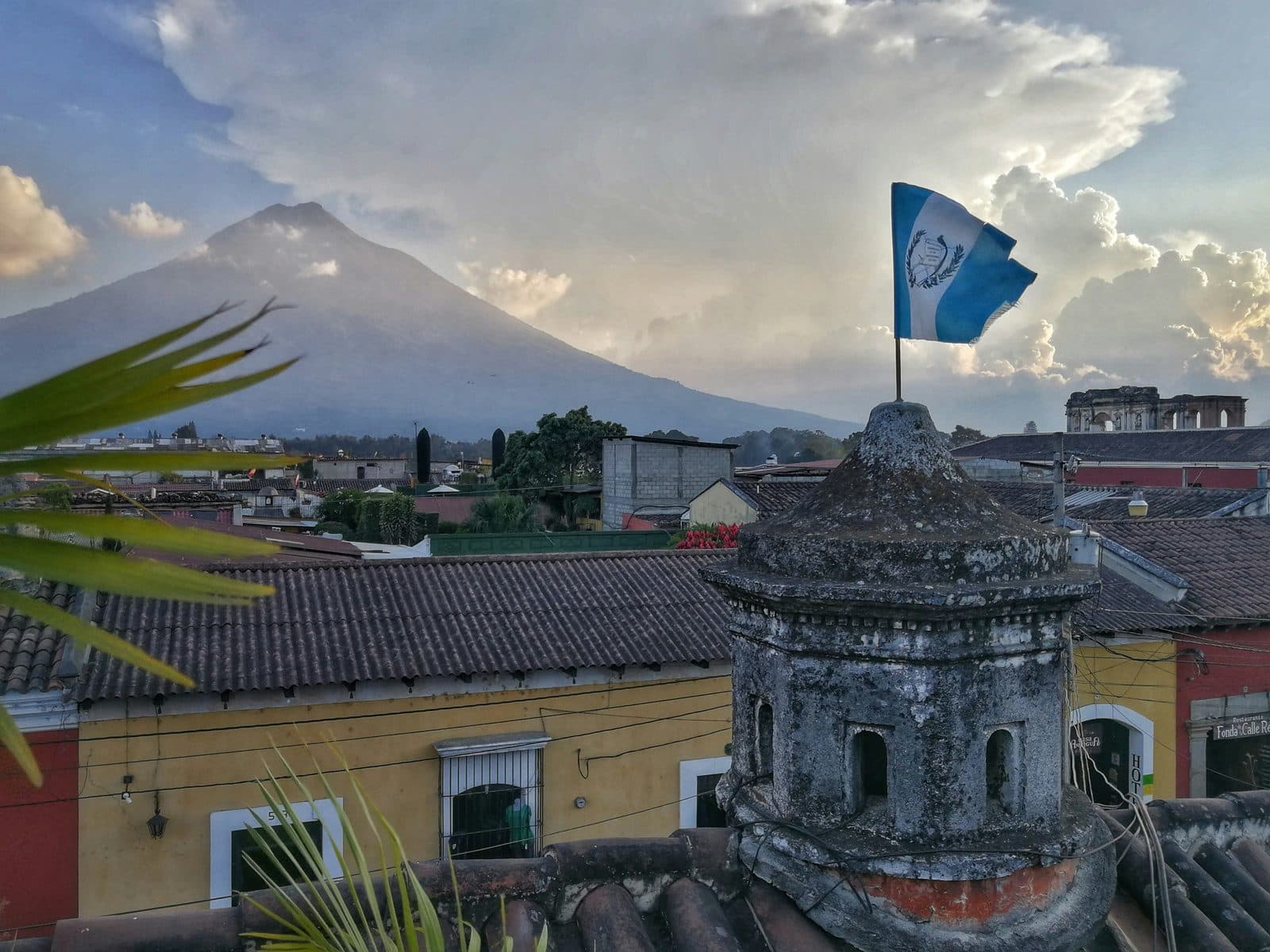
Antigua sits in Kaqchikel Maya territory, and the cultural presence is everywhere once you learn to see it. The central market, the textile cooperatives, the village of San Antonio Aguas Calientes (20 minutes by tuk-tuk), and the ceremonial sites scattered through the surrounding hills all offer entry points.
Our Preserved by Catastrophe tour walks the colonial city these threads run through, past the cathedral ruins, the Mercedarian church, and the Franciscan tomb of Hermano Pedro, and surfaces the Maya layer underneath the Spanish overlay. Because the temples at Tikal tell one story of the Maya, but the women weaving on backstrap looms in Antigua's market tell another. Both are real. Both are happening now.
Frequently asked questions
- How many Guatemalans identify as Maya today?
- More than six million Guatemalans identify as Maya, comprising roughly 40 percent of the population and belonging to over 20 distinct ethnic groups, each with its own language, textile tradition, and spiritual practices.
- What is a Maya traje and what does it signify?
- The traje is a distinctive textile pattern belonging to each Maya community that identifies the wearer's village, ethnic group, and social status.
- Is it correct to say 'Mayan culture'?
- No. Maya is both the singular and plural adjective, so it is Maya culture, Maya people, and Maya traditions. Mayan refers only to the language family.
Ready to experience it?
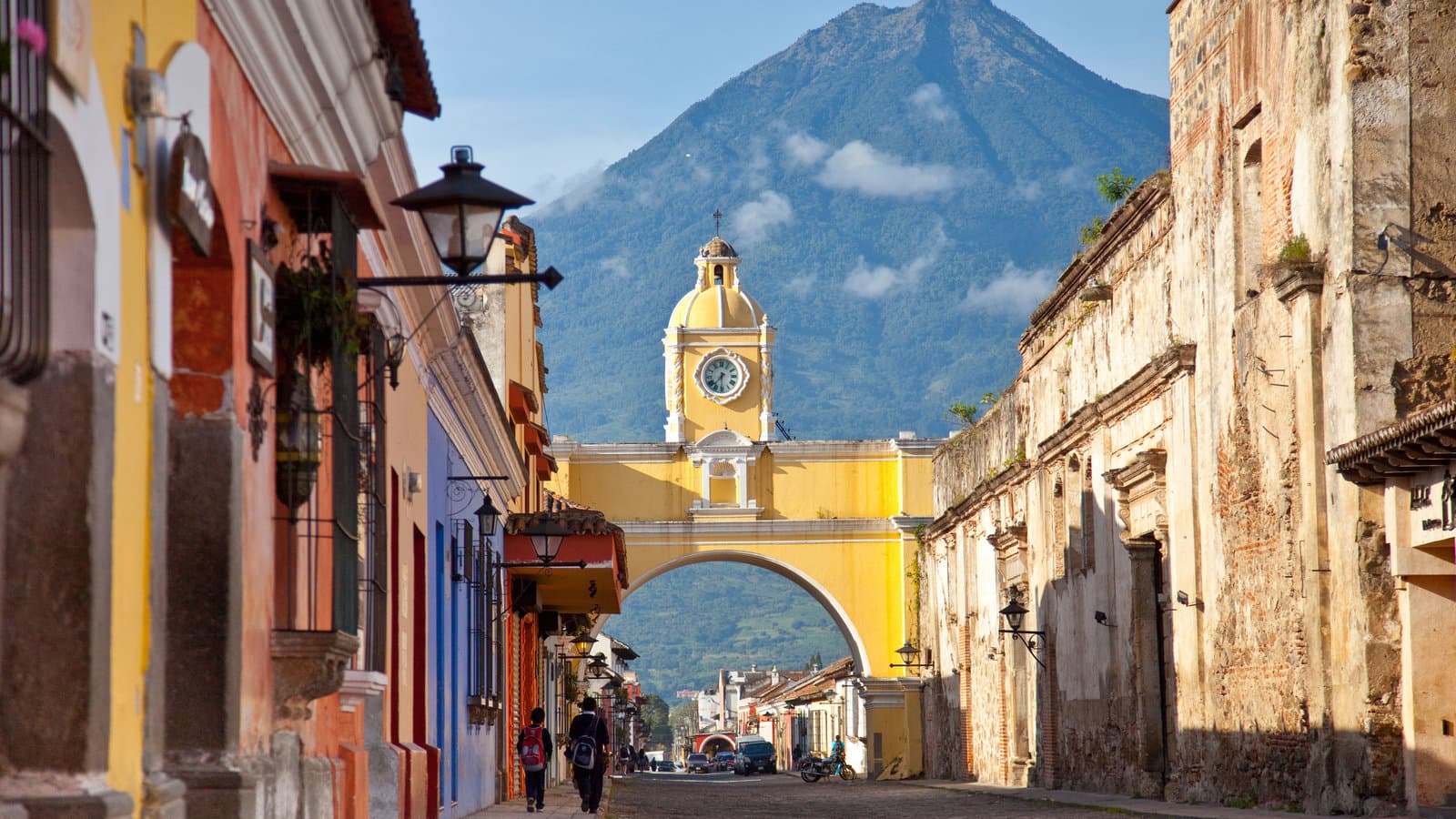
Historic Center: Preserved by Catastrophe
105 min · 3.69 km · easy
More from Antigua
Explore more at your own pace.
Antigua Guatemala Travel Guide: How Many Days, Getting There, When to Go (2026)
Best Self-Guided Walking Tours in Antigua Guatemala (2026)
One Day in Antigua Guatemala: A Walkable Itinerary (2026)
What to Eat in Antigua Guatemala: A Food Guide (2026)
The People Who Stayed: A Companion to the Historic Center Walk