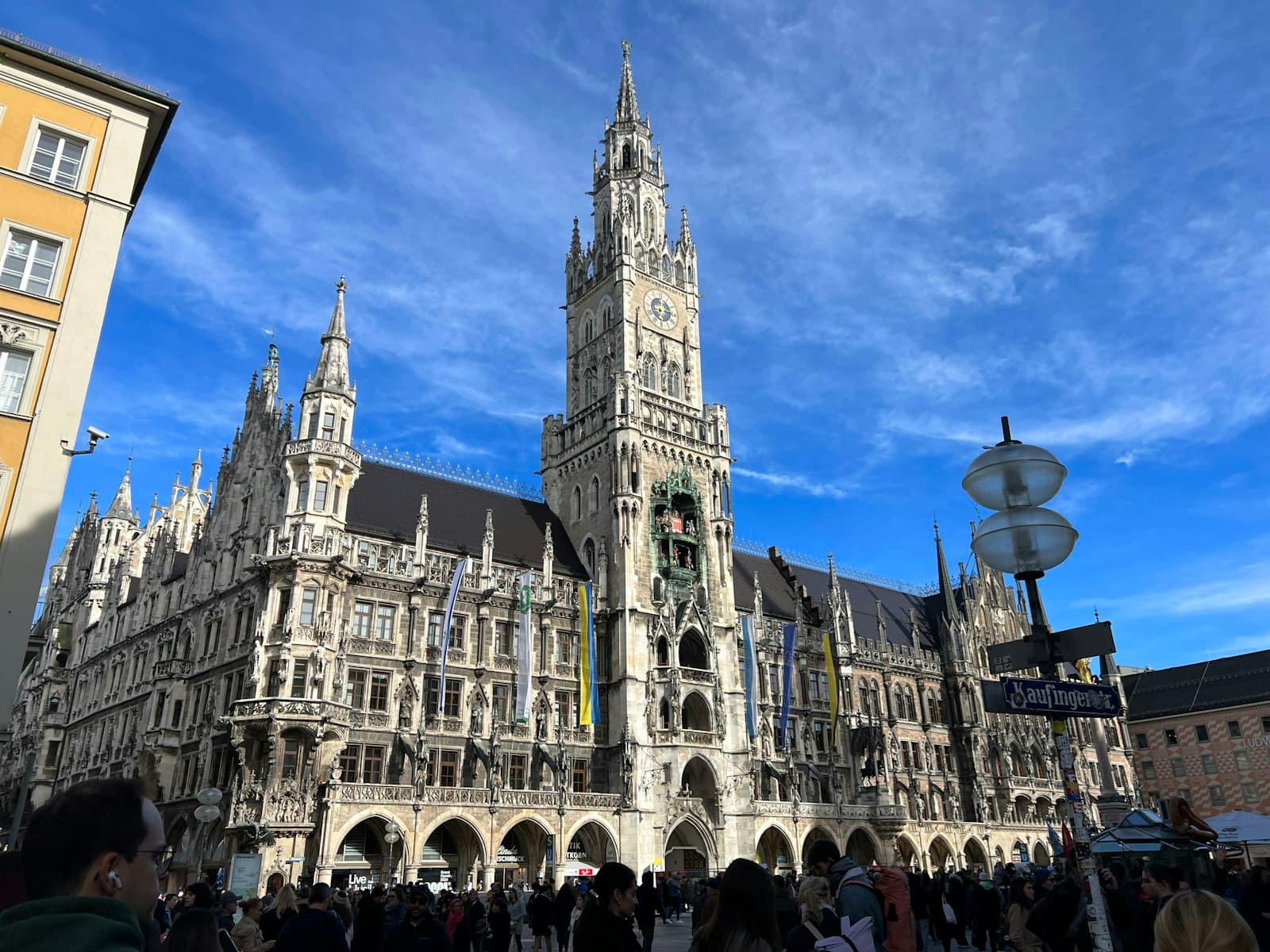
Walk the medieval heart of Munich and read how a duke burned a bishop's bridge to steal a salt toll, and how a market seized in the year eleven fifty-eight grew into a great city with a monk in its name.
Start · Marienplatz and the Mariensaeule
DirectionsStops
- 1
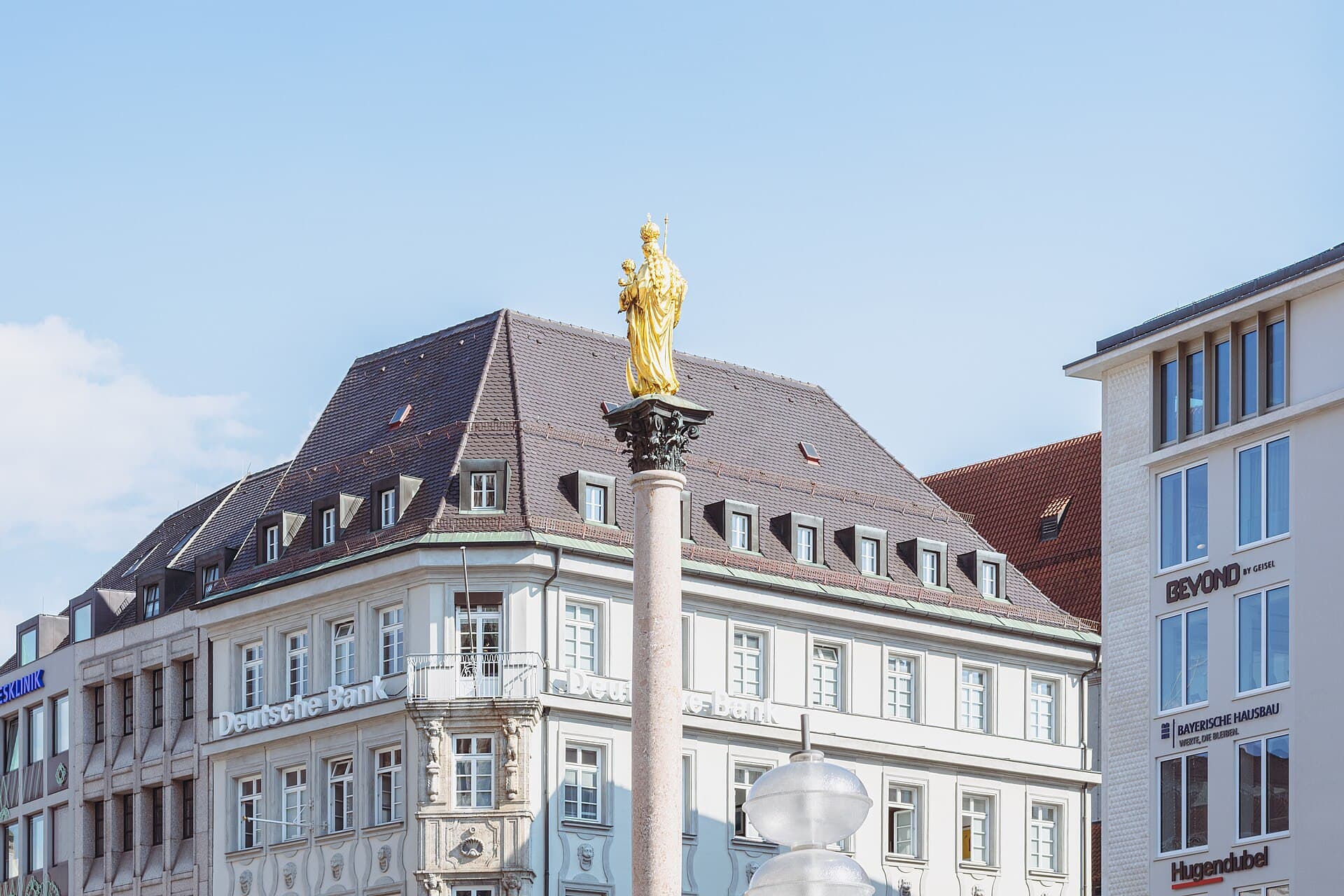
Marienplatz and the Mariensaeule
The central market square that was the entire point of Munich's founding, watched over by a golden Virgin raised in thanksgiving after the Thirty Years War.
- 2
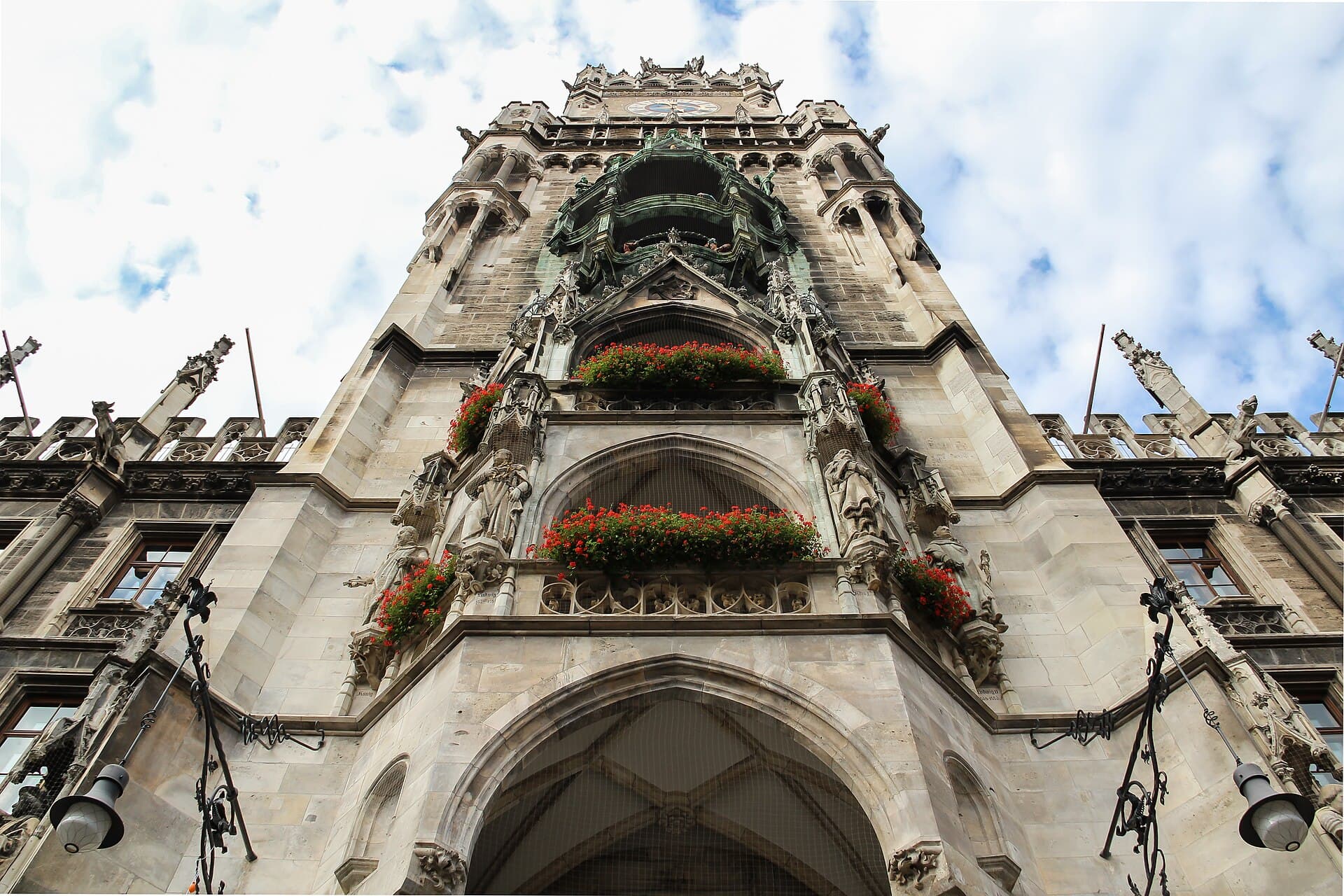
Neues Rathaus and the Glockenspiel
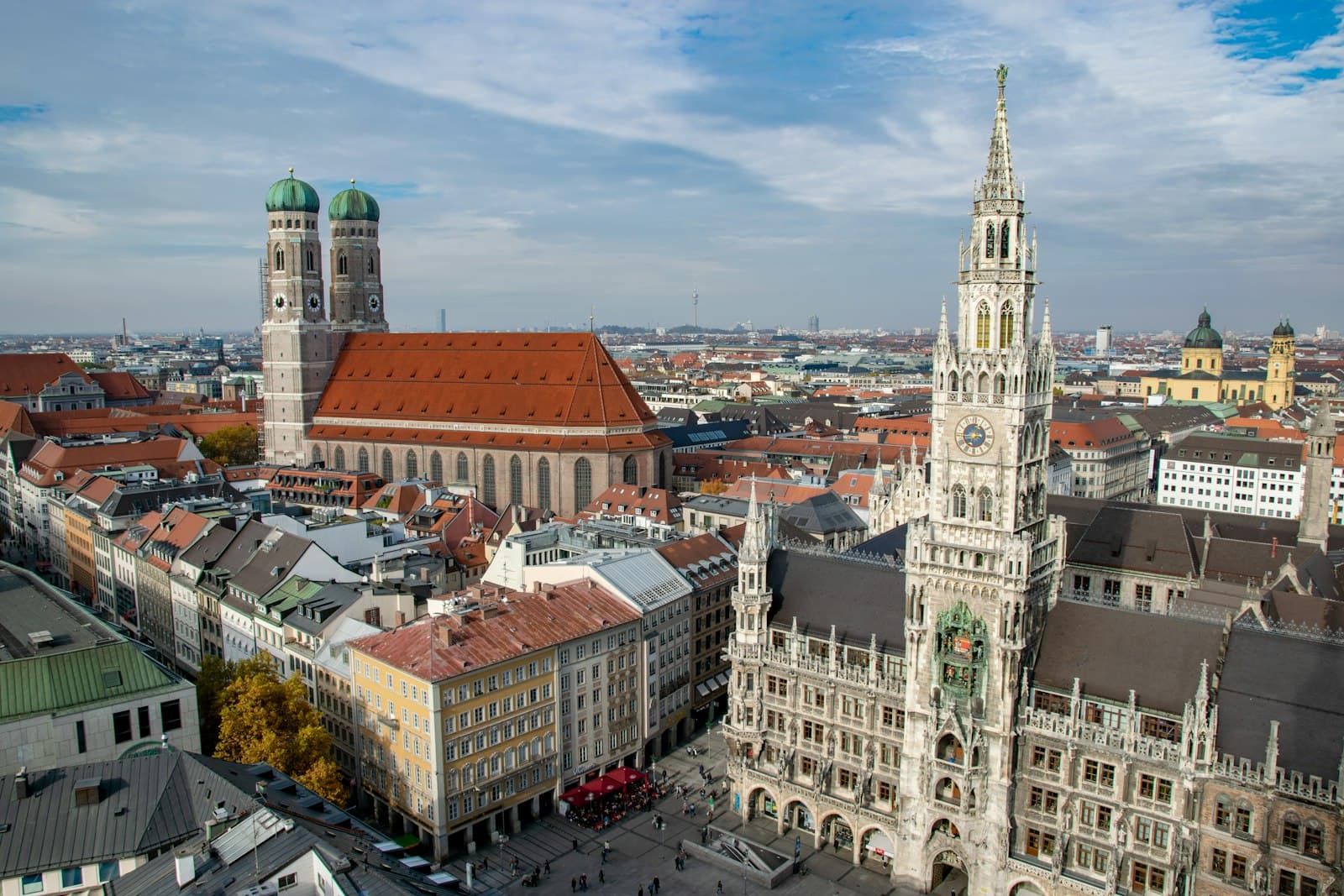
The neo-Gothic New Town Hall on the north side of the square, home to a mechanical carillon that reenacts a ducal wedding tournament and the coopers' dance.
- 3
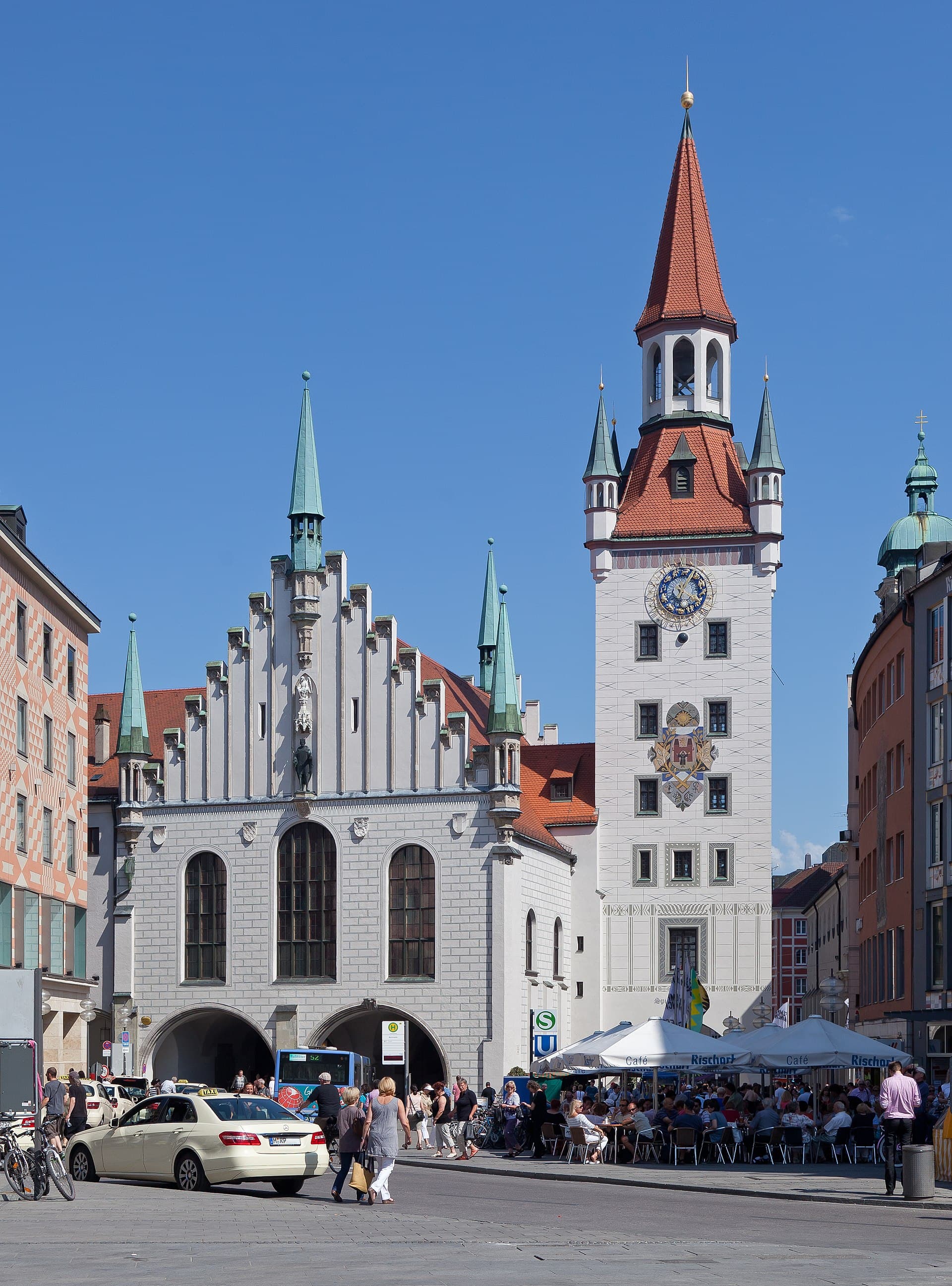
Altes Rathaus
The medieval Old Town Hall at the east end of the square, whose tower is literally a former gate in Munich's first town wall.
- 4
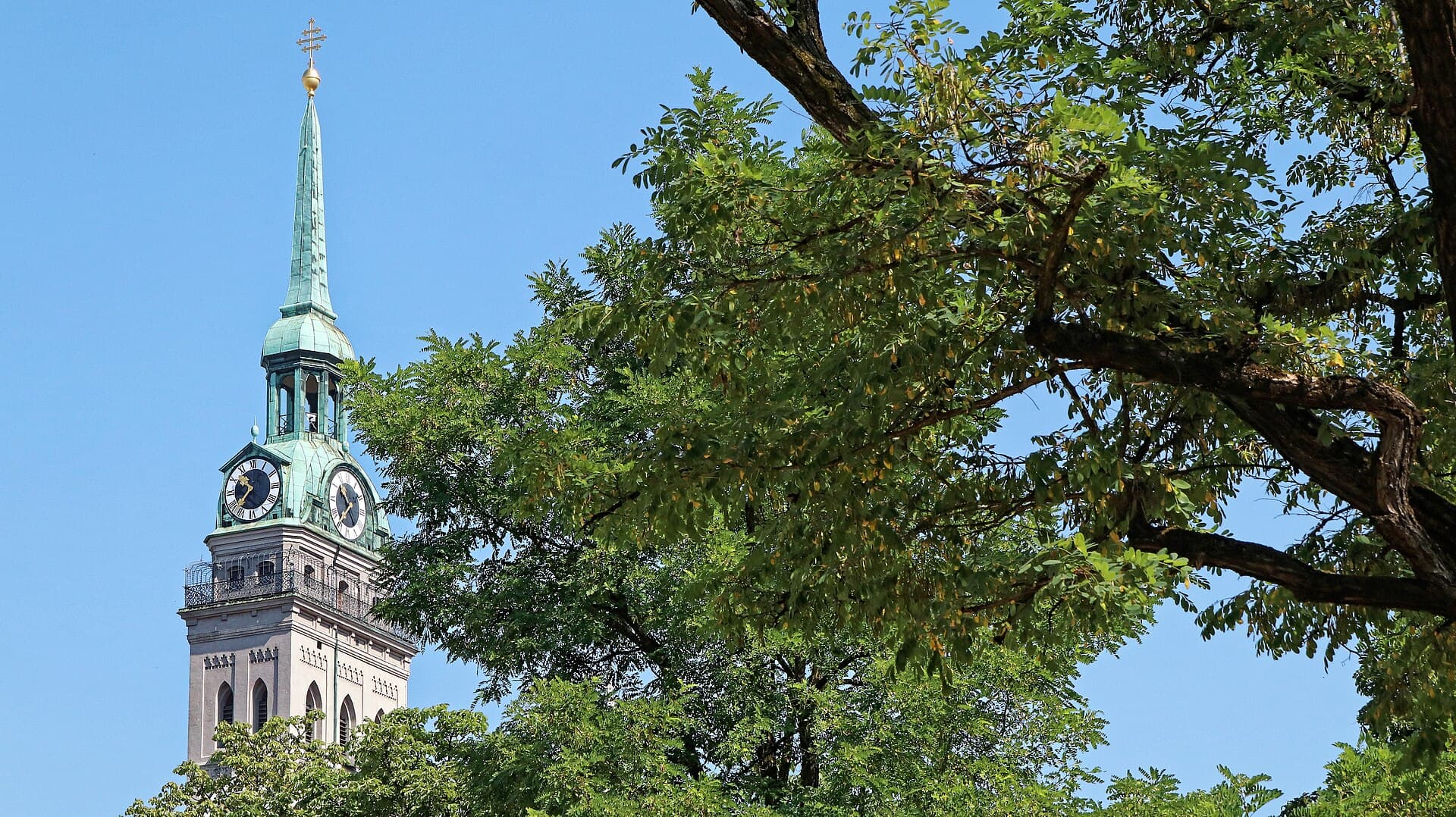
Peterskirche: Alter Peter
Munich's oldest recorded parish church, on the very hill where monks are recorded to have lived before the town was founded.
- 5
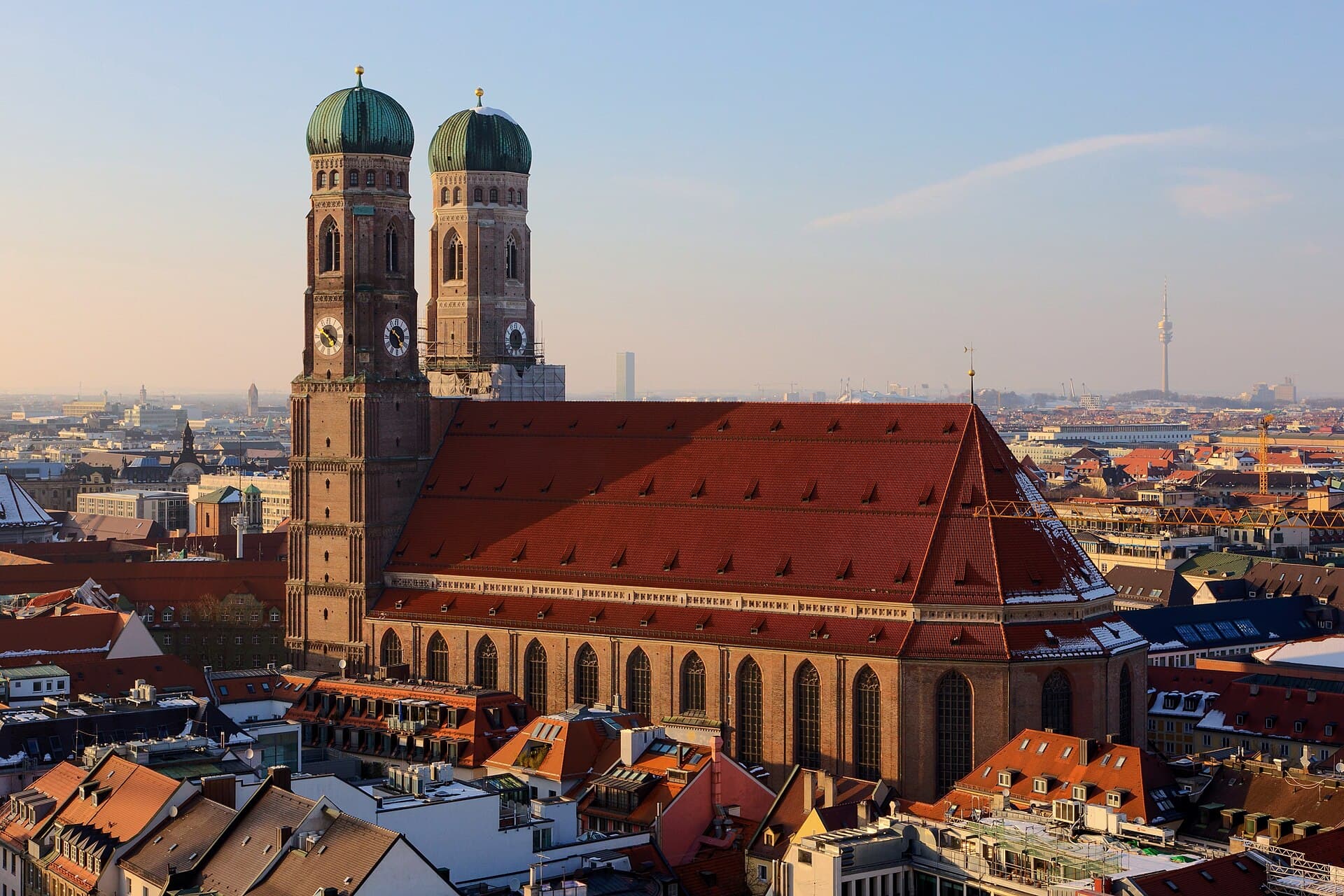
Frauenkirche: Dom zu Unserer Lieben Frau
The late-Gothic brick cathedral whose twin green domes still rule the Munich skyline by law.
- 6
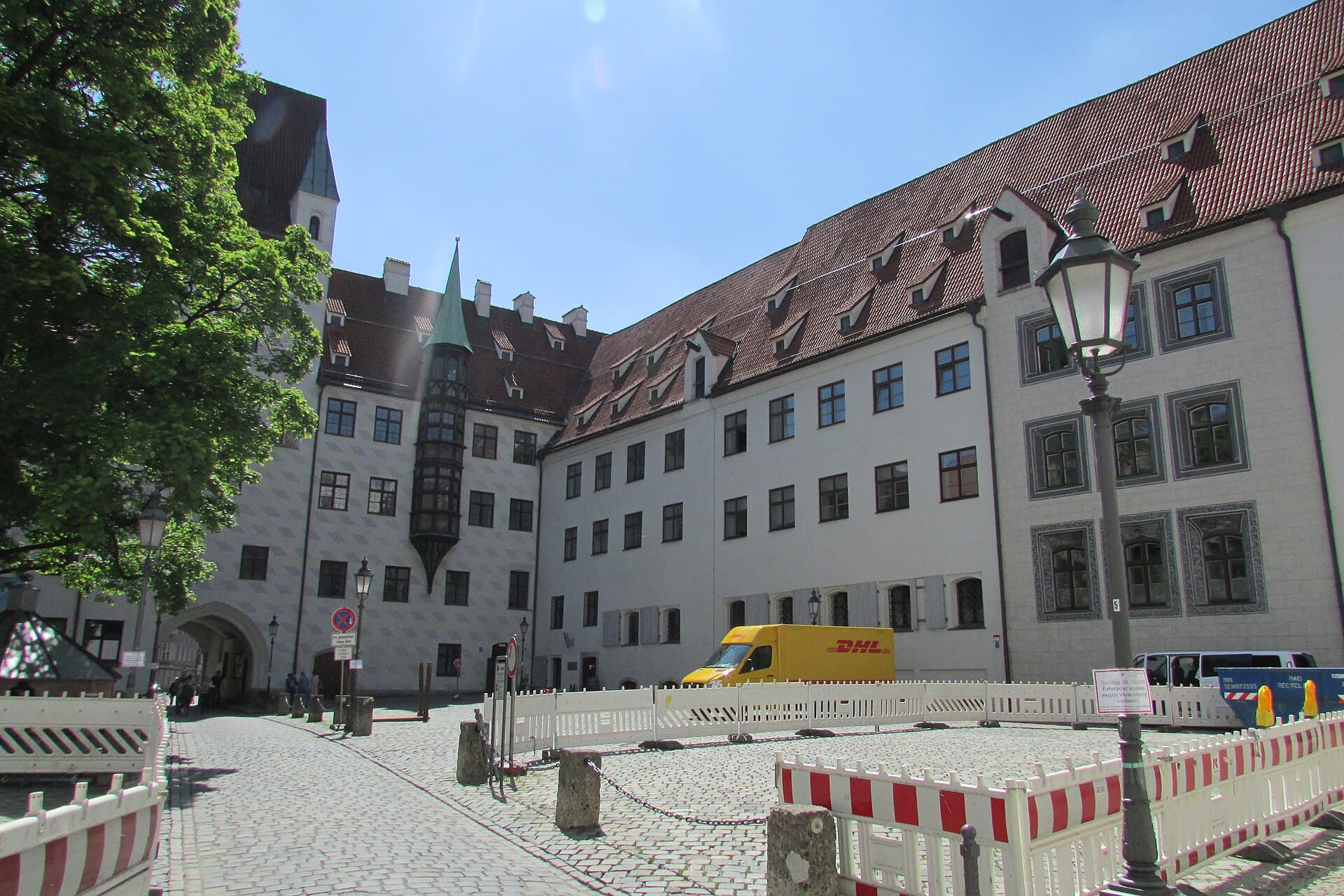
Alter Hof and the founding of Munich
The first fortified Wittelsbach court in the old town, the anchor of ducal power and the natural place to tell the founding in full.
- 7
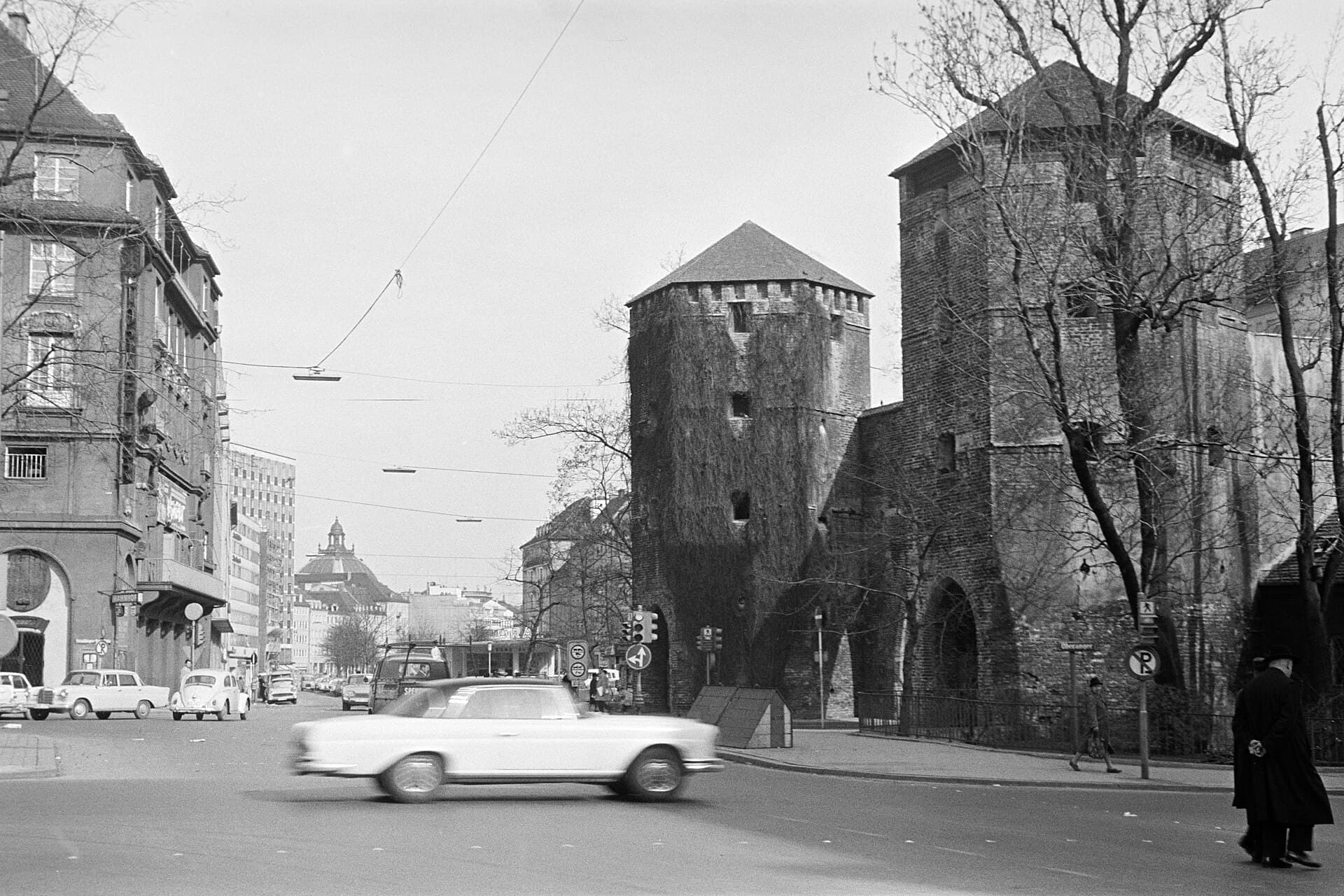
Sendlinger Tor
One of three surviving medieval Gothic city gates, marking the southern edge of the old walled town.
Details
Best Time to Visit
Late morning is ideal, so you can catch the Glockenspiel on Marienplatz at eleven or noon and still have soft light on the cathedral and the founding hill. Weekday mornings are calmer than weekends. If you plan to climb Alter Peter, go on a clear day for the view to the Alps, and arrive before the midday crowds thicken the stairwell.
Pro Tips
- •Time your pause on Marienplatz for eleven or noon to see the Glockenspiel turn, or five in the afternoon from March to October.
- •Climbing Alter Peter is three hundred and six steps with no elevator and a small fee, around five euros for adults, so save it for a clear day and wear steady shoes.
- •The Frauenkirche and Saint Peter's are both free to enter, so step inside even briefly for the cool interiors and the sense of scale.
- •Visit the free basement exhibition under the Alter Hof to see the founding and imperial history laid out where it happened.
- •Buy and validate an MVV transit ticket before boarding the U-Bahn or S-Bahn, since Sendlinger Tor is a major station and inspectors do check.
- •Keep the seven stops loose. This is your walk, so linger where a place holds you and skip anything that does not.
Safety & Precautions
- •Watch for fast, near-silent cyclists and trams in the old town. Bike lanes run right beside the pavement, and trams appear quietly on their tracks, so look both ways before stepping off a kerb.
- •The Altstadt is paved in cobbles and crossed by tram tracks that can catch a heel or a wheel, so walk with care and choose stable footwear.
- •Inside churches and the cathedral, dress modestly, keep your voice low, and be mindful of services in progress. Photography rules vary, so check posted signs.
- •At the Old Town Hall, where Nazi-era history is recorded, keep a sober and respectful manner. This is documented history, not a spectacle.
Travel advisory: Exercise Increased Caution (Level 2).
Gallery
Related Reading
Go deeper on what you'll see, hear, and walk through.
Overview
Best Self-Guided Walking Tours in Munich (2026)
3 min
Overview
Munich Travel Guide: Days, Transport, Timing, Safety, and Budget
6 min
Overview
One Day in Munich: A Walkable Morning-to-Evening Itinerary
9 min
Thematic
Best History Walking Tours in Munich (2026)
2 min
Thematic
The City the Monks Named: How Munich Turns Privilege Into Public Life
7 min
Companion
Alter Hof: Where a Burned Bridge Founded Munich
6 min
Deep dive
The Frauenkirche: Why Munich Wrote a Law to Protect Its Skyline
6 min
Read
What to Eat in Munich
6 min
Read the walk
The full story of Altstadt: The City the Monks Named, in words. Prefer to listen? Play it narrated, from home or on location.
Introduction
Munich, in Germany, carries a monk in its name and on its coat of arms, and the reason is a story of ambition. In the year eleven fifty-eight, a duke named Henry the Lion, Heinrich der Loewe, burned a rival bishop's toll bridge over the Isar and rerouted the lucrative salt road to a settlement the records call, by the monks. Emperor Frederick Barbarossa made that seizure official, and a market square was born that is still the civic heart. This walk reads the medieval town that grew from that single act, stop by stop, so you can watch it assemble itself. There are seven stops. Plan on roughly ninety minutes at an unhurried pace, and a little over two kilometres of gentle walking on cobbles and busy squares. This is your walk, so linger where a place holds you, and skip a stop that does not. You will stand on the founding market square and beneath a golden Virgin raised in thanksgiving. You will read two town halls, one neo-Gothic and one medieval, facing each other across the square. You will find the oldest recorded parish church on the hill where monks once lived, and the brick cathedral whose twin green domes still rule the skyline by law. You will reach the first ducal court that anchored a dynasty, and finish at a Gothic gate that shows the edge of the old walled town. Along the way I will name where these facts come from, and I will tell you plainly what is history and what is legend. When you arrive at Marienplatz and the Mariensaeule, begin with stop one.
1. Marienplatz and the Mariensaeule
You are standing on the square that was the whole point of the founding. Platz means square, and Marienplatz has been Munich's central market since the town began in the year eleven fifty-eight. For centuries it was simply called the Markt, the market, and later the Schranne, the grain market. Everything you will see on this walk grew outward from this trading ground. According to the city's own records, the square kept the name Markt until the ninth of October, eighteen fifty-four, when the grain market moved and the square was renamed Marienplatz, Mary's square. Look to the tall column at the centre. This is the Mariensaeule, the Marian column. Elector Maximilian the First of Bavaria had it erected in sixteen thirty-eight, in thanksgiving that Munich and the town of Landshut were spared destruction during the Swedish occupation in the Thirty Years War, fulfilling a vow he had made. The golden figure on top is the Virgin Mary as Queen of Heaven, standing on a crescent moon. The statue itself is older than the column. It was created in fifteen ninety and once stood inside the cathedral before it was raised here. Wikipedia records this as the first Marian column of its kind built north of the Alps, a design that later inspired similar columns across Europe. So here is the tension this walk holds. A monk gave the city its name, and a golden Virgin crowns its heart, yet the square beneath your feet was seized in a hard commercial coup. Take your time. The market, the churches, the town halls, and the gate all radiate from this spot.
2. Neues Rathaus and the Glockenspiel
The vast pinnacled building on the north side of the square is the Neues Rathaus, the New Town Hall. Rathaus means town hall. It looks medieval, but it is not. It is neo-Gothic, designed by the architect Georg von Hauberrisser, and built in phases across the later nineteenth century, with the tower rising from eighteen ninety-eight to nineteen oh five and the whole completed around nineteen oh six. The city government moved here from the older town hall in eighteen seventy-four. So this grand Gothic face is a Victorian-era answer to a genuinely medieval town. High on the tower is the Rathaus-Glockenspiel, a mechanical carillon. It has forty-three bells and thirty-two life-sized figures, and it turns daily at eleven and at noon, with an extra show at five in the afternoon from March to October. The upper level reenacts a tournament held in fifteen sixty-eight to celebrate the marriage of Duke Wilhelm the Fifth to Renata of Lorraine. The lower level performs the Schaefflertanz, the coopers' dance. By civic tradition this dance is said to mark the town's recovery from the plague years of fifteen fifteen to fifteen seventeen, when the barrel-makers were the first to dance in the streets again. I share that origin as tradition, not as documented fact. If you would like to watch the figures turn, time your pause for the top of an hour. Otherwise, take in the sheer ambition of a growing city dressing its government in the armor of the Middle Ages.
3. Altes Rathaus
Now turn to the east end of the square, to the smaller building with the pale spire. This is the Altes Rathaus, the Old Town Hall, and unlike its neo-Gothic neighbour, this one is genuinely old. Its great hall, the Grosser Saal, meaning grand hall, was built in the thirteen nineties, and the building was redesigned in late-Gothic style by the architect Joerg von Halsbach around fourteen seventy to fourteen eighty. Here is the detail I love. The tower is not just a tower. It incorporates the former Talburgtor, a gate in Munich's first medieval town wall. Tor means gate. So you are looking at an actual gate of the early walled town, absorbed into a civic building. According to Wikipedia, the building was severely damaged in the Second World War, and its spire was reconstructed between nineteen seventy-one and nineteen seventy-four. I want to record one part of this building's history soberly. On the ninth of November, nineteen thirty-eight, the grand hall here was the site of a speech by the Nazi propaganda minister Joseph Goebbels, a speech considered a prelude to the Kristallnacht pogrom against Germany's Jews. This is documented Nazi-era history, and German responsibility for what followed is not in question. I mention it not as a spectacle but because honest history belongs to a place. Stand here a moment and hold the two things together. A medieval gate that once let honest traders through, and a hall where hatred was later summoned.
4. Peterskirche: Alter Peter
A short rise south of the market brings you to the Peterskirche, Saint Peter's Church. Kirche means church. This is the oldest recorded parish church in Munich, and it sits on a small hill called the Petersbergl, Peter's little hill. That location is the quiet heart of the whole…
Full narration for this stop unlocks with the tour.
5. Frauenkirche: Dom zu Unserer Lieben Frau
Ahead rise two brick towers capped with green domes. This is the Frauenkirche, formally the Dom zu Unserer Lieben Frau, the Cathedral of Our Lady. Dom means cathedral. It is the seat of the Archdiocese of Munich and Freising, and it is the great landmark of the old town.…
Full narration for this stop unlocks with the tour.
6. Alter Hof and the founding of Munich
Through a quiet passage you reach the Alter Hof, the Old Court. Hof means courtyard. This was the first fortified residence of the Wittelsbach dynasty inside the old town, and it is where the founding story is best told in full. After the first partition of Bavaria in twelve…
Full narration for this stop unlocks with the tour.
7. Sendlinger Tor
The walk ends at the Sendlinger Tor, the Sendlinger gate. Tor means gate. This is one of only three surviving medieval Gothic city gates of Munich, together with the Isartor and the Karlstor. It belonged to the second, larger ring of fortifications built as the town expanded…
Full narration for this stop unlocks with the tour.