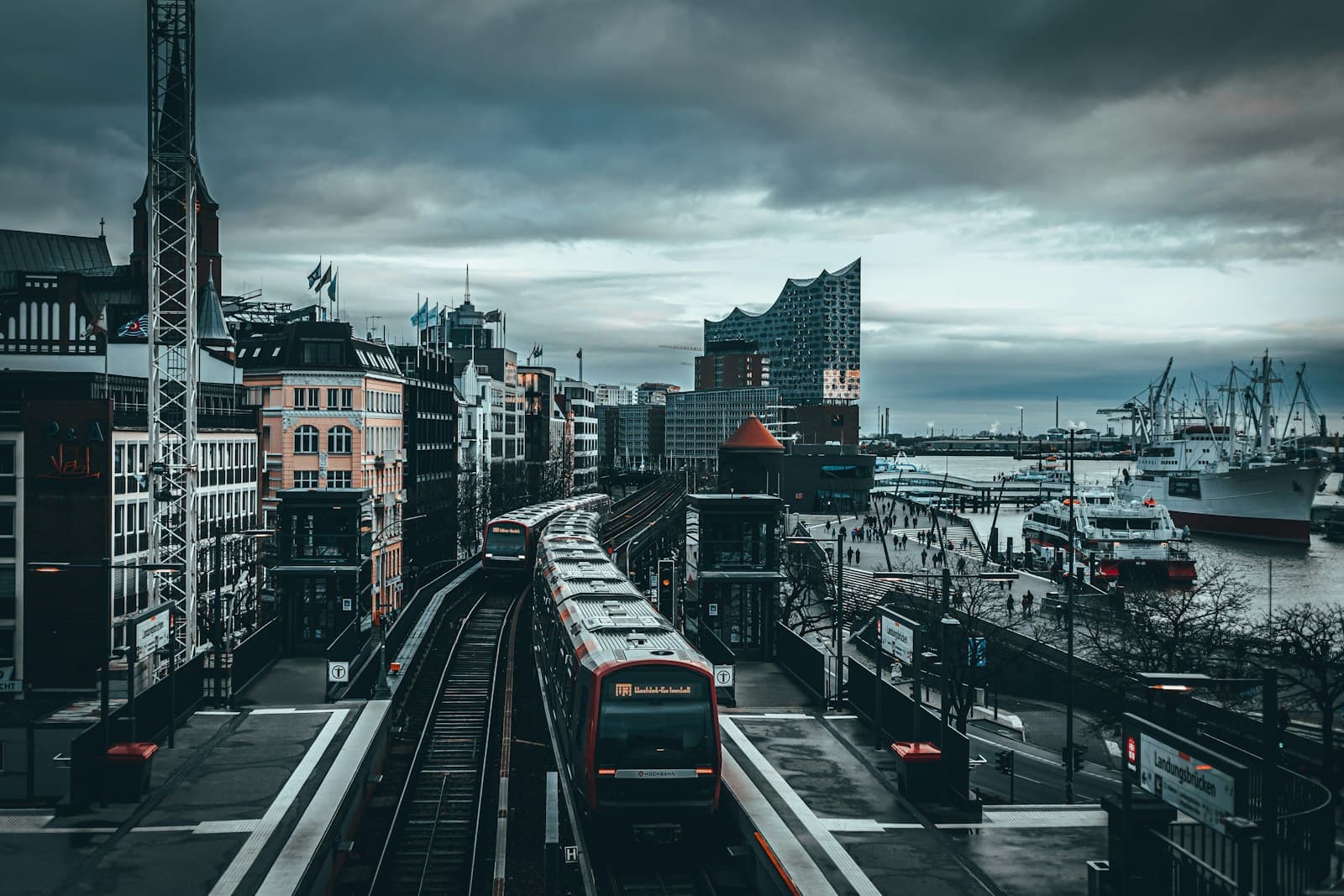
Walk the harbour quarter that respectable Hamburg pushed to its edge, and discover how St. Pauli turned relegation into one of the city's most exported cultures, including the rough clubs where a young band from Liverpool grew up.
Start · Die Landungsbruecken: Where the Sea Comes Ashore
DirectionsStops
- 1
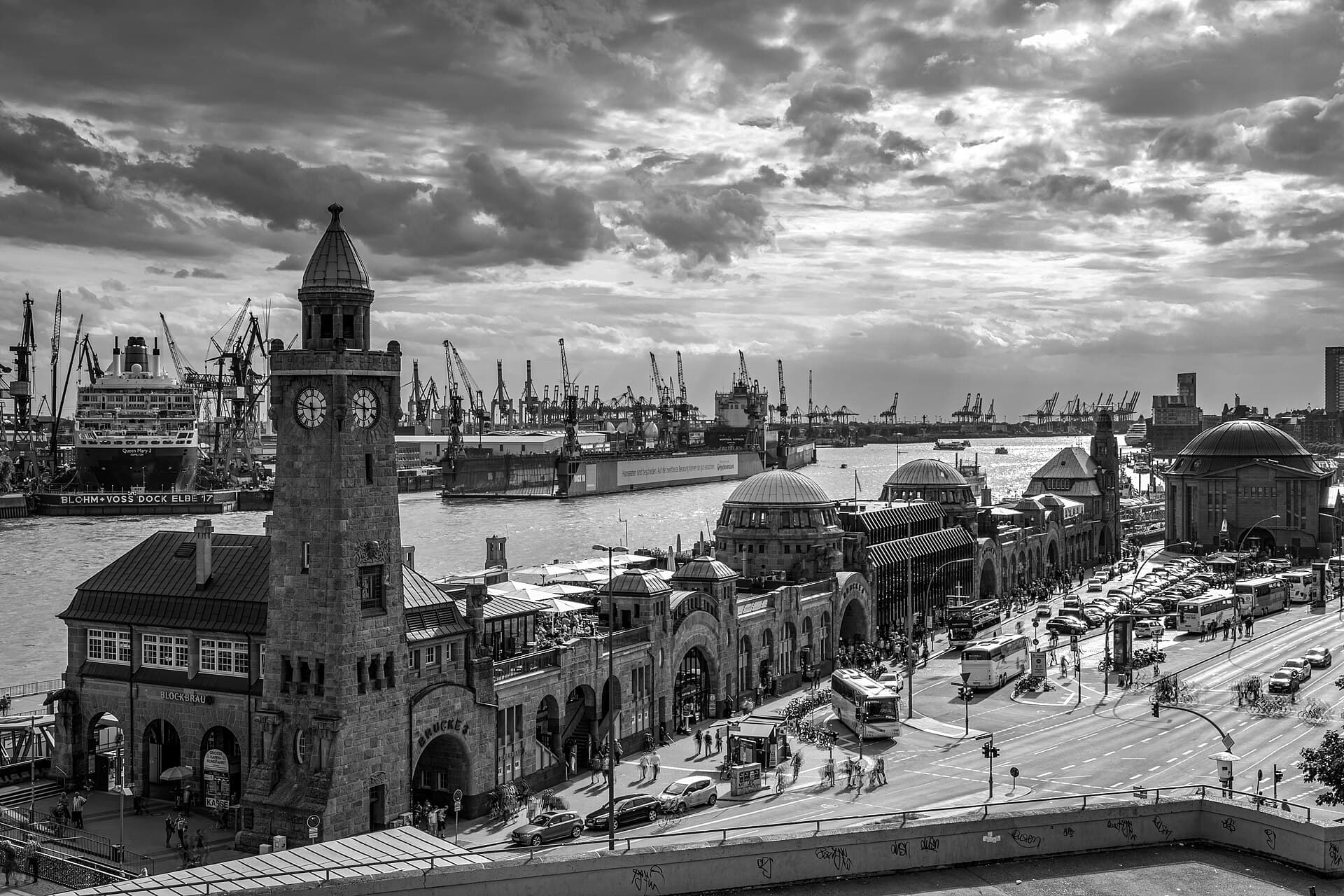
Die Landungsbruecken: Where the Sea Comes Ashore
Hamburg's great floating landing stages on the Elbe, the maritime front door of St. Pauli where the city meets the world.
- 2
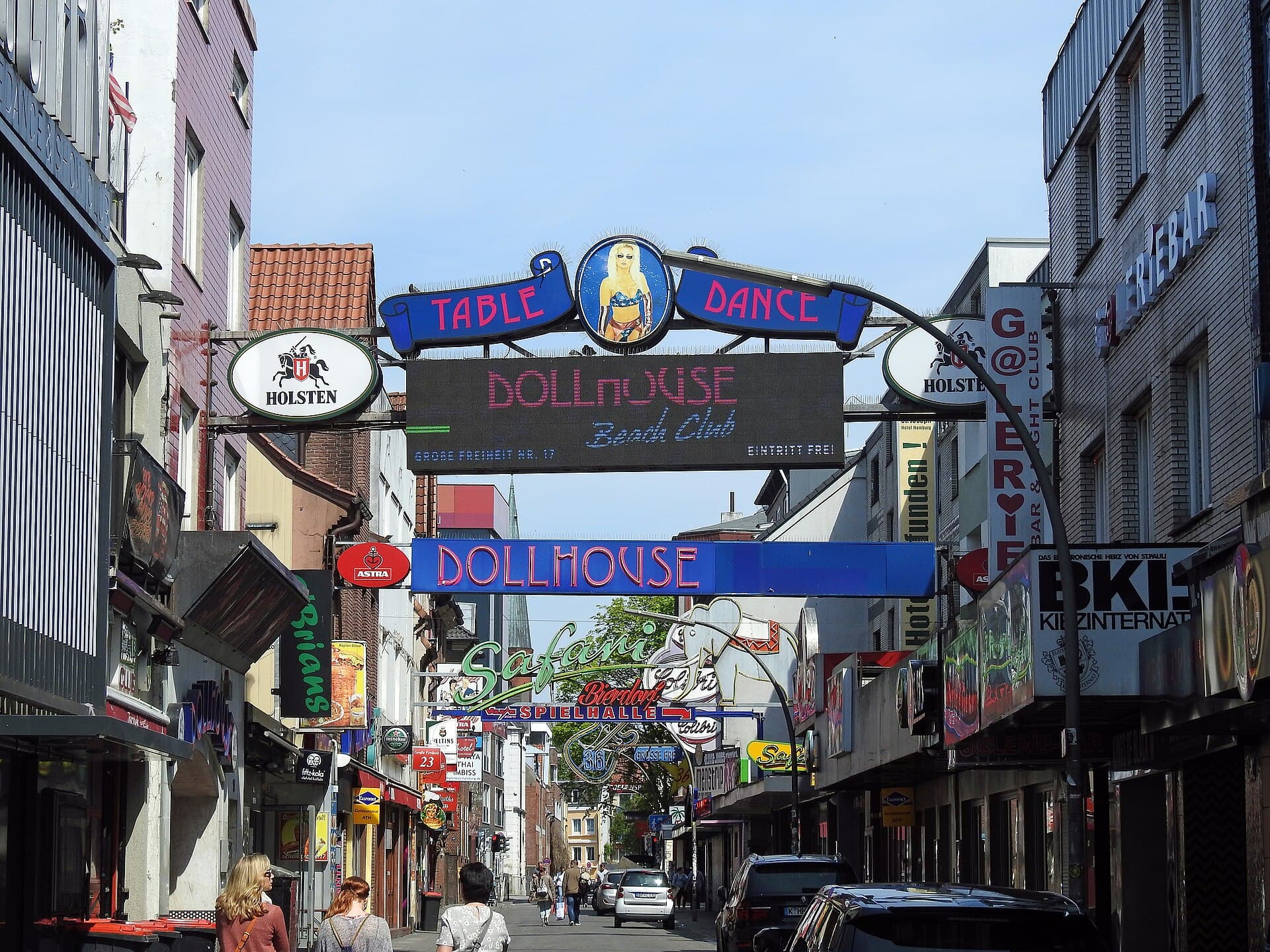
Die Reeperbahn: The Mile the City Called Sinful
St. Pauli's main street, born as an actual rope walk for the harbour trade and now Hamburg's principal nightlife strip.
- 3
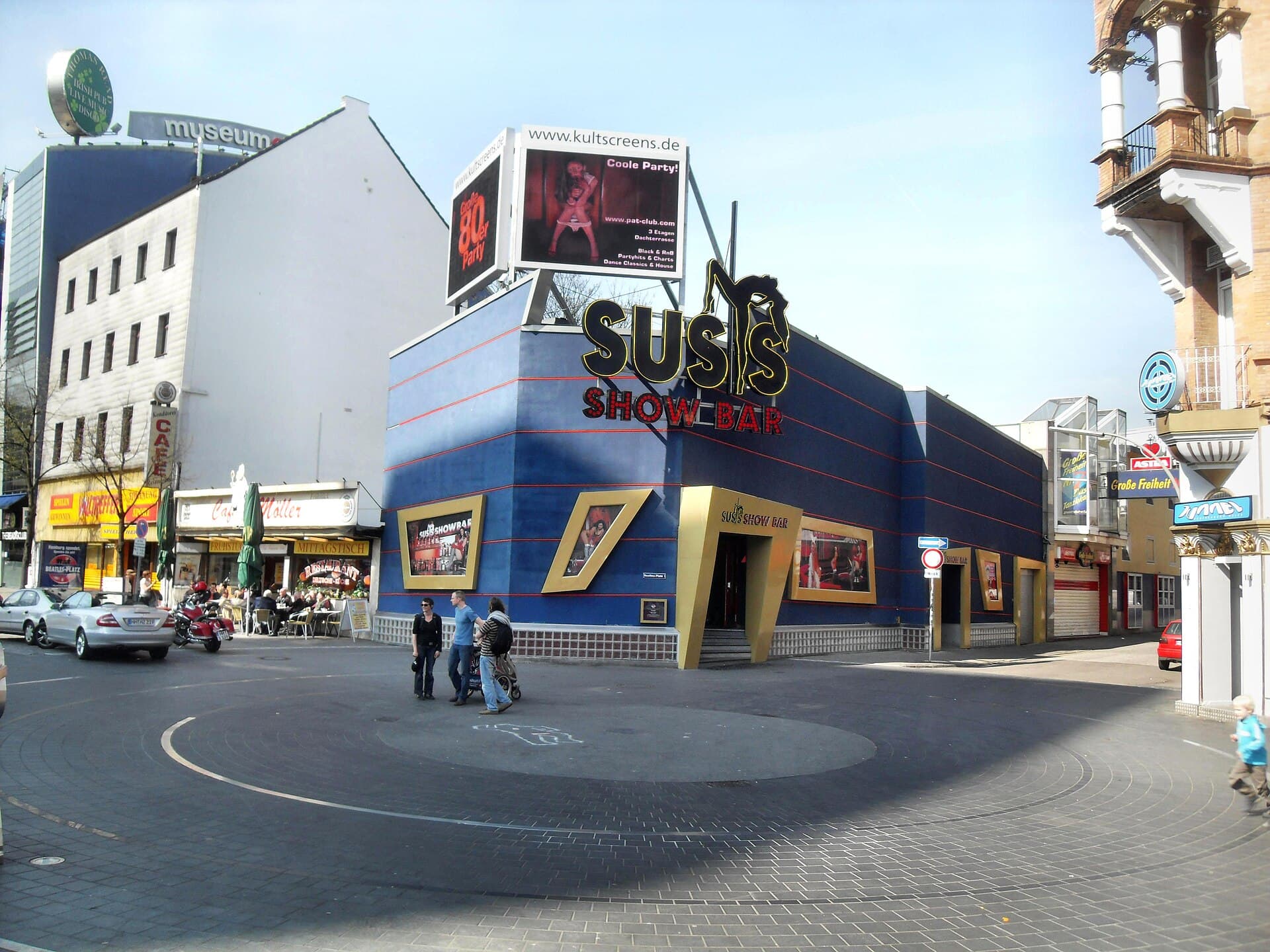
Die Grosse Freiheit und der Beatles-Platz: The Crucible
The side street off the Reeperbahn where a young band from Liverpool played hundreds of nights and grew up, marked today by a modern vinyl record memorial.
- 4
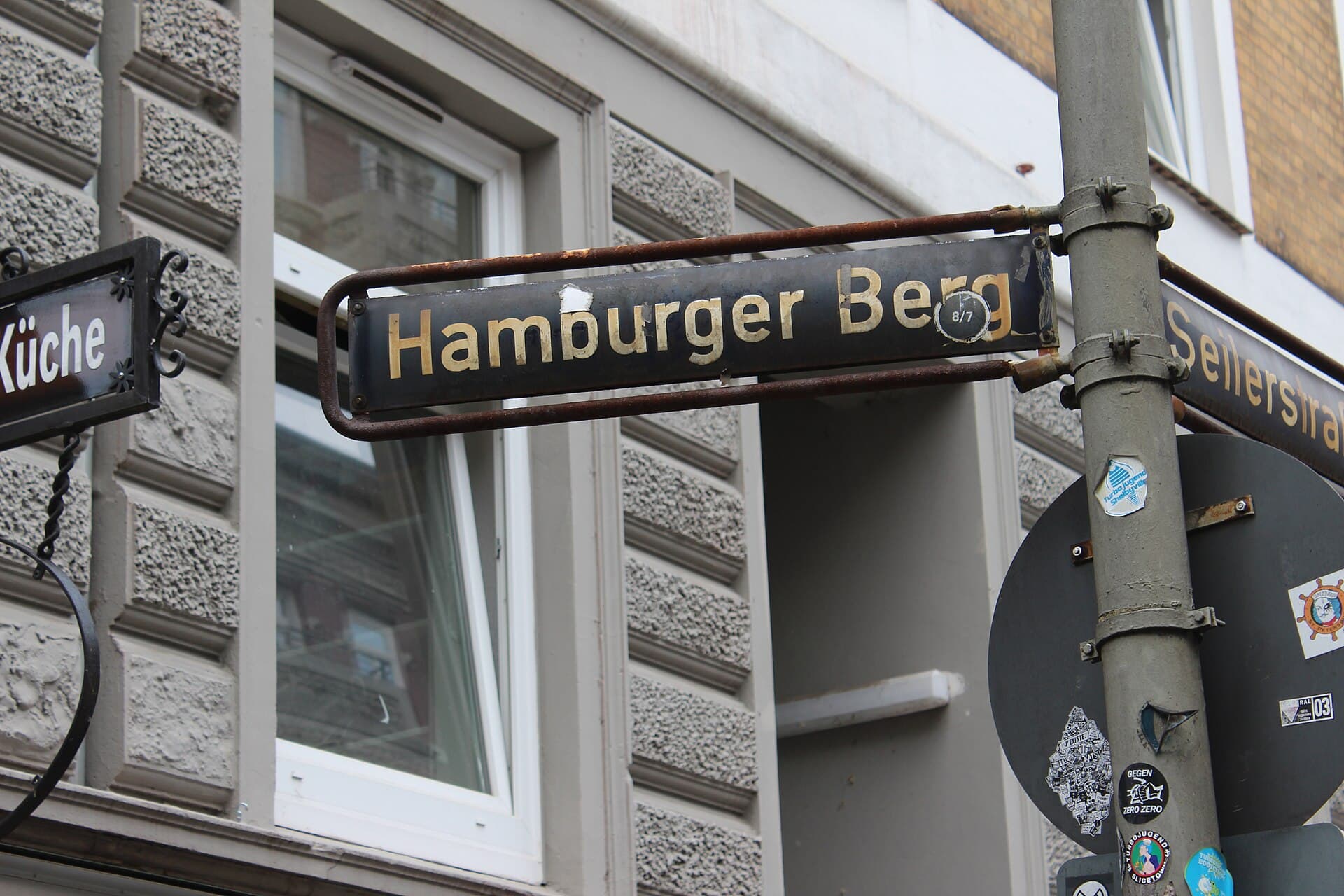
St. Pauli und der Hamburger Berg: The District at the Edge
The extramural quarter Hamburg pushed to its edge, once called Hamburger Berg, whose relegation became a crucible.
- 5
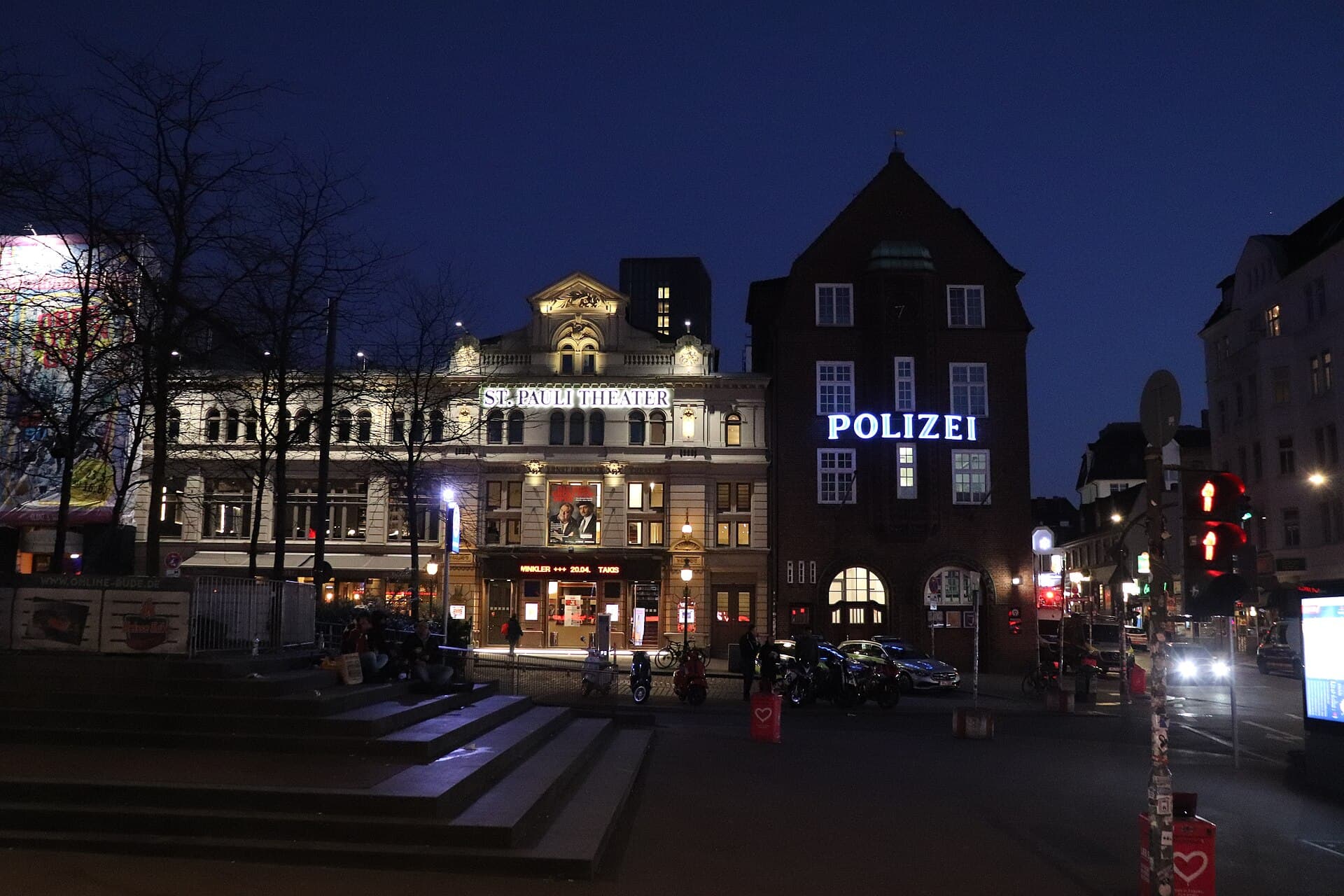
Die Davidwache und die Herbertstrasse: Order and Margin
A famous red brick police station facing a gated brothel street, order and the relegated trade standing side by side.
- 6
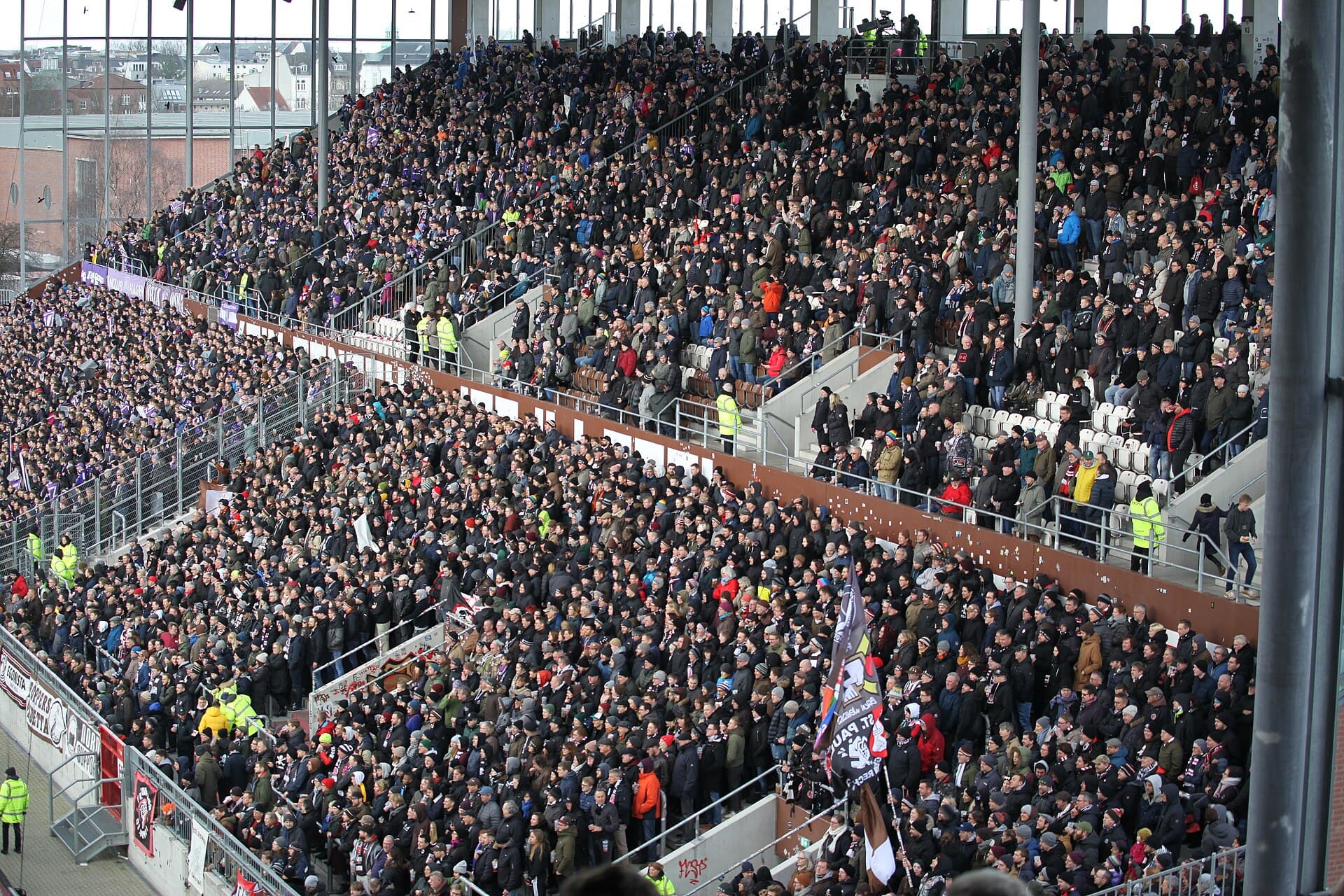
Der FC St. Pauli und das Millerntor-Stadion: Not Belonging as a Creed
The district's football club and its stadium, where St. Pauli's outsider status became a defiant modern identity.
- 7
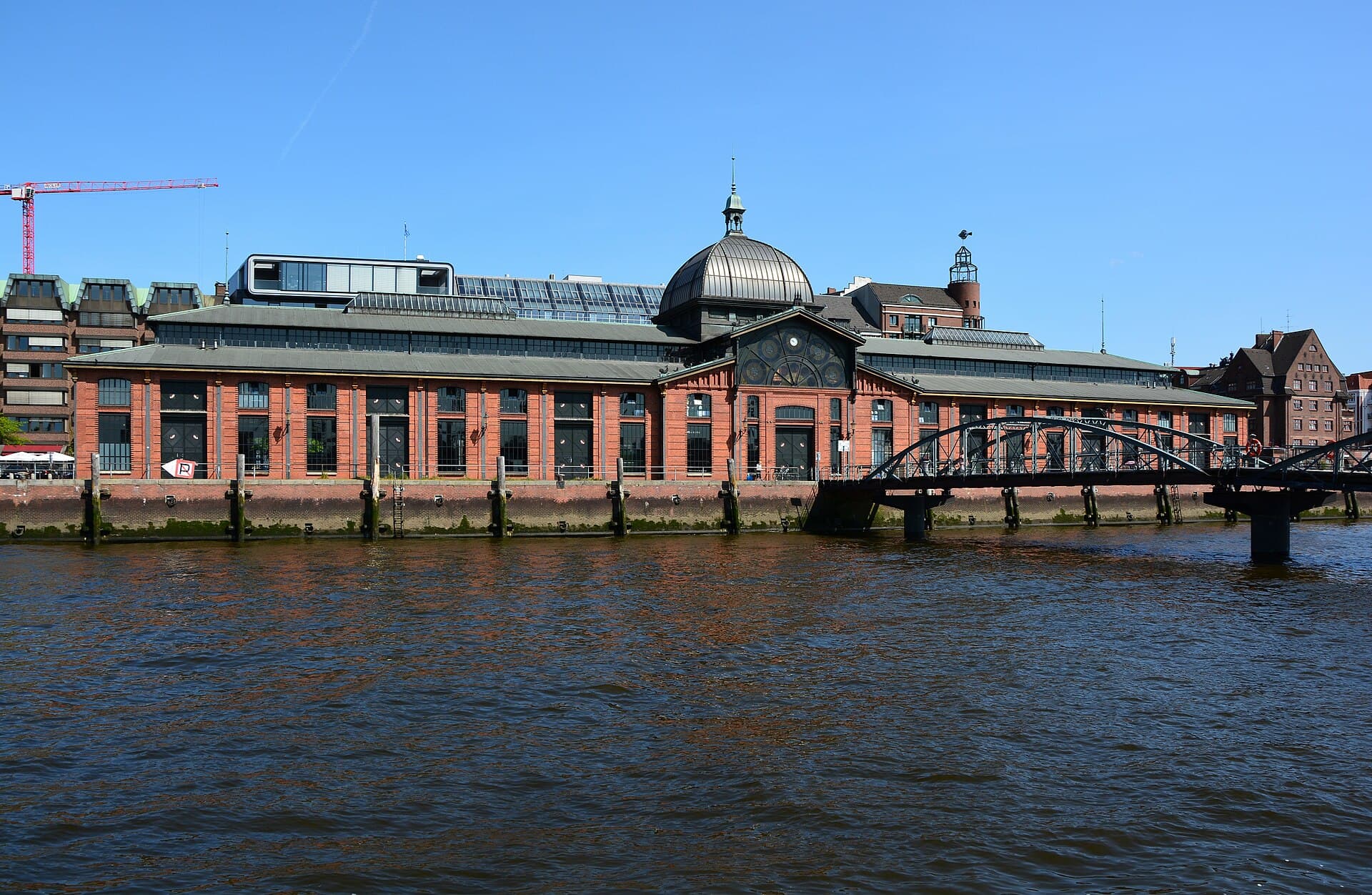
Der St. Pauli Fischmarkt: Where the Night Meets the Morning
A dawn Sunday market on the Elbe where the last of the night's revellers meet the first traders of the morning.
Details
Best Time to Visit
Early Sunday morning is the signature experience, because the Fischmarkt only runs at dawn on Sundays, from about five in summer or seven in winter until roughly half past nine, which lets you walk the strip while the night is still meeting the morning. On any other day, late afternoon into early evening works well, when the Reeperbahn wakes up but the quarter is still calm enough to read its history. Spring through early autumn offers the mildest weather along the exposed Elbe waterfront.
Pro Tips
- •Do the walk on a Sunday if you can, and consider starting near dawn so you finish at the Fischmarkt while the criers are still calling and the night crowd and morning traders overlap.
- •Wear shoes that handle cobblestones and tram tracks, since the harbour edge and the older streets are uneven underfoot and slick when wet.
- •Free harbour ferries and the free foot passage through the Old Elbe Tunnel let you get out over and under the water without a boat ticket, a good way to feel the port before the walk turns inland.
- •At the Grosse Freiheit, remember the clubs are all gone, so let Beatles-Platz and the street itself carry the story rather than hunting for a surviving venue.
- •Read Herbertstrasse and the harbour's harder history plainly and move on, without photographing people, since dignity is part of understanding this quarter.
- •Carry a little water and a light layer, because the Elbe waterfront at the Landungsbruecken and the Fischmarkt is open and breezy even on warm days.
Safety & Precautions
- •Watch for fast, near silent cyclists and for trams and their tracks, especially where cycle lanes cross the pavement near the Landungsbruecken and the Reeperbahn, and glance both ways before stepping off a kerb.
- •The harbour and canal edges along the Elbe often have low railings or none at all, and the wet cobbles and tram grooves can be slippery, so keep back from the water and mind your footing.
- •If you ride the U-Bahn or S-Bahn to reach the start, validate your ticket before boarding, since Hamburg uses proof of payment with roving inspectors and fines for travelling without a valid ticket.
- •Treat Herbertstrasse and the red light quarter with a sober, respectful manner, obey the posted entry restrictions, and never photograph individuals, keeping the same dignity you would at any place tied to human hardship.
Travel advisory: Exercise Increased Caution (Level 2).
Gallery
Related Reading
Go deeper on what you'll see, hear, and walk through.
Overview
Best Self-Guided Walking Tours in Hamburg (2026)
3 min
Overview
Hamburg Travel Guide: Days, Transport, Season, Safety, Cost
7 min
Overview
One Day in Hamburg: A Walkable Morning-to-Evening Itinerary
8 min
Thematic
Hamburg, the Free Port of Merchants: A Republic Built on Trade and the Tide
8 min
Companion
On the Grosse Freiheit, Where the Beatles Grew Up
6 min
Deep dive
The Reeperbahn: Reading the Rope Beneath the Neon
7 min
Read
What to Eat in Hamburg
7 min
Read the walk
The full story of Reeperbahn: Where the Beatles Grew Up, in words. Prefer to listen? Play it narrated, from home or on location.
Introduction
This is a walk along an edge. In the early sixteen hundreds, respectable Hamburg drew a line at its gates and pushed everything it did not want just beyond it, out onto the strip of land between Hamburg and the then separate city of Altona. The smelly trades, the noisy ones, the rope makers, the sailors, the spectacle. That relegated ground became St. Pauli, and this walk follows how it turned into something the city could no longer keep at a distance. You will move through seven stops over roughly two hours, covering about five kilometres here in Hamburg, in northern Germany. You will start where the sea comes ashore and read the strip itself, its rope walk origins and its sinful nickname. You will reach the side street where a young band from Liverpool played hundreds of all night sets and left transformed. You will pass the quarter's institutions of order and its relegated margins, a football club that made not belonging a creed, and you will end at a dawn market where the last of the night meets the first of the morning. Go at your own pace. The stops are short and skippable, and you decide how long to linger at each one. Some subjects along the way are handled soberly, a red light street screened behind gates, workers who died under the river, and they deserve to be read plainly rather than gawked at. Keep your ears open for the water, the gulls, and the low hum of the port that made all of this possible. When you arrive at the Landungsbruecken on the Elbe waterfront, begin with stop one.
1. Die Landungsbruecken: Where the Sea Comes Ashore
Stand at the water and let the harbour do the talking. These are the Landungsbruecken, the long floating landing stages that ride up and down with the tide on the Elbe. This is Hamburg's largest landing site in its port, a place where harbour ferries dock and where, for generations, passengers boarded ocean going vessels bound far past the horizon. The pontoons in front of you are not as old as the port itself. An earlier landing structure here was built between nineteen oh seven and nineteen oh nine, designed by the architectural firm of Raabe and Woehlecke, with sculptural work by Arthur Bock, and that one was destroyed in the Second World War. The floating pontoons you actually walk on today are a post-war rebuild from around nineteen fifty-three to nineteen fifty-five. And the site is older still, standing where a coal terminal for steamships opened back in eighteen thirty-nine, so the water has been working here far longer than any of these particular pontoons have floated. Think of this as the arrival stop. The sea comes ashore right here, and everything the ships carried, cargo, crews, newcomers, and the money that moved them, spilled onto St. Pauli soil just behind you. The harbour both connected Hamburg to the world and dumped the world's arrivals onto the district's edge. Off to the western end you can find the entrance to the Old Elbe Tunnel, the Alter Elbtunnel, which opened on the seventh of September nineteen eleven. It runs four hundred twenty-six metres beneath the river to Steinwerder, roughly twenty-four metres down, and it was built by the firm Philipp Holzmann. Three workers died during its construction, a sober fact worth carrying quietly as you look at the river. Before the walk turns inland into the quarter, take a moment here where the water still does what it has always done.
2. Die Reeperbahn: The Mile the City Called Sinful
You are standing on the Reeperbahn, and the name is the whole story. Reep is Low German for rope, and Bahn means track. Until the sixteen twenties, Hamburg's rope makers laid out their long lines in the inner city near the Elbe, but as the town grew crowded they were relocated outside the city walls, along the country road that ran toward Altona. That road took the name Reeperbahn, and through the seventeenth and eighteenth centuries this street functioned as an actual rope walk, a long straight stretch where rope for sailing ships was twisted and laid out to its full length. So the sinful strip began as honest, essential harbour work. Sailing ships could not exist without rope, and rope needed length, and length needed the edge of town. The strip runs about nine hundred thirty metres. Over time the entertainment gathered here, the theatres and the bars and the trade in pleasure, and Hamburg gave the mile a nickname it half regretted and half embraced, die suendige Meile, the sinful mile. Locals also simply call the quarter the Kiez, the neighbourhood. It is worth hearing that nickname for what it is, a civic label, part embarrassment and part emblem, rather than a literal claim. This is the tension of the whole walk in a single street. Respectable Hamburg pushed the rope makers out here to keep the smell and the length beyond its gates, and the edge it created became one of its most defining and most exported places. Walk it slowly, and read the rope beneath the neon.
3. Die Grosse Freiheit und der Beatles-Platz: The Crucible
Turn onto the Grosse Freiheit, the side street where the transformation happened. In the summer of nineteen sixty, five young men from Liverpool arrived barely able to play together, and over roughly two years, from August nineteen sixty to May nineteen sixty-two, with later visits, they were remade on these few paving stones. Their first Hamburg shows were at the Indra Club at number sixty-four, starting the seventeenth of August nineteen sixty, until noise complaints closed it. They moved to the Kaiserkeller at number thirty-six, from the fourth of October nineteen sixty, owned by Bruno Koschmider, alternating sets with another Liverpool group, Rory Storm and the Hurricanes. Later came the Star-Club, which opened on the thirteenth of April nineteen sixty-two with the band booked for its first weeks, and they played their final Hamburg shows late that year. All three venues are gone now. What forged the band was brutal, cheap, all night labour, hours upon hours on stage that the clubs bought on the cheap. Along the way the lineup changed. Stuart Sutcliffe, the original bassist, died in April nineteen sixty-two. Pete Best drummed in the early years, and by the Star-Club shows Ringo Starr had the seat. George Harrison was deported in November nineteen sixty for being underage. A young photographer named Astrid Kirchherr is credited with the moptop look that would define them. John Lennon is widely quoted as saying he might have been born in Liverpool but grew up in Hamburg. At the corner with the Reeperbahn is Beatles-Platz, whose ceremonial opening was on the eleventh of September two thousand eight. Its surface is paved to resemble a black vinyl record, ringed by five stainless steel statues standing in for the band, including a hybrid figure for the drummers Pete Best and Ringo Starr. It is a modern memorial, not an original relic, but it marks the crucible honestly.
4. St. Pauli und der Hamburger Berg: The District at the Edge
This is the thesis of the whole walk, and it hides in a name. Before it was St. Pauli, this quarter was called Hamburger Berg, which means Hamburg hill, after a defensive hill and rampart raised in sixteen twenty. It grew in the early seventeenth century as an extramural suburb,…
Full narration for this stop unlocks with the tour.
5. Die Davidwache und die Herbertstrasse: Order and Margin
Here two things stand almost within sight of each other, and together they tell the quarter's hard truth. First, the Davidwache, the small red brick police station on the Reeperbahn at the corner of Spielbudenplatz and Davidstrasse. A police post has stood on this spot since…
Full narration for this stop unlocks with the tour.
6. Der FC St. Pauli und das Millerntor-Stadion: Not Belonging as a Creed
Here the quarter's outsider status becomes a creed you can wear on a scarf. FC St. Pauli is the district's football club, founded on the fifteenth of May nineteen ten. Its home is the Millerntor-Stadion, near the Reeperbahn, which opened in nineteen sixty-three with a capacity…
Full narration for this stop unlocks with the tour.
7. Der St. Pauli Fischmarkt: Where the Night Meets the Morning
The walk ends where the whole night resolves into first light. This is the St. Pauli Fischmarkt, the open air Sunday dawn market on the Elbe waterfront. It has run since about seventeen oh three, opening on Sunday mornings from around five in summer, seven in winter, until…
Full narration for this stop unlocks with the tour.