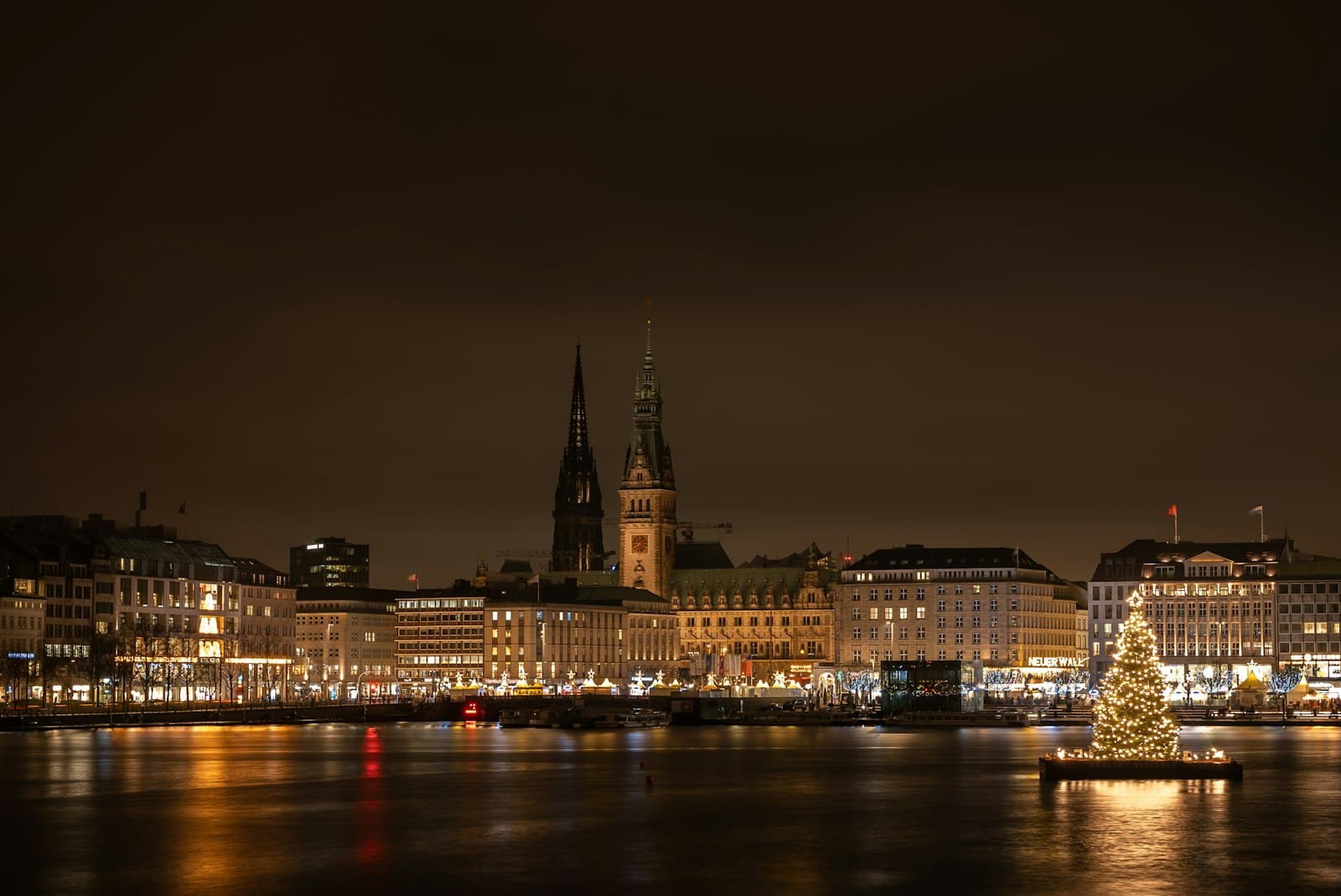
Hamburg governed itself for centuries as a Free and Hanseatic City of merchants, a republic answering to trade and the sea rather than a court. This walk reads that proud, self-made city in stone and water, from a palace crowned by no monarch to a burnt-out church the city keeps standing as a warning.
Start · Hamburger Rathaus: The Palace With No Throne
DirectionsStops
- 1
Hamburger Rathaus: The Palace With No Throne
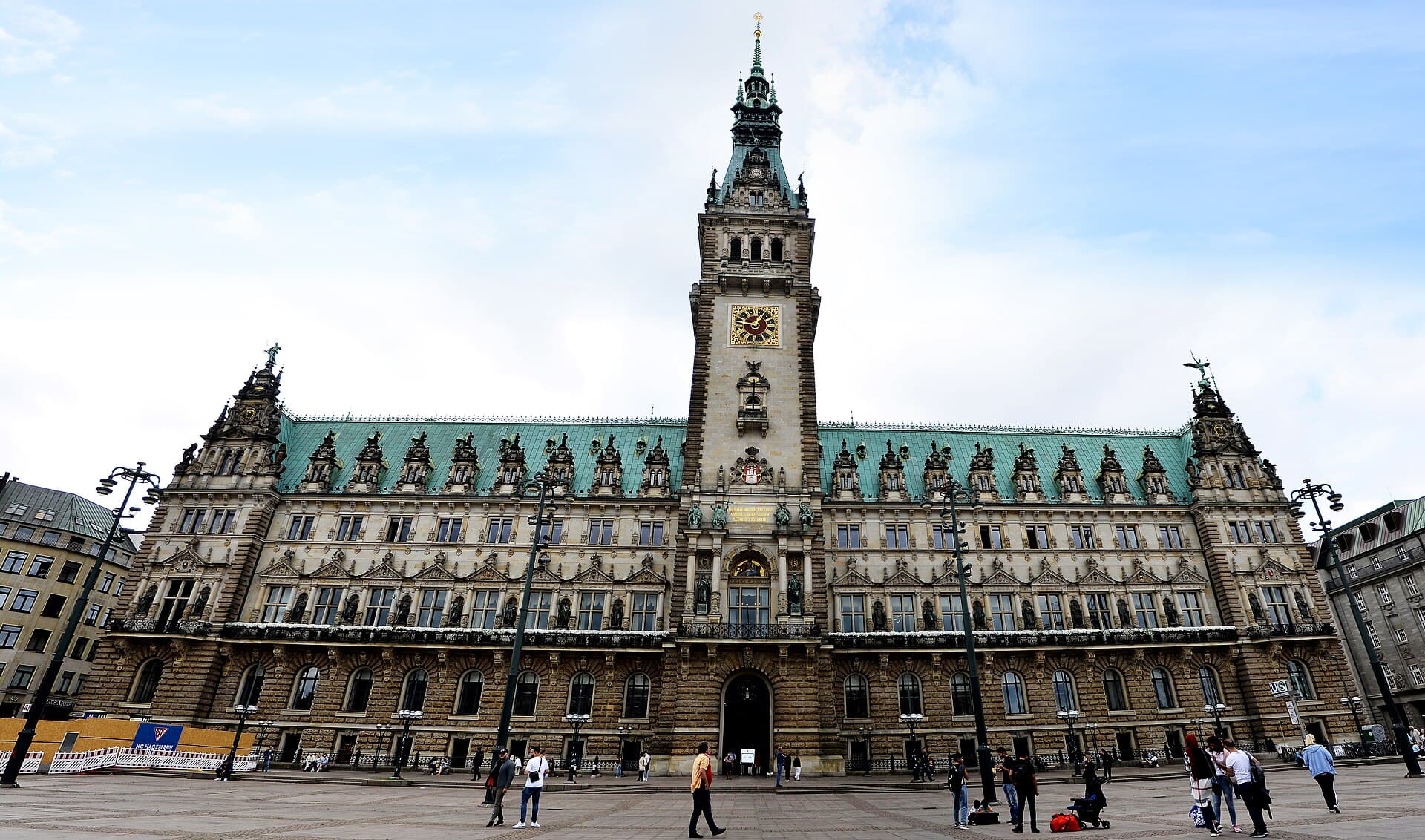
A town hall built with the grandeur of a palace by a republic that answered to no monarch.
- 2
Handelskammer Hamburg and the Pfeffersaecke
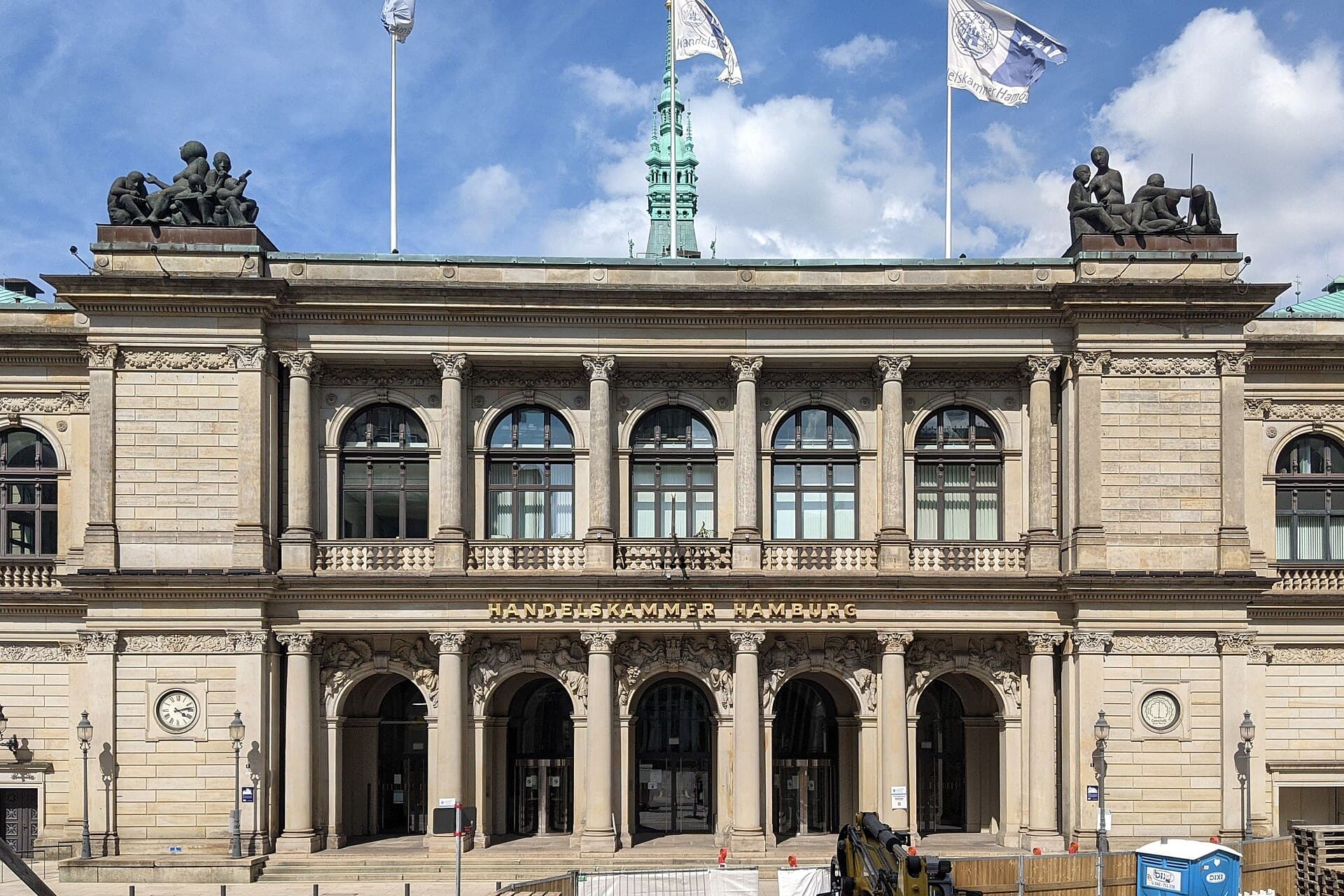
The chamber of commerce behind the Rathaus, and the mocking merchant nickname that reveals how this city made its money.
- 3
Binnenalster and Jungfernstieg: The Dammed River
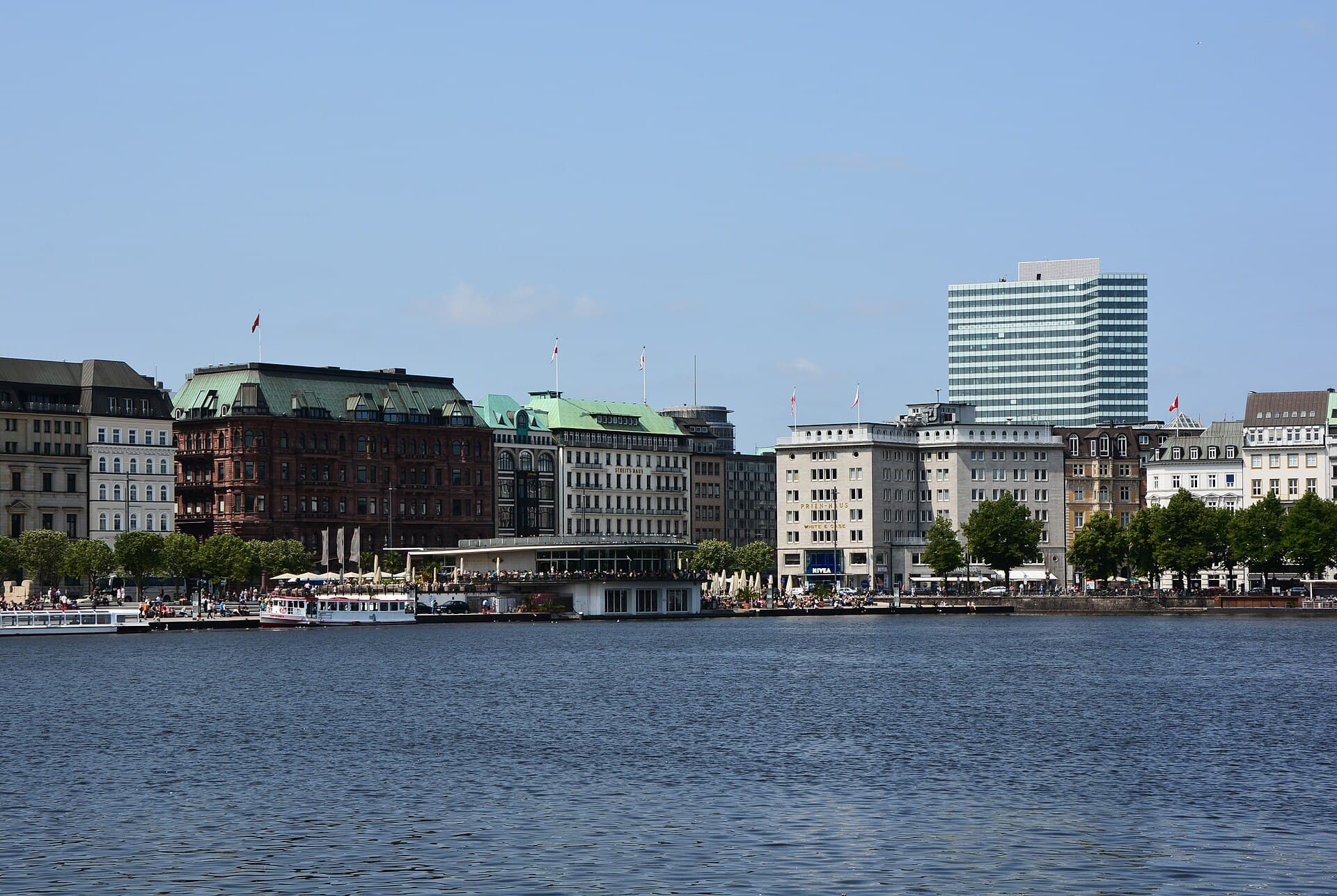
An artificial lake at the heart of the city, created when a count dammed a small river, and the promenade that became Germany's first asphalted street.
- 4
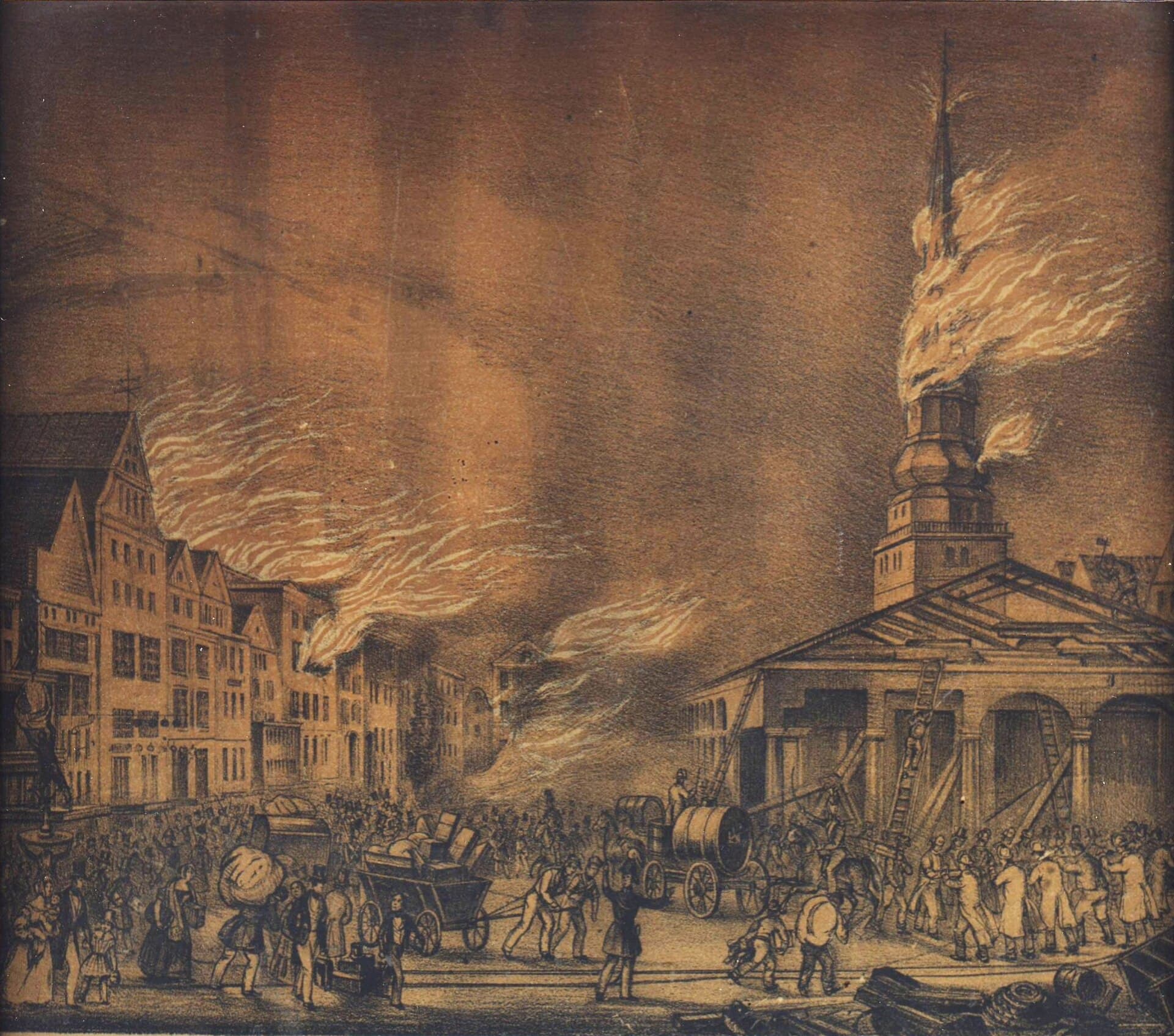
The Great Fire of Eighteen Forty-Two: Grosser Brand
Three days of flame that erased a third of the medieval old town and forced a modern city into being.
- 5
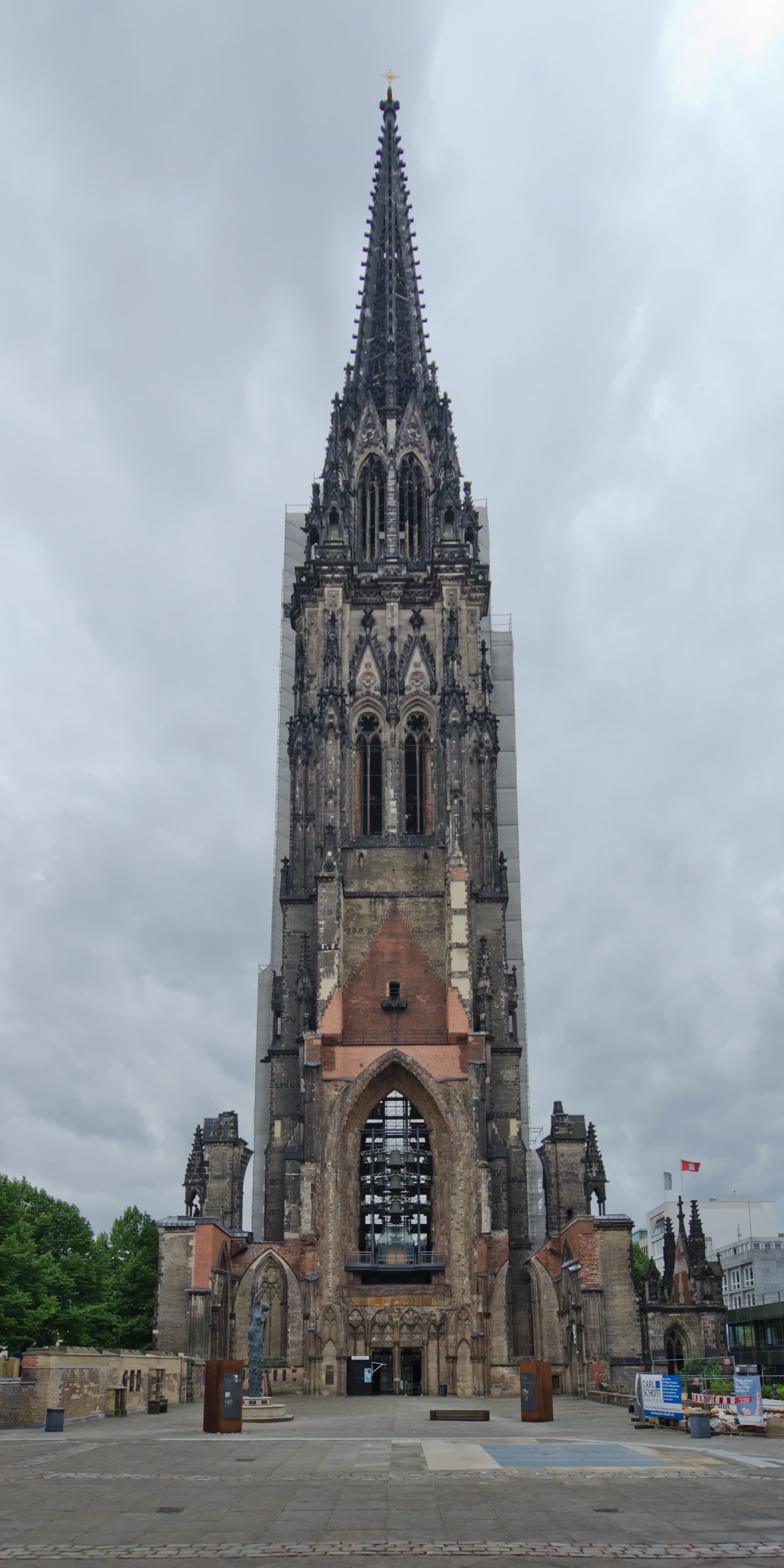
Mahnmal St. Nikolai: The Church Kept as a Warning
A ruined tower the free city refuses to rebuild, held as a memorial against the war its country began.
- 6
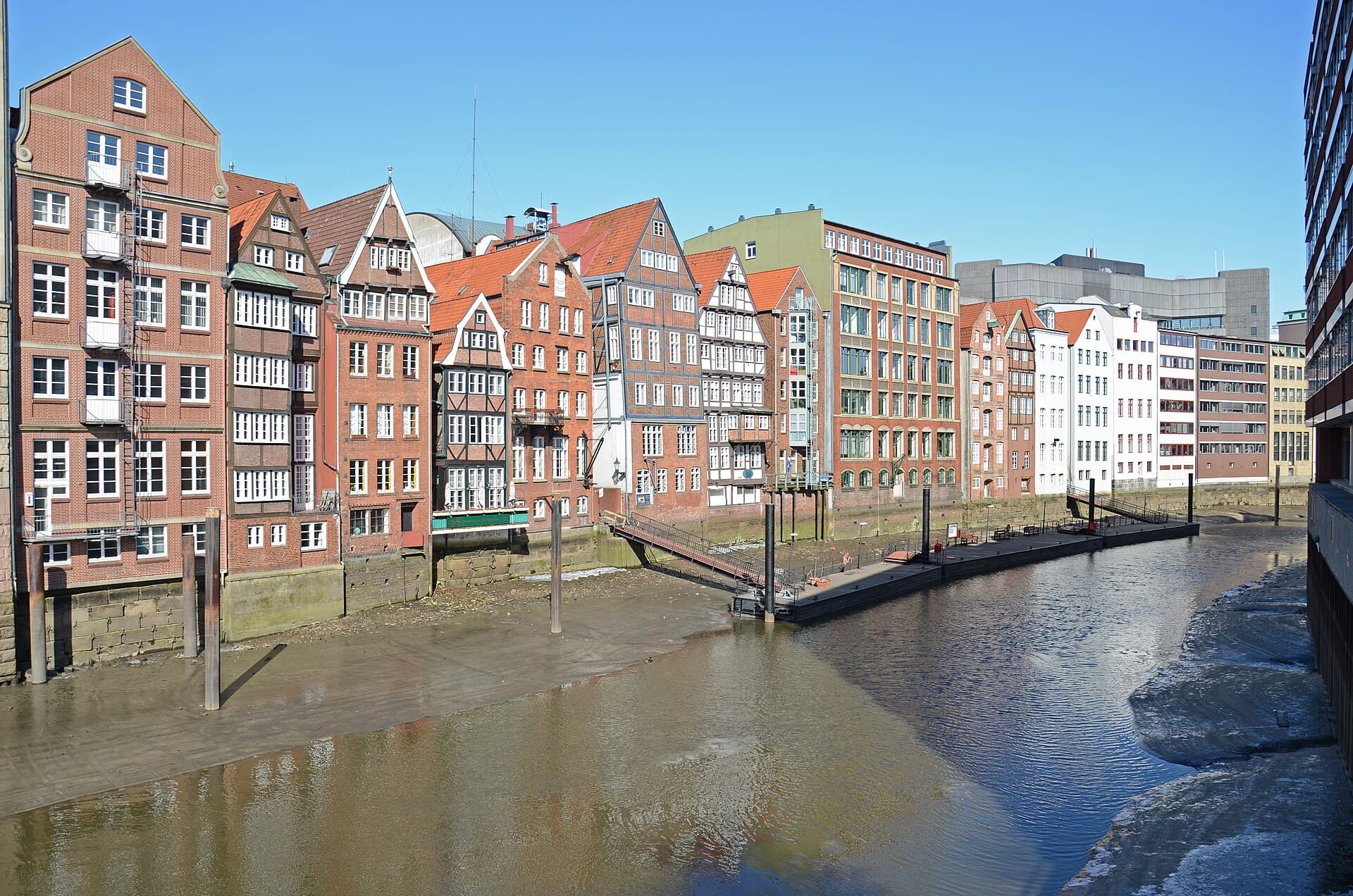
Deichstrasse and the Nikolaifleet: The Last Merchant Street
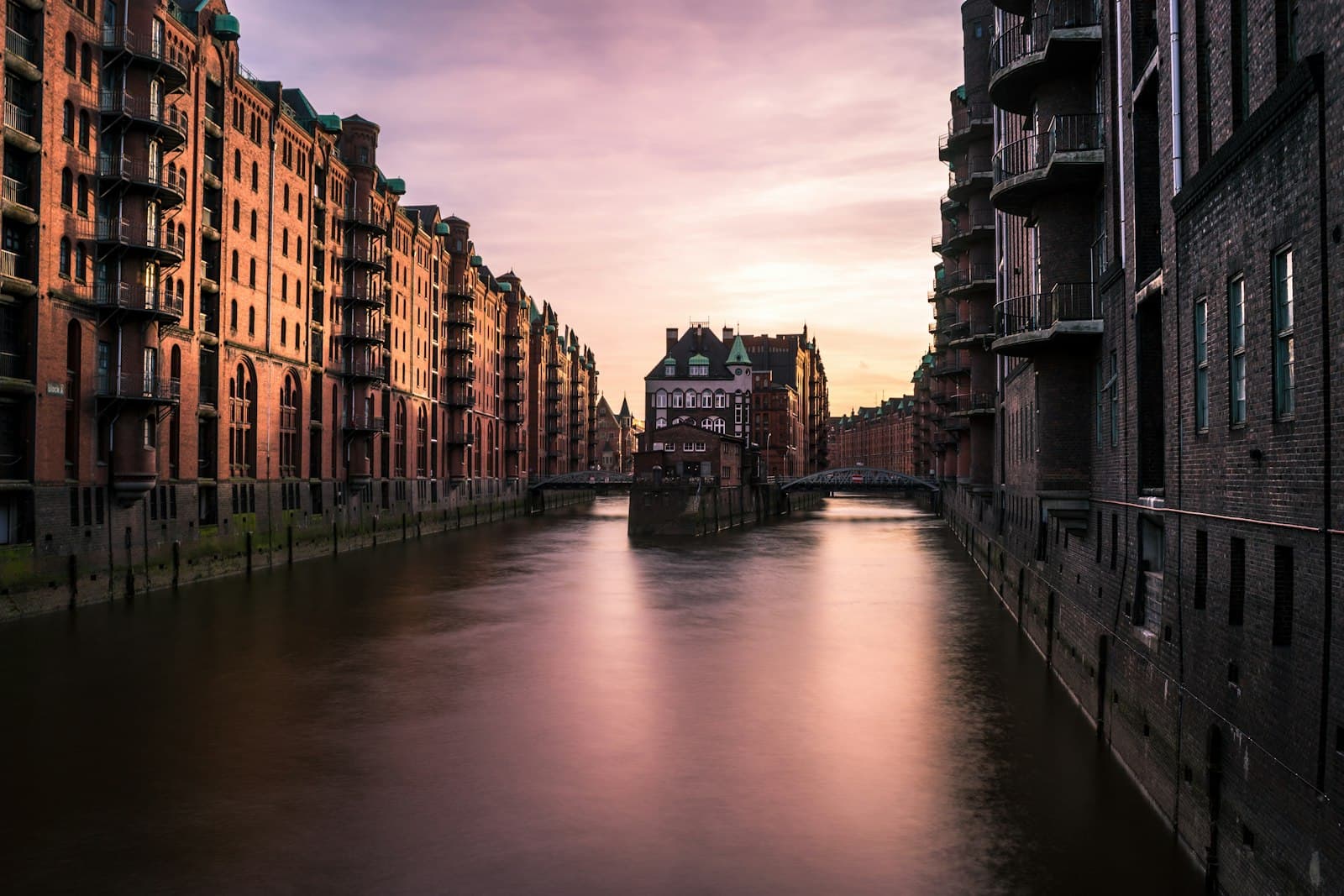
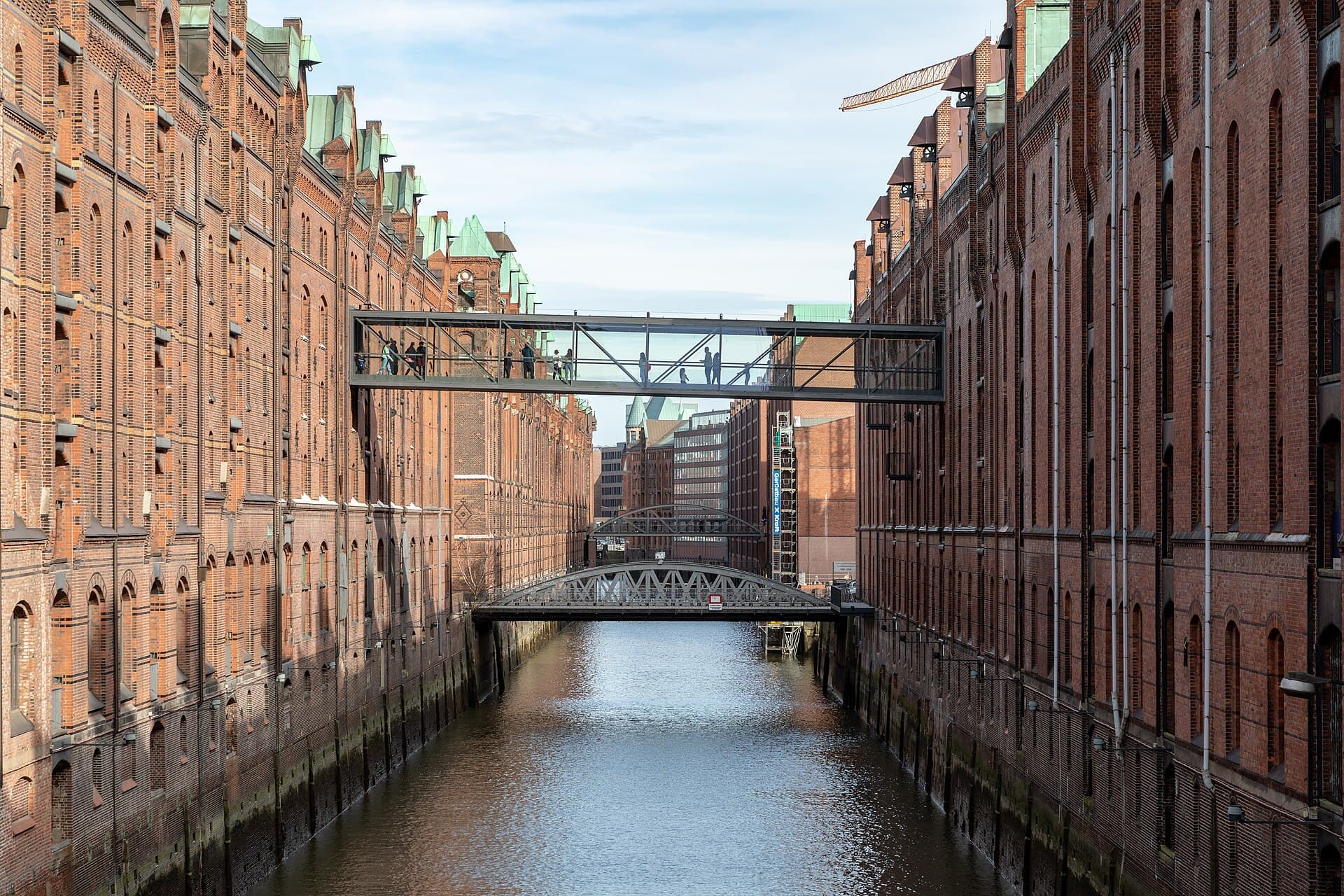
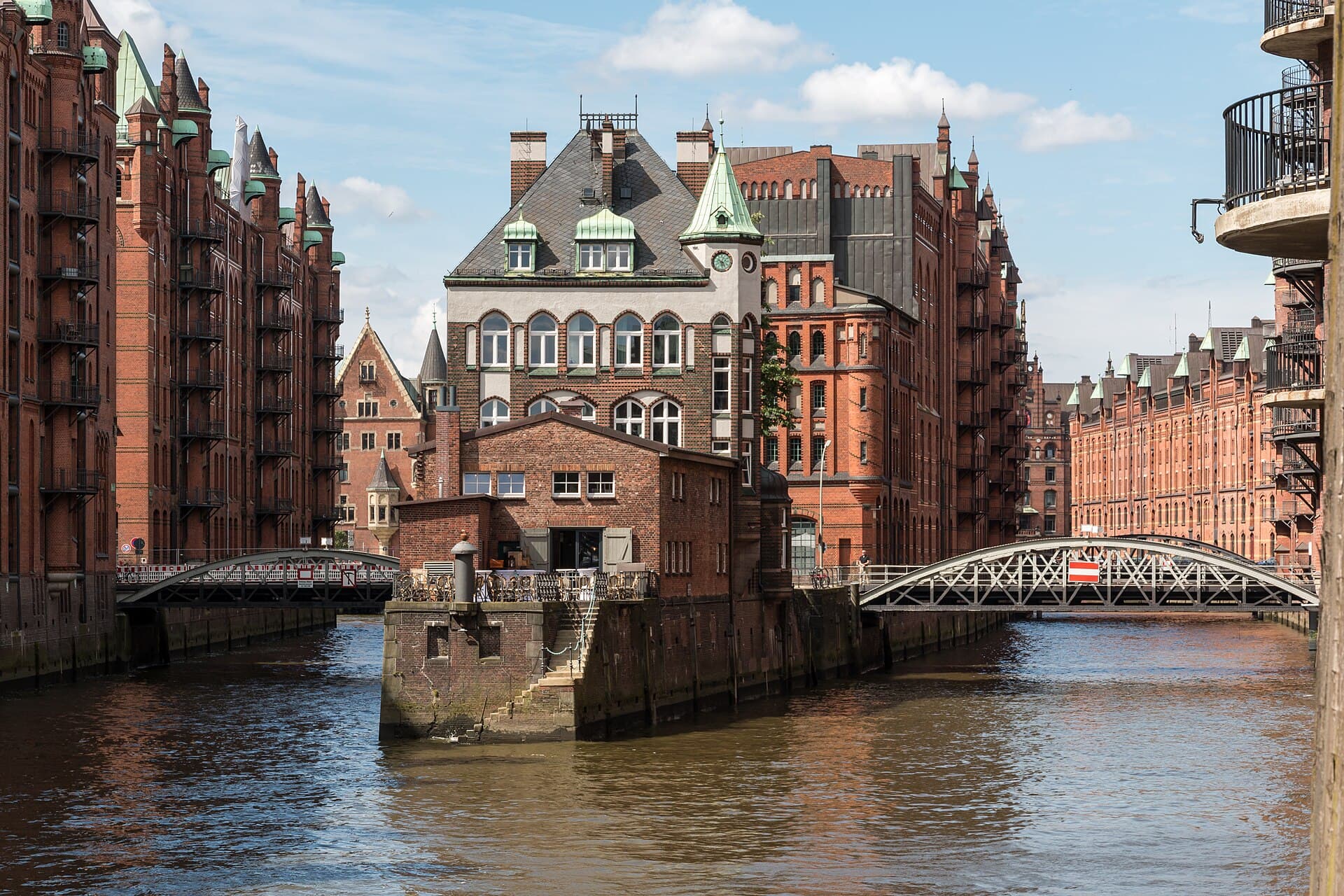
A surviving row of gabled merchant houses on the old harbour canal, the last remnant of the medieval port.
- 7
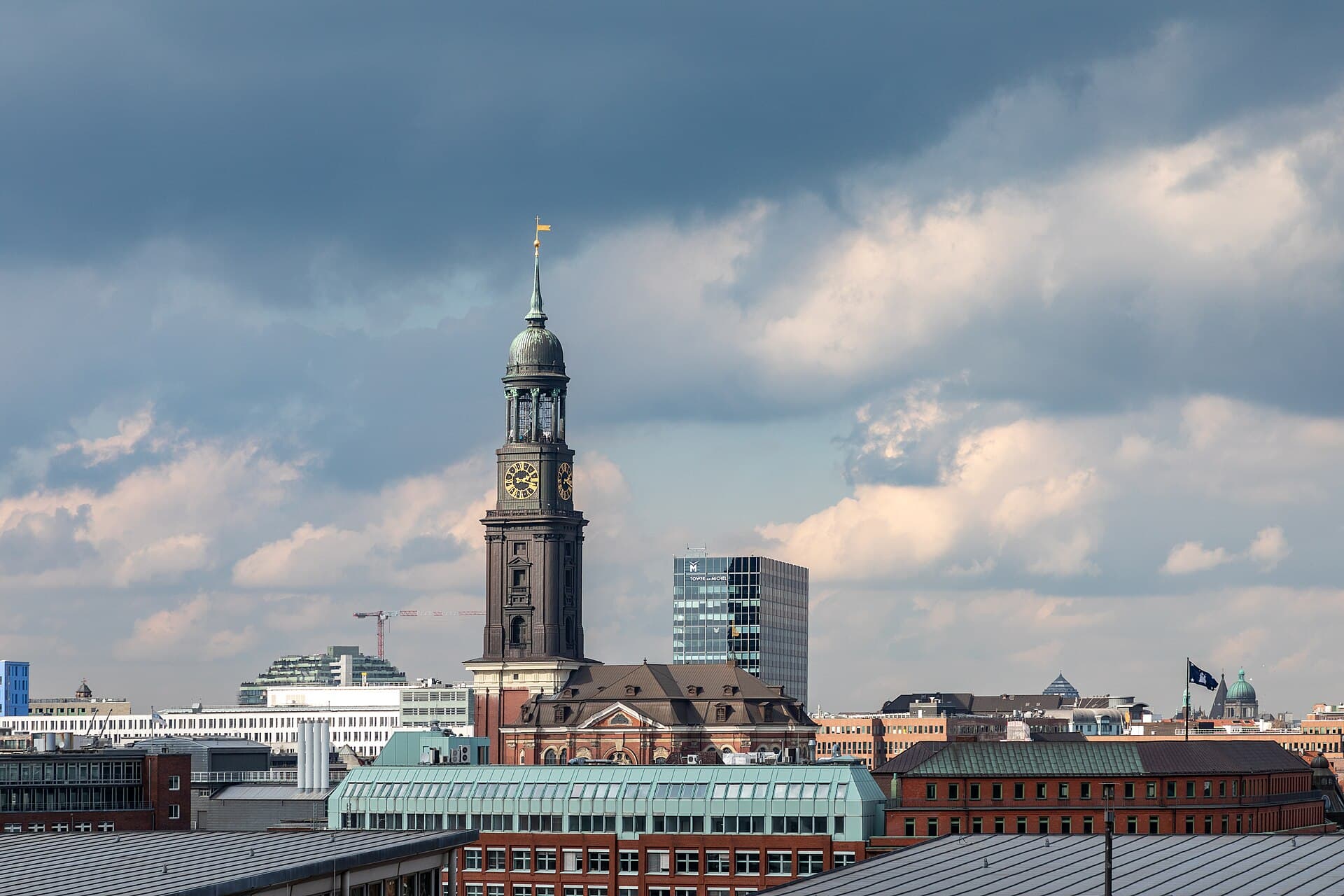
St. Michaelis (Der Michel): The Seamark
A copper-spired Baroque church that guided ships home up the Elbe, rebuilt again and again through fire, lightning, and war.
Details
Best Time to Visit
Late morning to mid-afternoon is ideal, roughly ten in the morning to three in the afternoon, when the Rathaus lobby, St. Michaelis tower, and the St. Nikolai documentation centre are all open and the light is good over the Binnenalster. Spring and early autumn are the most comfortable seasons, with mild temperatures and long daylight; northern Germany can be grey and wet, so an overcast day is normal rather than a problem. Weekday mornings are quieter around the Rathausmarkt and Jungfernstieg than weekend afternoons.
Pro Tips
- •Wear comfortable, sturdy shoes with a bit of grip. Much of the route runs over cobbles, kerbs, and tram or rail tracks near the centre, which can be uneven and slick when wet.
- •Carry a light waterproof layer whatever the forecast says. Hamburg weather turns quickly, and a breeze off the water and the canals can make an otherwise mild day feel cold.
- •Take the stops in any order that suits your pace and skip freely. Each one is self-contained, so if a queue at St. Michaelis or the Rathaus is long, move on and circle back later.
- •If you want to go up a tower, note that both St. Michaelis and the St. Nikolai memorial charge a modest admission for the lift or climb, so carry a little cash or a card and check current hours on the official sites.
- •Give yourself a slow, quiet pause at the Mahnmal St. Nikolai rather than treating it as a photo stop. The crypt documentation centre adds real context to the ruin above.
- •Linger by the Nikolaifleet on Deichstrasse and look at the canal side of the houses, not just the street side. The water-facing gables and old hoists are the whole point of the street.
Safety & Precautions
- •Watch for fast, near-silent cyclists and for trams and buses at the centre. Cycle lanes often run right beside the pavement, and riders move quickly and quietly, so look both ways before stepping across.
- •Mind your footing on cobblestones, kerbs, and embedded tram and rail tracks, which can catch a heel or wheel and are slippery in rain. Take extra care on the wet, uneven edges near the canals.
- •Keep back from the canal and harbour edges along the Nikolaifleet, the Binnenalster, and the Alster promenades. Many quaysides have low railings or none at all, and the stone can be slick.
- •At the St. Nikolai war memorial and at any Holocaust or wartime remembrance site, keep a sober, respectful manner: quiet voices, no climbing on the ruins, and thoughtful rather than casual photography. If you ride the U-Bahn or S-Bahn between points, validate or hold a valid ticket, as fare checks are common, and dress modestly and stay quiet inside the churches.
Travel advisory: Exercise Increased Caution (Level 2).
Gallery
Related Reading
Go deeper on what you'll see, hear, and walk through.
Overview
Best Self-Guided Walking Tours in Hamburg (2026)
3 min
Overview
Hamburg Travel Guide: Days, Transport, Season, Safety, Cost
7 min
Overview
One Day in Hamburg: A Walkable Morning-to-Evening Itinerary
8 min
Thematic
Hamburg, the Free Port of Merchants: A Republic Built on Trade and the Tide
8 min
Companion
The Hamburg Rathaus: A Palace Built by a Republic With No Throne
7 min
Deep dive
Der Michel: How Hamburg's Copper Spire Guided Ships Home
6 min
Read
What to Eat in Hamburg
7 min
Read the walk
The full story of Rathaus and Altstadt: The Republic of Merchants, in words. Prefer to listen? Play it narrated, from home or on location.
Introduction
This is a walk through a city that never bowed to a king. Hamburg, in the north of Germany, spent centuries governing itself as a Free and Hanseatic City, a republic of merchants that answered to trade and to the sea rather than to a court. You will read that story in stone and water: a town hall built like a palace but crowned by no monarch, a lake dammed from a small river at the heart of town, the great fire that erased the medieval old town, a copper spire that guided ships home up the River Elbe, the last row of gabled merchant houses on an old harbour canal, and a burnt shell of a church the city refuses to rebuild. There are seven stops. Plan for about two hours at an unhurried pace, covering roughly three kilometres, all of it walkable and mostly flat. Each stop stands on its own, so take them at your speed, linger where something holds you, and skip what does not. This is your afternoon, no group, no schedule. I will lean on Wikipedia and the city's own records as we go, and I will tell you when a claim is tradition rather than settled fact. And near the end, at a ruined church, I will drop my voice and stay plain, because some history asks for that. When you arrive at the Rathausmarkt, in front of the Hamburger Rathaus, begin with stop one.
1. Hamburger Rathaus: The Palace With No Throne
Stand in front of this building and you would swear it was built for a king. The Hamburger Rathaus, the town hall, has the face of a palace: a hundred-and-twelve-metre tower, a facade heavy with carved figures, an interior of about six hundred forty-seven rooms. According to Wikipedia, that room count is itself a small comedy. It was discovered almost by accident in nineteen seventy-one, and there may be more, so hold it loosely as about six hundred forty-seven, not a final number. Here is the twist. For all its grandeur, there is no throne room, because there was never a throne. Hamburg is officially the Free and Hanseatic City of Hamburg, and it ruled itself. When this building was completed and inaugurated in eighteen ninety-seven, in a proud neo-Renaissance style by the architect Martin Haller and his team, it was not celebrating a monarch. It was celebrating a merchant republic that had governed itself for centuries and wanted the world to see it. Even today this one building holds both of Hamburg's governments. Hamburg is one of Germany's sixteen states, so the Rathaus is home to the city parliament and to the state senate at once. Notice what the wealth points at. Not a crown, but ships, trade, industry, the sea. This is a city that made itself rich by its own hand and built a palace to say so. Everything on this walk flows from that founding claim: a republic of merchants, with a palace but no throne. Take your time in the square before we go looking for the engine that paid for all of it.
2. Handelskammer Hamburg and the Pfeffersaecke
Just behind the Rathaus, sharing the block on Adolphsplatz, sits the Handelskammer, the chamber of commerce. This is where the money story lives. It was founded in sixteen sixty-five, originally under the name Commercial Deputation, and it is, as the city of Hamburg commonly describes it, the oldest chamber of commerce in Germany. I will voice that as it is usually stated rather than as bare fact, because it is the city's own claim more than a settled encyclopedia entry. What matters is what it represents: a merchant class organized enough to govern its own trade. And this city's wealth was old even then. Hamburg was a leading member of the Hanseatic League, that medieval alliance of trading towns. According to Britannica, the League grew from a strategic pact between Luebeck and Hamburg dated to twelve forty-one. Hamburg controlled access to the salt trade coming down from Lueneburg and became a great transshipment point, moving grain, cloth, furs, and above all spices. Which brings us to a wonderful nickname. The wealthy merchants here were called Pfeffersaecke, pepper sacks. It was mocking, sometimes downright rude, aimed at men grown rich on the spice trade, with pepper standing in for all the exotic goods flowing through the port. The German dictionary traces the jibe back centuries, and it is still lobbed at Hamburg's upper class today. So there is the engine. A free imperial city, self-governing merchants, spices from across the world, and a nickname that keeps them humble. From wealth like this, a city built a palace and, next, reshaped its own water.
3. Binnenalster and Jungfernstieg: The Dammed River
Look out over this broad sheet of water. It looks natural, calm, ornamental. It is not. This is the Binnenalster, the inner Alster, and it exists because a count decided to dam a river. According to Wikipedia, back in twelve thirty-five, Count Adolph the Fourth commissioned a mill dam on the small Alster river. The dam did its job for the mill and then did something nobody planned: it backed the water up into a large lake right in the middle of town. A city that would later dam and shape everything for trade began by accidentally making itself a lake. The promenade you are standing on is the Jungfernstieg, running about six hundred metres along the southern shore. It has one lovely, precise claim to fame. In eighteen thirty-eight it became Germany's first asphalted street. Not a legend, a plain fact. Along a nearby canal you may notice a white, elegant arcade, the Alsterarkaden. Keep that in mind, because it was built during the reconstruction that followed a great fire, a fire we are walking toward. So this stop is about a city that shapes its own water. It dammed a river to make a lake, paved the country's first modern street beside it, and turned the result into the polished heart of town. Sit for a moment if you like. Watch the boats, the reflections, the way the whole centre organizes itself around water that a medieval count created almost by mistake. Then we turn from the city's proud making to the day it nearly unmade itself.
4. The Great Fire of Eighteen Forty-Two: Grosser Brand
Pause here, because on this ground the medieval city ended. Early on the fifth of May, eighteen forty-two, a fire broke out in a cigar factory on Deichstrasse, the street we will visit shortly. According to Wikipedia, it began at number forty-two, in a factory belonging to…
Full narration for this stop unlocks with the tour.
5. Mahnmal St. Nikolai: The Church Kept as a Warning
I am going to keep my voice plain here, because this place asks for it. This is the Mahnmal St. Nikolai, a memorial, and the story is not a comfortable one. The tower above you is neo-Gothic, one hundred forty-seven point three metres tall, designed by the English architect…
Full narration for this stop unlocks with the tour.
6. Deichstrasse and the Nikolaifleet: The Last Merchant Street
After the ruin, here is survival. This is Deichstrasse. Deich means dike or embankment, Strasse means street, and this one was first documented in the year thirteen oh four. Beside it runs the Nikolaifleet, and in Hamburg a Fleet is a canal. Look at these houses. They are gabled…
Full narration for this stop unlocks with the tour.
7. St. Michaelis (Der Michel): The Seamark
We end on a high note before the walk's last thought settles. This is the Hauptkirche Sankt Michaelis, though everyone here just calls it Der Michel. It is a Baroque Protestant church and Hamburg's great landmark, and its spire is something to see: one hundred thirty-two metres…
Full narration for this stop unlocks with the tour.