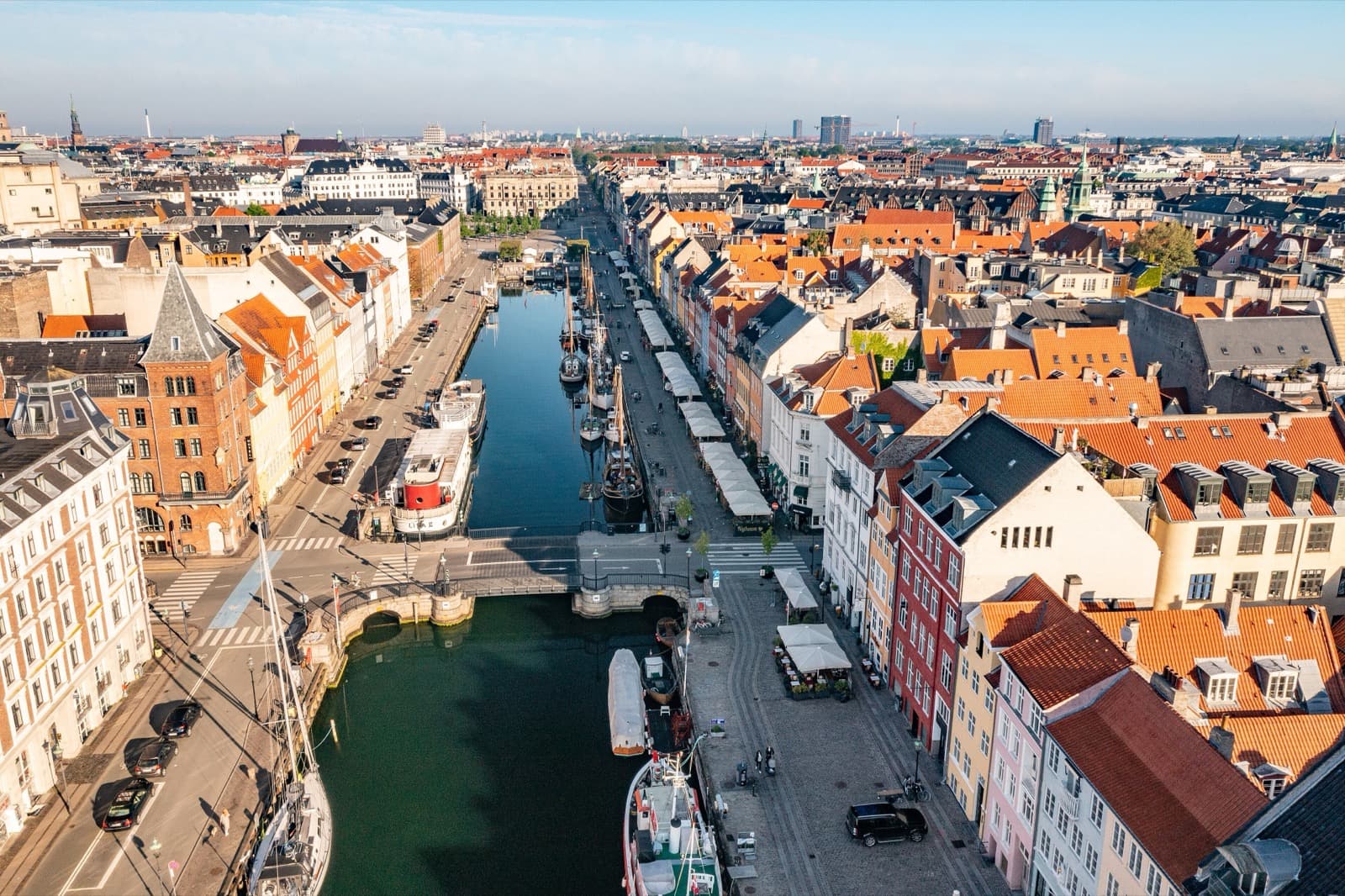
A walk through the Copenhagen a king drew on purpose, from the great round square of Kongens Nytorv down the coloured quay of Nyhavn to the royal palaces, the Marble Church, a star fortress, and a small bronze mermaid looking out to the Sound.
Start · Kongens Nytorv: The King's New Square
DirectionsStops
- 1
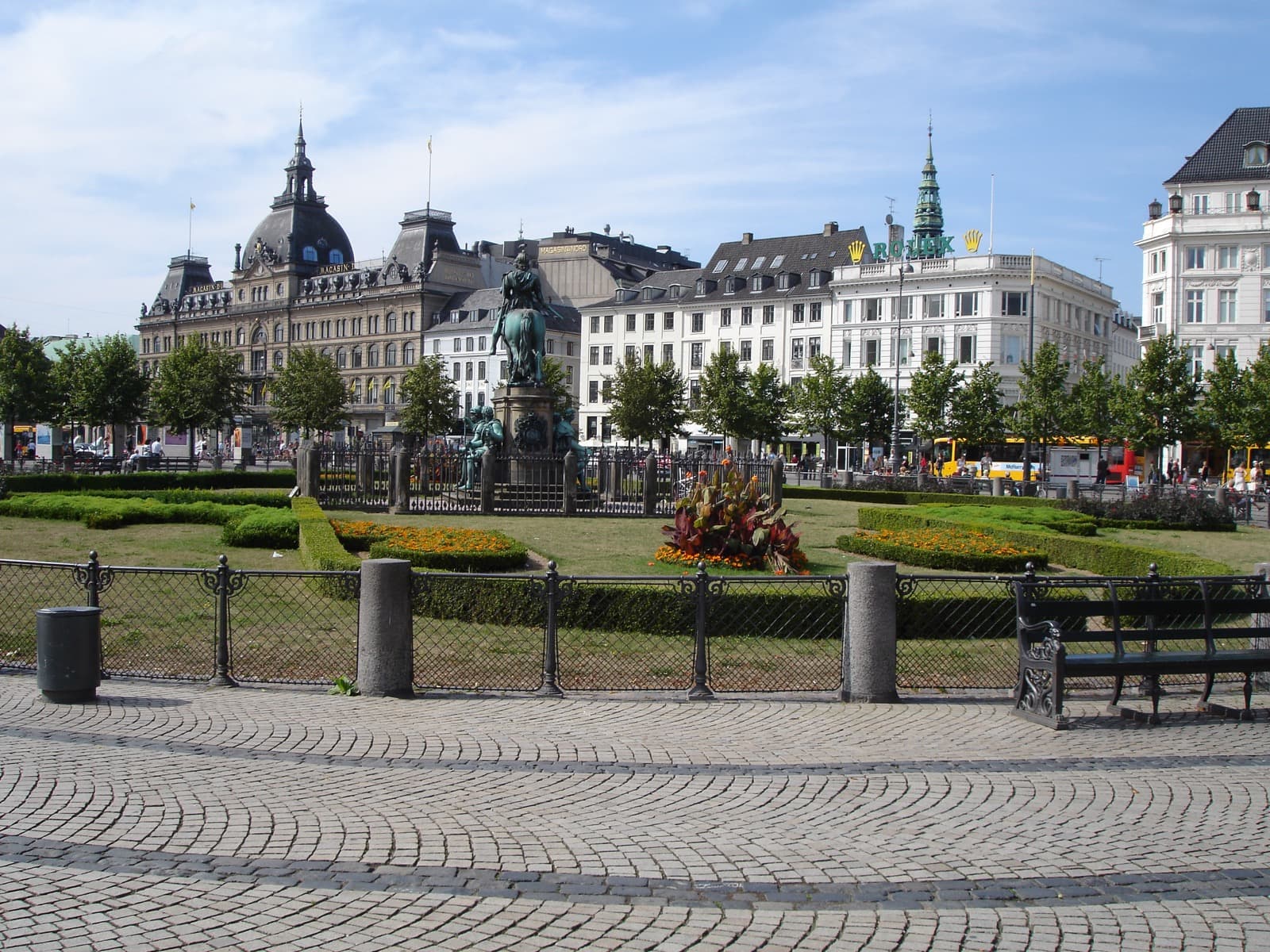
Kongens Nytorv: The King's New Square
The great round square that King Christian the Fifth drove through the medieval town in sixteen seventy, ringed by the theatre and academy and centred on an equestrian king.
- 2
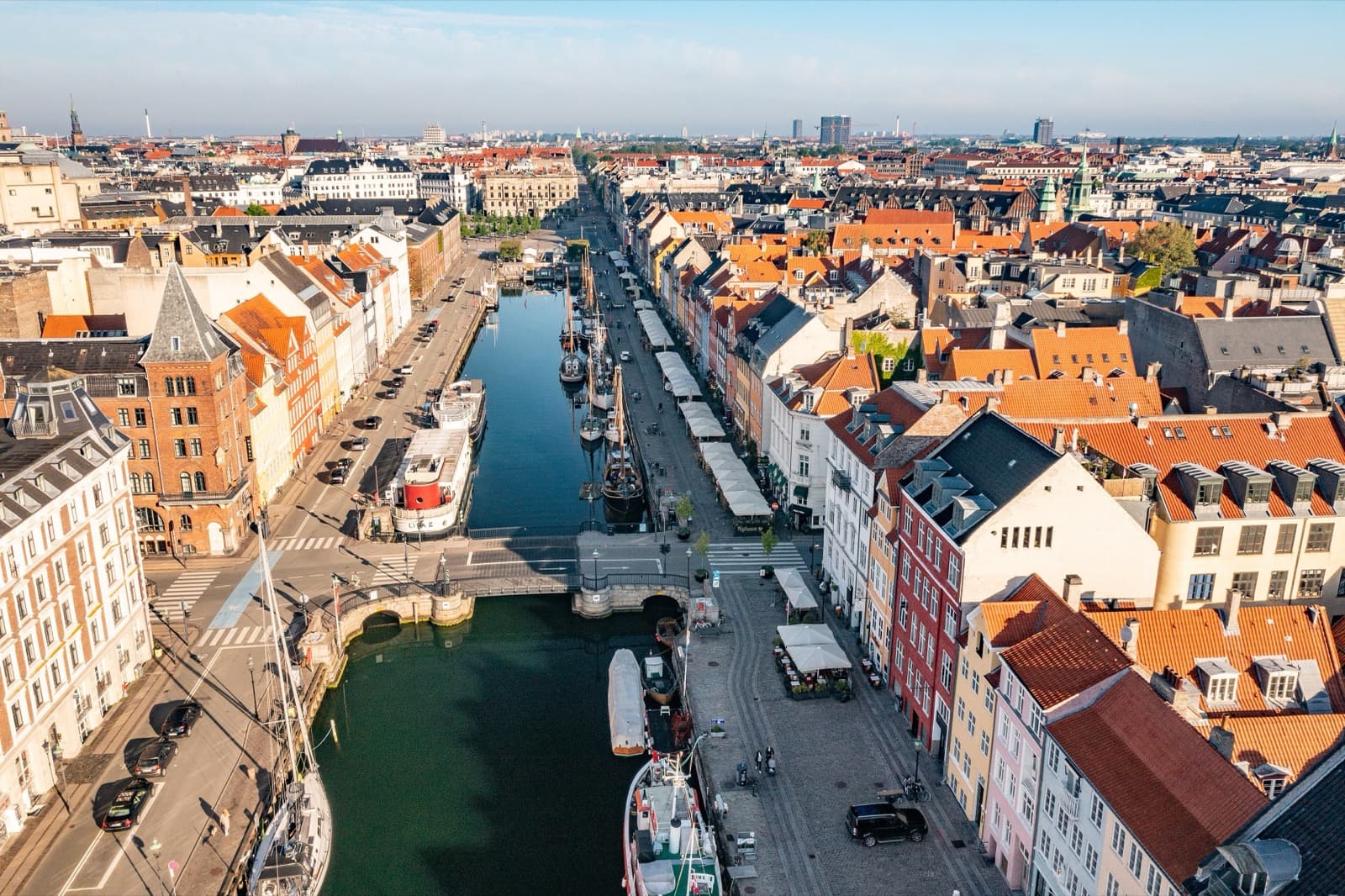
Nyhavn: The Harbour of Coloured Houses
The short canal dug on royal orders in the sixteen seventies, once a rough sailors' quay and now the coloured, most-photographed face of the city.
- 3
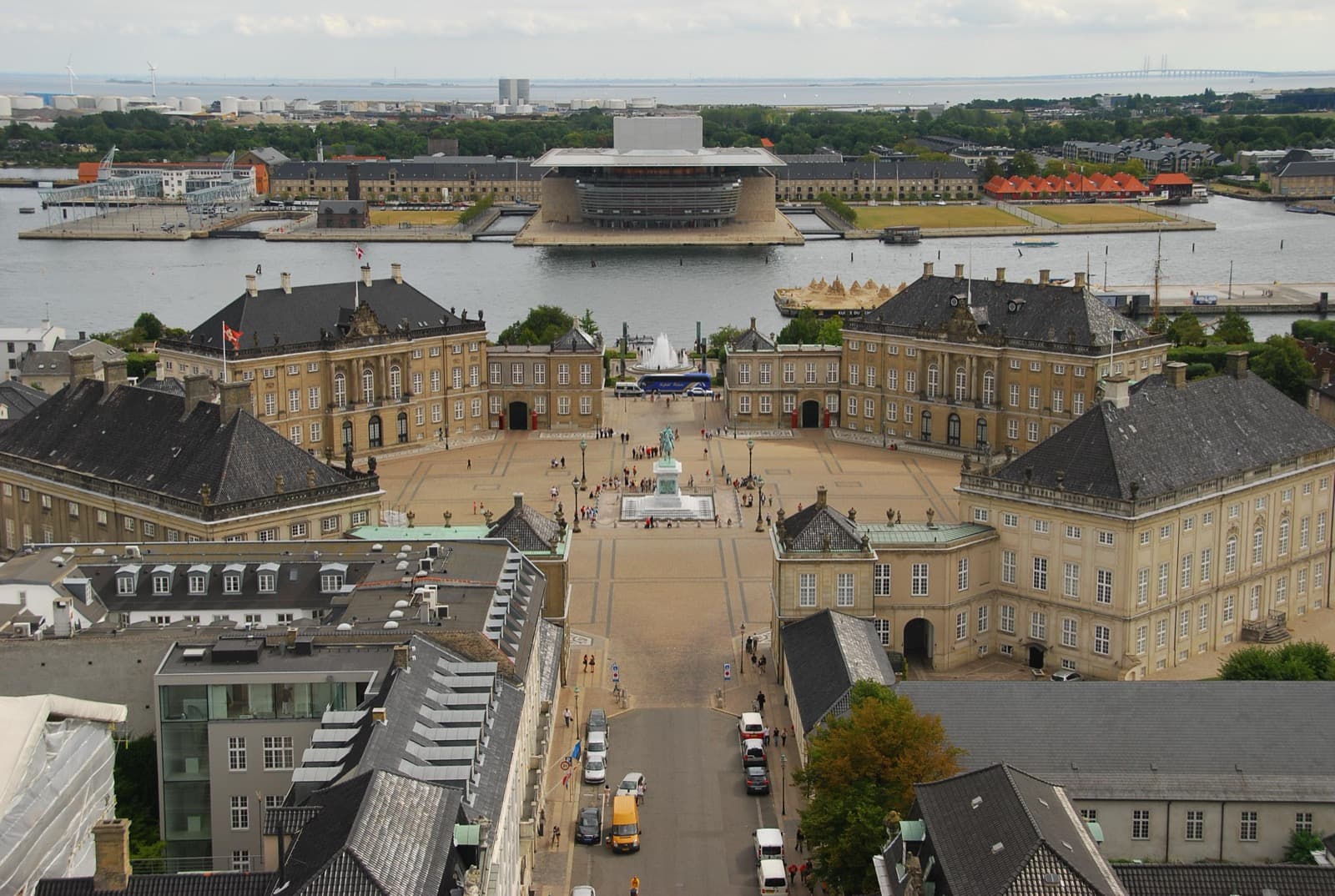
Amalienborg: The Four Palaces of the Royal Quarter
Four matching rococo palaces set around an octagonal square, the planned royal core of Frederiksstaden and still the monarch's winter home.
- 4
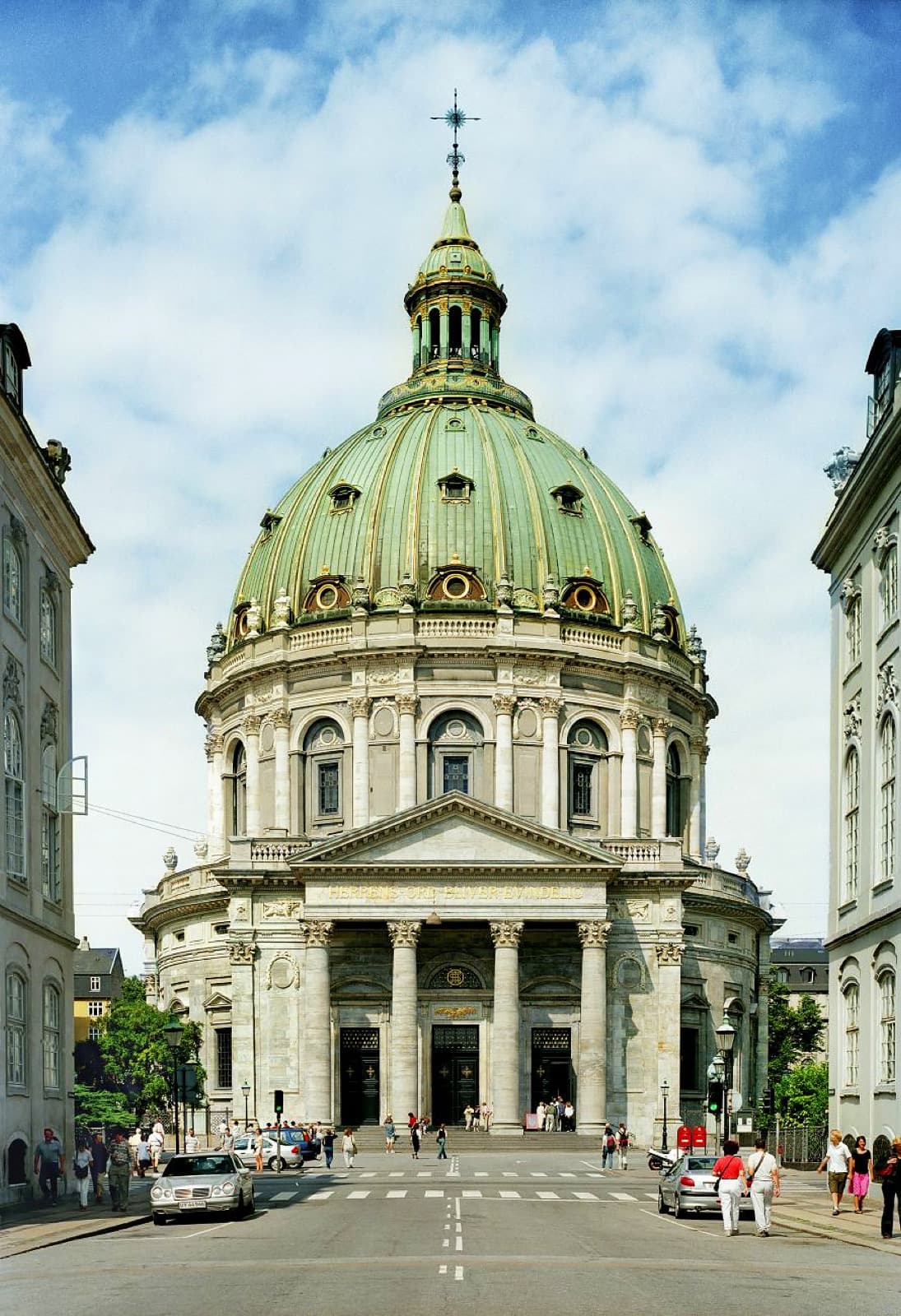
The Marble Church: A Century and a Half to the Dome
Frederik's Church, whose great dome closes the axis of Frederiksstaden and took nearly a hundred and fifty years and a financier to complete.
- 5
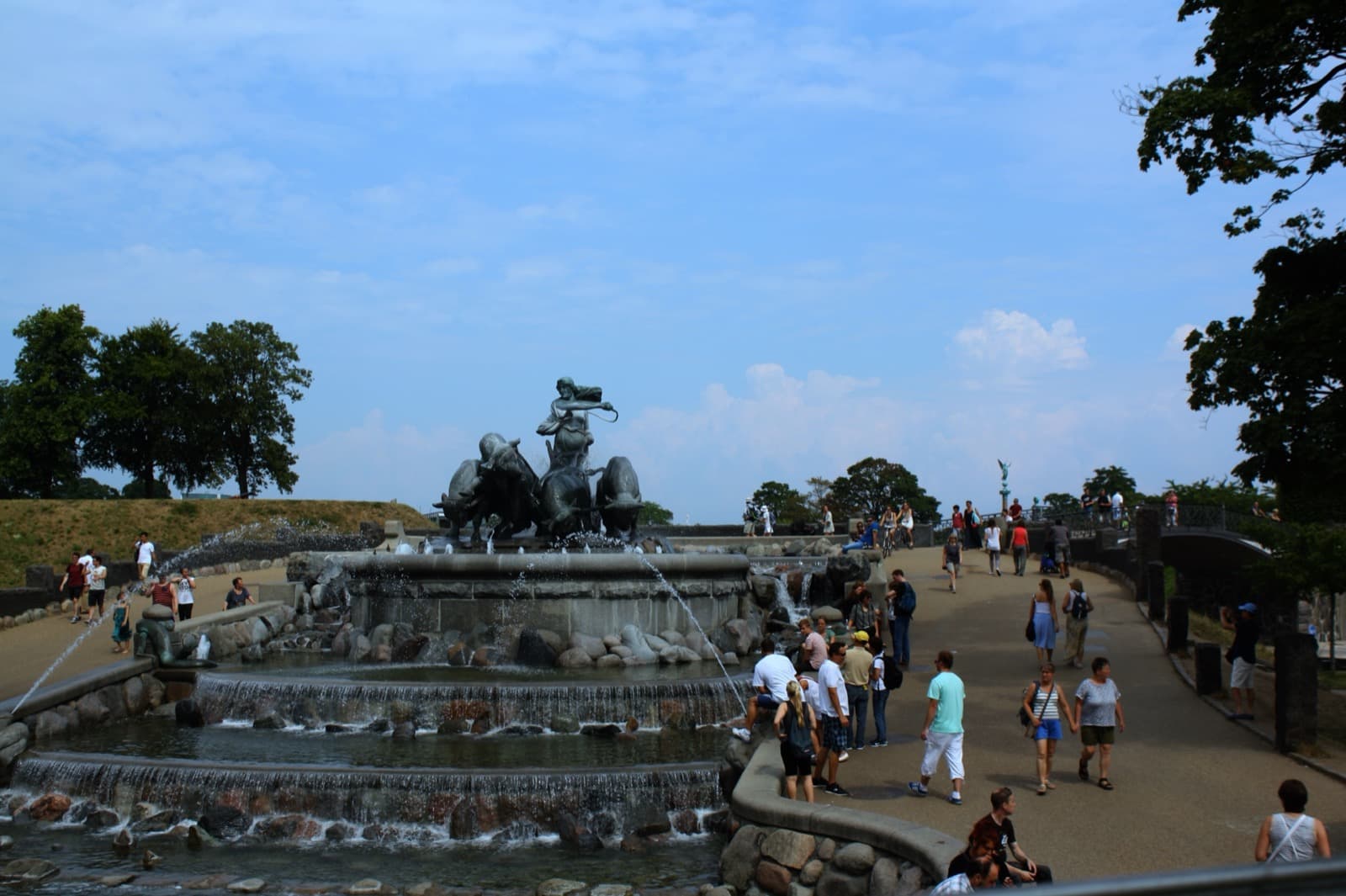
The Gefion Fountain: The Goddess Who Ploughed an Island
A grand fountain of nineteen oh eight illustrating the Norse legend of Gefion ploughing Zealand, beside the Gothic Revival English church of Saint Alban.
- 6
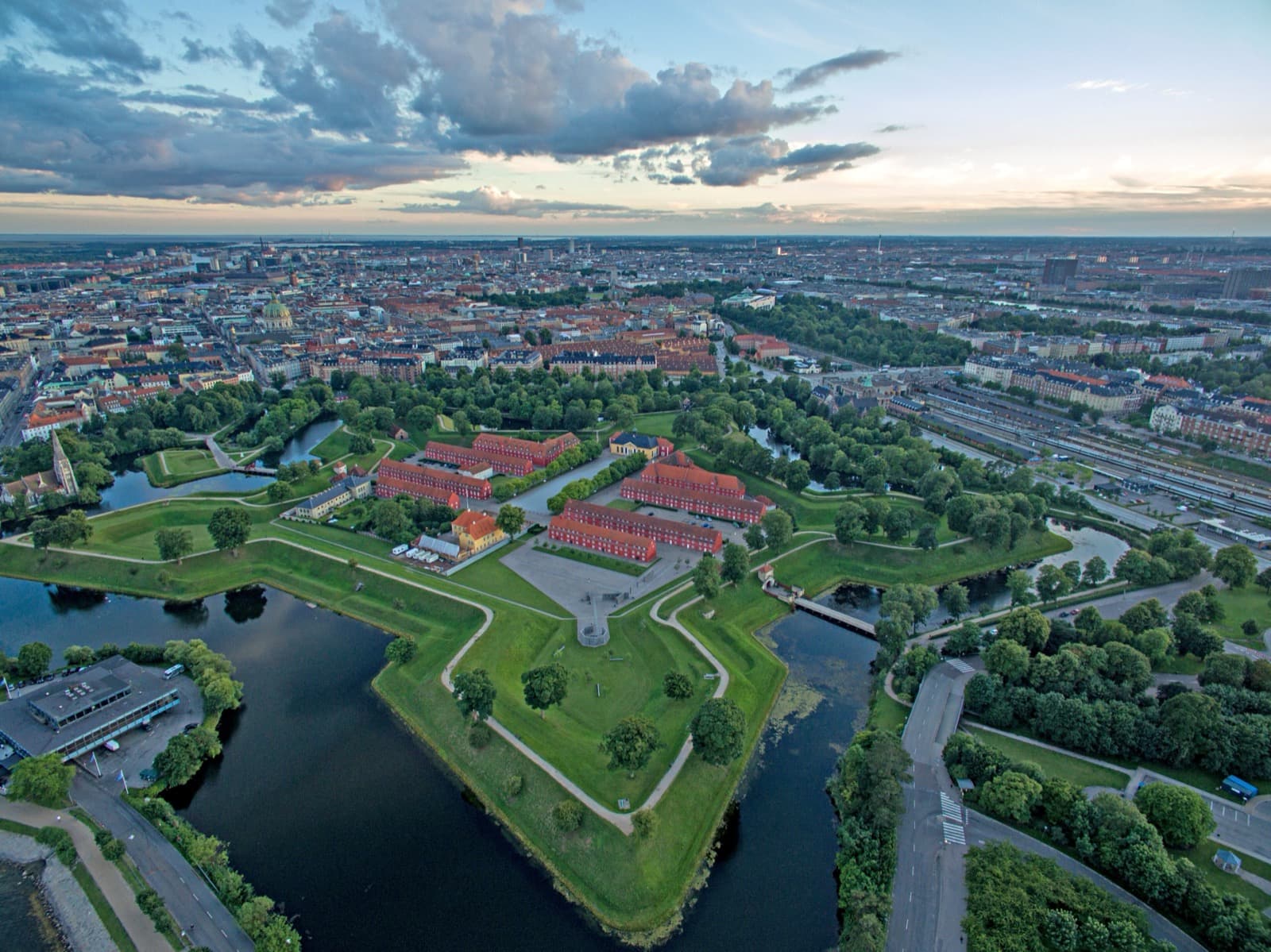
Kastellet: The Green Star Fortress
A five-bastion star fortress of the sixteen sixties, still active military ground, and near a harbour front from which Danish Jews fled to Sweden in nineteen forty-three.
- 7
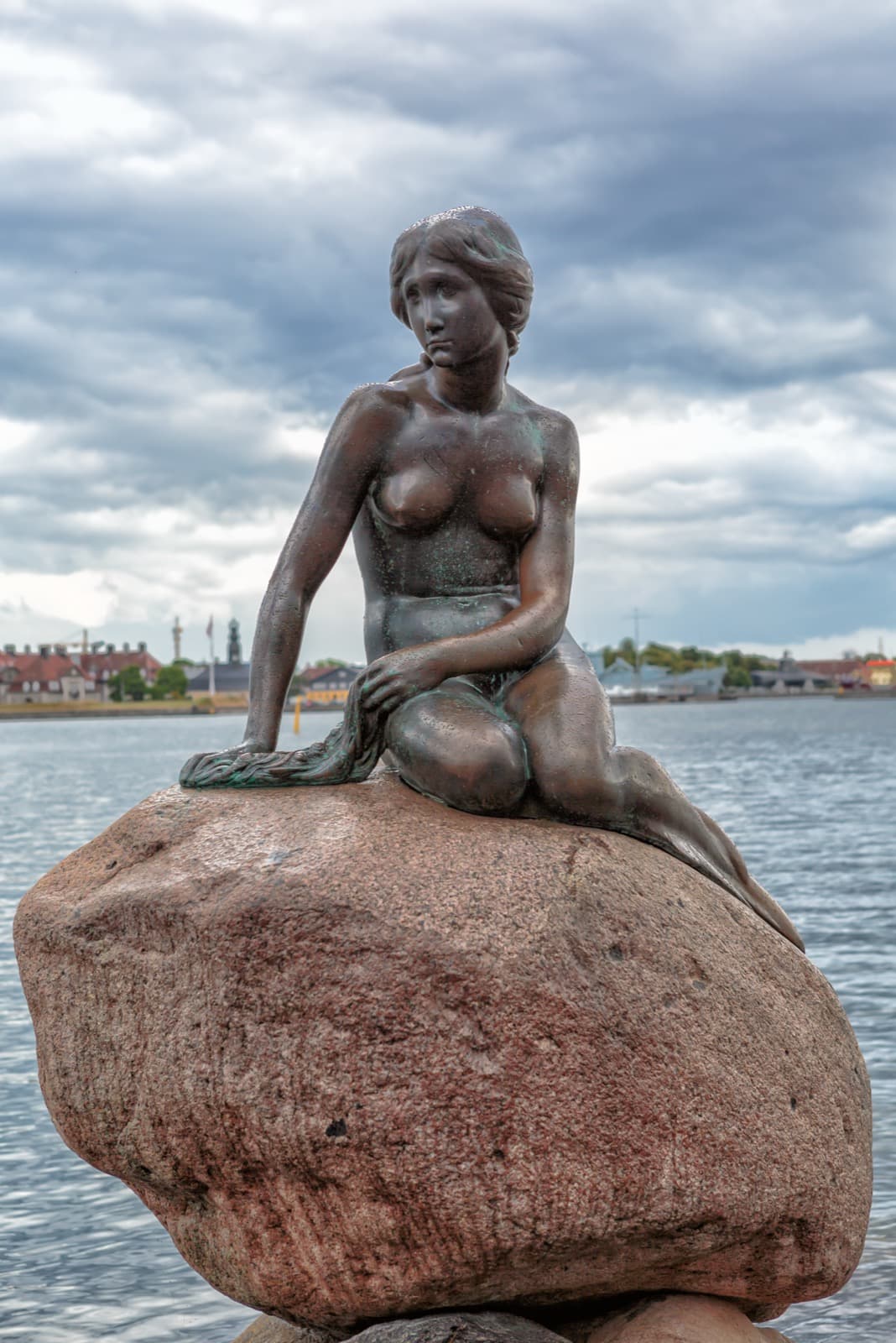
The Little Mermaid: The City's Quiet Icon
A small bronze mermaid on a granite rock at the harbour's edge, unveiled in nineteen thirteen and inspired by Hans Christian Andersen's fairy tale.
Details
Best Time to Visit
Late morning is the sweet spot. If you begin around ten in the morning you can reach Amalienborg in time for the changing of the guard at noon, then carry on to Kastellet and the Little Mermaid in the softer light of early afternoon. Weekday mornings are quietest on the Nyhavn quay before the canal-boat crowds gather; summer gives you long northern daylight, while spring and autumn trade some warmth for thinner crowds and clearer photographs along the water.
Pro Tips
- •Start late morning so you reach Amalienborg for the changing of the guard around noon, when the Royal Life Guards march down from Rosenborg.
- •Photograph the coloured Nyhavn houses from the bridge at the far end of the canal, where the whole painted row lines up along the water.
- •The Marble Church is free to enter, and its dome climb, offered at set times for a small kroner fee, gives a wide view over Frederiksstaden and the harbour.
- •The stretch out to Kastellet and the Little Mermaid is flat and green; take it slowly along the ramparts and moat rather than rushing to the statue.
- •Look for the memorial plaque marking Hans Christian Andersen's Nyhavn homes at number sixty-seven and number eighteen as you pass along the quay.
- •Carry a little cash in Danish kroner and expect card payment almost everywhere; entry fees at museums and the dome are priced in kroner, not euros.
Safety & Precautions
- •Copenhagen runs on bicycles: dedicated cycle lanes sit between the pavement and the road, and cyclists move fast, so look carefully both ways before crossing any lane.
- •The Marble Church is a working church and the citadel church at Kastellet is active; dress modestly and keep quiet if a service is underway.
- •The dome climb at the Marble Church is a real ascent up narrow stairs and can queue at busy times; skip it if stairs or heights are difficult.
- •The harbour front out toward the Little Mermaid is exposed and can be cold and windy even in summer, so bring a layer and keep valuables discreet in the crowds around the statue.
Travel advisory: Exercise Increased Caution (Level 2).
Gallery
Related Reading
Go deeper on what you'll see, hear, and walk through.
Overview
Best Self-Guided Walking Tours in Copenhagen (2026)
4 min
Overview
Copenhagen Travel Guide: Days, Transport, Season, Safety, and Budget
7 min
Overview
One Day in Copenhagen: A Walkable Itinerary From Morning to Evening
6 min
Thematic
Best History Walking Tours in Copenhagen (2026)
2 min
Thematic
The Rebuilt Capital: How Copenhagen Kept Raising Itself from Fire
7 min
Companion
Amalienborg and the Copenhagen a King Drew on Purpose
7 min
Deep dive
The Little Mermaid: Why Copenhagen's Smallest Icon Draws the Biggest Crowds
7 min
Read
What to Eat in Copenhagen: Dishes, Origins, and How to Order Like a Local
6 min
Read the walk
The full story of Nyhavn: The Royal Quarter and the Harbour of Coloured Houses, in words. Prefer to listen? Play it narrated, from home or on location.
Introduction
This is a walk through the Copenhagen that a king drew on purpose, a stretch of Denmark's capital laid out as a deliberate act of royal town-planning. Over about seven stops and roughly four kilometres, taking around an hour and a half to two hours at an easy pace before any lingering, you will read the city as a plan: a great round square driven through the old town, a working harbour dug on royal orders, a whole rococo district set around a palace and a domed church, a star fortress, and at the end a small bronze mermaid on her rock. The through-line is intention. Nearly everything here was ordered into being by a crown, a foundation, or a plan, and the pleasure is in reading that grammar of design without anyone hurrying you. Copenhagen's marquee sights run heavily on scheduled group walks and canal cruises, but this route is yours alone. You set the pace, choose where to pause, and stay on the quay or in the fortress as long as you like. Along the way the story turns from picture-postcard prettiness to the harder record beneath it: a rough sailors' quay, a church left a ruin for a century and a half, and a genteel harbour front that in nineteen forty-three became one of the shores from which thousands of Danish Jews were carried to safety. The record is told plainly, legend marked as legend. When you arrive at Kongens Nytorv, begin with stop one.
1. Kongens Nytorv: The King's New Square
Begin in the middle of the plan. Kongens Nytorv means the King's New Square, and it was laid out by King Christian the Fifth in sixteen seventy as part of a grand expansion of the fortified city. This is the largest square in the old town, and its shape is the point: a broad round place where several streets meet and radiate outward, drawn in the spirit of the royal city-planning then fashionable in Paris. Where the medieval town had grown in a tangle, a king imposed a circle. At the centre stands the oldest royal statue in Copenhagen, an equestrian figure of Christian the Fifth raised in sixteen eighty-eight. The French sculptor Abraham-Cesar Lamoureux cast him as a Roman emperor, laurel-wreathed and commanding, the king literally at the hub of the wheel he had drawn. It was first made in gilded lead and later recast in bronze between nineteen thirty-nine and nineteen forty-two. Around the rim of the square you can read the institutions of a capital: the Royal Danish Theatre, whose present building went up in the early eighteen seventies, and Charlottenborg, a palace built between sixteen seventy-two and sixteen eighty-three that has long housed the Royal Danish Academy of Fine Arts. Take your time here. The canal you are about to follow was dug in the same royal decade, and it runs off one edge of this circle. You set the pace, so stand a while and watch the streets fan out before you walk down to the water.
2. Nyhavn: The Harbour of Coloured Houses
Nyhavn simply means New Harbour, havn being the Danish word for harbour, and it is the reason a king dug straight into the heart of his city. Between about sixteen seventy and sixteen seventy-five, on the orders of Christian the Fifth, this short canal was cut from Kongens Nytorv down to the main harbour so that ships could unload their cargo in the centre of town rather than out at the edge. The digging was done by Danish soldiers and by Swedish prisoners taken in the war of sixteen fifty-eight to sixteen sixty. Along both banks rose tall narrow merchant houses of the seventeenth and early eighteenth centuries, and later they were painted in the strong reds, ochres and blues you see today. The oldest of them, number nine, dates from sixteen eighty-one. For a long time this was a rough working quarter of taverns, tattoo parlours and sailors' lodgings, a place respectable Copenhagen kept its distance from. It is worth remembering that as you watch the postcard scene. The writer Hans Christian Andersen lived on this quay: at number sixty-seven from eighteen forty-eight to eighteen sixty-five, where a memorial plaque now marks the house, and at number eighteen from eighteen seventy-one to eighteen seventy-five. Canal cruises and group harbour tours leave from here in a steady stream, but you owe none of them your schedule. Linger on the quay, follow the painted row to the bridge at the far end, and read the water at your own pace before turning north.
3. Amalienborg: The Four Palaces of the Royal Quarter
Now you reach the deliberate heart of the plan. Amalienborg is the winter home of the Danish royal family, and it is not one palace but four, identical rococo buildings set symmetrically around an octagonal square. The whole arrangement is the centrepiece of Frederiksstaden, a rococo district laid out under King Frederik the Fifth. Its founding was tied to a jubilee in the late seventeen forties, marking three hundred years since the House of Oldenburg came to the throne, and the planning year of seventeen forty-nine sits at the root of everything you see around you. At the centre of the square rides King Frederik the Fifth himself, an equestrian statue by the French sculptor Jacques Saly, begun in the seventeen fifties and unveiled in seventeen seventy-one. The royal family did not always live here. They moved to Amalienborg after Christiansborg Palace burned in seventeen ninety-four, and they have stayed ever since. If you have timed your walk for late morning, you can watch the changing of the guard: the Royal Life Guards march down from Rosenborg and change the watch here at noon each day. Notice how the square lines up as an axis. One way it points to the domed Marble Church, your next stop, and the other way it opens toward the harbour. The Danish Architecture Center regards Frederiksstaden as one of the finest planned rococo quarters in Europe. Stand at the centre, feel the symmetry, and take the axis westward when you are ready.
4. The Marble Church: A Century and a Half to the Dome
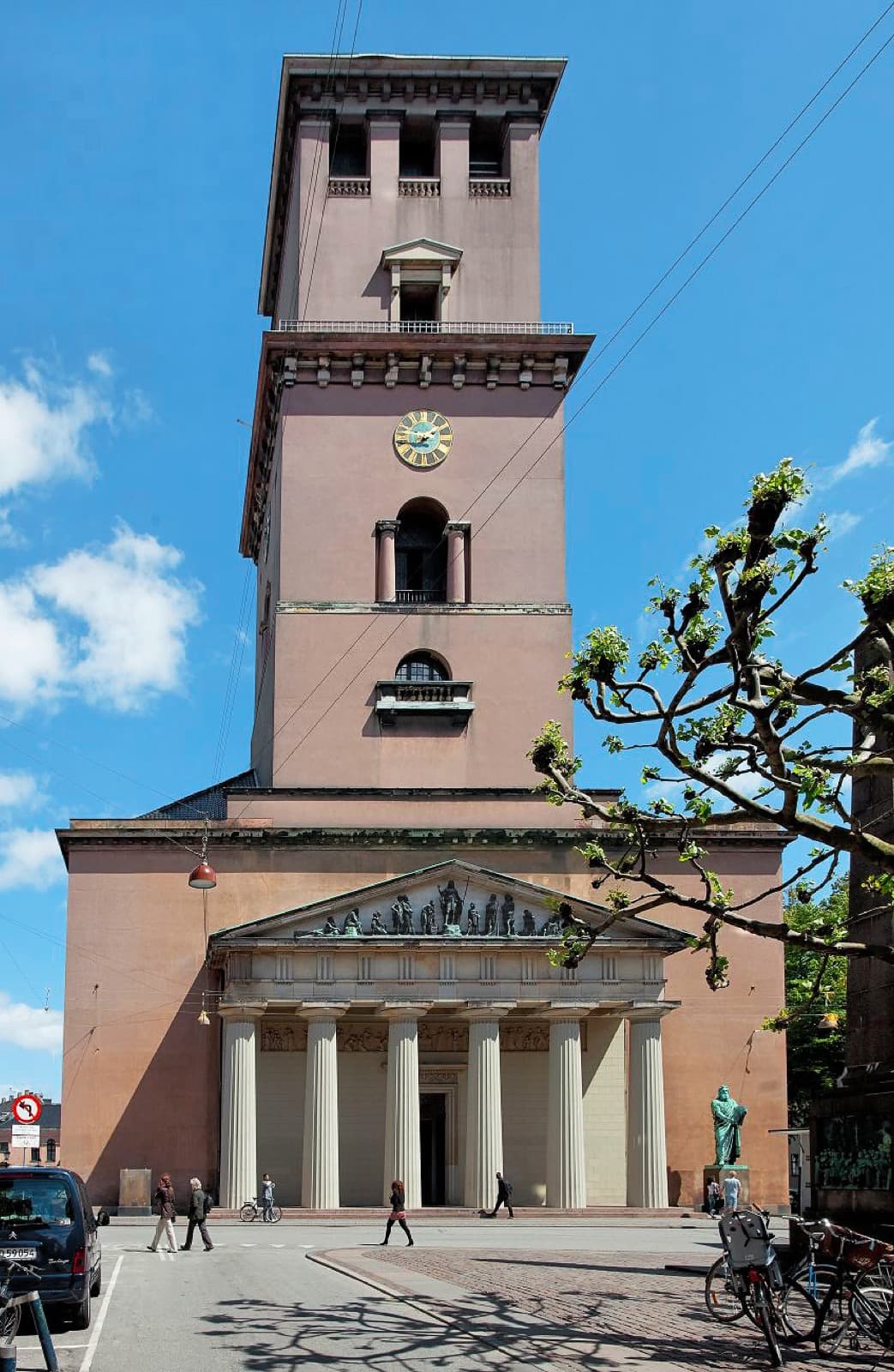
Facing Amalienborg across the square stands the church that closes the whole axis of Frederiksstaden. Its formal name is Frederik's Church, but everyone calls it the Marble Church, kirke being the Danish word for church. Its foundation stone was laid by King Frederik the Fifth…
Full narration for this stop unlocks with the tour.
5. The Gefion Fountain: The Goddess Who Ploughed an Island
As you come toward the green edge of the city, water and stone tell an old story. The Gefion Fountain, by the sculptor Anders Bundgaard, was inaugurated on the fourteenth of July nineteen oh eight, a gift of the Carlsberg Foundation for the brewery's fiftieth anniversary.…
Full narration for this stop unlocks with the tour.
6. Kastellet: The Green Star Fortress
Kastellet means the Citadel, and it is one of the best-preserved star fortresses in Northern Europe. Seen from above it is a five-pointed star, a pentagon of ramparts and bastions ringed by a wide moat. The fortress as it stands was built between sixteen sixty-two and sixteen…
Full narration for this stop unlocks with the tour.
7. The Little Mermaid: The City's Quiet Icon
The walk ends on a rock at the water's edge, with the city's most famous figure. The Little Mermaid is a small bronze statue set on a granite stone along the harbour, and she is far smaller than her fame suggests, about one and a quarter metres tall and weighing roughly one…
Full narration for this stop unlocks with the tour.