A slow walk across Gradec, the older and prouder of the two hilltop towns that became Zagreb, where a free medieval city still keeps its cannon, its icon-roofed church, its parliament, and its last living gate.
Start · The Funicular and the Lotrscak Tower: Noon on the Hill
DirectionsStops
- 1
The Funicular and the Lotrscak Tower: Noon on the Hill
A tiny historic funicular and a thirteenth-century watchtower whose cannon has marked noon over Zagreb since the eighteen seventies.
- 2
St Mark's Church: The Roof That Flies the Kingdom
The medieval parish church of Gradec, crowned by a nineteenth-century tiled roof that turned it into the emblem of Zagreb.
- 3
St Mark's Square: Where a Nation Governs
The small hilltop square that is the working political heart of Croatia, ringed by parliament, government, and the Constitutional Court.
- 4
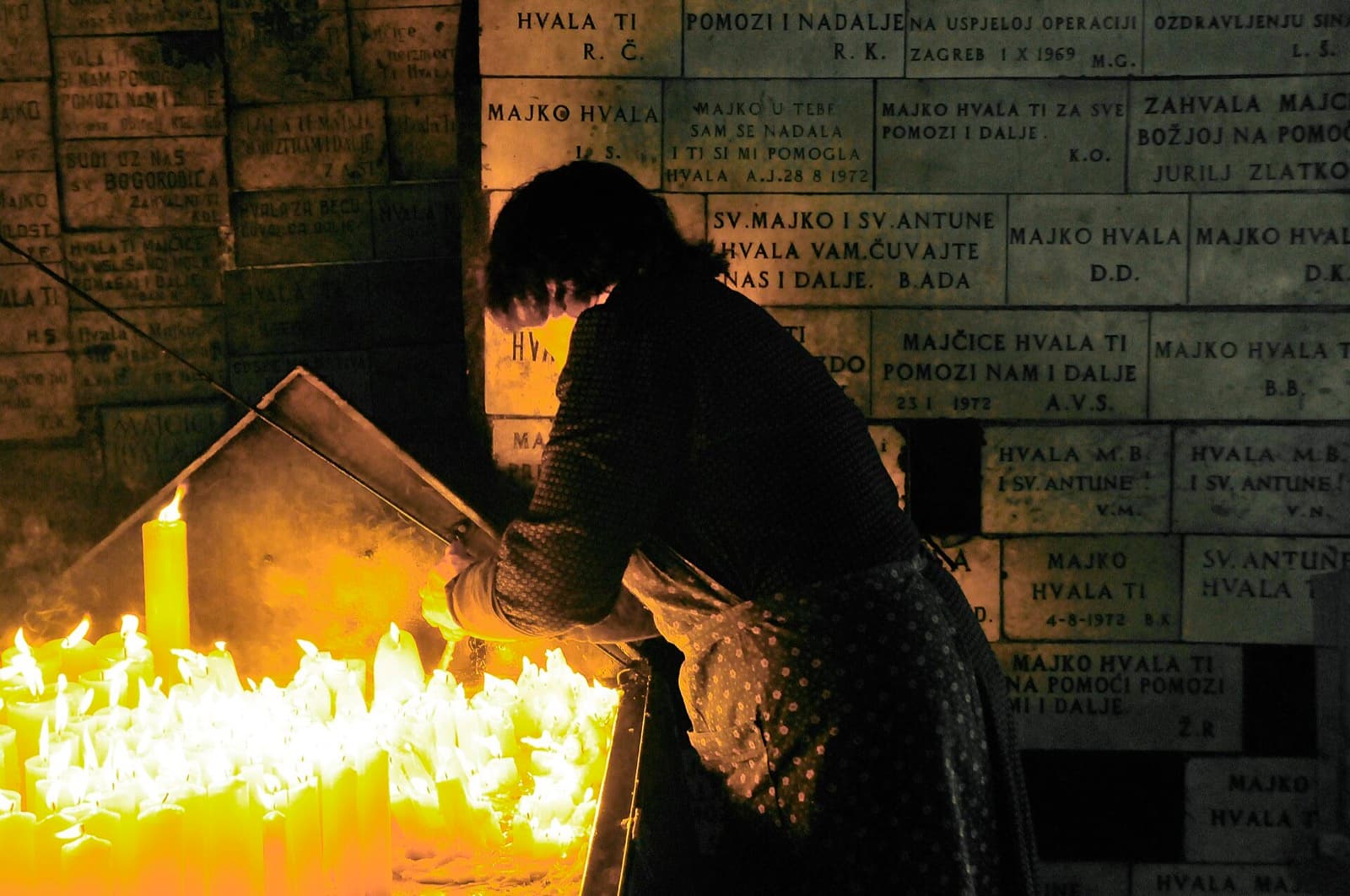
The Stone Gate: The Last Gate and Its Candles
Gradec's only surviving medieval gate, now a quiet living shrine built around a painting said to have outlived a great fire.
- 5
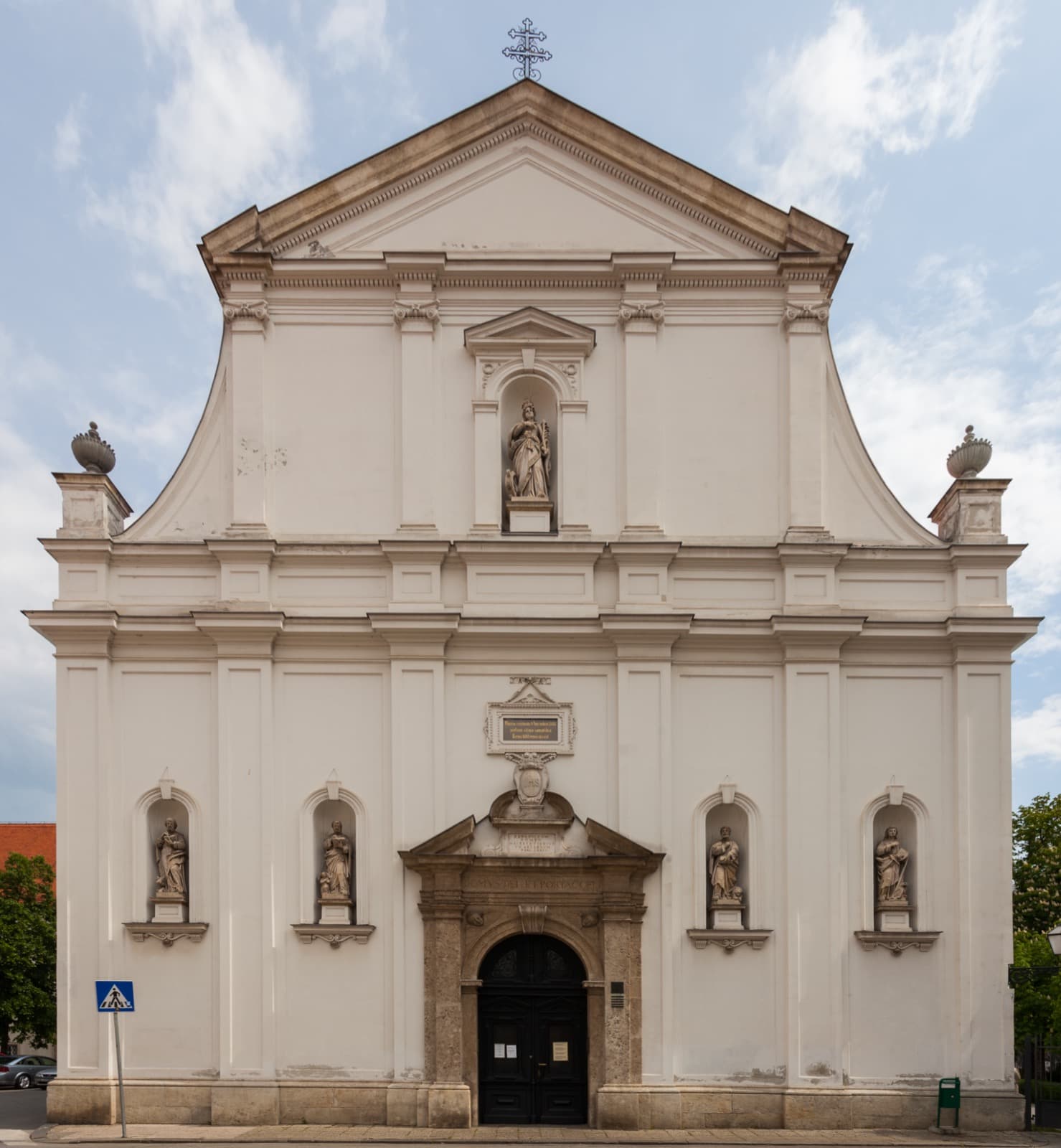
St Catherine's Church: White Baroque on the Hill
A Jesuit church of the early seventeenth century, celebrated for the luxurious white stucco that makes it the finest Baroque interior in Zagreb.
- 6
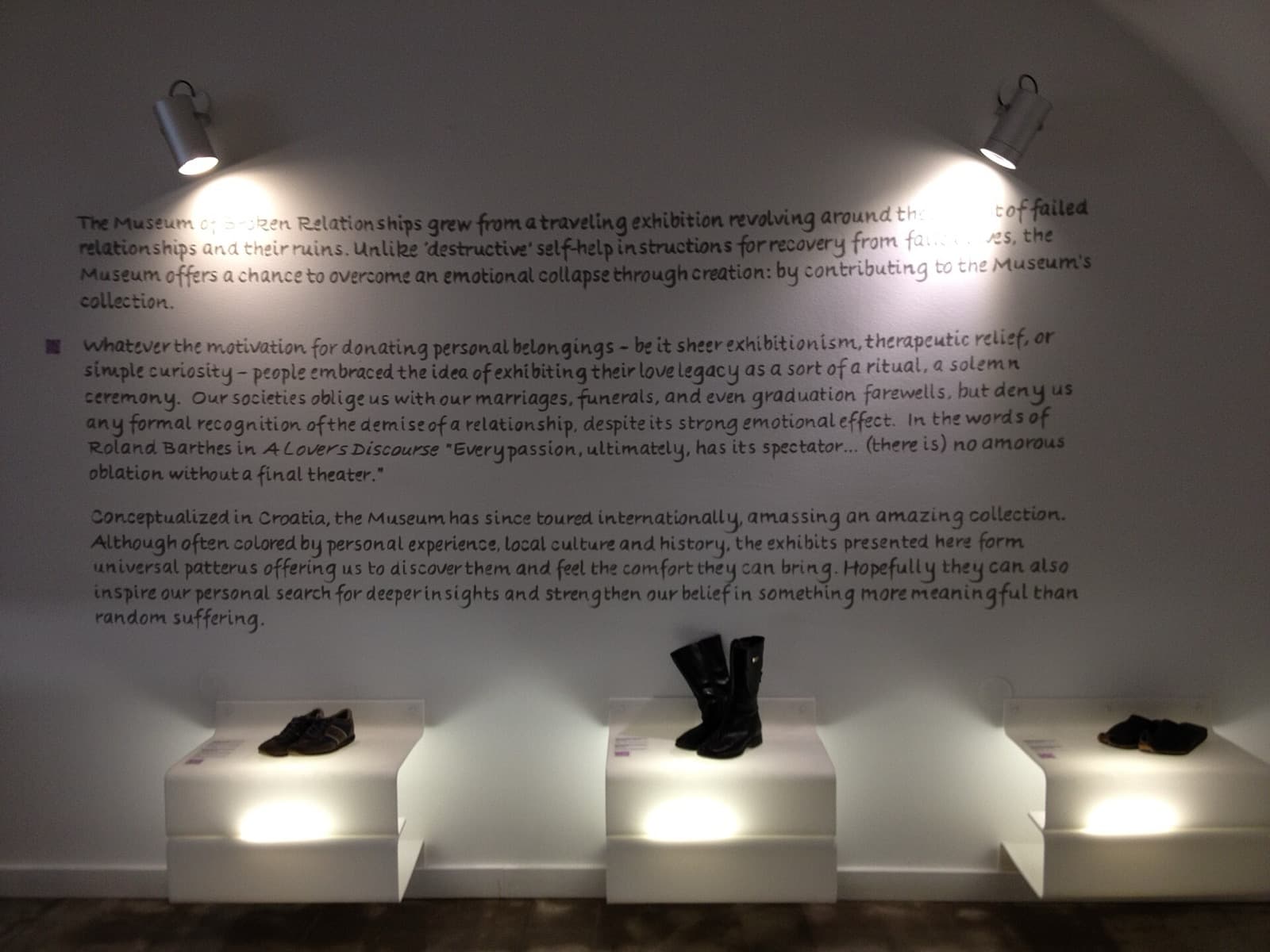
Klovicevi Dvori and the Museum of Broken Relationships
A gallery in a former Jesuit monastery and a wholly original museum of ended love, side by side near the top of the hill.
- 7
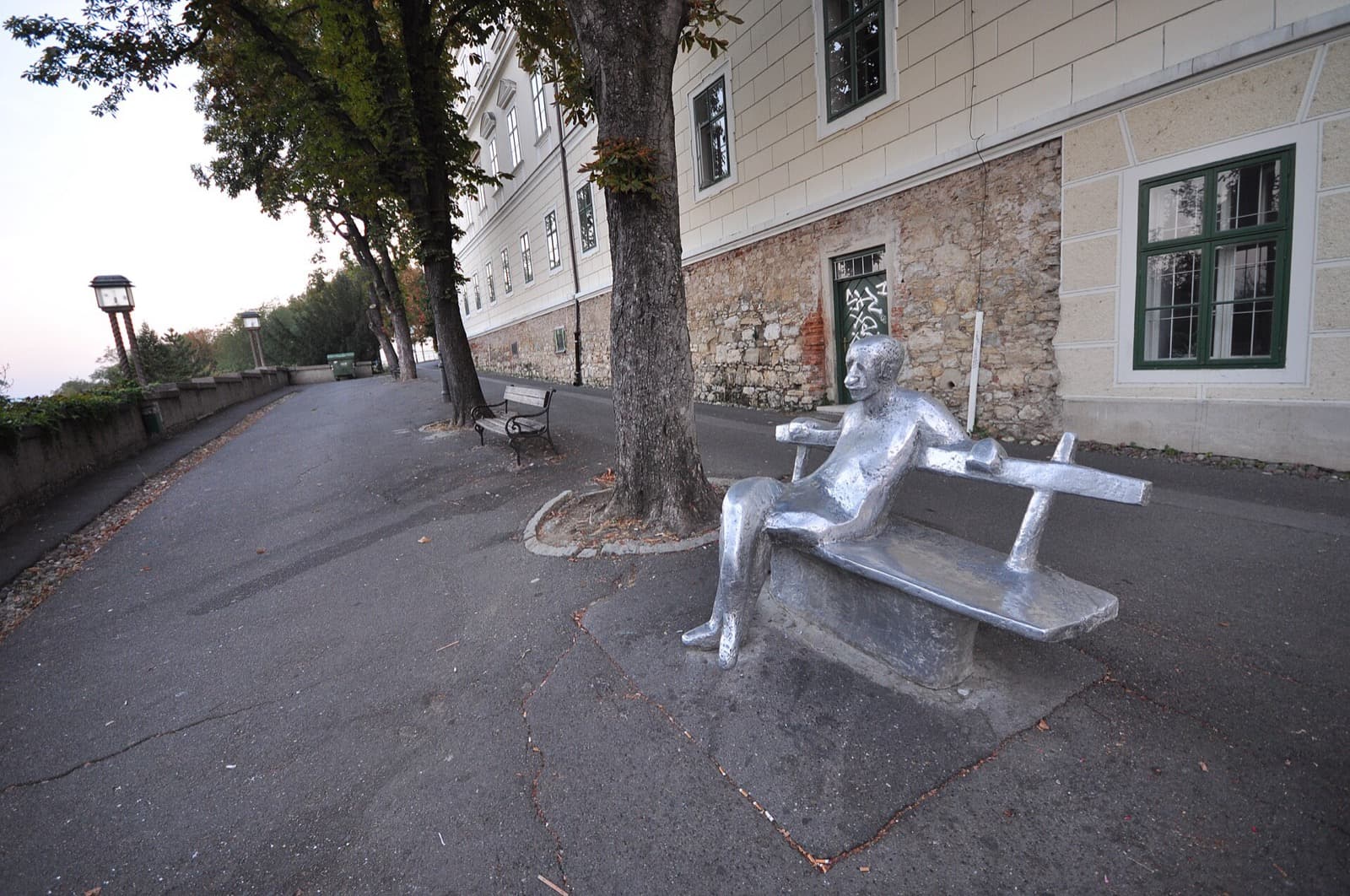
The Strossmayer Promenade: The City Below
A tree-lined belvedere along Gradec's old ramparts, where an aluminium poet sits on a bench above the roofs of the Lower Town.
Details
Best Time to Visit
Late morning is ideal so you can end near noon at the Lotrscak tower and catch the daily cannon at midday. Weekday mornings are quietest on Saint Mark's square, since the parliament and government buildings draw more activity and occasional closures on official days. Golden hour in the late afternoon is beautiful on the Strossmayer promenade, when the light rakes across the red roofs of the Lower Town.
Pro Tips
- •Time your loop to be near the Lotrscak tower at noon for the daily cannon, and expect a loud boom, so do not be startled and watch small children and pets.
- •Ride the historic funicular up at least once for the experience, even though the whole hilltop walk is short and easily done on foot.
- •Saint Mark's church interior only opens around Mass times, so plan to enjoy the famous roof from the square and step inside only if it happens to be open.
- •At the Stone Gate, keep your voice down and put your camera away near the altar: it is an active shrine, and people are genuinely there to pray.
- •Buy museum and tower tickets on site as you go rather than in advance, since Klovicevi dvori, the Museum of Broken Relationships, and the Lotrscak viewing platform all sell entry separately.
- •Save the Strossmayer promenade for last and sit for a few minutes on the bench beside the poet Matos to take in the view over the Lower Town.
Safety & Precautions
- •Saint Mark's and Saint Catherine's are working churches, so dress modestly, keep quiet, and stay respectful of anyone at worship if you go inside.
- •The Stone Gate is a living shrine within a public passage: move through it quietly, avoid blocking the candle-lit altar, and be mindful of people praying.
- •The Upper Town has uneven historic paving, cobblestones, and a few stretches of steps and gentle slopes that can be slippery when wet, so wear sturdy, flat-soled shoes.
- •Saint Mark's square is ringed by parliament, government, and court buildings that are active institutions, so respect any security barriers or temporary closures and do not attempt to enter.
Travel advisory: Exercise Normal Precautions (Level 1).
Gallery
Related Reading
Go deeper on what you'll see, hear, and walk through.
Overview
Best Self-Guided Walking Tours in Zagreb (2026)
3 min
Overview
One Day in Zagreb: A Walkable Morning-to-Evening Itinerary
7 min
Overview
Zagreb Travel Guide: Days, Transport, Best Time, Safety, Budget
6 min
Thematic
Best History Walking Tours in Zagreb (2026)
2 min
Thematic
Two Hills and a Horseshoe: How Zagreb Became a City
8 min
Companion
St Mark's Church in Zagreb: The Roof That Flies a Whole Kingdom
7 min
Deep dive
The Stone Gate: Zagreb's Last Medieval Gate and Its Candles
6 min
Read
What to Eat in Zagreb
6 min
Read the walk
The full story of Upper Town: The Hill of Saint Mark, in words. Prefer to listen? Play it narrated, from home or on location.
Introduction
Zagreb, in Croatia, was born as two rival hilltop towns. One belonged to merchants and craftsmen, the other to the bishop and his clergy, and for centuries they eyed each other across a narrow ravine before they ever thought of themselves as one city. This walk stays on the older, prouder hill: Gradec, the free town, where the word grad simply means town or city. In twelve forty-two a royal charter made Gradec a self-governing town and told it to raise walls and towers, and much of what you will read here is the grammar of a place that ran its own affairs. A watchtower whose cannon still marks noon. A parish church whose tiled roof flies the arms of a city and a kingdom. A square where a nation's parliament and government sit side by side. A single surviving gate where candles still burn to a painting that outlived a fire. This is a small high town that has punched far above its footprint, and you can take it slowly, in your own order, lingering where you like and skipping what you do not. There are seven stops. Plan on about an hour and a half of easy walking, roughly one kilometre, most of it flat along the top of the hill with a few gentle lanes and steps. Keep the local names loosely in your ear as you go. When you arrive at the upper station of the funicular beside the Lotrscak tower, begin with stop one.
1. The Funicular and the Lotrscak Tower: Noon on the Hill
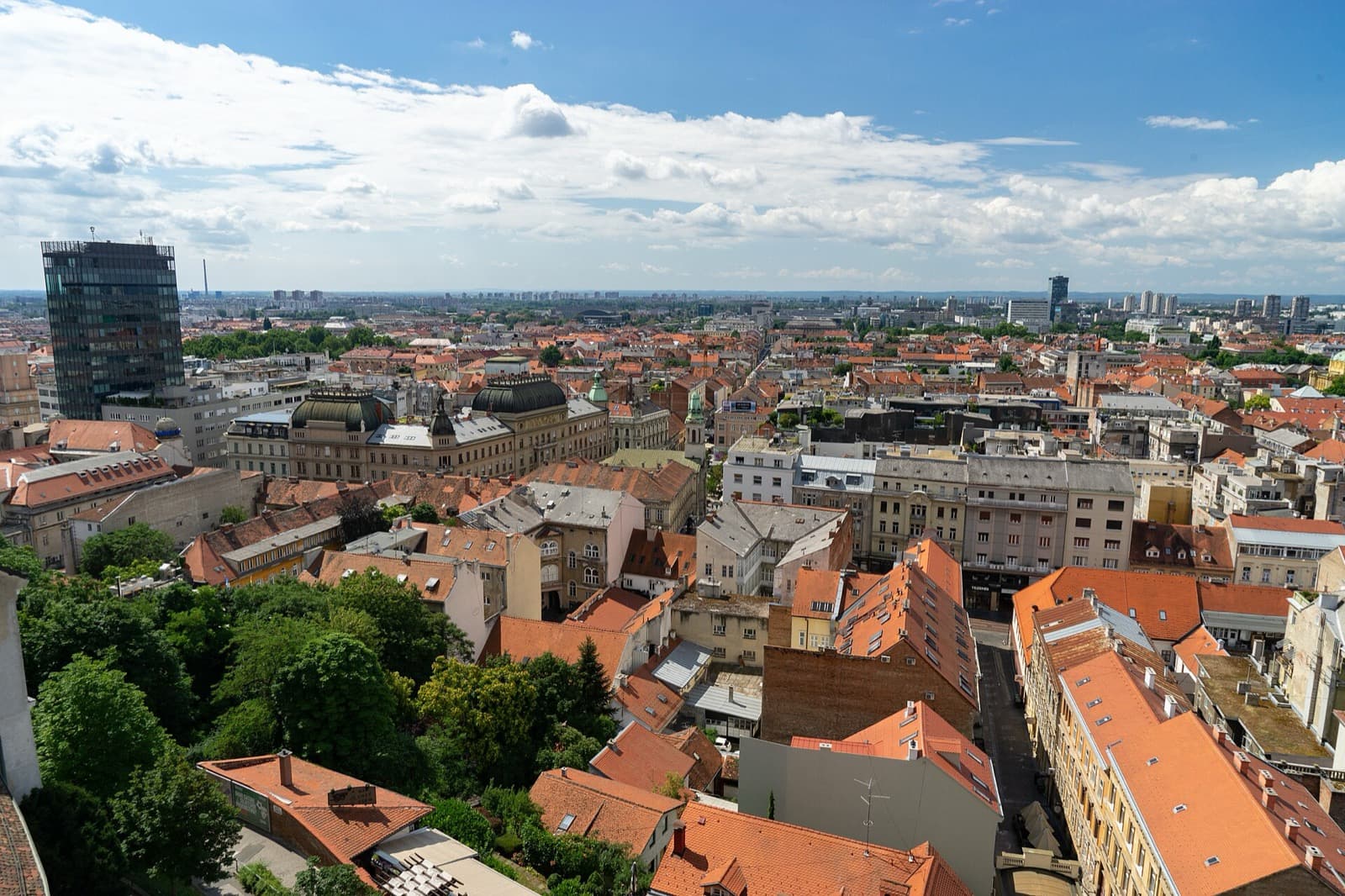
Stand at the top of the funicular and look out over the red roofs of the Lower Town, and you are standing where the free town of Gradec announces itself. The little funicular that climbs to this spot opened in eighteen ninety, and its track runs only about sixty-six metres, which makes it one of the shortest public-transport funiculars anywhere and Zagreb's oldest form of public transport. Beside it rises the Lotrscak tower, in Croatian the kula Lotrscak, where kula means tower. It is a thirteenth-century tower, built to guard the southern gate of the Gradec town wall. Here is the origin story in stone. In twelve forty-two, King Bela the Fourth granted Gradec a royal charter that made it a free town and obliged it to raise defensive walls and towers. That work took about twenty years and was finished around twelve sixty-six, and this tower belongs to that first ring of defenses. The name carries a small piece of everyday medieval life. It comes from a Latin phrase meaning the thieves' bell, after a bell hung here in sixteen forty-six that rang each night to signal the closing of the town gates. If you are here at midday, wait for the boom. Since the first of January eighteen seventy-seven, a cannon has been fired from this tower every day at exactly noon. Its first job was simple and practical: to give the city's church bell-ringers one exact signal so their bells would ring together. The hill has an older name too, Gric, and the gun is still called by it. Watching from the street below is free.
2. St Mark's Church: The Roof That Flies the Kingdom
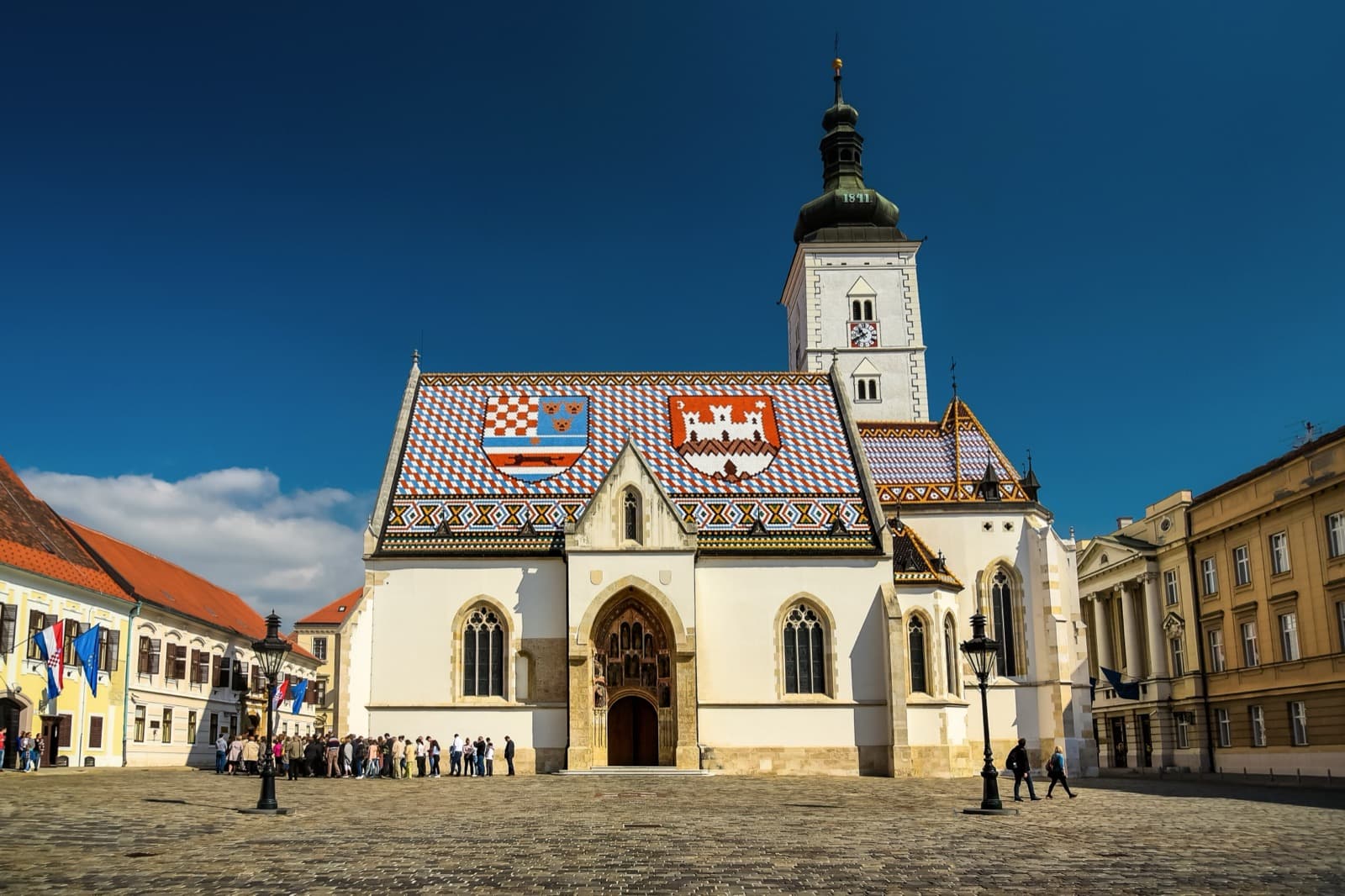
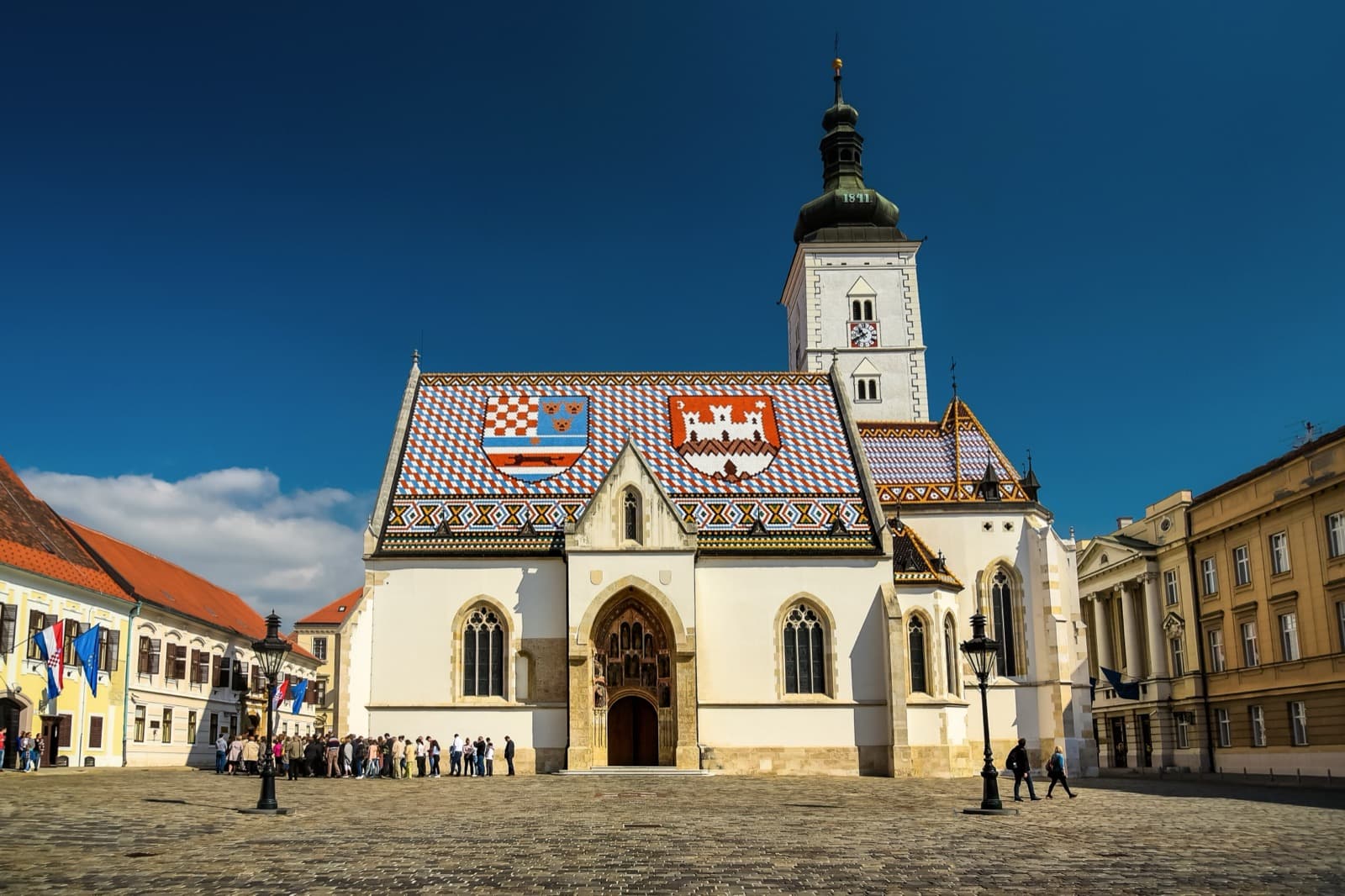
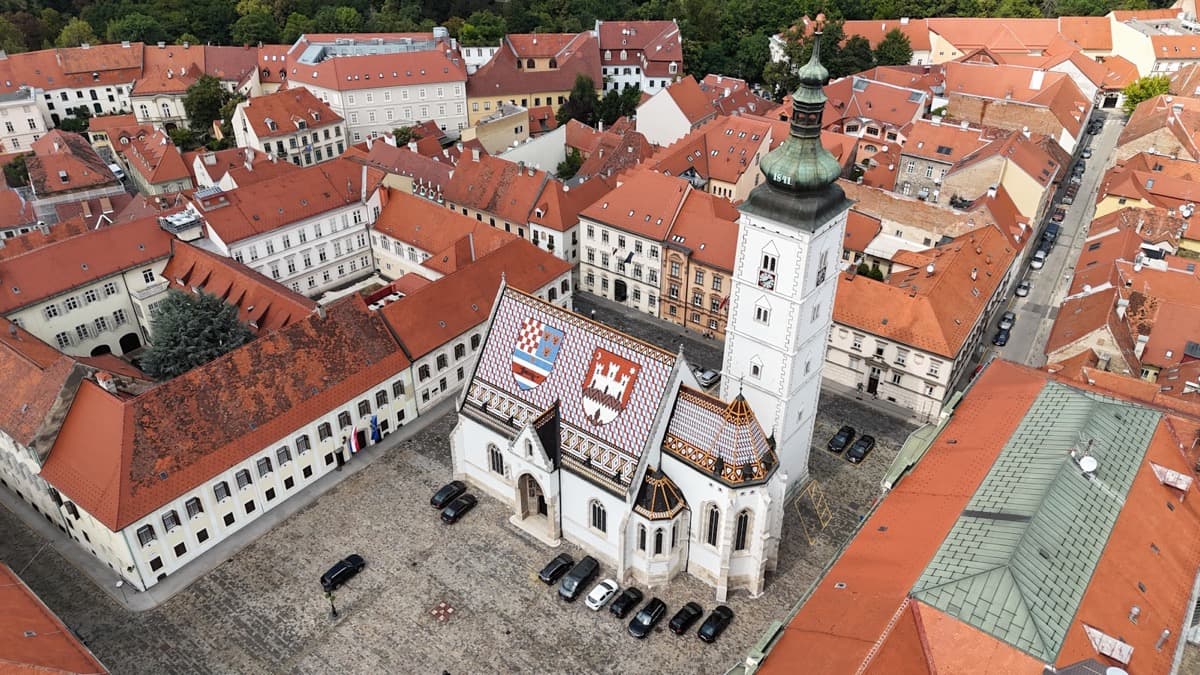
Saint Mark's church is the medieval parish church of Gradec, and its famous roof is the picture most people carry home from Zagreb. The church itself is old. It began in the thirteenth century and was rebuilt in the second half of the fourteenth century into a late-Gothic church of three naves. But the roof that everyone photographs is not medieval at all. Those bright glazed tiles were laid during a neo-Gothic restoration in the eighteen seventies and eighties, led by the Viennese restorer Friedrich Schmidt with his collaborator Hermann Bolle. It is a nineteenth-century statement made in tile, and it is what made this small church the city's emblem. Read the two coats of arms in the tiles. On the left is the medieval combined coat of arms of the so-called Triune Kingdom, that is Croatia, Slavonia and Dalmatia, three lands under one crown. On the right is the arms of the City of Zagreb itself: a white castle on a red field. So the roof flies, quite literally, both the town and the kingdom. Below the roof, look for the Gothic south portal, which survived from the older church. It holds fifteen carved figures set in eleven niches, among them Mary and the infant Jesus, Saint Mark with his lion, and the twelve apostles. It is described as the richest Gothic portal in southern Central Europe, and the sculpture is attributed to the Parler workshop of Prague in the late fourteenth century. The exterior is yours to admire freely from the square. The interior is a working church, open around Mass, so if you step in, keep to modest dress and quiet.
3. St Mark's Square: Where a Nation Governs
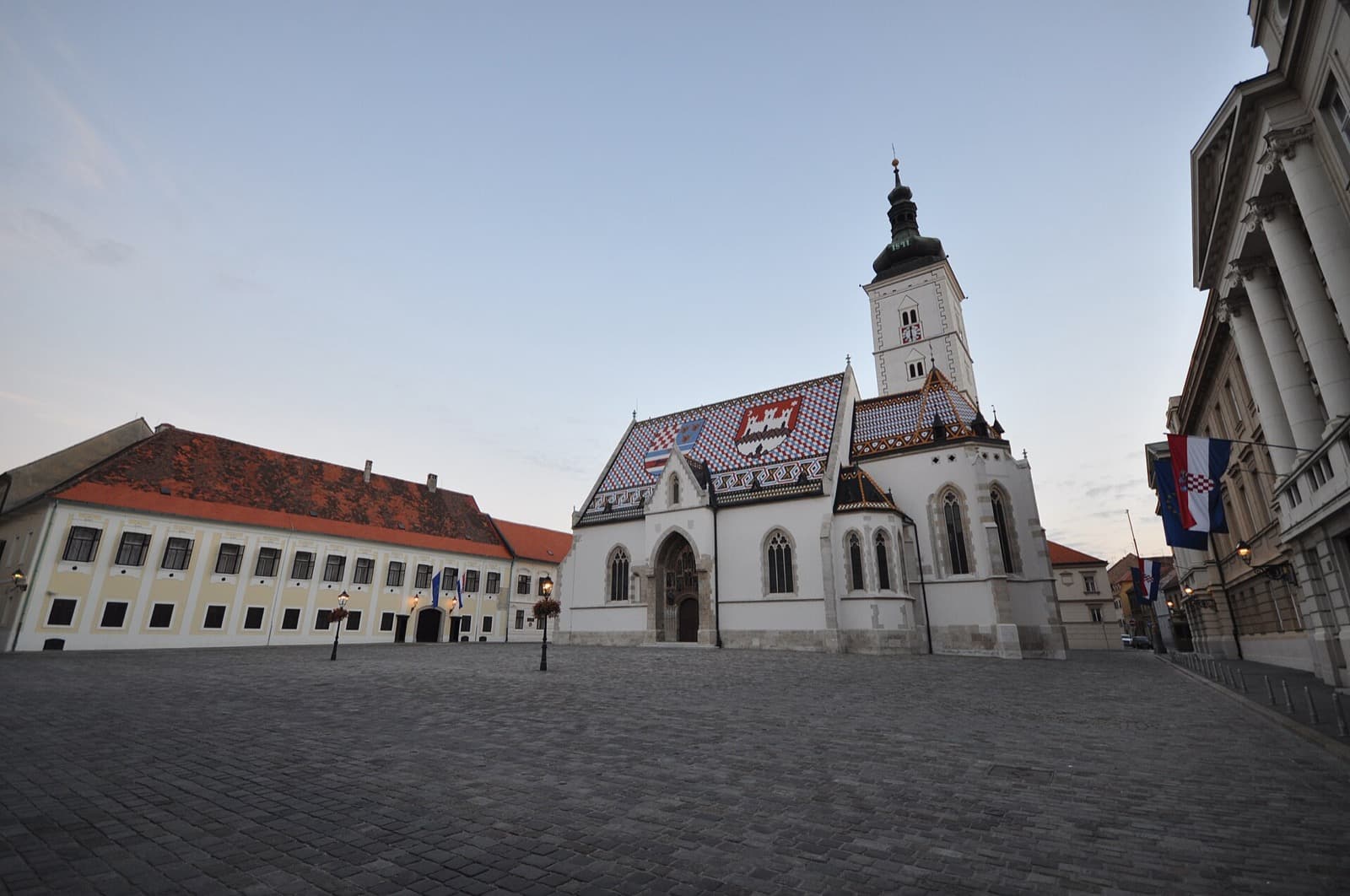
You are standing on Saint Mark's square, in Croatian Trg svetog Marka, where trg means square. For all its modest size, this is the political heart of the country. Three institutions of state ring it. On one side is the Sabor palace, seat of the Croatian parliament, which is called the Sabor. Parliament has sat on this site since seventeen thirty-seven, and the present building took its final form early in the twentieth century. Facing it are the Banski dvori, once the palace of the ban, and here a gloss helps: a ban was the historic viceroy or governor of Croatia, and dvori means the palace or court. Today the Banski dvori house the Government of Croatia and the office of the prime minister. Nearby sits the Constitutional Court. So within a few dozen paces you have the parliament, the government, and the highest court, all on one small hilltop square that grew out of a medieval merchant town. This square has been the stage of Croatian statehood for a very long time. Two of the most consequential turns in the country's modern history were decided here: the break from Austria-Hungary in nineteen eighteen, and the departure from Yugoslavia in nineteen ninety-one. These are working buildings, not museums, so admire them from the open square and let the officials come and go. What is worth carrying with you is the sheer compression of it: the picturesque roof you just saw and the machinery of an entire nation's government share the same few hundred square metres of paving, on a hill that a charter freed almost eight centuries ago.
4. The Stone Gate: The Last Gate and Its Candles
This vaulted stone passage is the Kamenita vrata, the Stone Gate, where vrata means gate. It is the only preserved medieval town gate of Gradec, built in the same great push of the twelve forties to twelve sixties that raised the walls and the Lotrscak tower. Of all the gates…
Full narration for this stop unlocks with the tour.
5. St Catherine's Church: White Baroque on the Hill
Saint Catherine's church stands on its own small square, Katarinin trg, and it is the finest example of Baroque architecture in Zagreb. The Jesuits built it, beginning construction in sixteen twenty and finishing in sixteen thirty-two, on a site where a fourteenth-century…
Full narration for this stop unlocks with the tour.
6. Klovicevi Dvori and the Museum of Broken Relationships
Within a minute of each other on the Gradec plateau sit two very different institutions, and together they show the range of what this small hill holds. The first is the Klovicevi dvori gallery, whose name means Klovic's halls. It occupies a former eighteenth-century Jesuit…
Full narration for this stop unlocks with the tour.
7. The Strossmayer Promenade: The City Below
The walk resolves here, on the Strossmayer promenade, in Croatian Strossmayerovo setaliste, where setaliste means promenade or walk, and where locals simply call it Stross. It runs along the southern edge of the Upper Town beside the Lotrscak tower, a tree-lined belvedere of old…
Full narration for this stop unlocks with the tour.