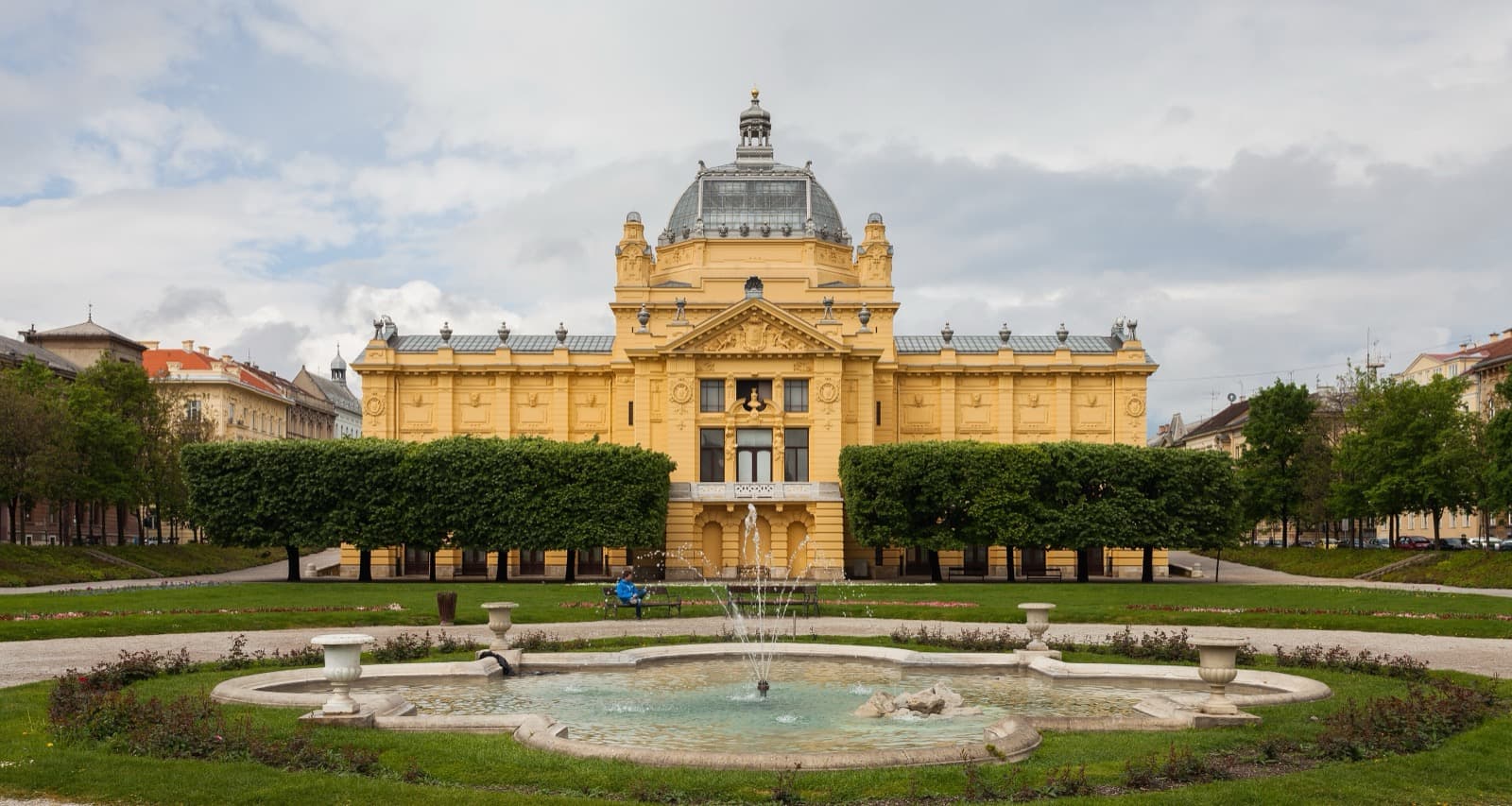
Below Zagreb's two old hills, a young Habsburg capital drew itself a brand-new Lower Town and threaded a U-shaped chain of leafy squares through the grid. This is a walk through a promenade of parks, academies, museums, a theatre, and a botanical garden that together announced the city had arrived.
Start · Zrinjevac: The First Room of the Lower Town
DirectionsStops
- 1
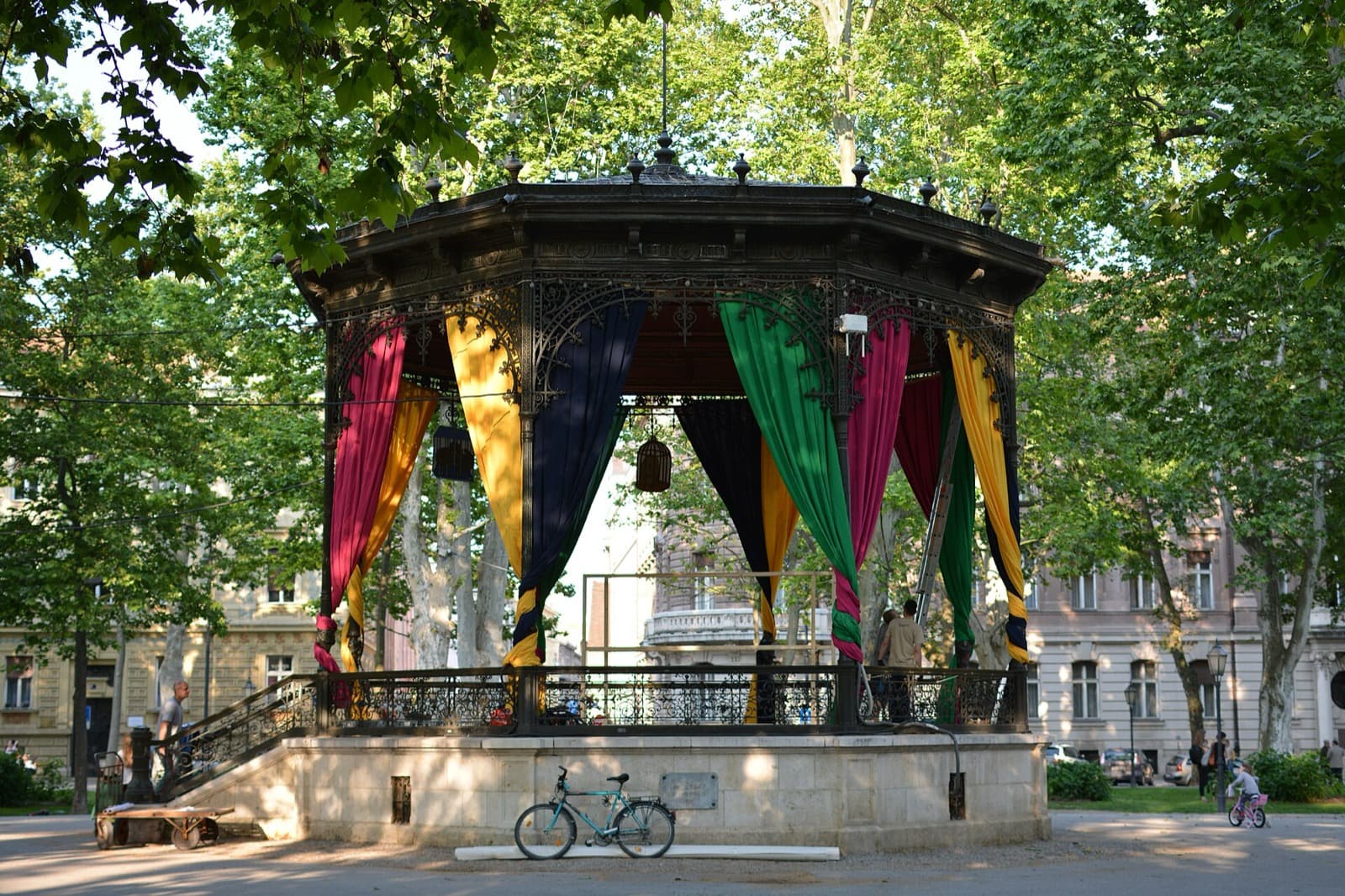
Zrinjevac: The First Room of the Lower Town
The first and grandest square of the Horseshoe, a plane-tree promenade that set the grammar for the whole planned Lower Town.
- 2
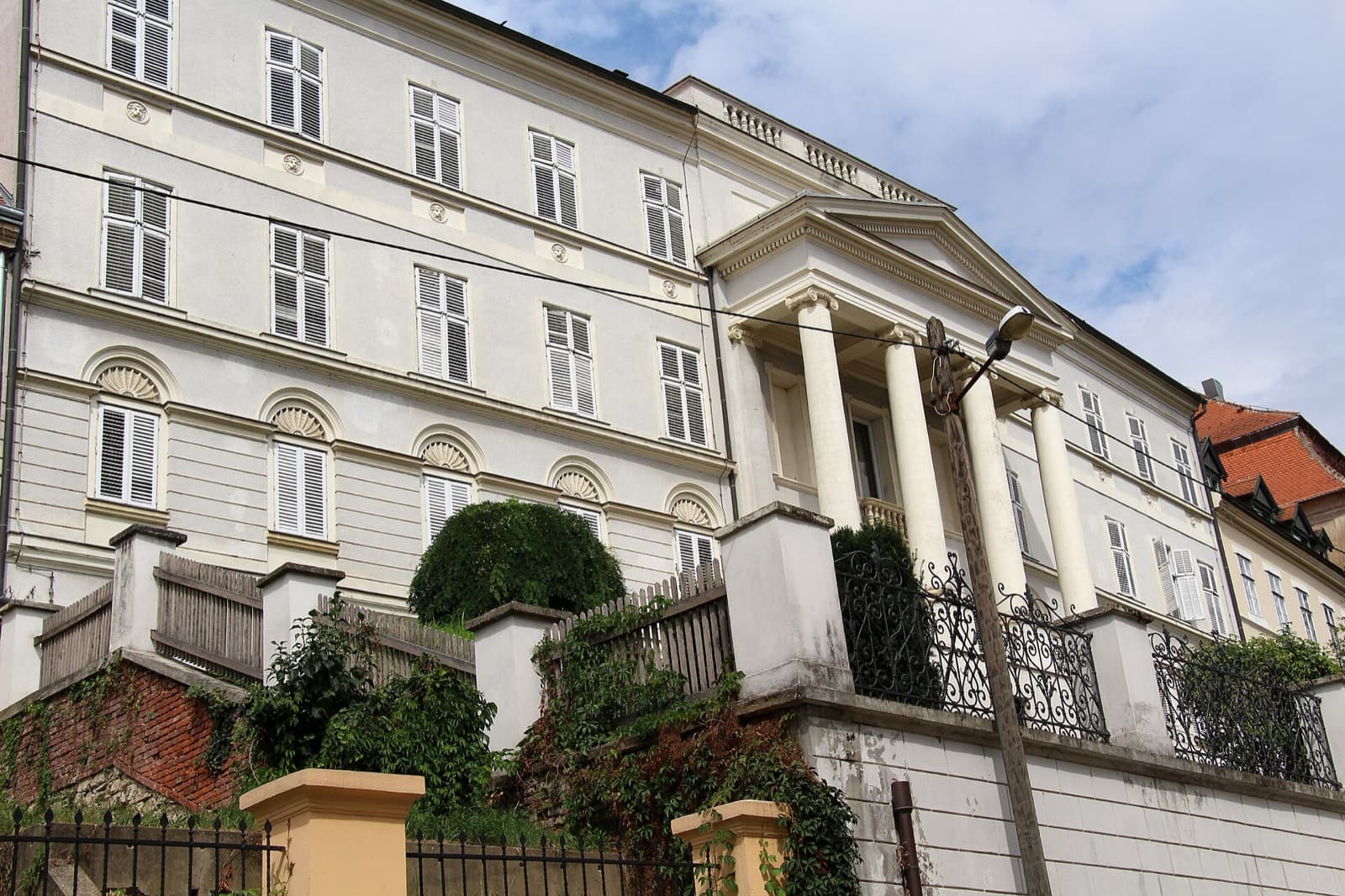
The Academy and the Strossmayer Old Masters
A neo-Renaissance palace at the foot of Zrinjevac holding a bishop's donated collection of Old Masters and one of the oldest monuments of the Croatian language.
- 3
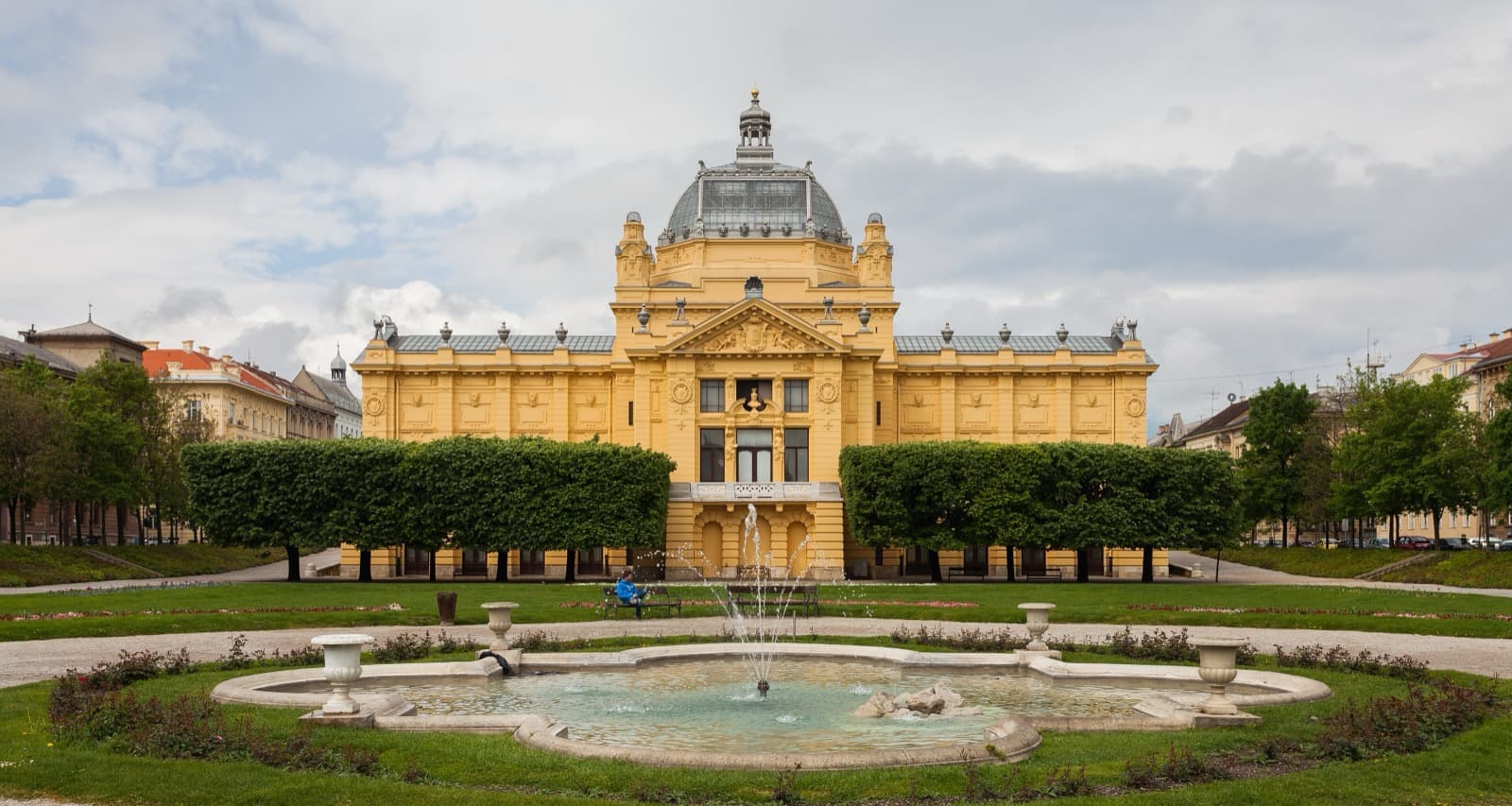
The Art Pavilion: A Hall That Traveled by Train
A golden-yellow iron exhibition hall whose prefabricated frame was first built for an exhibition in Budapest, then dismantled and shipped to Zagreb by rail.
- 4
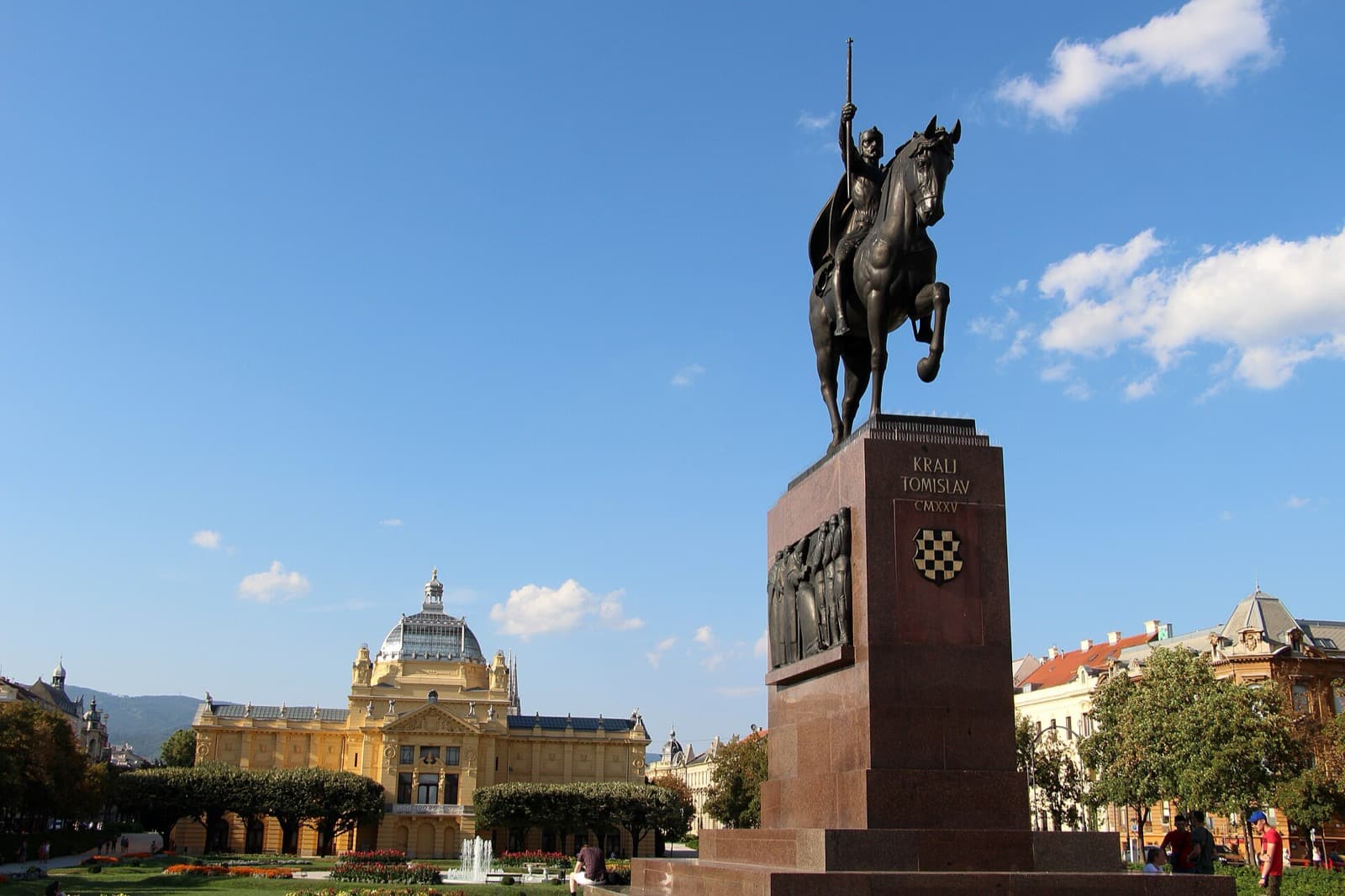
King Tomislav Square and the Gateway Station
The ceremonial arrival axis of the Lower Town, closed at its far end by the grand facade of Zagreb's main railway station.
- 5
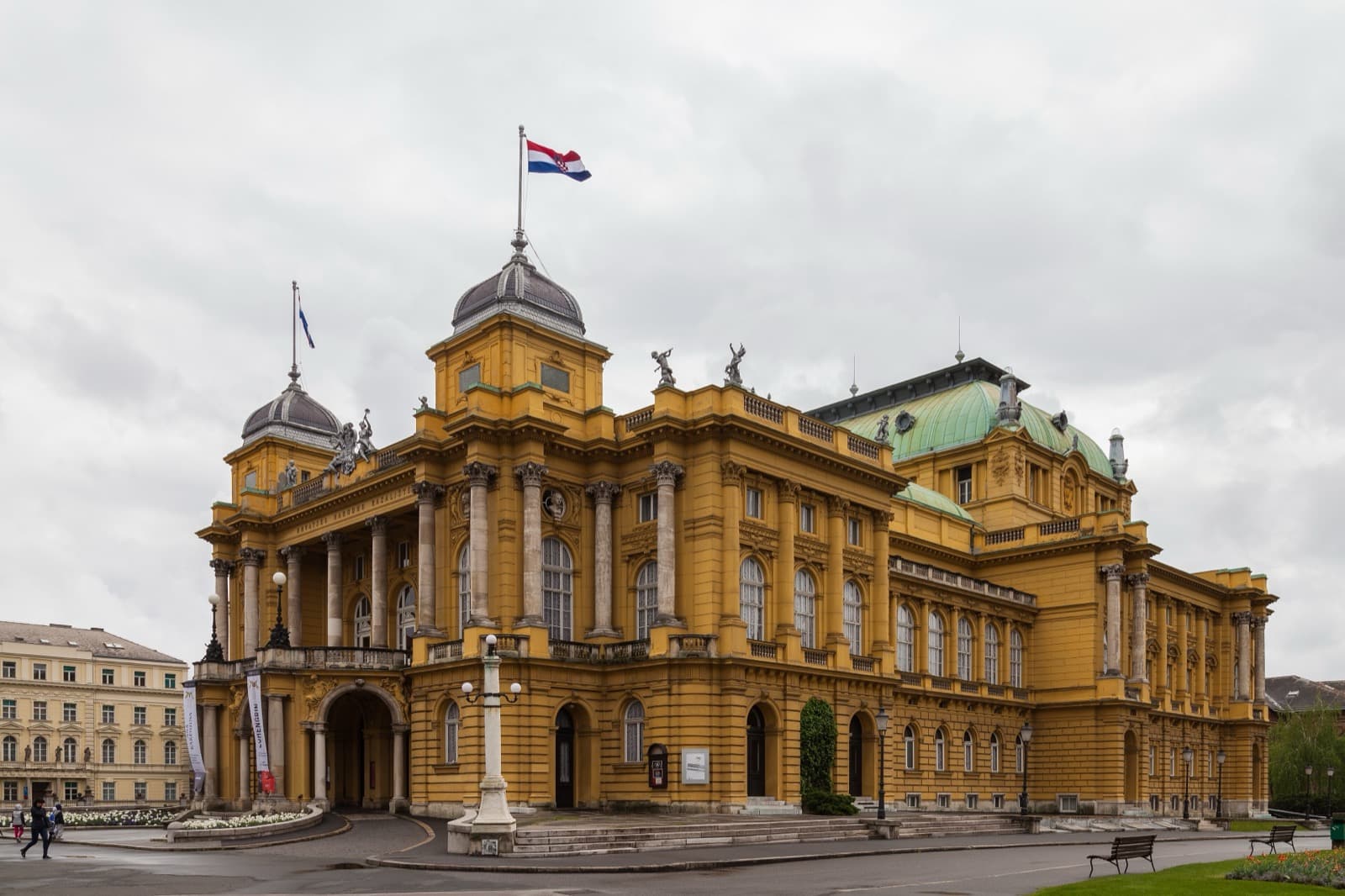
The Botanical Garden: The Green Corner of the U
A heritage teaching garden at the lower turn of the Horseshoe, laid out in English-landscape style with ponds, glasshouses, and an arboretum.
- 6
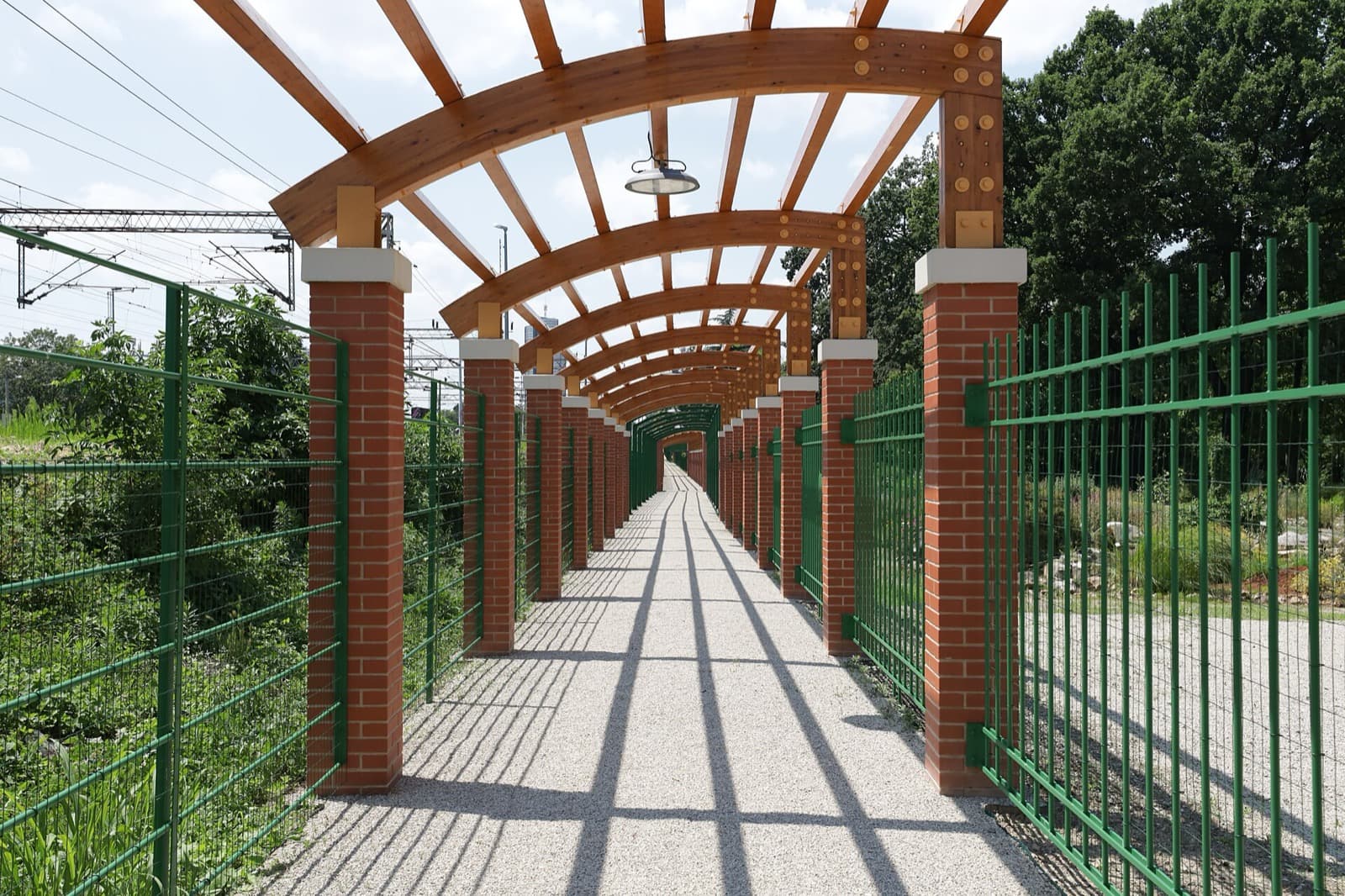
The National Theatre and the Well of Life
The grand neo-Baroque climax of the Horseshoe's western arm, fronted by Ivan Mestrovic's bronze fountain the Well of Life.
- 7
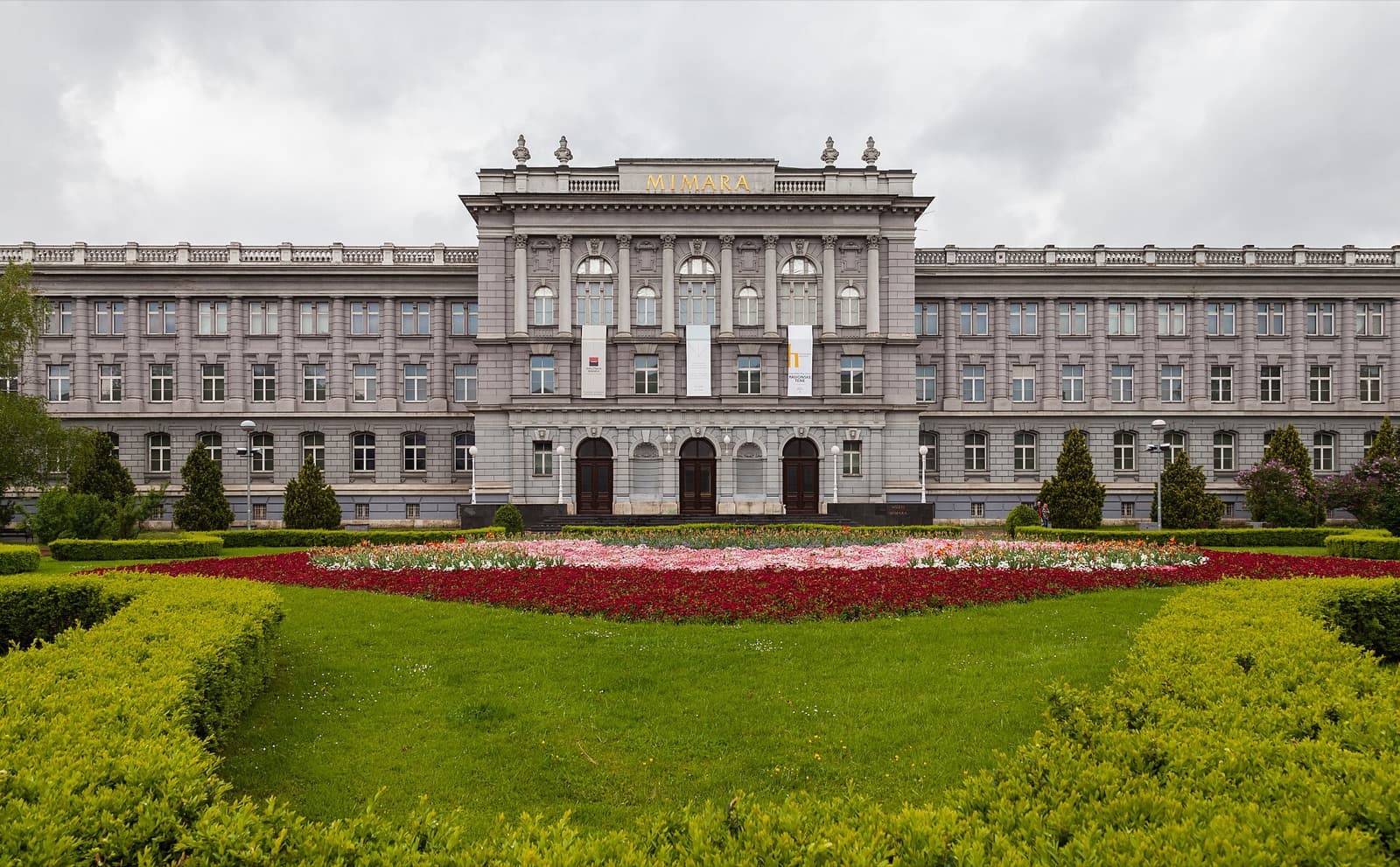
The Mimara and the Museum-City Read Whole
A neo-Renaissance former school on Roosevelt Square holding a vast donated art collection, and the western bookend of the planned museum-city.
Details
Best Time to Visit
Late spring through early autumn, when the plane trees are in full leaf and the squares are at their greenest. Mid-morning or the golden hour before sunset gives the best light on the yellow facades and the coolest walking; the Botanical Garden keeps seasonal hours and generally closes in the winter months, so warmer months let you complete the full loop.
Pro Tips
- •This is a loop, not a line. Start at Zrinjevac if you can, but join the Horseshoe wherever you happen to be and walk the squares in whatever order suits you.
- •The whole route is flat and paved, well under three kilometres, so it is comfortable at a slow pace; budget extra time if you want to step inside the Strossmayer Gallery.
- •Check ahead before counting on the Art Pavilion and the Mimara Museum: both have been closed for post-earthquake reconstruction, though their squares and facades are always free to enter.
- •Carry the walk with a coffee-house pause. Zagreb's coffee-house tradition is part of the city's heritage, and the benches under the plane trees on Zrinjevac are made for lingering.
- •Time your visit around the Botanical Garden's opening hours if you want the restful green pivot at the bottom of the U, as it keeps limited seasonal days and generally shuts in winter.
- •Look down as well as up: the meteorological column on Zrinjevac and the Well of Life fountain by the National Theatre reward a close, unhurried look.
Safety & Precautions
- •The Strossmayer Gallery and other institutions on the route keep museum hours and charge admission; confirm opening times and ticket details before you set out, as several buildings are affected by ongoing earthquake repairs.
- •Parts of Zagreb still bear scars from the twenty twenty earthquake, and some buildings remain fenced or under scaffolding; respect closures and barriers around reconstruction sites.
- •The squares are shared with cyclists, trams, and everyday city traffic on the surrounding streets; watch tram lines and crossings, especially near the railway station.
- •Summers can be warm with little shade between the tree-lined squares, so carry water, and remember the Botanical Garden and several museums close seasonally or for repair, so a working plan avoids a locked gate.
Travel advisory: Exercise Normal Precautions (Level 1).
Gallery
Related Reading
Go deeper on what you'll see, hear, and walk through.
Overview
Best Self-Guided Walking Tours in Zagreb (2026)
3 min
Overview
One Day in Zagreb: A Walkable Morning-to-Evening Itinerary
7 min
Overview
Zagreb Travel Guide: Days, Transport, Best Time, Safety, Budget
6 min
Thematic
Two Hills and a Horseshoe: How Zagreb Became a City
8 min
Companion
Zrinjevac and the Green Horseshoe: How Zagreb Planned Itself Park by Park
7 min
Deep dive
Zagreb's Botanical Garden: The Living Corner of the Green Horseshoe
6 min
Read
What to Eat in Zagreb
6 min
Read the walk
The full story of Lower Town: The Green Horseshoe, in words. Prefer to listen? Play it narrated, from home or on location.
Introduction
In the late nineteenth century, Zagreb, in Croatia, was a young capital boxed in below its two old hills, and it decided to prove it belonged among European capitals. Not with one grand monument, but with a whole planned district. Planners laid out the Lower Town, or Donji Grad, on a grid, and threaded through it a U-shaped chain of leafy squares lined with an academy, museums, a theatre, an exhibition pavilion, and a botanical garden. People now call this promenade of parks the Green Horseshoe, or the Lenuci Horseshoe, after the urbanist Milan Lenuci, who conceived it beginning in eighteen eighty-two. The rebuilding after the eighteen eighty earthquake spurred it on. The whole loop reads as one statement of the city's ambition, park by park. This route has seven stops. It covers a little over three kilometres of flat, easy walking, and takes about two hours at a gentle pace, longer if you linger in a gallery or under the plane trees. It is a loop, so the order is a suggestion, not a rule. Stop wherever a bench or a bandstand invites you, skip a museum that is closed for repair, and set your own pace. Along the way you will pass the grandest square of the chain, a bishop's donated art collection, an iron exhibition hall that arrived by train, a ceremonial railway station, a heritage botanical garden, a neo-Baroque national theatre, and a museum-city read whole. When you arrive at Zrinjevac, the first and grandest of the squares, begin with stop one.
1. Zrinjevac: The First Room of the Lower Town
This is the first room of the planned Lower Town, and everything that follows takes its cue from here. Its formal name is Nikola Subic Zrinski Square, Trg Nikole Subica Zrinskog, and trg simply means square, but everyone calls it Zrinjevac. It was the first park laid out in Donji Grad, opened with ceremony on the fourteenth of June, eighteen seventy-three. Before that, this ground was an old cattle-market field. The town council resolved to turn it into a representative square on the three-hundredth anniversary of the Battle of Siget, dedicating it to Nikola Subic Zrinski, the defender who died there in fifteen sixty-six. Walk its central avenue of London plane trees, imported, local sources say, from Trieste, and you feel the whole logic of the Horseshoe in miniature: greenery framed by civic palaces. Around you stand the Archaeological Museum to the west, the Croatian Academy of Sciences and Arts to the south, and the Supreme Court to the north. Two small monuments reward a closer look. The music pavilion, a graceful iron bandstand, was built in eighteen ninety-one, a gift to the city from Eduard Prister. Nearby stands a meteorological column of Istrian marble, a gift from a military doctor and amateur weather-watcher, Doctor Adolf Holzer. Its instruments came from Gottingen, its clock from a Zagreb maker named Konig, and the column itself was designed by the architect Hermann Bolle. Take a bench under the planes for a moment. This is the grammar of the entire walk, stated in its first and grandest square: a leafy room, ringed by institutions, carrying a young city's ambition.
2. The Academy and the Strossmayer Old Masters
At the southern end of Zrinjevac stands a three-story palace in a warm yellowish brick, styled after the Renaissance palaces of Florence. This is the home of the Croatian Academy of Sciences and Arts, completed in eighteen eighty. Its story is really the story of one man's patronage. The bishop Josip Juraj Strossmayer set up the trust fund that created the Academy and was elected its patron, and this is the ambition the whole Horseshoe carries made personal: a young nation endowing itself with learning. Inside is the Strossmayer Gallery of Old Masters, which opened in eighteen eighty-four with two hundred and fifty-six works, mostly Italian Renaissance paintings from Florence and Venice, later broadened to take in northern-European and seventeenth-century schools. In eighteen sixty-eight the bishop decided to give his collection to the Croatian people, and he entrusted it to the Academy. Handle that soberly: it was a bishop giving away his life's collection as an act of national and cultural endowment. The building holds one more treasure worth naming. The Baska tablet, the Bascanska ploca, is a limestone slab kept here, one of the oldest monuments of the Croatian language and the oldest known Glagolitic inscription, dated to around eleven hundred and two. Tradition ties it to a land grant by King Zvonimir to the church of Saint Lucy at Jurandvor, near Baska, on the island of Krk. You can admire the palace and the tablet lobby freely; the gallery of paintings asks a ticket. Stand a moment before the facade, and remember what it represents: a city, and a nation, insisting that culture is the proof of arrival.
3. The Art Pavilion: A Hall That Traveled by Train
Ahead of you rises a golden-yellow hall with an iron frame, the Art Pavilion, in Croatian the Umjetnicki paviljon. It has a remarkable origin: it traveled here by train. In the spring of eighteen ninety-five, the painter Vlaho Bukovac proposed a prefabricated pavilion to present the Kingdom of Croatia and Slavonia at the Budapest Millennium Exhibition of eighteen ninety-six, which celebrated a thousand years of Hungarian statehood. He had it designed so that it could later be moved to Zagreb. When the Budapest exhibition closed, the iron skeleton was taken apart and shipped by rail to Zagreb. Here the Viennese firm of Fellner and Helmer, that is Ferdinand Fellner and Hermann Helmer, designed the adaptation, and it was built between eighteen ninety-seven and eighteen ninety-eight. It opened on the fifteenth of December, eighteen ninety-eight, with the Croatian Salon exhibition, an event organized by Bukovac and the sculptor Robert Franges Mihanovic, and often taken to mark the start of Croatian Modernism. It is described as the oldest gallery in Southeast Europe, and the only building in Zagreb purpose-built for large-scale exhibitions. A note as you look: the pavilion was damaged in the twenty twenty Zagreb earthquake and is under reconstruction, closed as of the present. So you meet it as a facade rather than a gallery, but that facade is enough. Picture the iron frame arriving carriage by carriage on the railway just to the south, then rising again here at the head of a ceremonial square: a building that quite literally embodies a young capital importing its own culture and setting it down in the planned grid.
4. King Tomislav Square and the Gateway Station
This long green rectangle is King Tomislav Square, Trg kralja Tomislava, and it is the ceremonial arrival axis of the whole planned town. At its heart stands a bronze equestrian statue of King Tomislav, remembered by tradition as the first king of Croatia, crowned in the tenth…
Full narration for this stop unlocks with the tour.
5. The Botanical Garden: The Green Corner of the U
Here, at the lower turn of the U, the Horseshoe softens into its greenest corner: the Botanical Garden of the University of Zagreb, the Botanicki vrt, at Marulicev trg, near the railway. It was founded in eighteen eighty-nine by Professor Antun Heinz of the university, and…
Full narration for this stop unlocks with the tour.
6. The National Theatre and the Well of Life
Now the Horseshoe reaches its grandest cultural statement. On the Square of the Republic of Croatia, Trg Republike Hrvatske, stands the Croatian National Theatre, in Croatian the Hrvatsko narodno kazaliste. Its bright-yellow, neo-Baroque bulk was designed by the Viennese theatre…
Full narration for this stop unlocks with the tour.
7. The Mimara and the Museum-City Read Whole
The last stop stands one square west of the theatre, on Roosevelt Square, Rooseveltov trg, and it lets you read the whole planned museum-city as a single idea. This free-standing, two-storey, U-shaped building in a neo-Renaissance and Beaux-Arts manner was built between eighteen…
Full narration for this stop unlocks with the tour.