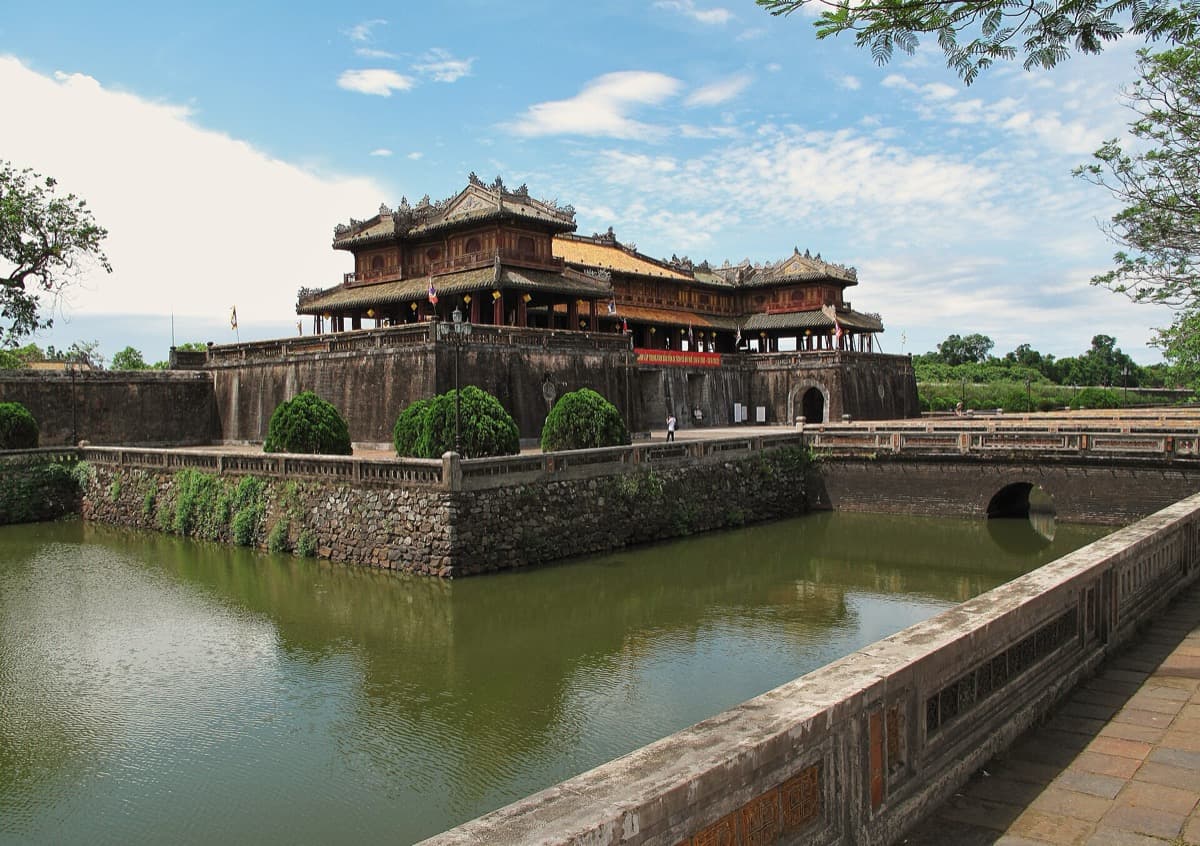
Read the Imperial City of Hue as what it was built to be: a Confucian diagram of the cosmos written in stone, walked inward one enclosure at a time, from the flag tower on the outer rampart to the vanished innermost sanctum.
Start · Flag Tower: The Citadel Faces the River
DirectionsStops
- 1
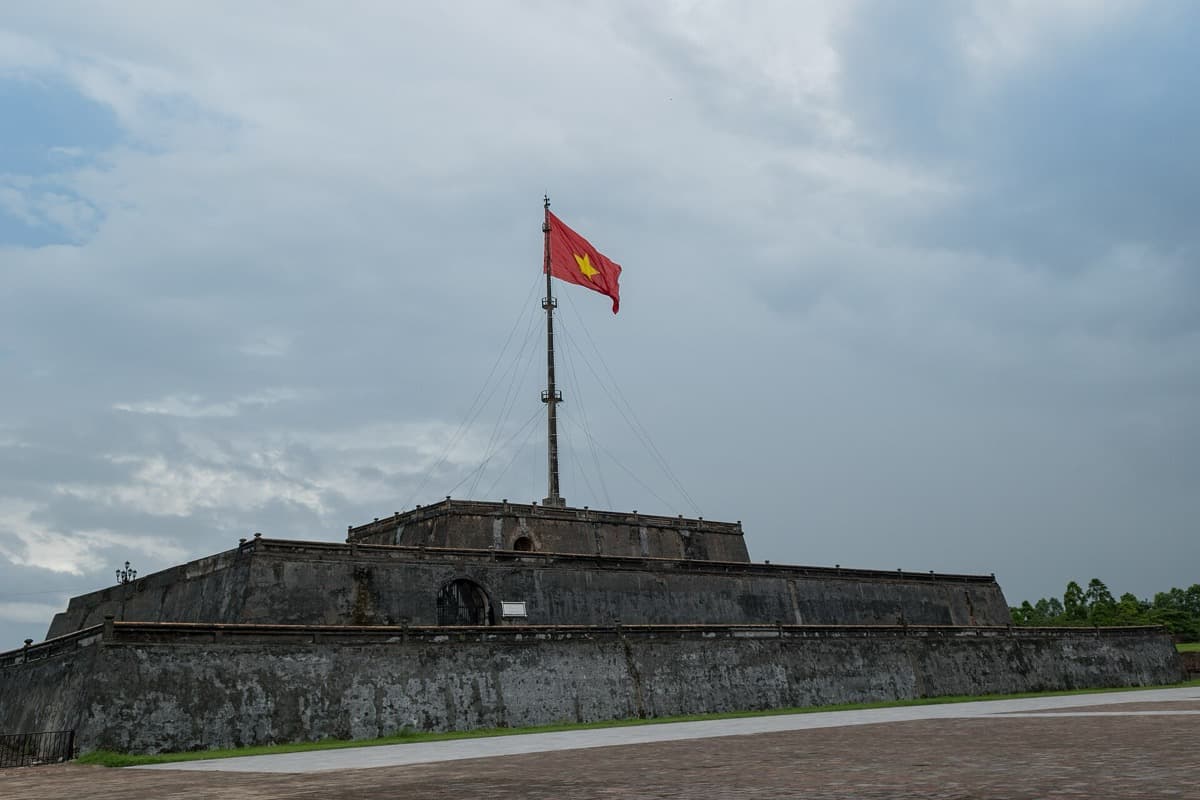
Flag Tower: The Citadel Faces the River
The outermost element of the cosmic diagram, a three-tiered masonry tower where the citadel turns to announce itself to the Perfume River and the country.
- 2
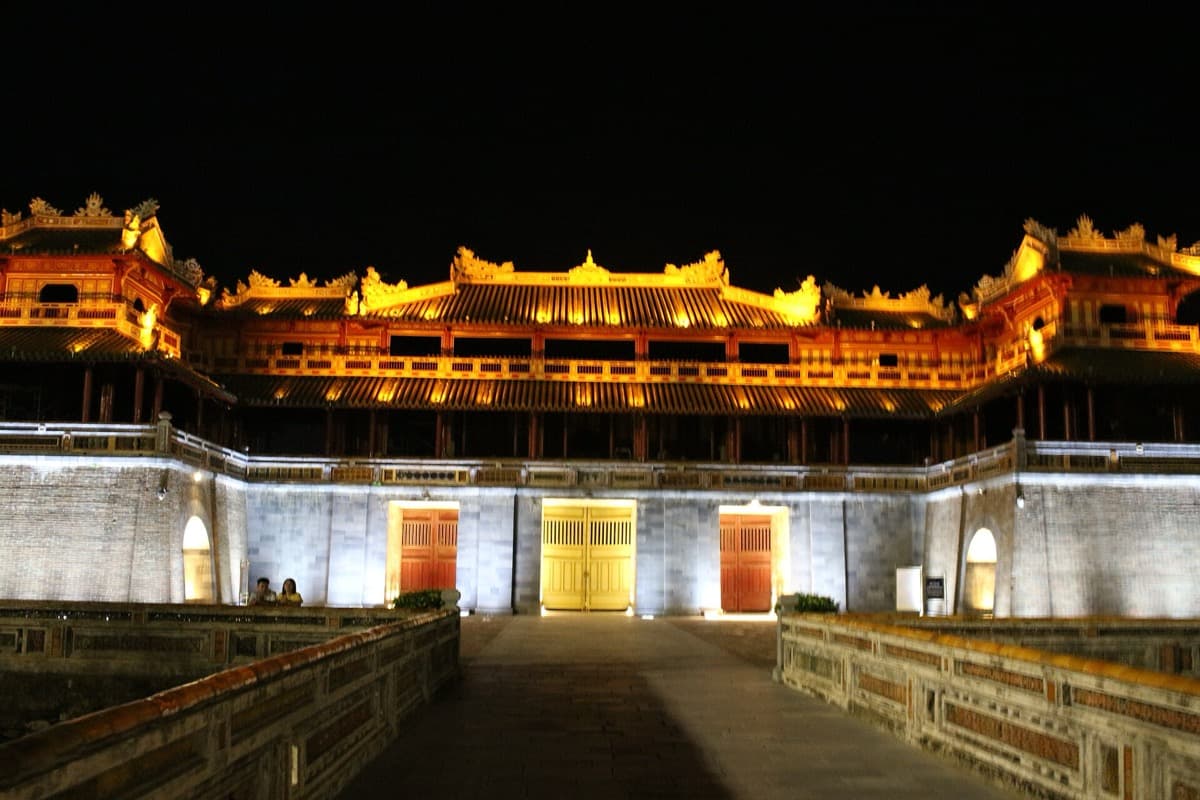
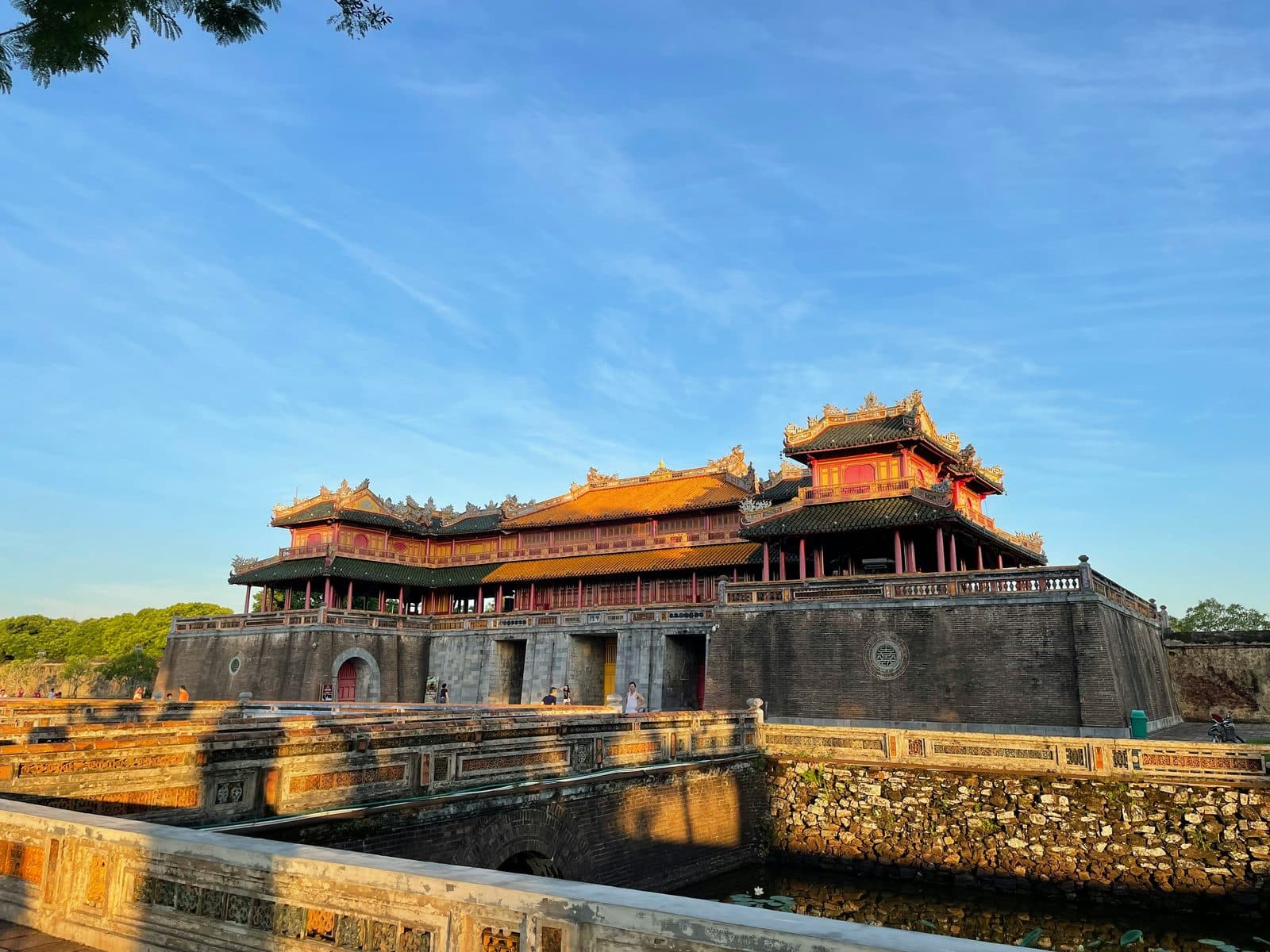
Ngo Mon: The Threshold of the Axis
The principal south gate, crowned by the Five Phoenix Watchtower, whose central passage was reserved for the emperor alone and whose forecourt saw the dynasty's final act.
- 3
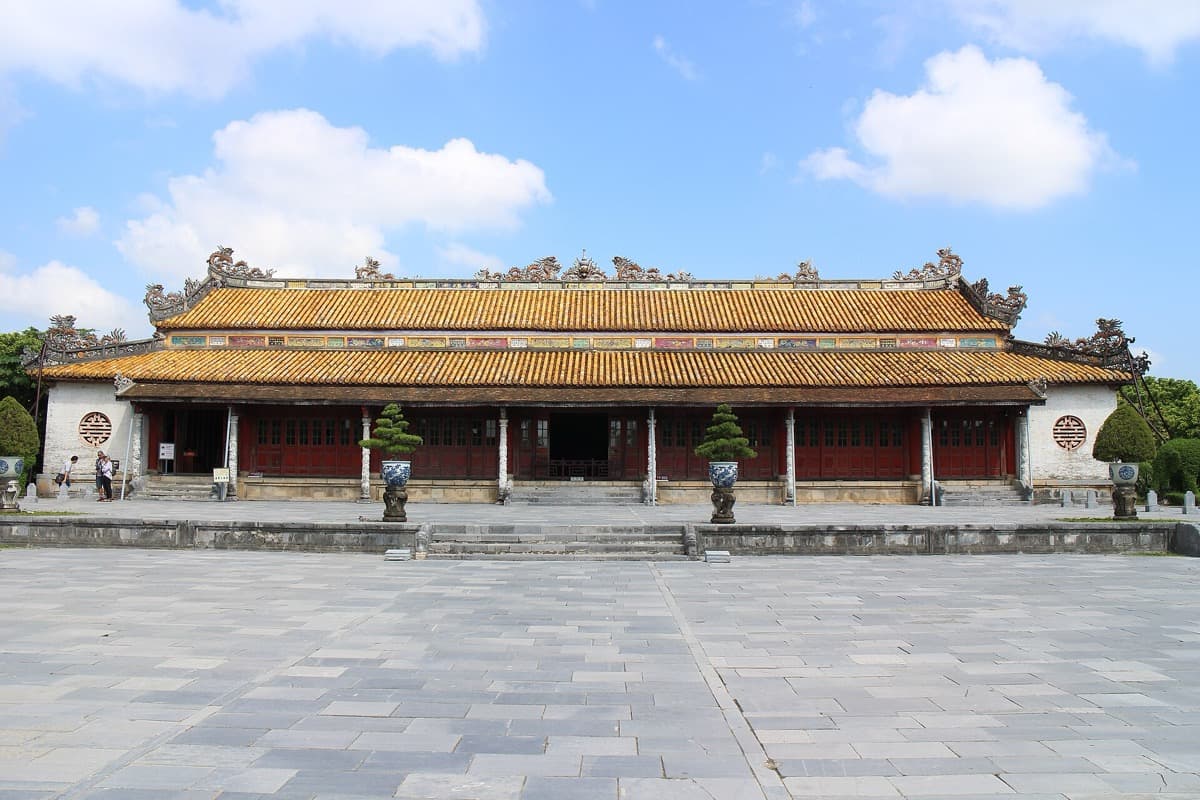
Thai Hoa Palace: The Fixed Center
The throne hall of Supreme Harmony, the fixed heart of the axis, where every one of the thirteen Nguyen emperors was crowned.
- 4
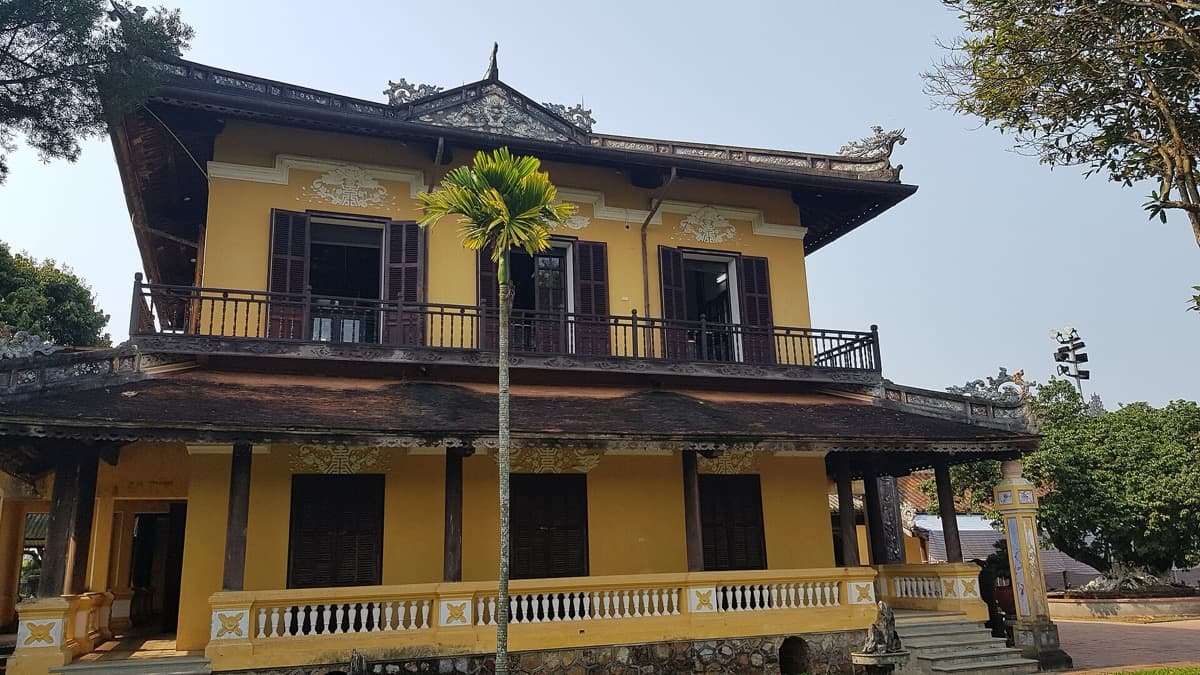
Ta Vu and Huu Vu: The Ranked Court
The Left House and Right House flanking the great courtyard, where the mandarins gathered and took their places by rank before the throne.
- 5
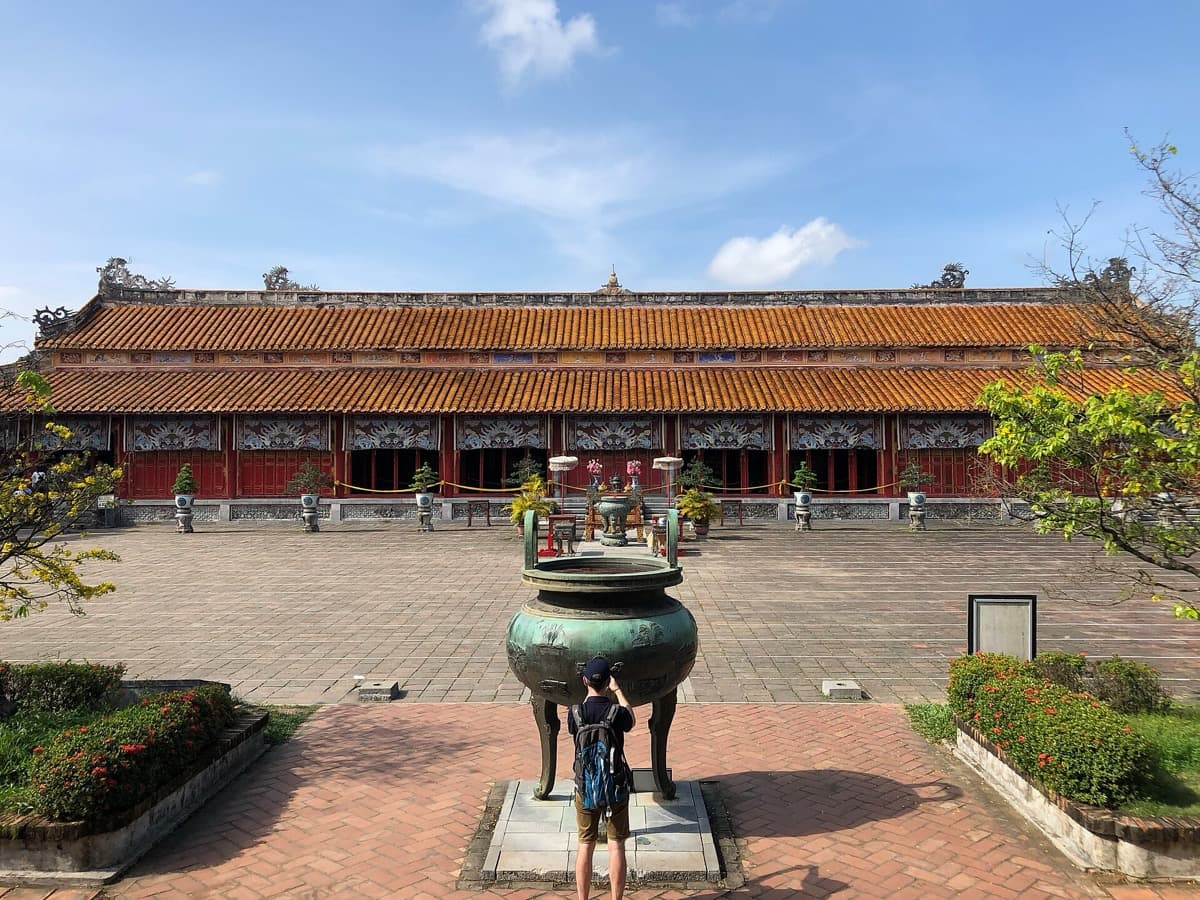
The Mieu: The Temple of the Generations
The dynastic ancestral temple, where the living rulers faced their forebears and legitimacy ran backward through the dead.
- 6
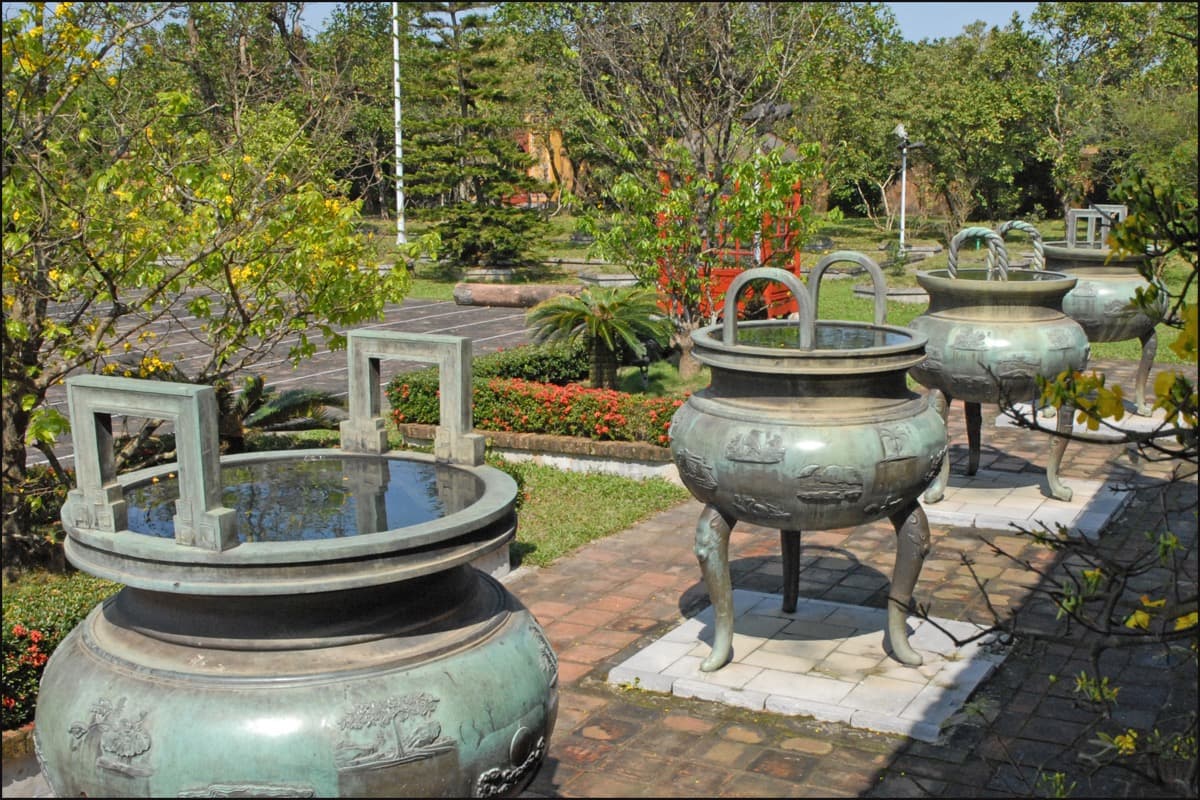
Cuu Dinh: The Nation Cast in Bronze
Nine massive bronze urns before the temple, each carved with the rivers, mountains, and creatures of Vietnam, the dynasty's claim to land and time poured into metal.
- 7
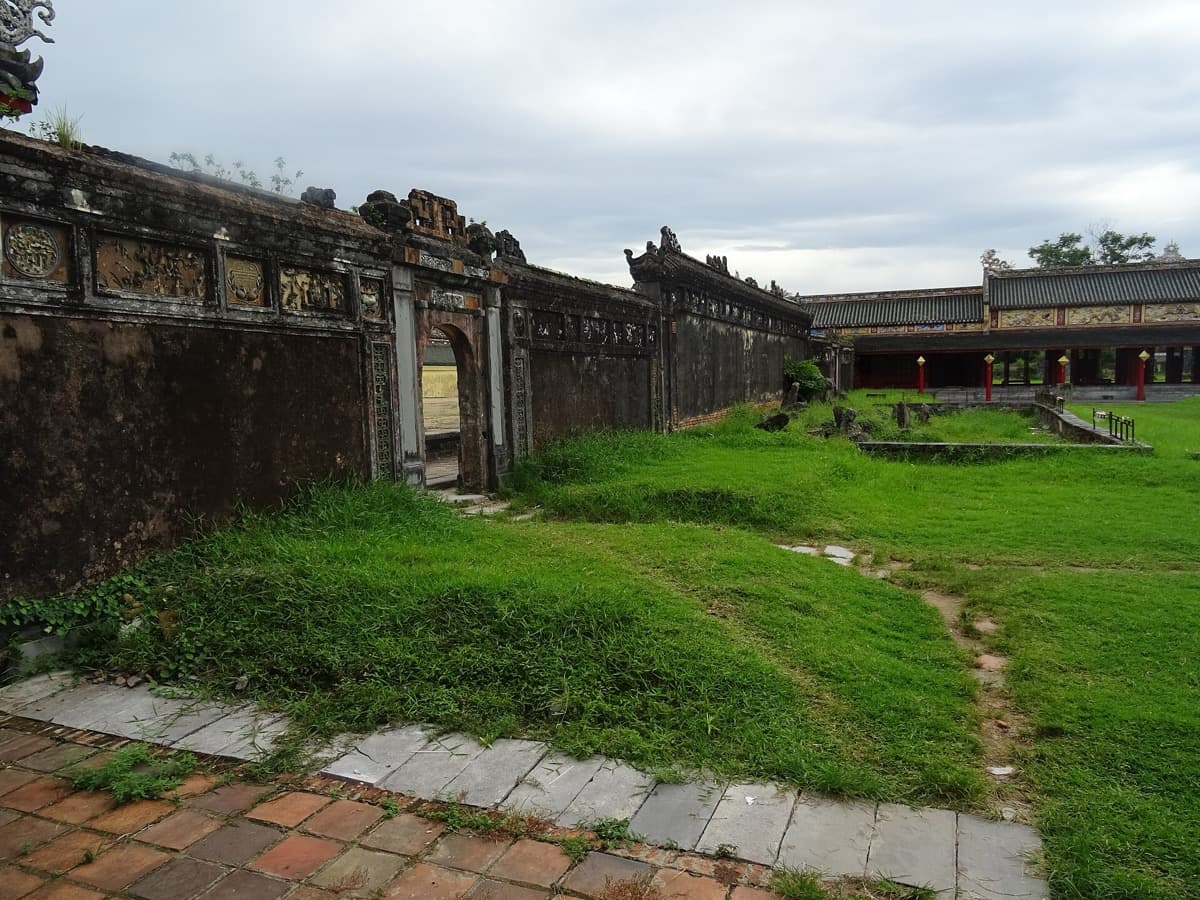
Tu Cam Thanh: The Empty Center
The Forbidden Purple City, the innermost and most private enclosure, once a hidden city of the emperor's household, now largely open foundations after twentieth-century war.
Details
Best Time to Visit
The most comfortable window is the drier stretch from February to April, when the heat is manageable and the courtyards are not waterlogged. Arrive soon after the gates open in the morning: the light is soft on the stone, the wide courtyards are still cool, and the walk to the innermost enclosure is far kinder before midday. Avoid the peak of the rainy season, roughly September through December, when heavy downpours and flooding are common in Hue.
Pro Tips
- •One adult ticket for the Imperial City, or Dai Noi, about two hundred thousand dong as of twenty twenty-five, covers all seven stops. You do not need to buy anything separately once you are inside.
- •Go early. The courtyards between the throne hall, the temple, and the urns are wide and open, and midday sun in Hue is fierce with almost no shade.
- •Walk the axis in order if you can. The tour is built as a line from the outer wall inward, and the cosmic grammar stacks up when you follow it in sequence.
- •Bring water and a hat or a small umbrella. The distances between stops are short, but the open stone courtyards hold and radiate heat.
- •At The Mieu and the Nine Urns, slow right down and read the bronze reliefs; a few unhurried minutes there reward you more than rushing to the next hall.
- •Set your own pace. There is no schedule to keep, so linger where a stop grabs you and move on quickly where it does not.
Safety & Precautions
- •Hue has a long rainy season, roughly September through December, with heavy downpours and periodic flooding. Check the forecast and watch for slick stone underfoot after rain.
- •Sun exposure is real here. The great courtyards offer little shade, so sunscreen, water, and a hat matter even on mild-looking days.
- •These are active ancestral temples and imperial memorial spaces. Dress modestly, keep your voice low inside the halls, and respect any posted limits on photography or roped-off areas.
- •Parts of the site, especially the Forbidden Purple City, are open foundations and uneven ground. Watch your footing and keep children close.
Travel advisory: Exercise Normal Precautions (Level 1).
Gallery
Related Reading
Go deeper on what you'll see, hear, and walk through.
Overview
Best Self-Guided Walking Tours in Hue (2026)
3 min
Overview
How to See Hue: One City, Written Twice and Partly Erased
6 min
Overview
Hue Travel Guide: How Many Days, Getting Around, When to Go (2026)
5 min
Overview
One Day in Hue: The Imperial City in a Single Day (2026)
6 min
Companion
The Cosmos in Stone: How to Read the Imperial City of Hue
6 min
Deep dive
The Nine Dynastic Urns: A Nation Cast in Bronze
7 min
Read the walk
The full story of Imperial City: The Cosmos in Stone, in words. Prefer to listen? Play it narrated, from home or on location.
Introduction
The Imperial City of Hue is not really a set of palaces. It is a single sentence written in stone, a Confucian diagram of the cosmos laid out as three nested walls on a sacred north-south line beside the Perfume River, here in central Vietnam. On this walk you will learn to read that grammar. There are seven stops, and it takes about ninety minutes to cover roughly two and a half kilometres, all of it inside the single Imperial City, which locals call Dai Noi. Emperor Gia Long unified Vietnam in the year eighteen oh-two and made Hue his capital. He and his successor, Minh Mang, built this citadel as a working model of heaven, order, and imperial power, where every gate, courtyard, and throne says something exact about your distance from the Son of Heaven. We move inward, one enclosure at a time. We begin on the outer rampart, where the citadel announces itself to the river and the country. We pass the threshold that only the emperor's axis may cross, reach the fixed throne at the center, read the ranked officials arrayed before it, visit the temple and the bronze urns where the dynasty cast its legitimacy into metal, and end at the innermost, most private enclosure, now mostly empty ground. That absence is not an accident. Much of this text was rewritten by the wars of the twentieth century, and part of reading it is holding the intended meaning and the missing words at once. Go at your own pace. Nothing here needs to be rushed. When you arrive at the Flag Tower on the southern rampart, begin with stop one.
1. Flag Tower: The Citadel Faces the River
You are standing at the southern edge of the citadel, at the Flag Tower, which the Vietnamese call Ky Dai. This is the outermost element of the whole diagram, the citadel turning to face the Perfume River and, beyond it, the country. It was built in the year eighteen hundred and seven, the sixth year of Emperor Gia Long's reign. The base is three stacked masonry tiers rising to roughly seventeen and a half metres, and those three levels are often read as heaven, earth, and humanity, the same layered order the rest of the citadel will spell out in more detail as you walk inward. The flagpole is a lesson in itself. A cast-iron pole was installed here in nineteen hundred and four. Artillery broke it in nineteen forty-seven, and the tall reinforced-concrete pole you see now, about thirty-seven metres, dates only to nineteen forty-eight. So the tower is old, but the pole is not the original. Different flags have flown from this point through the wars of the twentieth century. One moment is fixed in the record: after Japan surrendered at the end of the Second World War, the Viet Minh flag was raised here on the twenty-first of August, nineteen forty-five. Take a moment before you enter. Everything past this wall gets more restricted, more sacred, and more coded. The whole complex, this tower included, was inscribed by UNESCO in nineteen ninety-three as Vietnam's first World Heritage Site. From here, the sentence begins.
2. Ngo Mon: The Threshold of the Axis
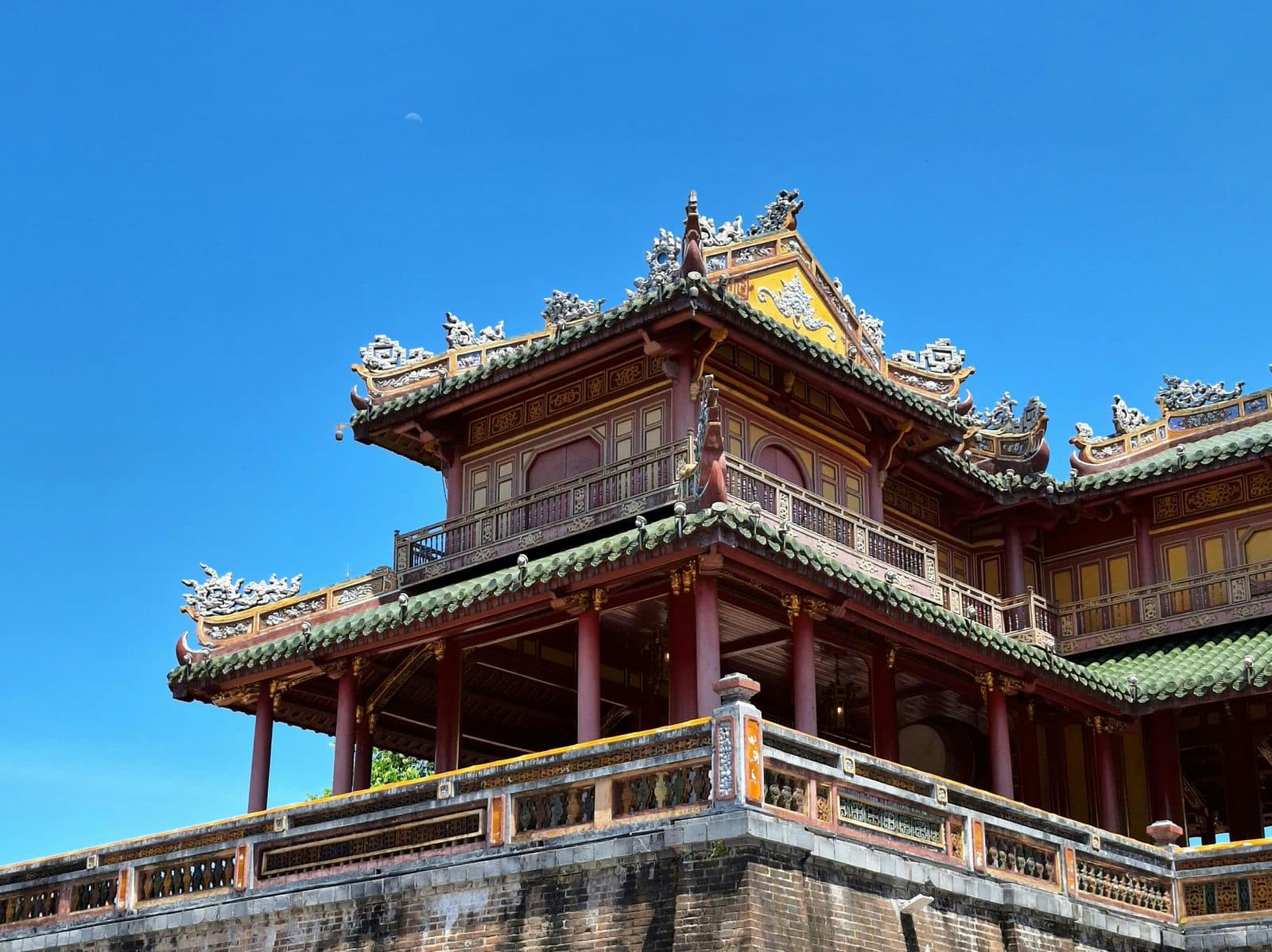
This is the Ngo Mon, the Meridian Gate, the principal southern entrance to the Imperial City. Emperor Minh Mang built it in the year eighteen thirty-three, as part of a larger reorganization of the citadel. Look up and you will see the Five Phoenix Watchtower riding on top of the U-shaped stone platform, its roofs curving over rows of ironwood columns. In the grammar of this place, a gate is never just a way in. It is a statement about who may pass and along which line. The Ngo Mon has several passages, and the central one, aligned with the sacred north-south axis, was reserved for the emperor alone. Officials and soldiers used the side entrances. To walk the middle was to claim the axis of heaven itself, so no one else could. This gate was the stage for the dynasty's great ceremonies, and it was also the stage for the dynasty's end. On the thirtieth of August, nineteen forty-five, Emperor Bao Dai abdicated at a ceremony held outside this gate. He handed the imperial golden seal and sword to representatives of the Viet Minh, and with that the Nguyen monarchy closed after one hundred and forty-three years. Stand where the crowd would have stood and picture it: the last emperor giving up the very axis this gate was built to protect, in the open air, in front of the wall. When you pass through, try to notice which passage you take. Then keep the emperor's line in mind, because the whole interior is built along it.
3. Thai Hoa Palace: The Fixed Center
You have reached the throne hall, the Thai Hoa Palace, the Palace of Supreme Harmony. If the citadel is a sentence, this is its main verb, the point the whole axis is built to reach. Construction began on the twenty-first of February, eighteen oh-five, and finished that October, under Emperor Gia Long. Emperor Minh Mang later rebuilt it and shifted it south to this spot in eighteen thirty-three, making it grander. Step inside and look up. A double roof rests on tall columns of lacquered ironwood, each one painted with dragons winding through clouds, an image reserved for imperial authority. The heritage account describes around eighty of these columns and cloisonne panels carrying close to two hundred short poems, though those counts are best taken as flavor rather than arithmetic. What matters is the throne, raised at the center, facing south down the axis you have been following. This is where the emperor sat for the ceremonies that held the state together: coronations, his birthday, the reception of foreign envoys, and the grand audiences held twice a month. And here is the fact that anchors the room. Every one of the thirteen Nguyen emperors, from Gia Long, who founded the dynasty, to Bao Dai, who ended it, was crowned in this hall. Thirteen reigns began on this exact spot. Stand a moment where the court would have knelt. Everything outside, the gates, the walls, the flag tower, exists to protect and point toward this single fixed center, the place where the dynasty said heaven met the state.
4. Ta Vu and Huu Vu: The Ranked Court
On either side of the great courtyard in front of the throne hall stand two long halls, the Ta Vu and the Huu Vu, the Left House and the Right House. If the throne is the center of the sentence, these are the ranked words arrayed on either side of it. This was the working space…
Full narration for this stop unlocks with the tour.
5. The Mieu: The Temple of the Generations
In the southwest quarter of the Imperial City stands the The To Mieu, usually shortened to The Mieu, the Temple of the Generations. This is the dynastic ancestral temple, and it turns the diagram in a new direction: not out toward the country or up toward heaven, but back toward…
Full narration for this stop unlocks with the tour.
6. Cuu Dinh: The Nation Cast in Bronze
Line up in front of the temple and you will find nine massive bronze urns standing in the courtyard, between the temple and the pavilion called Hien Lam Cac. These are the Cuu Dinh, the Nine Dynastic Urns. Emperor Minh Mang had them cast between late eighteen thirty-five and…
Full narration for this stop unlocks with the tour.
7. Tu Cam Thanh: The Empty Center
You have reached the innermost of the three nested walls, the Tu Cam Thanh, the Forbidden Purple City. Emperor Minh Mang gave it this name in the year eighteen twenty-two. This was the most restricted, most sacred enclosure of all, reserved for the emperor and his household: his…
Full narration for this stop unlocks with the tour.