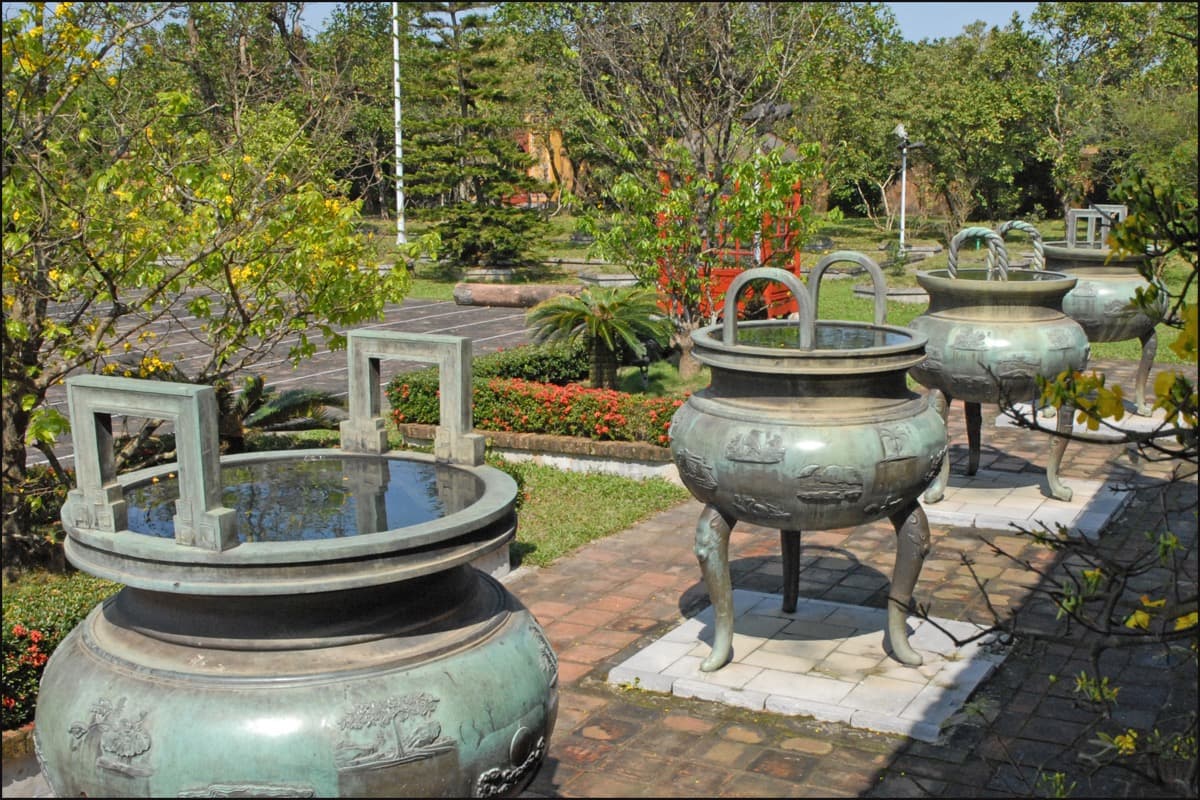
Walk the axis of the Imperial City of Hue inward, past the throne hall and around to the southwest quarter, and you arrive at a courtyard that looks, at first, like a rank of nine large cauldrons on stone bases. They stand in the open ground between the dynastic temple, The Mieu, and the pavilion called Hien Lam Cac. They are the Cuu Dinh, the Nine Dynastic Urns, and they are the single most concentrated object on the whole walk. Everything the citadel spells out across three nested walls, the Nguyen dynasty tried to say again here in bronze, all at once, in nine pieces of metal.
If you have read the citadel as a Confucian sentence, which is how our Imperial Citadel companion reads it, the urns are the moment the sentence tries to become permanent. Gates and courtyards state your distance from the emperor. The urns state the dynasty's claim to the whole country, and they state it in the heaviest, least perishable form the court could commission.
Who made them, and when
Emperor Minh Mang, the second Nguyen ruler and the same emperor who rebuilt much of the citadel along its sacred axis, ordered the urns cast. Work began in late 1835 and the urns were completed and set in place in early 1837. They were cast by the bronze workers of Phuong Duc, a founding village on the edge of Hue whose furnaces served the court. This was not decorative metalwork. It was a state project, commissioned by the throne, executed by the capital's own bronze guild, and installed at the ceremonial heart of the dynasty.
Each urn is heavy in a way that resists the eye. The nine range from roughly eighteen hundred to twenty-six hundred kilograms apiece, and stand between about two and a half and two and three-tenths metres tall. To move one is a small engineering problem. To cast nine, each unique, was a demonstration of what the dynasty could marshal.
Nine urns, nine emperors
Hear a stop from this walk
Tu Cam Thanh: The Empty Center
The number nine is not casual. Each of the nine urns is dedicated to a Nguyen emperor. The largest, set at the center and slightly forward of the others, is the Cao Dinh, and it belongs to Gia Long, the dynasty's founder, the emperor who unified Vietnam in 1802 and made Hue his capital. The remaining eight fan out to either side, each carrying the name and the memory of a successor.
Read that arrangement against the temple behind them. Inside The Mieu, the living rulers faced the altars of their ancestors and renewed the dynasty's claim to legitimacy by remembering exactly whom it descended from. The urns move that same logic outdoors and cast it in metal. The temple keeps the ancestors. The urns give each one a bronze body in the courtyard, ranked and permanent, facing the same axis the whole citadel is built along.
The encyclopedia on the surface
The reason to slow down at the urns is the surface. Walk close and you find them covered in raised relief, cast directly into the bronze: rivers, mountain ranges, the Eastern Sea, boats, weapons, birds, animals, and plants. Across all nine urns there are 162 of these engraved images. They are not ornament in the loose sense. They are a deliberate inventory of the country: its geography, its waters, its flora and its fauna, gathered and fixed in metal at the center of the capital.
Vietnam's heritage scholars describe the set as a picture encyclopedia, and the phrase is fair. The 162 reliefs range from the great rivers and the coastline to native plants and creatures, a survey of the land the dynasty claimed to hold. This is what makes the urns more than beautiful objects. They are a document. The Nguyen court took its idea of Vietnam, from the mountains in the north to the southern sea, and pressed it permanently into nine bronzes so that the claim could not be edited or forgotten.
That documentary character is exactly why the international recognition, when it came, was of a particular kind.
Why UNESCO listed them
The Cuu Dinh have two layers of recognition, and it helps to keep them straight. The whole citadel, the urns included, belongs to the Complex of Hue Monuments, which became Vietnam's first UNESCO World Heritage Site in 1993, a listing about the site as a place.
The urns then earned a second, different honor about the urns as a record. On May 8, 2024, at the tenth plenary meeting of the Memory of the World Committee for Asia and the Pacific, held in Mongolia, the bas-reliefs of the Nine Dynastic Urns were inscribed on the region's Memory of the World register. The vote was unanimous among the twenty-three participating member states. Memory of the World is UNESCO's program for documentary heritage, the archives and inscriptions that carry a society's memory, and the urns qualified because their 162 engraved images function as a cast record of nineteenth-century Vietnam's geography and natural world. Vietnam had already named the urns a national treasure in 2012. The 2024 inscription placed them on the international register, twelve years later.
So the urns are recognized twice, for two different things: once as part of a heritage site, and once as a documentary object in their own right.
The objects that kept the promise
Here is the fact that gives the urns their quiet weight, and it only lands if you have walked the rest of the citadel first. The Imperial City was built to freeze the universe in place. Its most sacred enclosure, the Forbidden Purple City just north of here, was designed to last forever and is now largely open ground: its core burned in fighting in February 1947, and this whole quarter of Hue became a central battlefield again in 1968, during the Battle of Hue in the Tet Offensive. Across the entire Imperial City, of roughly one hundred and sixty buildings, only about ten major structures survived the wars of the twentieth century.
The urns stood through all of it. They sat in this courtyard while the buildings around them burned and were shelled and, in most cases, disappeared. Bronze does not burn the way lacquered timber does, and the nine urns are heavy enough, and few enough, that they were never carried off. The dynasty built palaces to be permanent and lost them. It cast nine urns to be permanent and kept them. Of everything on the citadel walk built to outlast time, the Cuu Dinh are the objects that came closest to keeping that promise.
That is the thing to hold as you stand here. You are looking at the dynasty's most literal bid for permanence, and, almost alone in the citadel, at the bid that worked.
How to see them
The urns are stop six on our Imperial Citadel walk, and reaching them in sequence, after the throne hall and The Mieu, is the way the arrangement makes sense. One adult ticket for the Imperial City, Dai Noi, covers the whole complex, urns included, so there is nothing extra to buy once you are inside.
Give the urns real time. Do not just note that there are nine of them and move on. Walk slowly around the set, pick one urn, and read its surface: find a river, a mountain, a boat, an animal. You are reading a 162-image portrait of a country, cast almost two centuries ago and, unlike most of what surrounds it, still exactly where it was put. The rest of the citadel tells you what the dynasty wanted to be. The urns are the part of that wish that survived.
And when you have read the emperors' bronzes, remember that the capital they ruled did not run on ceremony alone. One canal-crossing east of these walls lay the working merchant city that actually supplied the court, the quarter our Gia Hoi and Dong Ba companion walks, and if you are planning your days in the city, our How to See Hue overview sets all three Hues side by side.
Ready to experience it?
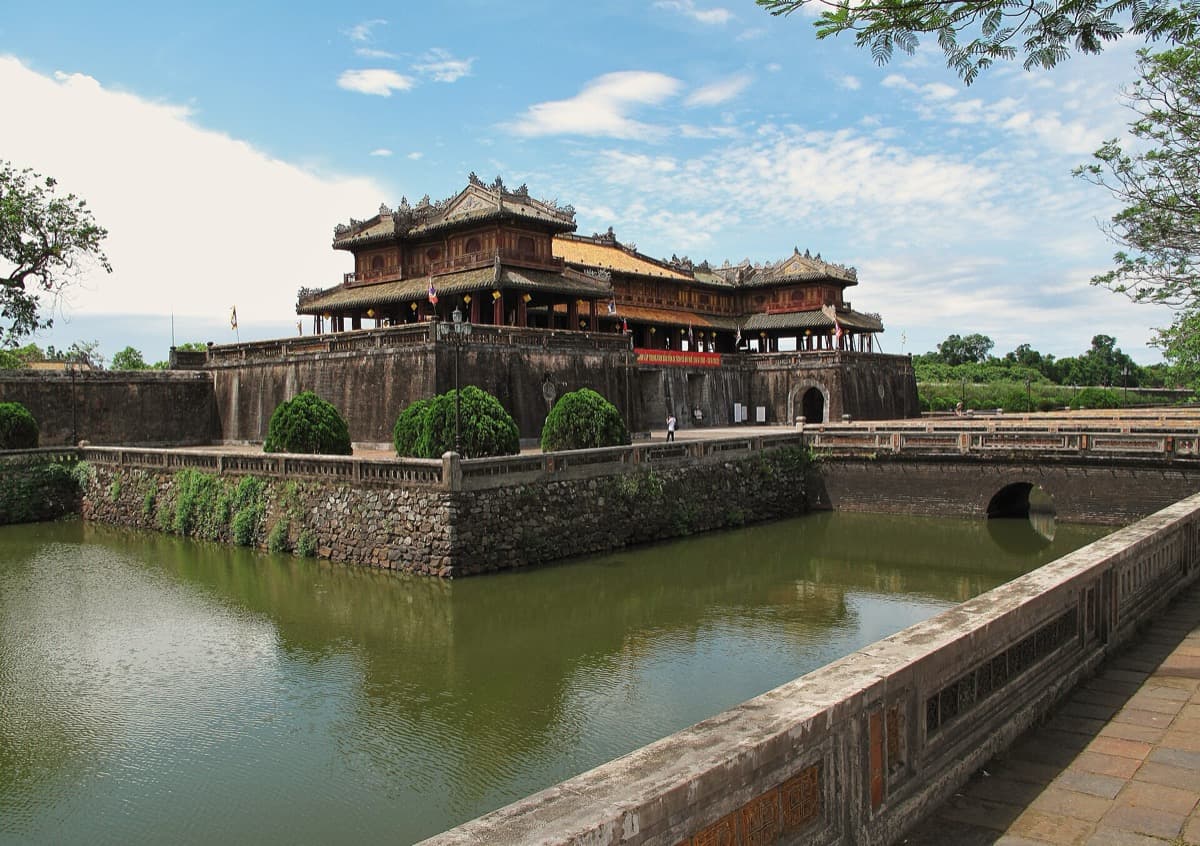
Imperial City: The Cosmos in Stone
95 min · 2.6 km · moderate
More from Hue
Explore more at your own pace.
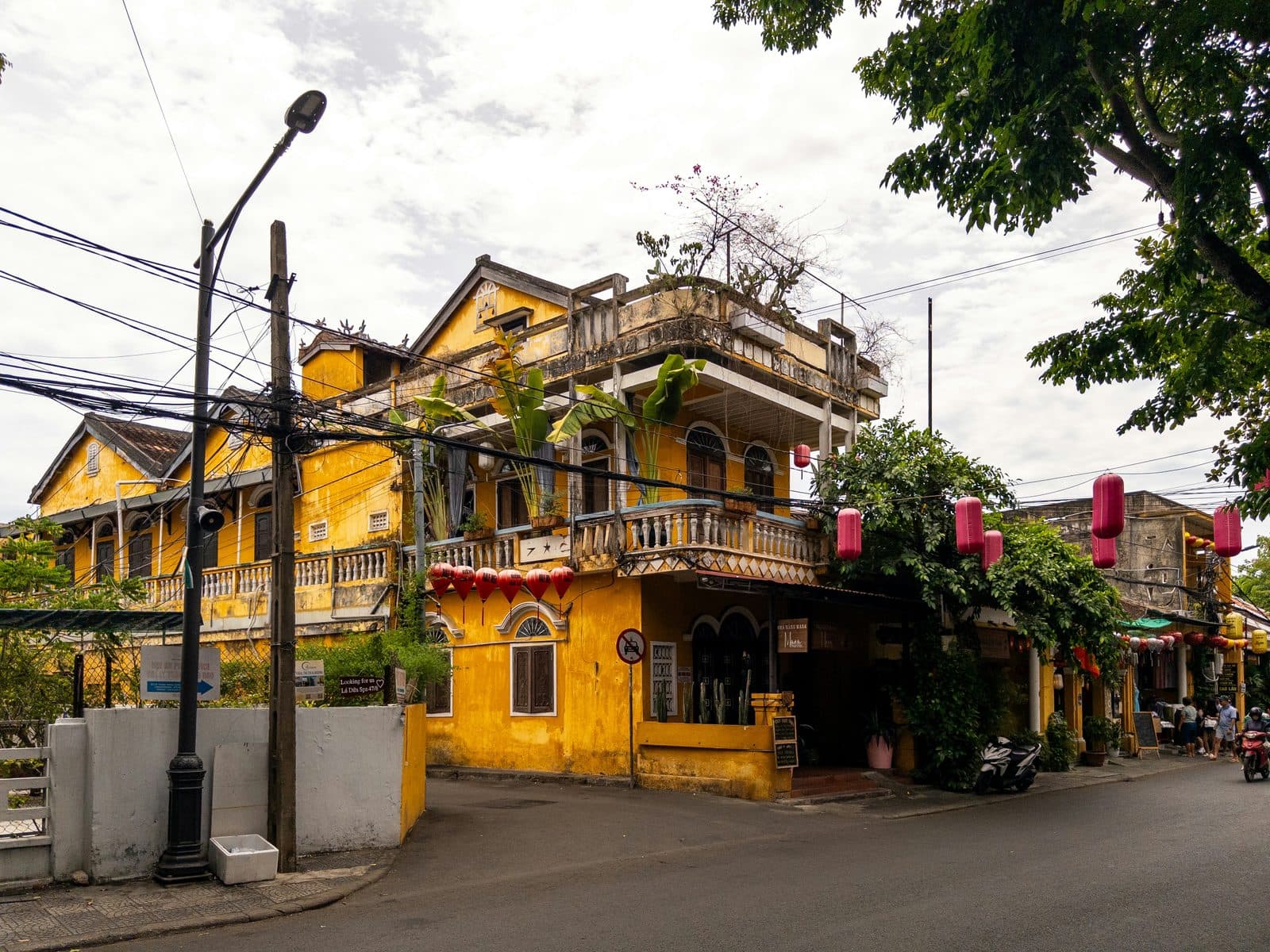
How to See Hue: One City, Written Twice and Partly Erased
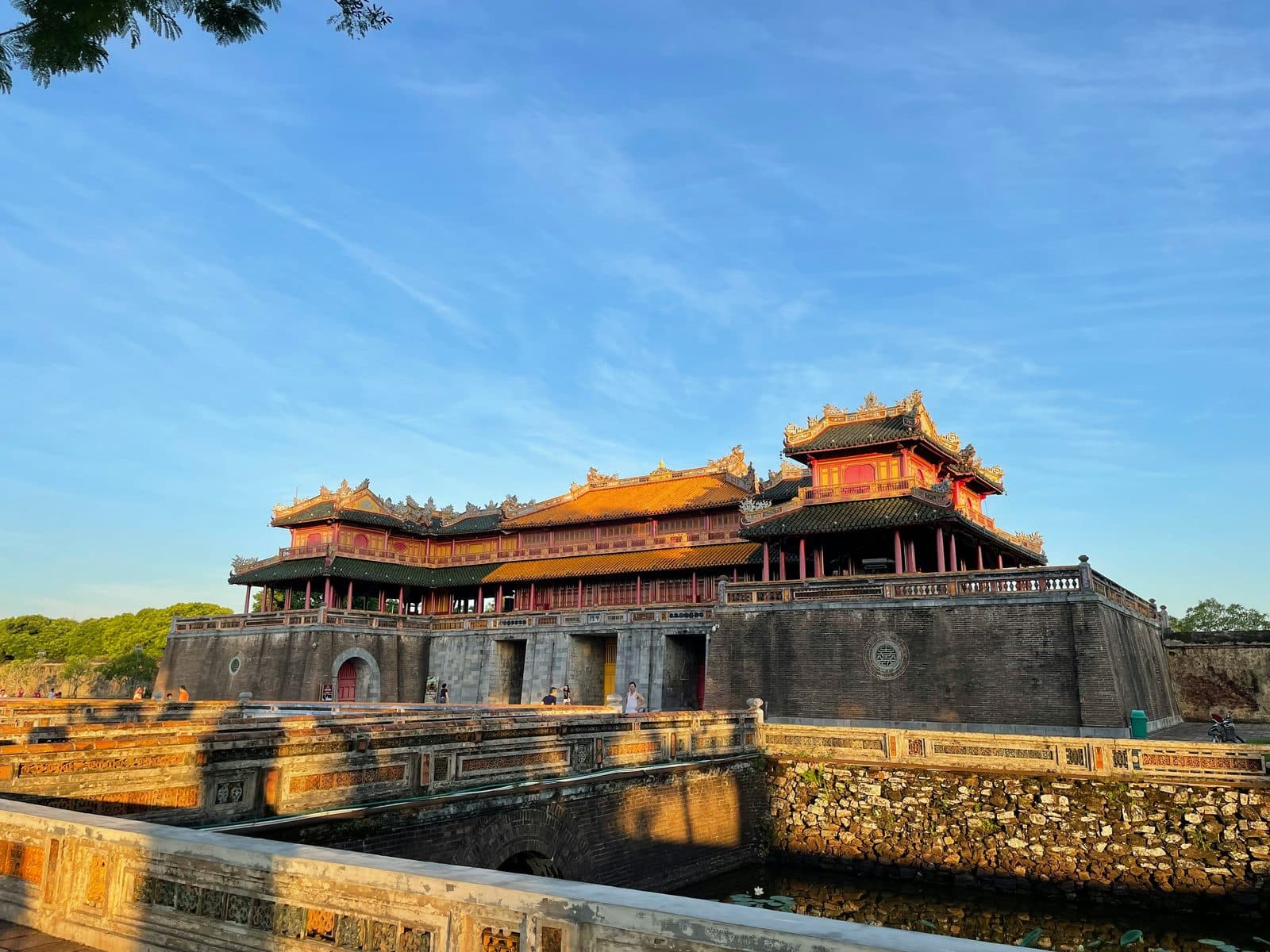
Hue Travel Guide: How Many Days, Getting Around, When to Go (2026)
One Day in Hue: The Imperial City in a Single Day (2026)
What to Eat in Hue: A Food Guide (2026)
Behind the Palace: The Working City That Kept Hue's Emperors Alive