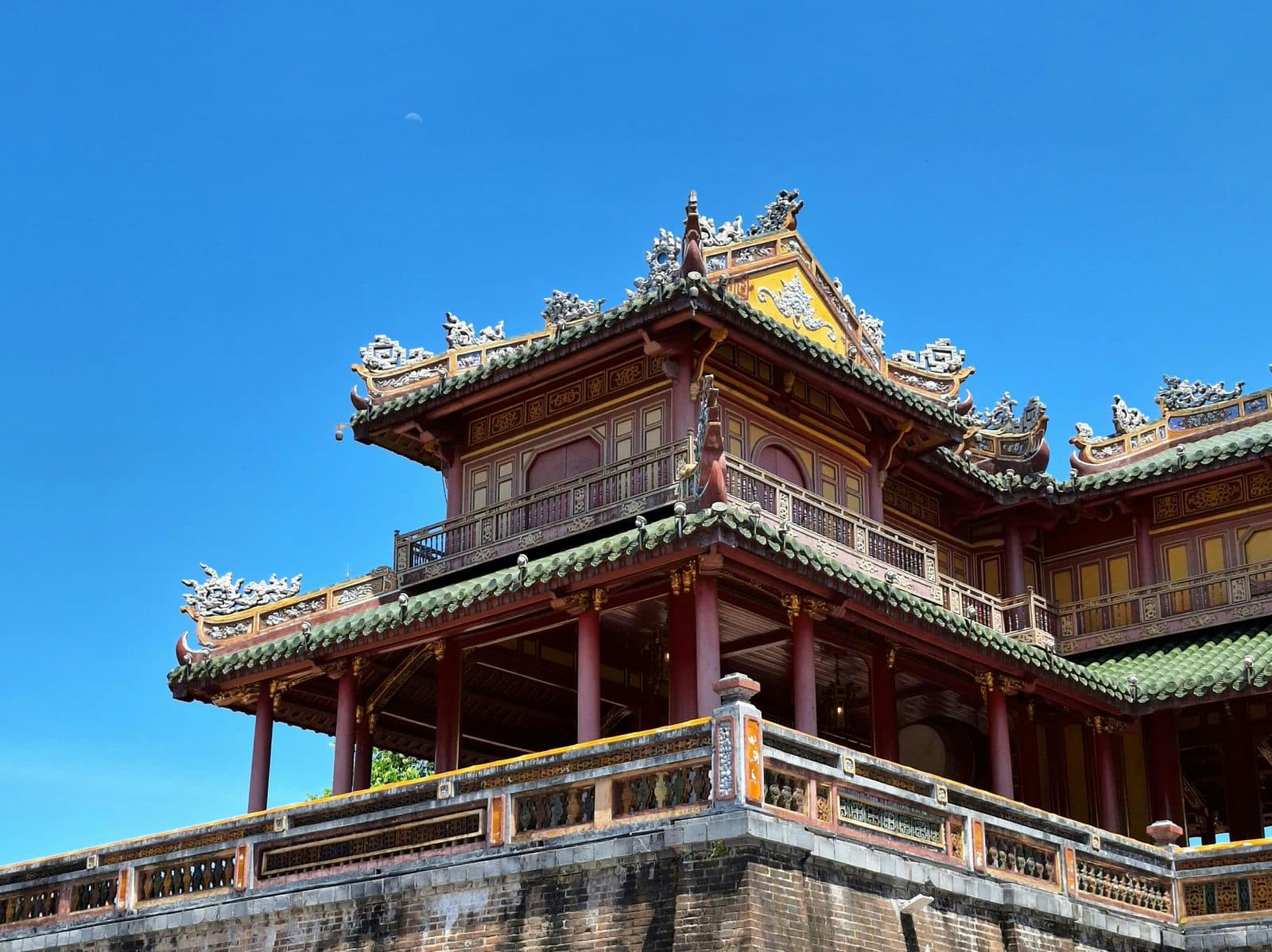
Most visitors walk the Imperial City of Hue as if it were a collection of pretty buildings connected by wide courtyards. That is the wrong grammar. The citadel is not a collection of anything. It is a single sentence, written in stone, and if you learn to read it as a sentence, the whole place snaps into focus.
Emperor Gia Long unified Vietnam in 1802 and made Hue his capital. He and his successor Minh Mang laid out the Imperial City, which locals call Dai Noi, as a Confucian diagram of the cosmos: three nested walls on a sacred north-south axis, running back from the Perfume River. Every gate, courtyard, and threshold states something exact about your distance from the emperor, the Son of Heaven at the fixed center. You do not wander this diagram. You read it, inward, one enclosure at a time. That is the whole design of the walk, and it is why doing the stops out of order flattens them into scenery.
The sentence, read inward
The sentence opens on the outer rampart, at the Flag Tower the Vietnamese call Ky Dai. Built in 1807, its base is three stacked masonry tiers often read as heaven, earth, and humanity, the same layered order the rest of the citadel spells out in more detail. This is the citadel turning to face the river and the country. Even here the text has been edited by history: the tall concrete flagpole you see dates only to 1948, after artillery broke the earlier cast-iron pole the year before.
The first real threshold is the Ngo Mon, the Meridian Gate, which Minh Mang built in 1833 and crowned with the Five Phoenix Watchtower. In the grammar of this place, a gate is never just a way in. It is a statement about who may pass and along which line. The central passage, aligned with the sacred axis, was reserved for the emperor alone. To walk the middle was to claim the axis of heaven, so no one else could. Keep the emperor's line in your mind's eye, because the entire interior is built along it.
Pass through and the axis carries you to the main verb of the sentence: the Thai Hoa Palace, the Palace of Supreme Harmony. This is the fixed center the whole diagram is built to reach. Construction began in 1805 under Gia Long; Minh Mang rebuilt it and shifted it south to this spot in 1833. Here is the fact that anchors the room. Every one of the thirteen Nguyen emperors, from founder Gia Long to Bao Dai who ended the dynasty, was crowned in this single hall. Thirteen reigns began on this exact spot. The throne sits at the center, facing south down the axis you have been following, under a double roof carried on lacquered ironwood columns painted with dragons winding through clouds.
The rest of the sentence arranges people and legitimacy around that center. Flanking the great courtyard stand the Ta Vu and Huu Vu, the Left House and Right House, where the civil and military mandarins gathered and then filed out to take their places by rank. Stone markers once showed exactly where each grade belonged. Where you stood was who you were. The cosmos of this place was not only heaven and earth. It was also a diagram of people, ranked and pointed at the throne.
Then the diagram turns backward, toward time. In the southwest quarter, the The To Mieu, or The Mieu, is the dynastic ancestral temple, raised by Minh Mang in 1821. Here the living rulers faced their ancestors and renewed the dynasty's claim to legitimacy by remembering exactly whom it descended from. The altars kept score. From 1822 until 1958 only seven emperors were honored in the main hall; in 1959, three more altars were added for Ham Nghi, Thanh Thai, and Duy Tan, rulers who had resisted or been deposed under French colonial rule. Their late arrival is its own quiet sentence about who counts, and when.
In the courtyard before the temple stand nine massive bronze urns, the Cuu Dinh, cast between 1835 and 1837, each tied to a Nguyen emperor and covered in reliefs of the country's rivers, mountains, seas, and creatures. They are the dynasty's claim to the land and to time, poured into some of the heaviest and most permanent objects it could make. They are also, as it turns out, the objects that came closest to keeping the citadel's promise of permanence, and they deserve a closer look on their own, which our deep-dive on the Nine Dynastic Urns gives them.
The last word, mostly erased
Hear a stop from this walk
Tu Cam Thanh: The Empty Center
The sentence ends at the innermost of the three nested walls, the Tu Cam Thanh, the Forbidden Purple City, which Minh Mang named in 1822. This was the most restricted and most sacred enclosure of all, reserved for the emperor and his household. Once, more than a hundred buildings stood here: residences, a private audience hall, libraries, theaters, a whole hidden city behind the public one.
Look around now and you find open ground and low foundations, grass where rooms used to be. The core here was burned in fighting in February 1947, and this exact ground became a central battlefield again in 1968, during the Battle of Hue in the Tet Offensive, the subject of Mark Bowden's detailed 2017 account of the fighting. Across the entire Imperial City, of roughly one hundred and sixty buildings, only around ten major structures survived. The rest, most of all here in the innermost enclosure, are gone.
This is what makes the citadel more than a beautiful ruin. It was designed to freeze the universe in place, a cosmos that could never change. And yet its most sacred center is now the emptiest part of it. Reading this place honestly means holding both things at once: the diagram's claim to last forever, and the visible cost of the history that ran through it. The restoration work you will notice around Thai Hoa Palace is the state slowly re-inking the sentence, hall by hall. The empty ground of the Forbidden Purple City is the part it has chosen, for now, to leave as it is.
Reading it well
Go at opening time, walk the axis in order, and let the enclosures do their work in sequence. One adult ticket for Dai Noi, around two hundred thousand dong, covers all of it. Slow right down at The Mieu and the urns, where a few unhurried minutes reward you more than rushing to the next hall.
And when you finish, remember that this diagram was only ever half of Hue. The court staged power here, on the north bank, but the capital could not run without the market and the merchant quarter one canal-crossing east, the working city our Gia Hoi and Dong Ba companion walks. The citadel is the sentence. The rest of the city is everything that had to be true for the sentence to be spoken at all.
Ready to experience it?
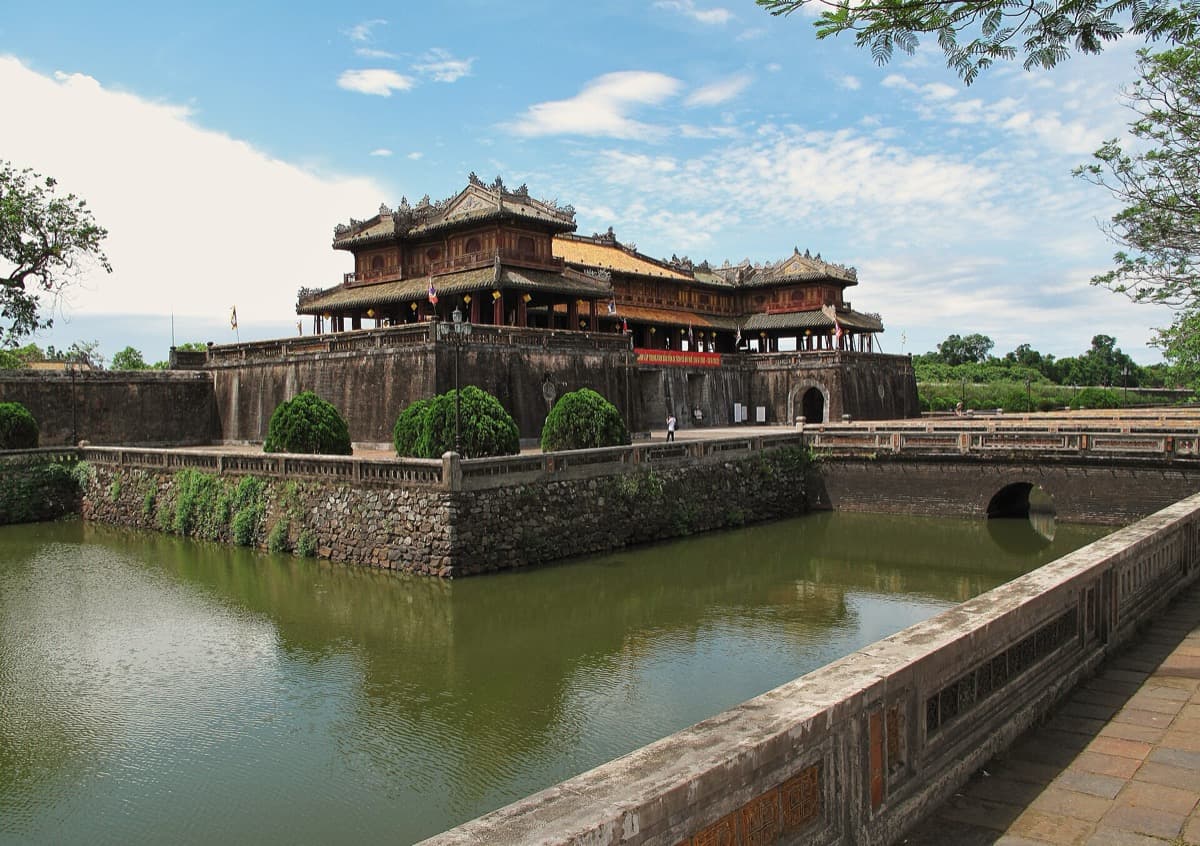
Imperial City: The Cosmos in Stone
95 min · 2.6 km · moderate
More from Hue
Explore more at your own pace.
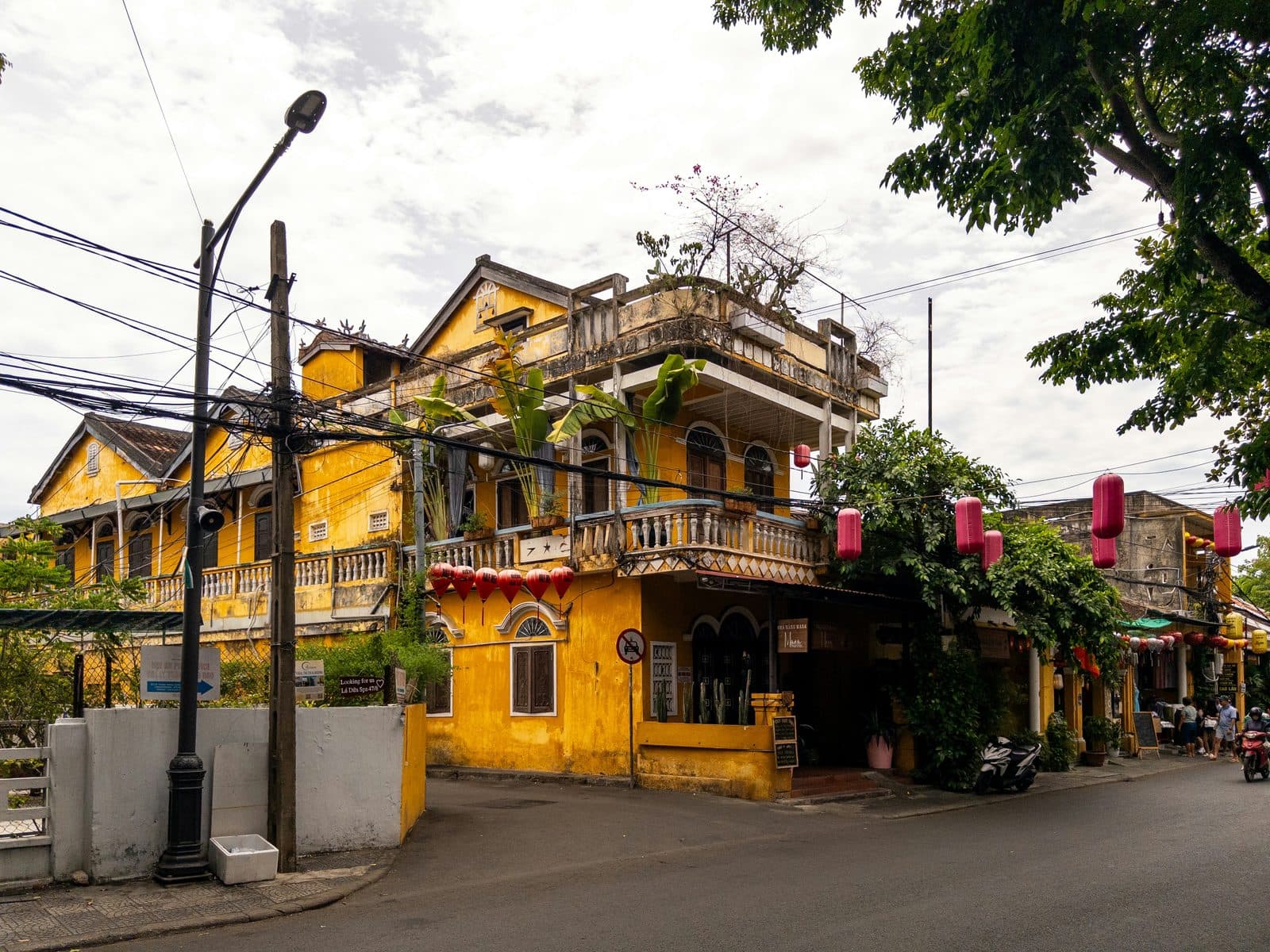
How to See Hue: One City, Written Twice and Partly Erased
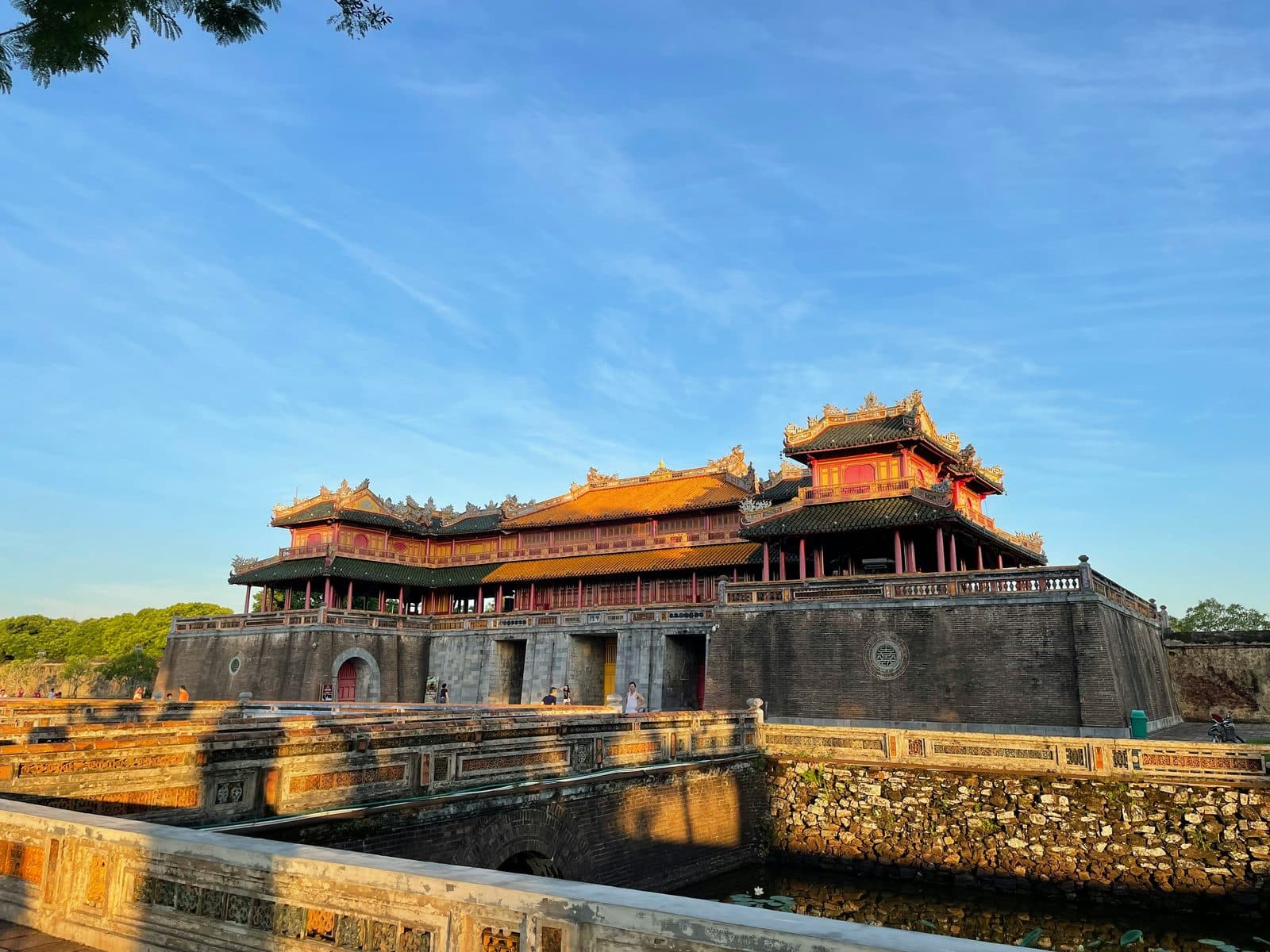
Hue Travel Guide: How Many Days, Getting Around, When to Go (2026)
One Day in Hue: The Imperial City in a Single Day (2026)
What to Eat in Hue: A Food Guide (2026)
Behind the Palace: The Working City That Kept Hue's Emperors Alive