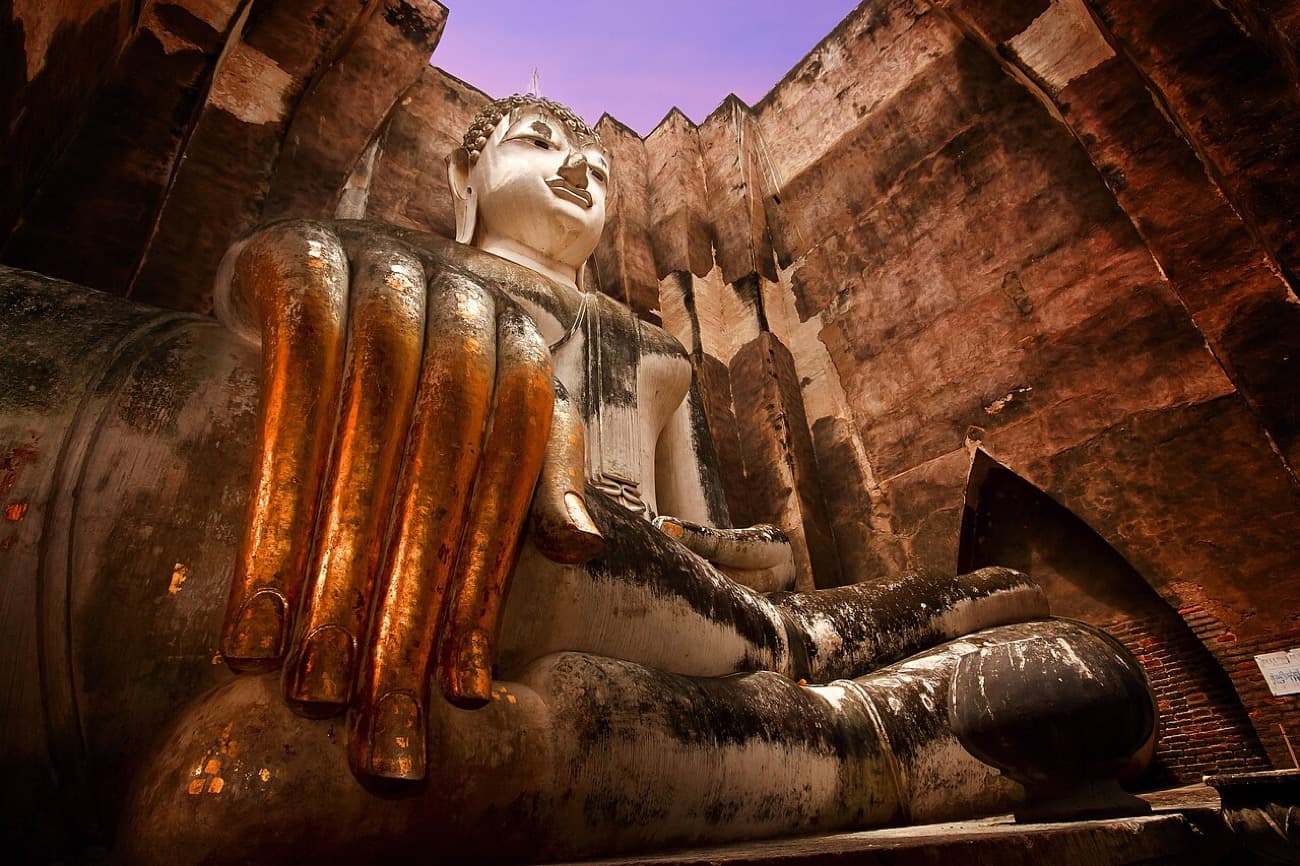
A walk through the quiet northern temples of old Sukhothai, ending before a fifteen metre Buddha that pilgrims once believed could speak. Old Khmer ground gives way to the serene grammar the Sukhothai artists invented.
Start · San Ta Pha Daeng: The Oldest Stone
DirectionsStops
- 1
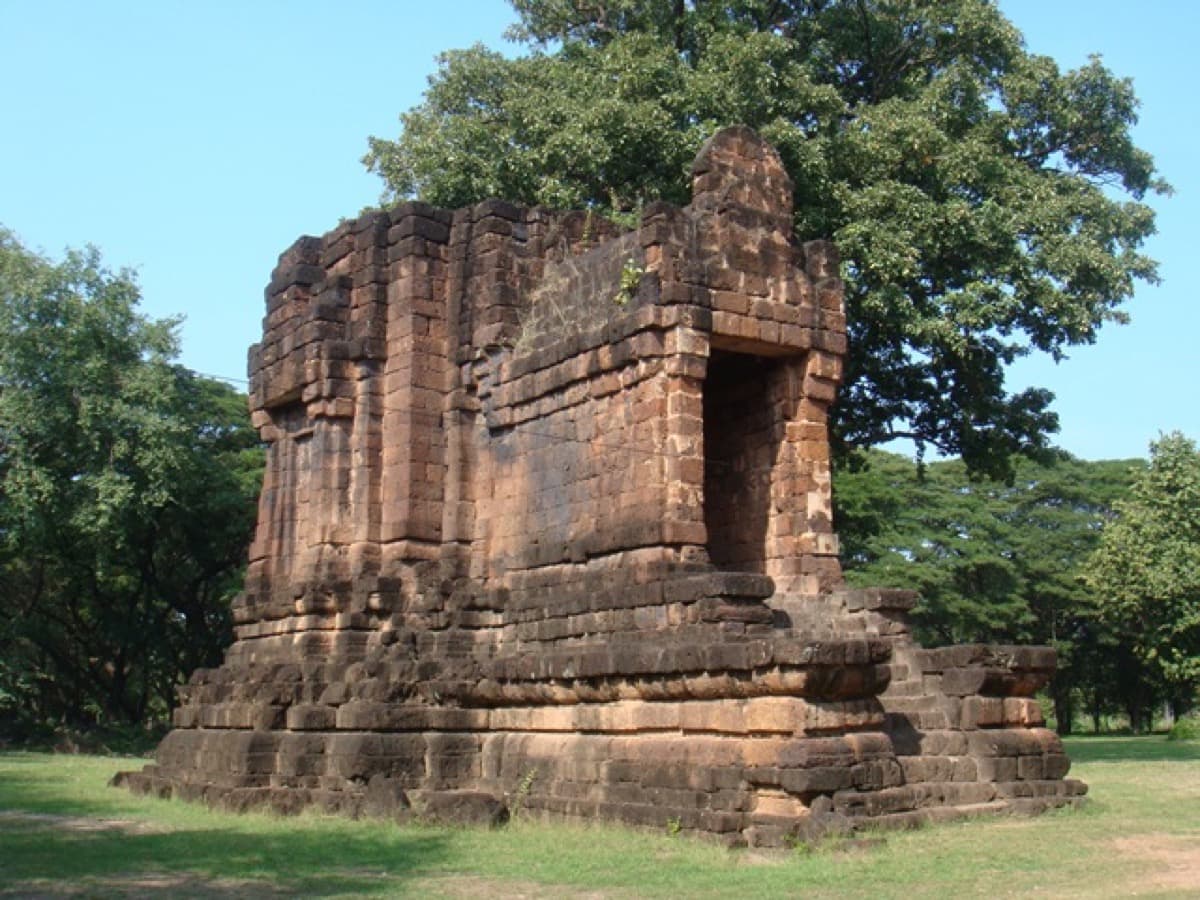
San Ta Pha Daeng: The Oldest Stone
A single laterite Khmer tower, the oldest surviving monument at Sukhothai, standing from before the Thai kingdom existed.
- 2
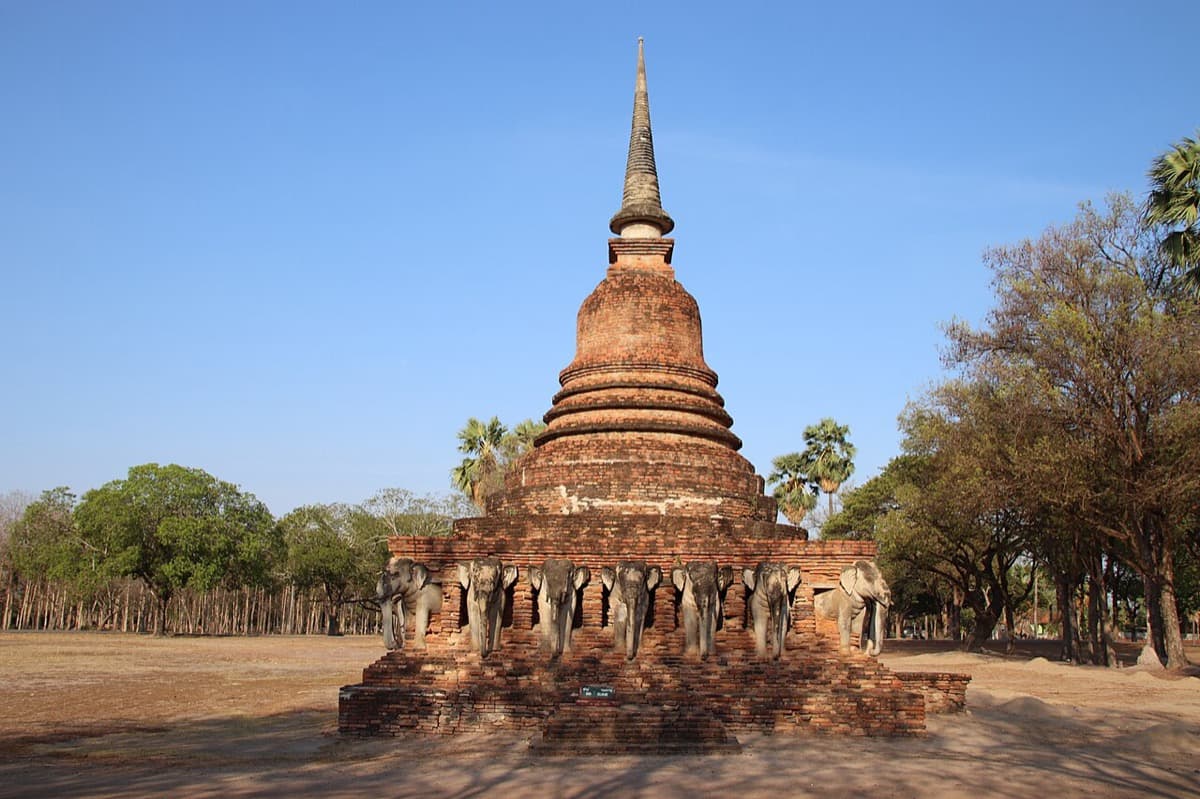
Wat Sorasak: The Elephants That Carry the Sky
A bell shaped chedi ringed by twenty four stucco elephants, dated to the year fourteen twelve by a stone inscription.
- 3
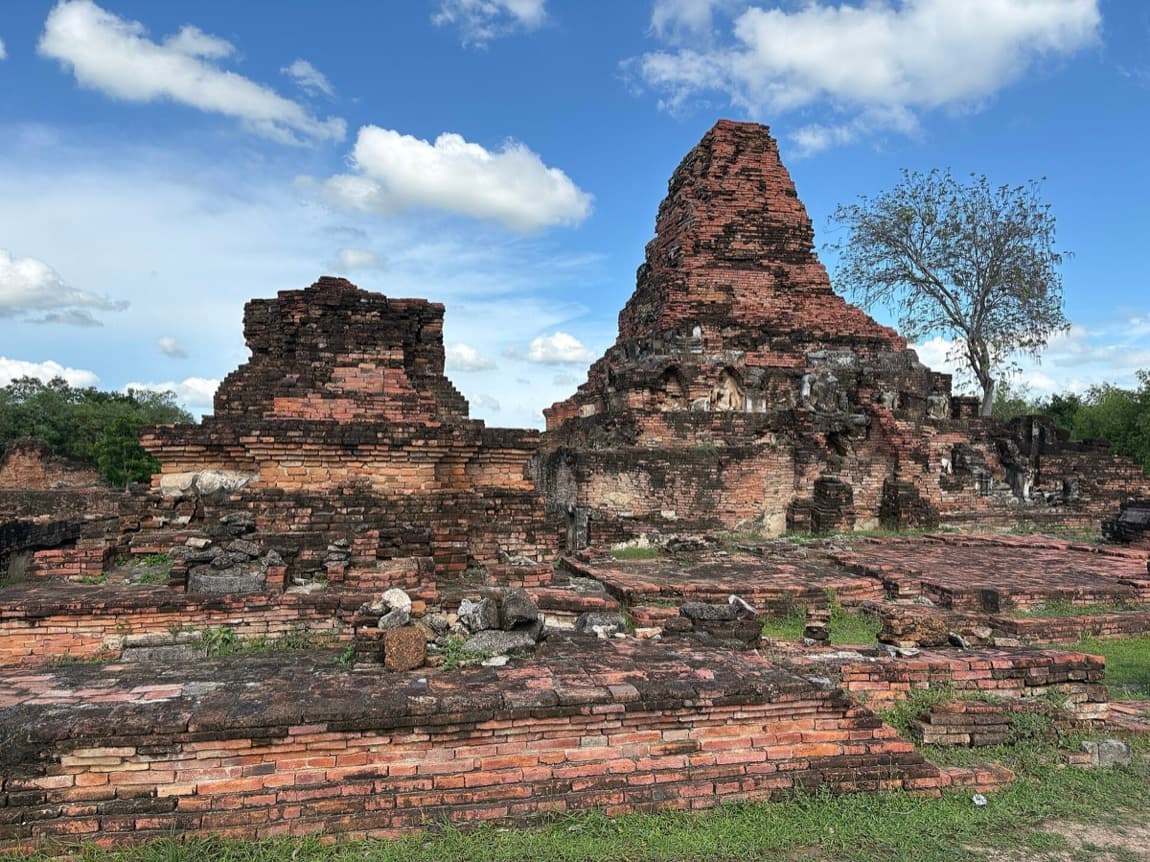
Wat Phra Phai Luang: The Three Towers Before the City
A Khmer complex of three laterite prangs, thought to be the original ritual centre of the settlement before the Thai kingdom.
- 4
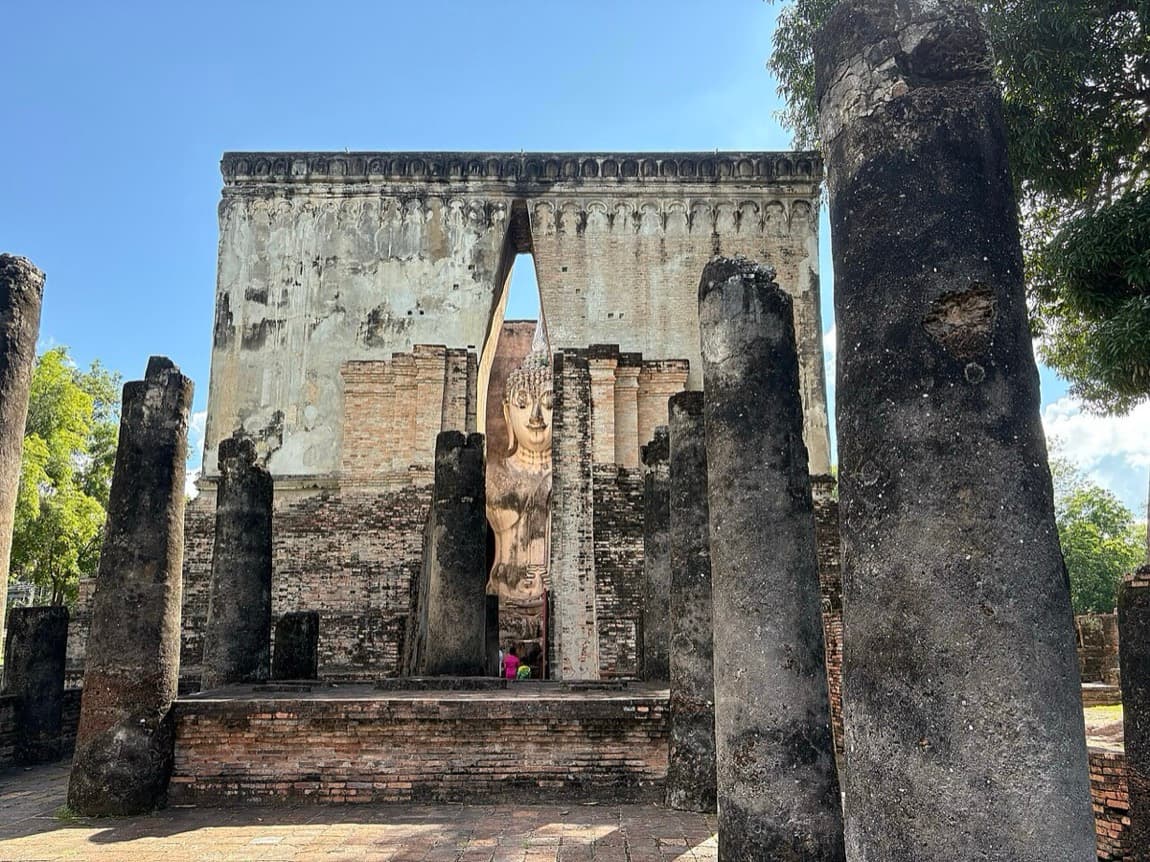
Wat Si Chum: He Who Is Not Frightened
The climactic reveal: Phra Achana, a seated Buddha almost fifteen metres high, glimpsed through a tall slot in a roofless brick chamber.
- 5
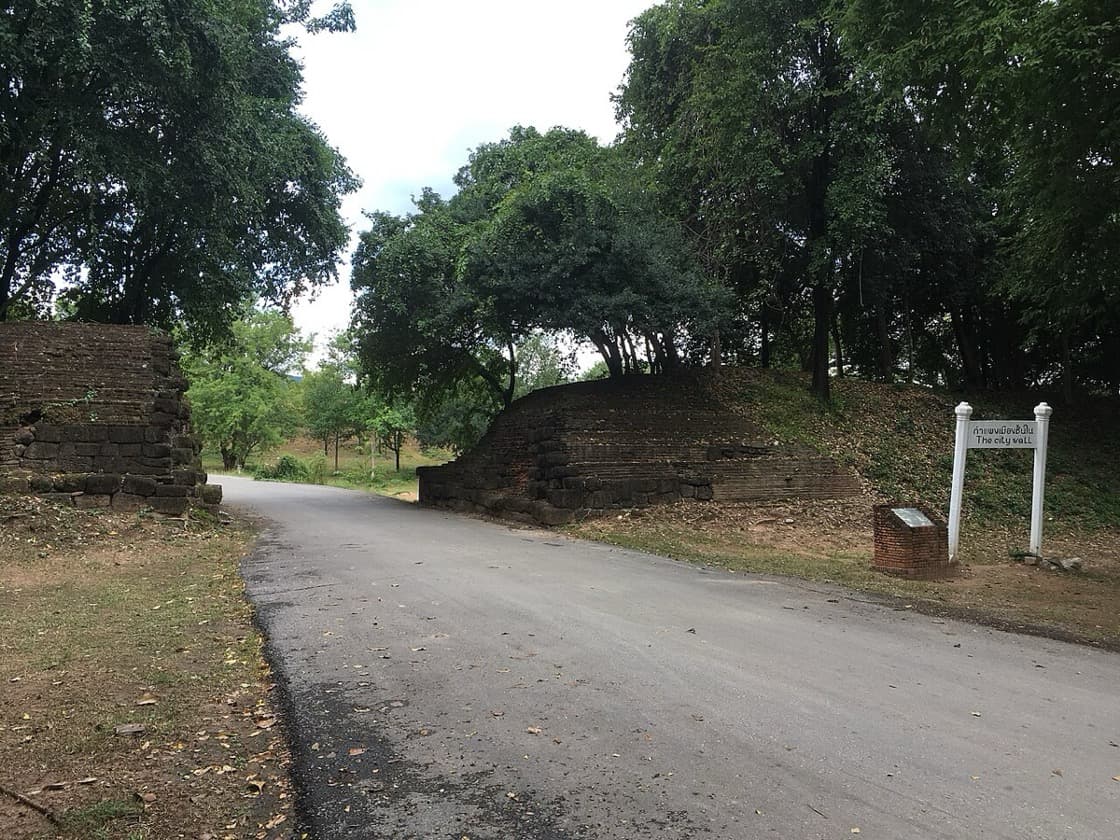
The North City Wall: The Frame Around Everything
The earthen north rampart of the planned rectangular city, where the whole grid and its moats come into view.
Details
Best Time to Visit
Come early, ideally right at opening around eight in the morning, or in the last two hours before the park closes near sunset. The middle of the day is punishingly hot and the flat, shadeless zones offer little relief. Morning light through the slot at Wat Si Chum is especially striking, and the northern temples are quieter than the central zone at both ends of the day. The cool, dry season from November through February is the most comfortable window overall.
Pro Tips
- •The northern temples, Wat Phra Phai Luang and Wat Si Chum, sit in a separate ticketed zone from the central ruins, so budget for two tickets or check the current combined options at the gate before you set out.
- •Renting a bicycle is the classic way to link these stops, since the distances between zones are longer than they look on a map and the ground is flat and easy to ride.
- •Carry more water than you think you need. Shade is scarce across the open temple grounds and there are few places to refill once you are inside a zone.
- •Approach Wat Si Chum from straight in front so the giant Buddha reveals itself gradually through the vertical slot. That slow reveal is the whole point, and it is lost if you come at it from the side.
- •Bring small bills in baht for entry tickets and the modest bicycle surcharge, as card payment is not reliable at the zone gates.
- •Give yourself a rest stop in shade between the central and northern zones during the hottest part of the day rather than pushing straight through.
Safety & Precautions
- •Heat and humidity here are serious. Wear a hat and sunscreen, drink water constantly, and slow down or seek shade at the first sign of dizziness, since the open ruins offer almost no cover through midday.
- •These are active places of worship. Dress modestly with shoulders and knees covered, remove your shoes where signs or worn thresholds indicate, and never climb on the Buddha images or point your feet toward them.
- •In the monsoon months from roughly May through October, sudden heavy rain can make brick and laterite surfaces slick and low areas muddy. Watch your footing on old steps and uneven stone.
- •Watch for bicycle and light vehicle traffic on the roads and paths that link the zones, and cross with care, as sightlines around the ruins and vegetation can be short.
Travel advisory: Exercise Normal Precautions (Level 1).
Gallery
Related Reading
Go deeper on what you'll see, hear, and walk through.
Overview
Best Self-Guided Walking Tours in Sukhothai (2026)
3 min
Overview
One Day in Sukhothai: A Walkable Morning-to-Evening Itinerary
8 min
Overview
Sukhothai Travel Guide: Days, Transport, Costs, and Safety
7 min
Thematic
Sukhothai: The Kingdom Thailand Reads as Its Beginning
7 min
Companion
Wat Si Chum and the Buddha That Watches Through a Slot
7 min
Read
What to Eat in Sukhothai: The Noodle Bowl That Carries the Town's Name
6 min
Read the walk
The full story of Wat Si Chum: The Watching Buddha, in words. Prefer to listen? Play it narrated, from home or on location.
Introduction
This is a walk about a very particular kind of calm, and about the older world that Sukhothai built on top of. You are in Sukhothai, in north central Thailand, in the ruins of a city that a Thai kingdom raised in the thirteenth century on ground the Khmer had held before them. This route has five stops. Plan on about two hours of unhurried walking, roughly four and a half kilometres end to end, all of it flat. It is yours to take at your own pace. Every stop is short, and you can linger at the ones that hold you and step past the ones that do not.
We begin at the oldest surviving stone here, a small Khmer shrine that stood before any Thai king. From there we move to a bell shaped tower ringed by stucco elephants, then to a Khmer complex of three towers that may mark the original heart of the settlement. Then comes the reveal this walk is built toward: a seated Buddha almost fifteen metres high, filling a roofless brick chamber, watching you through a tall vertical slot. We end up on the earthen north wall of the planned city, where the whole grid comes into view at once.
Along the way, keep one question in your pocket. What is the Sukhothai smile actually made of, and why does a downcast gaze in stucco feel so unlike the Khmer stone it grew out of. When you arrive at San Ta Pha Daeng, begin with stop one.
1. San Ta Pha Daeng: The Oldest Stone
Start small, because the oldest thing here is small. San Ta Pha Daeng is a single east facing tower, and it is widely described as the oldest surviving monument at Sukhothai, the eldest of the three Khmer shrines that outlasted everything else. It was built by the Khmer toward the end of the twelfth century, in the Angkorian era, when this ground belonged to the empire whose heart was at Angkor, far to the southeast.
Notice what it is made of. Not brick, not the soft stucco you will meet later, but laterite, that rusty pitted stone that hardens in the air, set on an unusually high base with lotus moulding around it. The tower above has long since fallen away. Sources differ on which Khmer king raised it, tying it either to the Angkor Wat period or to a slightly later reign, so it is safest to say simply this: it is Angkorian, roughly twelfth century, and it predates the Thai kingdom by generations.
This was a Hindu place. During a restoration in the late nineteen fifties, workers uncovered five headless sandstone figures here, male and female, carved in the Khmer manner, their jewellery echoing the reliefs at Angkor Wat. Stand with that for a moment. Before there was a Sukhothai, before the downcast smiling Buddhas, there were Brahmanic gods facing east on a high stone plinth. Everything else on this walk is the story of what the Thai artists did after they arrived, when a Tai leader rebelled against the Khmer governor and a new kingdom began. You are standing at the before.
2. Wat Sorasak: The Elephants That Carry the Sky
Here the Thai grammar begins to show. Wat Sorasak, temple of Sorasak, is built around a single bell shaped tower, a chedi, rising from a low square brick base. The word chedi is worth glossing once: it is a solid monument, often holding a relic, not a hall you enter. And look at the base of this one. Twenty four elephants, moulded in brick and stucco, protrude from the sides, shoulder deep, as if the whole spire were resting on their backs and they were carrying it patiently upward.
This one we can date with unusual confidence. A stone inscription, catalogued as inscription number forty nine and unearthed by the Fine Arts Department in nineteen fifty five, fixes the foundation to the year fourteen twelve. That inscription now sits in the Ramkhamhaeng National Museum in town. It also names the man behind the temple, one Nai Inthara Sorasak, most likely an officer from the Ayutthaya kingdom to the south, sent to look after Ayutthaya's interests here as Sukhothai's independence was fading. That is as much of his life as we honestly know, so let him stay a name and a role.
The elephants matter beyond charm. The bell shape and the elephant base are both Sinhalese ideas, carried along the Theravada Buddhist world from what is now Sri Lanka. You will find the same elephant girdled chedi at Si Satchanalai, up the road. Think of it less as a signature of this one temple and more as a shared vocabulary the Sukhothai builders spoke fluently, the moment when a Thai monument learned to stand on the strength of a herd.
3. Wat Phra Phai Luang: The Three Towers Before the City
Now cross the older ground. Wat Phra Phai Luang sits north of the walled city, and it is a large monastic complex that began, once again, as a Khmer work. It was laid out with three laterite prang towers on a shared base, a prang being the corn cob shaped tower that is a Khmer…
Full narration for this stop unlocks with the tour.
4. Wat Si Chum: He Who Is Not Frightened
This is the stop the whole walk leans toward, so approach it slowly and let it do its work. Ahead is a roofless square brick chamber, a mondop, its base about thirty two metres on each side, its walls some three metres thick. In the front wall there is a tall vertical slot that…
Full narration for this stop unlocks with the tour.
5. The North City Wall: The Frame Around Everything
End on the wall, because the wall explains the plan. The old city of Sukhothai was laid out as a deliberate rectangle, its ramparts running about two kilometres east to west by one point six kilometres north to south. What you are standing on is not a single stone wall but a…
Full narration for this stop unlocks with the tour.