Historical Park: The Dawn of Happiness
90 min · 3 km · moderate
The dish to eat in Sukhothai is Sukhothai noodles, called kuaitiao Sukhothai, a bowl of thin rice noodles in a slightly sweet pork broth topped with green beans, ground peanut, and pork crackling that the town's family stalls have made their signature. Order it, learn where the tradition comes from, then walk the ruins that gave the province its name. This guide covers what the dish is, the two vendors most associated with it, what else to eat around the markets, and how to slot a bowl into a day at the Sukhothai walking tours.
The one dish to order: Sukhothai noodles
Sukhothai noodles are a regional rice-noodle soup, distinct enough that Thai food maps treat "kuaitiao Sukhothai" as its own category. The base is a thin rice noodle called sen lek, in a pork-based broth that reads sweet and mellow rather than sour or fiery. The toppings are what set it apart from the Chinese-style noodle soups sold across Thailand: sliced pork or ground pork, crisp pork crackling, thin-sliced long green beans in place of bean sprouts, a little chopped salted turnip, and a generous scatter of ground roasted peanut. It is finished with lime, fish sauce, and ground chili at the table, so the bowl arrives mild and you push it toward the balance you want.
Kuaitiao itself is a family of Thai rice-noodle dishes that descend from Southern Chinese kway teow, brought by Chinese traders and adapted to local ingredients. The Sukhothai version is built on pork and palm sugar rather than the plainer Bangkok-Chinese template. When Sukhothai noodles first reached Bangkok, they were introduced at a shop called Somsong Pochana, run by a schoolteacher named Somsong who came from the Sawankhalok district of Sukhothai province. That detail is a useful reminder that this is a migrant dish twice over: Chinese noodles made Thai, then a country recipe carried to the capital.
How to order like a local
Hear a stop from this walk
Ramkhamhaeng National Museum: The Stone and the Debate
Two decisions shape your bowl. First, soup or dry: ask for the soup version to get the sweet pork broth, or the dry version (haeng) if you want the noodles tossed in seasoning with the broth served on the side. Second, the noodle: sen lek (the thin rice noodle) is the standard for this dish, though most stalls will swap in wider or thinner noodles if you point.
Do not over-season before you taste. Sukhothai broth is built to be gently sweet, and the four table condiments (fish sauce, sugar, ground chili, vinegar or lime) are there for you to adjust one at a time. A squeeze of lime and a pinch of chili is the common local move. The ground peanut and pork crackling are part of the dish, not extras, so leave them in. Portions run small and cheap, which is why locals treat a bowl as a mid-morning or lunch stop rather than a full dinner.
Where the tradition is served
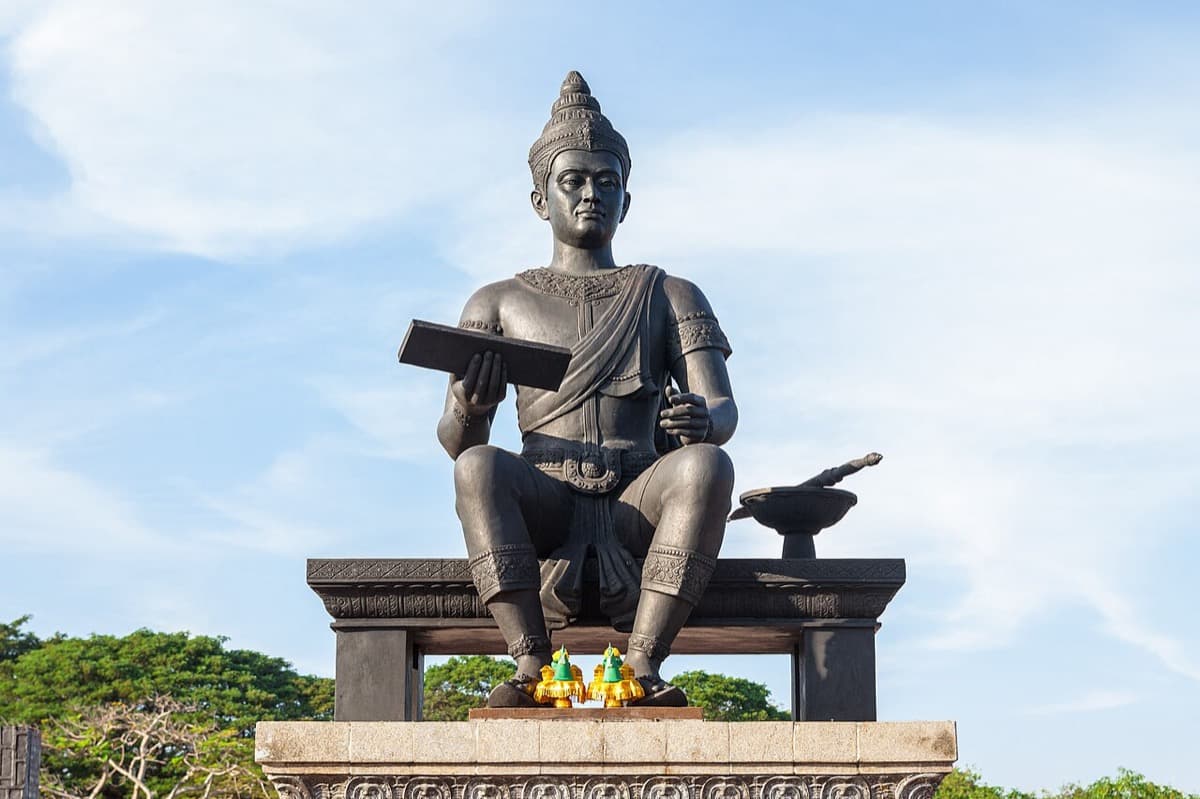
The two vendors most tied to Sukhothai noodles sit across the street from one another on Charot Withithong Road, the same road that runs past the King Ramkhamhaeng Monument at the start of the central-zone walk. Ta Pui is the plainer of the two and claims to be the original vendor of the dish; food writers who have eaten both describe its bowl as the most balanced. Jayhae, directly across the road, is the more popular one, the stop nearly every Thai visitor to Sukhothai makes for lunch, with a bowl that runs sweeter. Both open early and close by mid-afternoon, roughly seven in the morning to four in the afternoon, so this is a breakfast-and-lunch food, not a dinner one. Beyond the noodles, Ta Pui also puts out pork satay, skewered grilled pork balls (look chin muu ping), and crisp deep-fried pork fat.
One geographic note that saves confusion: there are two Sukhothais. New Sukhothai, the modern town where most guesthouses and the transport hub sit, is about twelve kilometers east of the historical park. Blue songthaews (shared pickup trucks) shuttle between them through the day for around thirty baht, taking twenty to twenty-five minutes. Both the noodle vendors and the ruins are on the old-city side, so you can pair a bowl with the walk without backtracking to the new town.
What else to eat
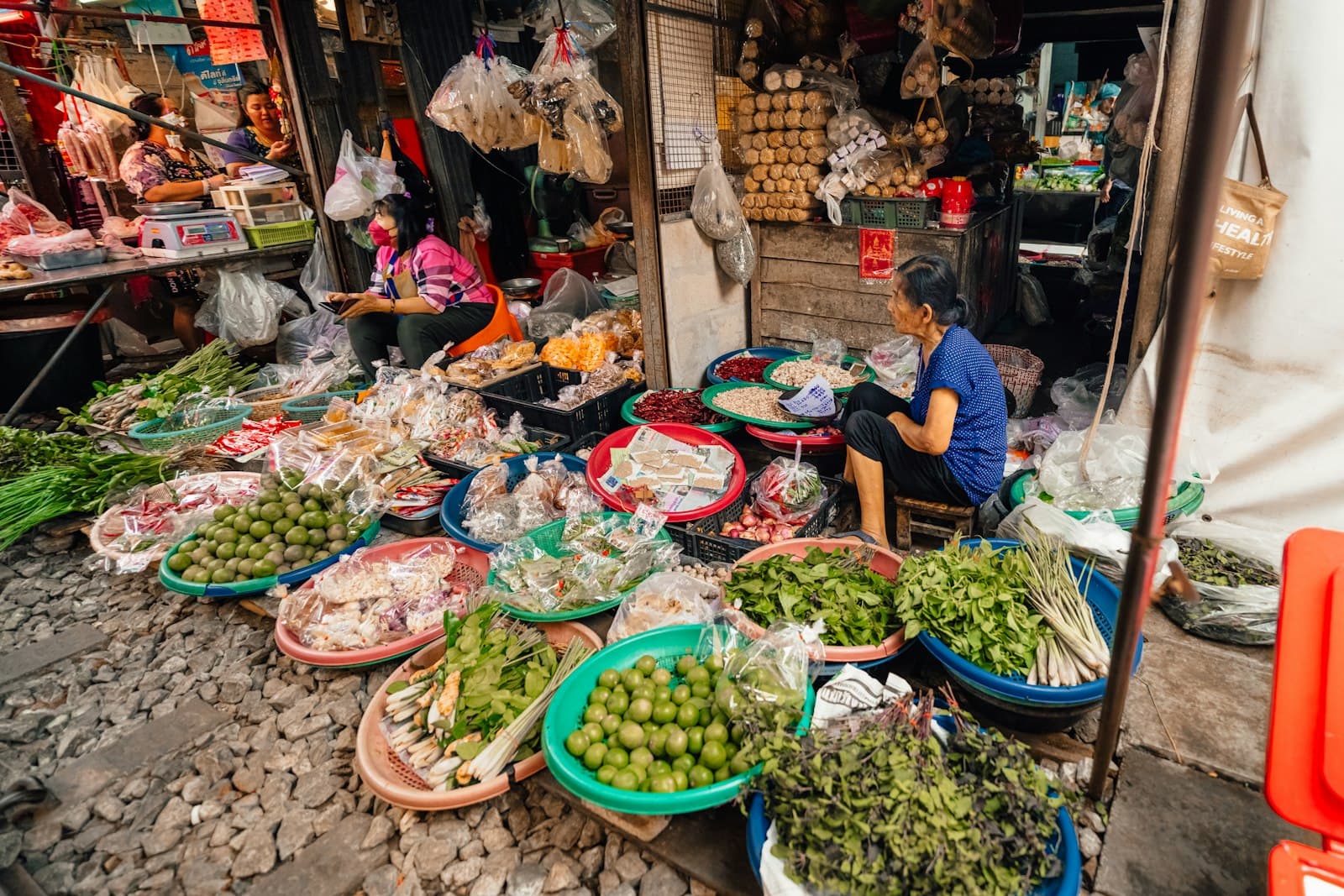
For everything beyond the signature bowl, aim for a market. The night market in the Sawankhalok area and the food streets near the old city carry the standards done well: steamed buns (salapao), grilled meat and seafood skewers, Thai-Chinese stir-fries, and chicken rice (khao man gai). Many footpath stalls plate up quick single dishes, from noodle soups to pad Thai, for well under a hundred baht.
Save room for dessert, because Sukhothai's sweets lean coconut and rice. Look for khanom si tuay, a set of four coconut-milk desserts served together (basil-seed, pandan-flavored rice-flour drops, popped rice, and black sticky-rice pudding), alongside the countrywide favorites: mango sticky rice, fresh coconut ice cream, and crisp banana fritters. These are cheap, portable, and easy to carry into the shade between temples.
Fit it into a day of walking
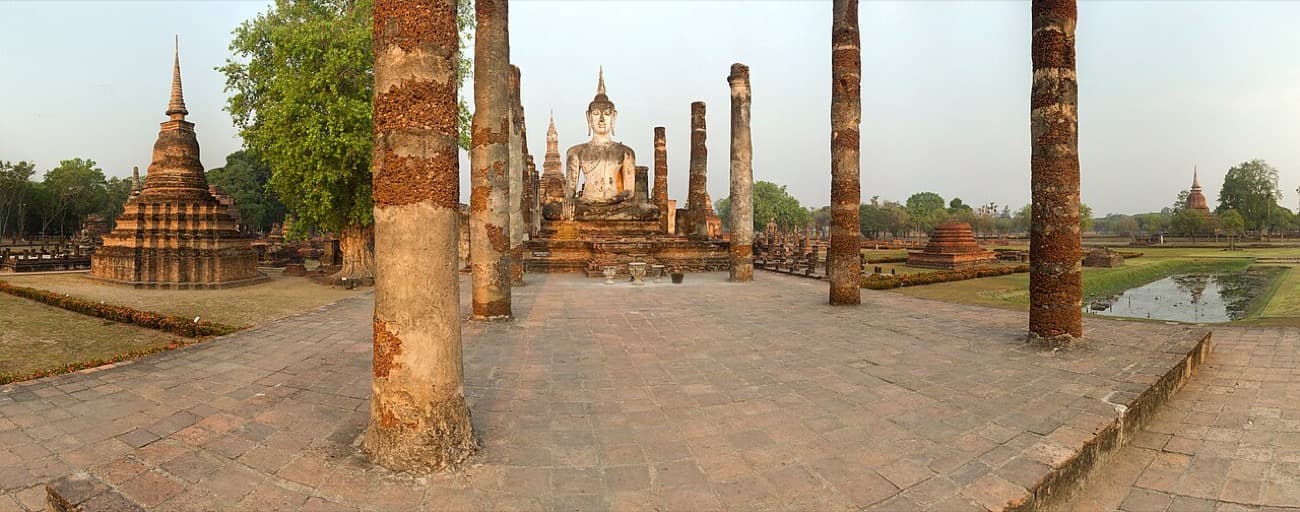
The clean plan is to eat before the ruins, not during them. Have a bowl of Sukhothai noodles on Charot Withithong Road in the morning while the vendors are fresh and the day is still cool, then start the central-zone walk a short distance away at the King Ramkhamhaeng Monument. The central zone is open, exposed, and short on food once you are inside the walls, so carry water and a dessert from the market rather than counting on stalls among the temples. If you are building a fuller day, the three self-guided routes fan out from here: the central origin-story walk through Wat Mahathat, a northern walk to the giant seated Buddha at Wat Si Chum, and a western walk that climbs the hills past the Saritphong dam. Browse all of them at the Sukhothai walking tours hub, or start from the city page at /thailand/sukhothai.
Sources
Frequently asked questions
- What food is Sukhothai famous for?
- Sukhothai is famous for Sukhothai noodles, known as kuaitiao Sukhothai. It is a rice-noodle soup made with thin sen lek noodles in a slightly sweet pork broth, topped with green beans, ground roasted peanut, chopped salted turnip, and crisp pork crackling. It is a regional specialty distinct from the Chinese-style noodle soups sold elsewhere in Thailand.
- What are Sukhothai noodles made of?
- Sukhothai noodles use a thin rice noodle called sen lek in a pork-based broth that tastes sweet and mellow. The toppings are sliced or ground pork, pork crackling, thin-sliced long green beans instead of bean sprouts, a little salted turnip, and ground roasted peanut. Lime, fish sauce, and ground chili are added at the table to adjust the flavor.
- Where can I eat the best Sukhothai noodles?
- The two vendors most associated with the dish, Ta Pui and Jayhae, sit across the street from each other on Charot Withithong Road near the historical park. Ta Pui claims to be the original and is often described as the most balanced bowl, while Jayhae is the most popular and runs sweeter. Both open around seven in the morning and close by about four in the afternoon.
- Is Sukhothai noodles a breakfast or dinner dish?
- It is mainly a breakfast and lunch dish. The best-known vendors on Charot Withithong Road open early and close by mid-afternoon, roughly seven in the morning to four in the afternoon. Portions are small and inexpensive, so locals often eat a bowl mid-morning rather than as a full evening meal.
- What else should I eat in Sukhothai besides noodles?
- Head to the markets for steamed buns (salapao), grilled meat and seafood skewers, Thai-Chinese stir-fries, and chicken rice (khao man gai). For dessert, look for khanom si tuay, a set of four coconut-milk sweets served together, plus mango sticky rice, fresh coconut ice cream, and crisp banana fritters.
- How do I get from Sukhothai town to the food and the ruins?
- New Sukhothai town sits about twelve kilometers east of the historical park. Blue songthaews (shared pickup trucks) run between them through the day for around thirty baht, taking about twenty to twenty-five minutes. The noodle vendors and the ruins are both on the old-city side, so you can eat and walk without returning to the new town.
Ready to experience it?
Historical Park: The Dawn of Happiness
90 min · 3 km · moderate
More from Sukhothai
Explore more at your own pace.

One Day in Sukhothai: A Walkable Morning-to-Evening Itinerary
Sukhothai Travel Guide: Days, Transport, Costs, and Safety
Sukhothai: The Kingdom Thailand Reads as Its Beginning
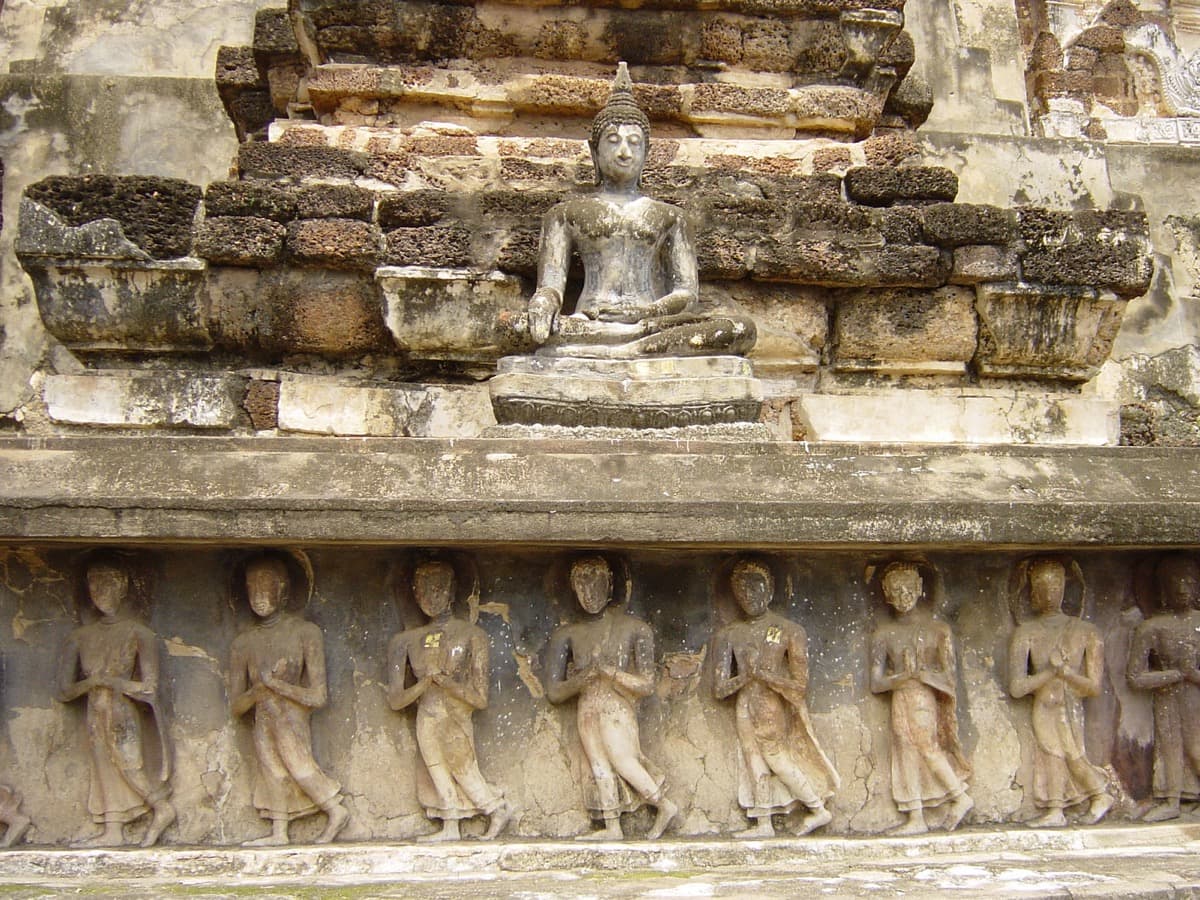
Wat Mahathat: Where Sukhothai Turned Its Origin Story Into Stone
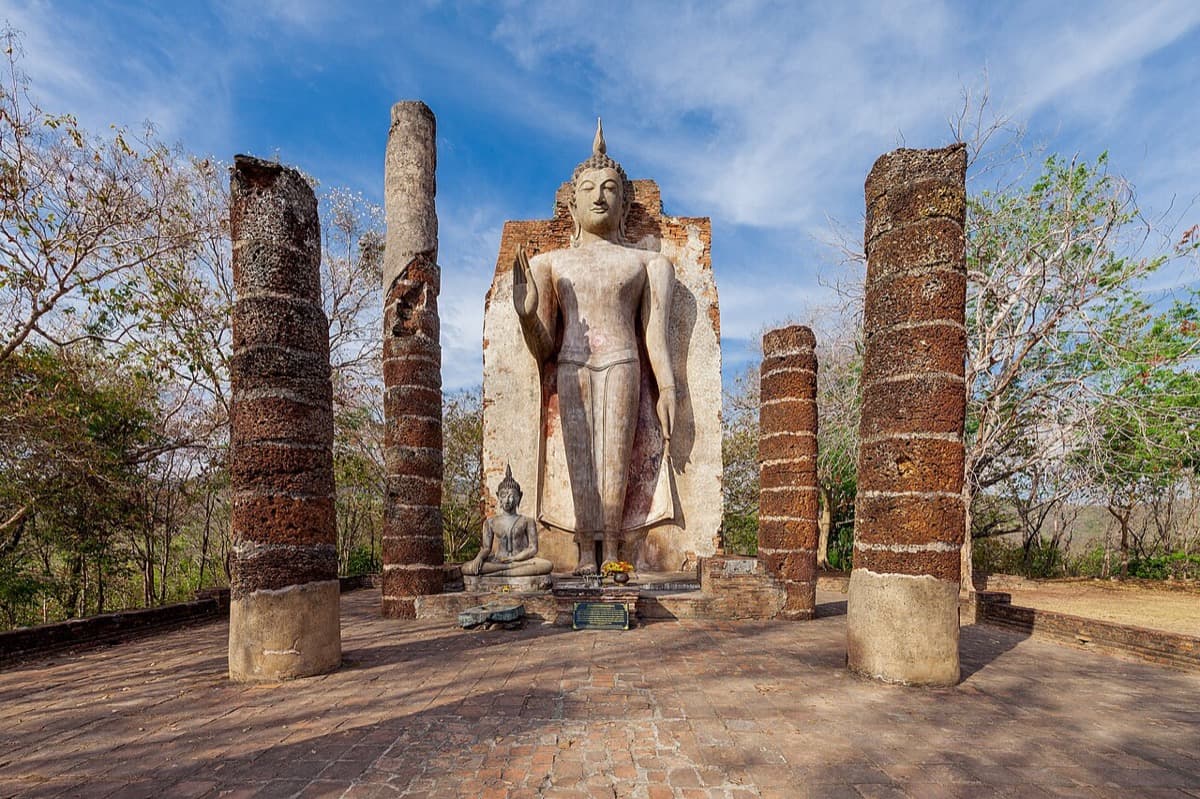
Wat Saphan Hin: Reading Sukhothai's Ruins as One Idea in Two Hands