Historical Park: The Dawn of Happiness
90 min · 3 km · moderate
One good day in Sukhothai means walking the walled central zone in the cool early morning, riding out to the northern and western temples through the hotter middle of the day, then returning to the ponds at the center for golden hour. The ruins are spread across a wide park, so the trick is to sequence your walking by temperature and light, not by map order. Here is a morning-to-evening plan that keeps you on foot where walking is best, uses a bicycle or a short ride to close the distances, and lines each stretch up with the self-guided audio tours that carry the story.
Sukhothai Historical Park protects the remains of what Thailand remembers as its first kingdom, a UNESCO World Heritage site (inscribed in 1991) of laterite towers, lotus-bud spires, and reflecting reservoirs. The park is divided into ticketed zones, with the central, north, and west zones charging admission and smaller east and south areas free to enter. The central zone alone is roughly two kilometers across. You can see the highlights in a single full day if you start early. For the full set of routes, see the Sukhothai walking tours hub, or jump straight to the /thailand/sukhothai city page.
Before you go: hours, tickets, and getting there
The historical park opens early, around 6:30 in the morning, and stays open into the evening, typically until about 7:30, with later hours on Saturday when the ruins are floodlit. Each zone carries its own ticket. Foreigner rates were reported in 2026 at around 200 baht for the central zone and about 120 baht each for the north and west zones, with a small extra charge (around 10 baht) if you bring a bicycle in. Reports on whether a combined multi-zone pass exists conflict, so confirm the current tickets and prices at the central-zone booth when you arrive rather than pre-committing to a plan. Bring cash in small notes.
Most travelers sleep in New Sukhothai, about 12 kilometers east of the ruins along the main road. Shared songthaew trucks run between the new town and the old city for roughly 30 baht per person; a tuk-tuk costs more. Once inside the park, a bicycle rented near the central-zone entrance (a small daily fee) is the single best move. It lets you cover the distances between zones while keeping the slow, self-paced feel of a walk.
A realistic shape for the day is an early start, the central zone on foot, a mid-morning ride north, lunch, an afternoon out west, and back to the center for sunset.
Morning (roughly 7:00 to 10:30): the walled center on foot
Hear a stop from this walk
Ramkhamhaeng National Museum: The Stone and the Debate
Start where the story starts. Enter the central zone soon after it opens, while the laterite is still cool and the ponds are glassy. This is the stretch to do entirely on foot, and it maps directly onto the Sukhothai Central self-guided tour, an origin-story walk of about three kilometers over roughly six stops, mostly flat across open ruins and water.
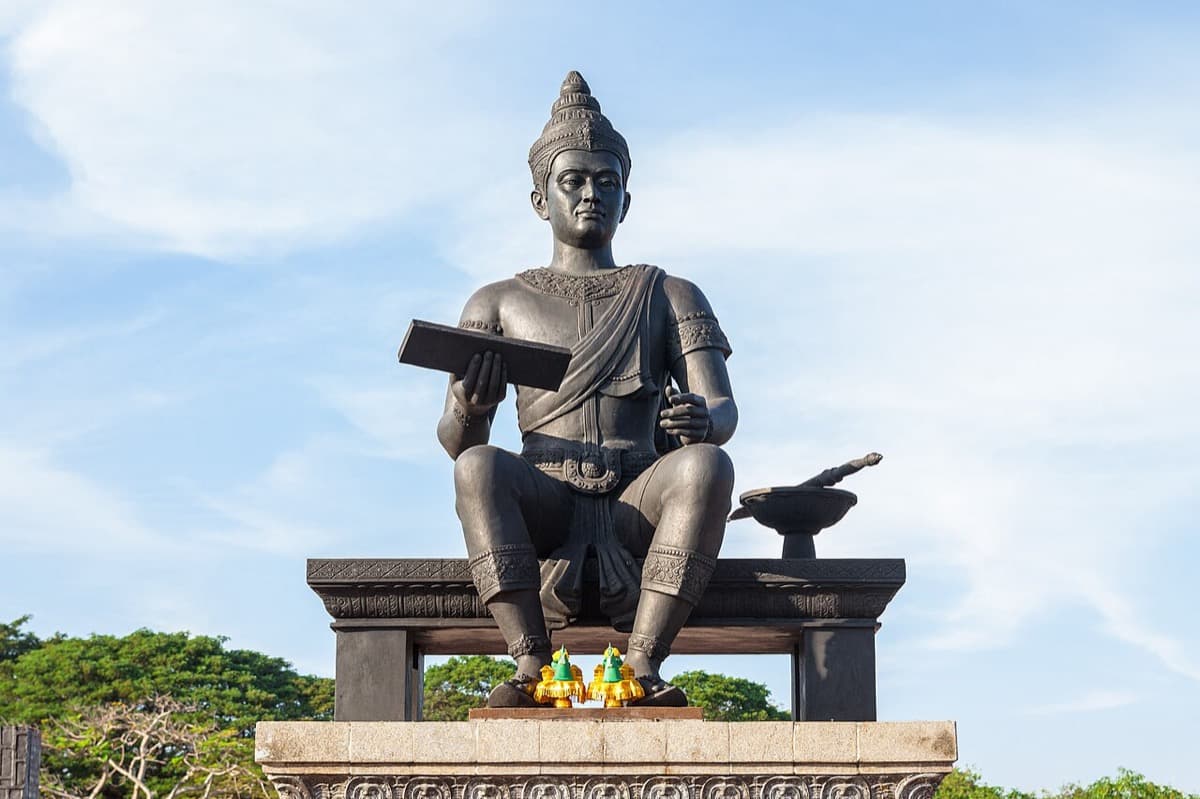
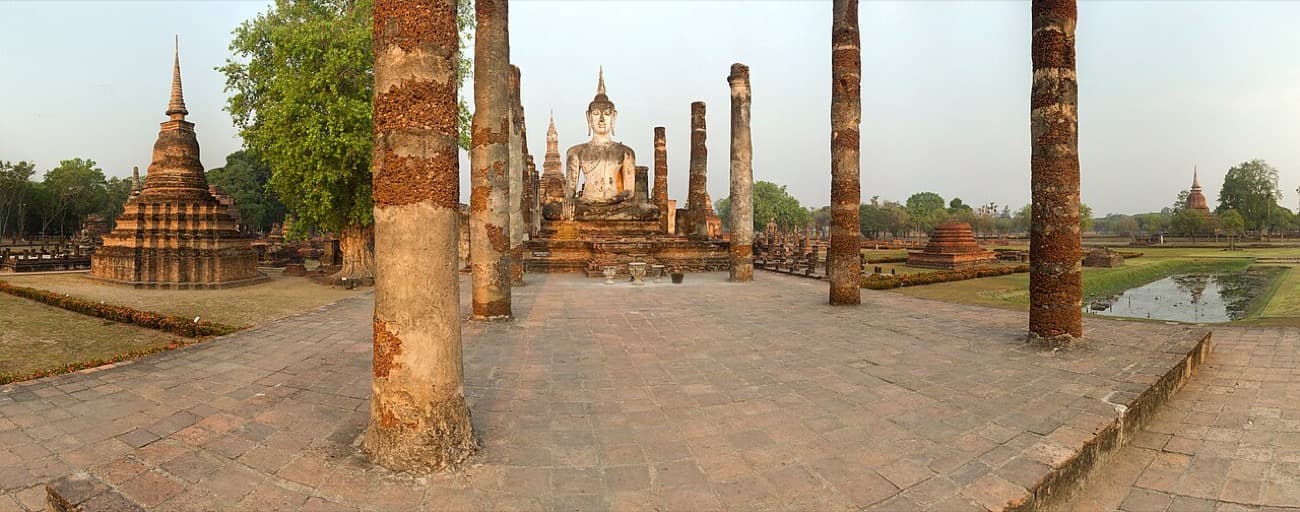
Begin at the King Ramkhamhaeng Monument, a bronze statue raised in 1975 to the king most tied to the Sukhothai golden age. Walk south into Wat Mahathat, the principal royal temple, whose central spire carries the closed lotus-bud finial that became the signature shape of the kingdom. From there the audio route threads through Wat Si Sawai, three Khmer-style towers that began as a Hindu sanctuary before conversion to Buddhist use, then across footbridges to the island temple Wat Sa Si in its lotus pond, and to Wat Traphang Ngoen, mirrored in the reservoir that gives it its name.
The set closes at the Ramkhamhaeng National Museum, just east of Wat Mahathat, which holds a replica of the famous Inscription One (the original is in Bangkok). The museum keeps its own hours, typically daily from about 9:00 to 4:00, with a separate admission for foreigners commonly cited in the range of about 150 to 200 baht. Because those hours are shorter than the park's, you can either duck in mid-morning or save it for after lunch. The central walk takes about two hours at an unhurried pace, so an early start leaves you time before the heat peaks.
Midday (roughly 10:30 to 2:00): ride north, then eat
By late morning the exposed central zone gets hot and glaring, which is the right moment to move. Ride your bicycle out through the north gate to the northern zone, a slightly longer loop of about four and a half kilometers that pairs with the Sukhothai North tour.
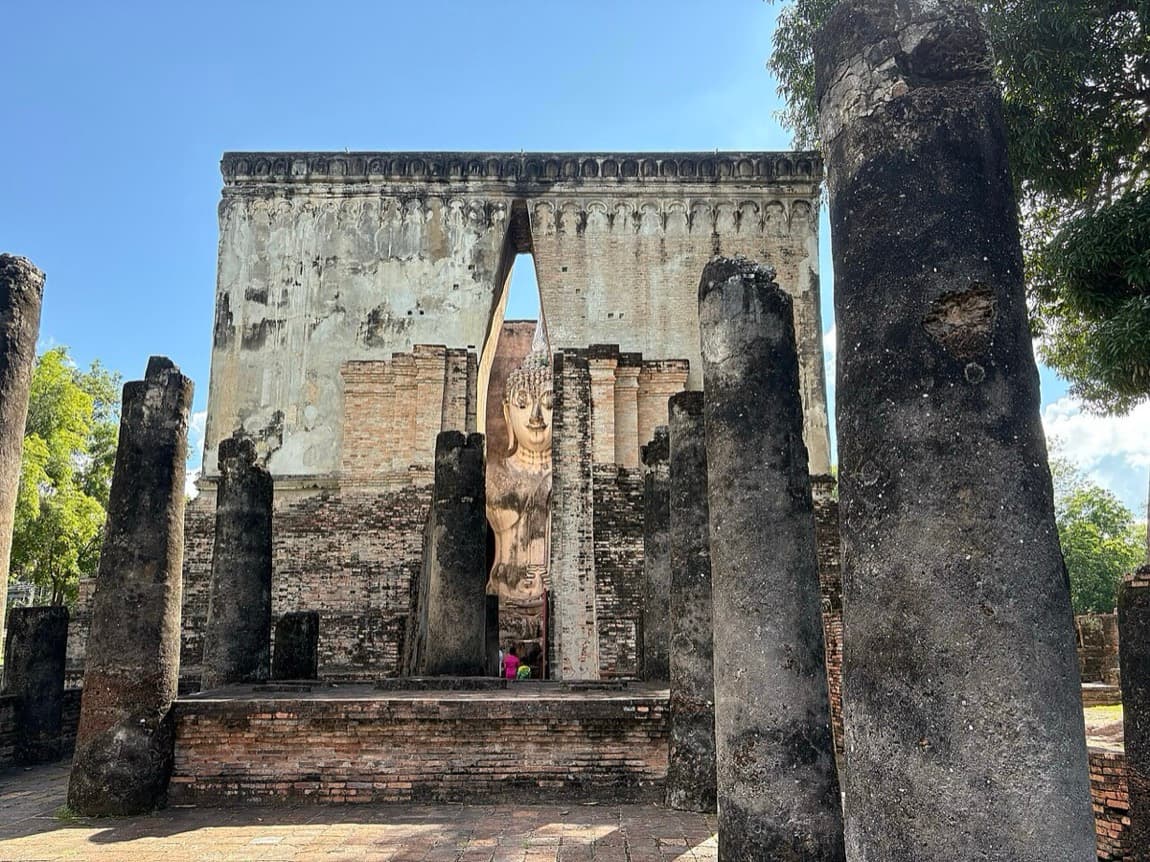
The reason to make the trip is Wat Si Chum, home to a seated Buddha image rising some fifteen meters inside a tall, narrow brick mondop, its face and hand framed by a slot in the wall. Local tradition once held that the figure could speak. The northern route also passes Wat Phra Phai Luang, one of the oldest sites in the area with Khmer-period roots, and Wat Sorasak with its elephant-buttressed base, before reaching the old north wall and gate. These northern temples sit on ground that was settled before the classic Sukhothai city, so the walk reads a little older and quieter than the center.
Break for lunch around the park or back toward the entrance road, where small restaurants serve Sukhothai-style noodles. Eat in shade and rehydrate. This is the hottest part of the day and the right time to rest your legs rather than push through more open ruins.
Afternoon (roughly 2:00 to 5:00): the western hills and the water
The western zone is the most ambitious stretch and the most rewarding for anyone with energy left. It is a longer, harder route (about eleven kilometers if walked in full, with a gentle climb), so most people ride the flat approach and walk the temple clusters and the hill. This is the Sukhothai West tour, which reads the ruins as a story about water and elevation.
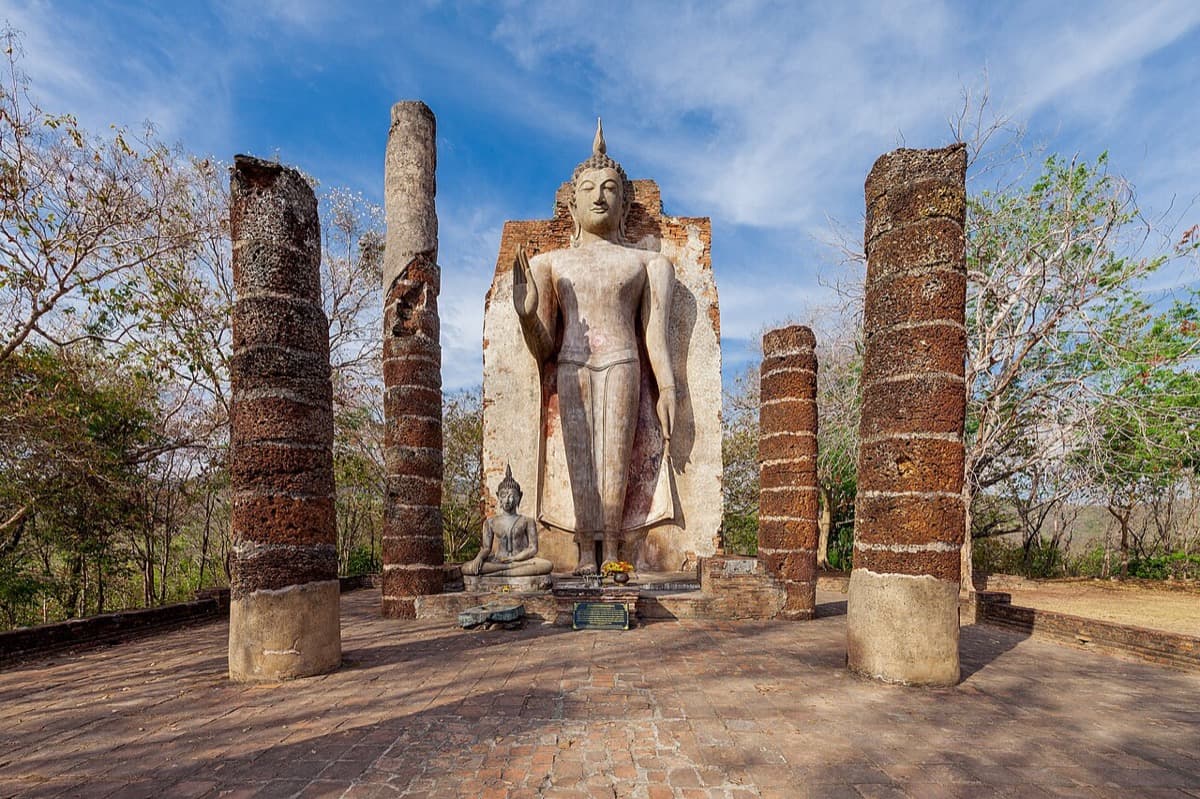
Out here the plain gives way to earthworks and hills. Wat Chang Lom and Wat Chetuphon sit on the flat, and the Saritphong dam recalls how the kingdom stored the monsoon. The payoff is Wat Saphan Hin, reached by an old stone-slab path climbing a low hill to a large standing Buddha that looks back over the plain. Save this for the cooler late afternoon; the climb is far kinder once the sun drops, and the view is best then too. If the heat or the distance is too much, this is an easy stretch to shorten. Every stop stands on its own.
Golden hour (roughly 5:00 to 6:30): back to the ponds
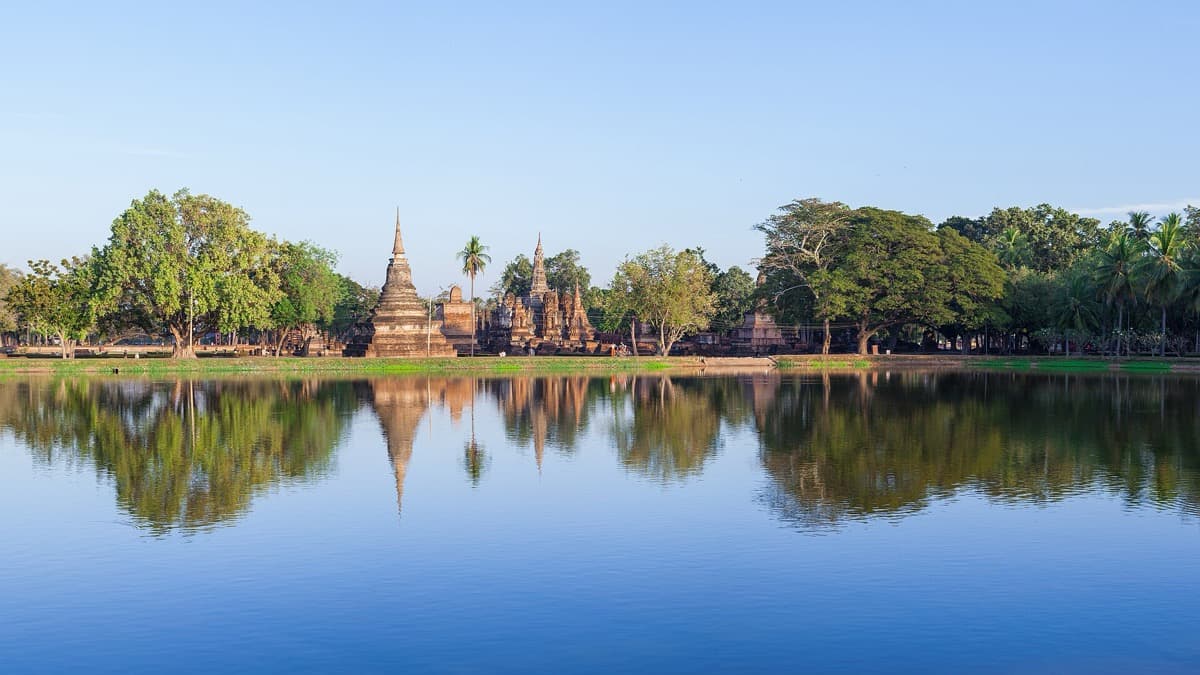
End where you began. Ride back to the central zone for the last hour of light, because this is when Sukhothai looks the way the postcards promise. The reflecting reservoirs go still, and the lotus-bud spires of Wat Mahathat and Wat Traphang Ngoen mirror in the water. Wat Sa Si on its island is one of the most photographed spots in the park at this hour for good reason.
Then let the songthaew or a tuk-tuk carry you back to New Sukhothai for dinner. You will have walked the origin story in the morning, read the older and quieter north at midday, climbed to the western hills in the afternoon, and closed the loop in golden light. That is a genuinely full, genuinely walkable day, and the three self-guided tours give you the narration for every stretch of it. Start from the Sukhothai walking tours hub to download them before you lose signal at the ruins.
A note on comfort and respect
Heat and glare, not danger, are the real challenge here. The zones are open and short on shade, so wear a hat and sunscreen, carry more water than you think you need, and pace yourself between temple clusters. The cooler, drier months from November through February are the most comfortable overall; the rainy season from roughly May to October brings green ponds and sudden afternoon downpours that make bridges and stone steps slippery. At the temples, cover your shoulders and knees, keep your voice low near Buddha images, and never climb on the spires or statues. Watch for bicycles and shuttle carts on the park roads. Move at your own rhythm, skip what you like, and the day stays easy.
Sources
Frequently asked questions
- Can you see Sukhothai Historical Park in one day?
- Yes. You can walk the central zone, visit the northern and western temples, and return to the ponds for sunset in a single full day if you start early. The central zone alone takes about two hours on foot, and a bicycle rented at the entrance closes the distances to the outer zones. Save the exposed central ruins for early morning and late afternoon to avoid midday heat.
- What are the opening hours and entrance fees for Sukhothai Historical Park?
- The park opens early, around 6:30 in the morning, and stays open until roughly 7:30 in the evening, with later hours on Saturday when the ruins are floodlit. Each zone has its own ticket, with foreigner rates reported in 2026 at around 200 baht for the central zone and about 120 baht each for the north and west zones, plus a small charge for bringing in a bicycle. Prices and combined-ticket options vary between sources, so confirm at the central-zone booth on arrival.
- How do you get from New Sukhothai to the Historical Park?
- The old city and its ruins sit about 12 kilometers west of New Sukhothai along the main road. Shared songthaew trucks run the route for roughly 30 baht per person, and tuk-tuks cost more. Once at the park, renting a bicycle near the central-zone entrance for a small daily fee is the easiest way to move between the zones.
- What is the best time of day to visit Sukhothai?
- Early morning and late afternoon are best. The central zone is open ruins and reflecting ponds with little shade, so the low sun is both cooler to walk in and better for seeing the lotus-bud spires mirrored in the water. Midday heat and glare across the laterite are intense, which makes the middle of the day the right time to eat, rest, or ride out to the shadier outer temples.
- Do you need a ticket for the Ramkhamhaeng National Museum?
- Yes, the museum charges a separate admission from the park zones. Reported foreigner rates vary between sources, commonly cited in the range of about 150 to 200 baht, so check the current price at the door. It keeps shorter hours than the park, typically daily from about 9:00 in the morning to 4:00 in the afternoon. It holds a replica of the famous Inscription One, while the original inscription is displayed in Bangkok.
- Should you walk or cycle around Sukhothai?
- A mix works best. Walk the central zone, which is compact and full of closely spaced temples and ponds. Rent a bicycle to reach the northern and western zones, which are farther out, so you can cover the distances comfortably while keeping the slow, self-guided feel. The western zone in particular is long and includes a gentle hill climb best saved for the cooler afternoon.
Ready to experience it?
Historical Park: The Dawn of Happiness
90 min · 3 km · moderate
More from Sukhothai
Explore more at your own pace.
Sukhothai Travel Guide: Days, Transport, Costs, and Safety
Sukhothai: The Kingdom Thailand Reads as Its Beginning
Wat Mahathat: Where Sukhothai Turned Its Origin Story Into Stone
Wat Saphan Hin: Reading Sukhothai's Ruins as One Idea in Two Hands
Wat Si Chum and the Buddha That Watches Through a Slot