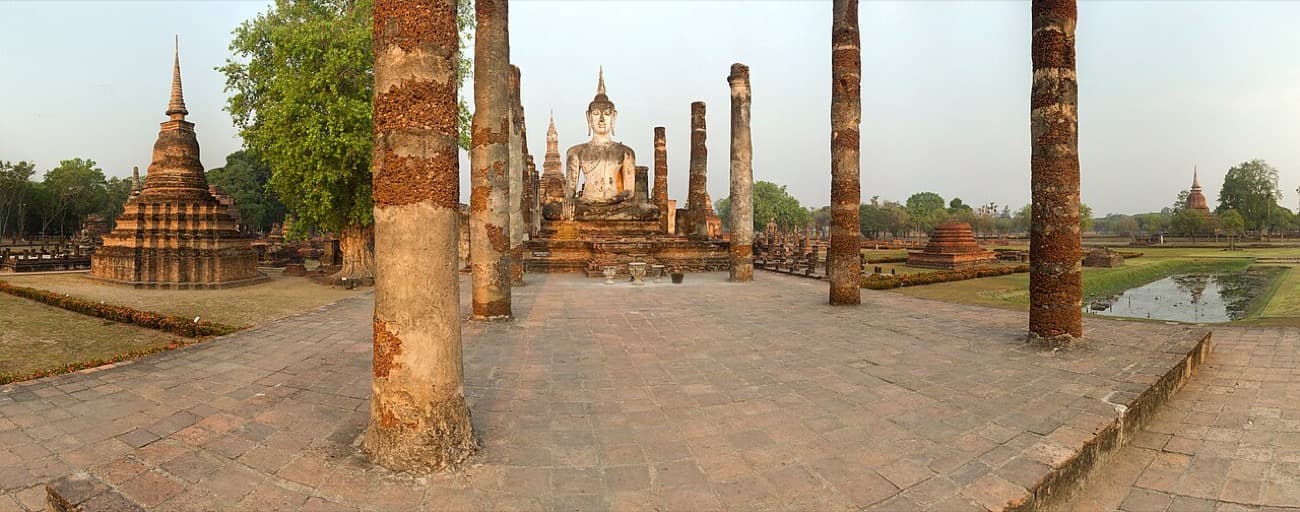
Historical Park: The Dawn of Happiness
90 min · 3 km · moderate
Plan two to three days for Sukhothai, rent a bicycle to cover the flat ruins, come between November and February for the coolest weather, and treat the town as a calm, low-crime base where heat is the real thing to manage. Sukhothai splits into two parts, and knowing that up front saves confusion: New Sukhothai is the modern town with the bus terminal and most guesthouses, and Old Sukhothai, about 12 kilometres west, holds the walled Historical Park where the temples stand. Nearly everything a traveler searches for here (how long to stay, how to move around, when to come, what it costs) resolves around that 12-kilometre gap and the wide, sun-exposed park at the end of it.
This guide walks through the practical decisions in order. For the temples themselves and the story behind them, our three self-guided audio walks pick up where logistics leave off: see the full set at Sukhothai walking tours, or browse the city page at /thailand/sukhothai.
How many days do you need in Sukhothai?
Two full days is the comfortable answer for most travelers, with a third if you want to slow down or add the sister site at Si Satchanalai to the north. One day is possible but rushed: the Historical Park is not a single cluster, it is a set of zones spread across old rice-paddy country, and the outer temples sit a real distance from the walled centre.
A sensible rhythm looks like this. Day one covers the Central Zone inside the old walls, the densest and most famous ground, where the royal temple, the island temples, and the museum stand within easy cycling distance of each other. Day two takes the quieter outer zones: the northern temples with the enormous seated Buddha at Wat Si Chum, and the western hills where a long uphill route ends at a summit shrine. Our walks map to exactly this split. The central walk runs about 3 kilometres over roughly 90 minutes, the northern walk about 4.5 kilometres, and the western walk is a longer, harder 11-kilometre route that climbs into the hills, so budget its own half-day.
How do you get to Sukhothai?
Hear a stop from this walk
Ramkhamhaeng National Museum: The Stone and the Debate
Three routes from Bangkok, trading time against money. The bus is the workhorse: operators including Wintour, Cherdchai, and Transport Co. leave Bangkok's Northern Bus Terminal (Mo Chit) through the day, fares run roughly 365 to 500 baht, and the ride takes about 7 to 8 hours on faster services. Flying is the fast option, with Bangkok Airways running short hops of around one hour and twenty minutes into Sukhothai's own airport, with fares that typically start near 1,500 baht and climb from there. There is no train station in Sukhothai itself, so the rail route means taking a train to Phitsanulok, about 60 kilometres away, then continuing by bus or van.
Once you land or arrive, remember the two-town split. Buses pull into New Sukhothai, and the airport sits outside town with its own shuttle. To reach Old Sukhothai and the park, hail a songthaew (the shared blue pickup trucks) from near the bus terminal, which runs the 12-kilometre link for roughly 20 to 30 baht per person. Many travelers simply stay in Old Sukhothai, within cycling distance of the gates, which removes the daily transfer entirely.
How do you get around the Historical Park?
Rent a bicycle. The park is flat, the lanes between temples are shaded and quiet, and cycling keeps the slow, self-paced feel that suits these ruins. Rental shops outside the Central Zone entrance and along the main road charge roughly 30 to 50 baht per day, and they close in the early evening, around 5:30 to 6:00. Note that bringing a bicycle into a ticketed zone adds a small extra charge, on the order of 10 baht per zone.
If cycling is not for you, electric trams run a loop of the Central Zone during busier periods for around 40 to 50 baht per person, and small golf carts with a driver can be hired by the hour. Walking the whole park is possible in the central area but taxing in the outer zones, where the western temples in particular are spread over kilometres. Whatever you choose, the underlying truth is the same: the distances are manageable, the ground is level, and heat, not terrain, is what sets your pace.
What does it cost to visit?
Budget by zone. The Historical Park is divided into five zones, and the three you are most likely to want (Central, North, and West) each charge 100 baht admission for foreign visitors, so seeing all three costs about 300 baht. The eastern and southern zones are free. The Ramkhamhaeng National Museum, which holds a replica of the famous stone inscription that founds Sukhothai's origin story, charges a separate admission of around 150 baht.
Prices for foreign visitors have been reported in a range and can change at the gate, so carry cash and confirm the current rate when you arrive rather than relying on any single figure. Beyond tickets, Sukhothai is inexpensive: guesthouse rooms, bicycle rental, songthaew rides, and simple Thai meals all sit at the low end of Thailand's prices, which is part of why the town rewards an unhurried stay.
When is the best time to visit?
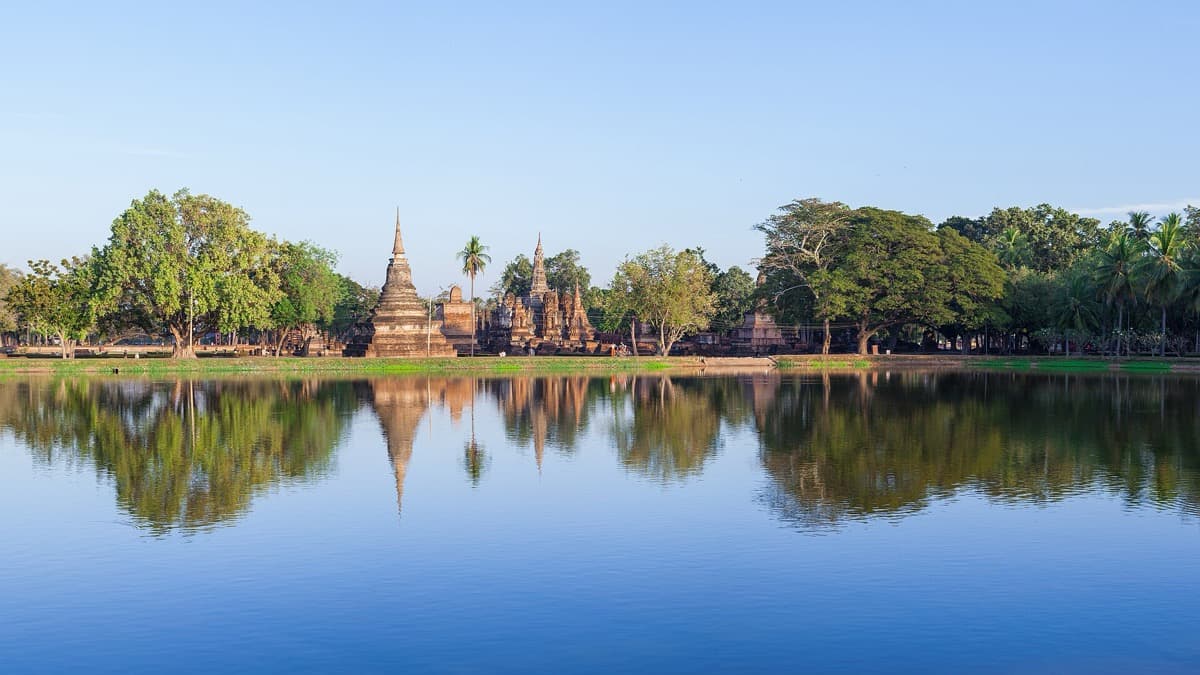
Come between November and February. This is the cool, dry season, with daytime temperatures roughly in the mid-twenties to low-thirties Celsius, crisp mornings, and clear light for cycling and for seeing the lotus-bud spires mirrored in the ponds. Rain is scarce and the landscape is still green from the wet months.
The other seasons each carry a caveat. March to May is the hot season, often above 35 degrees, and it overlaps with agricultural burning across northern Thailand that can push haze into unhealthy ranges, with March usually the worst. June to October is the rainy season, defined less by all-day rain than by short, intense afternoon or evening downpours that clear again quickly, leaving full ponds and green paddies behind. Whenever you come, plan around the sun: arrive soon after the park opens in the early morning or return in the last hours before sunset, and treat midday as a break rather than a walking window, because the central ruins offer almost no shade.
One date worth planning around is Loy Krathong, the festival of floating lights, which falls on the full-moon night of the twelfth lunar month, usually in November, and which Sukhothai stages against its illuminated ruins. It is a memorable time to be here, and also the busiest, so book accommodation well ahead if your trip lines up with it.
Is Sukhothai safe?
Yes, with ordinary travel caution. Sukhothai is a small, calm provincial town with reliable public transport and none of the nightlife-driven friction of larger tourist hubs, and violent crime against visitors is not a common concern. The honest risks here are practical rather than dangerous.
Heat and dehydration are the real hazard, since the central zone is open and exposed: carry more water than you think you need, wear a hat and sunscreen, and pace yourself. In the rainy season, stone steps, bridges, and pond edges turn slippery, so watch your footing around the island temples. Mosquitoes come out near the water and after dark, so pack repellent. Watch for bicycles, motorbikes, and shuttle carts on the lanes that cross the park. And during crowded festival nights, keep an eye on your belongings in the usual way. Dress modestly at the temples, cover shoulders and knees, and remove your shoes where signs indicate an active shrine. None of this makes Sukhothai a difficult place to visit. It makes it an easy one, best handled slowly.
Sources
- How to Get to Sukhothai: Bus, Plane & Train Guide (2026), The Longest Way Home
- Sukhothai Historical Park: Entrance Fees, Temples & Visitor Guide (2026), The Longest Way Home
- Bangkok to Sukhothai travel options, Rome2Rio
- Loy Krathong in Sukhothai: Festival Guide, Dates & Tickets (2026), The Longest Way Home
- Historic Town of Sukhothai, UNESCO World Heritage Centre
Frequently asked questions
- How many days do you need in Sukhothai?
- Two full days suits most travelers, with a third if you want to slow down or add the Si Satchanalai ruins to the north. One day is possible but rushed because the Historical Park spreads across several zones rather than one cluster. A practical split is the walled Central Zone on day one and the outer northern and western zones on day two.
- How do you get to Sukhothai from Bangkok?
- Three main options. Buses leave Bangkok's Northern Bus Terminal (Mo Chit) through the day, cost roughly 365 to 500 baht, and take about 7 to 8 hours. Bangkok Airways flies in about one hour and twenty minutes into Sukhothai's own airport, with fares typically starting near 1,500 baht. There is no train to Sukhothai itself, so the rail route means riding to Phitsanulok, about 60 kilometres away, then continuing by bus or van.
- How much does it cost to enter Sukhothai Historical Park?
- The park has five zones. The Central, North, and West zones each charge foreign visitors 100 baht, so all three cost about 300 baht, while the East and South zones are free. The Ramkhamhaeng National Museum charges a separate admission of around 150 baht. Prices can change at the gate, so carry cash and confirm the current rate on arrival.
- What is the best time to visit Sukhothai?
- November through February is the cool, dry season and the most comfortable time to cycle the exposed ruins, with pleasant days and clear light. March to May is very hot and overlaps with agricultural burning that can bring haze. June to October is the rainy season, mostly short afternoon downpours rather than all-day rain. Whatever the season, walk early morning or late afternoon and avoid midday heat.
- How do you get around Sukhothai Historical Park?
- Rent a bicycle. The park is flat and the lanes are shaded, and rental shops near the Central Zone entrance charge roughly 30 to 50 baht per day. Bringing a bike into a ticketed zone adds a small extra charge of about 10 baht per zone. Electric trams loop the Central Zone in busier periods for around 40 to 50 baht, and golf carts with a driver can be hired by the hour.
- Is Sukhothai safe for tourists?
- Yes. Sukhothai is a small, calm provincial town with reliable transport and low crime, and violent crime against visitors is not a common concern. The real risks are practical: heat and dehydration in the exposed central zone, slippery bridges and steps in the rainy season, and mosquitoes near the water after dark. Carry water, use sun protection and repellent, and keep an eye on belongings during crowded festival nights.
Ready to experience it?
Historical Park: The Dawn of Happiness
90 min · 3 km · moderate
More from Sukhothai
Explore more at your own pace.
One Day in Sukhothai: A Walkable Morning-to-Evening Itinerary
Sukhothai: The Kingdom Thailand Reads as Its Beginning
Wat Mahathat: Where Sukhothai Turned Its Origin Story Into Stone
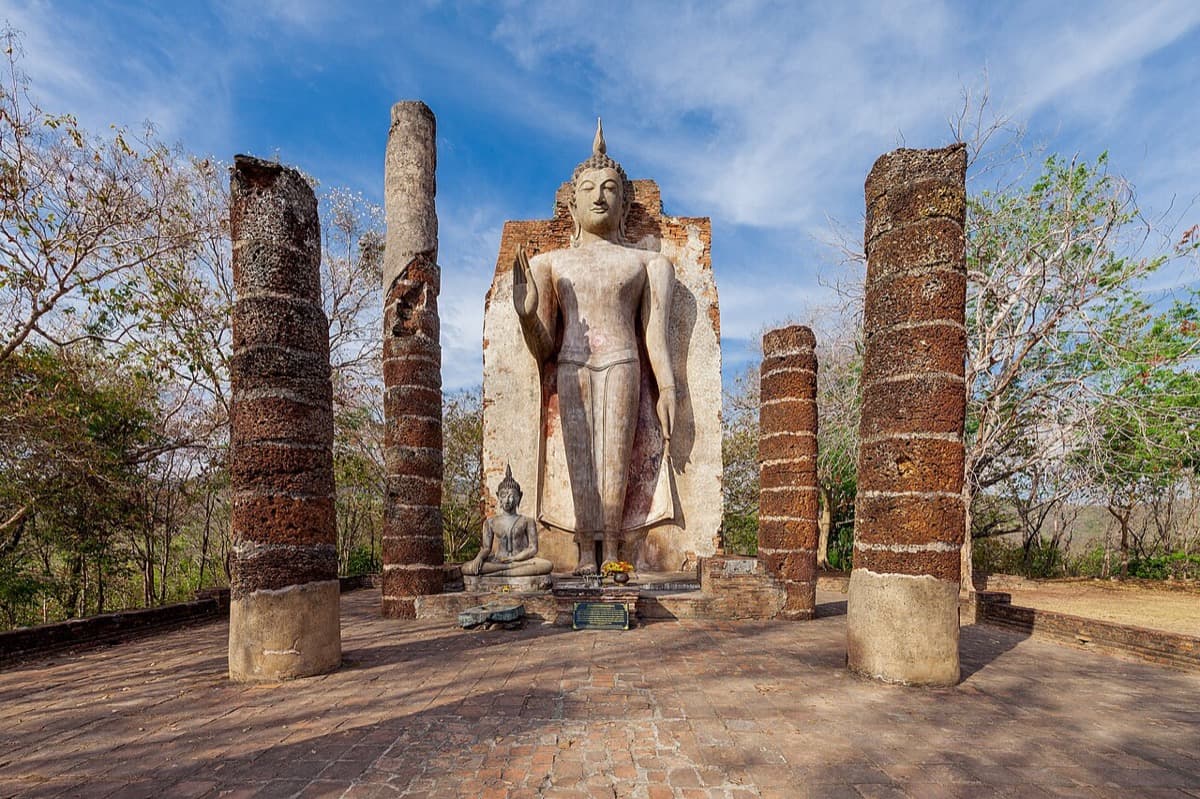
Wat Saphan Hin: Reading Sukhothai's Ruins as One Idea in Two Hands
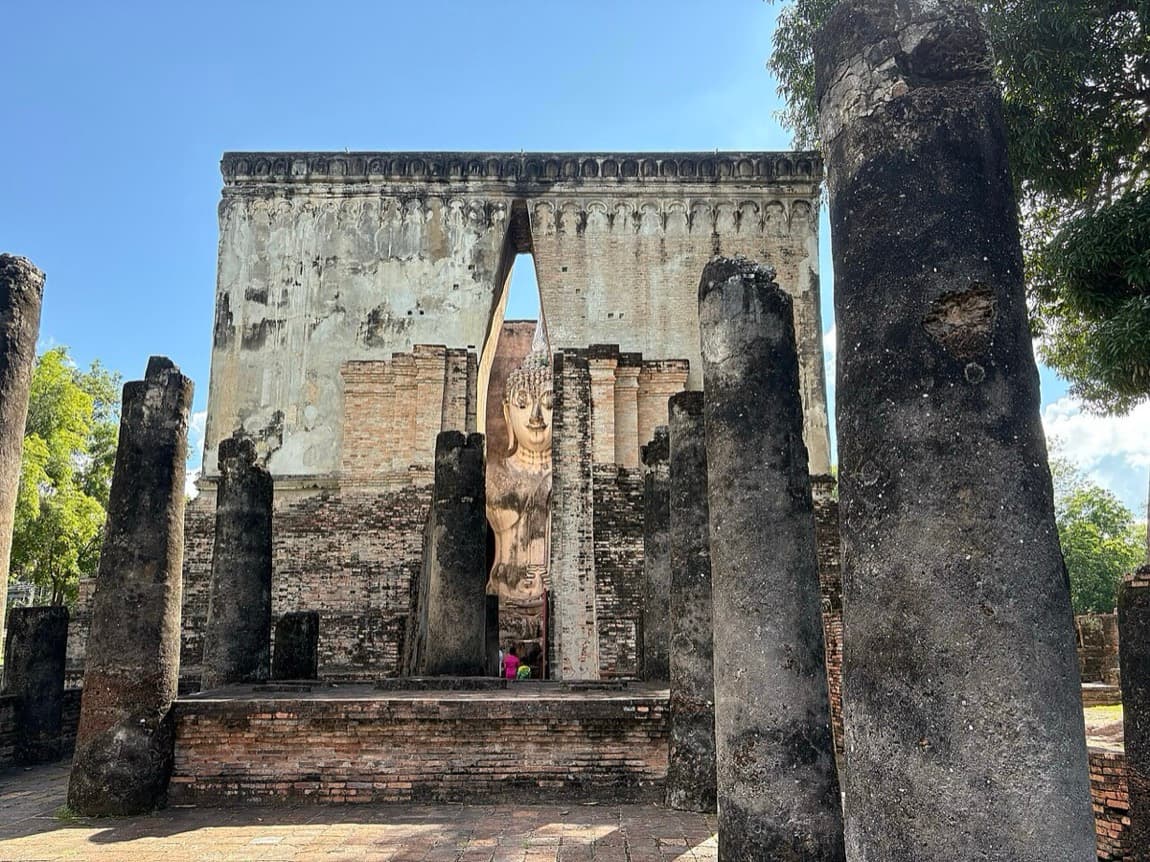
Wat Si Chum and the Buddha That Watches Through a Slot