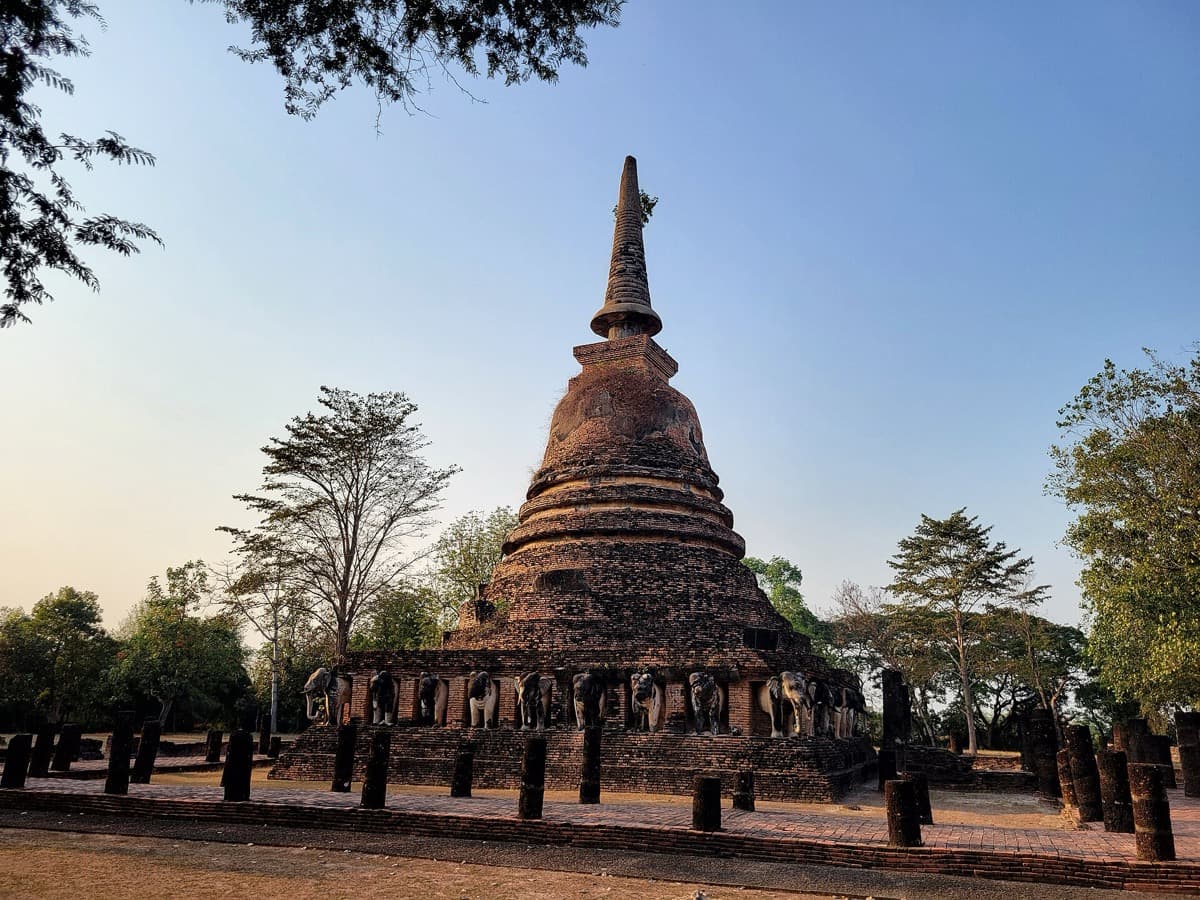
A walk that reads the ruins of Sukhothai as one idea held in two hands: an earthen dam that stored the monsoon, and a religion that climbed the hills to sit closer to the sky. Follow the water uphill, from elephant girded temples on the plain to a giant Buddha waiting at the summit.
Start · Wat Chang Lom: The Temple Surrounded by Elephants
DirectionsStops
- 1
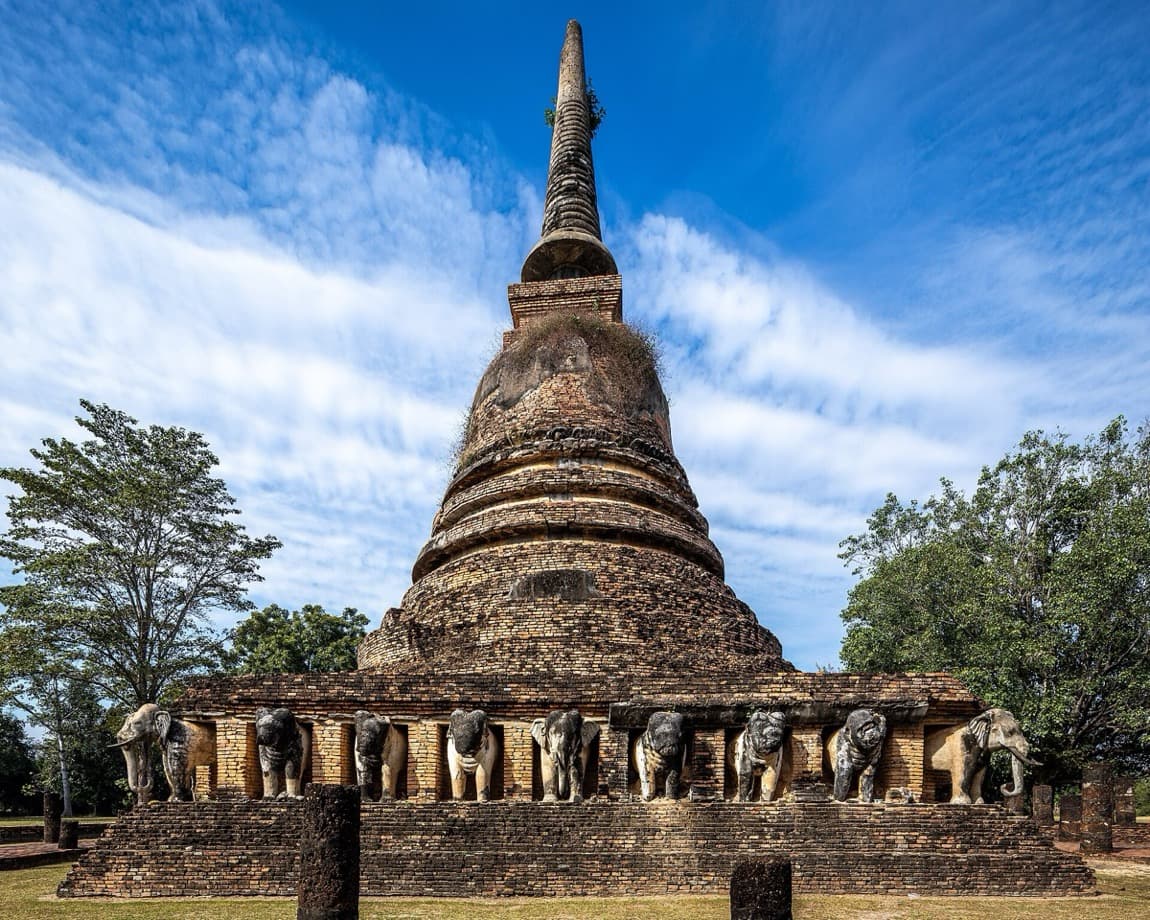
Wat Chang Lom: The Temple Surrounded by Elephants
A Ceylonese style bell shaped tower on a square brick base, girdled at its feet by rows of stucco elephants that seem to carry the whole structure on their backs.
- 2
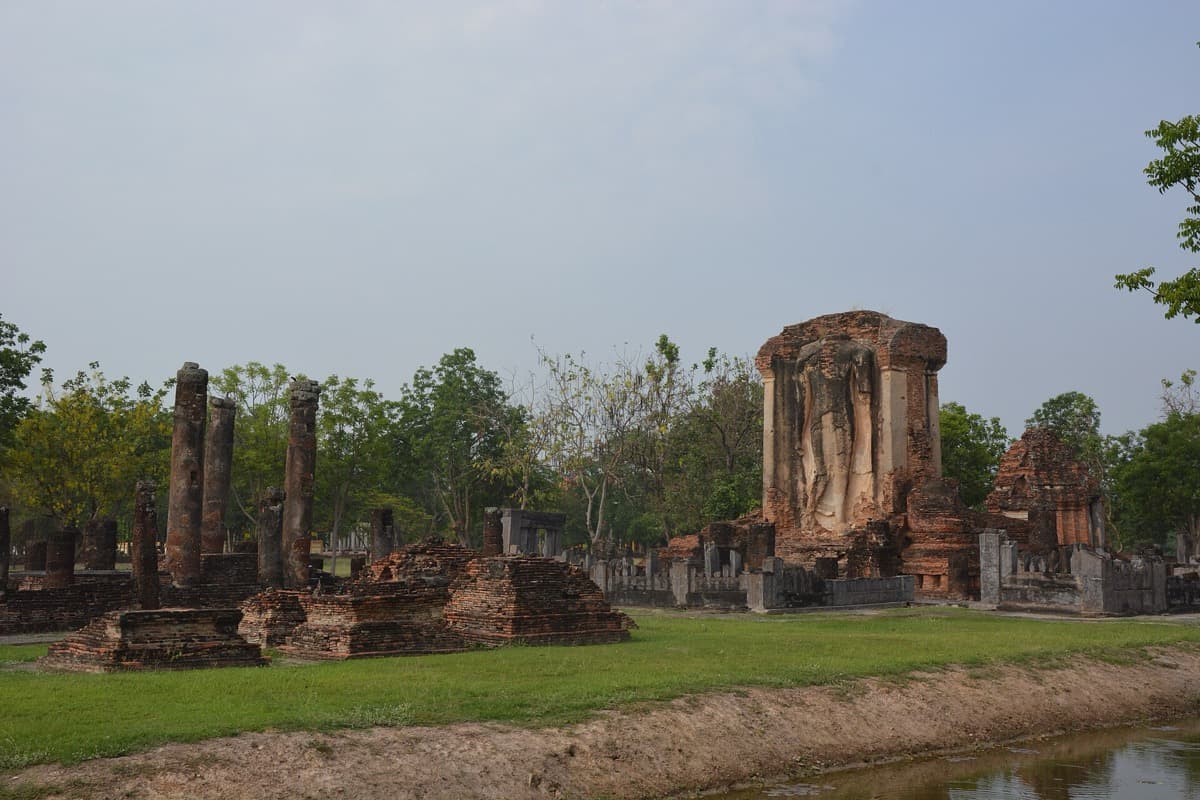
Wat Chetuphon: The Buddha in Four Postures
A temple whose heart is not a great tower but a single shrine that presented the Buddha in four postures at once, one facing each direction.
- 3
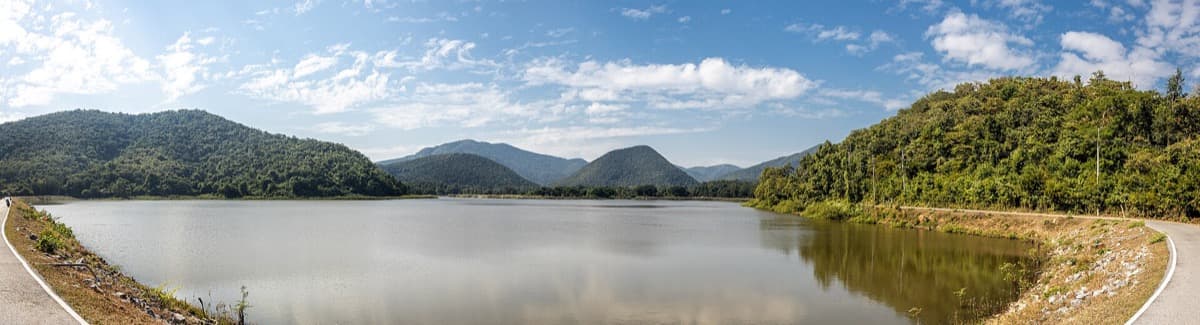
Saritphong Dam: The Earthwork That Made a City
An unglamorous earthen dam raised between two hills to trap the monsoon, the load bearing fact beneath every beautiful temple on this walk.
- 4
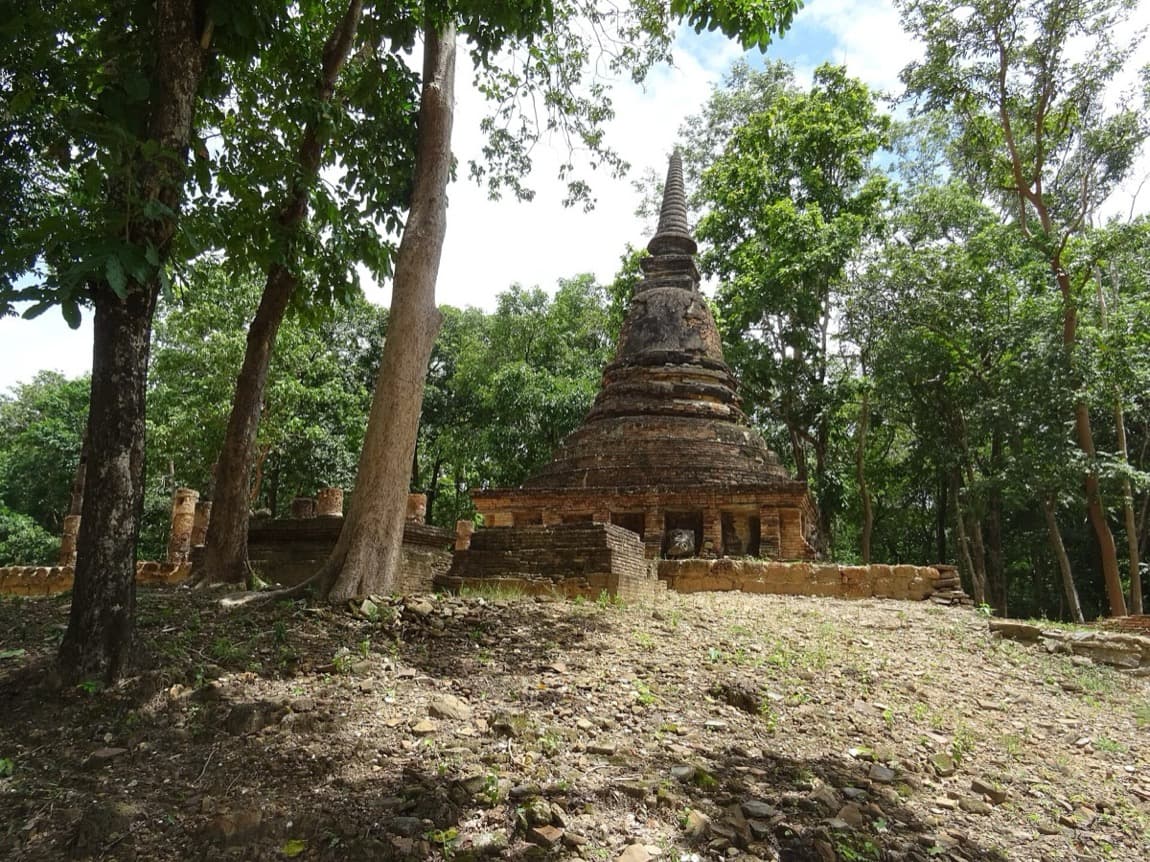
Wat Chang Rop: The Threshold of the Forest
A hillside forest temple where the city grid ends and the sacred monastery ridge begins, its bell tower once ringed with elephants like the one on the plain.
- 5
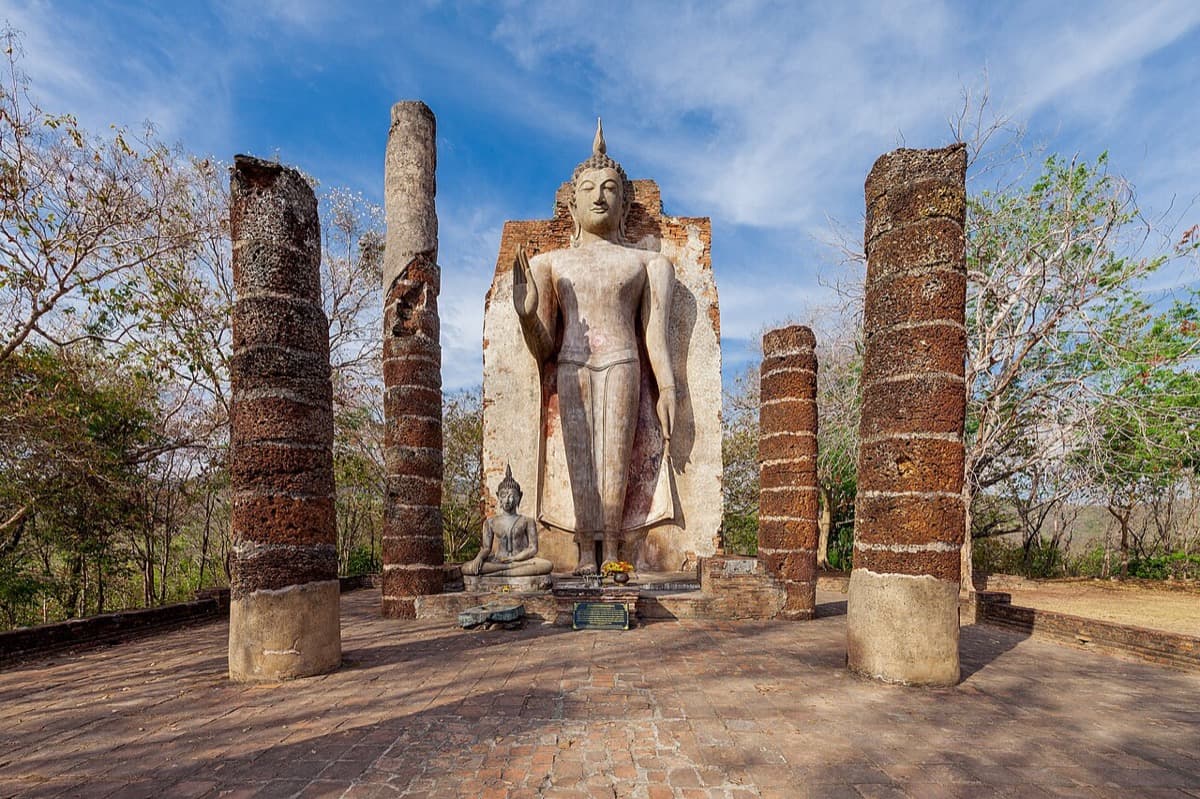
Wat Saphan Hin: The Stone Bridge to the Sky
A stone stair climbing a forested hill to a colossal standing Buddha who raises his hand against fear and looks back over the watered plain below.
Details
Best Time to Visit
The cool dry season, roughly November through February, is the most comfortable time to walk Sukhothai, with lower humidity and gentler heat. Within the day, arrive early in the morning or in the last hours before closing, when the light is soft, the crowds are thin, and the western ridge in particular feels almost empty. Midday sun on the exposed plains and the open stone stair can be punishing, so plan the uphill stops for cooler hours.
Pro Tips
- •This is a spread out route across multiple zones, so consider renting a bicycle or arranging a driver to move between stops; the western ridge in particular is a distance from the plain temples.
- •The western zone temples, Wat Chang Rop and Wat Saphan Hin, carry a ticket of about one hundred twenty baht, while the southern and eastern stops, Wat Chetuphon and Wat Chang Lom, are often reachable within the central zone ticket; carry a little cash and expect a small bicycle surcharge.
- •Save the stone stair up to Wat Saphan Hin for a cooler part of the day and take it slowly; the slate slabs can be uneven and the climb is longer than it looks from the base.
- •Walk the full circle of each elephant girded base rather than viewing it from one side; the sculptors varied every animal, and the details reward a slow loop.
- •Bring more water than you think you need, especially for the ridge stops, where shade and facilities thin out considerably.
- •Read the ruins patiently: many of the finest images, like the walking Buddha at Wat Chetuphon, are headless and weathered, so give your eye time to reconstruct what the sculptors intended.
Safety & Precautions
- •Heat and humidity are the real hazard here; the plains and the open stone stair offer little shade, so pace yourself, rest often, and carry water to avoid heat exhaustion.
- •These are active religious and heritage sites, so dress respectfully with shoulders and knees covered, keep your voice low, and never climb on the chedis, Buddha images, or elephant sculptures; some shrines may require you to remove your shoes before entering.
- •During the monsoon months, roughly May through October, sudden heavy rain can make the slate stair and earthen paths slick and muddy, so watch your footing on the climb to the ridge and near the dam.
- •Because the route crosses roads between zones and shares lanes with bicycles and vehicles, stay alert to traffic when moving between the plain temples and the western hills, and use strong sun protection throughout.
Travel advisory: Exercise Normal Precautions (Level 1).
Gallery
Related Reading
Go deeper on what you'll see, hear, and walk through.
Overview
Best Self-Guided Walking Tours in Sukhothai (2026)
3 min
Overview
One Day in Sukhothai: A Walkable Morning-to-Evening Itinerary
8 min
Overview
Sukhothai Travel Guide: Days, Transport, Costs, and Safety
7 min
Thematic
Sukhothai: The Kingdom Thailand Reads as Its Beginning
7 min
Companion
Wat Saphan Hin: Reading Sukhothai's Ruins as One Idea in Two Hands
7 min
Read
What to Eat in Sukhothai: The Noodle Bowl That Carries the Town's Name
6 min
Read the walk
The full story of Wat Saphan Hin: The Hydraulic City, in words. Prefer to listen? Play it narrated, from home or on location.
Introduction
Sukhothai, in north central Thailand, is remembered as a golden age of art and kings, of graceful chedis and a walking Buddha. But the thing that let all of it exist was plumbing. This plain has no dependable dry season river, so the kingdom raised an earthen dam between two hills to trap the monsoon, then fed it through canals into ponds inside the walls. With the city watered, its people pushed their most sacred temples out of the grid and up onto the forested western ridge. This walk reads the ruins as two ideas held together, an engineered defense against drought, and a faith that climbed the hills. There are five stops. Give yourself about three hours across roughly eleven kilometres, a walk most visitors do by bicycle, which is a spread out route best done partly by bicycle or with a driver between zones, at whatever pace suits you. We start with the sacred image everyone comes for, an elephant girded bell shaped tower, and a temple that stages the Buddha in four postures at once. Then we pivot hard, to an unglamorous mound of packed earth that is the real hero of the story. From there the land rises. A forest temple marks the edge where the city grid ends and the monastery ridge begins, and a stone stair climbs to a colossal Buddha who turns to look back down over the watered plain that this whole walk has been explaining. Engineering at the bottom, transcendence at the top, one continuous thought. When you arrive at Wat Chang Lom, begin with stop one.
1. Wat Chang Lom: The Temple Surrounded by Elephants
Start here, at the image that draws people to Sukhothai in the first place. The centerpiece is a bell shaped tower, a chedi, in the Ceylonese or Sinhalese style, rising from a square brick base roughly eighteen metres on each side. What makes it unforgettable sits at the base. Thirty two stucco elephants ring the platform, each set into its own bricked niche with only its front quarters emerging, so the herd looks as though it is stepping out of the wall to hold the tower up. Most are damaged now, many headless, worn by centuries of monsoon and sun, and that weathering only makes them feel more like survivors than decoration. The name tells you what you are looking at. In Thai, chang means elephant, and Wat Chang Lom means the temple surrounded by elephants. The symbolism most often read into this form is that the elephants support the Buddhist cosmos, carrying the sacred mountain at the center of the universe on their backs. Treat that as the accepted symbolic reading rather than something carved into an inscription, because no founding date or named builder for this particular temple survives in the record. This elephant girded tower is a signature Sukhothai form, and you will meet its echo later on the ridge, which is part of why we begin with it. Take your time walking the full circle of the base. Notice how the sculptors gave each elephant slightly different tusks and trunks, so a ring of thirty two animals never quite repeats. Around the tower once stood a prayer hall and an ordination hall, enclosed by a low brick wall and a moat. Stand back, let the whole thing settle, then move on when you are ready.
2. Wat Chetuphon: The Buddha in Four Postures
This temple makes a quieter, stranger point than the last one. Its most important structure is not a soaring tower but a compact shrine, a mondop, that once presented the Buddha in four different postures, one carved on each of its four sides. Walk around it and read the compass. The walking Buddha faced east, the reclining Buddha lay along the south, the standing Buddha faced west, and the seated Buddha faced north. The standing and walking images have weathered best and are still in fair condition, though both have lost their heads. The seated and reclining figures are badly damaged, more suggestion than form now, so you will need to slow down and let your eye reconstruct them. What is unusual here is the absence of a dominant chedi. Most Sukhothai temples orbit one great tower. This one organizes itself entirely around the four posture shrine, which tells you the images themselves were the whole point. Housing the Buddha in several postures together was a Sukhothai practice, each posture tied to episodes and periods of the Buddha's life, so that the shrine becomes a small compressed biography you walk around rather than read. Pay particular attention to the walking figure. The walking Buddha, the phra lila, is the celebrated Sukhothai innovation, a fluid gliding form caught mid stride, robes flowing, one heel lifting, prized as the artistic high point of the era. It is easy to walk past a headless standing figure and miss how radical it was to carve a god in motion. Before you leave, notice that everything sacred here is still down on the plain. Hold that thought. The whole cosmology you are looking at, elephants carrying the universe, a Buddha in four directions, depends on something we have not seen yet.
3. Saritphong Dam: The Earthwork That Made a City
Here is the hero of the whole story, and it is a mound of packed earth. This is the Saritphong Dam, also called the Thamnop Phra Ruang, an earthen dam attributed to the Sukhothai era and dated by scholars to the fourteenth century. It was raised between two hills, Khao Kieo Ai…
Full narration for this stop unlocks with the tour.
4. Wat Chang Rop: The Threshold of the Forest
Now the ground is climbing under you, and the character of the place changes. Wat Chang Rop is a western zone temple set in the wooded hills, on the rising land that leads up toward the summit. It belongs to a different world than the temples on the plain. This is the Aranyika,…
Full narration for this stop unlocks with the tour.
5. Wat Saphan Hin: The Stone Bridge to the Sky
This is the summit, and the payoff for everything below. The name Wat Saphan Hin means stone bridge, for the long path and staircase of slate slabs that climbs the hillside to the top. The hill rises about two hundred metres above the plain, and this is the quietest, most…
Full narration for this stop unlocks with the tour.