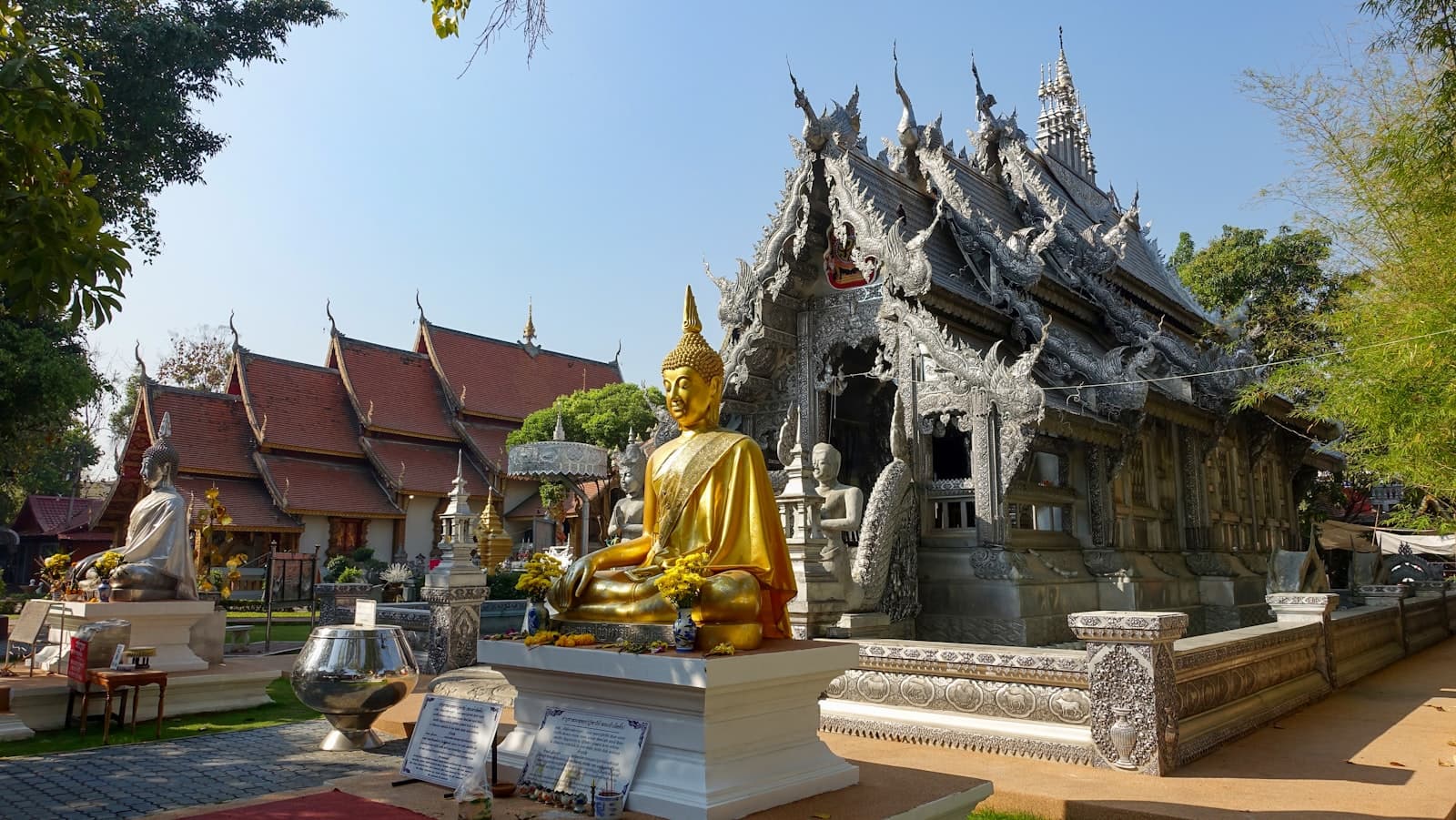
South of Chiang Mai's old walled city, one short road carries a single craft as its whole identity: hand-hammered silver, beaten into bowls, panels, and a temple that gleams. This is the story of how a resettled trade became a neighbourhood's name, its temples, and its Saturday-night heartbeat.
Start · Chiang Mai Gate: The Southern Threshold
DirectionsStops
- 1
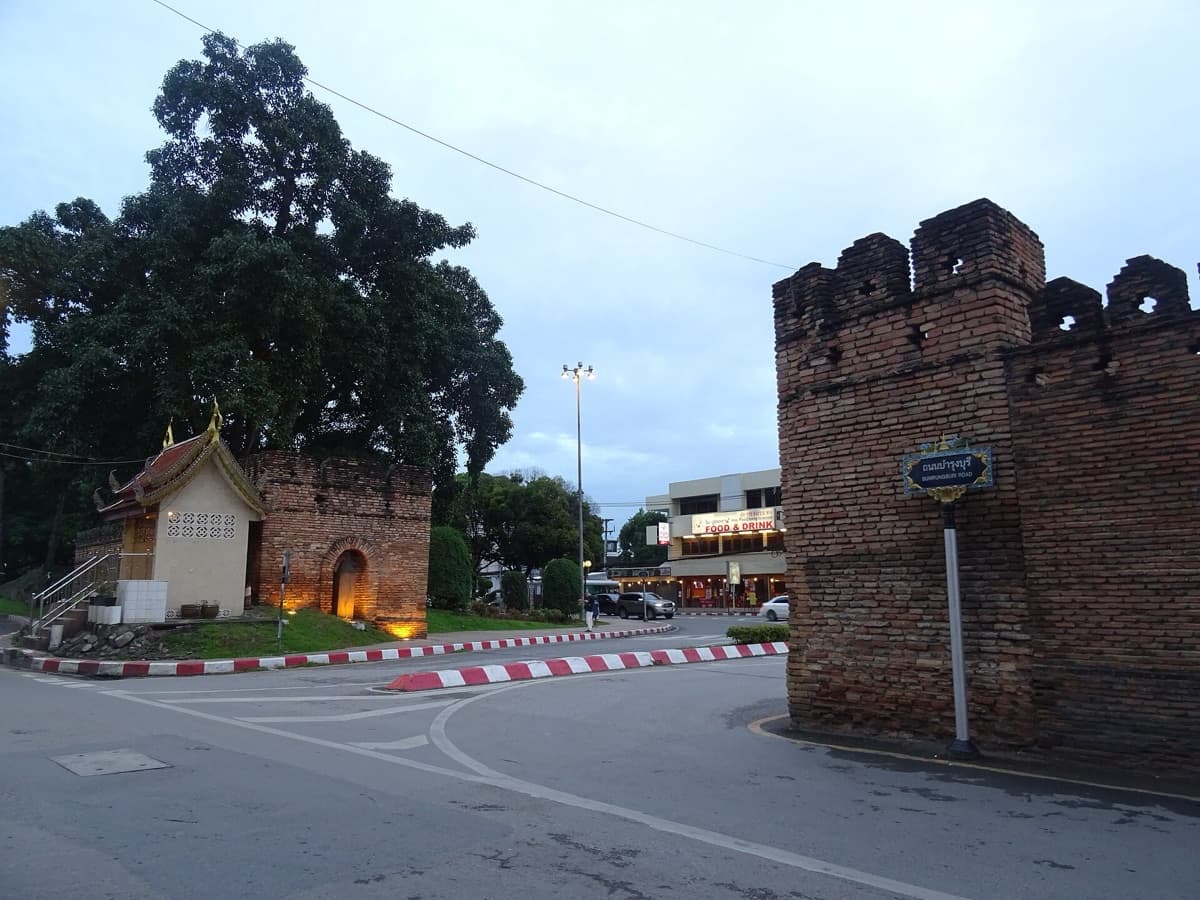
Chiang Mai Gate: The Southern Threshold
The southern gate in the old city wall, on the moat, where the walled city ends and the silversmith road begins.
- 2
Wualai Road: Why the Silver Road Exists
The historic silversmith street, named for a resettled community brought here around the turn of the eighteen hundreds.
- 3
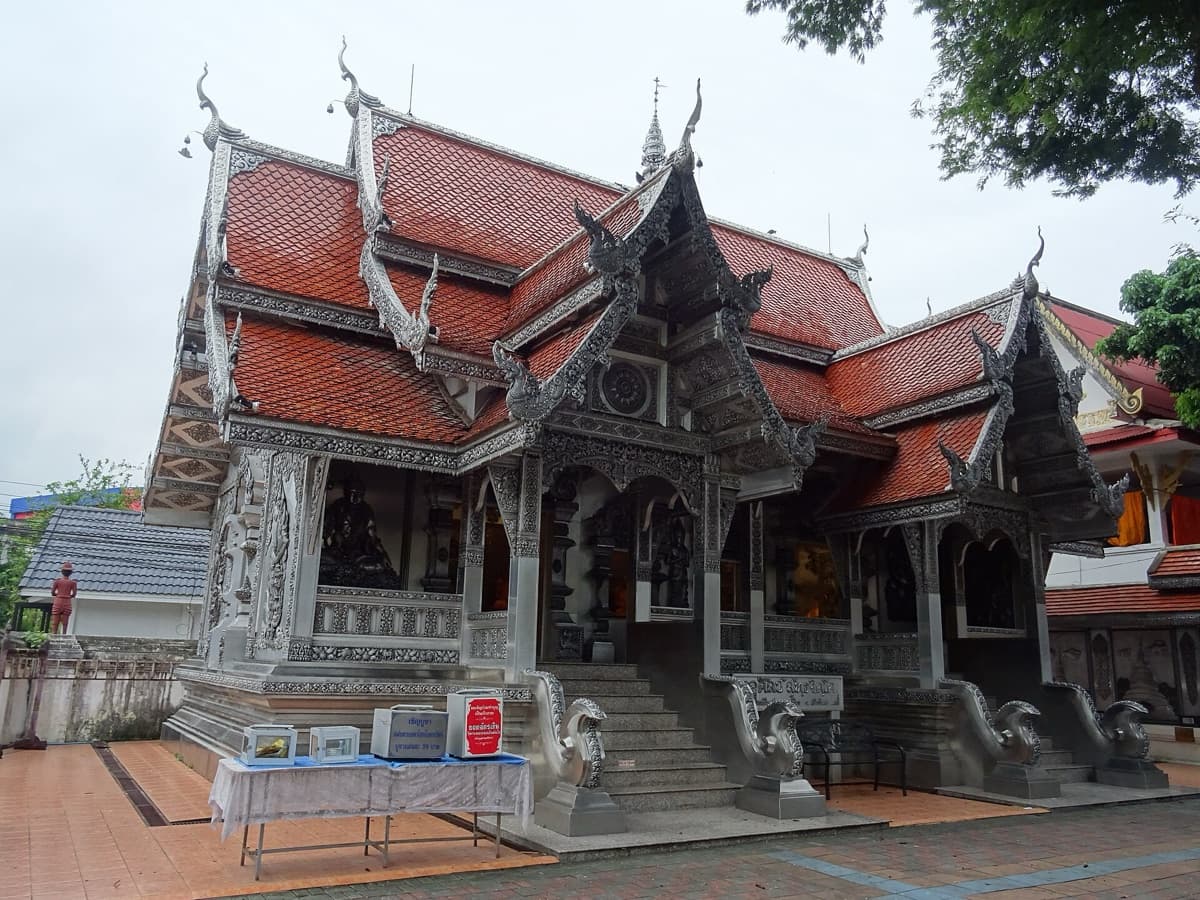
Wat Muen San: The Community's Roots
The quieter, older silversmith temple, restored by the resettled community as the heart of the silver quarter.
- 4
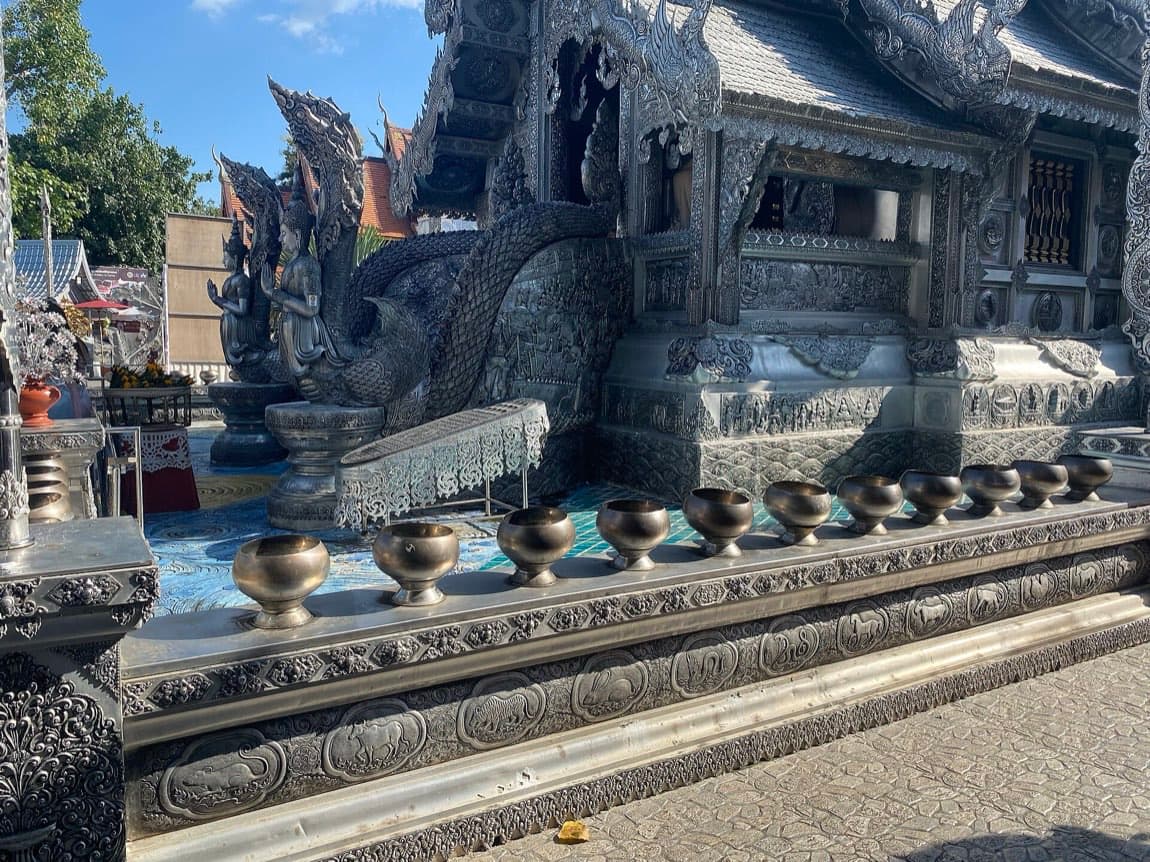
Wat Sri Suphan: The Silver Temple
The silver-clad ordination hall, the craft's grandest statement, and its sharpest rule.
- 5
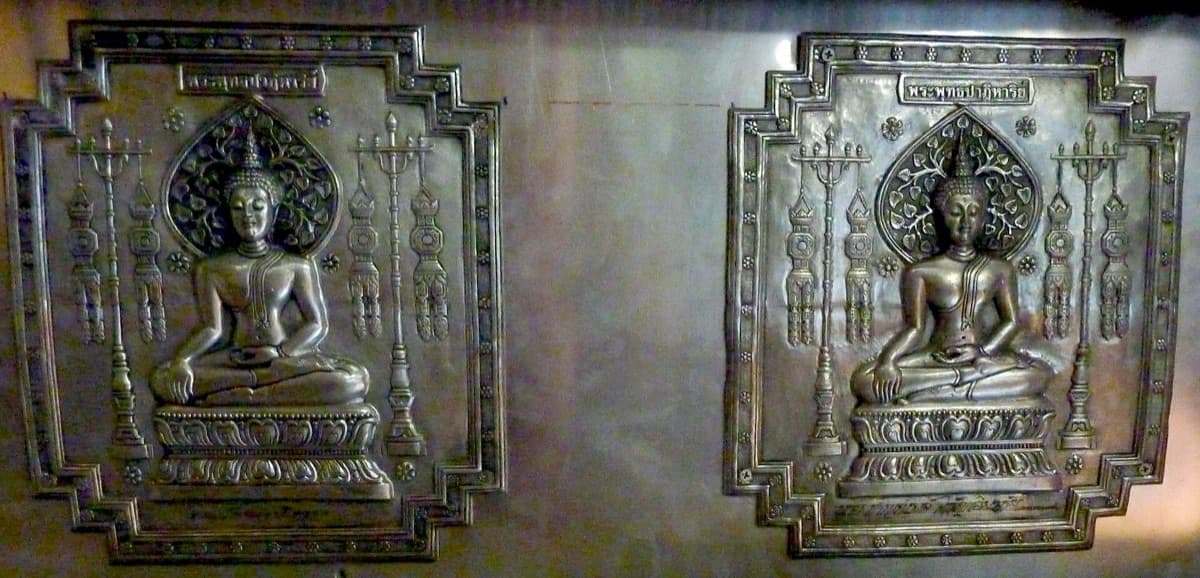
The Wualai Silversmith Workshops: The Living Craft
The working street where the two-century repousse tradition is still hammered by hand, family to family.
- 6
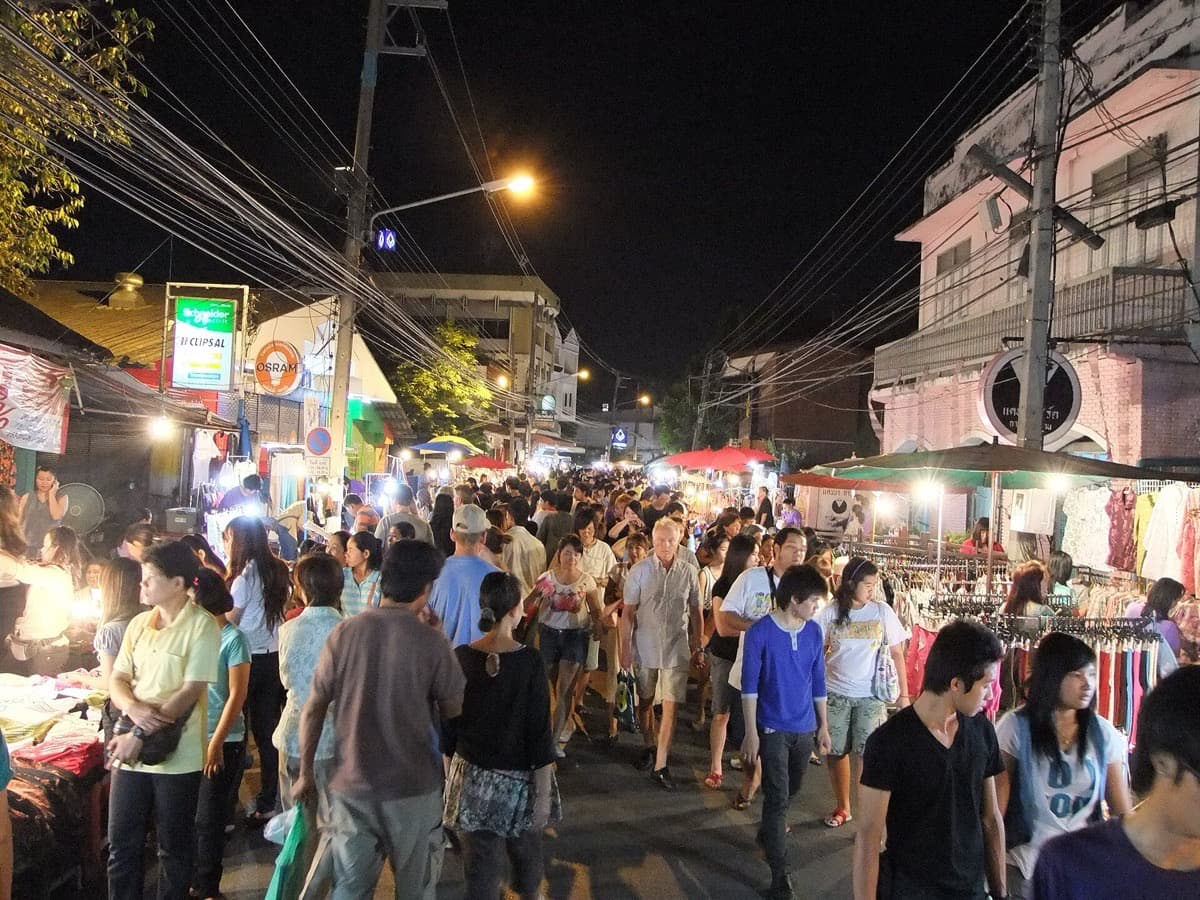
The Wualai Saturday Walking Street: The Craft Made Public
The Saturday night market that fills the silver road at dusk, the craft and the neighbourhood made public.
Details
Best Time to Visit
A Saturday evening is the fullest way to walk this road, when the whole street closes to traffic and becomes a walking market from around five in the afternoon until about ten at night, with the liveliest crowd between seven and eight. On any other day, come in the cooler hours of morning or late afternoon to see the temples calmly and catch the sound of workshops. Late morning light plays beautifully across the silver ordination hall at Wat Sri Suphan.
Pro Tips
- •Save the temple interiors for cooler morning or late-afternoon hours, and carry water. Chiang Mai heat and humidity build fast around midday.
- •Dress modestly for both temples: cover shoulders and knees, and be ready to remove your shoes before entering any hall.
- •Note that women are barred from entering the ordination hall at Wat Sri Suphan. Anyone can view the silver exterior in full, so plan your visit around seeing the panels from outside.
- •If you want the Saturday Walking Street, arrive by early evening and start from Chiang Mai Gate, then work south. The crowds thicken sharply after seven.
- •Carry small cash in baht. Street stalls and temple donation boxes work in cash, and change for large notes can be hard to find.
- •Don't chase a single famous silver shop. The heritage is the whole road, so walk slowly and let the sound of hammering guide you into open workshops.
Safety & Precautions
- •Heat and humidity are serious here, especially from late morning to mid-afternoon. Pace yourself, stay hydrated, wear sun protection, and use shade between stops.
- •Temples are active places of worship. Cover shoulders and knees, remove shoes and hats before entering halls, lower your voice, and never point your feet toward Buddha images or turn your back to them for photos.
- •During the rainy season, roughly from June to October, expect sudden heavy downpours in the afternoon and evening. Carry a light rain layer and watch for slick pavement and pooling water on the road.
- •Wualai Road carries scooters and cars on non-market days, and pavements can be narrow or uneven. Watch traffic when crossing near the gate, and mind your footing along the workshop stretch.
Travel advisory: Exercise Normal Precautions (Level 1).
Gallery
Related Reading
Go deeper on what you'll see, hear, and walk through.
Overview
Best Self-Guided Walking Tours in Chiang Mai (2026)
3 min
Overview
Chiang Mai Travel Guide: Days, Getting Around, Best Time, Safety, and Budget
7 min
Overview
One Day in Chiang Mai: A Walkable Morning-to-Evening Itinerary
5 min
Thematic
Best Culture Walking Tours in Chiang Mai (2026)
2 min
Thematic
Chiang Mai: Reading the Lanna Capital in Three Layers
7 min
Companion
Wat Sri Suphan and the Silver Road of Wualai
7 min
Read
What to Eat in Chiang Mai: The Dishes, Their Origins, and How to Order Like a Local
8 min
Read the walk
The full story of Wualai Road: The Silver Road, in words. Prefer to listen? Play it narrated, from home or on location.
Introduction
This is a walk about one road that made silver its whole identity, in Chiang Mai, in northern Thailand. Just outside the old walled city, a short street runs south from the ancient moat into a quarter where families have beaten sheets of silver into relief by hand for more than two hundred years. The craft clads a temple in gleaming metal, it fills the pavement every Saturday night, and it is still hammered a few doors from the shrines. Take this at your own pace. There are six stops across roughly one and a half kilometres, and if you linger it runs about ninety minutes, though nothing here demands that you rush or stay. Skip a stop that does not call to you and come back to it, or not. We begin at the southern gate, where the old city ends and the silver road begins. We walk into the quarter, pause at the older, quieter silver temple to find the community's roots, then reach the famous silver-clad ordination hall, the craft's grandest statement and its sharpest rule. We step back to the living workshops that make the whole street heritage rather than any single shop, and we close on the Saturday street, the same road humming at dusk that hummed with hammers by day. It is a story of beauty and of coercion held together, because the silversmiths who seeded this place did not choose to come. When you arrive at Chiang Mai Gate, begin with stop one.
1. Chiang Mai Gate: The Southern Threshold
Stand at the moat and look at the gate in front of you. This is Chiang Mai Gate, in Thai Pratu Chiang Mai, the opening in the centre of the south wall of the old walled city. Chiang Mai itself was founded by King Mangrai in the year twelve ninety-six, and this gate has been reconstructed more than once since then, through the eighteen hundreds and again in the nineteen hundreds. What you see is a threshold in the most literal sense. Behind you, inside the moat, is the old royal city of temples and lanes laid out seven centuries ago. In front of you, running south, is Wualai Road, the road of the silversmiths. The two worlds meet right here. By day, a food market gathers by the gate, and every Saturday evening this same stretch becomes the head of a walking street that runs the length of the silver road. Notice that the gate does not lead anywhere grand on the far side. It leads to a working neighbourhood, and that is the point of this walk. The prestige of the old city inside the walls, and the craft that grew up just outside them, have been neighbours for a very long time. Take a moment with the moat and the wall before you turn your back on the old city. Everything from here south belongs to a different story, one written not by kings inside a wall but by families with hammers. When you are ready, follow the road south, away from the gate, into the quarter itself.
2. Wualai Road: Why the Silver Road Exists
You are now on Wualai Road, in Thai Thanon Wua Lai, and the name itself is the beginning of the story. To understand why silver lives on this one road, go back to the end of the seventeen hundreds. Chiang Mai had been largely emptied under Burmese pressure, abandoned for roughly twenty years. King Kawila, born in seventeen forty-two, set about rebuilding it, and formally became King of Chiang Mai in eighteen oh two. He did not refill the city by inviting people. He resettled whole communities from the surrounding regions, moving them here. It is important to say that plainly. This was forced relocation, not a voluntary migration. In the year seventeen ninety-nine, according to the history kept at the local temples, he brought people from a place called Ban Nguai Lai, west of the Salween River, in what is now Shan territory. Among them were skilled silversmiths, and the neighbourhood took its name from their origin place. They settled here, just outside the moat, and began to work. The craft they carried is silver repousse. You coat a sheet of silver or alloy in resin, then hammer and punch it from the reverse, raising a relief design out of the flat metal. Bowls, panels, and a traditional vessel called the salung took shape under those hammers. For more than two hundred years this has been the neighbourhood's identity. Hold both truths as you walk. The beauty all around you grew from people who were brought here against their will, and what they built over two centuries became one of the city's proudest living crafts. Carry that as you continue south toward the community's oldest temple.
3. Wat Muen San: The Community's Roots
This is Wat Muen San, and wat simply means temple. It is the quieter, older temple of the silver quarter, and if the silver hall further along is the neighbourhood's grand statement, this is its heart. The site is old. It was first recorded in palm-leaf manuscripts in the year…
Full narration for this stop unlocks with the tour.
4. Wat Sri Suphan: The Silver Temple
This is Wat Sri Suphan, the Silver Temple, and it is the reason many travellers find their way to this road at all. The temple itself is old, founded around the year fifteen hundred during the reign of King Mueang Kaeo of the Mangrai dynasty. But what stops people in their…
Full narration for this stop unlocks with the tour.
5. The Wualai Silversmith Workshops: The Living Craft
Step back now from any single building and pay attention to the street itself. This is where the walk stops being about temples and becomes about the craft as a living thing. For more than two hundred years, families along Wualai Road have practised silver repousse by hand, and…
Full narration for this stop unlocks with the tour.
6. The Wualai Saturday Walking Street: The Craft Made Public
We close where the road becomes public. Every Saturday evening, the whole length of Wualai Road turns into a walking street. The stalls typically open around five in the afternoon and close around ten at night, with the thickest crowds somewhere between seven and eight. If you…
Full narration for this stop unlocks with the tour.